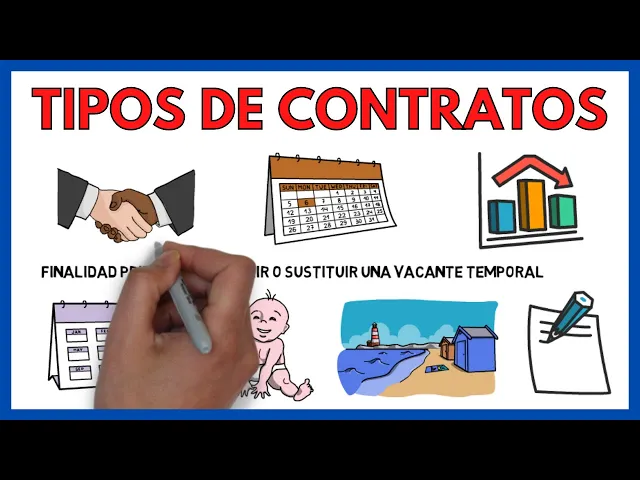
Welcome once again to home economics, today we will continue with the free course on business economics. In this chapter we will talk about the different types of employment contract An employment contract is an agreement between an employee and an employer that specifies and formalizes the services and activities that the employee must perform for the employer, as well as the financial compensation that they must receive. the worker for the provision of those services.
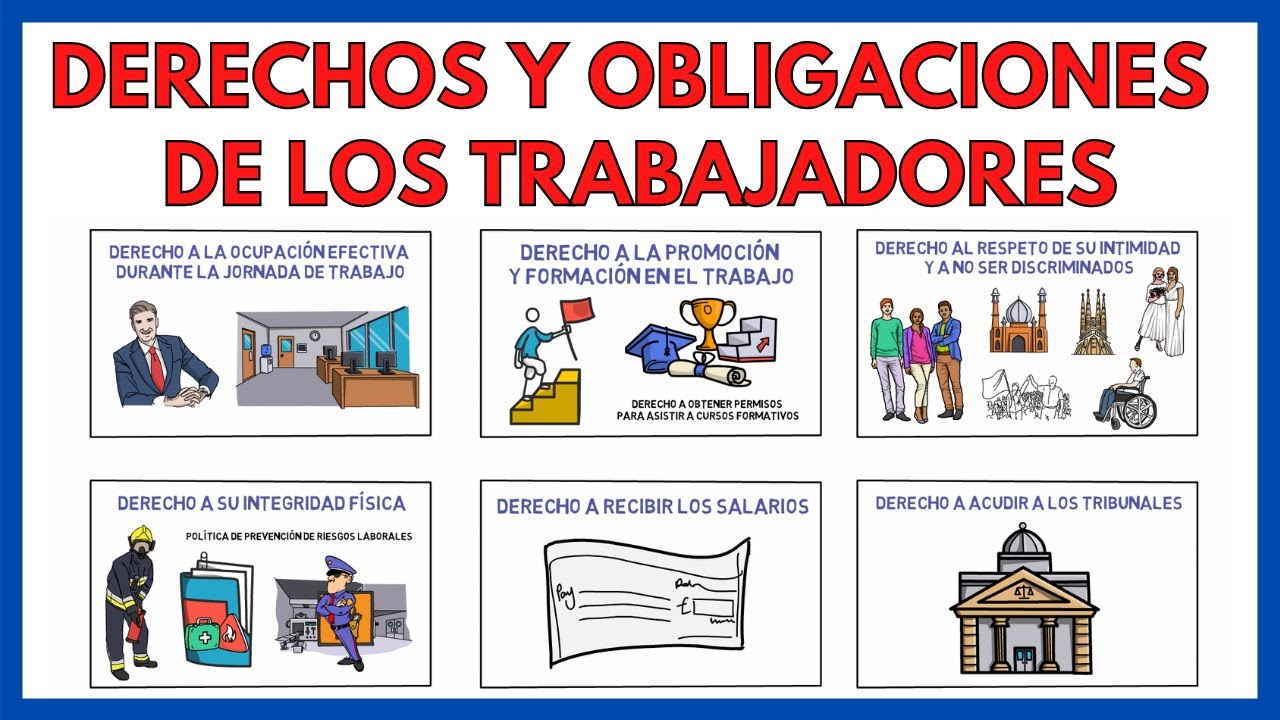
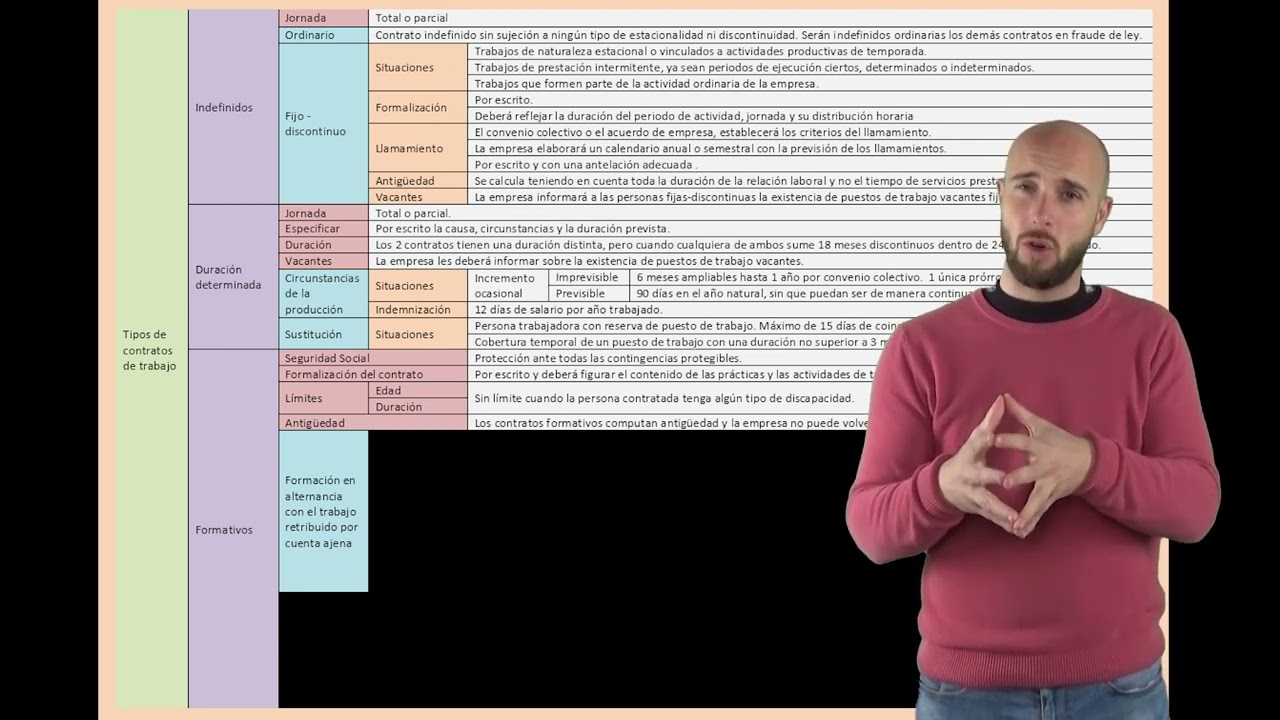
Likewise, the rights and obligations of each of the parties are established, which we saw in the video that I leave you here on the labels, as well as the mutual consent of the commercial relationship and the purpose of said relationship. Other aspects to take into account and that must be clearly reflected in the contract are its duration, the existence or not of a trial period, the commitment and the need for prior notice in case of wanting to terminate the agreement before the agreed period, the consequences of its breach by any of the parties and any other agreement reached during the contracting process. All these fundamental elements of the employment contract were further developed in the video that I leave you here on the labels By virtue of the characteristics, 4 types of basic employment contracts are distinguished from which there are subtypes Contracts of indefinite duration They are employment contracts that do not have a fixed end date.
This means that they can be prolonged in time until one of the following situations occurs: Dismissal: there are different types and each one has a different compensation depending on whether it is a proper, unfair, objective dismissal, etc. Voluntary termination : the The worker may also be the one who decides to terminate their contractual relationship with the company. In this case, it must be notified in writing and with a notice period of 15 days or a month, depending on the category of the worker.
Trial period: the duration of this period will depend fundamentally on the category of the worker. Among the permanent contracts, the most frequent is the common and ordinary employment contract. This type of contract offers a series of advantages not only for the worker who will have a relatively stable job but also for the employer, since they can benefit from different types aid or tax deductions, depending on the type of worker hired.
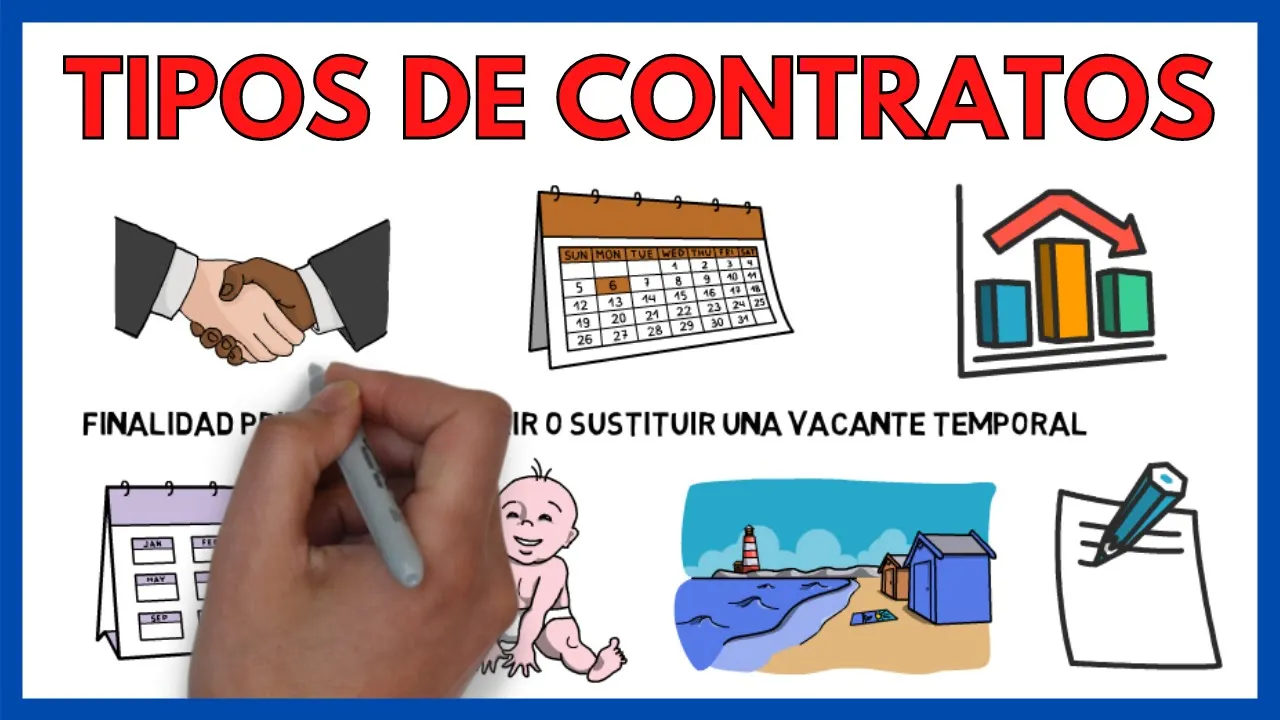
For example, hiring people with disabilities, young people, groups at risk of social exclusion, over 52 years of age or former inmates has a series of aids or tax deductions for the company It must be taken into account that except in interim contracts, training or relief, will pass to this type of contract if they exceed two years of commercial activity with the same company. Temporary contract This type of employment contract is entered into by establishing a time limit that specifies the duration of the services to be provided. They are usually used for specific projects or when there are work peaks due to, for example, reductions, which imply the need to reinforce the company's workforce for a certain period of time.
Within this contracting style, there are 3 well differentiated categories to take into account: Contract for work or service provided: The objective of the contract is to carry out a specific work or service. Therefore, the work carried out is independent and autonomous. In addition, at the end of the contract, the company must compensate you with a salary corresponding to 8 days of work for each year of service provided.
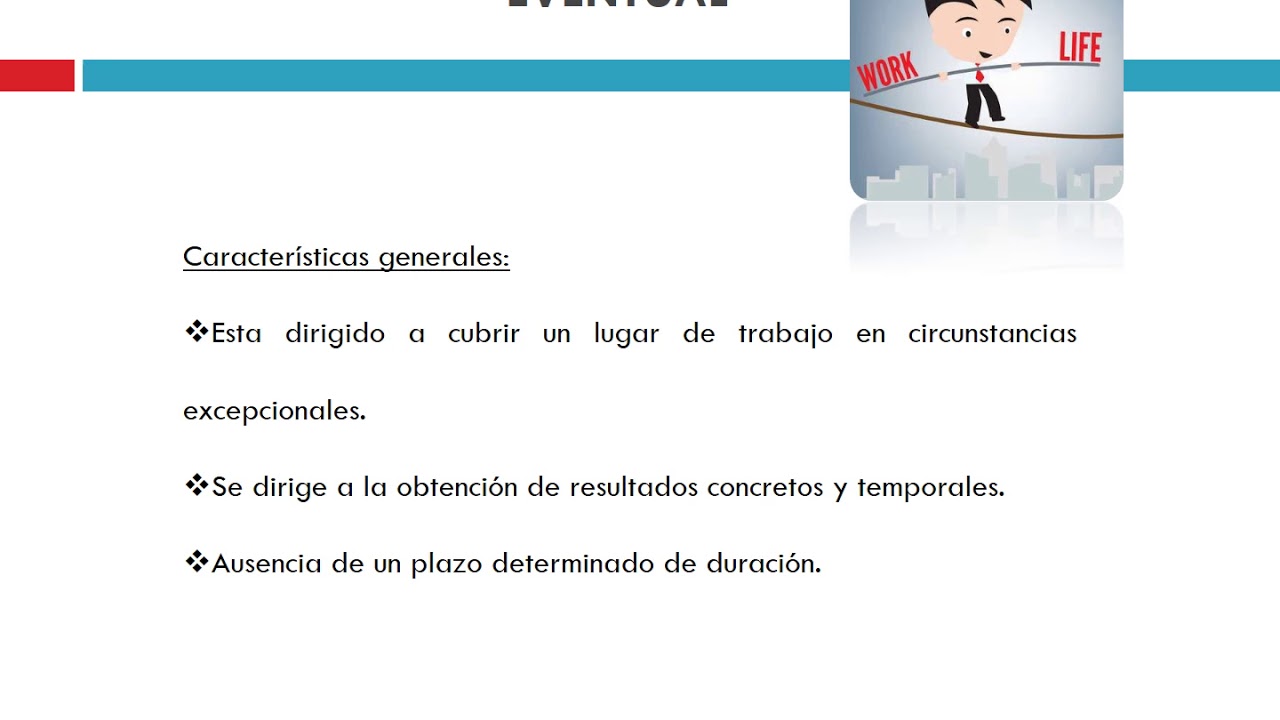
Eventual contract due to production circumstances: this type of contract, which must have a maximum duration of six months, is one of the most common today. Basically, this contract is used when the company needs temporary help due to unforeseen circumstances such as a job peak where more workers are needed than usual. Interim contract: The interim contract is a contract whose main purpose is to fill or replace a temporary vacancy.
The duration of the contract covers the period of absence of the worker or the vacancy that is replaced. This means that if you need to temporarily cover a job due to maternity leave, vacations, among other reasons, you must sign an interim contract. Part-time contract In these contracts, the worker agrees to work fewer hours than usual, that is, less than the normal working day, which is currently 40 hours a week.
Regardless of whether they are of indefinite or temporary duration, there are two main types of contracts within this category: Partial retirement contract: this type of contract occurs when someone partially retires and starts working fewer hours than they were previously entitled to. Replacement contract: as a counterpart to the partial retirement contract, this other type of contract arises and is one that is carried out to replace the workday of the partially retired person . This contract can only be made with a person who is currently unemployed or who had a fixed-term contract with the company.
Training contracts These contracts are designed to provide experience and training. They are classified into two main classes Internship Contract. Its objective is to train a person who already has the necessary theoretical knowledge but does not have work experience.
The worker must have a university degree, a professional training or an equivalent qualification that enables him to practice the profession. They can only be employed during the four years following graduation and the work must be related to those studies. Its maximum duration is two years and never less than 6 months.
The remuneration is set in the collective agreement, but it cannot be less than 75% of the remuneration that a worker in the same position would receive. Training contract This type of contract should only be used for people between the ages of 16 and 30. In the event that the unemployment rate is less than 15%, it can only be used in people between 16 and 25 years old.
Its main function is to allow people to alternate between work and training to increase their integration into the labor market, while providing them with the necessary training so that they can work properly. They can last a maximum of three years, after which it is possible, although not mandatory, to sign a contract and enter the staff indefinitely. The salary must be equal to greater than the minimum interprofessional salary agreed by agreement.
It must be taken into account that the company is obliged to provide theoretical and practical training and that at least 15% of the working day must be dedicated to training. With all this we say goodbye for today, if we have helped you and you want to continue learning we leave you two videos for you to click on based on YouTube recommendations. On the other hand, I would appreciate it if you would subscribe to our channel if it has been useful to you by clicking on our logo on the left side of the video.
As always, any questions or suggestions please leave them in the comments so we can respond to you. See you in the next video.