The reality is, if you're posting content on Facebook or Instagram or YouTube, it's very unlikely it's going to go viral unless we have a very deliberate strategy behind that. Hi there. I'm Dan Martel and this is the SAS Growth Show by SaaS Academy.
I want to introduce you to an exclusive training we did with Coach Marcel, one of our top coaches in SaaS Academy breaking down the SaaS funnel. There's actually six stages to the bow tie funnel and four specific channels you can use to drive demand gen. It used to be an exclusive training only for our private clients, but we wanted to make it public as we launch the new YouTube channel.
So be sure to stay on the end because I'm also going to talk to you about the SaaS Academy lead gen summer campaign so you can learn more about how we can support you in achieving your lead gen goals. Let's hear more from Coach Marcel. My first question for all of you before we get into this is what is the hardest part about developing a marketing strategy for you?
When you think about putting together the plan on how you're going to get customers, what starts to get challenging about that? I want to hear from all of you, which channel do you choose first? It's a great question, Rich, and a very, very tough one to answer.
There's so many different ways to get attention. What should I be focused on today? Gary was telling me it's Tik Tok, this other tech bro in my in my newsfeed on Instagram with a whiteboard is telling me I got to be doing YouTube ads.
Right? Everybody that's selling you marketing services has the name, has the hammer that's appropriate for your nail. But who's really got the right answer?
And how do you figure that out for yourself? Which channel is going to give you the best amount of discovery calls? What are the questions to answer?
How do you narrow down the audience? How do you pull the right lever at the right time? Yes, the timing is so important because we don't want to be wasting time and energy in the wrong places.
So what I want to share with you today is our strategy is going to help you overcome a couple of specific challenges. Number one, the reality of that marketing is probably the most overwhelming thing in any business, really. And it's compounded by the fact that marketers love to market people who sell marketing ideas, sell marketing services, sell marketing programs.
They love to market. So if you're anything like me, any time you pick up your phone and get on social media, you're being bombarded with messages that if you're not doing this thing and you are messing up as a founder, you are leaving opportunities on the table. If you're not turning everything on your life into an NFT and deploying empathy on Tik Tok and creating content, right, then you're messing up.
Thanks, Gary. Now I have anxiety and I can't sleep because I think that I'm failing as an entrepreneur because I'm not doing dances on Tik Tok Well, you know what? I'm here to tell you that it's okay to say no to some of these things or just say not now, because as we've learned today, doing less is often the best way to do more.
And we can feel very, very busy, but not productive if we're falling into this trap of believing that we have to be everywhere and do everything to get results. And this is how we end up really diluting our effort across a lot of different things and reducing the velocity at which we can move. And finally, this can hurt our cash flow.
And as a bootstrapped company, cash flow has got to be one of the most important elements that determines how fast we can grow. The ability to deploy a dollar and get it back quickly and redeploy it back into marketing is going to be the handbrake that determines how fast you can grow as a bootstrap company. The reason people raise money is so that they don't have to deal with that constraint in the early days.
And if we're not choosing to maintain ownership of our company, which in my opinion is often the best way to actually achieve a good financial outcome from our SaaS company, then we've got to be focused on being efficient in our marketing, and we do that by being specific. So my promise here is that we're going to go through a framework that's going to allow you to simplify and clarify a lot of the messaging, a lot of the tactics, a lot of the things and ideas that you might be consuming around marketing and understand where they belong in the strategy and when it's the right time to focus on it, it's going to allow you to understand what the right timing around the right actions is and audit this for yourself as things change and evolve in your business and finally build great momentum that leads to good cash flow and you'll be able to understand what levers you can pull to improve your cash flow and exactly what to pay attention to, to know when your cash flow is good enough or when you're really off the mark and you need to make a change. So let me ask you this question.
How would you feel if you come out of this next session knowing exactly what to do to grow your sass company? No more guesswork around what's the right channel? What's the what's the lead man?
I got to have, you know, what's the what's the funnel I got to have do I got to send emails. Do I got to buy a list? How would that feel?
We're going to create this plan together over the next roughly 90 minutes. So let's do it. And I want to share a case study with you as a very handsome gentleman here on this image.
I know it looks familiar to you that Ryan Gosling is that Nick Jonas with a beard? No, it's me. It's me.
Marcel Pedophile, founder and CEO of Parakeet. And we have been growing like gangbusters the last little while. And the reason for that is because I implemented this strategy and used it to really create clarity for myself.
And as I kind of alluded to before, I built a funnel that was generating interest for us before we even really figured out what our product was. And so when our product was ready, we had access to a ton of interested people because we built a great funnel around a clear problem and we created repeatability in this. And it's a flywheel that just continues to spin.
And as I mentioned before, we haven't spent a dollar on marketing. So of course we do invest money in our marketing team. We invest money in creating content, but our cash flow is so incredibly good that right now we recover our customer acquisition cost the minute the client signs up for our product.
So we don't have to wait any amount of time to redeploy that capital. Every customer that we get buys us the ability to go out and get three more. So this is the power of really focusing on this for an extended period of time.
And by the way, I want to I want to actually call something out. This is a little braggadocious. But if you go to our website right now, it doesn't say schedule a call.
It says apply for a call. That's because this has worked so well that you actually now have to apply to get on a sales call with me because we have too much demand. And our biggest problem is that we can't find enough people to backfill what we're doing.
So this is the power, right? How many of you would like to have people fighting to get on your calendar to buy from you? That's what's happening in my business, and that's a really, really strange but cool feeling.
All right. Let's jump to the model in your workbook. Page number 62.
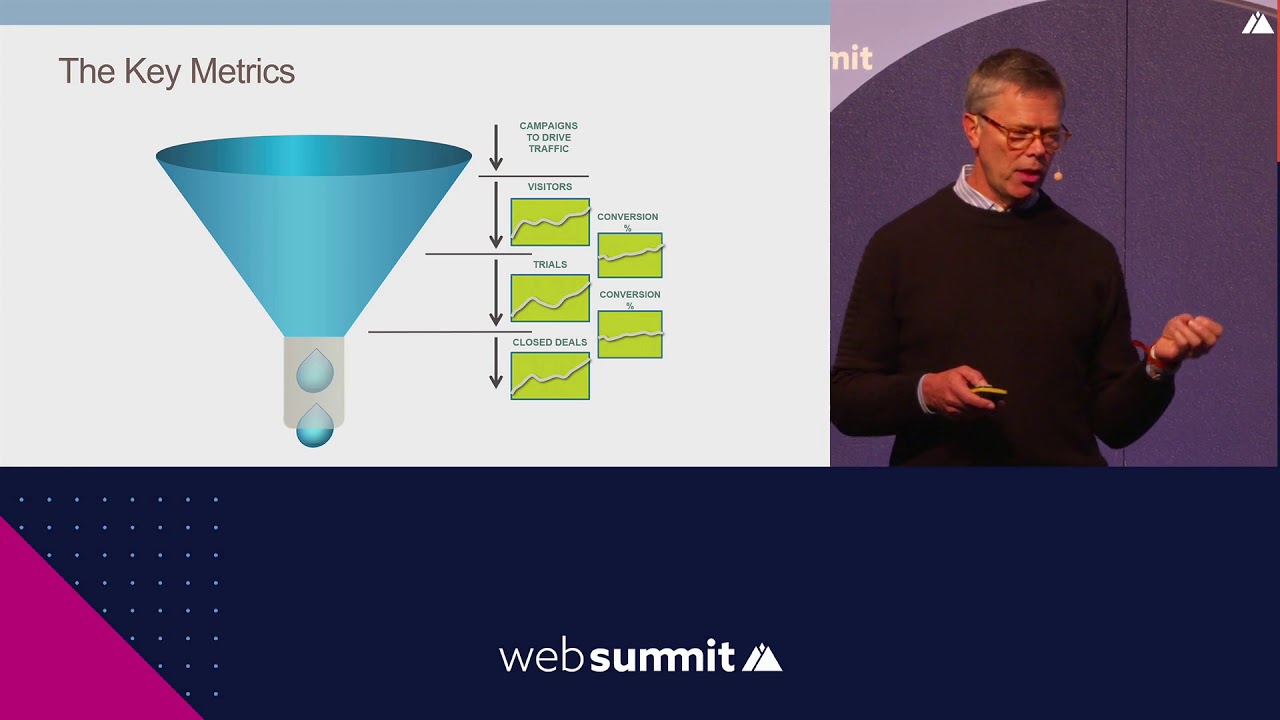
We're going to go through the SAS funnel. This is actually a framework that I created. It's inspired by Jaco van der Coogee from Selling by design or winning by design, and I have adapted this to speak specifically to the ideas in SAS Adamy and I'm very excited to take you through it.
So the first idea here is that there are two things in marketing that we need to think about as separate entities. They are often conflated as being the same thing, but they are different. They work together and they need to be separated in our minds so that we can understand how to place things in the right sequence and understand how to prioritize.
So the first is the funnel and the second is the channel. And the analogy that I use to describe this often is if we went bowling and if you're anything like me, you're really, really bad at bowling, or maybe you've got some young kids that you've gone bowling with. You're familiar with these gutter guards, right?
There's a button you can hit somewhere in the bowling alley and these little rails come up and they prevent you from putting balls in the gutter. So you have a higher likelihood of rolling a ball down the lane and knocking down a pin. That is essentially what your funnel is.
You're marketing funnel is infrastructure that you create around your business. That means that more of the attention that you are going out and spending time or money to generate has a likelihood of getting to the end of the buyer's journey and knocking down a pin or in this case, creating revenue for you. And the way that we want to think about creating that infrastructure is by creating content and systems that deliver that content to your audience such that they can have a meaningful engagement with you and your company regardless of where they are in their buyer's journey.
The problem that I see a lot of people have in their marketing is they only focus their marketing. Their messaging on people who are ready to buy their content is all about buy my product. Their ads are all about buying my product.
Their blog posts are all about buying my product. But guess what? 10 to 20% of the people in your market are ready to buy a product right now.
The other 80 to 90% are not. And so we're wasting a lot of time and energy by only focusing on that message. Or we could be creating a lot of a longer term strategy and nurturing more of those people.
If we zoom out and think about the buyer's journey. So the journey that everybody is going to ideally go through in our business is from awareness all the way through to promotion. And so at the awareness level, they are essentially just becoming aware of you and becoming aware of the problems that they didn't know they had.
And usually they're doing that through content. This is free content. It's available to them and they don't have to give us any information to get access to it.
So this could be a blog post, a podcast, a YouTube video, a tweet doesn't really matter what the medium is, but this is content that we publish out into the market that ideally is speaking to problems and speaking to topics that are relevant to our perfect customer. And the way I would think about this is what are the things that your perfect customer is laying awake at night worrying about and losing sleep over? I'm curious what type of.
Yes. In the chat, if you've ever watched one of Dan's YouTube videos, by the end of it you go, I don't even know I had that problem. And now I feel like I got to do something about it right.
That ever happened to you? That's by design. That is the purpose of this content.
We're starting to connect with people on a level of understanding the pains that they're dealing with, and then we're teaching them how to think about their business. And in doing so, we can start to teach them how to think about their business in a way that positions us as the only viable solution solving some of these problems. So that's the awareness level of the buyer's journey.
Next, we want to go to consideration. So when somebody has become aware that they have a problem, then there is the stage of considering whether or not to solve it. And we want to identify those people using a lead magnet.
What is a lead magnet? Well, it's really any piece of content that somebody can get access to in exchange for an email address. And so if you remember, believe it was Christine that came up and asked about, hey, you know, can I be asking people for an email address?
The answer is yes, but we want to do that using a lead magnet. And so if you've ever been on HubSpot blog, for example, you've seen what a lead magnet looks like. You Google how to run Facebook ads for my SAS company.
Inevitably, HubSpot has a blog post this ranking well for that you get on the blog post and what do you know? Here's a checklist, a ten step checklist to running amazing Facebook ads for your SAS company. Just give us your email and you can get access to it.
Well, you're like, well, I'm here to learn about Facebook ads. I guess I could use that checklist. You give them their email address, and now you've given them permission to market to you and a starting point for the conversation about how their product could help you solve that problem better.
So that's the consideration phase is helping give somebody an opportunity to take a small step towards solving that problem in exchange for a very small investment, which is their email, also known as permission to market. That then allows us to start bringing people to the decision phase. And the decision phase is where we start talking about our product, right?
So now that they've identified through the consideration phase that they want to solve a problem, now we can start to have the conversation about why our product is the best way to solve that problem. And what's interesting about this is if we do a lead magnet, right, and if we do the follow up sequence on a lead magnet, right, we can use the lead magnet to teach them the framework for solving the problem that positions us as the best solution for solving that problem. Right.
So if in my lead, me and I say these are the three things that you must do to improve your profitability as an agency. Oh, and by the way, we're the only product in the world that has all three of those things. Well, we've just created the framework in our customers mind, the quadrant that they're using to essentially evaluate products.
And we're educating them on how to think in a way that positions us as the leader. So that's kind of the top of the funnel, getting people from awareness through consideration and eventually into decision. And then of course, once they convert and either start a trial or get on a demo and convert into our product, then our responsibility is to activate them, to get them to the outcome that they wanted to get when they decided to opt in for our product.
And so that is our onboarding. And then of course, we want them to expand their usage of the product and ideally spend more money with us over time and of course, get to a place where they're promoting our products to other people because they're excited about what's going on. And that becomes a function of our customer success program.
So these are the pieces of content or that the infrastructure that needs to be created in order to create meaningful engagements for your clients. At every step of the buyer's journey, the infrastructure that's used to actually put this in front of them is along here on the right hand side. So if somebody lands on a blog post or lands on your website and consumes some content from you but does not give you their email address is not down with the lead magnet.
Well, we can get back in front of them now using remarketing, right. So whether that is on an owned channel or not, whether that's on your website or it's on our Facebook page or YouTube page, etc. , all of these platforms have pixels.
They have ways for you to capture that person's IP address and then create some simple rules that say, Hey, anybody in the last 30 days that looked at these five blog posts or that's watched a YouTube video for more than 30 seconds, I want you to put an ad in front of them. And generally, that ad is going to contain a lead magnet that is relevant to the problem that that content was speaking to. So we can give them another opportunity to opt in and take a first step to solving that problem once they've done so.
Now we have their email address and depending on what our deal size is, we might even ask them for their phone number or use a tool like clear bit to go and get their phone number and start giving that information to our sales team so that they can start calling these prospects that are clearly interested in solving a problem. And now they have a starting point for that conversation. But the very least, we can now send emails which cost basically nothing and start the conversation about, Hey, it looks like you're interested in solving this problem.
Here's some more great stuff that we've developed to help you get down that path and solve that problem and learn how to do it better. And by the way, we have this product here that we've built specifically for this reason. If you'd like to check it out, click here to start a trial or get into a demo from there.
Once they've onboarded, we can start to mix in in our messaging. And of course, once they get deeper into our community, we can even start to mixing groups and live events. So that is the funnel.
How do we guide people down through the buyer's journey right now? Once we've done all of this, the question is how do we get attention into the funnel, right? So this is the problem that I see a lot.
People do all of this stuff. They say, hey, we've got a website, we've got blog posts, we've got lead magnets, we've got all this remarketing set up, but we're not getting more customers. And the reason for that is because this is not going to generate attention for you.
It's possible that you'll have a blog post go viral. It's possible you have a social post go viral or YouTube video go viral, but it's not likely to happen. Not today in the world of organic distribution being very, very limited unless you're on an emerging channel like a Tik Tok, for example.
But the reality is if you're posting content on Facebook or Instagram or YouTube, it's very unlikely it's going to go viral unless we have a very deliberate strategy behind that. And so we have to leverage a channel to generate attention and start putting people into this funnel. All right.
So what are our channels? Well, there's basically four ways to go out and acquire attention for channels to choose from. We can pay for attention.
There are lots of people that have attention that they're willing to sell to us. Obviously, the obviously the ad platforms are a clear option here. We have Google, Facebook, YouTube, LinkedIn, Tik Tok, all kinds of people that are willing to take your money and give you very specific targeted advertising online.
You can buy billboards, newspaper ads, you can sponsor events. There's lots of people that you can pay for attention. So that's one option.
The challenge with paid is that it requires an outlay of capital before we can recoup that investment. So there is some risk here. But of course, figuring out paid can be an amazing channel because it's very predictable.
And if we can get the unique dynamics right and our tracking right, then we can start to really predict, okay, I put a dollar in and I get this many opportunities from that. If we understand our funnel economics, we can really start to have a gas pedal for our business. So paid is option number one.
Option number two is SEO. So we can go and compete for attention using SEO. Search engine optimization, of course, the thing that most of us think about when we look at SEO is Google.
But YouTube also is the second largest search engine in the world. We also have these platforms like Cap, Terra and G to crowd essentially, the question around SEO is where are people already going to search for answers to these questions? Where is their attention already going and how do we go and compete there to show up first for those keywords to be served to the audience that is using these tools to search for answers.
So SEO is option number two. Of course, the nice thing about SEO is if you can assert your position on keywords that have high volume, then this is very low cost traffic. The trouble with this is a lot of times there are some things that require a level of maturity that are necessary to rank for some of the best keywords in your industry.
So things like domain authority, backlinks, right, all of these factors that at times can take a while to develop in order to start competing for attention. So while this is a potentially very cost effective strategy, there can be a bit of a lag time between when we start investing in SEO and when we start reaping the benefits of it. The next channel is earned media and this is really what we talked about in our core targeting framework, right?
It's the question of asking who already has attention in our market and how do we go borrow it from them? How do we earn media from other people? How do we get on a podcast, get in a magazine, get a feature on a YouTube channel?
How do we get invited to speak on stage at an event? How do we go and earn media from people that already have attention? So this is PR and partnerships and really just kind of paying attention to where is the attention already been aggregated in our market.
So of course, the advantage to earned media is that it can be extremely cost effective. We can make the majority of our customer acquisition cost into some kind of a partnership or affiliate agreement, and it can be a very efficient way to get off the ground. The other thing that I love about urban media is that it is a great way to generate backlinks which can make a stacking SEO on top of this is that can channel very effective.
So there's a lot of reasons that I like SEO, but I like earned media better as a starting point, mostly because it can be a faster way to get results. If we can get on a podcast, then we will get long term benefits from that podcast. But we'll also generally get a short term influx of opportunities from the exposure that we get when that comes out.
So for me, this is probably one of the better channels when it comes to balancing risk, speed and longevity. It really kind of sits nicely in the middle. There's not a whole lot of downsides to this unless you're in an industry where there's just a lot of difficulty around developing partnerships are there's some restrictions around what is possible when it comes to creating partnerships.
So financial services or medical can be some of those tricky areas where you might be throttled by regulation. The last channel is cold, right? We can just go grab and demand attention.
There are this is getting more and more difficult to do with some of the regulations that are coming out around anti-spam and GDPR. But this would be kind of your old school sales tactic of picking up the phone, sending emails, getting on LinkedIn, and just going directly to the person that you know is a perfect customer and interrupting them with a message to try and get them engaging in your sales process. This still works.
It's definitely a valid option, especially if you have a large deal sizes that are south of five or $10,000 a year. This can be a very viable option and like paid it can be extremely predictable. And I know of companies that have scaled to very, very large revenue numbers, only focusing on cold outbound, but it does require a lot of discipline and it can be very expensive to do if you are outsourcing this to a sales team.
So are some considerations around cold outreach to determine whether or not they're right for you. So the idea here is that in order to get started, we want to start step one by choosing one channel, right? One channel, just like the scaling credo, one channel, and just really doubling down on that channel and figuring out how to generate and accelerate the rate at which we generate attention for our business.
And then we want to start building out our funnel. And generally, generally we want to start building out our funnel from the middle out. So we want to start with, of course, how we talk about our product.
This is our website, right? The messaging that is there for people who are ready to make a decision. And then we want to start to expand out based on where the weak point is.
If we're having a really, really poor activation, we want to focus down on the bottom of the funnel. If we're having, you know, good activation, expense or attention. But we're struggling with converting our traffic and we want to start looking up the funnel and start building that out.
The exception to this rule is if we really have very, very little traffic coming to the website, but generally we want to start building our funnel from the middle out. So what I want to ask everyone to do for a moment here is sit back and do an audit of your own funnel. I want you to think about which area of my business, which area of my funnel is the weakest right now and just score everything using kind of a red, yellow, green.
So red being this is nonexistent or it's not working at all, yellow being we've got something here but you know there's kind of some room for improvement and green being this is good it's dialed I'm really happy with where this is. And essentially what we're going to do here is kind of go through and highlight each of the elements that we have. So let's think about like content.
Am I creating any content that's free and unguarded? Or if the answer is no, this might be red. Am I doing remarketing?
No, this is red. Do have a lead magnet. Yeah, I've got one button.
Not many people are downloading it. It's not really a good conversation starter for my products. Maybe that's yellow.
Do I have an email sequence afterwards? No, I don't. That's a red.
But we are doing some phone calls to people. We don't have a good process for it. Right.
How do I feel about my website? It's okay. But you know, I think I've learned some things today that tell me I need to go and make some improvements.
So one by one, I just want you to kind of go through and start giving each of these a color score so that when you zoom out and look at your funnel, kind of be clear to you, where are the weak points? Where do I need to be kind of plugging some holes? And then when you think about prioritization, again, think about working from the middle, middle out like it's Pied Piper and you're on the Silicon Valley show, middle out, baby.
That's what we're going to do. And then the last thing I want you to do is pick the one channel that you believe is going to be the right starting point for you. And the reality is, especially if your deal size is higher, there isn't necessarily a wrong answer around your channels.
It doesn't really matter what you pick first. Even the wrong channel executed consistently over the course of time, you can generally find a way to make it work, but choose the channel that you're most excited about committing to for the next year. So I'm going to put a couple of minutes on the clock here.
GJ, DJ Sham is going to roll some working music and I'm going to ask everyone to just go through and color code your funnel and pick the one channel you're going to focus on. Here we go. Hey there.
Hope you enjoyed that. Very powerful training with Coach Marcel. This is the beginning of the Legion summer, where every week Ruby launching new, powerful Legion specific strategies for you to employ in your business.
Next week, I'm going to be sharing my personal lead magnet builder, what I call the beacon. Lead magnet strategies help me create hundreds of very potent lead magnets that my ideal customers literally would pay me to download the generated millions of dollars in profit. Now, if lead generation is a challenge that you want to solve right now in your business, be sure to check out the lightning bolt lead gen stack.
You can click the link below to learn more about that. But we put that together to help you make lead gen a problem of the past. Click the link.
Check it out. I'll see you in the next video.