A mysterious land and culture that is the origin of our very society, cultures, and religions. A place in time so old that we can only piece together its history through myths and legends. And yet it's a time and place so important to the history of mankind that we should be focusing all our efforts to uncover the truth, and that truth is, in fact, so amazing, so bizarre, that it staggers belief.
Ancient aliens came thousands of years ago. They genetically engineered a slave species we now call the human race. They were gods in the land with incredible technology and wisdom, and they've left their mark for us to find.
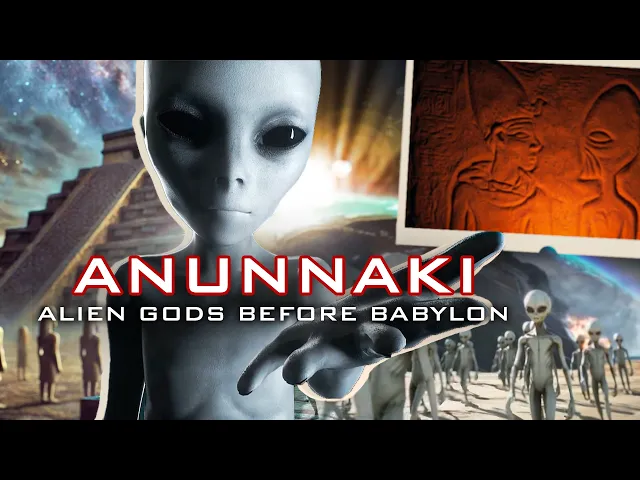
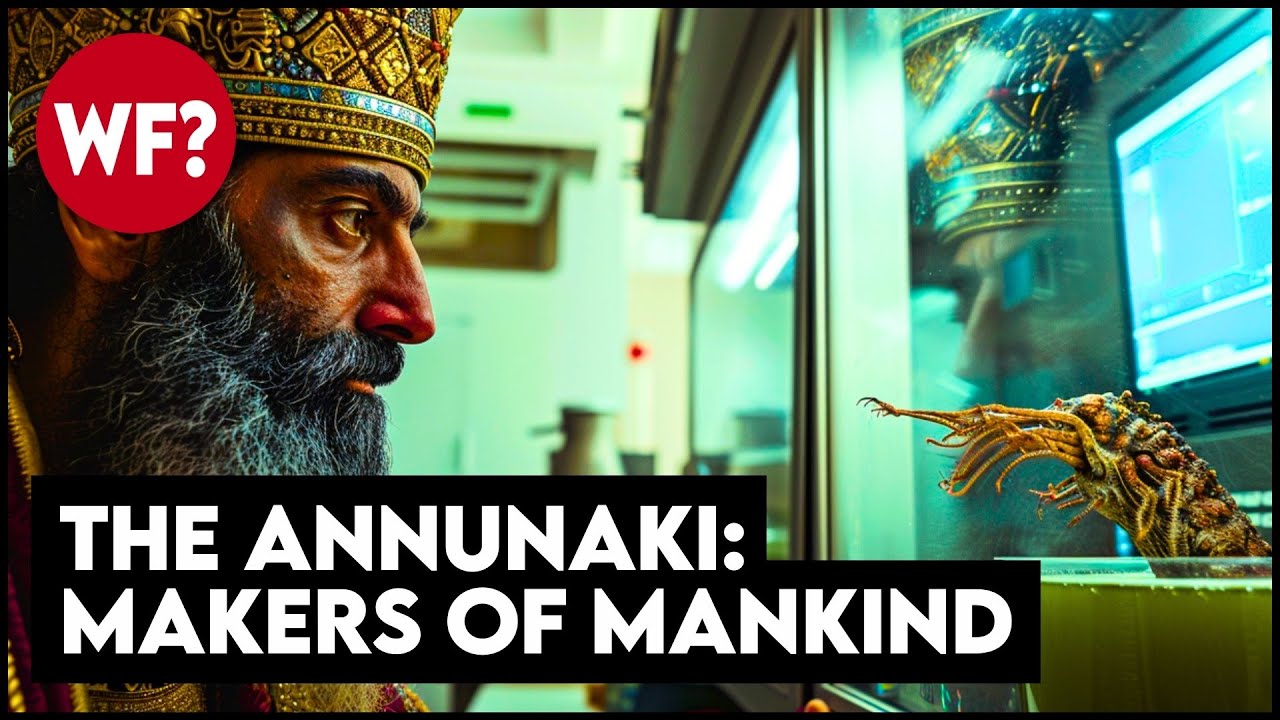
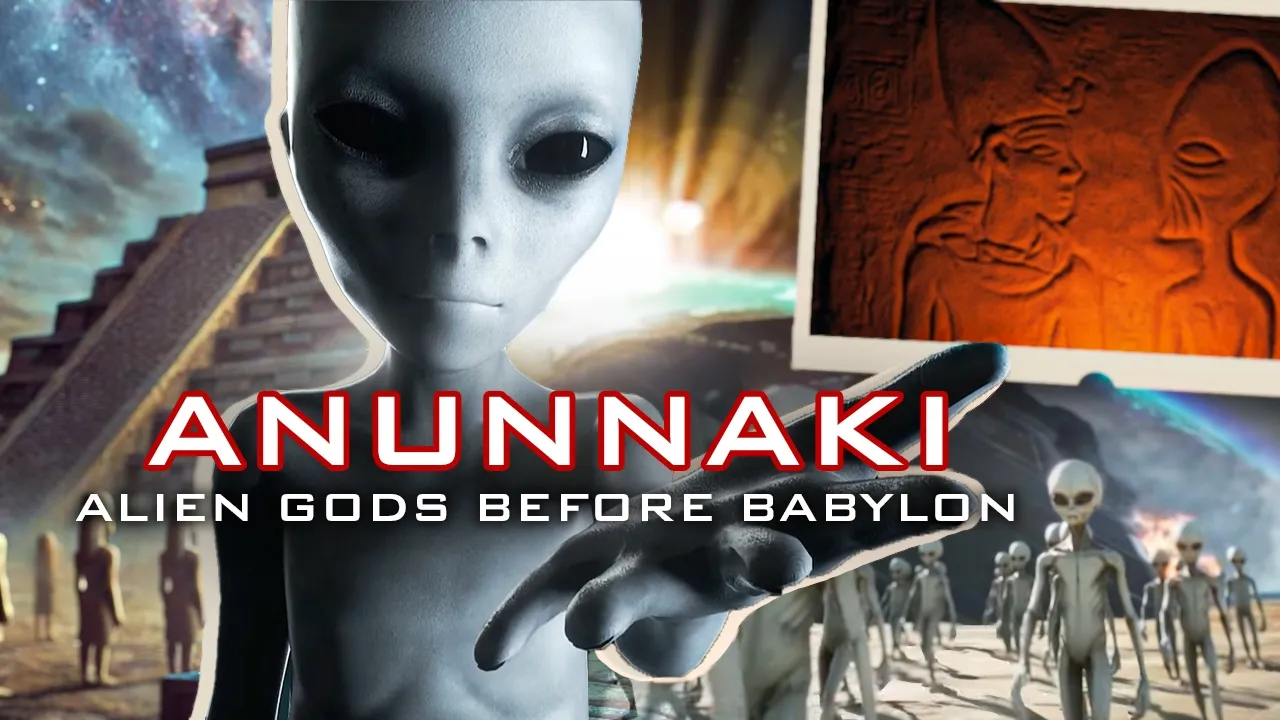
They are the ancient Mesopotamian deities we call the Anunnaki. The Anunnaki is a term that refers to a group of ancient deities from Mesopotamian mythology. The term is a combination of two words, Anu and naki, which translates to, the extraterrestrial race who came to Earth, or simply put, the visitors.
The fact that these beings are believed to have come from another planet is what sets them apart from most other mythological gods. According to ancient Sumerian texts, the Anunnaki were a group of beings who traveled to Earth from the planet Nibiru. This planet is believed to have a highly elliptical orbit, which means that it only enters our solar system at intervals of several thousand years.
Nibiru is said to be the original home of the Anunnaki, who supposedly migrated to Earth in search of gold and other precious resources. The Anunnaki are believed to have played a significant role in shaping human civilization. According to ancient texts, they gifted humanity with knowledge in various fields such as agriculture, metalworking, and medicine.
They were also credited with the creation of the first humans, whom the Sumerians referred to as the Lulu Amelu, or the primitive worker. One of the most prominent figures of the Anunnaki pantheon is the god Anu. According to Sumerian mythology, Anu was the god of the heavens and he was believed to have been the ruler of the Anunnaki.
Another significant figure was Enki, the god of wisdom, creativity, and fresh water. Enki was said to have created humans with the help of his sister, Ninhursag. The myth of the Anunnaki has also garnered attention due to the suggestion that these beings may have been responsible for the development of advanced technologies, including space travel.
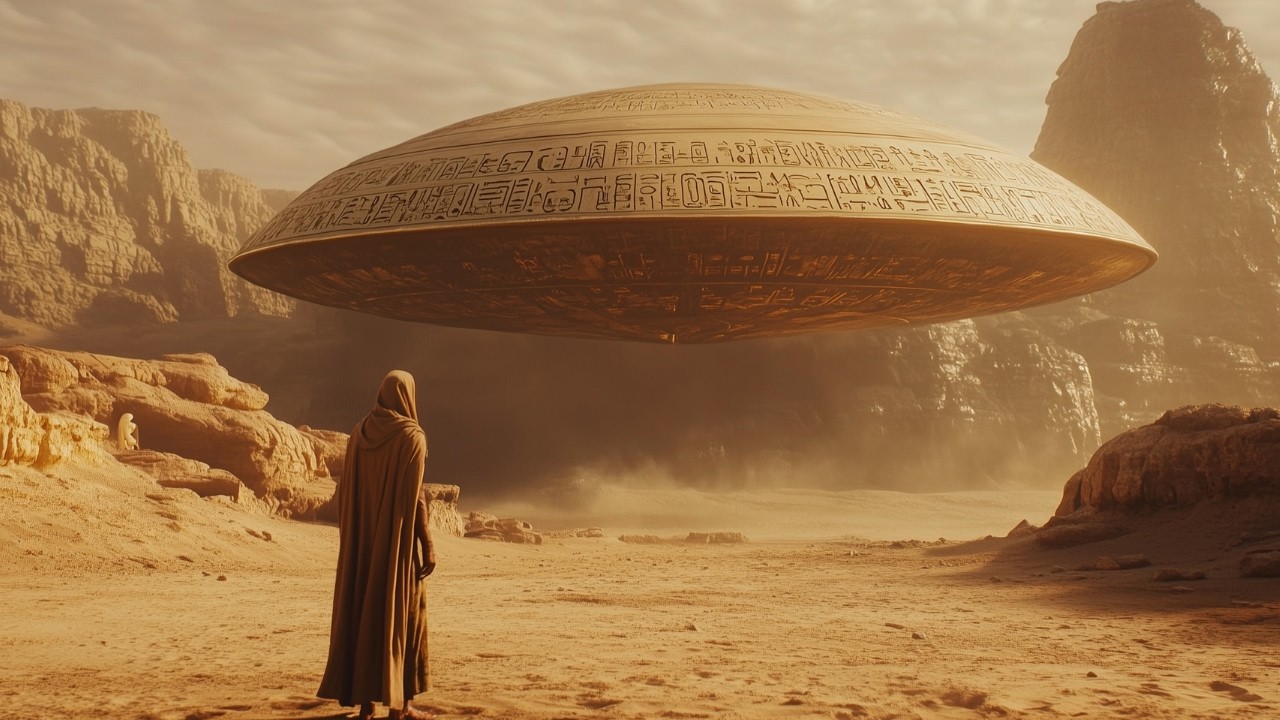
It's claimed that the tablets found in ancient Sumerian cities contain detailed information on spacecraft construction and piloting techniques. Despite the mythology surrounding the Anunnaki, there is little scientific evidence to support the notion that these beings were real. However, some researchers have pointed out that the possibility of extraterrestrial life cannot be completely discounted.
The idea that advanced civilizations may have visited Earth in the past is not easily dismissed, especially considering the wealth of ancient evidence that suggests the presence of highly advanced and sophisticated cultures. Skeptics have also suggested that the Anunnaki legend is nothing more than a fanciful tale created by ancient storytellers. They argue that the creation story of the Anunnaki is simply an allegory for the natural processes that gave rise to life on Earth, with the gods representing different aspects of the natural world.
Regardless of whether the Anunnaki were real or not, the myths surrounding them has left an indelible mark on human history. The story of these otherworldly beings may have played a vital role in shaping the religious beliefs of ancient civilizations, and continues to capture the imagination of people today. In recent years, the concept of the Anunnaki has gained attention in pop culture with numerous books, movies, and TV shows featuring them as a central theme.
This renewed interest in the Anunnaki has also led to the development of various conspiracy theories, with some people suggesting that the truth about these beings has been suppressed by governments and other powerful organizations. While the concept of the Anunnaki may be considered fringe by most academics, there is no denying the fascination that it holds for many people. The idea of extraterrestrial life is one that has long captivated the minds of humans, and the story of the Anunnaki is a testament to the enduring power of this idea.
The story of the Anunnaki is a testament to the enduring power of the idea of extraterrestrial life, and serves as a reminder of the endless mystery that surrounds the universe. However, we do not need to understand Mesopotamian history in order to get into the reality of just who or what the Anunnaki were. Mesopotamia is a rich historical region that is located in the Middle East, specifically in the areas that are now known as Iraq, Iran, Kuwait, and Syria.
The word Mesopotamia is derived from the Greek language, and it means the land between the rivers, referring to the fertile lands located between the Tigris and Euphrates Rivers. Mesopotamia is widely considered as one of the cradles of human civilization, and strangely, many of the world's most important inventions and innovations were developed here, as if there were something very special here. The history of Mesopotamia can be traced back to the Neolithic period, which began around 10,000 BCE.
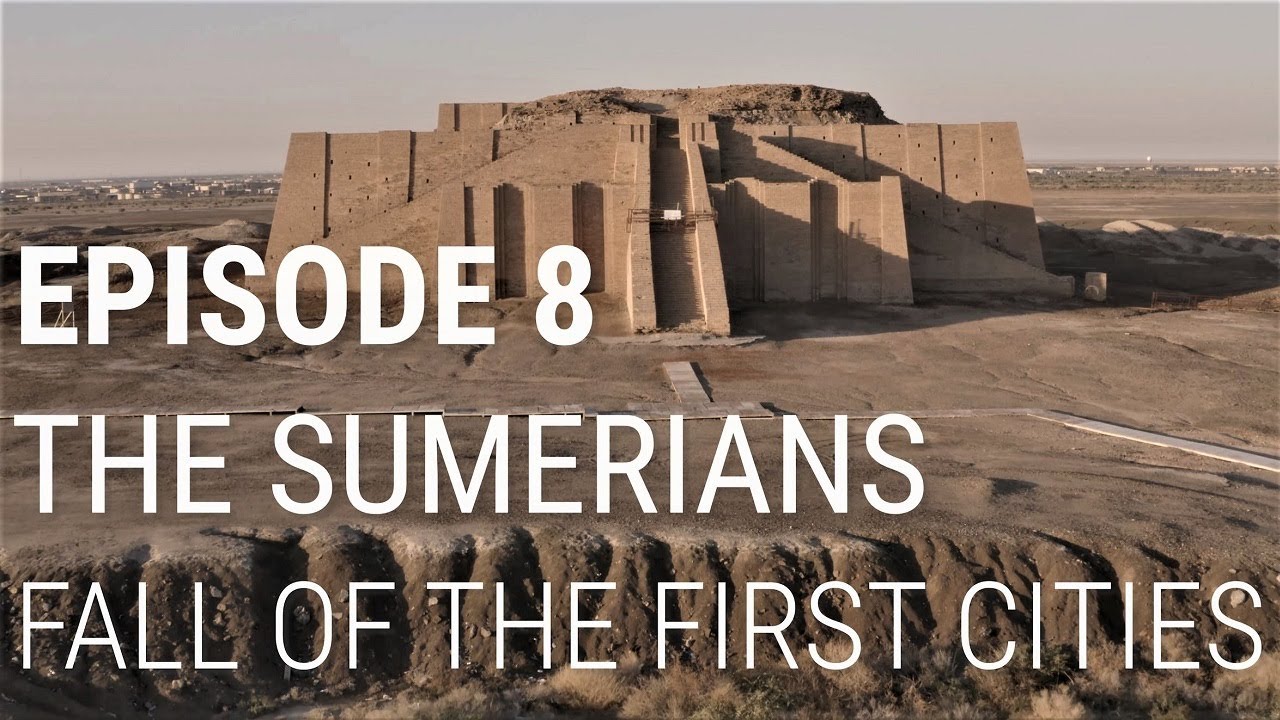
At this time, early human societies were emerging in the area, and they engaged in hunting, agriculture, and pastoralism. The first known civilization in Mesopotamia was the Sumerian civilization, which emerged around 4,000 BCE. The Sumerians developed a complex society with a system of writing, a religion, and a legal system that influenced later civilizations.
The Sumerians developed a writing system that used cuneiform, which involved making marks on clay tablets. This writing system was used throughout Mesopotamia for years. Everything about this culture was so far in advance of every other culture on the planet.
Around 2334 BCE, the Akkadian Empire was established under the rule of Sargon of Akkad. The Akkadians were able to conquer the Sumerians and established the first empire in Mesopotamia. The Akkadians had a highly centralized government and a strong military, which allowed them to maintain control over their territories.
During this time, many technological advancements were made, including the development of bronze tools and weapons. The Babylonian Empire was established in Mesopotamia in the early second millennium BCE. The Babylonians were known for their advanced scientific knowledge, including the development of astronomy and mathematics.
The Babylonians developed a code of law known as the Code of Hammurabi, which is considered one of the oldest legal systems in the world. The Babylonians also built many impressive structures, including the famous Hanging Gardens of Babylon. The Assyrian Empire was established in Mesopotamia in the 10th century BCE.
The Assyrians were known for their highly organized military and their brutal conquests. They were able to establish one of the largest empires in the ancient world, stretching from Mesopotamia to the Mediterranean. The Assyrians were also known for their impressive architecture, including large palaces and temples.
The Persians conquered Mesopotamia in the sixth century BCE. The Persians were known for their advanced military tactics and their ability to conquer vast territories. They developed a highly centralized government with a sophisticated bureaucracy and a system of laws.
The Persian empire was divided into provinces, each of which was ruled by a satrap or governor. The Persians also built many impressive structures, including the famous palace complex at Persepolis. In the fourth century BCE, Alexander the Great conquered Mesopotamia.
Alexander was known for his military prowess and his ability to conquer vast territories. He established the city of Alexandria, which became one of the most important cities in the ancient world. Alexander died in Mesopotamia in 323 BCE, and his empire was divided among his generals.
Mesopotamia became part of the Seleucid Empire, which was established by one of Alexander's generals, Seleucus. The Seleucids were able to maintain control over their territories for many years until they were eventually conquered by the Parthians. The Parthians were known for their skill in archery and horseback riding.
They established a highly decentralized government with local rulers maintaining control over their territories. The Parthians were able to maintain control over Mesopotamia for many years until they were eventually conquered by the Sassanid Empire. The Sassanid Empire was established in Mesopotamia in the third century CE.
The Sassanids were known for their advanced military tactics and their highly centralized government. They developed a sophisticated administrative system and a code of law. The Sassanids also made many architectural advancements, including the construction of large palaces and religious structures.
In conclusion, Mesopotamia is a region with a rich and varied history that spans thousands of years, and was by far the most advanced civilization on the planet for thousands of years. Every subsequent Mesopotamian empire did well because of the knowledge and power of those before it. So that is a very brief history of Mesopotamia, but what about their gods?
These are the beings claimed to have been aliens, and so we ought to learn a little bit about them and their abilities. The Anunnaki gods have been an important figure in Mesopotamian mythology. The term Anunnaki has been translated to mean the ones who came from heaven to Earth, and is referred to as the deities of ancient Sumerian, Akkadian, Assyrian, and Babylonian cultures.
However, while they share the same name, they're known to have been worshiped differently in each civilization. The Anunnaki gods are commonly identified with Anu, the god of the heavens, and his sons Enlil, the god of air and wind, and Enki, the god of water and wisdom. However, the Anunnaki as a group can be categorized into several main deities who are recognized for their distinct roles and personalities.
The chief of the Anunnaki was Anu, who was also known as the god of the sky and held the highest position in the divine hierarchy. Anu was acknowledged widely and prayed to in the ancient Near East for his power and wisdom. Another important god of the Anunnaki was Enlil, who was regarded as the god of the air, wind, and storms.
Enlil was seen as the supreme god of the region of Sumer, and was considered the god responsible for the creation of mankind. Enki, the third important Anunnaki god, was the god of water, wisdom, and as well the god responsible for the fertilization and growth of crops. Enki was often depicted with a flowing beard, symbolizing the fertility of the Earth, abundant harvests, and an abundant source of life.
Besides the aforementioned three major gods, there were other deities in the pantheon of the Anunnaki gods that played vital roles in the Mesopotamian mythology. Ninhursag, the goddess of the Earth, also known as Key, was responsible for creating and giving birth to all living creatures. And Erta, the god of war and hunting, was also an important Anunnaki deity who had a great impact on the Assyrian and Babylonian traditions.
The goddess of fertility, Ishtar, was also popular and was known as the Queen of Heaven. Ishtar was associated with sexuality and procreation, and was revered in the ancient Near East as a powerful goddess capable of granting fertility to women. Another important goddess in the Anunnaki pantheon was Nammu.
She was regarded as the mother goddess from whom all the other gods and goddesses, including the three major Anunnaki, were created. Apart from the Anunnaki gods' role in creation and fertility, their importance can be traced to their involvement in human affairs. The Anunnaki gods were believed to intervene in human lives by giving them favorable or unfavorable results based on their actions.
They were also believed to have had the power to decipher the future, predict events, and guide individuals and societies in their undertakings. The Anunnaki gods were also a significant figure in the development of culture and religious practices in the ancient Near East. They were regarded as the base of society, and inspired the development of rituals, prayers, festivals, and other religious ceremonies.
Moreover, the Anunnaki gods were responsible for the rise and fall of dynasties and empires in the ancient Near East. Political figures, kings or priests, were often seen invoking their aid for their ambition and goals. Furthermore, the Anunnaki gods had an impact on the Mesopotamian civilization's beliefs and values.
They were seen as the guardians of morality and justice, and played a critical role in shaping the standards of society. The importance of living in ethical life, honesty, and altruism, was emphasized in their teachings and practices. It's believed that the Anunnaki gods were responsible for maintaining the order of the universe, and living a moral life was seen as an act of obedience to their will.
Lastly, the worship of Anunnaki gods continued beyond the ancient Near East classical period, inspiring the rise of other religions and beliefs such as Zoroastrianism and Western monotheism. These religions carry traces of the ancient Near East beliefs, and the Anunnaki gods are seen as the predecessors responsible for the development of the divine theologies that later came to dominate Western and Near East religions. To conclude, the Anunnaki gods have played a significant role in creating, fostering, and subduing the human race.
If it's true that these gods were in fact alien beings, then we really ought to know about it. And so the question is, did aliens come to Earth in ancient times? The idea of extraterrestrial life and their possible visitations to Earth has been an intriguing topic of interest for years among many scientists and researchers.
While many believe that the concept of aliens visiting Earth in ancient times is a myth or a figment of the imagination, there is ample evidence to support the theory. First and foremost, there are various historical accounts and physical evidence that support the theory of extraterrestrial life visiting Earth. From ancient Egyptian hieroglyphs to prehistoric cave paintings, we can find numerous references and depictions of what appear to be alien life forms and flying objects.
In fact, ancient Indian texts such as the Vedas mention flying machines known as vimanas that were allegedly used by gods and demigods, suggesting that these machines may have been of extraterrestrial origin. In truth, almost every religion and history on the planet maintains that our gods came from somewhere other than Earth. Furthermore, many ancient structures such as the pyramids of Egypt and Machu Picchu in Peru are believed to have been built with the help of advanced technologies that were beyond the capabilities of humans at the time.
Some researchers speculate that these structures may have been constructed with the assistance of extraterrestrial beings that possess superior knowledge and technology. Another piece of evidence that supports the theory of alien visitations is the discovery of strange metallic objects and artifacts in various archeological sites across the globe. Some of these artifacts defy explanation, such as the Antikythera mechanism, an ancient that was discovered in 1901.
This device is believed to have been designed to track the movements of celestial bodies, and has been regarded by some as proof of high level scientific knowledge in ancient times. Additionally, there are various accounts in different cultures that describe strange spacecraft or flying objects that visited Earth in ancient times. For instance, the ancient Indian epic Ramayana describes an aircraft named Pushpaka Vimana that could travel between different planets and dimensions.
Similarly, the Bible mentions chariots of fire and angels descending from the heavens, which many interpret as alien spacecraft. Moreover, some ancient human skulls have displayed unusual characteristics that cannot be explained by known scientific or medical conditions. One such example is the Paracas skulls found in Peru, which have elongated skulls that resemble those of extraterrestrial beings depicted in other cultures around the world.
While some scientists claim that these skulls are evidence of an ancient human practice of skull modification, some researchers argue that they may be of extraterrestrial origin. Furthermore, there are numerous accounts of ancient humans being visited or abducted by extraterrestrial beings in various mythologies and stories. For example, the story of the abduction of the Greek goddess Persephone by Hades is often interpreted as a metaphor for alien abduction.
Similarly, the Dogon Tribe in Africa has been found to have extensive knowledge of the Sirius star system, including information that was not known by modern science until the 20th century. In addition, it has been found that many ancient temples and structures are built in specific locations that align with astronomical events, such as solstice and equinoxes. Some researchers believe that these structures may have been built as landing sites or communication beacons to extraterrestrial beings who could navigate their way to Earth using such markers.
Moreover, many ancient texts such as the Sumerian tablets and the Book of Enoch describe the existence of advanced civilizations and technologies that were far beyond the scope of human development at the time. Some researchers speculate that these stories may be based on actual interactions and experiences with extraterrestrial beings. Another indication that supports the theory of alien visitations is the discovery of biological anomalies in various parts of the world.
For instance, the Nazca Lines in Peru depict giant figures that can only be viewed from above, leading researchers to speculate that they may have been designed to be seen by extraterrestrial beings in spacecraft. Additionally, some researchers have found bacterial organisms that are believed to have extraterrestrial origin in meteorites that have landed on Earth. Lastly, millions of people have reported personal experiences of being in contact with extraterrestrial beings, including sightings of UFOs and aliens.
While these claims are often dismissed as false or exaggerated, many people worldwide have reported similar experiences, suggesting that there may be some shared truth to them. In conclusion, while the idea of aliens visiting Earth in ancient times may seem outlandish to some, there is ample historical, physical, and anecdotal evidence that supports the idea. So were the Anunnaki aliens?
Well, there's one man who spent years trying to prove it: Zecharia Sitchin. Zecharia Sitchin was a renowned scholar and author who spent much of his career researching ancient Sumerian mythology and history. One of his most well-known theories was that the Anunnaki, a group of mythological beings in Sumerian mythology, were ancient astronauts who visited Earth long ago.
To begin with, Sitchin's research into Sumerian mythology was meticulous and extensive. He translated many of the ancient Sumerian texts himself, and spent years studying the culture and history of the Sumerian people. Through this research, he was able to gain a deep understanding of the mythology surrounding the Anunnaki.
One of the key pieces of evidence that Sitchin used to support his theory was the Sumerian creation myth. This myth tells the story of how the Anunnaki created humans as a labor force to work in their mines. Sitchin believed that this story was not just a myth, but was a historical account of the Anunnaki's activities on Earth.
He argued that the Anunnaki were ancient beings who visited Earth in the distant past. Sitchin also pointed to the fact that the Sumerian texts described the Anunnaki as having advanced technology. They were said to have been able to travel through space and manipulate matter at will.
This, Sitchin argued, was evidence that the Anunnaki were not simply mythical beings, but were in fact ancient astronauts who possessed advanced technology. Another piece of evidence that Sitchin used to support his theory was the fact that the Sumerians themselves had a sophisticated understanding of astronomy. They were able to accurately map the movements of the planets and stars, something that modern scientists have only been able to do in the last few centuries.
Sitchin argued that this knowledge was likely passed down to the Sumerians by the Anunnaki, who had advanced knowledge of astronomy due to their ability to travel through space. Sitchin also pointed to the fact that the Sumerian texts described the Anunnaki as having a complex social and political structure. They were said to have had a king, multiple gods, and a complex hierarchy.
Sitchin argued that this was evidence that the Anunnaki were not just mythical beings, but were instead a complex society that existed in the distant past. Another piece of evidence that Sitchin used to support his theory was the fact that the Anunnaki were described in the Sumerian texts as having a strong interest in mining. They were said to have created humans to work in their mines, and were known to have a great deal of expertise in mining and metallurgy.
Sitchin argued that this was evidence that the Anunnaki had a deep understanding of the Earth and its resources, which was likely gained through their activities on Earth in the distant past. Sitchin also pointed to the fact that the Sumerian texts described the Anunnaki as having a strong interest in genetics and biotechnologies. They were said to have created humans by combining their own DNA with that of the locally available hominids.
This, Sitchin argued, was evidence that the Anunnaki were not just mythical beings, but were instead ancient astronauts who possessed advanced knowledge of genetics and biotechnology. Another piece of evidence that Sitchin used to support his theory was the fact that the Sumerian texts described the Anunnaki was having a long lifespan. They were said to have lived for thousands of years, something that was not possible for humans at the time.
Sitchin argued that this was evidence that the Anunnaki were not just mythical beings, but were instead ancient astronauts who possessed advanced knowledge of medicine and longevity. Sitchin also pointed to the fact that the Sumerian texts described the Anunnaki as having a strong interest in agriculture. They were said to have taught humans how to farm, and were known to study the Earth and its ecosystems.
This, Sitchin argued, was evidence that the Anunnaki had a deep understanding of the natural world, which was, again, likely gained through their activities on Earth in the distant past. Finally, Sitchin's theory is supported by the fact that it offers a coherent and logical explanation for many of the mysteries surrounding ancient Sumerian mythology and history. By viewing the Anunnaki as ancient astronauts who visited Earth in the distant past, the mysteries were finally explained.
There is another group of aliens in ancient Mesopotamia known as the Igigi, who were said to be servants of the Anunnaki. The Igigi of Sumeria have in fact been a matter of interest for researchers and enthusiasts for years. There have been debates about whether they were of extraterrestrial origin or simply mythological gods.
The Sumerians had a pantheon of deities, of which the Igigi were an important group of gods. These gods were believed to dwell in the sky, which many researchers identify as an indication of their extraterrestrial origin. Additionally, in the mythological tales from the Sumerian civilization, the Igigi were described as having the ability to fly, which was a technology unknown to humans at the time.
These gods were also linked to planet Jupiter, which adds to the theory that they were a group of extraterrestrial beings with advanced technology. Furthermore, the Sumerian gods were said to have come down to Earth to provide knowledge and wisdom to humankind, which is a common theme among extraterrestrial theories. Their technology seemed so advanced that the Sumerians could not comprehend or replicate it, leading them to believe it was magic or supernatural powers.
Another important point in considering whether the Igigi were aliens is their appearance. In depictions in Sumerian artwork, they are often shown with wings and with a contrasting appearance to other deities, suggesting that they may not have originated from Earth. Moreover, the Sumerians believe that the Igigi had the ability to move between the heavens and the underworld.
This idea is consistent with modern theories of alien life, since extraterrestrial entities are believed to have the capability of traveling between different dimensions. In addition, the Igigi were often associated with the creation of the world. While the Sumerians credited them with the creation of human beings, the similarity between the Sumerian myths of creation with other ancient civilizations, such as the Babylonians and Egyptians, indicate that their gods may have played a crucial role in the creation of life on Earth, suggesting that they had the power to create life forms on our planet.
Furthermore, the Igigi were known for possessing knowledge and learning that was beyond what the humans of Sumeria were capable of comprehending, suggesting that their wisdom and intelligence surpassed that of humans. The Igigi were also depicted as having superior power, intelligence, and abilities, which were beyond even the most advanced technology of their time. They were often depicted with advanced weaponry, suggesting that their technology was much more advanced than what existed on Earth.
Additionally, the Sumerian gods were known for being able to assist in the building of large structures such as temples and ziggurats, which were believed to be beyond human capabilities at that time, again, highlighting their advanced abilities. Finally, modern day scientific investigations have found similarities between Sumer's creation stories and science fiction scenarios, including alien intervention. This discovery provides a compelling argument that the Igigi were indeed extraterrestrial entities.
In conclusion, the evidence presented suggests that the Igigi of Sumeria were indeed aliens. Their abilities to fly, move between dimensions, advanced technology, and superiority to humans all point towards an extraterrestrial origin. Furthermore, their association with the creation of the world and the similarities with other ancient civilizations add weight to the theory that they played a crucial role in shaping human civilization and life on Earth.
Therefore, it's highly likely that the Igigi of Sumeria were in fact extraterrestrial beings. So there's ample evidence to suggest the Anunnaki and other gods of Mesopotamia could have been aliens. What about the rest of the planet?
While much attention is given to the Anunnaki, there are other pieces of evidence that suggest they visited other parts of the world. One piece of evidence that points towards ancient aliens is the ancient artifacts that have been found around the world. These artifacts are often created with materials and technology that were not available to the ancient civilizations believed to have created them.
For example, there are ancient objects that contain intricate metalwork. Tools available in the time period these artifacts were created were made of stone. This suggests that the creators of these objects had access to advanced technology, and it's possible that they had help from extraterrestrial beings.
There are also ancient texts and myths that describe encounters with beings from other worlds. These texts and myths are found in cultures around the world and describe beings with advanced technology and knowledge. Some of these beings are even described as having physical features that are not human.
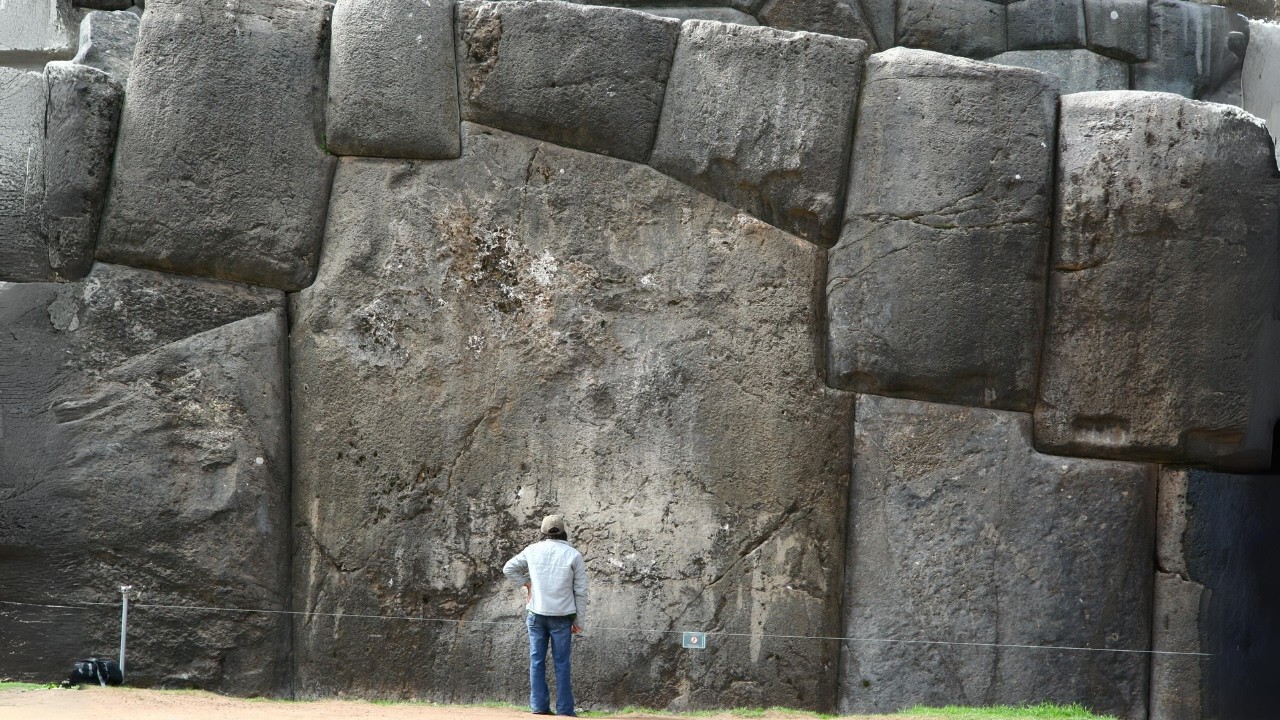
These encounters are often described in detail, providing a wealth of information about the beings that visited Earth in ancient times. Megalithic structures found around the world are another piece of evidence that suggests the existence of ancient aliens. These structures were built using enormous stones that would've been difficult for ancient civilizations to move and carve without the use of advanced tools.
The precision of these structures suggests that they were created with the help of beings who had access to advanced technology. The Nazca Lines in Peru are another piece of evidence that suggests ancient aliens visited Earth. These lines are enormous geoglyphs that can only be seen from the air.
The precision and complexity of the design suggests that they were created with the help of advanced technology and knowledge. The Dogu figurines found in Japan are another piece of evidence that suggests the existence of ancient aliens. These figurines depict beings with large eyes and elongated heads, and some researchers believed they were inspired by encounters with extraterrestrial beings.
The Dogu figurines also feature advanced technology such as helmets with built-in lighting systems. The Pumapunku Ruins in Bolivia are another piece of evidence that suggests the existence of ancient aliens. These ruins feature precision stonework that could not have been created by ancient civilizations without the use of advanced technology.
The precision of the stonework is so precise that it would be difficult to replicate even with modern technology. In fact, we could go to any culture in any time and reveal ancient alien influence. Religions alone are full of them.
One assertion that has gained popularity among some individuals is the idea that religions of the world are based on aliens. To begin, it is necessary to define what is meant by aliens. Aliens are commonly thought of as extraterrestrial beings, beings that are not from Earth.
This definition leaves the possibility that gods and angels could be defined as alien. Many proponents of the idea that religions are based on aliens point to ancient texts and artwork as evidence. The ancient astronaut theory proposes that extraterrestrial beings visited Earth in the past, interacting with and influencing human civilizations.
Proponents of this theory often point to artwork and carvings that they claim depict flying machines or beings wearing spacesuits. Another piece of evidence is the idea of a missing link in human evolution. Some proponents of this theory claim that the missing link is not a biological link, but an extraterrestrial one.
They suggest that extraterrestrial beings intervened in human evolution, bringing about the rapid development of human consciousness and intelligence. Another argument often used is the concept of godly intervention in human history. Proponents of this theory often point to stories in religious texts where gods intervene in human affairs, performing miracles or providing humanity with knowledge.
One of the most compelling pieces of evidence used to support the idea that religions are based on aliens is alleged sightings of extraterrestrial beings and UFOs. Proponents of this theory argue that these sightings, coupled with ancient artwork and religious stories, provide a comprehensive picture of extraterrestrial influence on human civilization. Of course, one strong element of ancient aliens and religion is the existence of angels, and these often appear very much like the gods of the Anunnaki.
To begin with, angels are often described as beings who come from another realm. In Christianity, for example, angels are believed to inhabit the spiritual realm and to have the ability to materialize when necessary. This concept of materializing is similar to how extraterrestrial beings are believed to travel in UFOs or by other advanced means, appearing in our physical realm from another world.
Moreover, many ancient religious texts describe angels as having supernatural powers, such as flying or telekinesis, which suggests that they're not bound by the same physical laws as humans. This is also true for aliens, as they possess advanced technology and abilities that allow them to traverse space. Furthermore, the idea of angels as aliens is not limited to Christianity alone.
Many other religions also have stories about celestial beings who visit Earth. Hinduism, for instance, has accounts of gods and goddesses visiting Earth in human form, while Islam records a heavenly messenger communicating with the Prophet Muhammad. It's also notable that many accounts of alien sightings describe beings with similar characteristics to those attributed to angels in religious texts.
These include descriptions of beings with wings, halos, and glowing auras. Such similarities suggest that these sightings could be interpreted through a religious lens, especially since they're often framed as coming from another realm or dimension. It's important to note, however, that the concept of aliens and angels would be a syncretic interpretation of religious and scientific narratives.
Syncretism is the merging of two or more different belief systems, which could be the case in how we understand the connection between angels and aliens. While this might be seen as problematic from a theological perspective, it's worth considering the ways in which science and religion can inform each other. In religious texts, angels are often described as bringers of good news and blessings.
In the same way, alien sightings are sometimes depicted as transformative experiences that inspire awe and wonder. To some extent, both angels and aliens could be seen as symbols of hope and possibility. They both represent an unknown mystical realm beyond our current understanding of the universe, and offer the promise of something better or greater than what we currently experience.
The truth is that most of the religions in the world evolved or emerged from those of the Anunnaki and simply changed and adapted over time. So in truth, our religions are based on the ancient alien gods of Mesopotamia. The Anunnaki and the Mesopotamians have influenced all of humanity.
Without them our world would be very different. But apart from their influence on our society, culture, and religions, the big question is, did they in fact create us in the first place? Mesopotamia is, after all, the cradle of civilization and where life emerged.
The Sumerian creation myth states that the Anunnaki genetically engineered humans by combining their own DNA with that of the existing hominids on Earth. The resulting hybrid was then taught advanced skills and knowledge to serve as a labor force for the Anunnaki. The idea of genetic , as modern science has shown that it is possible to manipulate DNA to create new species or enhance existing ones.
There is also evidence to suggest that humans have some genetic material that cannot be explained by evolution. For example, a gene called HLA-B27, which is associated with autoimmune disorders, is found in a much higher percentage of people than would be expected through natural selection. This leads some researchers to believe that this gene was artificially introduced into the human genome.
In addition to genetic evidence, there are also numerous myths and legends from around the world that describe the Anunnaki as having a hand in the creation of humanity. The ancient Babylonians, for example, believe that their god, Marduk, created humans by splicing together the blood of a slain god and the clay of the Earth. The Greeks also have a creation myth that involves the manipulation of existing forms to create humans.
Humans have 46 chromosomes, while most other primates have 48. This suggests that there was a fusion event at some point in our evolutionary history, but it's unclear how this could have happened naturally. Some believe that the fusion could have been a result of Anunnaki genetic modification.
The Anunnaki also reportedly had advanced knowledge and technology which would've allowed them to perform genetic engineering. They were said to have possessed advanced medical knowledge, as well as spacecraft that could travel between planets. It's not a stretch to imagine that they could also have the ability to manipulate DNA.
Zecharia Sitchin argued that the Sumerian creation myth could be read as a literal account of the Anunnaki's actions on Earth. It's all is also worth noting that there are many unexplained gaps in the evolutionary history of humans. For example, there's a sudden increase in brain size and complexity between Homo erectus and Homo sapiens, with no clear explanation for how this happened.
This could be evidence of genetic engineering by an outside force such as the Anunnaki. The existence of unexplained genetic material, myths and legends from around the world, and unexplained gaps in our evolutionary history all point to the possibility of intervention by an outside force. While the idea of aliens playing a role in human creation may seem farfetched, it's worth considering the evidence and keeping an open mind.
They came, they created, they fostered and controlled, civilization emerged, and over time, literal history became mythology. There is indeed evidence of ancient alien activity on our very planet many thousands of years ago, and it's time this idea was taken seriously.