Ever notice how success just raises the bar? I mean, you blow out your number, you have a record year, you send a ton of your team to President's Club and your reward for that, a way bigger number next year. And not just a small bump. I'm talking 20 30% or sometimes more. And here's a kicker. They're not adding to your prior year's target. They're usually adding to what you actually finished at. So if you end the Year at 150% your number, 110% your number, that's your new baseline plus the the added components to it. That's
exactly what happened to me. My second year as a director, I was running an 85% sales or driving over 150 million in new business. Then year two hits, doubledigit increase on that number plus a merger that dumped 15 to 20 reps into my org. And these are reps who've been selling purely based on price. Only half of what we charge. completely different Culture, different everything. And guess what? My territory didn't grow bigger for my reps. Everyone just end up shrinking. And meanwhile, at home, my parents were on the edge of divorce after 37 years. I
also had a brand new six-month old baby. I was on the road constantly. My blood pressure was spiky. My hair was falling out. But none of that mattered because at the end of the day, I had one job, which is to deliver my number. Now, if we haven't met, I'm Marcus Shan, CEO of Bentley. I help sales doors hit exceed their targets. And today, I'm sitting down with Carl Ortsman on the Revenue Problem Solvers podcast, walk through exactly how I pulled it off. This isn't motivational fluff. It's the real system I built, the ones that
helps blow that number out and sent 20 people that year from a market that usually only sent five or six. So, let's dive right into it. My guest today began his working experience, I should Say, as a chef for four years before he moved into sales. He's worked at companies like Enterprise as a branch manager. He then went on to Cintas as a sales manager and a director of sales. He's a member of the Forbes Business Council. He's the author of SixFigure Sales Secrets and he was the top sales influencer for Salesforce for four straight
years. today. He's the founder and CEO of Venley. Welcome to the podcast, Marcus Chan. Thank you very much for being with us. >> What's up, Carl? Pumped to be here. >> Yeah, us too. So, um before before we jump in and and dive into all of revenue challenges, can you give the world a little bit of context of what is your world? So, what industries, what verticals do you work in today? What size companies? What are your selling motions? What does that look like? >> Yeah, great question. So now typically you work with you know
more mid-market To enterprise organizations. They're usually doing at least 50 million plus per year in sales if not more. Usually their their orgs are at least 25 to 30 plus AES the very very minimum. So there's multiple layers of leadership. So a lot of times and by the way in terms of verticals um a lot of SAS for sure uh to a lot of actually some really interesting industries basically almost any industry that does B2B sales we we've actually have worked with from Industrial companies to like telecommunications to business supplies um waste services etc. So
ultimately if they have a direct frontline sales force like that's like working with prospects you know whether it's on Zoom or in the field and there's multiple layers of leadership oftent times there's broken parts of their process that we help go and help fix and systemize across the board whether it's working directly with the reps enablement uh their leadership Team and a lot more so we work across the board uh for all types of organizations so it's a lot of fun what I get to do because ultimately I'm a problem solver that's what it is
so we're coming in we're figuring out what the core problems are and we're helping systematically solve it. So, not putting band-aids on, you know, one part of the problem, but actually looking what's a core root issue and solving that so systematically can scale and grow beyond That core issue. >> That's awesome. It uh it reminds me of taking when I was working in manufacturing and and I don't know how much you know about the Kaizen and going to Gamba if if you've had any of that, but it's like let's go and find the root of
the problem. What is the root? and let's address the root because we you know it's uh uh if you can't fix the root then the rest of it's gonna fester. So um very cool. >> So Marcus and I admittedly have we we don't really have much relationship other than on LinkedIn like he he's been liking some posts. We've had a little bit of interaction. Um and I was like hey do you want to come on? Like I feel like you'd be a great topic. And he candidly he said yes and and very kindly. So, um,
when we did the when we were prepping for this, I said, "Hey, um, Marcus, what's a successful revenue initiative you've led or an existing Challenge you're solving?" And you were pretty easily to say, "Well, it's got to be the challenge of I hit my number, I achieved it, but then next year my number just doubled, and there's successes that come with it. Now, not only do I have to repeat great success, but I also have to grow that number. Mhm. >> So, how I'll just maybe start with this one. How come you chose this as
the topic to talk through today? >> Well, so I think it's a for I think a couple different reasons. Number one, the reality is is as we all know in sales, we're only as good as a number we delivered yesterday. >> And every year the the clock restarts or for some people every quarter restarts. So, you know, the curse of being great in what you do, especially as a leader or as individual salesperson, is you get the curse of a up a bigger number the following year. That's just what Happens. And reality is is anybody
can hit presence club one time. Anybody can have a one banner year, but very small percentile can have repeat success year after year after year, especially a scale to sales organization. That's why it's really not uncommon for many sales VPs and CRO to last maybe 18 24 months until they're either pushed out, forced out, or they find themselves exiting out to go after something else instead and then repeating that cycle. But if you Can identify and solve core challenges for repeatable success, you start to realize how can you stack your numbers every single year, win
every single year like clockwork. Doesn't mean it's easy, but at least you have a playbook to run. So when you ask me that question, I'm like, well, to me it seems that the obvious answer is we should go for the challenge because reality is is you have a better year, now what? And then the year after that, now what? And it's a Constant game you're constantly going until you build enough, you know, escape velocity to go do your own thing. >> So this is obviously an issue you've current you've you've faced personally or it's one
you're constantly seeing with some of your clients. >> Both. So both. Okay. So maybe if we can if we take that perspective here. So, how did that happen for you? You you hit, let's just say I hit you, you hit your number, whatever number is, I'll Just say round number. I hit $5 million is my number. That was it. And all of a sudden, next year, say, "Hey, Marcus, your number is now seven and a half." >> Mhm. >> How did you prepare for that? Because there's it's not just, well, we're going to up the
quotas for our team. There's a lot of things that need to go into that. Hiring, training, onboarding, enablement, territory planning, etc. And I could probably go on for more and More, but how did you approach breaking that down from a systematic perspective for success? >> Yeah, great question. So, I'm going to give you a couple uh you know, a couple different examples, right? So, I'll just I'll just tell a story. I think it helped illust illustrate really really well. So, um this is my second year as a director. So, I just I had my first
year as a director. I had a sales or about 85 plus employees. Uh we were Underperforming. I we turned it around. It hit my number. We did great. blew the number out. Ended up doing over 150 million year new business that that year. The next year, I got the gift of not just a year-over-year increase over my prior target. It was a year-over-year increase over what I finished at. So, it was almost doubledigit increase over what I I trended at anyways, right? So, that was the gift I was given. So, obviously, I'm very very stressed.
Now, On top of that, you know, there was other things that were really stressing me out as well. You for instance you know number one uh the company just acquired another billion dollar company. So there was this acquisition that was happened at the same time. It was a competitor. So they were culturally different. Their team sold purely off price like half the price right. Uh I absorbed into my market about 15 to 20 plus reps right? Uh and then we were There was very clear there's no layoffs. We had to save and keep every single
single person while maintaining everyone else on our team. we had to ramp and integrate them and on top of that because we had the same ter my territory my market territory did not change so now I had more reps in the same territory which meant everyone's territory shrank >> so you can imagine the turmoil now with every rep who's like wait hold on not Only do I get less accounts this year I now need to sell with these people I should sell against they're going to be in the bullpen with be part of our team
and we need kind of bring them in you know so there's a lot of repercussions of that and then on top of that like I start having all personal stuff, right? Like my parents who have been married at the point like 37 years were fighting talking about divorce, right? I was getting stressed with that. I was Traveling a lot. My my son was six months old at the time, right? So all these things that was going on, but ultimately when you you boil it down, I still had one core objective which is I need to
deliver my number, right? At the end of the day, despite all this stuff going, I had to deliver my number, right? So the first thing I did was number one we I took a look at the whole situation. I needed to identify okay what are the constraints in my Organization and are we set up for success? What does success look like 12 months out and what do I anticipate to be the biggest challenges? So there were there was some unique things in there where I had to take a look like okay like well number one
I knew culturally I need to make sure these new hires adapted quickly in right if I do it right I can add an extra head I can add I can do an extra 500k per head per person for each of those people so I Knew strategically if I can keep those people get them to at least 500k each that would drive additional revenue obviously as a result right obviously they do better they'll do even more right so I had to take a look at the whole situation kind neutralize it. So the first step was literally
I'm out literally traveling to every market meeting each person sitting make sure they feel very very welcome you know and and whenever I have a new hire I always Sit down and do what's called a success blueprint I walk through what their goals are what their what their u what they want to achieve in life you know what what they struggle with etc what their weaknesses are and I build an action plan with them so I sat down every single one made sure they felt very very welcome that was a big part right and that
was part of the strategy on top of that you know because I this is my second year in the role I had Already put a lot of key sales leaders in place and I also had trained them how to onboard train develop people. So we put together my my own onboarding playbook, the 98 playbook, right? Because what we found was I knew as a company hold. That's why you got to know your numbers and beyond just like revenue. I knew by the time the average the average um person when we opened a job requisition, the
average like rep would take 157 days to to get to their First deal from open requisition to getting hired into closing first deal. That was too long. That was far too long. So I knew how to compress that timeline, right? Right. So that's why actually why even beforehand I'd already put things in place such as making sure my managers knew how to train 101 and do all the core things like a worldclass presence club level sales leader that was very very critical because this is how I leveraged through myself into Them. Right? So that that
was already in place because of my year one identified as a as a core obstacle. Right? The second thing I also I realized before as well was we weren't developing future leaders. So I actually had rebuilt our leadership development program for our top performing AES. So this is a developmental program I implemented in the first 12 months that developed the leaders or developed those top AEES to become either a great IC down the road For larger opportunities or into sales leadership. So I built a whole curriculum with we had implemented all that stuff as part
of my first 12 months and then that was also naturally leading down to year two. I have more locker room leaders and I have more of these future leaders on these teams. So, so if you think take a step back, I'm making sure I'm meeting all the new hires, making sure they're completely dialed. I'm I knew my leaders are already dialed Already because we I trained them properly, put them in place, gave them an onboarding plan for the new hires that they're going to be running, which I had complete oversight on. I'd also put in
locker room leaders that are getting developed as well as part of their program. This helped me make sure things are stable at every single operation. So, these are the key things as part of that process, right? So like for me that was like a really really big Piece right and then what I did now as a leader is you know I because we already had a lot of processes in place and how we managed the number you know because all my leaders knew how to they knew how to train they knew how to hire they
knew how to develop they knew how to do run ones they knew how to do call reviews they knew how to coach because I trained them all all leaders and now also my locker room leaders same thing so I'm deploying resource I'm making people Better across the board to make it far easier my year two so yes we all coping going on. So now I knew I can make sure I could set the vision. I can go into each of these markets, meet all the people, keep very close to them, develop them, but also run
the systems we've already put into place that I'm already doing to lead the leaders, right? And that's like, you know, obviously knowing our numbers tight, having like really good directives on how I manage the Team, having quarterly initiatives driving all those things. So because we did all those things, you know, like we're able to keep our turnover relatively low. We kept it like I mean we actually increased turnover a little bit because we still had some turnover. So I think we went so I initially took it from 50% down to 17% year one as a
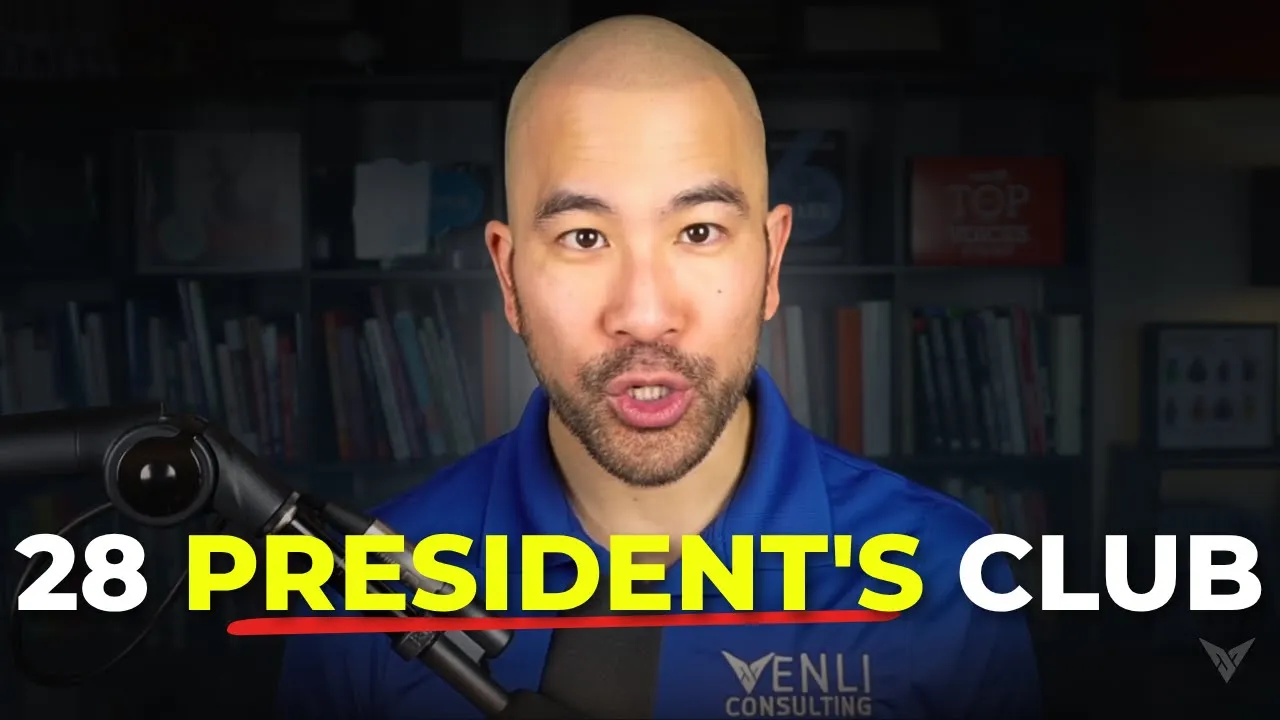
whole org and then we increased like 22% that second year. So we had a little bit attrition is what it is. Um but we still Maintain pretty low turnover right. Um and then through that though we end up uh we actually had an amazing banner year blew our number out. We sent like a record number of people to presence club. I think we like that like that size market most people send maybe five to six. We sent I think 28 people that year to presence club right broke a lot of records. So um but it's
because we had these systems in place, right? So if we take a take a step back, obviously I Share about what happened in year one, but in year two, there was things that I did that was consistent. So I made sure people were do they were very engaged, right? I made sure I reached out to each each person. It was consistent with it. I made sure they were properly trained and developed. I made sure we had ongoing training for them. I made sure they felt surrounded and supported by their locker room leaders, to their leaders.
I made sure I helped manage all These processes. And then I was also visible. I came in and I hung out with the teams in each of the reps every single quarter. So there was a high level of visibility and I'm very in touch with the team to drive the performance. Was it perfect? No. A bunch a bunch of stuff go wrong 100%. Right. But if we can at least stabilize the core processes and have the right SOPs, standard operating procedures for success, it's far easier to scale as a Result. >> So you you said
a lot there and and if anybody's paying like whoever's listening to this, go back. I think it's about 10 minutes and just listen to everything that you you just said and there's because here's what I heard. You you went through the hiring process. So, how did I hire? How do I how do I on and then you went to the enablement side, the onboarding? How do I onboard somebody? How do I get them into the Seat to reduce my time to first deal? >> And then how do I make sure that my leaders are able
to do all of those things while I'm able to do all the rest of the the job, but make sure that I've got my standard. So, these are all major things inside of a company. >> Yeah. >> I've got lots of questions for you on this, but here's the first one. >> Who helped you try to get everything done and implement all of these Processes? >> Yeah. So, first off, it doesn't happen overnight, right? So, I wish I could say I someone taught me these things and coached me on these things. No. Um but what
I have realized is in in every single role that you're in there are there the prao principle principle always applies which is 20% of what you do drives 80% of the results. So, so the important concept to understand here is in each of the roles that you're in, What is that? What is the 20% that drives the results, right? Like if you think about it, for example, for to make it very simple, you know, for reps, they have what's called I call IPAs, income producing activities. And to me, they only do four things. Number one,
they generate pipeline, advance pipeline, close pipeline, advance their sales skills. That's the four biggest things that will drive revenue and close close business for them. Everything else is Just noise. All right? So that means if if I'm training a rep, I'm focusing on that. Now, here's the thing. Let's say you're a frontline sales leader. No, it's different. Okay? You can't do the same thing because you obviously have a team now, right? So, forget the title because sometimes they're called VP, sometimes they're called salesman, some of the directors. When you have a direct frontline sales force
or AES are poured into you, you know, I've broken down to What I call charge. Okay? And charge what breaks down to these are the six core levels for sales leadership. Number one, you got to coach for impact, right? So, you got to make sure you develop them properly. You got to hire for excellence. So you got to bring in coachable high potential talent. You need a align expectations. So they have to be really clear what are expectations from activity to outcomes. They need R the pipeline. So drive hygiene Qualification movement. They need to grade
performance right which is identify the gaps early and fix things fast. And then they need to engineer high performance culture. So they're really modeling embedding behaviors that win. So you understand as a frontline sales leader you're doing these things right now. Now if you're going to for example my title is deceiving. I was called the sales director but I we delivered nine figures a year. I mean I Actually had full P&L responsibility. So you know my full or was about 110 employees within my org but I was dotted to hundreds of other employees on the
business side that impacted other half my comp plan. So I got I was fun for bottom line impact right? And so at that level of responsibility you know the the the the 20% I call scale right and it stands for stump something something which is number one I got to shape the org okay so it's a structure the Territories the roles for clarity and coverage I need to see coach the leaders okay I need to uplevel the managers into worldclass coaches because this is how you extend yourself right uh I need to a align the
revenue motion so I need to look at the go to market the product the enablement I need to unify it towards growth I need to leverage the data. So I need to oper operationalize the insights for forecasting and performance and need to enable scale. I need to build Systems, playbooks and rhythms for replicate success. So when I identify these things, you know, when when you kind of understand these frameworks of scale and charge, I start building them based off the highest priority that will drive the greatest long-term results. So for instance, if you if you
listen closely to the first 12 months, I didn't just go out and just try to ride with the reps and just sell deals individually because I knew that only Changed the results right there. I I saw the core challenge which was well the leaders do not know how to be a worldclass leader like everything that I was doing they they had I had presence club every single year as a frontline sales leader. Well there was things that I did right and they weren't doing these things and they didn't if they were doing they weren't doing
it well. So they so they either didn't know the what or they didn't know the how or they Didn't know both. So I built a playbook teaching and coaching and training them to make sure they ran the playbook I ran. That was like really key. So that was like that was a major focus. But what I also saw because I forecasted ahead, I'm like what happens if I can't coach coach them to get better? Well, if there's a a bad fit for the role, I need to replace them, right? Who are my back fills? Well,
an external back fill is far harder than an internal back fill. And your best rep is not always your best leader. >> And they kind of had a development program in place, but it was really garbage. It was like read a book once a month type of thing. Like that's useless. >> Like I'm like, what are the core skills I need a sales leader to have? And it's those things within charge, right? Most of them didn't know how to do those things. So if you get really tactical, For instance, most of them didn't know how
to read a P&L, a profit and loss statement. Like most pro most sales leaders don't even know how to read a P&L. >> But that determines your what you what you need to do, right? So when you understand cash flow and P&L and these operating models, you can run a better business. So I made sure when I was developing these these uh these reps in this program curriculum, it was Developing them to actually do the skills I need them to do. That was very very vital. So as I started to build these things out like
you know you have to be really smart about deploying resources, right? So it's kind of like okay cool like first off like who can help me with this, right? So depending what whichever initiives I'm focused on like who can help me? Do I have anyone who's already excel in these things? Can they help me with building This out? You know, do I is it more administrative? Do I just need to get my EA to do it? Right? Did I have an EA? So, I actually didn't have an EA to begin with. So, exe executive assistant
for those who don't know what that is. So, um I had to make sure like, you know, one of my first things that I realized I'm like, I need to get an EA. So, I hired an EA to get to basically get rid of any low-level tasks that so could free my mind. So, it's kind of Like if you give tasks a dollar amount, right? uh for each for that what it's worth. Is that task a $30 an hour task? Is it a $100 an hour task or is it a $2,000 an hour task or
$5,000 hour task? When you identify those core tasks, you can take a look at the ones who are lowlevel and you replace them with staff automation or AI or something like that. Right? At the time, because I only so much control, I can only do hiring. So I'm like, no problem. I'll hire staff to Replace those pieces to help deploy those type of resources. Right? So that's why it's really critical for when we're building these things out. That's what I'm focused on doing. It's like, hey, what can I go do, right? And then of course,
uh, either I deploy someone else to do it for me. If they couldn't do it, I figure out how to do it myself, which sometime that's just a challenge of you just got to figure out how to do it, you know, and then you you make it Happen. But the key is identify the core resources. What are you missing? Fill in the gaps and find a way to get it done. Especially if it's a high key priority. It's probably not you're probably not going to see any results right now, but you'll see it down the
road. So to give you example, so now I I left that organization uh almost seven years ago, right? To this day that that director in that market has still been like the number one director in the company. >> Wow. >> Ever since right my back fills who I'm who were actually were my former sales managers. So we had two different backfills both of my former sales man. They're still the top you know. So it's like I see all the presence it's all it's all my it's all my people right be and the reason is not
because I'm special by any means. That's not my point. My point is more so is I understand the power of scale and Systems >> by putting the right things in place that are scalable and that that live beyond just you. That's why even after after I left to start my own business, they actually took my EA because we all for my market and they deployed it for the whole region, you know, like because they wanted to deploy these in a better in a better way. And she she was my rock. I train I trained her
and showed her and we built these together because She was such an awesome hire. >> Yeah. something you said there simple scales is is and I that's what I take away from I have this saying simple scales right so you have charge and you have scale so you have two different acronyms which I'm such a big fan of with the acronym side of things >> we it sounded like it sounds like you were inside of a big company at the time so we don't have to say the company name when you were doing this all
of these Changes >> what kind of feedback or push back did you get from others inside the company for you to deploy and roll all this out Yeah. So, here's the thing. Some of them thought it was kind of crazy, right? To be quite frank. They're like, "Oh, just use what the company gives you, right? Like, hey, there's a reason we're a big company. Just kind of do what it does." Well, here's the reality. If it worked for every single region of market, they All be crushing it. So, it's like those are a good like
baseline idea, but it's like I've always thought about it like it's like this. It's like when you get when you have a recipe, it can be hit or miss, but how can you make it your own? Now I'm very entrepreneurial in mindset. I'm a builder. I like to create and build things. That's just how it is, right? Like even when I was working at enterprise years ago, it was a startup Division of the big company. So it was nothing. There was like there's no playbook. So I built everything from scratch from there. So I've always
had that mindset of like okay like what's what can I make how can I make it better, right? Like if it's not already first off, if it already has something in place, how can I make it better? Now I didn't go and start telling everyone about these things. So like I think mistake some people make is like they Start building these things and they're like hey look everybody look at what I'm doing but they don't have any backing. They don't have any like results to prove out their ideas and their theories. Everyone's got great ideas
and theories but very few come to fruition. >> So I didn't go and just like tell people about it, right? But if someone said, "Well, hey, I heard you bu you built like a really interesting like developmental program for your your top Reps. like can we hop on a call and like talk about it and I'll be like yeah sure let's let's talk about it I show them the whole structure the curriculum the responsibilities and how it's designed and they'll be like this is insane because it was like enablement didn't do anything right they gave
us a very basic product product fact sheets and all the dumb stuff right like I was like we're in the people bit when you're when you're running a sales door you're in The people business you're in human capital management so how can we deploy human human capital to generate the greatest possible result right not in a transactional way but like reality is is when you make your team amazing, they're happier like they're happier because they're getting great results and their lives will be changed, right? So, I understood that. So, they would some of them would
see these things that built out and be like that's that seems like a Lot of work. I'm like it is a lot of work. It is absolutely a lot of work, but like we're seeing the fruits of the labor now. So for instance like you know like when I first built out like you know the developmental program it was a lot of work in year one build out and we didn't see any like was like amazing results because of it right like I mean we probably saw some indirect ones like you know we had lower
turnover so people could people felt developed you know Like which is great we future career path I think there some of these intangibles but I didn't really see the benefits till probably the second third fourth year because at that point we're keep we keep adding people in and qualifying people out of those programs so I had a bench of people to recruit from to put into leadership roles. >> So that was really key. I mean reality is is like when you look at a sales organization it's like it's you know if I knew I looked
at my sales or I knew my with my reps I had approximately 20% turnover. It's called a round number. not meant 100 reps 20 will leave right whether it's it's through you know a termination attrition or something happened they just don't like sales anymore minimum 20 will leave that means I need to hire at least 20 people minimum right so you can have at least 20 like 20 new people in every single year you already knew that right you Know your sales leaders might run that same number so if you know this math you know
you have 10 sales leaders that means two you're going to be gone every single year you need to have a constant flow of people that are literally fully joining the ranks. You need to have a machine that keeps running and you have to be thinking like not just right now. You need to be thinking like five years ahead. So you can you can adjust for headcount accordingly and staff Accordingly. Put the systems in place. Otherwise what happens for most organizations is they run 40 50% turnover and they just kind of run through reps. But it's
very costly. That's the issue. It's very costly especially when you have looking at like when when you have open territories and you start seeing like deals getting lost and you start seeing like you know pipelines not me is not good and then culture it really breaks down it becomes A whole issue as a result. >> I agree with you and hiring is one of the more hiring is challenging across the board. You could have somebody that is perfect. You get them in the seat and you're like all the things that we just tested on aren't
happening. Like what's going on? And a 20% turnover is still like it's still quite low >> uh for for the most part. Like I think something like 46% is the average turnover, >> right? And so >> shifting into like the systems and processes, it sounds like you were locked in on that >> when you got your number that was just so big and you looked at it and said, "How am I going to do this?" How did you roll this out with your managers so they had context and understanding and that they could then you
know motivate and drive the reps for attainment? >> Great question. So the first is all about setting expectations, right? So reality is is if you've been playing the game long enough, you know your numbers always going to go up and I knew that. So I knew every year it go up 10 to 20%. That was like pretty consistent across the board, right? But it was based off of trend, not the actual target. Okay. So that's how the organization ran. I knew that. Right. >> Right. >> And I knew as a top 40 or so. So
all I had to do because our fiscal year started in June. So all I would do because I was part of the projection process. I'm managing back in projections for my selling expense number and we're forecasting our budget for the year, right? And we still don't know our number. So I just made sure I set the expectation it's going to be a big increase. So I would say hey team Like you know we're looking at the numbers I want to get everyone a heads up because we need to start doing the the right things now
is I project our number will go up probably about 20%. Which means we'll probably be at this. So for example if your team number is you're supposed to deliver 10 million bucks let's make for simple math you know it's probably going to go up like to 12 million. you know, might be higher, it might be lower, but we need To mentally start wrapping our head around that. >> So, I'm doing this like four to five months in advance. >> So, this is very very intentional, right? So, what happens is I'm anchoring that number in their
mind. This is basic psychology. >> So, I'm anchoring them so they understand it's like, okay, because people hate I mean, so when they get it, they're like, yeah, it sucks, But I kind of expected it, right? like it's not it's like versus if they think it's going to be like around the same number. If they think it's going to be like maybe 10.5 mil and they get 12 mil like they're like shocked, >> right? >> So that's really the first piece, right? The second piece is is then breaking it down to individual rep productivity. So
what does that mean the each rep needs to deliver on a weekly or monthly Basis? So we're breaking down to because it's it's much more manageable, right? So for instance, like for like you know simple math kind of like let's say if it's a million dollar target that might be scary for some people like say a million dollar target. Okay well what that means is we got to close call 22k a week. >> Mhm. H okay 22k a week. Okay that's a little more feasible for average deal size is 50k. Okay close a couple deals.
But not only that you work we work the math all the way through. So they break down how many appointments they need to book each week. >> Mhm. So you run the math based off the ACV, the sales cycle, the average win rate or median win rate and you can break it down to make it very very simple. So you make it much more digestible, right? So these are like things you start to do, right? And then on top of that, you know, we had Something that was called sustain success, which is a very simple
formula. I I don't take credit for it. is by the company and there it was a very simple formula which is you take the number of meetings you run new new business meetings you multiply your win rate or closing ratio and you multiply by your average deal size that'll give you the average amount of revenue you're going to generate and it could be over any time frame. So whether you want to Measure on a weekly basis, a monthly according, it will work out to be the same number. And then you start to teach the reps
how to increase the not just the the more meetings, but how can we increase your win rate? How can your average deal size, right? So you start to get really strategic, right? So you start prescribing individually I would teach the managers how do you make sure you coach each rep accordingly. So for example, you have a brand new rep, You're trying to coach them to basically double their win rate and double their deal size. very hard for them to believe. >> But can you get them to book three more meetings a week? A little bit
easier to believe. >> Okay. So, you leave them that way. Let's say you have a more senior rep more someone who's who's consistent presence winner. They're scared of their new numbers they're going to have. No Problem. They're they're not activity beast. It's just not going to work for them anymore because they're they're far too skilled for that. But what can we work on? Hey, how can we do a better job increasing the ACV? Can we target better? Can we better target a list? Can we get better at bundling? Can we leverage our other partners and
other divisions and cross-ell and them increase the deal sizes right so we give them very tackle prescription plans that Scales down right so that's the other strategies uh the other core strategy as well is um you know we also had um these these basically enterprise reps that would sell and they would also impact our overall region number as well so like making sure the managers and the reps and myself were engaging with them bringing them into deals So that way they're helping the reps as well. So what happened is like they when they would go
an enterprise rep would go And they had different names. I'm just call enterprise to make it simple for most people. They would come they're basically subject matter experts if you will that number. They get brought into these other larger opportunities. They can co-work the deal together. They both get credit for that number. >> Mhm. >> And the benefit is for the that local that local rep is they increase their skills too. So you may not have that Benefit, but for for me what I looked at was like what are my highest levers to drive results.
And when I when I make it very very simple, either get them to see more people, okay, get better win rates or increase their deal sizes. I know that as overall strategies. Now what are the tactics now do within each one to get them get get them there? >> And you make it easy for them, right? And then you must make it easy to deploy for your sales managers as well. So, for Example, if your sales manager really struggles getting reps to like book more meetings, then you need to teach them how to get better
at getting reps to book more meetings. Is it helping them build more segmented lists? Is it helping them with uh cold calling? Is it helping them get in the bullpen? What is the core constraint that's holding them back from getting that number? That's that's a it's an easier number to pull. It's not the most reliable because you Obviously if they suck at closing and they have low ACV, you know, you're basically kind of, you know, you have a leaky bucket. at the end of the day. >> Yeah. I I I like I like how you're
saying that because, you know, there's one thing that I've been t I've been coaching a couple of of sales leaders recently and I asked them, I said, "Hey, what's the metric that you need to affect the most and what's the skill that you believe will help impact that Number?" >> And so the one the one uh director look at me like, "Oh, can I think about it?" I'm like, "Yeah, absolutely." Like, if you had it right off the top of your head, I'd love it. But there is a question around skill set and then outcomes,
right? It's inputs and outputs and all these other things. And so if you if you look at like my my issue, Marcus, is that I haven't booked enough meetings. Okay. And it sounds like what You're really good at is like, all right, let's look at the data and figure out where are we not booking it. Is it because we have the wrong prospect list? Is it we wrong targeting? That's what it sounds like to me. And again, this is the first time you've spoken, so I could be way off, but that's what it sounds like
you were doing. >> Oh, you get in the weeds. I'll give I'll give you an example, right? So, I remember um I was visiting a a team. I Don't want to say the team because they will listen to this later. And they're like complaining. They're like my team is like they're struggling to book meetings. You know, we have so we have these what's called phone blocks. We'd have these phone blocks, you know, as a market like they're just not booking, you know, cuz like you know, they're just like they're just like, you know, they're just
not good. phones or the market's bad is what excuses basically. I said, "Okay, that that sounds that sounds fair." Um, how about this? I'm gonna come into town and I'm going to run your phone block with you. All right. Now, we the expectation was in a phone was four hours, which is you book eight new business meetings. Okay? So, these aren't follow-ups. These aren't second. These are you never met them before. That was the expectation. So, and they were probably averaging like three to four, right? uh which might be Great for some for some companies,
but for us like you're you can't be on my team. Let's be quite frank. You're just you're not good enough, right? Until I scale you up. So, and and their team is averaging that across the board. So, I go down, you know, and it's 8:00, that's when we start. Boom. And I'm I'm like I'm like, "Hey, team, like listen, like I'm just here to observe. I don't want you to be Don't be worried. Like, am I here like am I No, not grading you. My Goal is just to help you guys. So, I'm just going
to listen and if I can help you, I'll guide you a little bit, right? >> Mhm. >> And you know, so like I'm just going to sit with each of you guys, right? And I and I go and I sit and I sit with the f the first rep, you know, who they're a little bit nervous. They've been around been around for like six months or so. And they're like, "Hey, you know, don't be nervous. Just just do your thing, Right?" And and I I see I I see her go. She picks the phone up
and she like starts to call, you know, they don't answer. Leaves a voicemail, hangs up on the next call, falls to the next one, calls, dials, person answers. Amazing, right? >> Yay. >> She's like, she's like thrown off. I could just like oh just like starts like rambling like whatever she said and doesn't book the meeting. And I was Like, okay. I'm like, all right. Oh my good job. You know, she's all embarrassed. I'm like, "Well, you know, first off, that's awesome." And she answered, right? That's probably that's like half the battle. She like, "Yeah,
you know, like I just really didn't nail that objection, you know." Um, and I was like, you know, I totally get that. I mean, maybe objection handling, but I was like, I noticed though, even with your opener and your script, I actually never even heard it before. Like, it's just like some it's like spewing just like trying to sell. I'm like, it's very much focused on the product and the service and the company. I'm like, it's actually completely different than what I've actually have trained you all on actually, >> you know, in our in our
rollouts. And she's like, yeah, I just don't think it works for me because of this. I'm not a script person, blah, blah, blah. I'm Like, that's that's totally fine. In fact, even the script was actually pinned large pinned right in her in her cubicle. I said, well, you know, maybe you and I practice. What do you think? And she's like, "Okay." I'm like, "Just let's just try this. Just like I'll pretend to be a prospect. Just read this verbatim out loud." So she reads it very robotically. I'm like, "Great. Nice job. Now let's Try it
again." And just try to sound more natural. Does again. Sounds better. We go through 10 more times. Boom. Sounds sounds much better. Okay. So by the 10 times, she just sounds sounds It game tells us it sounds very natural. Right. I'm like, "Cool. Let's add some objection handling because I knew if she couldn't have that, she didn't she didn't learn the the fivestep path I taught them, right? >> Goes through, botches it, no problem. Five times. Boom. Nails it. Nails it. Nails it. Nails it. I'm like, okay, how do you feel? She's like, I feel
pretty good. Let's go. Call, no answer. Call, no answer. Call, answer. Runs through it. Three objections. Books the meeting. She almost falls out of her chair. Oh my god, how'd that feel? Like, oh my god, amazing. You know, we we finished that hour. She boo books like six means an hour and everyone's like, "Oh my What what what just happened?" They're like shocked. They're like, "Oh my god." And what's happening is the other peers hear it. >> So they're like changing the I hear him change the scrap like pulling. They're like, "Oh Margaret's going to
coach me on this." And boom, they they're they're getting better result. Not the same luck was right next to her, right? But still they still like they were booking like two, three the first Hour. >> Mhm. So they're posting up their numbers and they're fired up because like and the sales man's like, "Oh, what did you do?" I'm like, "I didn't do anything. I'm me coaching them and help them be successful, right?" You know, and they had a misconception of it, right? So the data in their mind was the stuff doesn't work. So reprogram the
data, right? So that's why the lesson here is for sure get the Data, but like if your team is not achieving whatever result, go see and find out what's going on. >> Get in the trenches. See what's going on. Like we we got done that session in 3 hours. They had all booked like eight or more beans each. >> Wow. >> They were like this is a team like like eight eight reps. They were like blown away. Like they were like walking on water after. Like I went in the field With one of the reps
right after him. He was just like, "Oh my god, I've never seen that happen before." I'm like, "But I'm like, but I mean I'm like I'm like, but I told I'm like, "Did I do anything special?" He's like, "Not really." I'm like, "What did you guys do?" He's like, "Well, we just we actually kind of stuck to what you taught us and we just kind of practiced. We just we just kept going. We didn't stop." I'm like, "Exactly. Was that that does that take Skill or will?" He's like, "No, it's a will. It's not it's
not a skill. It's a will thing." We go in the field. He's fired up, right? And like, you know, we're gonna walk into like a like a a cold call. It's like an in-person cold call to a meeting. And uh I have I'm very fascinated. I'm like I'm like he's like uh I'm like, "Where's your stuff?" He's like, "Oh, I'm just going to walk in, you know, get a business card and get out and stuff." I'm like, "But what if they're ready to have a conversation?" He's like, "No, that never happens." I'm like, "What if?
Just to find out." I mean, let's just be I think it's just it's a mental thing. Just walk in mentally. Like if they if you need to drop an agreement to close them off spot, what are you going to do? Right? >> So, he brings all the stuff and it's it's my lucky day. Like, we walk in, owner is there, owner's like, "Sure, Let's have a seat. They're with the competitor. We sit down and I help the rep with a little bit, right? We one call close the deal for like 10k, you know, yearly." Not
big deal, right? But like one call closed in 45 minutes. You know, they're with the competitor. Break them out. Boom. And we're under contract walking out with a signed deal. He's like, "Oh my god, what happened?" I'm like, "This is a simple execution, right? This is the this is what happens When you get in the field as a leader. You just see the mental beliefs holding your team back. How can you reprogram them and coach them to a higher level performance?" >> Yeah. The there's there's a lot of that you just said in that that
is really resonating with me. One is does your team, the individual contributors have the belief in the system that they've been taught? >> Correct. And there's there's sometimes You have to go back and say do you believe this like are you following it etc. Then the second thing it's if I no I could be very wrong. Did you have a manager or somebody that was that was leading that team or did those individual contributors report directly to you? >> No they all had a manager. >> So the manager so now it comes to the question
of like hey manager we walked through this we taught this. Are you Reinforcing? >> Correct. And so then I'm sure the manager felt uncomfortable because they're like, "Oh yeah, I know you said that, but uh well, I just thought that they, you know, you probably got excuses, right? Um and verify." >> Yeah. And it's that trust and ver that's exactly it. It's trust and verify, right? Like um I I'm going to I'm going to make the assumption that you understand everything. We've gone Through it. I've onboarded you. You you're able to show it. Now I
have to verify it. >> And getting in the weeds like leaders do have to get in the weeds. >> That's it. >> I'm Is it going the way that I want? Is there something that I have, you know, and the other thing too is there's so much to learn. >> I don't know how if you know Kevin Dorsy at all is >> Oh, yeah. KD. Yeah. We're talking. >> Yeah. So KD um I remember taking a course through Pavilion with KD >> and he he talks about this like he takes a week and he blocks
everything out like look just leave me alone. I'm going to figure something out. If I ask you something, I'm going to need it quickly, but just leave me alone. And he'll go through and like he'll run the process. Is the process going well? Did I maybe miss something? Hey, is something Changed? How do I update it? And so he's I mean, I think he's very good at like explaining how he does that. And he talks about his frameworks very much like you do. Um, but then so taking that into the next step. So now that
they've changed all the behaviors, you know, your number's gone up. Is it all on you to deliver that number or are you working with marketing um to help you support that number and that pipeline requirement? >> Great question. Uh in my entire corporate corporate background, I've had zero help in marketing. >> What? >> It's 100% we were 100% outbound motion. >> Wow. So yeah, so they would have their own corporate marketing, but like I mean campaigns weren't great, you know, very marketingesque. I mean, just they were they started get better kind of the the tail
end. Um but like for the most part like they were not they were not like High value. People didn't really trust. They saw more corporate marketing. That's all they saw. >> H So the experience you had was I crushed my number. They didn't just give me the like I I I'm going to grow from 100% to 120% next year. I landed at 200%. They're going to add me from 200% to 20% on top of the 200% is what my number is going to be. Correct. >> And I have zero support. Plus, I have to build
the system, scale the system, Deploy the system, and also make sure that the system's working >> 100%. >> There's a lot that that's on your shoulders. What did the leadership above you say? Like, hey, Marcus, can you do everything that you're doing there across a company? And I think and where this is coming from is uh Jaco, if you know Jaco Willing, right? Like extreme ownership, right? Like the whole notion of like he Went into the Navy Seals and then became the trainer for the Navy Seals. It almost sounds like you could have taken that
next evolution to that. But how did Bishop look at what you're doing? Do they look at it as like you're entrepreneur, you're figuring it out, or you're breaking all the rules, but Marcus, you're crushing. I'm going to leave you alone. >> Depends on who talk to be quite frank. >> Okay. So, like my direct my direct like VPs, they loved me because they're like because they knew like whatever I was doing, they could just take I would I would happily teach everybody else and I would happily help. In fact, I would actually like I created
masterminds in organizations with other directors in other regions to share with them what they're I'm doing because I want to learn from them too. So it was like I I created a mastermind within the organization very intentionally right >> um it was really really powerful for me personally now some some leaders did not like this by the way so some of them are very much like you're like this is you're not it's too much you shouldn't be doing these type of things they also know I think they get scared quite frank so I became a
threat >> because when you're when you when you are that level entrepreneurial you naturally your next step is you go do it your It's like hopefully like that person does not wise up and go do their own thing because ideally your per your perfect world is you hire an entrepreneur someone with an entrepreneur mindset inside a company that wants to stay there and they're good with that. >> Um that's what I always thought I was but there and I always told my boss I said listen I I will never quit you um to go work
for another company >> but I will quit doing my own thing. >> So your biggest risk is I suddenly believe in myself I can go can go do that. That's your biggest risk. And that's that's what happened. Like I didn't go orphan another company. I went to go do my own thing because I knew I could do it at scale. Um for sure. So even from a scaling perspective, I I'm actually still in some of the training videos. So they actually flew me out and they record bunch of content. Actually Had hair back there. It's
actually really funny. Like it's like I'm in the corporate I get like text messages because like I'm people still know me there, right? Text me. You're still in here. I'm like all right. They haven't got rid of me yet, you know? Yeah. Which is kind of funny. But um but it's it's it's cool I think. But but in in some in in reality is when you work for an organization you do get to a point where you do outgrow a company over time that Can that can definitely happen. So there it's like at that point
you have to make a decision for yourself what you want to do. >> Yeah. Totally fair. Okay. I I just realized we've been talking for 47 minutes and it's gone like that. So apologies we're well over time than what I suggested. So I if we can sort of move into wrapping up. I like to say this. Everybody likes new. Nobody likes different. and doing both at the same Time can cause friction or uncertainty. So for companies or leaders listening to this and they're about to get a a number increase. >> What are two or three
operational or actionable things that you can say, "Hey, on Monday morning when you get into the office, do these two or three things to prepare you >> to hit your number again next year." >> Yep. Cool. So number one, I'll look at your conversion numbers, conversion Metrics. what's already going well and how can you make it a little better? So, if it's already doing well, for example, if you know your team has a pretty good overall win rate, how can you make it just a little bit better? Right? So, just that's the first step you
kind of think through. Okay, cool. Because it's it's far easier to do that, you have a far greater impact doing that. So, if your team is really good at win rate, great. What else can we do to increase That? That's the first step. The second piece is I would take a look at your leadership team and your your reps. Who are your locker room leaders that you can lean on to do more? because you know certain reps can do more revenue, you know certain managers can do more revenue. So being able to lean on them
and you can bring them in, say, hey, listen, I really value your opinion. We're going to have a big increase over the year. Set a high anchor. What are some ideas or strategies we can leverage together as a team to make it better? Right? You don't have to have all the answers, but if you can have the right people in the right room together, it's amazing what we'll make come about as a result of that. >> Very cool. Um, I I think I could have asked you a thousand more questions from this and it just
felt like it was a it was talking to to a friend. So, uh, let's get wrapped up. That'll wrap up Another episode of the revenue problem solvers. Marcus, thank you so much for sharing these incredibly invaluable insights. And as you heard, there's strategy you can put into action tomorrow. Remember, success leaves clues and every revenue problem has a solution. Sometimes you just need the right conversation to find it. Until next time, this is Carl with the Revenue Problem Solvers, helping you turn obstacles into opportunities. Thanks for Investing your time with us today. >> Here's the
thing. Anybody can hit their number once. Anybody can have one banner a year. That's actually not that hard. What's hard is doing year after year after year, especially when your number keeps going up, especially when dealing with acquisitions, territory changes, and all the chaos that comes with scaling a sales organization. The difference between people who flame out after 18 months and people who stack Success year after year after year. One word, systems. Not hustle, not motivation, not hero sales reps. Systems that scale without you. Now look, everything I talked about today with Carl, the charge
framework, the scale framework, how to build leadership pipelines, how to reduce turnover, how to compress your onboarding timeline, all that came from identifying the 20% activities that drive 80% of results and then building playbooks around those Things so they can become repeatable, so your managers can run them, so your locker room leaders can reinforce them. So the system works whether you're in the room or not. That's how you go from over 50% turnover down to 17%. That's how you send 28 people to presence club instead of just five people. That's how you deliver 9 fig
year after year without burning yourself out or your team as well. So if you got value from this conversation today, do me a favor. Share with another sales leader who's staring down a big number next year when how they're going to hit it because the strategies that we covered today, they actually work. And if you want to go deeper on any of the stuff, you know where to find me. Just head to the links below. We work with mid-market to enterprise orgs are doing at least 50 million a year plus in revenue and have at
least 25 plus AES at minimum. We come in, we identify your core problems in Your sales process and we systematically fix them with you, not band-aids. We're solving root issues so we can scale sustainably. Just test below and we'll see you in the next one.