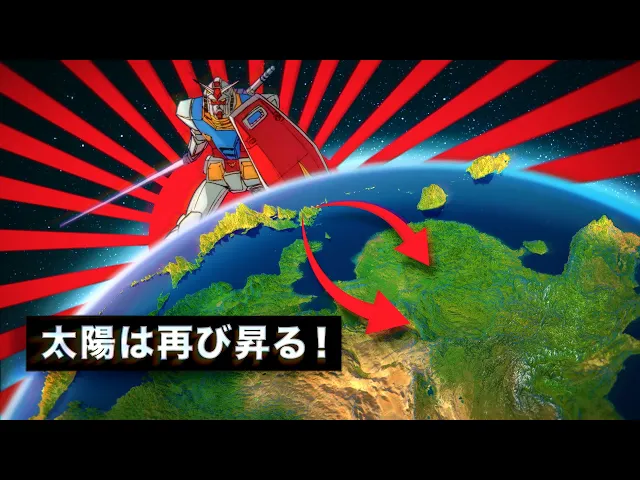
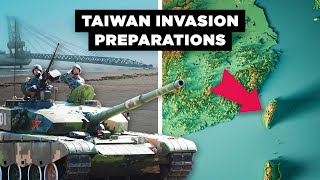
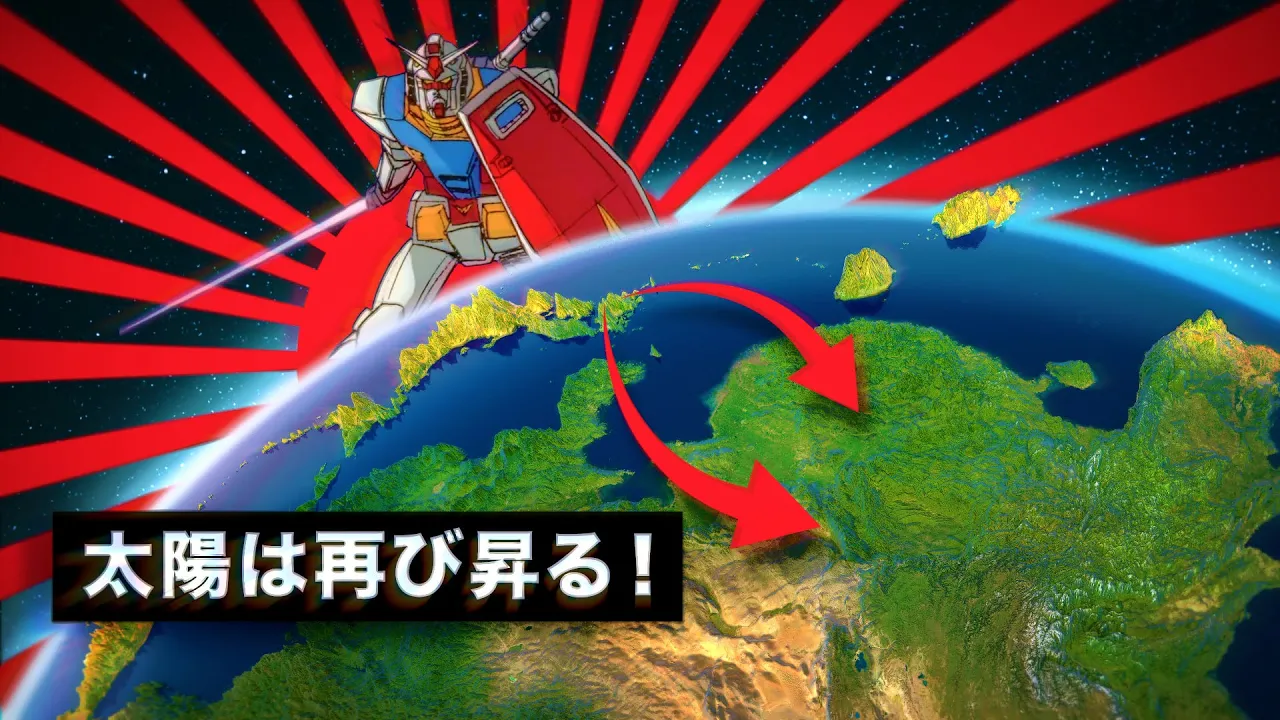
Tensions between Japan and China have recently ratcheted up to the highest level they've been since the end of the Second World War. The current crisis between them began on the 7th of November 2025 when Japan's new prime minister say Takaii was asked point blank in the Japanese diet what might prompt Japan to exercise the policy of collective self-defense. Now, it's important for you to understand the context behind this particular phrase in Japanese politics. Japan's constitution drafted after the end of the Second World War under Article 9 explicitly reads that the Japanese people forever renounce war
as a sovereign right of the nation and the threat or use of force as means of settling international disputes. It has been under this constitution after the horrors Japan experienced during World War II that the country has remained a strictly pacifist nation for decades now. and why modern Japan's armed forces have never been referred to as an army or a navy, but as self-defense forces instead, whose mission has always been restricted to the defense of Japanese territory itself in the event that Japan comes under a hostile foreign attack first. But in 2015, spearheaded by then
Prime Minister Shinszo AB, the Japanese government significantly reinterpreted Article 9 of its constitution with a new security law that enables the self-defense forces to exercise collective self-defense as well. In essence, granting Japan the legal authority to deploy military force abroad if it is in the defense of an ally that has come under attack and if it is judged to be necessary for the Japanese state's own survival. So, fast forward back to the 7th of November in 2025 when Japan's new prime minister say Takaii was asked directly by the diet what scenario exactly might prompt Japan
to actually invoke the policy of collective self-defense. Her public answer was that if China initiated an armed blockade or invasion of Taiwan, it could constitute a survival threatening situation for Japan. With survival threatening situation being the allimportant phrase she used here because it implied that she would trigger Japan's right to collective self-defense in the event of a Taiwan invasion or blockade scenario that would see the self-defense forces deployed into the war against China, even if Japanese territory itself was not attacked directly first. It was truly a breathtaking and unprecedented statement in Japanese politics. The first
time ever that [music] a sitting Japanese prime minister suggested publicly during a formal session in parliament that Japan might intervene militarily against China during a Taiwan conflict. And China's response since then has been a mix of shock and utter fury. The very next day after Tekki's remarks, China's console general in Osaka responded with particular anger. writing on X directly addressed to the prime minister herself, quote, "If you stick that filthy neck where it doesn't belong, it's going to get sliced off. Are you ready for that?" End quote. The post has since been deleted, but further
diplomatic attacks from Beijing have followed. The Chinese have consistently demanded that Taiichi retract her statement, which he has consistently refused to do. China provocatively flew a drone between Taiwan and the southernmost Japanese island of Yonuguni that resulted in the Japan Air Self-Defense Forces scrambling fighter [music] jets. And then even more provocatively, they sent four Chinese Coast Guard vessels into the territorial waters around the disputed Senkaku Islands, a small group of uninhabited islands administered by Japan, but claimed by China. Beijing has also issued advisories warning against Chinese students from studying in Japan or tourists from visiting
Japan, which the Japanese government has estimated might end up causing more than 14 billion dollars worth of economic damage to Japan alone. China has also banned the importation of all seafood coming from Japan. And they've recently begun shutting down and blocking Japanese firms and other culture from the country as well as most embodied by a viral event that took place on the 29th of November when Makiatsuki, a Japanese singer who was performing her well-known theme song for the anime One Piece on stage in Shanghai, was forced off of the stage by Chinese officials in the
middle of her performance after the ban on Japanese cultural content came more strictly into force. And all the while, Tekkai has continually refused to apologize or amend her statements in any way. And not only is Japan busy reinterpreting what kinds of military engagements they can get involved in from a legal perspective, they're also busy backing their words up with enormous new amounts of funding and arms for the Japanese self-defense forces as well. Frightened by Russia's invasion of Ukraine and China's increasing hostility towards Taiwan, Japan announced back in 2022 that they would be doubling their annual
military spending from 1% of GDP to 2% of GDP by no later than 2027, equaling NATO military spending targets for the first time in Japan's history. Shortly after she became prime minister in late 2025, Sai Takayichi announced that the timeline would be sped up by a year early to reach 2% of GDP on military spending by 2026. Meaning that next year, Japan will probably achieve a defense budget [music] of around $80 billion a year, putting it into the same ballpark as the UK and near the top five highest military spenders on the planet. A truly
titanic shift for a country that even just five years ago was so well known for its commitment to pacifism that not a single soldier in the self-defense forces has ever been killed in action by an enemy in the entire history of Japan since the end of World War II. But this shift in Japan's military posture has been a long time coming. And to China, Japan's rapidly increasing military spending and its comments about intervening against them over Taiwan are triggering deep and painful historical memories and experiences from their past. Because Japan and China have a long,
complicated, and contentious history. As the two most preeminent powers in East Asia, they maintained relations with one another for thousands of years. But in the late 19th century, Japan was able to rapidly industrialize and remain politically united and centralized, which enabled it to take advantage of a historically weak and vulnerable China that was still pre-industrial and increasingly politically fragmented and decentralized. Japan, more than any other single nation, contributed the most to China's so-called century of humiliation, and they inflicted more than 50 years of continuous pain and suffering on them. It began with the first SinoJapanese
war between 1894 and 1895 [music] in which Japan attacked China and emerged decisively victorious removing Korea from the Chinese sphere of influence and forcing the Chinese to seed Taiwan to Japan which then remained a Japanese colony for the next half century. Then a few years later in 1900, Japanese troops participated in the suppression of the Boxer Rebellion in China that resulted in tens of thousands of deaths. Following the outbreak of the First World War in 1914, the Japanese issued a series of secret demands to China that came to be known as the 21 demands, which
essentially demanded that the whole of China subordinate itself into becoming a Japanese protectorate. It only failed after China published the extreme demands and sparked outrage by the British and Americans who pressured the Japanese to back down. Later in 1931, the Imperial Japanese Army staged a false flag attack that came to be known as the Mukden incident, which they used as their pretext to launch an invasion into Manuria, which they subsequently conquered and where they established the puppet state of Manchu Quo over in 1932. Afterwards, the Japanese government encouraged a vast settler colonial project in Manuria
to alter the region's demographics that saw more than 1 million Japanese settlers migrate into the territory by 1945. Small clashes between the Japanese and Chinese armies continued on for years until they outright exploded in a fullscale warfare in 1937 when Japan launched a fullscale invasion across the rest of China with a goal of outright conquest. The ensuing second SinoJapanese war that lasted for the next 8 years and spilled over into World War II ultimately became one of the deadliest conflicts in all of human history, [music] resulting in the deaths of around 20 million people, the
vast majority of whom were simply Chinese civilians. Throughout the war, Japanese forces perpetrated an almost endless list of war crimes and atrocities against the Chinese people. But the two most infamous examples that continues to strain relations between the two countries today were the non-jing massacre and unit 731. Arguably two of the worst things that human beings have ever done to one another at any point in our history. After Japanese forces took control over the Chinese city of Nanjing near the end of 1937, then the capital city, they engaged in a brutal 6-w weekl long rampage
of mass murder, looting, arson, torture, and abuse directed against the city's Chinese inhabitants. Newer estimates believe that up to 200,000 [music] Chinese people within Nanjing were killed by the Japanese army during this 6-week massacre. A rate of killing that is comparable to the Rwanda genocide that would take place later in the 1990s. Meanwhile, Unit 731 was a top secret research facility that was operated by the Imperial Japanese Army in occupied Manuria throughout the war. >> [music] >> Unit 731 conducted large-scale research into chemical and biological weapons, including brutal and lethal experiments conducted on live human
beings [music] who are usually abducted Chinese civilians. Unit 731's victims were subjected to deliberate deadly disease [music] infections, chemical weapons and explosives testings, live limb amputations, and live vivisections performed under no anesthesia so as not to interfere with the potential results. [music] organ harvesting, cold exposure, and hypothermia testing, hypobaric chamber testing, and other brutal experiments that are collectively believed to have killed around 14,000 [music] of humanity's most unfortunate ever victims. Not a single person who ever entered into Unit 731's research testing is known to have survived. While the biological weapons they developed led directly to
the deaths of at least another 200,000 more people across Chinese villages and cities through the Japanese army's deliberate contamination of water supplies and agricultural lands. The legacy of these atrocities in Japan's 50-year war on China continue to negatively impact relations between the two countries today. and it frames the historical context in which China often views Japan's modern military expansion that's currently taking place. At the end of the Second World War, when Japan was thoroughly defeated and occupied by the United States, the country was made to surrender all of its conquered territories back to China, including
Taiwan, and was made to adopt its new pacifist constitution that renounced its right to war and the use of force forever, effectively resulting in Japan's demilitarization. [music] After suffering through millions of their own dead over the course of the Second World War, including the atomic bombings of Hiroshima and Nagasaki, the Japanese public was left traumatized and wary of war as well, easing their transition towards pacifism in the post-war years. Without the legal right to ever go to war again, Japan also agreed to become incorporated into the American security umbrella with the 1950 security treaty, [music]
which guarantees that the US will defend Japan's territory in the event of a hostile attack in exchange for Japan granting the US the right to base large numbers of military forces within their country. This arrangement at the time was mutually beneficial as it enabled Japan to outsource all of their defense needs to America, which allowed them to fully concentrate on rebuilding and then developing their economy in the post-war years instead. While it enabled America to control a huge and strategically valuable rear base of military operations in East Asia that it has been able to use
to great effect during wars in Korea and Vietnam and [music] in buttressing the position of Taiwan against China. And yet, relations between Japan and China continued remaining tense [music] despite Japan's new commitment of pacifism. After the end of the Chinese Civil War in 1949, Japan continued recognizing the Republic of China's government based on Taiwan and didn't normalize the relations with the People's Republic of China for years until 1972. After the Korean War broke out in 1950, the US encouraged Japan to establish an armed police force that eventually evolved into the Self-Defense Forces by 1954. But
for decades, as Japan relied on the US military for defense and focused all of its energies on rebuilding and then expanding their economy, the growth of the self-defense forces was kept at a minimum. [music] It was organized to be the bare minimum force necessary to defend the Japanese home islands themselves from an outside attack. And so they resisted acquiring any and all offensive capabilities for decades and continued only being allocated a minimal budget. By the late 1970s, an informal cap on the Self-Defense Forces budget of 1% of GDP per year had come into effect that
would last all the way up until our modern age in the 2020s. After the end of the Cold War, Japan's position initially seemed to feel even more secure with the collapse of the Soviet Union and their continued privileged position within the US security umbrella. And so, no major push to expand the role of the self-defense forces would come for another generation. But then all of a sudden, beginning in the 2010s, [music] Japan's geopolitical situation would begin growing increasingly precarious due to four major developing reasons that are pushing the country to now re-evaluate things. The first
reason has been an increasingly bold and aggressive North Korea on their doorstep that's now armed with nuclear weapons. North Korea conducted their first successful nuclear weapons test in 2006. And since then, they've conducted six additional nuclear weapons tests with the most recent one reaching a threshold of 160 kilotons worth of explosive power. 10 times the power of the Hiroshima atomic bomb. The Stockholm International Peace Research Institute, which tracks the nuclear inventories of countries from around the world, currently estimates that as of January 2025, the North Koreans possess around 50 active nuclear weapons and have enough
file material to produce another 40 more in due time. They've also likely already acquired the capability to mount one of these nuclear weapons to ballistic missiles that [music] can impact and destroy any city in the Japanese home islands, making North Korea an existential threat to Japan's own survival for the first time. The North Koreans are also known to possess around a thousand ballistic missiles, hundreds of which have the range and capability to impact targets in Japan with conventional warheads as well. While multiple North Korean missile tests have begun flying directly over Japanese territory itself beginning
in August of 2017 with further flyovers taking place in September 2017, October 2022, and January 2025, further putting Japan on edge. Even worse, North Korea has been growing increasingly closer to Russia and more militarily capable since the invasion of Ukraine began, too. To date, North Korea is the only UN member state other than Russia itself to have formally recognized Russia's conquests and annexations in eastern Ukraine. North Korea has provided Russia with millions of artillery shells for the war effort. And most provocatively of all, they've even deployed thousands of their own soldiers to fight against the
Ukrainians during the Kursk offensive in Russia in 2024. While recent Ukrainian intelligence released in November of 2025 appears to suggest that North Korean troops are active in the Russian occupied parts of the Zaparisia region of Ukraine as well, potentially making North Korea an active belligerent in Ukraine's invasion as well. North Korea and Russia have signed a renewed military alliance pledging the two to the other's defense. [music] While the Russians are known to be providing the North Koreans with many of their most advanced military technologies in exchange for all of the support the North Koreans are
giving them in Ukraine. The end result is that with increasing military technology and realworld modern battlefield experience in [music] Ukraine, the North Korean army is growing more capable and dangerous while its nuclear arsenal continues to pose an existential threat to Japan's very existence. [music] The second, and probably the most important reason, has been an increasingly powerful and assertive China. [music] Between 2013 and 2022, while US military spending only increased by 2.7%, Chinese military spending rocketed up by more than 63% over the same time frame. As of 2024, the US continues to maintain the highest military
spending in the world at $997 billion a year compared to China's $314 billion a year. But while America's military is engaged all around the world, [music] China's military is only engaged regionally in East Asia. Beginning in 2010, as China's ambitions began growing with its power, China has also increasingly begun clashing with Japan on a number of territorial disputes that had remained dormant for decades beforehand. Between 2010 and 2012, the two countries clashed bitterly over the status of the Senkaku Islands, a small group of uninhabited rocks that [music] Japan controls, but which China claims and calls
the Dao Yu Islands instead. In 2012, the Japanese government purchased three of these disputed islands from their private owner, which triggered huge [music] anti-Japanese protests in China, who saw it as a Japanese attempt to establish their sovereignty over them. China attempted to pressure Japan by temporarily restricting the export of rare earth minerals to them. The first time that China seriously weaponized its trade relationship with Japan over a diplomatic dispute. At around the [music] same time, China unilaterally issued an extended maritime EEEZ claim in the East China Sea that significantly extended into Japan's zoneclaimed EEZ area,
introducing a major maritime dispute between the two countries that still remains in place today. Then in 2013, adding on even further pressure, China unilaterally declared an extension of their air defense identification zone across the East China Sea as well, incorporating the Skaku Islands and significantly overlapping with the air defense identification zone claimed by Japan, escalating the conflict between them even more. China's growing arsenal of missiles has also been of a particular concern to the Japanese. As of 2024, the Pentagon believes that China possesses around 400 intercontinental ballistic missiles, 500 intermediate range ballistic missiles, 1,300 medium-range
ballistic missiles, 900 short-range ballistic missiles, and 400 ground launched cruise missiles. Meaning that, in other words, China now possesses hundreds upon hundreds of missiles at its disposal that can reach the Japanese home islands in the event of a conflict. The point was delivered by the Chinese profoundly in 2022 [music] when then US House Speaker Nancy Pelosi made an official state visit to Taiwan, after which China initiated large-scale military exercises encircling Taiwan that included multiple ballistic missiles being fired directly into Japan's maritime EEZ just south of the Japanese island of Yonaguni. clearly illustrating China's capability to
strike Japanese territory or warships if they so desire. China and Japan alike both understand that the status of Taiwan going forward is a poor national interest of both of them. For Japan, a Chinese takeover of Taiwan would simply be geopolitically disastrous. [music] China would break the continuous link in the so-called first island chain. the line of islands through Japan, the Ryuku Islands, Taiwan, the Philippines, and Indonesia that box the Chinese coast in and contain the Chinese Navy's ability to break out into the open Pacific. [music] Since the waters to the west of the line are
relatively shallow and easier to detect submarine activity in than the deeper waters to the east of the line, all of the countries along the First Island chain, from Japan to South Korea to Taiwan and down to the Philippines, are staunch US allies. But with a successful Chinese takeover of Taiwan, the chain would be broken and the Chinese Navy would finally be able to access the greater Pacific unobstructed. From their control of Taiwan, China could further increase their pressure on the Skaku Islands dispute and their disputed maritime and airspace areas with Japan that have serious implications
on potential offshore natural gas reserves in the area as well. And potentially worst of [music] all, Japan's critical sea lines of communication would become more exposed to their historic rival than they'd ever been before. Japan is enormously overdependent on maritime trade to survive. Nearly 90% of Japan's energy imports transit into the country through vulnerable maritime choke points like the waters near Taiwan. If these sea lanes are compromised during a conflict exploding over Taiwan, Japan holds a strategic petroleum reserve that contains 232 days worth of net oil imports. But they only have a strategic LNG reserve
that holds just 19 days worth of net LG imports. If the war blockade over Taiwan lasts longer than 40 days and keeps the sea lanes compromised, Japan would begin facing strategic paralysis and an economy that would begin grinding down without the energy imports they need to continue functioning. Rerouted energy imports away from around Taiwan would add both time and cost to them. [music] And there's no guarantee that China wouldn't just take advantage of their control of Taiwan afterwards to continue interfering with them [music] to apply even more pressure on Japan's economy later. These are the
reasons why Japan has long maintained a policy of keeping the Indo-Pacific region both free and open. A term that they themselves first coined before the US adopted the same policy by the same name under the Obama administration later. There's also a concern that no matter what Japan does, they won't be able to stay out of a Chinese invasion or blockade of Taiwan for long. The island of Yanuguni, the southwesternmost island of Japan, is merely 110 km away from Taiwan. As such, it's an extremely important location to control for both China and the US during a
potential conflict scenario. Yonauni and the rest of the Japanese islands in the Ryu Hyu chain stretching up to Okinawa will be vital for both sides to [music] control as they'll be critical for establishing aerial supremacy and logistics routes for US forces resupplying Taiwanese forces or counterattacking Chinese positions. The islands are a major component of the US fish hook underwater sensor network that's critical for America's ability to detect Chinese submarines atte bulk of their own military forces stationed in Japan nearby in Okinawa where some 30,000 US troops are permanently forward deployed at. If the US interveneed
during a Taiwan conflict, even if Japan itself didn't, China would be likely to at least use their missiles to bombard American bases and assets [music] in Okinawa. And under extreme scenarios, they might even attempt to launch amphibious operations to try and seize the southwestern most Japanese islands between Yanuguni and Makushima in order to secure their northern flank around Taiwan against potential US reinforcements and naval and air operations. Thus, there are major legitimate reasons why Japan fears that their territory could come under attack or even under occupation and their economy threatened by a Chinese assault on
Taiwan. There was also the risk that military action taken by China in the Taiwan Strait or military action taken by North Korea in the Korean Peninsula could encourage escalation by the other within their respective theaters. [music] China might encourage North Korea to ratchet up hostilities in the Korean Peninsula in order to distract and tie down US and allied assets away from Taiwan. And even if they don't do that, a full-blown Chinese attack on Taiwan that draws in US assets would inevitably present an opportunity for North Korea to take advantage of the distraction and increase escalation
on their own accord in Korea. Thus, there is a major fear for Japan and America that they could end up facing a two-front war in East Asia under the worst case scenario [music] with conflicts breaking out in the Taiwan Strait and the Korean Peninsula almost simultaneously. Even if none of that happens, though, the mere chance that North Korea might escalate in the Korean Peninsula during a Taiwan conflict will force Japan and the US to hold at least some of their resources in reserve rather than being able to focus everything they have against China alone. Okay.
Now, the third reason why Japan is reconsidering the Self-Defense Force's modern role is the Trump administration's wavering commitments to defend US allies, including Japan. Trump has publicly suggested that he wouldn't send US forces to protect NATO states in Europe coming under attack whom he felt had not been paying their fair share towards defense. And he's openly criticized the long-standing US Japan security treaty that's been in effect since 1950. As recently as March of 2025, Trump plainly stated that he felt the security treaty with Japan was unfair and a bad deal. Because while it pledges the
US to come to the defense of Japan during an attack, it doesn't pledge Japan to come to the US's defense during an attack in the other direction. Japanese officials were quick to point out, of course, that the treaty is also what enables the US to station tens of thousands of their troops in Japan across dozens of bases. The Japan ultimately bears the burden of hosting. This has led to fears in Japan that the US might not actually be serious about really assisting them during an emergency scenario around Taiwan. And knowing that the US military is
globally engaged all around the world, while the Chinese military is only regionally engaged in East Asia, Japan has felt the pressure to increase their own military spending to help out and compensate or to hedge. Then the fourth and final reason for Japan's remilitarization was the precedent that was set by Russia's full-scale invasion of Ukraine that was launched in early 2022, showing clearly that massive wars of conquest launched by one state against another wasn't a relic of the past. Only months after the invasion began, then Japanese Prime Minister Fumio Kashida warned that Ukraine today may well
[music] be East Asia tomorrow. While polls showed that around 90% of the Japanese public believed that their country needed to do more to prepare for a potential Chinese invasion of Taiwan. And thus, because of all these various threats, Japan has felt compelled to begin acting, evolving from the reinterpretation of the Constitution's Article 9 in 2015 that has enabled Japan to act in collective self-defense of its allies who fall under attack. And then Japan's announcement within months of Russia's invasion of Ukraine in [music] 2022, that they would double their defense spending to 2% of GDP by
2027 and recently expedited to happen by 2026. [music] In February of 2025, for the first time ever, the Japanese Maritime Self-Defense Forces provocatively sailed a destroyer directly through the Taiwan Strait in order to send a message, which triggered a spokesperson with [music] China's Ministry of National Defense to say, quote, "China respects the navigation rights of all countries under international law, but firmly opposes any country creating trouble in the Taiwan Strait, infringing upon China's sovereignty and security and sending wrong signals to the Taiwan Independent Separatist [music] Forces. End quote. And that incident was even before current
Prime Minister Sonai Takai's remarks, [music] which suggested that a Chinese attack on Taiwan would be interpreted by Japan as a trigger of collective self-defense [music] and would lead directly to an armed Japanese intervention. So, what exactly is Japan planning to acquire and do with its double defense budget? First, and probably most controversially of all, Japan plans to finally equip the self-defense forces with strike capabilities like long range cruise [music] missiles. Japan has since declared their intent to purchase 400 US-made Tomahawk cruise missiles, which can accurately strike targets up to 2400 km away, and which can
be equipped on Japan's naval assets like destroyers and submarines, giving the maritime self-defense forces the ability for the first time ever to strike targets deep within the Chinese or North Korean interiors. This capability was long considered to be taboo for the self-defense forces to have. Why, after all, should constitutionally pacifist Japan possess these offensive weapons with such long ranges capable of striking their enemy's territories directly? To get around the optics of this acquisition, Japan likes to use the term counterstrike capability instead of strike capability when referring to the missiles, emphasizing that they won't be used
for preemptive strikes against their adversaries and will only be used after Japan itself comes under attack first. In November of 2025, a Japanese destroyer arrived in California to pick up the very first set of these Tomahawk missiles that they have on order. And hundreds more of them are soon to follow, along with several hundred other domestically produced longrange anti-ship missiles that are being developed by Mitsubishi Heavy Industries called the Type 12 Missile, which will have a range of about a,000 km. Japan has also been steadily increasing and improving their submarine fleet as well. Back in
2010, when the modern confrontation with China was just beginning, Japan only possessed a fleet of just 16 submarines, but it's grown to 24 of them as of today in 2025. While all of Japan's submarines so far, conventionally powered by electric diesel engines, the newest generation of Japanese submarines called the TAG class that was introduced in March of 2022, are extremely capable machines nonetheless. [music] Nicknamed the sea ninjas by the Japanese, they are very quiet and excellent for reconnaissance missions and are capable of covertly deploying sea mines and launching torpedoes. They're also expected to be armed
with the US supplied Tomahawk cruise missiles which will enable them to launch long range precision counter strikes against targets thousands of kilometers deep within the Chinese interior if they decide to do so. Currently, the Japanese submarine fleet consists of five of these modern TAG class subs and 15 older generation Soryu class subs. But two more TAG class subs are expected to join the fleet and become operational by 2027. And it will likely be these seven modern and quiet subs that the Japanese maritime self-defense forces would deploy to the southwestern most Ryuku Islands during a Taiwan
conflict. Where their mission would be to hunt and attack Chinese submarines attempting to break through the first island chain and to kill surface warships attempting amphibious assaults on them and to potentially fire counterstrike salvos of tomahawks at military targets within China itself. Japan's older generation of submarines and their surface warships, meanwhile, would be dedicated to keeping Japan's sea lines of communication and imports of oil and LNG as open and secure as physically possible through escort missions with tankers. Japan has also even inquired about potentially acquiring US nuclearpowered submarines as well following recent American agreements to
provide them to other allies in the Indo-Pacific region like South Korea and Australia. Japan also intends to use his double defense spending to acquire no fewer than 147 F-35 fighter jets from the United States as well, which will make Japan the second largest operator of the F-35 only after the US itself. The fighters will be capable of being armed with long range cruise missiles as well that like the submarines will be capable of striking targets deep within the Chinese interior if necessary. 105 of the F-35s on order by Japan will be conventional models, but notably
42 of them will be the F-35B short takeoff and vertical landing model of the fighter. [music] This is important because these are the F-35s that are being planned by the Japanese to be deployed to their upgraded Isumo class helicopter carriers. Japan possesses two of these types of small aircraft carriers, the Isumo and the Kaga, which were of course originally designed to carry helicopters. But now, Japan is using the money they're pouring into the military to retrofit and upgrade both of these carriers to enable them to each transport and launch up to 12 of the F-35Bs
at a time, which together will give Japan one of the strongest power projection capabilities in the world and will enable them to fight more effectively for aerial supremacy in hot spots like the East and South China Seas. When they're completed around 2027, the Isumo and the Kaga will notably become the first Japanese naval vessels to operate fixedwing aircraft since the days of the Imperial Japanese Navy during World War II. Many of the Mitsubishi Heavy Industries Type 12 missiles are planned to be stationed on the island of Kiushu by the spring of 2026 as well, which
will give Japan extensive missile coverage from the safety of the home islands across all of the Ryuku island chain [music] extending across the southwest. And across the parts of the island chain from Okinawa to Yonaguni, the Japanese are planning even more preparations. The island of Yanuguni closest to Taiwan is growing increasingly militarized. The Japanese have already set up a surveillance radar facility on the island and deployed an electronic warfare unit there in 2024 that'll be used to jam enemy communications and guidance systems around Taiwan's northern flank. And in 2025, they confirmed that they'll shortly be
deploying batteries of medium-range surfaceto-air missiles to the island as well, presumably to help guard against Chinese aircraft and drones that might attempt attacks from this direction. The island of Ishigaki, further to the east, is being armed with anti-ship missiles, while Makojima, even further to the east, is being equipped with missiles as well, and is getting transformed into a hub for air surveillance and ammunition storage depots that'll be able to be accessed by Japanese and American amphibious warfare units for counterattacks, presumably coming down the chain from the principal US military bases on Okinawa. Beginning in November
of 2025, as the crisis between Japan and China [music] continued escalating, the US Marines were observed to begin conducting exercises moving supplies like fuel and ammunition from Okinawa to Yonauni, presumably to simulate establishing a forward operating base there. While the Japanese themselves have also begun training and creating a new amphibious rapid deployment brigade that's based on Kiushu that is being modeled after the US Marine Corps and being tasked with a mission of recapturing islands in the Ryuku chain the night fall beneath Chinese occupation in the event of a full-scale conflict within the city of Oida
on Kiushu. The Japanese are currently building four new large ammunition depots that will house anti-ship and ground attack missiles, positioning still more assets nearby to the Ryuku Islands in the event of a contingency. Japan is also expanding its abilities to evacuate their citizens in the event of a full-scale war in the Taiwan Strait. If the worst comes to pass and the southwestern Ryukyu Islands become a war zone, Japan will seriously have to consider the prospect of evacuating tens of thousands of the island's Japanese residents to safety far away back on the main islands. And so
the maritime self-defense forces have to be adequately prepared to carry that mission out. And while it's not being actively considered yet, it's always a possibility that eventually the Japanese might calculate that the time has finally arrived to acquire their own independent nuclear weapons arsenal as well in order to guarantee maximum deterrence. Japan possesses the technology, resources, and technical expertise required to likely be able to build a functioning nuclear weapon in less than a single year's time if they really put their mind to it. The only things that have so far prevented them from doing so
have been their own taboo against nuclear weapons, US opposition, and the US security guarantees that puts them under their nuclear umbrella. Anyway, but in the event that those things change, especially the US security guarantees, the Japan would almost certainly acquire their own nuclear weapon rapidly to guarantee deterrence against their nuclear armed adversaries in China and North Korea and potentially Russia, too. Japan has seen the president of Ukraine, who surrendered their nuclear weapons in exchange for security assurances, only to become invaded and face a war of conquest fewer than 30 years later. In the event of
a Taiwan conflict, Japan could conceivably respond in one of four different ways with varying levels of escalation and risk. [music] In one scenario, Japan might choose to take a strictly defensive stance, declining to trigger its security law for collective self-defense [music] and choosing instead to focus on surveillance and missile defense over the Ryuku Islands and evacuating its citizens if and when necessary. This approach might keep Japan out of the conflict, but it would inevitably cause great harm to Japan's relationship with the United States. Under a second scenario, Japan could take a slightly more aggressive approach
and provide logistical support to American forces in the conflict, allowing the US to access fuel and ammunition depots, utilize their bases for air and naval operations, and using their maritime self-defense forces to keep the sea lines of communication open. Under this scenario, the self-defense forces would still at least be trying to avoid direct conflict with China, but China might still come to see Japan as heavily assisting the American war effort, which might expose Japanese territory to retaliatory attacks and still drag them into the war anyway. Under a third and much more aggressive scenario, Japan could
simply choose to invoke its right to collective self-defense by declaring an assault on Taiwan a survivalthreatening crisis for them. but still try and avoid direct combat around Taiwan itself. Instead, the Japanese self-defense forces could focus on safeguarding the Ryuku Islands by intercepting Chinese aircraft, drones, missiles, submarines, and ships attempting to attack or break through them. While their warships could escort American naval vessels through critical maritime choke points nearby Taiwan, like the Makco Strait in the north and the Bosshi Channel in the south. A final fourth and dramatically more aggressive option they could take would be
to fully commit the self-defense forces to heavy combat operations in and around Taiwan itself, which might involve firing their new long range cruise missiles to strike military targets within China itself, which of course would make Japan a direct combatant in the war and possibly incur the full wrath of China in retaliation. Regardless of which option Japan might ultimately choose to take if and when a Taiwan contingency actually materializes, the country also faces significant domestic problems towards its remilitarization drive. For one thing, there's major issues on how exactly to pay for it. Japan already has one
of the highest national debts in the world as a percentage of their GDP, currently standing at around 237%, nearly double the debt ratio of the United States. Tacking on even more debt to pay for the military expansion is a difficult prospect, which leaves the unpopular choice of increasing taxes in the country to pay for it instead. A politically difficult option since Japan already has very high tax rates due to the country's rapidly aging population and social welfare programs. And speaking of aging populations, Japan has a critical shortage of available manpower to fill their ranks as
well. The numbers of young men in Japan aged between 18 and 26. The prime age for military service peaked more than 30 years ago back in 1994 at around 17 million. By 2020, that number of young military-aged men in the country had shrunk to only 11 million and it is projected to further shrink beneath 8 million by 2050. Fewer than half the numbers of young men available they had in the 1990s. Low pay, tough work, low unemployment in the private sector, and the limited prestige of serving in the armed forces of a constitutionally pacifist nation
have further discouraged recruitment among the shrinking pool of manpower, meaning that the self-defense forces have missed the recruitment targets every single year since 2014. Moreover, the self-defense forces lack any credible or relevant realworld combat experience today. The last time that a Japanese soldier is known to have been killed in action was back in 1972. And that guy was a fanatical holdout from World War II who died in a shootout with police in the Philippines decades after the war had already ended. The self-defense forces themselves have never once experienced a fatality in combat in their entire
history. Will they and the Japanese public at large actually be prepared for potentially enormous rates of casualties during a major hot war with China and/or North Korea? I don't know. But overcoming these issues will be a significant hurdle for Japan to overcome. Neither Japan nor China currently seeking war with each other. But the legacy of their shared histories and their mutual military preparations in the present are increasingly making each other nervous, causing a cycle of increasingly hostile rhetoric and actions. Xiinping's China is determined to establish the authority of the Communist Party over Taiwan. In their
eyes, finally unifying China in the process and ending the legacy of China's century of humiliation. If Japan intervenes, China will see it as nothing less than a historical showdown like the last time Japanese forces overran Taiwan in the late 19th century. [music] as is already being shown in modern Chinese propaganda like this example. They will interpret a Japanese intervention as a Japanese attempt to prevent the unification of their country. While the Japanese will interpret a Chinese attack on Taiwan as a dangerous act of aggression that will threaten their long-term stability and their citizens lives on
the small Japanese islands nearby. Neither side wants war, but neither side will be willing to back down when the stakes are also this high. In Japan's view, as once said by the legendary Japanese samurai Miiamoto Mousashi, it is better to be a soldier in a garden than a gardener in a war. In some ways, though, Japan has been in a hostile confrontation with its neighbors in East Asia for longer than most people are probably aware of, especially when it comes to North Korea. Though North Korea has repeatedly fired missiles over Japanese territory since 2017, the
North Koreans have also done much worse than that to the Japanese in earlier decades. Between 1977 and 1983, hundreds of Japanese people began mysteriously disappearing without a trace, usually along the country's coastlines. For decades, there were no clear explanations for all of these disappearances because they were usually just ordinary average people. For a long time, the disappearances were the subject of various conspiracy theories among the Japanese public. Some of them even outlandishly purporting that North Korea was somehow behind all of them. Though hardly anybody actually believed that. That is until decades later in 2002 when
Kim Jong-il just outright confessed to the Japanese prime minister during a meeting that his country had indeed secretly abducted at least 13 Japanese citizens in the past and apologized for them. Since then, the Japanese government has formally recognized that at least 17 of their citizens were abducted by the North Koreans between 1977 and 1983. Though independent investigations believe that the true number is likely in the hundreds, confirming those once outlandish sounding conspiracy theories that had persisted in Japan relating to the disappearances for decades. These abductions were an organized program under the reign of Kiml Sun
in North Korea. The grandfather of the current country's ruler Kim Jong-un and the original founder of the Kim dynasty who personally ruled for nearly 46 years across the second half of the 20th century. To this date, Kimmel Sun is still officially regarded by North Korea's legal system to be the country's eternal president. Even though he died decades ago back in 1994, [music] he is still heralded as nearly a god in the country along with his son and grandson who have both taken over the country's rule following him. And I think that understanding him and how
he molded North Korea into the bizarre necro hereditary dictatorship it is today is a major lesson in what can happen with truly unchecked power in the modern world. And so I made an entire new documentary exploring the dark world and life of Kim Ilsung and the most outlandish things he did while ruling North Korea for decades in my brand new original documentary series that I'm calling Mad Kings, which will take deeper dives into the terrible personal lives and erratic policy decisions of recent megalomaniacal and eccentric dictators. But because of the inherently violent and controversial details
surrounding Kiml Sunsung, including details and depictions of multiple acts of terrorism that he personally ordered across the 1980s and '90s, my documentary investigating his reign, would never work on YouTube because it would instantly become demonetized and age restricted, which means the YouTube's algorithm that's based around showing you ads would never actually be incentivized to show the video to you or to promote it. I deal with very large numbers of my videos on YouTube getting demonetized and age restricted as they already are, including my recent video from just last month covering the ongoing events taking place
in Darth Fur. And that's why I'm uploading all of my documentaries in Mad Kings, including this one on Kimmel Sun, exclusively to Nebula instead. And why signing up to Nebula is the absolute best thing that you can do to support me and my channel. And there's never been a better time to sign up because you can now get 50% off of the annual subscription for just $30 for the entire year. A perfect gift that you can also give to someone else in the leadup to Christmas. And there's plenty of new content for you to watch
right now. There's Scav, a new documentary series by the Jetlag team that follows the world's largest scavenger hunt. There's multiple new exclusive video essays by Lindsay Ellis and a new short film by Patrick Williams called The Dinner Plan that features Griffin Newman and Zack Cherry. And of course, Nebula is also still home to some of the best curated and informative documentaries that are available on the internet today. There's Bobby Broccoli's 17pages documentary covering one of the largest scientific controversies of the 20th century. [music] Real Engineering 16 Days in Berlin, the most detailed Battle of Berlin
documentary that's ever been produced, [music] Wendover Productions, The Logistics of X series, and of course, my own modern conflict series covering dozens and dozens of modern wars, battles, and conflicts with plenty more originals from myself and other creators planned throughout 2026. [music] And if you're not sure about Nebula or been sitting on the fence about it for a while, you should know that we're now offering a 3-day free trial. And we dare you to try and watch all of our exclusive content in those 3 days. I personally treat Nebula as my own sanctuary away from
the noise of algorithmically driven sites like YouTube and other social media. Both as a creator and as a viewer, there's no AI bots and no AI generated slop clogging up your feed here. We choose and vet which creators we work with. And that enables us to only work with the best. Creators who truly love and take pride in everything they do. So, if you want to support me and hundreds of other independent creators who still value our craft and get access to some of the best documentaries and video essays on the internet that you won't
find here on YouTube. You can do so by visiting the link that's down below in the description, by scanning the QR code here on your screen, or by clicking the button that's here on your screen and signing up. You'll get 50% off of an annual subscription by doing so, which is just $30 for the whole year or $250 per month, a fraction of the price of YouTube Premium. You can even sign up for a lifetime membership as well with a 40% off discount for $300. If you don't ever want to deal with yet another streaming
platform subscription or ads ever again for as long as we both last, I hope that you'll consider signing up or gifting one to a friend or a loved one. [music] And as always, thank you so much for watching.