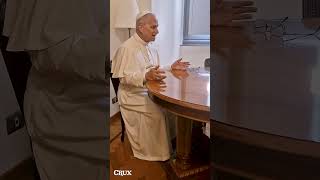
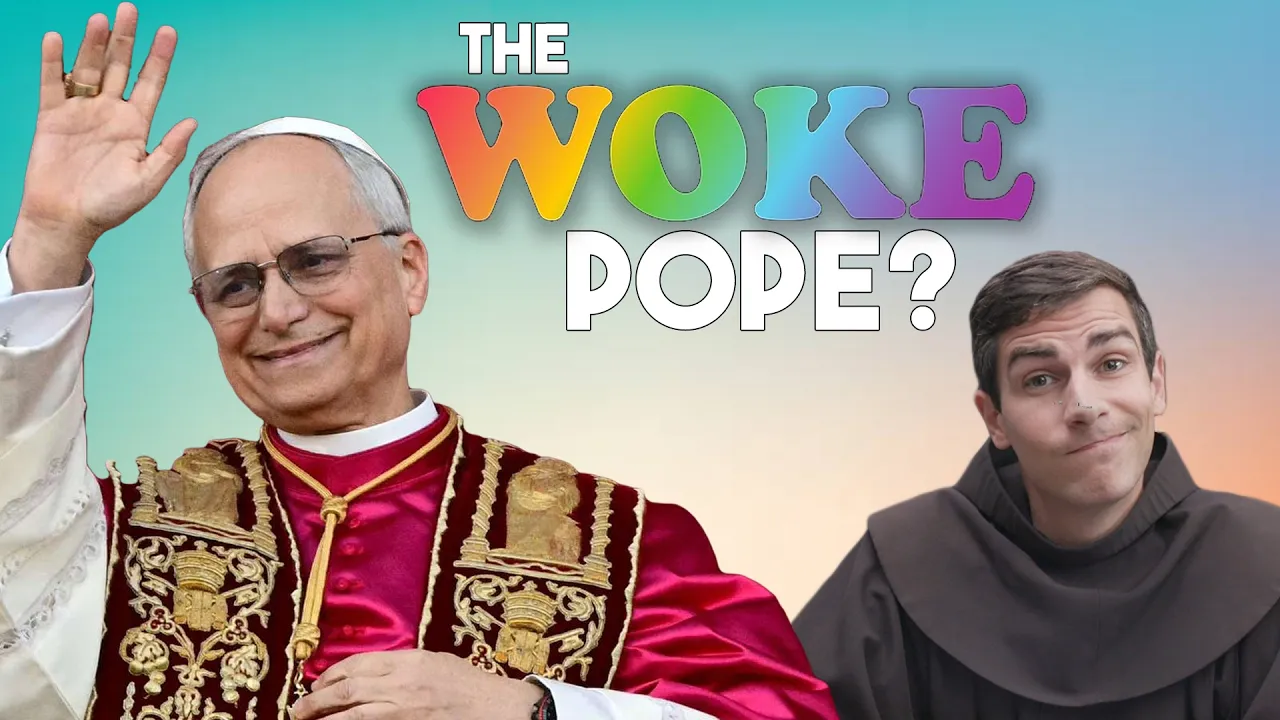
Habemus Papem! We have a pope! And he’s an American!
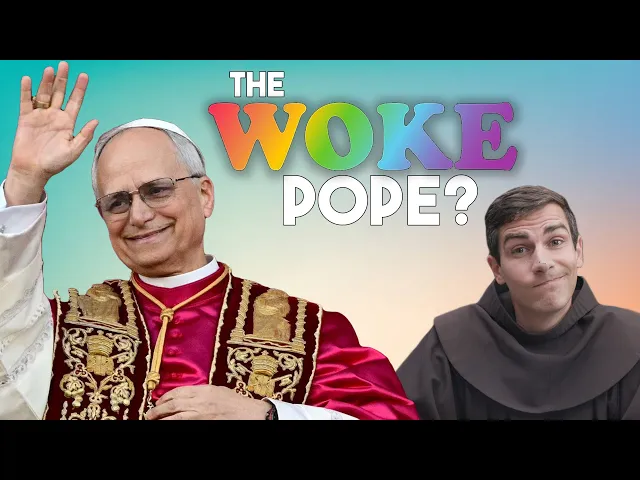
Around the country Thursday, people celebrated what most thought would never happen: the conclave chose an American, a Chicago born man named Robert Prevost, to be the successor of Peter in Rome. It was a jubilant moment, something that united the country in patriotic pride… for about five minutes. The new pope had barely exited the Vatican balcony after his introduction and blessing and people in the United States were already freaking out, calling him a liberal, globalist marxist, and of course “woke.
” Can I just say, because I know most are not going to watch until the end so let’s get the important point out right at the beginning: If you’re using the word “woke” at all in 2025, let alone to describe the pope, I think you might have your priorities mixed up. While that term used to be an important rallying cry for justice among the black community, today it is nothing more than pejorative dogwhistle, a catch-all term meant to mock and dismiss progressive ideas as out-of-touch and dangerous. If you’re still using the term in 2025, please stop.
If you’re using it to describe the Pope… we have a lot to cover. First, I think it’s important that everyone understand where the idea of “woke” came from, and how it is an another example of how so much of black culture has been coopted and stigmatized over the years. Second, in order to understand why the pope cares about things that would lead people to call him “woke,” we need to look to his choice of names, Leo XIV.
In the tradition of the Church, the name a pope chooses serves as a mission statement, signifying what his papacy is going to be about. His predecessor, Leo XIII, founded modern Social Justice initiatives, criticized American culture, and was a diplomat to the world. And finally, we’ll look at Pope Leo XIV himself—his background, things that he’s said and done, and what’s ahead of him—to see how “woke” he really is.
I. What is “woke”? While the word “woke” only entered the popular lexicon in the 2010s, ultimately coming to serve as a pejorative term to disparage leftist and progressive movements, its use in the black community goes back to at least the 1920s where it had a very different connotation.
In 1923, Jamaican activist Marcus Garvey, also known as the “black Moses,” gave a rousing speech in which he said, “Wake up Ethiopia! Wake up Africa! Let us work towards the one glorious end of a free, redeemed and mighty nation.
Let Africa be a bright star among the constellation of nations. ” At the time, he felt that many were asleep to the injustices that were happening to black people across American and around the world. They saw it, they heard it, but they did nothing about it.
It was as if they were asleep. In order for justice to come, they needed to wake up. The image was a powerful one, and over the next 80 years served as a rallying cry in the black community to inspire resistance against racism.
In 1938, the phrase “stay woke" was included in a song about the "Scottsboro Boys,” retelling the story of 9 black teenagers who were wrongfully imprisoned and almost executed for a crime they didn’t commit. In 1940, Negro Mine Workers fighting for their rights against discriminatory pay wrote, "We were asleep. But we will stay woke from now on.
” In 1962, William Melvin Kelley wrote an article for the New York Times entitled, “If you’re woke, you dig it. ” For nearly a century, the term was meant to signify that one was “not being placated, not being anesthetized,” that they were aware of the injustice of the world and that they would not go quietly. There could be no sleeping in a time like this.
It should be noted, that up until around 2017, there was nothing about being “woke” that went against church teaching. In fact, as we’ll see in section two, the fight for fair treatment goes hand-in-hand with the Gospel and is the work of the Church. Unfortunately, like so many things that originate in the black community, by 2017 the term had became popularized and was quickly distorted.
No longer a rallying cry for those seeking justice, it was weaponized by some on the right as a sarcastic, sneering term to dismiss anything anything related to progressive politics, real or imagined. Racial justice. Economic reform.
Gay marriage. Furries in schools. Open borders with no police officers.
Teachers convincing children to have sex change operations. Lump it all together, the craziest things you can make up with legitimate concerns for a just society, call it all woke, and you have a boogeyman for everyone to fear—crazy, out of touch, and absolutely dangerous. This is what people mean when they call something or someone woke.
This is what people mean when they call the pope woke. What do we make of this? II.
Leo XIII The biggest problem I think the Catholic Church faces in this environment, and why both Francis and Leo have been called woke, is because most people do not understand the history of the Church. By taking the name Leo XIV, pointing directly to the legacy of Leo XIII, I believe our new pope is reminding the world of three important points. The first is the social doctrine of the Church.
In 1891, Pope Leo XIII wrote one of the most consequential documents in Church history, Rerum Novrum, “Of new things. ” Written in a time of incredible change, Leo XIII witnessed arguably the most tumultuous time in human history as the world went from an agrarian society to an industrial one. The entire social order was overturned in a matter of decades.
Electricity, cars, radios, factories, light bulbs, telephones. Imagine what life looked like in 1850 compared to even 1900, not even a full lifetime. There was so much change, so much growth, and so many people left behind while the richest people in human history rose to power.
In his letter, Leo denounced unrestricted capitalism and socialism alike, demanding fair and living wages for all workers, safe working conditions, and the rights of workers to unionize. Far removed from the politics of our day, these were not “woke” ideas, but grounded in the fundamental principles of the Gospel and Church teaching: the dignity of the human person, need to uphold the common good, and respect for solidarity. The document was neither a break from previous church teaching nor was it a singular blip on the screen.
In the 130 years since it was published, popes have upheld and added to these teachings, calling for societies to be just and equitable, upholding the dignity of the poor, the outcast, and the refugee. Pope Francis was no more “woke” when he called for the welcoming of immigrants than when Benedict XVI called for the redistribution of wealth, when John Paul II called for the end of the death penalty, and when Paul VI called for solidarity with struggling third world countries. Teachings like this are not woke, they’re just the Gospel, finding their foundation in Leo XIII, who found his foundation in St.
Thomas Aquinas, St. Augustine, and Jesus himself. So that’s a huge point that needs to be repeated over and over again, and I’ve made plenty of videos on the social teaching of the Church if you’re interested in more, but it’s not the only contribution of Leo XIII that gives us some insight into the new pope: Leo XIII was the pope who condemned the heresy he called “Americanism.
” In his encyclical Longinqua oceani, Wide Expanse of the Ocean, Leo looks from his home in Italy across the ocean to the United States, and has a few things to say. On the one hand, he admired how the Catholic faith flourished in America despite the many anti-Catholic attacks at the time, building parishes, schools, universities, hospitals, and institutions. One day that little nation would have incredible faith to be proud of.
And yet, his real reason for writing, was to warn the American Church. There was something very deadly in that land that risked ruining their faith. He had seen how the wider society was fiercely individualistic, secular, and liberal, in the classical definition of the word.
It was a people that acted independently from the rest of the world, ruling not by principle or authority, not by divine or natural law, but by popular consensus. There was a worry, more than 100 years ago, that it was a land more concerned with its own national politics than the teachings of the Church, quick to soften, even discard the Gospel for more modern sensibilities. Again, when pope Francis said in 2023 that the US Church had “a very strong, organized, reactionary attitude,” this was not him being “woke,” “anti-American” or “anti-Trump,” this was him continuing the tradition of popes before him.
Leo XIII saw it first, and he called it out. A statement that Leo XIII was only able to say with any credibility because he was known to be a builder of bridges around the world as an extraordinary diplomat. Much like the economic landscape, the political landscape changed drastically in his time as pope, as many nations shifted away from monarchs, and countries like Italy and Germany solidified as unified nations.
Leo was an instrumental piece in these developments, brokering deals between Germany and Spain; improving relations with France, Russia, Switzerland, and Britain; and was able to unify the church across fractured lines, modeling prudence and patience. At no point did Leo XIII downplay the importance of the Catholic Church or apologize for the faith, but he also didn’t flaunt its power or make unreasonable demands either. His goal was not to gain more power, it was to bring about peace throughout the world.
The ultimate goal is always peace. Every life is sacred. Again, this is not woke, this is the Gospel.
It is Leo XIII showing what it means to be a principled world leader, seeking the best for everyone, not just Catholics. III. Leo XVI It is with all that said that we return to our new pope, Leo XIV, with the original question at hand: is he a woke pope?
Here is a man who spent much of his life as a missionary and then bishop in Peru, serving the those who are among the poorest in the world. He was known to be a man of the people, always having time for everyone who needed him, available on the streets and among the poor. He advocated justice for workers and resolved conflicts peacefully.
During the Peruvian floods of 2022, he put on boots and waded through the mud to help those most in need. He used to personally drive food and blankets to remote villages, and has advocated for the life and dignity of migrants. Not because he is “woke” but because he is Catholic.
As an American he knows how American politics work. As a prelate of the Church and someone who has ministered out of our American context for so long, he is also not defined by them. This may serve as the perfect combination for the world right now—someone who can speak directly to the United States and the problems it is causing the rest of the world.
Immediately after his election, old Tweets were found of him criticizing the Trump Administration’s immigration policy, J. D. Vance’s twisting of Thomas Aquinas to justify ignoring the needs of the world, and calling for justice for the unarmed black man, George Floyd, who was brutally killed by police in 2020.
He tweeted these things, not because he is “woke” but because he is Catholic. And finally, he is a bridge builder. His calm, moderate demeanor has made him a successful leader in both his Augustinian Order and as bishop.
He is said to be the type of person that thinks a lot before he speaks, being very careful with his words. This is not a man who will come with zingers or with an intention of beating an enemy. In his first remarks as pope, he mentioned building bridges three times.
His hope, not unlike Leo XIII, is to bring peace to the world. He recognizes the horrible acts of aggression in Gaza and Ukraine, the outbursts of violence between India and Pakistan, the constant threat looming all around the world, and he knows that now is the time for peace. In his first Sunday message as pope a few days ago, he made this his priority.
Peace must be found. And not just the absence of war, but peace that is built on justice. He says these things, not because he is “woke” but because he is Catholic.
And that’s the resounding point through it all. This is a Catholic man, meaning he is going to be on the side of the poor, he’s going to advocate for peace, welcome the stranger, and treat everyone with dignity. He is a man awake to the surroundings of his world and has an open heart to all those in need.
When did having empathy become a threat to people? When did wanting justice for everyone become a sign of Marxism? These are Christian values.
This is what Jesus advocated for. To dismiss these things, to mock them, to lump these legitimate calls for justice in with wild and made up fears of the alt-right is really, really awful. The new pope is not going to change the teaching on gay marriage.
He’s also not going to promote abortions, ordain women to the priesthood, or support sex change operations. The fact that he cares for the poor does not mean that he supports then entire liberal agenda, real or imagined, because what guides him is not American politics, it not whatever conception of woke the world may have, it is Jesus Christ and the teachings of the Catholic Church. The pope is Catholic.
If what he says or does offends you, if it challenges your political or social views, might I recommend something? Rather than calling him a name, take a moment to question your own beliefs. Are you guided more by your politics… or by the faith of Jesus Christ?
Turns out, you might be the woke one.