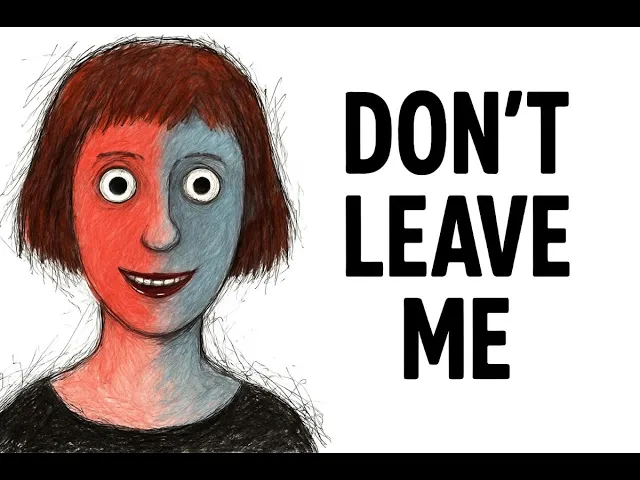
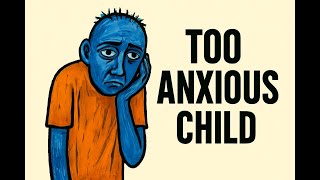
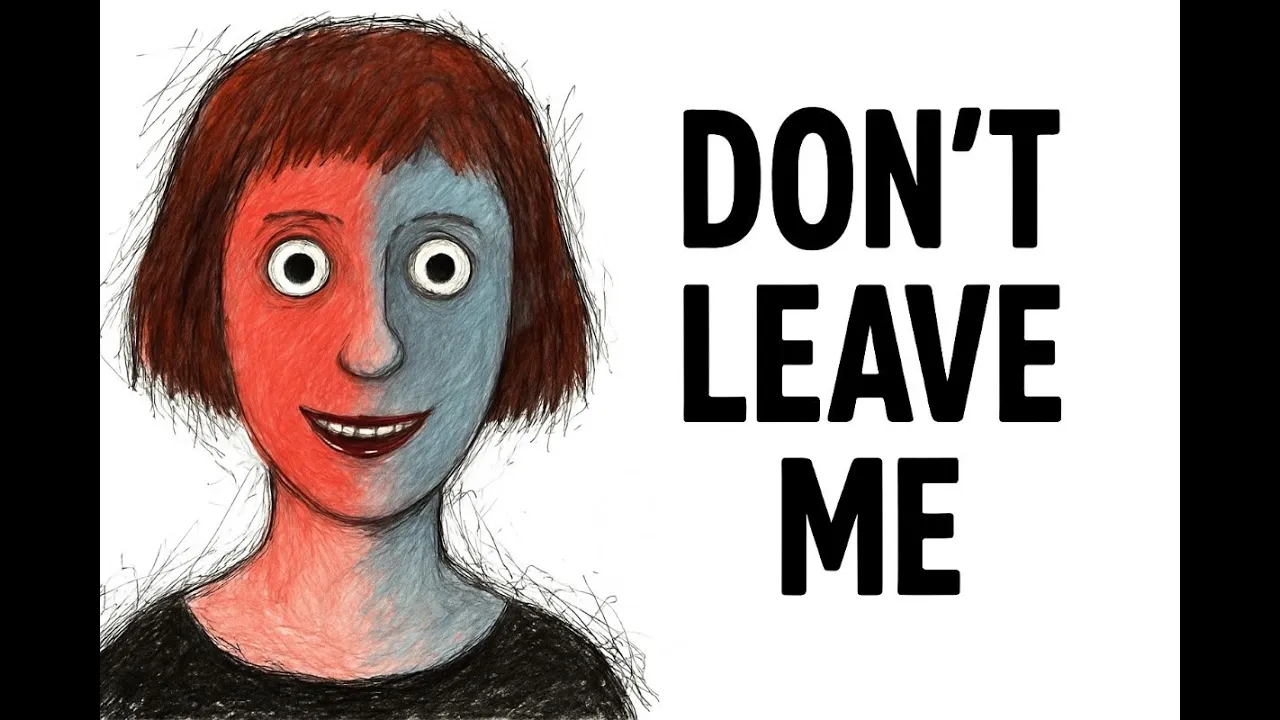
There's a child, perhaps one you know all too well, who desperately wants to feel safe, who longs for the kind of love that is consistent and grounding. But instead, the love they receive feels unpredictable, sometimes overflowing, sometimes withheld. The child learns very quickly that attention and affection are never guaranteed, so they cling tighter.
They cry a little louder. They hold on a little longer because deep down they're terrified of being left behind. And as that child grows up, the pattern doesn't disappear.
It simply transforms. The desperate cry for love becomes a racing mind, a restless heart, an everpresent fear that maybe the people we care about will one day walk away. [Music] This is the essence of the anxious attachment style, and it is far more common than most people realize.
Psychologists have long studied how our earliest relationships shape the way we connect with others as adults. The theory of attachment, first developed by John Bulby and later expanded by Mary Ainsworth, tells us that the bonds we form in our earliest years act as blueprints for how we love, how we trust, and how we experience intimacy. For those with an anxious attachment style, love has always felt a little fragile.
It's as though affection is a flame that might go out at any moment, so you hover close to it, terrified of losing its warmth. If you have ever found yourself overthinking every text message, feeling unsettled when someone you care about doesn't respond right away, or fearing that your partner might not love you as much as you love them, then you have tasted the anxious attachment cycle. It's not weakness.
It's not a flaw. It is a learned survival strategy, one that once made sense in the context of a child's world where love was inconsistent. But as adults, the same strategy becomes exhausting.
You are no longer a child waiting for a parents reassurance. But your nervous system has not forgotten those early lessons. The anxious attachment style is not rare.
Studies suggest that nearly one in five adults exhibit anxious tendencies in their relationships. That means millions of people carry this invisible weight, feeling constantly torn between longing for closeness and fearing abandonment. And the paradox is painful.
On one hand, those with anxious attachment often crave intimacy more deeply than anyone else. They want to merge, to feel safe, to know they are loved without question. But on the other hand, that very craving can overwhelm relationships.
The fear of being left can cause the anxious mind to interpret small silences as rejection, minor conflicts as catastrophe and distance as desertion. To truly understand this style, you have to see how it develops. Children are biologically wired seek safety and comfort from their caregivers.
When those caregivers respond consistently, a secure base is formed. But when responses are unpredictable, sometimes warm, sometimes withdrawn, the child learns uncertainty. They discover that love must be earned, fought for, vigilantly protected.
The nervous system becomes finely tuned to every subtle shift in mood, every sign of potential disconnection. This hypervigilance is adaptive for the child. It helps them hold on to love in an uncertain world.
But in adulthood, it becomes a constant source of anxiety. Anxious attachment is not about being dramatic or needy. Though that's often the label unfairly applied.
It is about a body and mind that have been trained since the earliest moments of life to never fully trust that love will stay. Imagine living with the constant background noise of what if they leave. It is like a song that never ends.
Sometimes loud, sometimes soft, but always there, shaping every interaction. This doesn't just show up in romantic relationships. It can appear in friendships, in workplace dynamics, even in the way one relates to mentors or peers.
The anxious individual often fears disappointing others, fears conflict, and overextends themselves in the hope of maintaining connection. They may struggle to say no, not because they lack boundaries, but because saying no feels dangerously close to rejection. Every action, every decision is subtly tilted toward avoiding abandonment.
It's important to recognize that the anxious attachment style is not destiny. It is not permanent. The brain and nervous system are remarkably capable of change.
A concept psychologists call neuroplasticity. With awareness, with practice, and with healing experiences, someone who grew up anxiously attached can gradually move toward secure attachment. But the first step always is awareness.
Let's pause here and reflect. Do you notice in yourself the constant need for reassurance? Do you catch yourself spiraling when someone doesn't respond quickly?
Do you feel your stomach drop when plans are uncertain or when someone you love seems distant? If so, that is not proof that you are broken. It is proof that your attachment system is active, sensitive, and deeply concerned with survival.
It is trying in its own way to protect you from the pain of loss. And yet, ironically, the very strategies that once protected you often create the very outcomes you fear most. The more you cling, the more partners may feel overwhelmed.
The more you seek constant validation, the more distant others might become. And so the cycle repeats. Fear leads to clinging.
Clinging leads to distance. Distance intensifies fear. But here's the profound truth.
None of this is your fault. The anxious attachment style is not a sign of weakness or failure. It is evidence of your capacity for love, your longing for connection, your sensitivity to human bonds.
These are not flaws. They are qualities that when balanced become profound strengths. Sensitivity allows for empathy.
Longing for connection allows for deep intimacy. Awareness of small shifts in others emotions can make you attuned, caring, and supportive. The challenge is not to erase these qualities, but to anchor them in security rather than fear.
Research shows that attachment patterns can change, especially through relationships that are consistent, safe, and nurturing. When an anxiously attached individual experiences love that does not vanish in moments of conflict, that does not withdraw in silence, the nervous system gradually learns a new lesson. Love can be stable.
It can be trusted. It can endure. Therapy, supportive friendships, and secure romantic partners all play roles in this process.
and even self-work. Learning to self soothe, to regulate emotions, to offer yourself the reassurance you once sought externally can create lasting transformation. But let's not rush to solutions just yet.
Because before healing can begin, there is something important to grieve. For many with anxious attachment, there is an unspoken sadness, a quiet mourning for the childhood moments when love felt uncertain. To acknowledge this is painful, but it is also liberating.
You may need to sit with the reality that your younger self did not always receive the steady comfort they needed. That pain is real, but it is not permanent. And most importantly, it does not define the love you are worthy of.
Now, think about this. The very fact that you are listening to this right now is proof of your courage. It is proof that you are willing to look inward to question the patterns that have silently ruled your life.
That willingness is the doorway to change because awareness is the first crack in the cycle. When you can say, "Ah, this panic I feel when someone pulls away, this is my anxious attachment speaking, not reality itself. " You are already one step freer.
The anxious attachment style is a teacher, though a harsh one. It teaches you where your deepest wounds lie. It reveals the intensity of your longing for love, safety, and acceptance.
And it shows you sometimes painfully that until you learn to soothe those wounds, the world outside will always feel unstable. But once you begin to tend to them, everything shifts. The same sensitivity that once felt like a curse becomes your greatest gift.
But how do we actually move from anxious attachment towards something more secure, something more grounded? The first step is recognizing the patterns as they arise in real time. When you feel that wave of panic because someone hasn't responded yet, pause and remind yourself, "This is my attachment system speaking.
It is not objective reality. Just because there is silence does not mean there is rejection. " Naming the pattern creates distance from it.
You are not the panic. You are the awareness observing the panic. That distinction, while subtle, is powerful.
Another step is learning self soothing techniques that help regulate the nervous system. People with anxious attachment often rely on others for reassurance. But part of healing is learning to give that reassurance to yourself.
Something as simple as deep regulated breathing, journaling your emotions, or grounding exercises, feeling your feet firmly on the floor, noticing the sensations in your body, can bring you back to the present. When you reassure yourself, you are teaching your brain that safety is available within, not only from outside sources. Education itself is also a form of healing.
Simply understanding that your attachment style is rooted in childhood dynamics, that it was once an adaptive response can dissolve layers of shame. You realize you are not too much or overly sensitive. You are responding the way any child would in an uncertain environment.
That perspective alone can be profoundly liberating. Relationships of course remain central. The research is clear.
Secure attachment is often built through what psychologists call earned security. This means that even if your early experiences left you anxious, new relationships can rewire your patterns, a supportive partner who communicates consistently, a therapist who remains steady, a friend who does not withdraw during conflict. These experiences teach the nervous system new truths.
Love can stay. Disagreements do not always mean abandonment. Space does not always mean rejection.
Every time you live through these corrective experiences, your anxious attachment loses a little of its grip. But healing is not linear. Anyone with anxious attachment knows this.
Some days you feel calm, trusting, safe. Other days, the old panic returns with full force, convincing you that you will be left behind. This does not mean you are failing.
It means you are human. The nervous system heals gradually through repetition, through patience, through compassion. The key is to stay with the process, to resist the urge to collapse back into old narratives about being unworthy of love.
There's another dimension here that often goes unspoken, the relationship you have with yourself. Many anxiously attached individuals externalize their worth. They believe they are lovable only when someone else validates them.
But the deeper work is to internalize that worth. To wake up each day and affirm not just intellectually but viscerally, I am worthy of love simply because I exist. This may sound simple, but for someone who has spent decades fearing abandonment, it is revolutionary.
Think of it like reparing yourself. If your younger self did not always feel safe, you can now step into the role of the consistent caregiver you once longed for. You can tell yourself the words you needed to hear.
I'm not going anywhere. You are safe. You are enough.
And though at first it may feel awkward, over time these messages rewire your internal landscape. They become the new background music of your life, replacing the anxious song of what if they leave. What's remarkable is that many people with anxious attachment also possess extraordinary gifts.
Their sensitivity makes them deeply empathetic. They notice emotional shifts in others that most people miss. They are capable of profound intimacy, of loving with an intensity that is rare.
The work then is not to suppress these qualities, but to anchor them in security. Imagine what happens when someone with anxious attachment learns to trust themselves, to soothe their own fears, to see their worth clearly. Their sensitivity transforms into wisdom.
Their longing for closeness becomes a steady capacity for deep connection. Their fear of abandonment turns into a profound appreciation for presence, for cherishing each moment of love without clinging to it. To truly appreciate this journey, it helps to see it not just as psychology but as philosophy.
Anxious attachment reflects one of the deepest human questions. Can I trust that love will remain? At its core, it is a question about existence itself.
If we cannot trust love, then the world feels chaotic, fragile, unsafe. But when we learn to trust even imperfectly, the entire texture of existence changes. Life feels less like a battle to keep love from slipping away and more like a flow in which love is given and received freely.
This shift has ripple effects far beyond romance. It changes friendships, work dynamics, even the way you walk through the world. Instead of interpreting silence as rejection, you see it as space.
Instead of assuming the worst when someone is distant, you allow them their humanity. Instead of chasing constant reassurance, you build an inner well of calm that others can feel when they are around you. Ironically, this calmness often draws people closer because you are no longer relating from fear, but from authenticity.
Of course, it is natural to wonder, will this ever fully go away? The truth is, attachment styles are tendencies, not prisons. Anxious attachment may always whisper in the background during moments of stress or conflict.
But the volume of that whisper can be turned down, sometimes so low that it no longer drives your behavior. You may always notice a flicker of worry when someone you love is silent. But you no longer spiral.
You breathe, you wait, you trust. That is the difference between being ruled by anxiety and living with awareness of it. If you've ever blamed yourself for being too much, I want you to hear this clearly.
There is nothing wrong with longing for closeness. The problem is not your desire for love, but the fear that has been layered on top of it. When that fear loosens, what remains is a heart that simply wants to connect.
And that is one of the most human desires there is. So, how do you practice this shift in daily life? Start small.
When you notice yourself craving reassurance, pause before reaching out. Ask yourself, "What do I most want to hear right now? " Then say it to yourself.
Write it down. Whisper it out loud. Over time, this practice teaches your nervous system that you are capable of offering safety to yourself.
Another practice is to reflect on past experiences where the worst case scenario did not happen. Remind yourself of the times when silence did not mean rejection, when conflict did not mean abandonment. Let those memories anchor you.
It is also helpful to communicate openly with those you love. Anxious attachment thrives in silence and secrecy. But when you can say to a partner or friend, "I sometimes worry when I don't hear from you.
Not because of you, but because of my own patterns, you bring light to the shadows. " And more often than not, people respond with compassion. They may reassure you or they may simply understand your needs better.
Vulnerability, when expressed openly, often deepens connection rather than threatens it. Ultimately, the path out of anxious attachment is not about becoming someone else. It is about becoming more yourself.
Beneath the anxiety, beneath the fear, there is a self that is steady, grounded, loving, and whole. That self has always been there waiting to be uncovered. The work is to peel back the layers of fear one by one until that authentic core shines through.
And when it does, something beautiful happens. Relationships become less about clinging and more about sharing. Love becomes less about desperation and more about celebration.
You stop asking will they stay and start living in the truth of even if they go I will be okay because I remain. That realization does not make you detached or cold. It makes you free.
And in that freedom, your capacity to love expands beyond anything you imagined. So if you are listening to this and recognizing yourself in these words, take heart. You are not broken.
You are not doomed to live forever in cycles of panic and reassurance. You are simply carrying the imprint of your earliest experiences. And those imprints can change.
With awareness, with compassion, with practice, you can teach your nervous system new truths. You can transform anxious attachment into secure connection. And in doing so, you do not just heal yourself.
You change the way you move through the world. Because the world needs more of what you have to offer. Depth, empathy, sensitivity, and love.
But it needs those gifts to be free of fear. When you step into security, your presence itself becomes healing. Not just for you, but for everyone you encounter.
And maybe that's the quiet miracle at the heart of this whole journey. The very qualities that once made life feel overwhelming. Your longing, your sensitivity, your deep desire for closeness become the very qualities that make you radiant.
Secure attachment is not the absence of need. It is the balance of need with trust, of longing with confidence, of connection with freedom. It is the realization that love is not something you must chase or earn.
It is something you can give and receive without fear. So let this be your reminder. You are worthy of love.
Not because of what you do. Not because of how perfectly you perform, not because of how tightly you hold on, but because of who you are. That worth has always been there.
And as you heal, as you learn to quiet the anxious voice, that truth becomes clearer every day. And perhaps one day you will look back on this journey with gratitude. Gratitude for the child who held on, who found a way to survive even when love felt uncertain.
Gratitude for the adult who had the courage to question, to heal, to grow. And gratitude for the self you are becoming now, steady, grounded, secure, and free to love without fear.