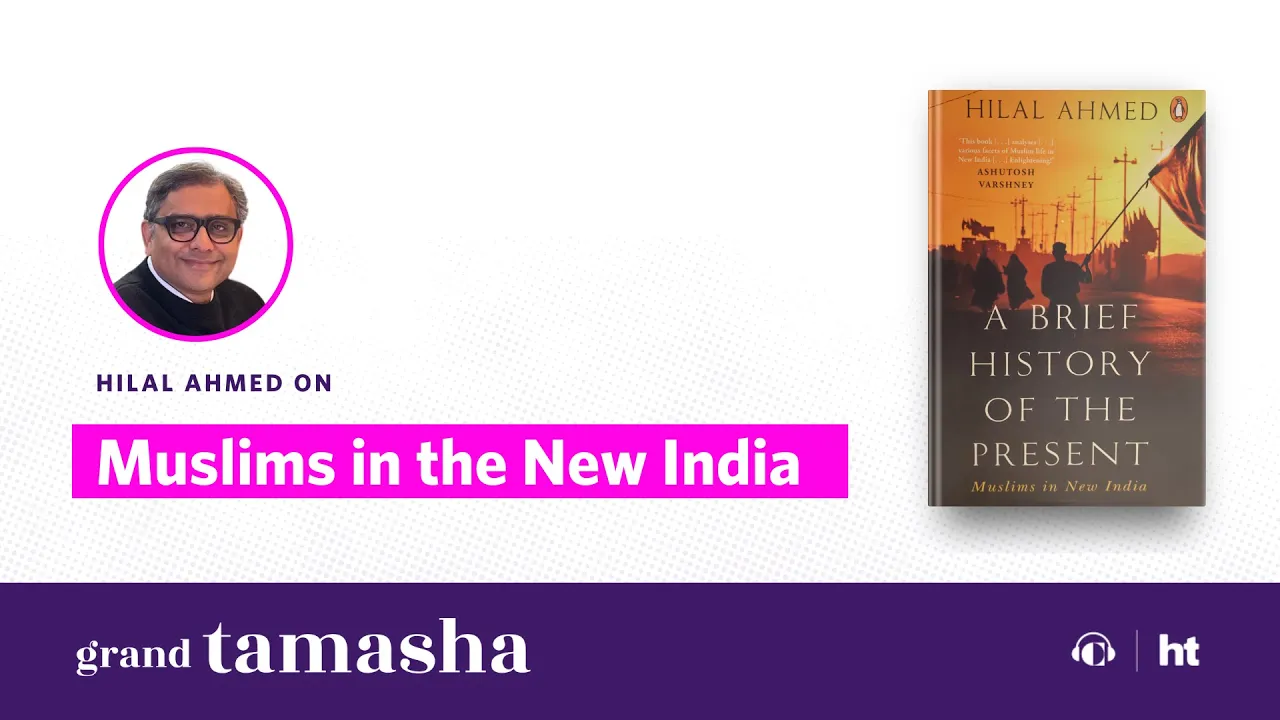
unabashed the most unpredictable becomes a headline the most volatile outrageous behavior unsubstantiated ntiv a battle of personalities welcome to Grant the Masha a co-production of the Carnegie Endowment for International Peace and the husan times I'm your host mil inov the discourse in India today on the issue of the Muslim Community seems to swing between two contrary positions according to the Hindu nationalist narrative Muslims are a monolithic religious category who whose presence justifies the need for greater Hindu solidarity on the other hand you have the narrative offered by many liberals who claim to protect Muslims as
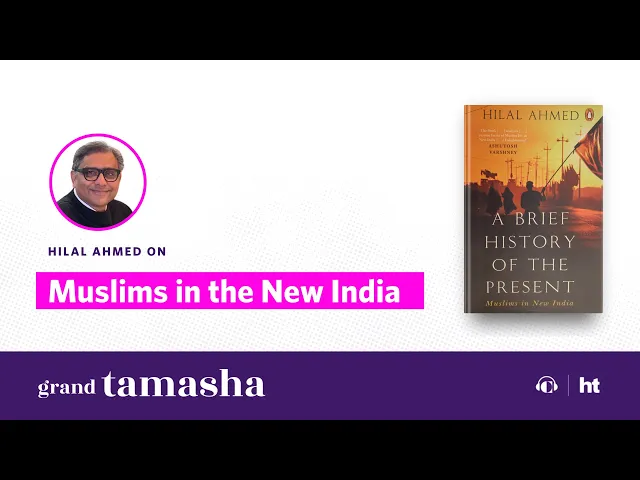
a religious minority to defend Indian democracy a new book by The Scholar Halal Ahmed a brief history of the present Muslims in New India departs from these one-dimensional Notions of Muslim identity it applies Concepts from political science from history political Theory to provide a much more nuanced view of India's Muslim Community Halal is an associate professor at the center for the study of developing societies csds where he is also associated with the L Niti program for comparative democracy he is an authority on political Islam electoral behavior and Indian democracy I am pleased to welcome him
to the show for the very first time hillal congratulations on the book and thanks for coming to the show thank you very much B and thank you very much for inviting me uh on this platform and uh the kind words you just spoke about the book thank you well we have been in touch about this book for some time and so I had the pleasure of reading an advanced copy um but I wanted to have you on because this book addresses I think one of the biggest questions out there when it comes to Indian democracy
and does so both in a personal as well as a scholarly way um and I thought you know maybe just to get the conversation started I want to ask you about the title uh the title is a brief history of the present Muslims in New India and in the opening chapter you write that this idea of history of the present is a is a kind of provocative title right especially when it's employed in relation to Muslims in India tell me a little bit about what inspired the title and and what did you hope what reaction
did you hope to provoke uh in last 10 years we have been hearing the term called historic moment historic event Etc so many times so the first thing was that you know if it is historic then why should start with writing the history of the present because after all uh everybody's talking about that this is historic in positive way say for instance Mr Modi and the opponent of Mr Modi would also say that this is happening for the first time so if this is happening for the first time and making a history it as a
as a political scientist this is my duty to respond to that and uh obviously in my view the work of a political scientist to look at here and now and try to theorize it in a way that it should provide some kind of an understanding um to to the moment in which we live at least the political world in which we live so that was the first uh you know provocation for me but there was a deeper meaning uh of that as well because and uh the second part of the question was that that how
do I relate it to Muslims of India because Muslims are always seen in relation to the Past um both in positive sense as well as in the negative sense and uh we use past and history quite in quite interchangeably thinking that past and history are basically the same thing uh but I make a conceptual distinction between past and history history is only one uh mode to understand the past past is a very big phenomenon so therefore I thought that uh it would be sensible to distinti between past and history and try to approach the past
which is traveling with us and try to make sense of it in relation to another very interesting concept that is given to us by this regime that came up out that came up in 2014 and that is called New India so I thought that uh uh writing and we all know that uh fuku used this in a very interesting way history of the present so you know uh I am not using the way Fuko used but I think it would be more sensible for people uh especially who belong to political science to look at this
how past Travels With Us and how uh when we call this historic moment how should we engage with that uh and produce some kind of uh an explanation of things which are very very contemporary so in a way uh when I say uh history of the present I'm very much located uh in the idea of contemporary while making its interconnection uh not Mainely with the immediate history but the long processes that actually led to this moment in which we live so you know in the book um you reflect on your own identity Halal as a
Muslim and as a scholar and as a political analyst and at various points you say that you've been criticized in including by fellow Muslims for being uh quote passive inactive self-contented armchair liberal secular intellectual who would not dare speak as a quote unquote Muslim I mean these are pretty strong words but in the book you have this interesting discourse where you say look you know it's important to separate out one's identity from one's analysis and I wonder if you could say a bit more about that um because I imagine it must be very difficult given
the highly charged contentious and emotive times we live in particularly for those who live in India absolutely uh you know basically the question was that uh whether it is you know uh how can and one um you know identities are an individual's identity is not onedimensional we all have our identity attributes and uh my professional identity as a researcher is equally important as my Muslim identity but at the same time I always uh because I work on Muslim communities so it is very important for me to uh underline my own self and for that purpose
I can also so you know I can't say that and which is a easy way that I can say that I am not a political person rather I am just an intellectual but this intellectual political binary is equally problematic so the term which I have used uh in order to find out a solution to this problem in my book it's called intellectual politics and in my view there are basically three things which as an intellectual and as a Muslim uh I um I am doing in this book that I'm actually highlighting that this intellectual politics
has got three dimension one because I am Muslim and I'm working on Muslim communities so it is very important for me to actually keep a principal distance from the communities I work on so that I can not merely see the making of these communities but also to critically look at their engagement with the larger political processes the second uh aspect of this intellectual politics is that I should as a researcher uh you know make my research more transparent and more open to my readers so that they can also draw their their meanings and you know
I'm taking this point from uh Udu and Hindi literature of 19th century when the author would first of all tell about himself or herself to make the the reader aware that what is the process of writing the book so that is also a political act in my view which is an intellect with with which has a intellectual angle to it and finally I'm also making a point that my arguments are actually quite tentative tentative in the sense that uh you know whatever material I have collected and I am making uh some kind of an explanation
of that material so that my argument are uh tentative and open to multiple interpretation as well as I'm not saying that I have found a uh final truth and this this is something which I take it from Gandhi uh because he would always say that uh I would like to emphasize my hair and now and my moral position so therefore these three things principal distance transparency of my research and tentativeness of my argument uh these are actually political act and I think that as a as a researcher this is what kind this is the intellectual
politics I'm involved in so my identity as a researcher and myid identity as a Muslim uh you know uh do not make me uncomfortable when I do intellectual politics of this kind so you know one of the things you do in the book uh Halal is you make a crucial distinction between two different concepts the first is called substantive muslimness and the other is called discourse muslimness and substantive muslimness refers to the ways in which Muslim identity is formed in a variety of regional and local context and then on the other hand you have something
you call discourse muslimness which refers to Muslims classification as a religious minority in purely statistical terms right uh help us understand in your mind the difference between these two ideas and and and how do they interact if they do interact yeah uh great question thank you very much for asking this because this is something which is you know and I'm very glad that uh one of the reviewers uh actually picked this up and uh both of these revie uh reviewers were very you know they they thought that as if that I have resolved their the
the the Dilemma they have been facing for some time uh let me just make two points here one is that uh this is an analytical distinction and this analytical distinction is very useful uh to make sense of contemporary muslimness because on the one hand when a Muslim tend to Define uh himself or herself in his or her image context it constitute muslimness in a substantive way for example if a Tamil Muslim would be talking about his or her environment uh in the context of Chennai uh obviously he or she is referring to the immediate context
but at the same time when he or she would start talking about the impact of hindutva on Muslim Community the perception changed and he or she would be actually drawing resources from the do discourses which are surrounded uh there so there is a dialectical relationship between these two substantive muslimness and discourse of muslimness and this dialectical relationship always determin Muslim uh responses in a variety of ways at every time and I you know I was bit uncomfortable with say for instance scholarly work on this question particularly of uh imaz Ahmed imtiaz Ahmed uh you know
he he was deeply interested in the idea of Muslim diversity but whenever he encounters questions such as what should Muslim do Etc and what is Muslim mind Etc he would tend to you know ignore the diversity question so tan Madan uh also you know found that quite uh problematic and he proposes a very interesting hierarchical model to understand Muslim identity and he says that actually Muslim Identity or like any identity fun functions like a pendulum so on the one extreme end you have uh you know conception of which are very Diversified which are very local
and on the other hand of this on the on the the on the other axis of this pendulum there is a discourse of muslimness where Muslims are are defined as a global religious community so this pendulum moves like this and it is very important to actually understand that at what point of time we are going to uh look at which Muslim Community uh and analyzing its responses to political processes and that's why uh coming back to the first question which you asked uh the idea of uh present uh the history of the present I think
that that's makes the dialectical relationship between substantive muslimness and discourse of muslimness very relevant because only if we if we focus on a particular historical moment we would be able to capture the identity uh which is constituting at that very moment and that's why you know the intellectual politics I just underlined the tentativeness of my my argument or the explanation inextricably linked to this process you know one of the things that you make a point of H and I think this is pretty obvious from the ongoing discourse in India is you know whenever we read
about hear about speak about Muslims Muslim identity their their place in this new India um it's never discussed without reference to hindutva but hindutva itself has a very loose definition right I mean even those within the BJP within the broader ecosystem don't always agree on what it means uh as you engage in this you know what framework do you use for trying to understand and explain what hindutva means to others this is a great question and thank you very much for asking it because first of all uh there are two meanings of hindutva uh in
post 2014 India and this is something which is very important to understand so the moment you start talking about hindutva people tend to go back to 1923 when VD saaka wrote that famous text but that's actually in Old text this this text has nothing to do the way in which hinda is understood both politically and in our social and cultural life uh and that is the reason why uh for me uh the lectures deliver by Mohan bhagat in 2018 2017 2018 were more important than the text written by saakar in 1923 and I should just
point out for our listeners who may not know where Mohan bwat here is of course the chief of the RSS absolutely yeah so uh hindutva and moan bhagwat right you know very uh he then this is also very important that um there is a very interesting division of labor BJP tend to uh tend to ignore uh hindutva and if I am correct that Mr Modi has used the term hinda only once in a public speech in last 10 years and it shows and in that very speech he also said that uh I not an authority
to Define what hindutva is so therefore there is an intentional unclarity that is there which is always in evoked to make this concept of hindutva more ambiguous and more uncertain so that it can be asserted as one of the most important expression of Indian identity so that is one meaning of hinda in which that is coming to us and that's a dominant meaning of hinda at the moment but there is another meaning in in which hindutva has become accepted in our cultural life especially after the construction of ram Temple and even before that uh now
if you think of a person who is actually going to ram Temple and there are a huge number of people huge number of Hindus for them the most important uh reference point to make sense of religion is actually defined through the prism of hinda so therefore and these are and you know that that constitute a very interesting tussle on the one hand Hindu has become a synonym of say Hinduism but on the other hand the political unclarity in which it is used actually create a conf confusion in the mind of those who would like to
use hinda in a positive sense so this is a conflict between two meanings of huta what our friends especially those who are the opponent of BJP could not understand that BJP and not mly BJP but the entire s parar is not interested in defining what hindutva is because the moment they Define hindutva in real political terms it it would become very difficult for them to actually uh create a space for those who Define hinda in pure cultural spiritual terms so that conflict between politics and spirituality is is actually going to be a very serious challenge
for Hindu politics in future trying to understand Asia is like piecing together a giant jigsaw puzzle 40 countries and more than 2,000 languages Asia is home to some of the fastest growing economies and it can be incredibly hard to cover them this part of the world so we're starting the big tick Asia a Weekly News podcast from Bloomberg I'm Wan ha I've been covering Asia news for more than a decade at blomberg listen to Big take Asia wherever you get your podcasts you know I want to ask you about a term that has come up
a couple of times and that I use myself although again it's a term that that that doesn't have a strict definition which is this this issue of New India right oh yes uh your the chapter two of your book is is titled what is new in New India and what you go on to say is that uh New India is an ideological political Doctrine and hindutva constitutionalism is a mechanism to help achieve it and I wonder if you could just separate out these two things how do we understand the interrelationship between what is New India
on the one hand and hindutva constitutionalism which is something different uh how do we understand understand those two together yeah thanks because you know this is an extension of the uh the question which I have just answered the Hindu question first of all new India uh as I said in the book that uh there are two meanings of New India first of all it is uh a policy discourse and because it's a policy discourse so it is actually used uh by the state which has come up say for instance after 2014 in two senses first
to reconstitute the relationship between political life and the economic life of the people second is uh it is also aim at reconstituting or restructuring the relationship between politics and culture and especially the political mechanism through culture is interpreted so in the in first sense when it is used to restructure the relationship between political life and economic life uh and and that's why I have also used the term called charitable State now this charitable state is is is the outcome of New India uh where the relationship between politics and economy is redefined so the state is
saying uh uh in order to create new India the state is saying that we have to make a distinction between Market oriented economic life of Indian people where everybody where Market will regulate itself but the role of the state is only to empower citizens so that they can compete in the market so New India in that sense is inextricably linked to this idea where the state is saying that we know that market will create certain problems for you in order to equip you or Empower you we would provide you some schemes so that certain kind
of uh you know you will be able to compete with the uh Market forces and you will then create your your space in it so there for uh we are going to provide you some welfare schemes and that's that's the charity model so New India uh New India has got a state which I called charitable state in which is reconstitution of political life and the E economy in a broader sense and that's why if you go back to you know there's a pledge uh uh introduced by prime minister Narendra Modi in 2017 which says that
uh uh uh if I want want to create new India and the ninth point of that pledge is that I will be a job Creator not a job Seeker it means that in order to become a job Creator I need certain kind of certain kind of support and that support is coming from the state in onetime Grants so therefore charitable state is actually a state which will constitute New India constitute the economic and uh the relationship between politics economy to produce new India in that real the second meaning is purely political meaning that how should
you restructure the Constitution which is actually an outcome of of a movement we have to remember that Indian constitution is an outcome of national movement so therefore you have to uh you know also restructure it now how would you restructure it to accommodate uh politics and uh its relationship with culture so duta constitutionalism obviously we all know that constitutionalism is a positive term but there is also a political meaning of constitutionalism and in that political term hindutva constitutionalism has got three features one is that you know it looks at the idea of constitution as a
rule book so there is a distinction that is what powerfully made between uh the principles and the ideals of the con Constitution and the rules and regulations and the provisions of the constitution for hindutva constitutionalism the ideal of the Constitution has already been achieved what is needed is to treat this book as a Divine book of some kind so that the rule can be implemented and that's the reason why this hindutva constitutionalism is very much interested in the idea of Duties not rights so that's the first feature of it so that again the political sphere
can be reconstituted the second feature of hindutva constitutionalism is that it is very much interested in the idea of minority not majority and that is because they would like to emphasize what what can be called hindutva victimhood narrative and finally and most importantly One Nation one Constitution and that argument is used uh when 370 was removed uh from Kashmir the article 70 was remov from Kashmir to make it a union territory so therefore the point is that in order to reconstitute polit the political sphere in order to achieve New India hindutva constitutionalism is established as
a mean so you know just to to to pick up on something you said you know this issue of the this idea of the charitable state right um You you talk about this at some length in the book and you say that you know this is a the pr Market state it provides benefits to Citizens on a case-by Case basis at the same time it Bargains with them in the realm of competitive electoral politics and I'm wondering you know how this concept is similar different to what yamani a has written about of the labari state
right where we have moved away from a rights based framework to essentially um uh you know you know citizens who now uh who who who who live um at at the at the uh what's the word um yeah du to the obligation of of of of of the state right they're they they behest kind of um you know is is is this a similar argument to what the one you're making it's it's in a in a way similar because yamanis uh we have been Co traveler and uh we have been you know uh devel in
this sort of ideas together for some time and contributing to each other's understanding uh so uh one in one way I can say yes uh yamini is also interested in the idea of the phenomena called abhari uh what is actually uh uh slight difference between my position and yam's position is this that I would be I would like to tress the story of this charitable State from from post liberalization period so uh I'm also trying to make sense of the relationship which were reconstituted uh after economic liberalization say for instance in mid99s and early 2000
and how do these reconstruction of the relationship between economy and politics produce different political narratives so one of the narrative that came up uh was certainly inclusiveness uh when and this has something to do with the rise of hindutva in later period because the inclusiveness narrative uh that emerged in early 2000 mid 90s and early 2000 uh was based on an assumption that everyone is excluded especially the marginalized communities and uh that that somehow created an impression that there is nothing for the Hindus and BJP was and exactly at that time say for instance around
2010 and 11 nationalism has made a decisive comeback and BJP did not actually played any role in introducing nationalism it was basically India against corruption followed by say for instance nbay Etc so uh for the first time we uh notice something extraordinary in Indian public life where Constitution became a tool to mobilize people national flag become a symbol to mobilize people for political action of some kind and that paved the way for the creation of arm admy party in early 2010s now BJP did something very uh interesting because they have been you know uh nationalism
was something which was inexa linked to their politics so the discourse of inclusiveness which has created a context in which uh every every identity was publicly discussed except Hindu ident the grand Hindu identity and on the other hand nationalism was making inroads so it was actually something favorable for the BJP establishment to link these two nationalism and the absent of Hindus so they actually interpreted nationalism and try to to try to present a picture uh that nationalism can also be defined from the perspective of hinda at the same time because uh you know the economic
policies which we have been following since 1991 moved into a different phase where it become very important for the state to roll back further and in that context it was inevitable for the state the new state to move from the right based which Jam rightly um argu right paced say for instance Mana kind of uh uh policies to uh to a new phenomena called labari oriented one-time welfare grants so in a way uh my work and yam work are overlapping and contributing to each other you know I I just want to pick up on one
thing that you said um with regards to the sort of protests and popular mobilization you know in recent years there have been many big events which um are associated with this quote unquote New India and which might have provoked a significant Muslim political response right so of course you have the consecration of the Ramer you have the uh law uh criminalizing triple tck you have the abrogation of article 370 in Jammu and Kashmir um but the protests against the citizenship Amendment Act and the national register of citizens that we saw in late 2019 are distinctive
right in terms of the collective mobilization and I wonder if you could just pause for a second and and and tell us how do we understand the factors which gave rise to this Collective protest of course the protest ended once the covid-19 pandemic started so we don't know what would have happened uh had the pandemic never hit um but nevertheless the mobilization was distinctive uh what what drove it uh I think first of all as we all know that um Constitution has become a very important uh element of our political life so so the so
you cannot do politics at the moment in India without evoking Constitution and the most important provision throughout the world for the minorities the protection given to minorities so when citizenship Amendment Act was you know passed uh by the state and for the first time uh and this was a very interesting uh thing because I have very different reading of that act because uh it was presented as if that's that's U that's a uh some kind of an anti- Muslim thing and that's the reason why I but I do not want to discuss that because for
me uh citizenship Amendment Act is an anti-refugee act because uh it is nothing to do with uh any religious minority Etc because we are talking about religious minorities living in neighboring countries and in order to become uh a citizen of India you have to spend five years stateless so in that sense uh from the Refugee point of view it's not a very good law uh but coming back to the question of protest politics so first of all I think we have to make it very very clear that Muslim participate in all forms of politics not
mainly the identity related politics and that's why uh the protest which actually happened after uh CA protest are also important in my view for instance uh Farmers protest look at the participation of Western up Muslims in in Farmer protest so therefore it would be uh it is not not uh appropriate to say that Muslim only participate when identity related issues areed but coming back to the question what was specific about that so it was the three things which are crucial uh in ntca protest first of all uh it was not presented as a Muslim issue
and it rather it was presented as a constitutional issue so you know all the women who actually sit in in different parts of the country especially in chyb were raising the question and reading the Preamble saying that it's it it is it is a it is challenging the very ideals of the cons and so this is nothing to do with Muslim rather it is related to everyone so that was the one specific argument that was made and that made that uh makes this movement uh that makes this protest not movement very very important the second
thing is that if you closely look at that uh protest that political parties were not involved so the Muslim protesters in fact especially in chin bab they decided not to get the banner of any political party so it was presented as some kind of a civil society sort of a movement and third important thing was the symbolic aspect of it that the symbol the symbol used in NTC protest were basically the figures of national movement contribution of Muslims contribution of Muslims of post colonial times for instance uh havalar Abdul Hamid Etc so therefore uh to
assert the placing of Muslim identity in public life that protest was actually um were you know not mainly about that very law and it was about to reassert muslimness uh in public life that was eroded since 2014 so these were the reasons where this very Act was actually seen as some kind of a reference point to address the issues of cultural mild marginalization of Muslim communities after 2014 and reassertion of these uh to reclaim the a a legitimate place in India's public life so in my view that was the overarching framework that was uh introduced
by this very protest not movement I don't think that it was movement because uh it is a protest and the failure of this protest was that it was almost U you know failed to mobilize uh common non-muslim individuals so for instance you know uh the survey which we did immediately after the ca during the time when Delhi elections were happening uh we found that despite the fact that aadmi party won uh with an overwhelming majority uh the Hindu opinion on CA was very very uh it was it it was mixed so it means that despite
the attempt of the protester to make it Alla phenomenon they failed to mobilize the people who are actually living exactly in the same city hey Grand the Masha listeners thanks for listening to the podcast putting the show together each week is a labor of love but it's takes a lot of work to put out a great show every week if you'd like to support the work we do at Grand theha please visit cp.org donate don't forget to subscribe to us on Apple podcast Google podcast Spotify or on your favorite podcasting platform so you'll be the
first to know when a new episode rolls [Music] out you know I want to just broaden this conversation out now to talk about uh the broader opposition here and and and I mean that specifically the political opposition and I was really struck Halal by by your conclusion that the non-bjp parties have been quote unquote clueless about hinda since 2014 uh and I just want to quote one thing you said you say their ideological templates are out of date and they don't have the intellectual capabilities to offer any fresh set of political ideas now uh I
I certainly agree with you I think that assessment is spoton but I wonder how you understand the results of the 2024 L saah election in that context right I mean would you say this was kind of simple anti-incumbency that was driven by boredom or fatigue or was this genuinely a clash of two competing Visions excellent question and first of all going going back to uh our initial uh question uh that as I said that I'm interested in here and now and my arguments are tentative so I wrote this book before you know 6 months before
the the results came out of general election and in the meantime I wrote a number of different essays uh looking at what has really changed in 2020 2024 we have to remember the contribution made by thehat joro yatra bhat J yatra not because it was uh done by Rahul Gandhi and it was uh congress's initiative it was supported by people's uh movement and Civil Society organization so in my uh if I go back to the the Lo SAA result of 2024 uh I find that there were three things which were which were which emerged and
which posed a very powerful challenge to uh Hindu constitutionalism as well as the charitable State model first of all for the first and that's why in if you ask me I would say that the Congress Manifesto of 2014 2024 was perhaps one of the most significant politic iCal documents of our times because For the First Time in 10 years this Manifesto challenge the charitable state state model by by raising the question look at the kind of uh economic policies Congress promised and it says that um wealth welfare and job creation employment so I think that
it is also making a point that the model that market will regulate itself is problematic and therefore there is a need to somehow create a different economic structure in India so that was something which was for the first time Congress Manifesto highlighted and uh it made BJP quite uncomfortable the second thing in my view in 2024 was the narrative was not hindutva rather it was challenged by a new Narrative of n or Justice and that's why uh not merely just Justice or uh justice or social justice politics of 1990 in my view a new kind
of uh politics was also a new kind of social justice imagination was also introduced in this case the diversity of say given categories like SC STD OBC Etc uh were highlighted but also you know the economic disparity became an important question so this discourse was very this Narrative of n was very very power powerful so first is the charitable State model was questioned second for the first time a new narrative was initiated by the position it was not the case uh in 2014 and 2019 and thirdly and most importantly bhat J yatras actually resensitized the
grassroot the social sphere which has always been dominated by hindutva forces since 2014 so therefore the restructuring also happened during that time now the failure if if I may add that what really happened in harana and Maharashtra it shows that despite the fact that uh the ideas are certainly coming means for instance charitable state is being questioned a new discourse of a new Narrative of Ni is taking a new shape and obviously at the grassroot level you find some churning happening but the old organizational structure of opposition especially Congress is not has not yet changed
so precisely for that reason uh this these ideas has not reached uh to the grassroot level and that's why bjp's hindutva has got an advantage again at the moment unlike the n n narrative somehow I feel that this n Narrative of Congress has not yet been fully appreciated by India block parties at the same time internally the Congress is also not very confident about it so you know this takes us to a very interesting place right um uh where where you uh write in the conclusion that you know there are many critics of the present
BJP regime and they make an analytical mistake sometimes in overemphasizing the 2014 election and the rise of the modil le bgp as a kind of inflection point in terms of the communalization of the state and public administration um that there in fact are uh many strands of continuity that predate 2014 and and in my own personal view is I think you're absolutely right on this but uh your this view is not universally embraced I wanted to ask you Halal you know as you step back and you reflect what are the threads from the pre-24 era
which continue even today what are those things that took place gradual though they may have been pre 2014 whose whose effects we're feeling even today uh first of all as I said uh that uh the the assumption that uh all the marginalized communities will come together and they would behave something called uh in a secular Manner and they would always vote for non-bjp parties uh was so high that uh uh you know the internal contestation and configuration of these communities were not not taken into consideration so that was already there so for instance North Indian
male upper cast Hindu was villain in our story so BJP tried to appropriate that and that continuation play played a very crucial role in 2014 election and post what really happened in 20 after 2014 that's one the second thing is that uh you know uh somehow opposition gave up the idea of secularism now in all our surveys we find that uh people still say that uh India cannot be cannot only belong to Hindus uh Indian religious diversity must be respected Muslims are as uh trustworthy as others and things like that these positive things are coming
time and again in all our service which we have conducted since 2014 now if that is the case then there is no narrative to sustain these these these emotions and to make a political argument of some kind so there is no template secularism is outdated certainly but uh and it you know started losing its its meaning when everybody started using it in pre-24 Era so everyone was secular at that point of time in BJP would say we are secular in fact we are more secular than others and uh others are shudo secular which a term
used by elani on number of occasions so therefore that is also a continuation of s and finally and most importantly that you know this so obviously uh BJP uh and if I remember correctly after 2019 election first thing was uh what Mr Modi said after winning the election he said that no one is using the term called secularism now BJP has not you know imposed any ban to use the term secularism by others so it is very important to have some kind of a template to show that you are different from BJP so their lack
of template has somehow meet uh position narrative and that's why I was very uh very much interested in the N narrative that was introduced by Congress just before the 2024 election but somehow uh in both the mean all the assembly elections I did not find that n narrative is used as some kind of an exertion to make a political point so that is the reason why I think the advantage uh is now on the site of BJP but it does not mean that bjp's house is in order and BJP does not face any sort of
a problem in my view BJP is also facing a different kind of a challenge the challenge is that uh unsettling of uh because Hindu has hinda politics has an inherent unsettling nature so that is quite understanding Dependable but in if uh BJP because BJP is the most most important and most powerful political force at the moment in the country and if they would like to rule for say for for a longer longer time they have to come out with certain positive constructive ideas and these positive constructive ideas are not coming out so there is an
unease so une between winning election and statecraft so bjp's statecraft is certainly very poor uh but bjp's the bjp's track to certainly win election is very very professional and mechanical so the state that there is a conflict between statecraft and uh electoral politics so therefore BJP has to make a choice my guest on the show this week is the scholar Halal Ahmed he is an associate professor at the center for the study of developing Societies in New Delhi and he's the author of the brand new book a brief history of the present Muslims New India
H this was a uh in incredible read very thoughtful provocative in Parts um also one of the things we didn't get into is the use of data from your own work with cscs LTI thanks so much for taking the time to share with us today thank you very much thank you man very much for having me thanks Grand the Masha is a co-production of the Carnegie Endowment for International Peace in the hind Sun Times this podcast is an HT smartcast original and is available on hcmc.com you can also find us on Apple podcast Spotify or
wherever you get your podcast don't forget to rate and review it helps others find the show more easily for more information about the show to support the work we do on Grand tamasha and to find the writing we mention on this week's episode visit our website gramha.com Tim Martin is our audio engineer Mira vges is our executive producer additional assistance is provided by Annabelle RoR thanks for listening and see you next week this was a Hindustan times production brought to you by HD smartcast HD smartcast