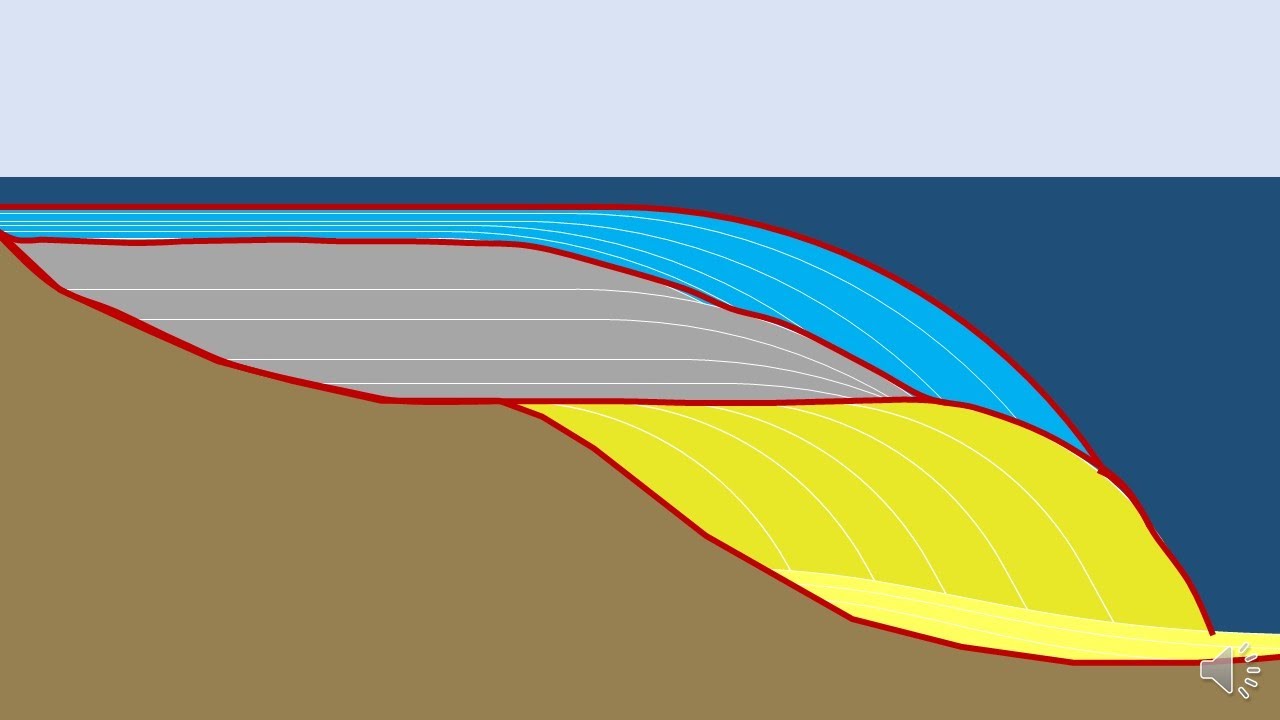
Geologic formations can be quite beautiful, but at the same time complex and potentially overwhelming. Yet, there is a fairly easy way to identify the relative age of each rock unit, at least when compared to the surrounding layers. I thus present the four laws of stratigraphy.
First, the law of superposition. In undeformed stratigraphic sequences, the oldest rock units lie at the bottom with each layer higher up being younger than the underlying layer. Second, the law of original horizontality.
All rocks layers are initially deposited in a horizontal manner, with any change to this shape indicating a later deformation event. Third, the law of lateral continuity. All rocks layers are initially laterally continuous in all directions, unless they taper off, encounter a barrier, or are later acted upon by another force such as erosion or faulting.
Fourth, the law of Cross-Cutting Relations. Layers of rock that cut across other layers such as due to a magma dike or salt diapir must have formed after the rock units they cut across. With these laws in mind, I want you to now attempt to label the rock units from oldest with a 1 to youngest with a 10.
Be sure to pause here. And now, here are the correct answers.