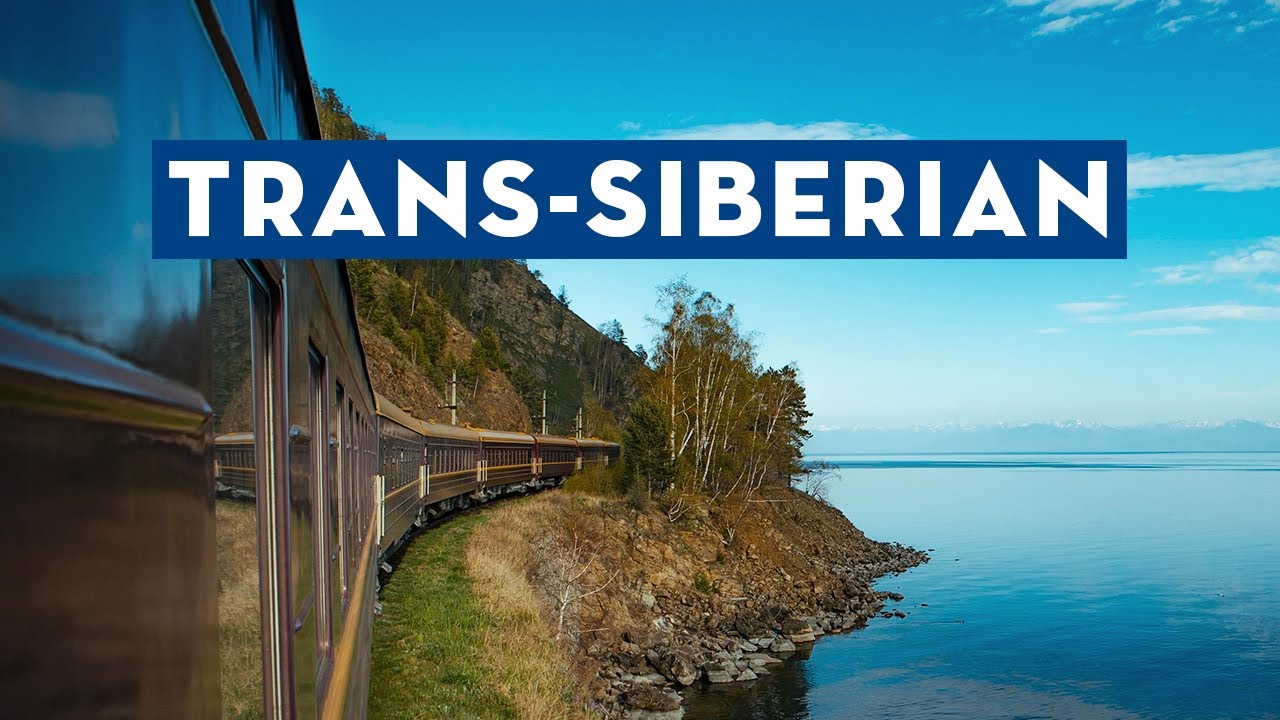
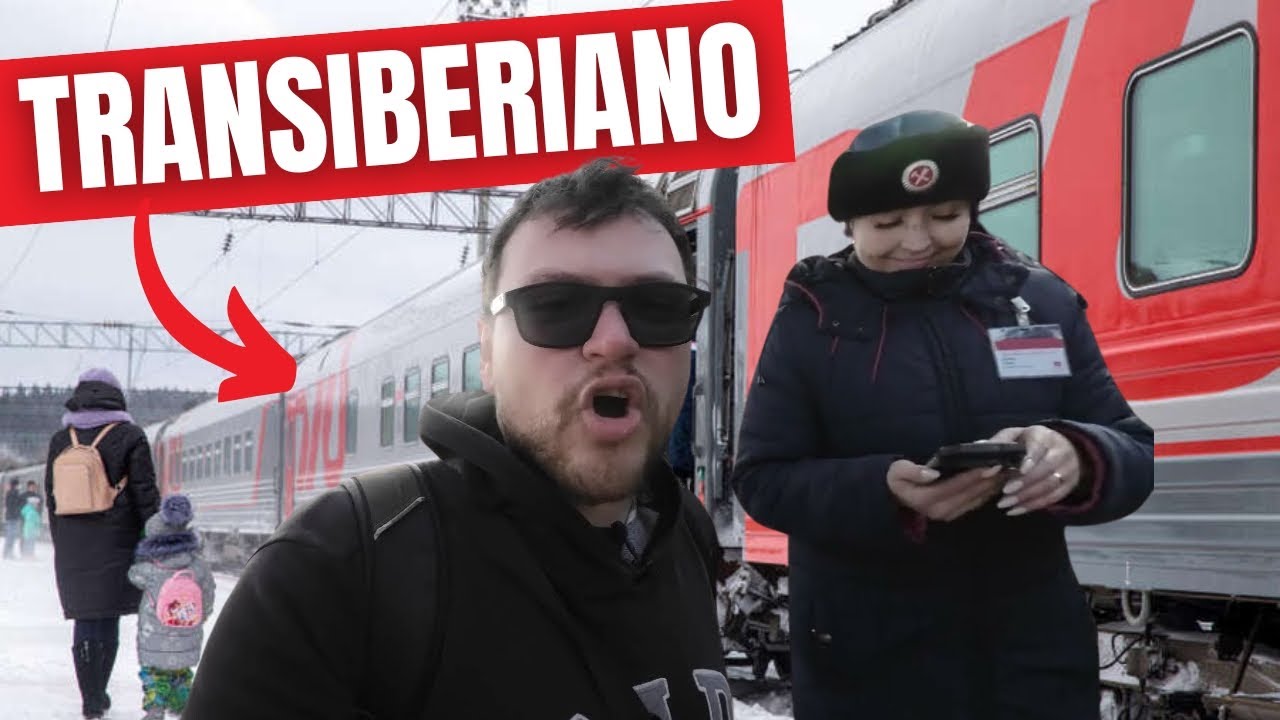
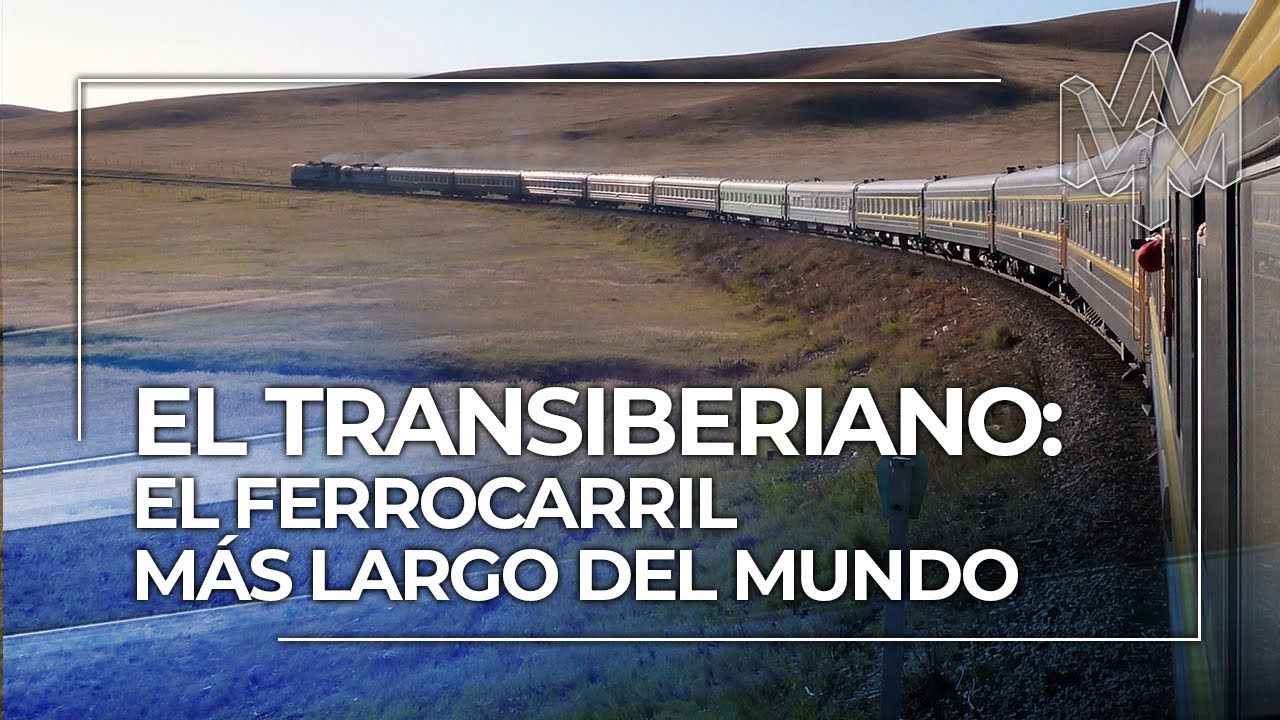
The Trans-Siberian is one of the most attractive places for travelers and adventurers from all over the world. How was it built, the places it goes through and a great halo of magic that covers it makes it something unique. Up next we invite you to discover what makes it so special and to imagine that we are crossing Russia from one extreme to the other.
But first we would like to invite you too, to be a member of Un Mundo Inmenso. Through a monthly contribution you can support us so that we continue to grow In addition, you can access exclusive content and participate in surveys. The Trans-Siberian, unlike what many believe, it is not a train.
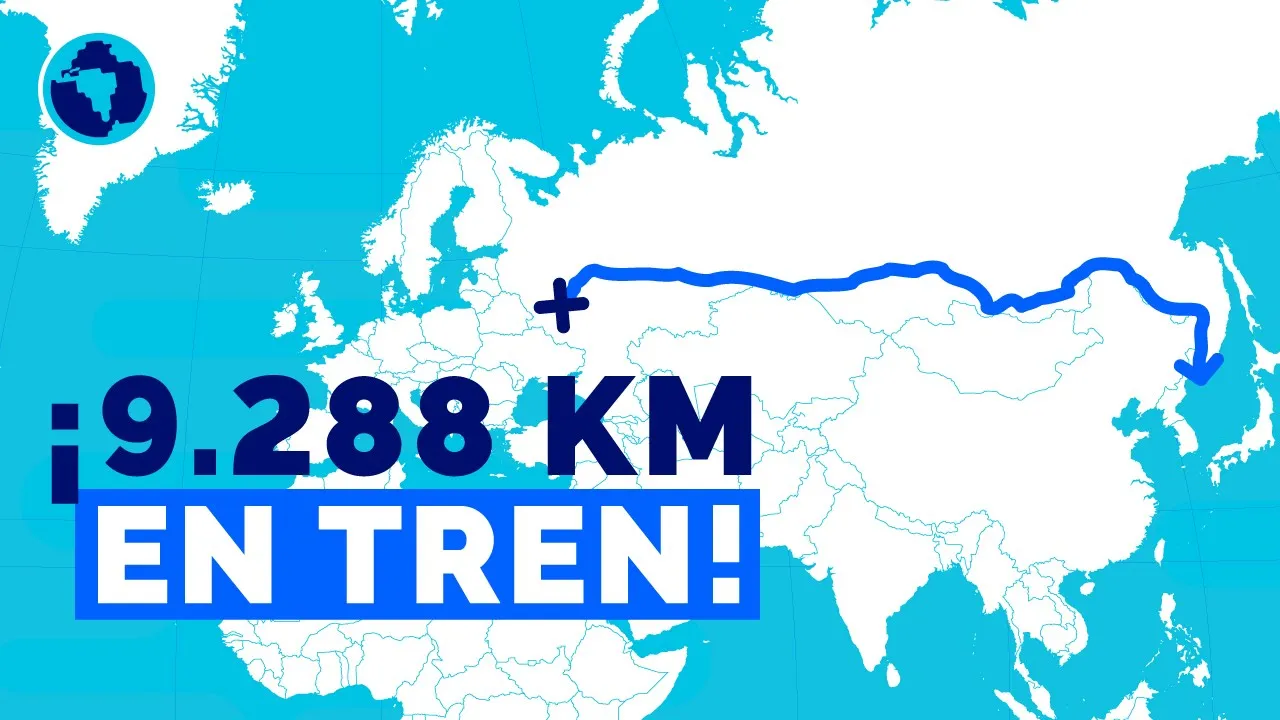
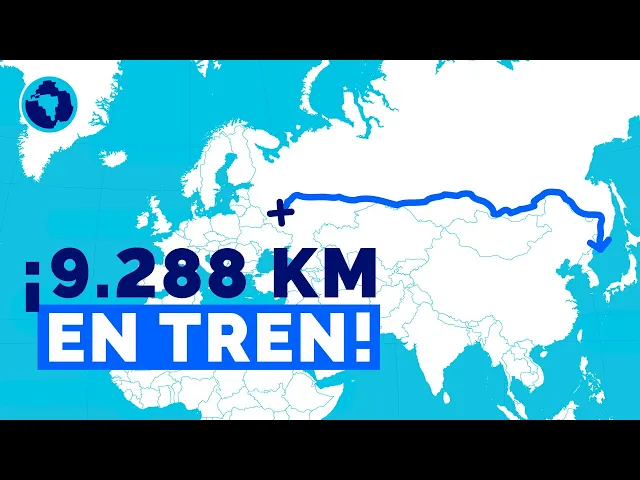
It is actually a railway network in where different trains circulate. The main track, which is officially the Trans-Siberian, unites Moscow, the Russian capital, with Vladivostok, on the Pacific Ocean coast. There are 9288 kilometers of tracks from one end to the other, what makes it the longest railway line in the world.
It has 72 stops, crosses eight time zones and if we want to do the trip at once, it will take a week. But there are two other tracks that are worth to stand out One is the Trans-Mongolian, which also departs from Moscow but it deviates to cross Mongolia and then enter China, until you reach Beijing. The other is the Trans-Manchurian, which separates ahead of the main line and also goes to Beijing.
But it does not pass through Mongolia, but it does through northeastern China until reaching the capital. For a country as extensive as Russia, the Trans-Siberian fulfilled an essential function when connecting the territory. To understand the importance of these tracks we must go at the end of the 19th century.
Tsar Alexander III faced several challenges: Chinese and Japanese threats in the East and even separatist movements in Siberia. So he came up with the Trans-Siberian, with the idea of consolidate the territory in the same way that the transcontinental had done it with the United States several decades before. The issue was that the Russian climate was very hostile and there were very inhospitable, almost unpopulated areas.
However, construction began in 1891. Many of the workers were prisoners, who preferred to work and receive a minimum wage before remaining in jail. After Alejandro's death, his son Nicholas would continue the work, who in the end would be the last tsar of Russia.
In 1904, when it seemed that the project was near completion, the Japanese invaded Vladivostok. To defend the city, the Russians used the train, but the tracks exploded because they were poor quality. After losing the war, it was necessary to remake good part of the Trans-Siberian.
Finally, it would be inaugurated in 1916, a quarter of a century after its construction began. In the 1950s there was a great improvement in the network, with the incorporation of steel and a second track. Returning to our days, the truth is that the Trans-Siberian not only has a historical and geographical value.
It also crosses cities with great cultural and touristic value. So, even if you can make the journey with no stops, many travelers choose to get off the train at some points to know the cities and get on later or a few days later in another train formation. Up next we will highlight some of the more important cities, although there are many.
Imagine then that we leave from Moscow to the east. The first stop we can make is at Nizhny Novgorod, 400 kilometers later. This city is located on the banks of the Volga River, one of the most important in Europe.
The next stop could be in Yekaterinburg, over the Ural Mountains. This is the border between Europe and Asia and we can visit the monument that points out that we already changed the continent and that we entered in Siberia In addition, this city is known for having witnessed the execution of the Romanovs, the dynasty that ruled until the Revolution. Back on the train we can go to Irkutsk, already more than 5000 kilometers from Moscow.
It is that from there we can go to the Baikal coast, the biggest freshwater lake in the world. It is estimated that there is 20% of the unfrozen sweet water of the entire planet. It is 1680 meters deep and has the lowest turbidity index in the world.
Very close there we can make another stop, in Ulan-Ude, and see this huge statue. Lenin's biggest head in the world, It weighs 42 tons and exceeds 7 meters high. The next stop is only for low temperatures fans who want to go to Oymyakon, the coldest city in the world.
You can get off at Skovorodino and do some 2000 kilometers, although at least half cannot be done by train Now yes, we finally reach the end of the Trans-Siberian It is not like any place, since Vladivostok has its thing. Even if we get tired there, it is worth touring this city, which for 34 years was closed to foreigners. As it was the headquarters of the Pacific fleet of the Soviets, it was not allowed until 1993 that foreigners enter there.
In addition, we will be a few kilometers away from a very special place at geopolitical level: the triple border between Russia, China and North Korea. In this city we can visit the bridge from Russki Island. It opened in 2012 as the longest cable-stayed bridge in the world, with more than 1800 meters that join both parts from the city.
We can also meet a great urban curiosity: Vehicles drive on the right, like in the rest of Russia. However, many of them have the wheel on the right, typical of the places where it is driven in the other side. This is due to Japanese influence, since this Russian city is located very close to the Japanese country and cars are imported from there.
In fact, a good idea to continue the trip after the Trans-Siberian is to cross by ferry to Japan and continue exploring. But we can also highlight some places typical of the other routes. If instead of the Trans-Siberian we get on the Trans-Mongolian, we can cross the Gobi Desert.
Although it is a redundancy, since Gobi means desert. We can also go to Ulaanbaatar, in Mongolia, which holds the record of being the coldest national capital in the world. Then we can cross to China and reach its Capital, Beijing.
In this way we can have an approach to the culture of the three countries. On the other hand, if we opt for the Trans-Manchurian, we will enter Manchuria, in northeast China, and we can visit Harbin, that although it is Chinese, reminds us of Russia. And we can experience nothing less than the Great Chinese wall.
We will also conclude the journey in Beijing, the capital of the country. To finish our tour we will do some brief recommendations to consider for those who are interested in embarking on the trip. One: what time to do it.
It will depend on the tastes of each traveler. Typically, it is done in summer, where days are longer And you can take more advantage of the cities. In addition, it will not be necessary to face the hard Russian winter However, if we do it in the months of winter, we can meet Siberia loaded with snow and better understand with what the Russian people face each year.
The other advantage is that the prices of tickets will be lower and there will be more availability to choose. Two: in what way to do it. If we start from Moscow to Vladivostok, we can gradually know Asia and the Far East.
Although both options are equally valid. In fact, if we start from the east surely we are surrounded by fewer tourists and more local people. Three: which track to choose.
The Trans-Siberian has its own magic, like we saw. But both the Trans-Manchurian and the Trans-Mongolian also have their own attractions and will allow us know other cultures. Four: which class to choose.
There are a lot of options as far as comforts and prices. Some are almost like a private cruise over rails, and are already predetermined the stops, the excursions and it's packed with luxury. They cost between 5000 and 15000 dollars.
But, easy, there are cheaper options. Most trains are regular trains, and they have three classes. In the first class we will have a private place for two people, and can even include a shower.
In the second class we find compartments for four people, with two beds above and two below. And in the third class we have beds that are not divided or have separating curtains. Prices vary greatly depending on the time and class, but we recommend you take out the tickets a couple of months in advance, since then the values increase.
Five: punctuality. All train schedules appear with Moscow time, so you have to convert the schedule according to the city where you are. In addition, they have extreme punctuality and never fall behind.
Would you do the Trans-Siberian? What would you like to know about this journey? Leave your comment below.



![[ENG SUB] THE MOSCOW METRO: THE 8 MOST IMPACTING STATIONS](https://img.youtube.com/vi/GtqdXXNCS2Y/maxresdefault.jpg)