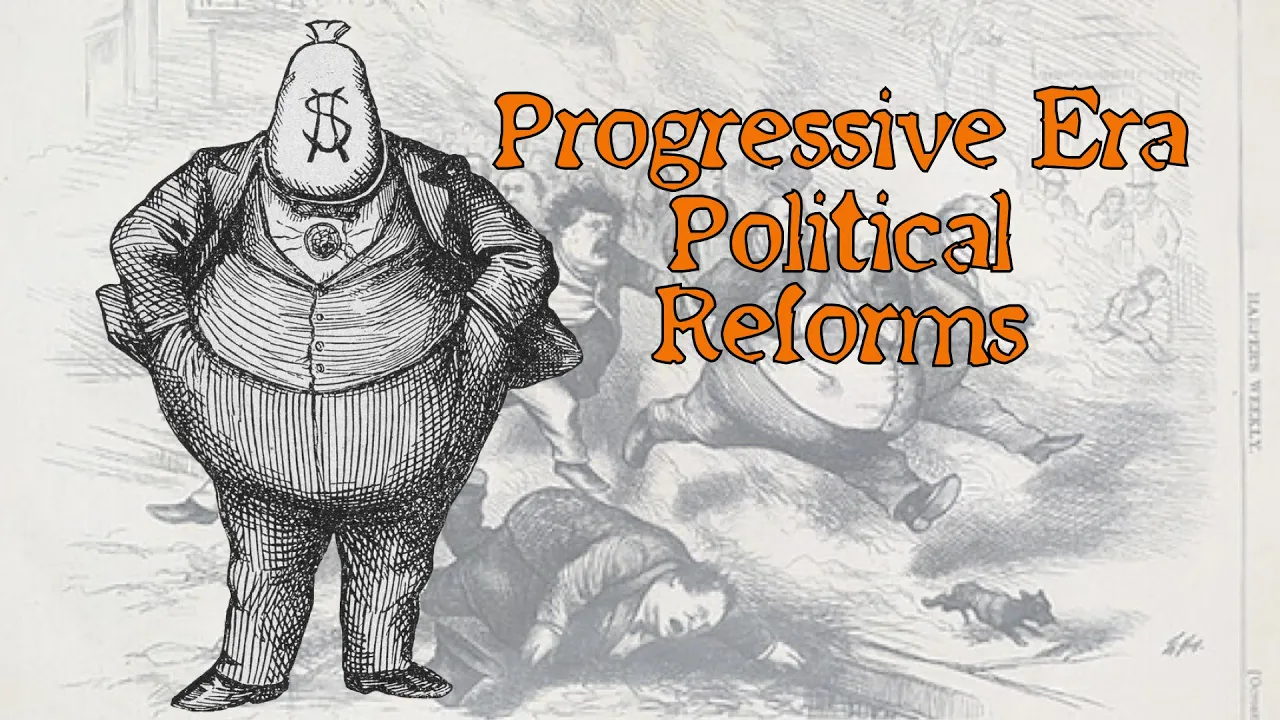
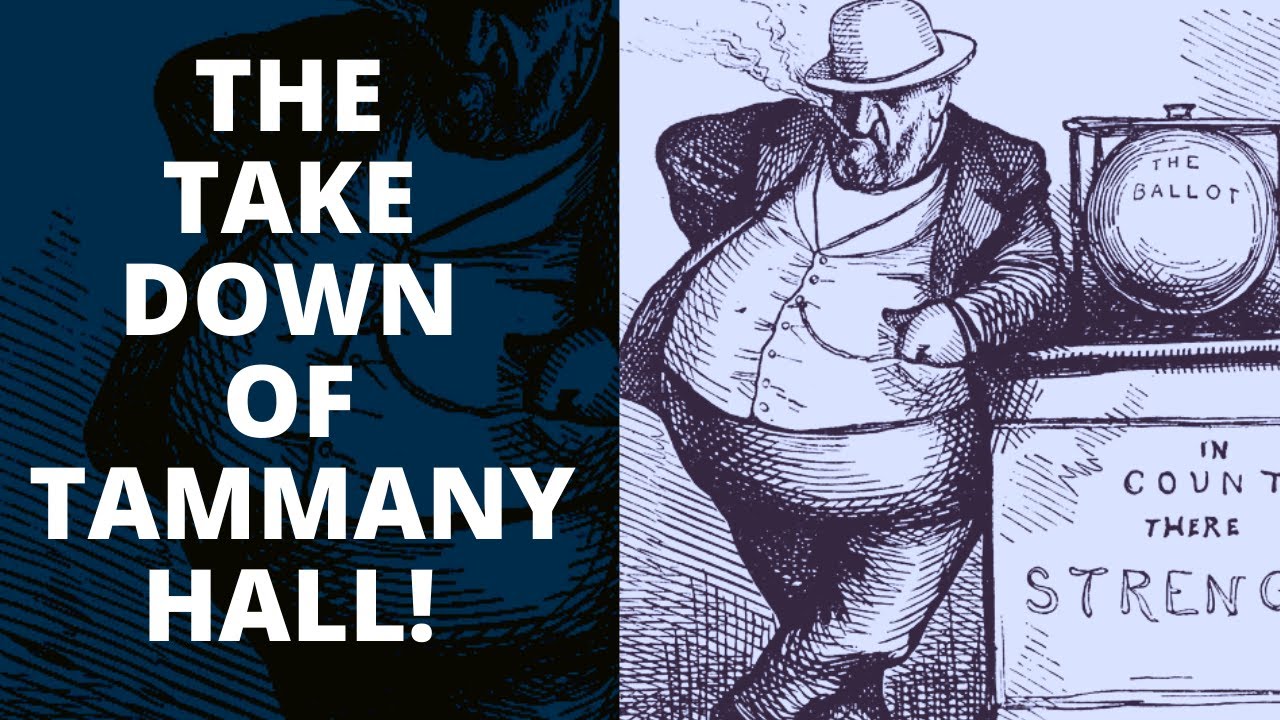
[Music] hi it's mr ramage and this lesson is designed to teach you about some of the political reforms that were created in past during the progressive era of american history so let's do a quick check in on politics at the local and state level in the late 1800s political machines were in charge and these are large powerful organizations that controlled city and state governments they are led by party bosses like william boss tweed in new york city political machines were corrupt they took bribes they took payoffs they rigged elections they controlled the police and judges
and essentially did whatever was necessary to stay in power in their cities and in their states uh the most famous of which would be the tammany hall crew in new york city led for a while by william boss tweed and the tweed ring itself brought in somewhere between 50 to 200 million dollars in corrupt money so through graft and cronyism and patronage political machines controlled the process and essentially didn't give voters the opportunity to have any influence whatsoever some people argue the political machines did benefit local government and local communities but at the end of
the day it's a lot of corruption and a lot of power in the hands of just a few people and that's something the progressive era was trying to fix so the progressives want to get rid of these political machines and the progresses want to create opportunities for voters to have more influence and power over their state and local and eventually national elections so let's take a look at those political reforms that the progressives are going to support remember the idea here is that each of these reforms empowers the voters in the political process the first
reform we're going to take a look at is the direct primary that's where if we have a number of candidates running for office the voters get a chance to decide who they would rather support and who the party should run for office so there are five men who want to become the governor of our state and they're all democrats there would be a primary election now this happens at the state level it also happens for the presidential elections where there are primaries so that we can determine which people the party would prefer to run for
office and from those primary elections we get the final candidate who will run as a representative of that party for that office so the direct primary gives voters a voice in who runs for office for their party of choice the second reform we're going to take a look at is the initiative so in the state that we live in voters want a new law in that state whatever that law may be but it's something that the voters want but at the moment the state legislature is not taking any action on that so what the voters
can do is go out and sign a petition to raise an initiative what they need to do is collect a certain number of signatures which varies depending on which state you live in and once enough voters have signed off on that petition saying that yes they would like to vote on this initiative then it's either going to go to that state legislature for a vote or it's going to go directly onto the ballot and the people of that state will be able to vote for that initiative so an initiative allows the voters of the state
to propose their own laws and sort of bypass a state legislature that might not be doing enough or the right things according to those people reform number three is a referendum this is kind of the reverse of an initiative so let's say your state legislature has passed a new law but the people in the state kind of hate that law it's not working out it's not really what was intended so what you can do is again go out with a petition have registered voters sign off on that petition and you can place that law on
the ballot as a referendum and turn it over to the people of the state to vote on that law so with a referendum voters can vote to get rid of a law that they do not support the fourth reform supported by progressives in the late 1800s and early 1900s was a recall let's say we've elected this person as our governor of the state and after a few months we come to realize that this person is absolutely terrible we need to replace this person he's a terrible governor uh do we have to wait four years in
order to get rid of them well we can have a recall and again you can go out and get signatures from registered voters then you can recall that governor and have a new election which allows other people to run against the governor and potentially the voters can vote to remove that person from office so any elected official is eligible for a recall election they don't happen often but it is a power that the voters of the office hold so if someone is elected and ends up not being able to handle the job or fulfill the
certain promises that they may have made a recall election would replace that person potentially another big reform that progressives supported in the 1900s was the creation of the 17th amendment to the constitution 17th amendment to the constitution is going to allow for the direct election of state senators by the voters of each state now that's not originally how senators were selected based on the constitution as a way to ensure state power and states influence over the national legislature it was the state legislature who actually selected members of the u.s senate now early in the lesson
we mentioned the corruption of government at the state level well that corruption was seeping into this process so here's how it worked voters of the state would elect their representatives to the state legislature the state legislature then would convene and they would select their state senators to go and represent the state of ohio or any other state in the u.s senate so the corruption that was taking place at the local level was finding its way into the united states senate this is a really big deal this is an example of an indirect election which means
the voters of the states do not directly elect their united states senators it's an indirect process they elect their state representatives and those state representatives then select the senators so progressives wanted to change this system and make it a direct election and that's what the 17th amendment does 17th amendment gives voters a direct election for their state senators we vote directly for our representatives to the u.s senate so to summarize what we covered in this video lesson progressive reformers supported things like direct primary elections initiatives referendums recalls and the 17th amendment in order to empower
voters at the state level to be able to get involved in the political process and to be able to remove the power and influence of those political machines and make sure that democracy worked for the individual not the party hopefully this lesson helped you learn more about political reforms in the progressive era there are a lot more details you should probably dive into but hopefully this got you started [Music] you



![The PROGRESSIVE Era [APUSH Unit 7 Topic 4] Period 7: 1898-1945](https://img.youtube.com/vi/0re-kW3fjdc/maxresdefault.jpg)