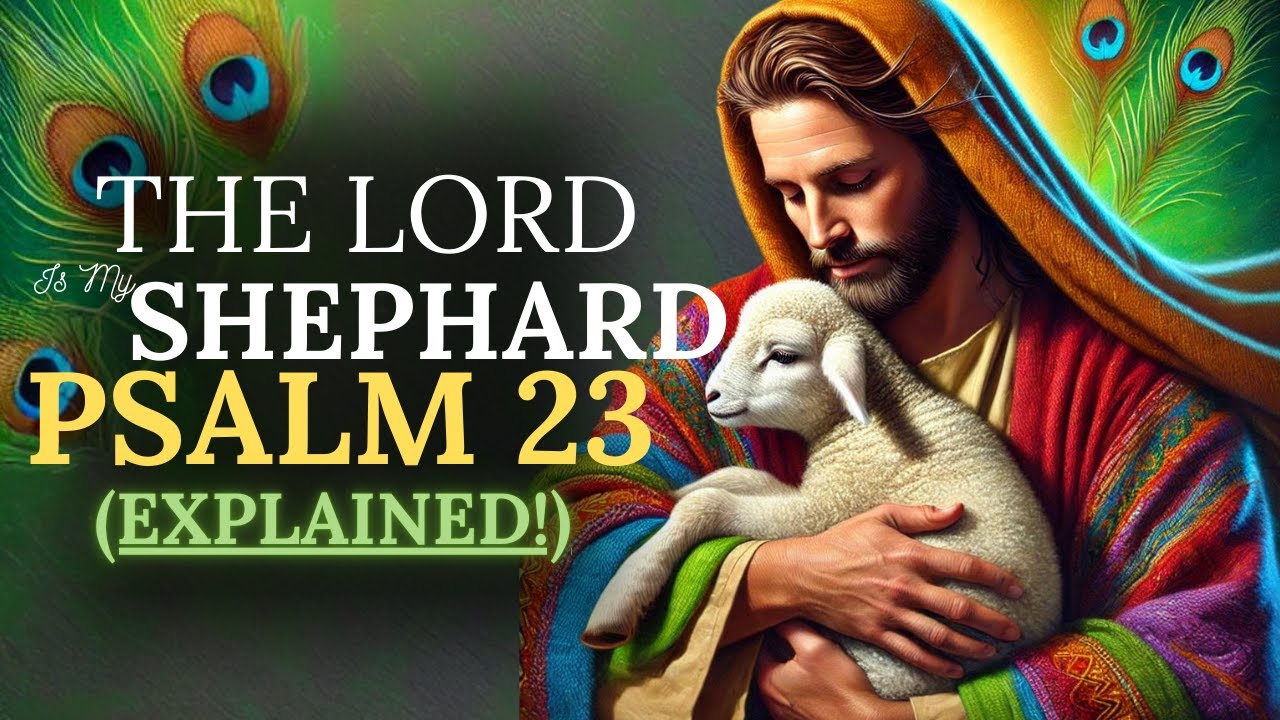
here's some advice for you when you're studying the Psalms don't just pay attention to the particular Psalm that you're looking at but the Psalms that precede and follow it because when the Psalms are put together they weren't like sh like cards being shuffled and they just were willy-nilly placed in whatever order they happen to be in there was a structuring and ordering of the sequence of the Psalms illustration look at Psalm 23 and the psalm that precedes and follows it Psalm 23 of course is well known Psalm 22 is the psalm that Jesus quotes when
he's on the cross my God my God why have you forsaken me he is the suffering messiah in the psalm and toward the end of it you have these notes of Triumph as well those notes of Triumph then Bridge their way into Psalm 23 in which you have this trusting Messiah who knows that even in the Valley of the shadow of death that his father is with him and he knows that he is going to end up in the house of the Lord and then you go to Psalm 24 and where does the Messiah end
up in the house of the Lord you have this progression this procession into the very House of the Lord and you could say that Psalm 22 is the psalm of the crucifixion transitioning to the resurrection Psalm 23 is the psalm of the resurrection and then Psalm 24 is the psalm of the Ascension and enthronement of the Messiah at the father's right hand so Psalm 23 isn't to be read in isolation but to be read in conjunction with the proceeding and following Psalms to get the full message of what the Psalms are teaching us about Jesus
the Messiah