They say the best way to a man's heart is through his stomach, but that's a common misconception. In reality, the best way to his heart is actually through the fifth intercostal space, out of the left midclavicular line. There's a lot that most people don't understand about men, a lot of questions that tend to go unanswered.
Why do guys get random erections? Why does cold cause, um, shrinkage? What causes male pattern baldness?
Thankfully, these mysteries don't have to remain unsolved. Today, we're diving into some of the weirdest facts about men. To kick things off, let's talk about erections.
Fifty percent of the population has them, and humanity wouldn't be able to multiply without them, so let's remove that stigma and open up the conversation! Millions of men all around the world have dealt with the stress and embarrassment of random, unanticipated erections. So what causes them?
Ghosts? A trickster god? The cursed coin you stole from that old lady?
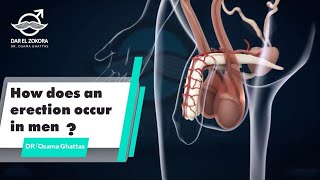
No, it's nothing like that. It's completely normal and natural. Erections are normally caused by sexual arousal, which in turn increases blood flow to the penis, allowing it to "rise to the occasion," so to speak.
But sometimes, erections occur without the presence of sexual arousal. One potential cause is hormone fluctuations, specifically the fluctuation of testosterone levels. Testosterone levels naturally fluctuate throughout the day and can be influenced by stress, diet, exercise, sleep, and aging.
As these testosterone levels shift, they can sometimes trigger unexpected or unwanted erections. There are also medications that can cause random erections as a side effect, including antidepressants, blood pressure medications, and some antihistamines. Yes, treating your allergies can result in random erections.
If this happens, it's important to discuss it with your doctor and find a way to adjust your treatment. One of the most common types of random erections occurs first thing in the morning. Nocturnal Penile Tumescence, or "morning wood" as it's been nicknamed, is caused when the penis fills with blood, and you wake up with an erection.
These can sometimes be brought on by dreams of the more erotic variety, but more often than not, they are caused by something more physiological. The parasympathetic nervous system is the part of the nervous system responsible for digestion, urination, and sexual arousal. When this system is active, it can cause an erection.
This part of your brain becomes really active when you sleep, especially during the REM, or rapid eye movement stage. This is also the sleep stage at which dreams occur. Most people wake up after or during REM sleep, meaning the odds of waking up with an erection are relatively high.
These dreams don't have to be sexual, they can be about anything, even that dream where you're falling off a cliff or running from one of those giant inflatable guys they put outside of used car lots. Nocturnal penile tumescence can also be triggered by sleeping with a full bladder. Some experts theorize that a full bladder puts pressure on the sacral nerve, triggering a parasympathetic nervous system response and resulting in an erection.
Whatever the cause, morning wood is completely normal and can last anywhere from a few minutes to 35 minutes. Sometimes, the same factors that lead to nocturnal penile tumescence can cause nocturnal emissions or wet dreams. In these cases, ejaculation occurs while the person is still sleeping.
This can be the result of a sex dream, but can also be set off by stressful dreams in REM sleep, activating our good friend, the sympathetic nervous system again, causing the involuntary reaction. Sometimes, the problem isn't poorly-timed erections, but a lack of erections when you really need one. But we'll get into that a bit more later.
First, let's move away from the penis for a moment and talk about the breasts. Male breasts, specifically. Did you know that men can produce breast milk?
This might sound like a fake fact we’ve made up but it's true, any man can lactate under the right conditions. Jack Newman, a Toronto-based doctor and breastfeeding expert, spoke with Scientific American about the possibilities of male lactation. Any changes in the production of prolactin, the hormone that causes milk production, can lead to spontaneous lactation, even in someone who has not given birth.
For example, Thorazine, an antipsychotic used in the mid-20th century, caused the pituitary gland to overproduce prolactin. This could then induce lactation. Lactation is also a potential side effect of digoxin, a heart medication.
A tumor in the pituitary gland could also increase prolactin levels and cause the same issue. It has also been pointed out that prolactin can be released in the body simply through nipple stimulation. Most men's breasts may look different from most women's, but under the right conditions, both are capable of producing milk.
On the topic of facts that sound like we made them up. Did you know it might be possible for someone to smell if you're single? A study at Australia's Macquarie University found that heterosexual women assessing the body odor of random men consistently rated single men as having stronger body odor than those in relationships.
Though the exact cause of this could not be determined, there were some theories. Mainly, it has been found that single men have higher testosterone levels on average than men in relationships, and testosterone levels are correlated with stronger body odor. Of course, this might just be due to the fact that older men are more likely to have partners, and testosterone levels decrease with age.
There will need to be more research on the matter to determine for sure if someone can actually smell your singlehood on you. Now for some slightly less fun but still important facts. On average, men have a shorter life expectancy than women, and one of the factors that contributes to that is a higher risk of heart disease.
The leading cause of death for men is heart disease, and men are statistically diagnosed with heart disease when they’re ten years younger compared to their female counterparts. So, men, please look after your hearts, and not just romantically. Okay, now we can get back to talking about penises.
Approximately 30 million men in the United States are affected by erectile dysfunction. Erectile dysfunction, also called ED or impotence, is a condition wherein a man has difficulty getting or maintaining an erection. ED can be caused by physical or mental factors, and the physical side of this is thought to be broken down into three major causes.
The first is a lack of blood flow to the penis, caused by issues such as heart disease, smoking, or high blood sugar levels. The second is difficulty storing blood in the penis during an erection, also known as a venous leak or cavernosal dysfunction. The third cause is the inability for nerve signals from the brain to reach the penis, which can be caused by injuries, surgeries in the area, or illness.
Psychological factors such as stress and anxiety can also contribute to ED. Luckily, it can be treated in a variety of ways, from lifestyle changes to medications. But we didn't always understand what caused ED or how best to treat it.
In their desperation to cure erectile dysfunction, men throughout history have resorted to some pretty bizarre remedies in an attempt to reinvigorate their sex lives. Ancient Egyptians would rub a mix of baby crocodile hearts and wood oil onto a chronically flaccid penis. The Romans went for an oral approach.
No, not like that, get your mind out of the gutter. They would consume the genitalia of animals known for high sex drives, such as rabbits. 13th-century German friar Albertus Magnus also swore by this cure, advising men struggling with impotence to roast a wolf penis in an oven, then chew a small portion of it—no advice on how to get a wolf penis without getting mauled to death, though.
Albertus also suggested eating starfish to aid with the issue, though that could lead to the patient ejaculating blood. Maybe some treatments are just not worth trying. The practice of eating animal parts to cure erectile dysfunction persists to this day, with black markets providing illegally acquired tiger penis to alleviate ED symptoms, a cure from ancient Chinese medicine.
Needless to say, it doesn't actually work, and means that the struggle to get sufficient erections has actually indirectly contributed to the tiger's status as an endangered species. If you thought starfish came with nasty side effects, wait until you hear about the miracle cure of the late 1890s: radium suppositories. Yes, radium, as in the radioactive substance.
And yes, suppositories, and they went exactly where you'd expect. Or, if that's a bit too much, there was also the option to insert radioactive wax rods into your urethra. For another horrible cure, but one that wasn't nearly as likely to cause cancer, there were testicle transplants like the one performed by Dr Serge Voronoff in 1913.
He transplanted pieces of tissue from a baboon's testicles into a 74-year-old man. An American doctor, John Brinkley, took to the idea and, up until 1939, was castrating goats and sewing their testicles into his patient's scrotums to also solve ED issues. Another inadvisable natural cure for erectile dysfunction is the bite of the Brazilian Wandering Spider.
The erection caused by that bite is much more pain than pleasure, however, as it induces an agonizing four-hour erection, followed by death. Speaking of four-hour erections, have you ever heard that number thrown around, maybe as a disclaimer in ads for erectile dysfunction medications like Viagra? There's a reason for that.
Prolonged, unwanted erections, such as the kind that can be caused by an adverse reaction to Viagra or the bite of a Brazilian Wandering Spider, are called Priapism. Some types of priapism are not cause for concern, but Ischemic priapism, which results from blood being unable to exit the penis, can cause permanent damage to the penis if not promptly treated. This is usually accomplished via a small needle and syringe, which removes excess blood from the area.
But let's not dwell on that mental image for too long. Just as the penis can become too engorged, it can also shrink down in a way that causes distress and discomfort. Many guys who've climbed out of a cold swimming pool have experienced "shrinkage," a phenomenon that occurs when the penis shrinks in size after exposure to cold temperatures.
Director of sexual health and medicine at Weill Cornell Medicine Darius Paduch said that exposure to the cold causes blood vessels to constrict, limiting blood flow to the penis and causing it to decrease in size. It's a frustrating occurrence, but there are actually evolutionary benefits to it! The human body has evolved over time to preserve heat and energy.
When it's exposed to extreme cold, it focuses all of its resources on keeping the blood flowing to the vital organs in the middle of the body. In order to do that, blood flow to less necessary appendages has to be reduced. This includes the fingers, toes, and, yes, in spite of how necessary of an appendage you might find it to be, the penis.
The testicles also retract toward the rest of the body for a similar reason so that they can stay warm. A study from King’s College London revealed that thirty percent of men are insecure about the size of their penis, and it's certainly a subject that gets a lot of attention. Amidst conversations about size in general, there is frequent cultural discussion of the difference between a "grower" and a "show-er.
" As the names imply, a penis that is a "show-er" does not change much in size from flaccid to erect, whereas a "grower" may appear smaller when flaccid, but becomes dramatically larger when erect. But is that actually a thing? In short, yes, but not for everyone.
In March of 2023, a study was presented at the European Association of Urology Congress in Milan that determined a scientific definition for both "growers" and "show-ers. " If a person's penis increased in size by more than 56% from flaccid to erect, they could be considered a "grower," while a penis that increased by less than 36% qualified as a "show-er. " Most of the male participants in this study did not fall into either category, neither growers nor show-ers.
No correlations could be found between these qualities and age, weight, or smoking status. The study also determined that subjects who qualified as "show-ers" tended to have longer flaccid penises on average than "growers. " In "grower" penises, the tunica albuginea, spongy erectile tissue in the penis, became thinner during erection than the "show-er" penises.
This is likely due to the presence of more elasticity in the tissue in penises that require it to stretch further, to account for "growth. " So, essentially, "growers" and "show-ers" do exist, but are not neat categories that all men can be sorted into. Another sexual frustration that tends to plague men is the sense of exhaustion and sleepiness that sets in immediately after orgasm.
What is it about the orgasm that just hits the snooze button in the male body? Well, prolactin is once again playing a significant role in things, though there's no milk involved this time. Prolactin is released during orgasm, and prolactin just so happens to suppress dopamine, a neurotransmitter that makes you feel more awake.
Oxytocin is also released during sex, lowering stress and making it easier to relax and drift off to sleep afterward. Combine that with the fact that people tend to have sex later in the day, which causes the hormone melatonin to release and kick-start the sleep cycle, and you have a cocktail of chemicals signaling that it's bedtime and not in a sexual way. If men manage not to fall asleep after sex, they may find themselves frustrated by their refractory period.
The refractory period is the scientific term for the time following ejaculation when a man is no longer able to get an erection. This is caused by the dopamine and testosterone levels in the body dropping, as well as, yet again, the rise in prolactin. These factors contribute to relaxation and the inability to achieve an erection immediately following orgasm.
The duration of this period varies wildly from person to person. Some men only need a half hour or even less. Others need hours or sometimes an entire day.
This can depend on age, arousal levels, hormones, and general physical health. As odd, confusing, and frustrating as the human body can be sometimes, it's important to remember that we are not alone in experiencing all of the bizarre, gross, amazing things that make us human. Now to see our original list check out “Weird Facts about Male Body”.
Or watch this video instead!