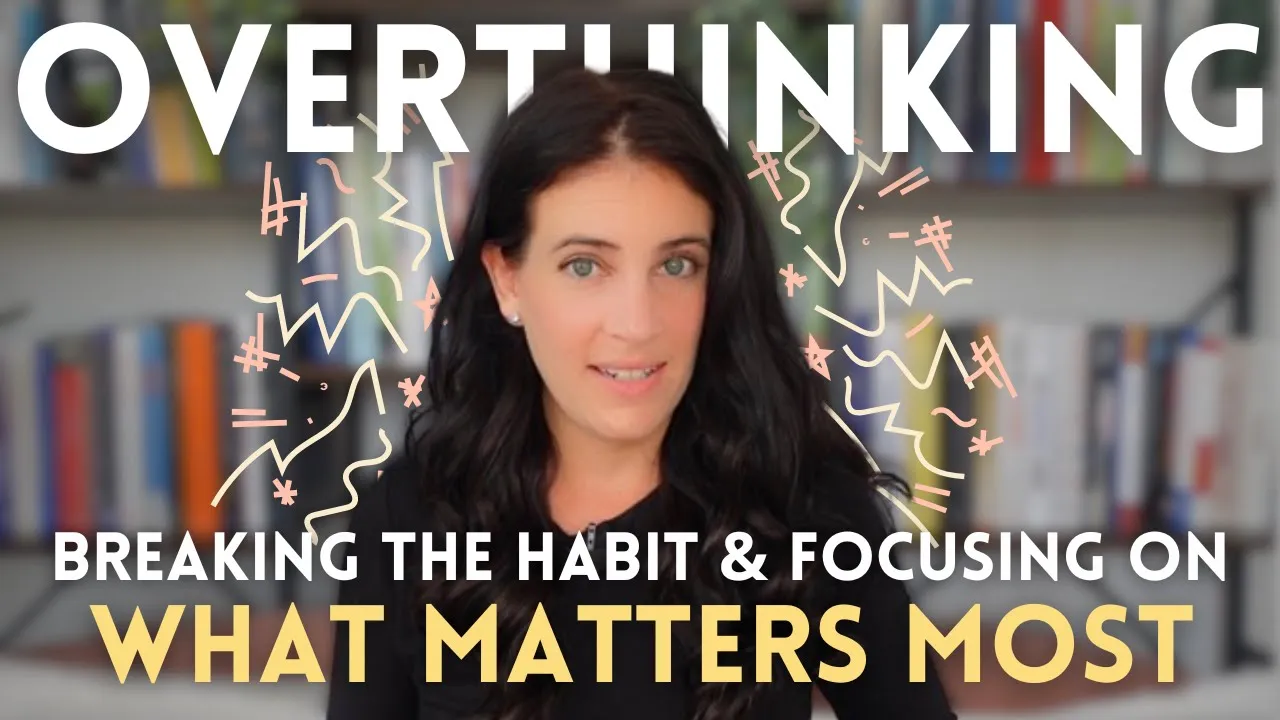
hey guys I'm Heidi PRI welcome back to my Channel or welcome if you're new here this summer on this channel we've been talking about neuroticism and today in particular I want to go deep on the concept of neurotic thinking which is often something we refer to using the term overthinking so to kick this off I actually want to talk about a tweet that I saw several years ago that kind of got into my mind and stayed there and the Tweet simply said there is no such thing as overthinking there is only thinking badly and I
remember seeing that tweet and initially going well that's not true and then really sitting with it and noticing that if I could trace my thought patterns back to the times when I got really stuck in some sort of loop or some sort of thinking pattern that I couldn't seem to find my way out of often the problem was not in fact only that I was thinking too much it was that I was trying to figure something out that either had no real answer to it that did have an answer to it but the answer to
it was not one that I wanted or that I simply did not have enough information or enough real and valid and verifiable information to come to a conclusion on or something else in that category and so I started noticing going forward anytime I found myself thinking too much about something was it true that the quantity was the main problem or was there something about the quality of my thoughts that I actually needed to pay attention to in order to stop the quantity from going way over the limit and then in 20121 I started doing my
master's degree in attachment Theory and part of what you study when you study attachment Theory particularly if you are learning to code adult attachment interviews which is the assessment tool that we give to people to determine their attachment Styles is something called discourse analysis now the first thing you need to understand about discourse analysis at least in the way that it's used to code adult attachment interviews is that when we are coding AIS what we're looking at is what are their patterns of language giving away about their patterns of thinking so the way that people
use language is often a reflection of how they are thinking now obviously the thought that comes up right away here for most people is well people can lie but interestingly there are also certain structures of language we would expect people to use when they are lying so with that taken into account we can look at the ways that people are expressing themselves and with a reasonable degree of accuracy predict certain patterns of thinking that that individual might have now discourse analysis is a really complex field so this doesn't map perfectly onto the concept of overthinking
but what we're going to do today is use the field of discourse analysis as a metaphor for understanding what's going on for us when we are overthinking and in some cases this does actually track very nicely onto our language patterns so in the field of discourse analysis there's something called Graces maxims Graces maxims are kind of Unwritten rules they're technically written down in that somebody wrote out the maxims but most people follow these maxims without being aware of them that govern how people cooperate with each other in conversation for example if somebody asks you hey
are you going to the beach later you're not going to start talking about the movie that you saw last night you're going to probably answer the question about the beach first and then change topic so just basic things like that the four maxims are quantity quality relevance and manner the maximum of quantity states that we ought to present the right amount of information so don't say too much relative to what's expected of you and don't say too little the maxim of quality states that we ought to be truthful in conversation so don't say that which
you know to be false and also don't State as fact that which you have insufficient evidence for the maximum of relevance is of course say what is relevant to the conversation and don't say what is irrelevant without creating some sort of bridge in the conversation so don't start talking about your gym routine if you're asked for the bus schedule and the maxim of manner implies that we ought to be clear and direct about what we're saying so don't use unnecessarily complicated language that the other person isn't going to be able to follow and also try
to keep the points you're making clear direct and connected to each other and when two people in a conversation naturally follow these four maxims the conversation tends to go fairly well but quite often people do not follow all of these maxims because because if our thinking is muddled in one of these areas it's going to be really hard to communicate that which we cannot work out internally so when we were studying AIS something I found very interesting was that when you have someone saying way more than what is expected or is appropriate in an adult
attachment interview so you ask them a short question that most people answer in two or three sentences and they go on for two or three pages it's often indicative that they're thinking around that top topic is not particularly clear and so often what they're doing is giving you way too much information because they're unable to parse out for themselves what within that information is relevant and important to communicate to the interviewer now why this is so interesting is because we can kind of think of overthinking through the same lens when our brain is giving us
way too much information often the problem is not the quantity itself it's that we're not clear on the other three maxims we might not know which parts of this information are relevant and which parts we ought to be focusing our attention on we might not know which information is true and what is false and so we might not know which information to trust and weigh the most heavily or we might not even be clear on what problem we're trying to solve within our own thinking so we might not know what information we can naturally stop
focusing on and when we're doing something like looking at an adult attachment interview where there's way more text than we would expect there can be many reasons why this is the case but one of them might be that someone has trauma and when you have a certain type of trauma it can cause you to retain too much information about the traumatic event and your mind is unable to sort through what is relevant and what is irrelevant so if you once got jumped on the street and the person who attacked you was wearing a red shirt
your brain in its traumatized State might log everything that was happening around you as part of the threat so in the future it might think not only is that area of town a threat also red shirts are a threat maybe you were listening to a particular song right before you got attacked in your headphones so that song might signal a threat response in your body in the future all of these things that in a nontraumatized state were able to filter out as unimportant information might get registered by your traumatized brain as relevant when they're not
so when we find ourselves in a state of overthinking what we can do is turn our attention towards these other three maxims to try to figure out how to improve the quality and structure of our thinking so that we get better results quicker if you think about something like a traumatic memory in which you have retained too much information which I just want to clarify is not always how traumatic memory works but this is one possible expression of it the learning that needs to happen both somatically and intellectually around that trauma is which parts of
the information that you have retained are actual indications of danger and which are not so you probably do want to keep the information in your awareness that that area of town is not a good area to be walking in after dark if that is true information that might keep you out of danger in the future but you probably also want to find a way to integrate the fact that red shirts are usually not indicators of danger or that the song Shake It Off by Taylor Swift does not necessarily mean that you are about to get
attacked every time you hear it so working with traumatic memories is in large part and there are a variety of ways to achieve this but it's in large part about helping your nervous system recognize which cues are real danger cues and which are not and this is similar to what we want to start doing with our own thinking when we find ourselves thinking in Loops we want to start narrowing down the information to figure out what is true what is relevant and what problem am I trying to solve here this is going to help us
narrow our attention to focus on what is most relevant or it's going to lead us to broaden our perspective if we find out that actually we're missing information that is incredibly important to what we're trying to figure out so what we actually need to do is kind of drop this problem and go gather more information so we're going to do a journey through the other three maxims and look at what might be going wrong in the instances where we are overthinking so the first one I actually want to encourage you to check in on is
the one that is listed last in G's maxims and we're going to work kind of backwards here which is manner manner refers to whether we are conveying our thoughts in a clear and direct way and when we apply this to thinking it's really hard to structure our thoughts effectively if we don't know in clear and unambiguous terms what problem it is that we are trying to solve with our thinking so when I find myself overthinking something the first thing I stop and ask myself is do I know very specifically what the problem I'm dealing with
is and do I know what the solution to the problem would look like so a lot of the time when I ask myself these questions I get very hazy responses from myself so it'll be something like well I feel bad and I want to feel good or I feel like I can't focus and I want to focus but often those aren't very clear goals they're very vague and indirect goals so what helps is to get way clearer on both of those things and to determine operational definitions of what those things mean for me in the
context that I'm currently in so if I feel bad but I want to feel good what would feeling better actually look like in what way do I want to feel better physically emotionally what am I actually aiming for here so spending more time clarifying that question might get me to the result of well I feel anxious because I'm in a conflict with my partner and I want to know when we're going to speak again maybe right now we're taking space and it's been a while and I'm just kind of getting anxious about when we're going
to reconnect now that's a much more comp conrete thing I'm working with then I feel bad I want to feel good I'm anxious because I'm dealing with an unresolved conflict I want to have a time and date that I can anchor in the future as to when we're going to return to it so my nervous system can kind of settle around that now I have a problem with a potential solution and I can Orient my thinking around getting to that solution point or getting to a similar solution point or sometimes I sit down to start
making bullet points for a YouTube video and find that I'm writing way too much and I stop myself and go okay what question am I trying to answer with this video maybe I have this idea that I want to talk about shame and then all of a sudden I have 5,000 words on shame and what I really need is like five bullet points and it helps me to really narrow that down what is the Beating Heart of this video what do I really really want people to get from it well I want them to understand
let's say how to recover from a toxic shame emotional flashback so if you are suddenly overcome with these unbearable feelings of worthlessness and you feel like you are 5 years old what are some concrete things you can do to manage that state now that's going to help me narrow down what I need to say about Shane because I have a very clear and direct purpose that I'm trying to achieve with the video so my brain can start to filter out irrelevant information maybe I have a to say on toxic shame that is true but it's
not relevant to toxic shame emotional flashbacks specifically so my brain knows to not focus on that and it knows what to focus on which leads us naturally into the next Maxim relevance do you definitely know which information is relevant to the solution that you're trying to arrive at or are you actually following a lot of false leads so some really classic errors I see people making over and over again myself included in this department are either trying to think your way out of a feeling problem so trying to find a logical solution for something that
can actually really only be solved through being present with your emotional experience and listening to the data and the wisdom that your body is giving you or trying to feel your way out of a problem that logic could solve so if you find that you're continuously ending up in the same distressing situations over and over and over again is there a way that you could zoom out and look at what mistakes you're making that is causing that pain to repeat itself rather than continuously focusing on how to manage your feelings around it so often for
myself when I'm really overthinking something I'm trying to write let's say the underlying problem is that I'm emotionally disregulated about something that's happening somewhere else in my life and my disregulated body is just not able to think as clearly as my regulated body is because it's trying to pull my attention back towards whatever it is that is causing my disregulation until my time is probably best used attending to that situation and finding my way back into a regulated State before my thinking about these other things will be clear again so sometimes we're omitting information that
is very relevant which is that I can't solve this problem because I'm emotionally disregulated and that is taking up a lot of my attention resources or or once again you could have a situation where you're finding yourself chronically emotionally disregulated and in that case you might be discarding a lot of relevant information around how you could stop that pain from occurring before it begins so let's say we are living in really close quarters with someone and we're starting to get chronically frustrated with each other and we could spend endless amounts of time trying to work
out all of these tiny frustrations that come from living in this very small cramped space but what if we could just move to a bigger space and of course that isn't always a possibility but this is just to get us all thinking about the fact that most of us tend to neglect certain areas of our own thinking so some of us tend to naturally repress what's going on for us emotionally and assume that the solution to every problem is logical and I kind of hate using that language because I think that attending to your emotions
actually is incredibly logical way more logical than avoiding them but to someone who's learned to suppress their emotions for much of their life there's often that bias that attending to emotions is irrational or illogical so you might have the bias in that direction in which case you want to ask yourself am I trying to think my way out of a feeling problem or you might have the opposite bias or the opposite bias in certain situations which is that you're comfortable attending to your emotional needs and the emotional needs of others but you're not always as
comfortable with zooming out and looking at what logical Solutions might help those recurring emotional problems to not get started in the first place so we want to be checking for am I focusing on the relevant information that is actually important to answering that question that I made clear to myself when I was evaluating the manner of my thinking am I focusing on the right information and or is there information that I need in order to answer that question that I currently don't have and that I actually need to go out and find and then of
course we want to look at quality so is the information that we're focusing on true and do we know for sure that it is true and here's the thing I think that there are different levels of this so sometimes the problem with quality is that we're making assumptions so we think that something's true but we can't be sure and that's one type of problem but another type of problem and this is one that I think happens very quently to people who are overthinkers is that when you evaluate your thinking for Quality you learn that you
are actually trying to solve a problem that it's impossible to solve so what does that look like it might look like getting really obsessed with a text message that you want to send to someone you had a really great first date with and your conscious thoughts about this might be I need to get this text message perfect but your subconscious thoughts about it might be if I nail this text message they are going to to love me forever and if I mess it up they're not going to like me and in reality there is actually
no way to know for sure what's going to happen in the future and so you might be ruminating over this text message because you are trying to use it in your brain to represent one of two possible outcomes that are actually not possible to know for sure there is no way on this planet to predict whether someone is going to love you forever in the future or not so information you're looking for is not within the realm of Truth so there is no way to arrive at the solution to the question that you are subconsciously
posing so what we want to do here is start being conscious of what questions we are subconsciously posing through this overthinking process and see if we can start developing questions that can be answered so a question that can't be answered is what's going to happen in the future am I going to be safe and happy and okay but a question that can be answered that's much more relevant to your distress is how do I cope right now with the feelings of anxiety that come up for me when I think about how uncertain the future is
right now in this moment in the present I have feelings that I am distressed by and what it is possible for me to figure out is how to deal with that anxiety how do I deal with the anxiety of not knowing whether my date feels the same way about me as I do about them because there's no real way for me to get inside of someone's brain and know for sure what they're thinking and feeling but can I start working on tools for dealing with the anxiety of not knowing that actually is within my control
and it actually is something that it would be beneficial for me to focus my thoughts on because it's a question that ultimately I can work my way towards a concrete solution to which again might include expanding our awareness and going out into the world and finding new resources or reading books or talking to people about anxiety management right so when we arrive at that clear question that is answerable we can naturally start sourcing the relevant resources that we need so one thing we want to get clear on when we're looking at the quality of our
thoughts is not just what is true but also what can and cannot be known if you're working with let's say a relationship issue you cannot possibly know what the other person is thinking and feeling entirely whatever they tell you is only ever going to be a portion of what's going on for them but what you can know for sure is how you're feeling you can tune into when this person says this whether or not it's true whether or not they are lying to me I know how I feel when I hear it if I feel
distrust ful that is real information that I can form a relevant question about in my own mind I feel distrustful of my partner what might help me increase my trust in them or is this feeling of distrust so chronic that I think it might be time for me to leave the relationship because it's causing me so much distress we can know for sure what we're feeling and when we share with another person what we're feeling how they respond and how we feel about that is more concrete information so what we want to make sure of
here is that we are focusing on what we can know and using that as the relevant information that helps us make decisions when we stay fixated on what it's impossible to ever know for sure we will end up endlessly in an overthinking Loop because there is no end to thinking about that which has no concrete answer so before we wrap up here I just want to summarize once again really quickly what you might want to check in on if you find yourself overthinking and don't know how to stop one are you clear on exactly what
question you are trying to use your thinking to answer and is the surface question the same as the deeper subconscious question that you were trying to answer getting clear on that question is going to be really helpful so this is very embarrassing but I'm going to tell this story for the the purpose of driving the point home I remember when I was living in Colorado there was this point where I had a massive crush on this guy that I was seeing and nothing had happened between us yet but we had this big hiking day planned
and I remember saying I'll bring the snacks and I went to the grocery store and became obsessed with finding the perfect trail mix and I got really in my head about like is he more of a salty snacks guy more of a sweet guy more of a dried cranberries kind of person and I actually remember calling my best friend from the grocery store and saying I am going insane please help me and she went sure this isn't about the trail nuts and I think that if you just accepted that you're nervous because you like this
guy and you don't know how he feels about you you might be able to relax a little bit around the peanuts and she was absolutely right I didn't know the answer to what trail mix he liked but the intensity to which I was focusing on a relatively benign question implied there's probably a deeper subconscious one which is does this person feel the same way about me as I feel about them and even just getting in touch with that question and making it explicit to myself automatically allowed that overthinking to really slow down so are we
clear on the question that we're asking both the surface level one as well as the deeper one and what solution we're looking for next question is the answer that we're trying to arrive at answerable or are we struggling with some great existential question that has no answer or a small existential question that has no answer if we are fixated on a question that is unanswerable can we instead turn our Focus to how to cope with the anxiety we're feeling around the fact that we are struggling with an unanswerable question that's going to be where our
resources are better used three are we dealing with a question that is answerable but that we don't have enough information to arrive at an educated answer to as it stands this is one of those cases where going out into the world and seeking more relevant information that we can be sure is reliable and true is going to help us sometimes and no overthinker likes to hear this that means taking some action and then thinking about it again fourth question and this is one that I actually think is the problem a lot more of the time
than many of us like to admit do I already know the answer to this question I just don't want it to be true and so am I going in circles over and over again in my mind trying to make something that is false seem true because I don't like the actual truth and when we ask ourselves that question in Earnest often we arrive at the real answer that's hard harder to accept and digest but that does stop that pattern of endless rumination I would say much of the time when I'm overthinking something it's because I
don't want to accept the truth that I no longer care about this thing or I no longer value something that I used to value or I no longer want something that I once really did want and I'll jump through so many mental Hoops to try to make that not true but it's soon as I accept that it is true all of that overthinking stops so in short is the question that we're trying to answer clear to us is the information that we're analyzing relevant to the answer to that question are we sure that the data
we're looking at to try to answer that question is true and reliable and if not what information might we be missing that we could go out into the world and gather for ourselves and is the answer to the question that we are posing knowable or are we driving ourselves crazy trying to make the unknowable knowable this is not a comprehensive guide to how to stop overthinking but these are some of the questions that have helped me immensely when I find myself stuck in thought Loops checking my own thinking not just for quantity which is the
most obvious problem but for Quality relevance and Clarity often the problem actually lies in one of those domains all right that's all I have to say for today on this topic as always leave any questions comments thoughts that are popping up for you in the comment section below I love you guys I hope you're taking care of yourselves and each other and I will see you back here again really soon [Music]