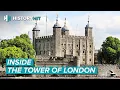
[music] It's 6:00 in the morning here in London. The sun is yet to rise. The city is waking up around me.
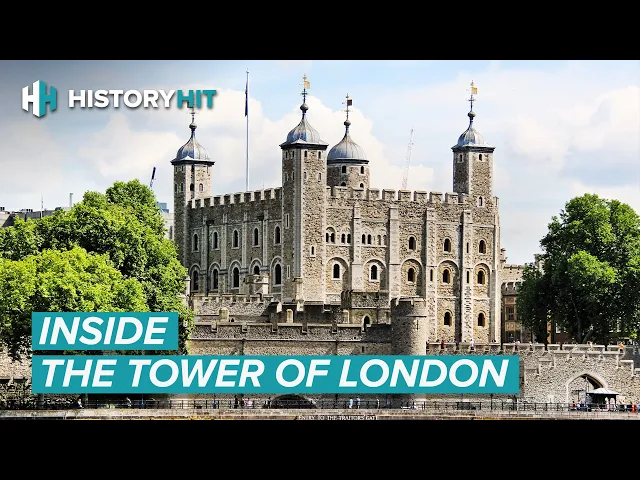
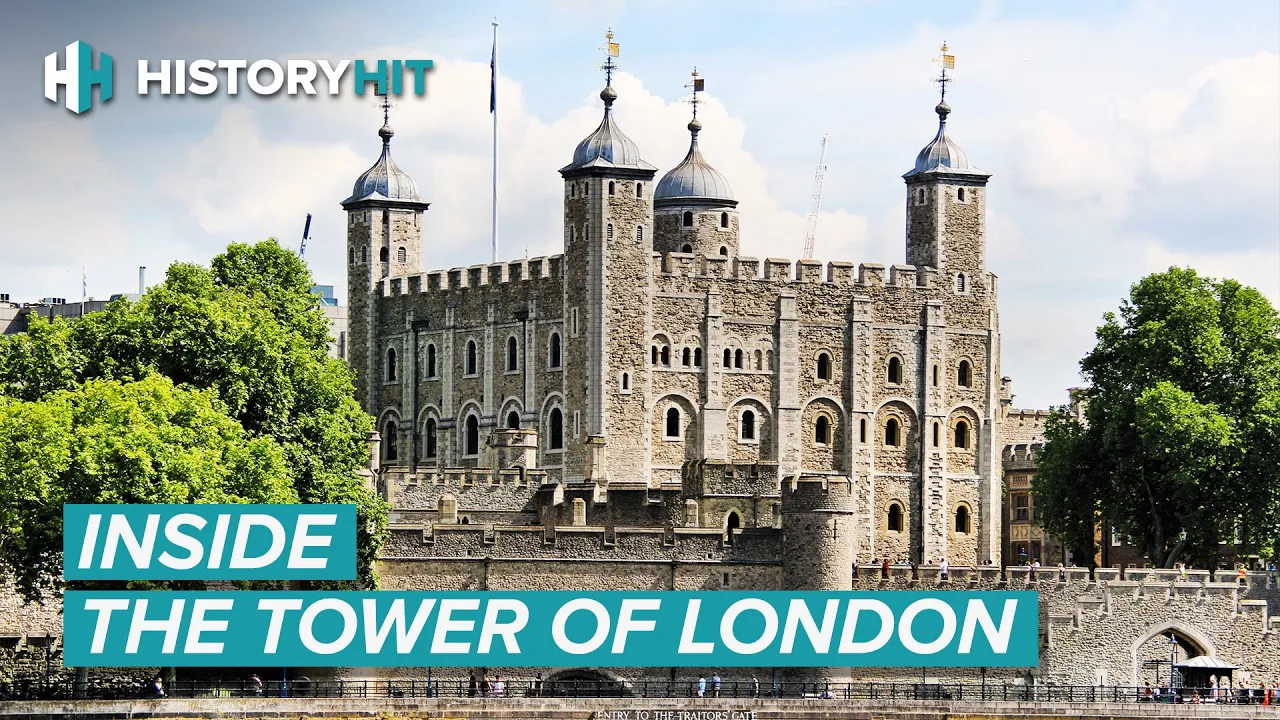
And I'm here at this hour because I've been granted special access to one of the world's great historic sites, the most magnificent medieval castle and palace in Europe, the Tower of London. And you're coming with me. Number one, the defenses.
There's just no getting away from the fact that the Tower of London is a monumental medieval super fortress. It is perched right on the edge of the city of London. And by the 13th century, for example, the city of London was the most important in the kingdom.
Lots of wealth generated here. Lots of commercial activity, very, very valuable to the crown. But it wasn't always the most pliant place.
The Plantagionic kings didn't always get their own way when it came to London. It could be a little bit rebellious. And so they make this giant statement.
They build on the foundations begun by the the Norman kings of England and they create this mega fortress. There was a gate house complex over there that was really a castle in its own right. Then if people managed to fight their way through that somehow [music] they were confronted by this enormous moat.
This is a very wide moat. It was filled with water and it meant that anyone shooting crossbows or arrows was really a pretty long way from the walls and their projectiles would start to lose some of that momentum velocity by the time they hit the defenders here. It also meant that it was impossible to undermine these [music] defenses.
A way of breaking into castles was to get your miners to dig tunnels underneath the moat and and then collapse the walls and come up into the castle. Well, that was impossible. The moat was so wide.
The soil here is so shingly and muddy and sandy on the banks, the temps. That was impossible. So the only way in is to fight your way through that gate house across the moat here.
And then you are greeted with another massive set of defenses. These outer walls here, the bywood tower. You're approaching this way.
You're being shot at. You're people are dropping projectiles on you. There are arrow slits here.
People shooting crossbow bolts. If you get this far, you're confronted with a port cullis. I'm very happy to say that medieval port chalice is still in place here, ready to be dropped if needs be.
This is a fearsome obstacle. Once you've burned or battered your way through that, you face these huge gates here. Through the gates you go, and you are confronted by yet another encircling set of walls.
Look at this. This is the bell tower right here ahead of me. But you you've basically got a castle within a castle.
And here you're in a killing zone, surrounded on all sides by defenders. And if you want to fight your way to the heart of the castle, you got to keep going. There are more defenses to come.
Private. See that? We go to all the best areas.
I've come behind the scenes now. This is why the private areas is not open for the public. And I'm here because we have got one of the most astonishing artifacts in the tower.
One of the most astonishing artifacts in the kingdom. This is number two, the Port Calis. Just look at this.
This is the original 13th century Port Cullis with its lowering gear, with its lifting gear in position, unchanged here since the massive military upgrade this tower received in the 13th century. This is the lifting gear up here. But this port color is the original 13th century wood, the 13th century lattis.
And right down here is the original portal color. We saw the spikes from down below. This is us looking at it from the top.
And you can see if you look down there, you can see the entrance. You can see people entering and leaving the town. I just imagine over the years the people coming in out of here.
Queen Elizabeth I, Winston Churchill, you name it. All of them under this imposing structure right here. never been taken out ever since it was installed during that massive military upgrade of the 13th century.
And the best thing is we've got some cutting edge military technology over here. People aren't even sure what this feature is for, but I I think it's a particularly interesting. If you look under here, see this hole and there's a pipe that connects with the outside just behind that port cullis.
Now, some people think perhaps it was for pouring down boiling hot water or human waste to try and drop on any attackers coming through, but some experts think it was a fire suppression system. So, if anyone tried to burn their way through the wood of the port kalis, you could pull water down here and this would spray out and put out the fire. Now, no one ever breached this port cullis.
This castle never fell to an enemy army. It did once get captured though by a bit of a rabble. It was during the peasants revolt of 1381.
The so-called peasants marched on London. The king rode out to meet them and try and negotiate with them. But a group of that peasant force made their way to the Tower of London, discovered that it wasn't properly being protected.
The doors were open, the port colors up, and they burst in and and ran a mock. They looted it. They dragged out some particularly uh unpopular royal servants and they even harassed the members of the royal family that they found in here.
So that's the only time the tower has ever been stormed. That's the only time this port cullis has been breached. number three.
Before we enter the the the heart of the tower, I just want to show you this wonderful little gate here because it's a reminder of just some of the vast number of famous and influential important people from English and British history who've come into the tower. This is a poston gate. This means a little narrow entrance where when the tower is totally locked down, you can still get in and out, perhaps send messengers, things like that.
Now, this is the bywood Poston. You come through here, you go through a right angle, which means anyone with a battering ram can't get it around this corner. And this was the way that actually most normal people would would come and go, including Queen Anne Berlin on the way to her coronation.
1533, Henry VII's lover for such a long time, now finally acknowledges his wife as his queen. One of the best days of her life, she'd have come in this way. But also this is the way that she would have come in just three years later when she was on the way to her imprisonment and eventually her execution here in the tower.
So the the best and the worst day of her life. This is the original TUDA gate. Untouching history here.
This witnessed the entry of an for example. Just imagine how old this wood is that went into building this. And these doors could be closed here and you get this feature here which is this little tiny flap.
And this is a reminder that when the castle was locked down, you could really restrict access. You're not getting an army in through this flap here. You could make sure that people could only come in in ones and twos and control who's getting into the castle.
Number four on my list, it is the medieval palace. This was not just a giant super fortress designed to secure royal power in the most important city in the kingdom. It was a medieval palace.
This is where the royal family rested their heads at night. Sometimes this was where they felt safe. They could entertain foreign dignitaries.
They could relax. And we all have an image of medieval history from movies of cold dank castles, exposed stone, people sitting around in armor. This would have been completely opposite.
Look at this. There were beautiful wall hangings. There were fabrics.
It was soft. There was paint. It was warm.
It was cozy. Particularly this room here that's been beautifully reconstructed. Look at this.
This would have been the royal bed chamber here. They could have closed those curtains around the bed at night, keeping out the chill of those damp London nights on the edge of the temps in the winter. Murals on the walls, magnificent heraldic devices.
This was a bedroom. This was a set of chambers fit for a king and a queen. Now, Edward I spent a huge amount of money here.
And in fact, he only spent something like 50 days here because the nature of medieval kingship was you had to stay on the move. You had to rule with the sword in your hand and your bum in the saddle. So he was always traveling around his vast empire, which by that stage included places like Wales that [music] he conquered.
He pushed north into Scotland. He controlled swades of France. So he wasn't in London that often, but when he was, he made sure that he was here sleeping, receiving guests in style.
Now, the king didn't just keep fancy beds [music] and furniture like this at all his different palaces just in case he was going to turn up. This one was designed to be disassembled, flatbacked, put on a wagon, and taken to the next location so he could sleep comfortably there as well. If we look at these beautiful decorations, these murals, these paintings on the walls, these this has actually been reconstructed.
This is what it would have looked like in the 13th century. We know from accounts at the time. And I love the fact we just got the sunlight glinting on the temps out there.
So much has changed in London. But if you just look through this window, if you just squint with your eyes, you have the same view that Edward and his queen Elellanena would have enjoyed. It's one of my favorite parts of the tower into the the Wakefield Tower.
This was part of the royal palace. An important part of demonstrating the power, the reach, the grandeur of the Plantaginate kings. Look at this room here.
Wonderful vaulted ceiling. In this al cove over here, we've got the throne on which the kings of England would have sat and tried to intimidate foreign diplomats and their own over mighty subjects. [music] But there's also a moment of of grizzly, tragic history that [music] took place in this tower itself.
King Henry V 6th, one of the most sad kings in English history. a feeble man, a a a poor king, just not up to the challenges [music] of that job. Unlike his legendary warlike father, Henry V.
He lost the Wars of the Roses in [music] the 15th century. His son, his only son and heir, was killed on the bloody field of Chuksbury in in the spring of 1471. And after that, Henry the 6 was imprisoned.
He was brought here to the tower. And here on the 21st of May 1471, he was murdered in in this space here. His enemies said that he died of melancholy, but it's far more likely he died of cold steel.
Still, every year here in the tower, they mark the ceremony of liies and roses and it [music] and it's to to commemorate the death of Henry V 6th. And and people come here from the educational establishments that Henry founded. He might not have been a warlike [music] king.
He might not have been up to the task of keeping conquered France within the English kingdom. He might not have been up to the task of dealing with his warlike cousins and and and baronss. But he was a gentle man.
He believed in scholarship. And he founded two remarkable institutions. Eaton College, a school for for young boys, and also King's College Cambridge, a tertiary educational establishment.
And still representatives from Eton and King's College come here on the 21st of May to commemorate the death of their founder. This is the way into that next layer of defenses. Another port cullis, another massive set of gates, strong defenses.
This, by the way, is known as the bloody tower. But that's very dramatic name only given in recent years sadly. Used to be known as the garden tower, but it's less exciting.
We come through here. Another set of gates that were hung here. Another port callus.
And we are greeted with another layer of defenses. This wall here surrounding the heart of the castle, the holiest of holies. And that is the white tower started nearly a thousand years ago by William the Conqueror after his Norman conquest to lock down London to help lock down this new kingdom.
That was the first tower of London. But to get in there, to get into the heart of the tower, you've also got to get through another layer of defenses. These walls hit.
So, I've made my way through that last defensive wall and I am here in front of the White Tower for number five. The oldest bit of the Tower of London, nearly a thousand-year-old, built by William the Conqueror just after his conquest of England after the Battle of Hastings in 1066. This is what you have to build if the neighbors absolutely hate you.
London was famous for its well, Anglo-Saxon sympathies, its English loyalties. They weren't sure about these new Norman lords who'd come over and captured the country. And so this is what William built to keep himself and his family and his officials safe in what was becoming the most important city in the kingdom.
Built into the old Roman walls of London. It's a massive a really huge square to keep. There's very few around Western Europe that are as big as this.
And you'll notice that the entrance is way up there on the the first story. It's up there because there would have been a wooden set of stairs like there are now. Now, the reason for that is because if there was a siege at the castle, if there was a sudden emergency, you could set fire to those stairs, set fire to that wooden structure, and it would be even harder for the enemy to get access to that tower.
So, even the tower itself was built to be defended. A building that's strong enough and secure enough to keep people out is also quite a good place to keep prisoners inside. And it was used a prison almost from the beginning.
In around 1100, a senior bishop, Bishop of Durham called Ran Flamard, was put in here by the new king Henry I. He'd been an adviser to his older brother, William II, and he was a useful scapegoat for all the mismanagement of that reign. Now, he managed to escape because he got the guard drunk and he lowered himself down on a rope and made it out of here.
Many others have tried to escape, some successfully, some not so successfully. In 1244, a captured Welsh prince, Griffith Abluwellin, he managed to get out of the windows, climbed down the rope, but it was too short. He let go of the end, dropped to the ground, and didn't survive the fall.
Some of the prisoners used their time here in the tower very constructively. Sir Walter Raleigh wrote an entire history of the world when he was a prisoner here. One man Charles Juke of Olon was captured at the crushing French defeat at the battle of Azenor in 1415 and he was imprisoned here in the tower for the next 20 years and during that time he became a celebrated medieval poet.
In fact one of the images from a volume of his poetry gives us one of the best medieval depictions of the tower. shows the tower with London in the background, the famous arches of London Bridge, the temps flowing beneath them, all the activity going on in the tower, and then himself sitting at a desk writing at the heart of the White Tower. There have been so many phases of building and demolition and changes that have gone on in these grounds over the thousand years of the tower's existence.
It's hard to believe, but on this bit of grass here, this was where the Chuda Palace was. This was where Anne Bolin banqueted before her coronation in 1533. In fact, those famous, dare I say, iconic onion domes were put on the White Tower to mark the occasion of her coronation.
Little did anyone know at the time, this was also the place where just 3 years later, she would be tried for high treason, adultery, and incest. There's lots going on here. A thousand-y old building requires a lot of maintenance that's got to happen before all the crowds come in.
We've got various museumlike exhibitions. We've got people preparing for the crowds. Going look at the crown jewels which are still stored here in the Tower of London.
It's a busy place even at 7:00 in the morning. number six. We're plowing through the halfway point.
We're into the second half of the tour here. We've arrived inside the White Tower. This room, this exhibition is one of the most special places for me.
It's where I first fell in love with history. I was brought in here as a kid. I couldn't believe my eyes and I'm still overwhelmed by coming in here all these years later.
This contains some of the most precious pieces from the royal armies. An astonishing collection of arms and armor through centuries of English and British history. And this space here has some of the armor worn by the kings and the princes who've ruled uh this realm.
Particularly this piece here is so astonishing. This belongs to the young Henry VII. Now, we can tell he was young for several reasons.
One is he's looking quite trim. He put on a bit of weight in his older years. And secondly, you start looking at the the clues, the heraldic devices on this armor and on this horse armor.
First of all, come and look at this. You can see I'll get my torch on here. Around the hem of this this skirt, this iron skirt, you see H and K intertwined.
Henry and Catherine. Katherine, his first wife. Katherine of Araggon.
So he's still very much all is well in the royal household. He's still married to his first wife. In fact, he's so keen on his first wife that you can see even their their badges, the tuda rose there on his the back of his leg, uh intertwined with the pomegranate, which was the symbol that she took, a pomegranate symbolizing fertility, a promise of ficundity of many children that they would have together.
that didn't quite work out sadly for them and sadly for uh the unity of the Catholic Church. Anyway, that's another story. So, you see all of this beautiful design all over here.
Every inch of this armor telling a story. So, not just defensive, but also speaking about royal power and his ambitions. Interesting.
Not there's hardly a crack in this armor. These were so finely constructed. They were such studies in protecting the body that when NASA were looking to build space suits in the middle of the 20th century, they came to the Royal Armies and they actually looked at some of the techniques that were used.
Now they could incorporate that in building space suits. How to build uh outfits that were protective but also ergonomic. Allowed you to do things.
If you want to know what Henry VII looked like 25 years later, well, look no further than this. Because just as today you'd have welltailored suits for every state of life that you go through. So Henry would have different suits of armor made that to be carefully fitted to his body at the time.
He's now around 50 years old thanks to the fact that he did in fact have a jousting accident. Uh he's filled out a bit. He's not doing quite as much exercise.
We think he's got something like a 56 in chest at this point. He we can tell how swollen his ankles were. We can make judgments about his state of health.
Um, this was made in 1540 for him. Look at that beautiful gold inlay. No expense spared.
You can see the beautiful gilded etched borders here. It's impossible to look at this arm without being drawn to the fact that there is a very prominent codpiece. Perhaps it's just how armor was designed.
But perhaps Henry is trying to draw attention to the ongoing psycho drama of his reign, which is his desire to spawn healthy male heirs. By this stage in his reign, finally, after three wives, he had had a son, a legitimate son, Edward. So perhaps he wants the world to know about it.
Perhaps he's particularly proud of his manhood. Yeah, this enormously thick walls run right through the heart of the White Tower, which shows that even within the tower, there were still defensible positions. Imagine that.
Imagine expecting a siege where you might have to not just fight on the outer defenses, not to defend the tower, but inside the tower itself. And actually, it's very bright in here now. These enormous windows were punched through the world walls a lot later.
They would have been uh arrow slits when the tower was really designed for defense. And just look at this. What a magical space.
The chapel of St. John. This is where William the Conqueror and his family, his troublesome sons could all gather and enjoy a moment of of contemplation, of religious observance.
And they would have worshiped here. and kings and dignitaries have [music] worshiped for a thousand years nearly in this space. You can see it's Norman because you got these classic Romanesque these rounded arches.
It's like actually being transported back to Normandy the Norman style of building and they as they reshaped uh English religious architecture right across the country. So they did in here in the Tower of London and this is just classic. It's a lovely peaceful place.
You can't imagine anything intruding on the holiness of this space. But intrude they did in 1381. Remember I mentioned the the peasants when they stormed the Tower of London.
They ransacked every corner of this tower. And in here they found the Archbishop of Canterbury, Simon Sudbury, who they hated and they seized him and they dragged him out. And I like to imagine that moment.
Did he rush up here and quickly assume a position of devotion hoping that his vestments hoping this space would somehow protect him? But it did not. They dragged him out.
They took him up to Tower Hill and they hacked his head off. Just one of the highlights of the Tower of London. When you're inside the White Tower, you just realize how large this keep was.
And and and for for many years, this was the Tower of London. This was the Royal Palace. This was the store rooms.
This had to survive by itself perhaps if enemies were swarming around the wall. And there was plenty of space up here. You could have kept the royal court.
Indeed, you could sort of sustain a small army in this vast tower. The tower is infamous as a place of execution, which brings us to number seven, the place of execution itself. Traitors typically actually were dragged outside the walls and had their heads chopped off on uh on Tower Hill just out there.
But particularly high status, sensitive prisoners were put to death inside the tower itself. The most famous of whom was Henry VII's wife, Anne Berlin, the first of two wives that would die inside these walls. Anne Berlin had her head chopped off by a French swordsman.
Queen Victoria visited the Tower of London in the 19th century and she was so moved by the tragic story of Amblin that she said really there ought to be a commemorative plaque or something to to mark the spot and they just plonked one here. It's actually thought that most of the executions took place just to the north of the White Tower. So imagine that they build a scaffold here and these prisoners would be brought out of their cells.
We're talking about the death of Amble. We're talking about the death of Katherine Howard, the execution of Katherine Howard, who was Henry VII's fifth wife. We're talking about the execution of the Earl of Essex, once Elizabeth's favorite, but he rebelled against his royal mistress and his head hit the floor over here.
It's amazing to think this is where they would have given their last speeches. Amberlin, in particular gave a very pretty speech. She said uh she hoped that God would save the king.
There was never a more merciful prince. Perhaps she was hoping for a last second reprieve, but none came and her head was chopped off pretty close to this spot. So, this was probably the bloody place of execution around about here.
And opposite it now is a much newer building. This was built in the 19th century. It's called the Waterloo block.
It was built by the Duke of Wellington, that towering figure of 19th century history. Uh he built he named it after his most famous victory, the Battle of Waterloo where he defeated Napoleon in 1815. And he built this because there had been a huge fire here at the Tower of London.
The the tower had been a stockpile. It's where military supplies were kept. Lots of flammable material.
It all went up in a huge blaze painted beautifully by the way by the artist Turner. And after that, the Duke wanted to put some capacity back in. And so this was built as a barracks and and a storehouse.
And it continued to be used by the military right up until the 20th century. And here's a funny little story. Two of the most famous prisoners ever held at the tower are two of the last, the Cray brothers, those notorious East End gangsters.
They were doing national service. They they've been conscripted. They were serving the London regiment in 1952.
And they absconded. They went awall and they were apprehended. They were dragged back into the tower and they were kept in those little towers up there.
Number eight on my list, the Bechum Tower. Tower of London was famous as a royal palace, as the place where the crown jewels were kept, as a royal zoo at certain points, but it's also famous for its role as a prison. It's the place where you kept high status prisoners right from its beginnings all the way up to the 20th century.
And this tower is where some of those elite prisoners, traitors in the eyes of the crown, it's where they were kept. And some of them have left the mark. This room in particular is covered in graffiti and more than graffiti, elaborate carvings to commemorate the the time spent here by some of these high-profile prisoners.
This one in particular, it's beautiful. This is the Dudley family. The Dudley's rule throughout prison because the Dudley's made a big mistake.
They tried to install Lady Jane Gray on the throne. She was married to one of the Dudley brothers. And so because of that, their dad, the Duke of Northland, he tried to put his daughter-in-law and his son on the throne of England after the death of the childless Edward V 6th.
And the whole family were thrown in prison. And that didn't work out. Lady Jane Gray was executed.
The Duke of Northland was executed. And the brothers were all put in here. Now, this has little clues as to who these brothers were.
We have Ambrose Dudley commemorated by these roses here. And then here we have Gilly Flowers for Guilford Dudley. Now, poor old Guilford was married to Lady Jane Grace.
Unfortunately, he got the chop. Robert Dudley. These acorns that the the Latin is robus.
So that that's a play on the words there. He did all right. He survived just about and he went on to become a favorite of Queen Elizabeth the perhaps more than a favorite.
So all the sons are commemorated here. This is a very interesting relief here. This relief shows a person kneeling and then this rectangle here and it suggested this could be the infamous little ease which was a a special kind of cell designed to inflict maximum punishment.
You could neither stand up in there nor could you lie down. A place that haunts my nightmares in particular because I'm 6'5. So I'd have been very careful always to stay on the right side of the monarch.
This is a beautiful little tuda corner of the tower. It's called the king's house. used to be called the queen's house, but now that we have King Charles, this is his house.
He This is where he would stay if he lived in the tower. He doesn't live here, but if I was him, I would. But through here, we have this wonderful object.
Here it is one of my favorite doors in the Tower of London. Yes, I do have a top five list. Open it here.
It's thought to be chewed up, possibly even possibly a medieval. So, we're talking 500 years old, maybe more. Imagine the people that have opened and closed this door, the people that have passed through.
Among them, perhaps we think because we've we're entering the lower story now of the bell tower. And we think in here, according to some contemporary sources, this was where one of the most famous prisoners in the history of the tower spent his time. And that is Thomas Moore, St.
Thomas Moore, [music] if you like, he was a political thinker under Henry VII. He was Henry VII's Lord Chancellor. But he fell out with his king about that break with Rome, about that split within the Catholic Church.
He did not believe that Henry had the right to enull his marriage to his first wife, Katherine of Araggon. He refused to swear an oath saying that Henry was effectively the head of the Church of England. And as a result, he was executed.
You fall out with Henry VII. There's only be one outcome. The Pope canonized Thomas Moore and today St.
Thomas Moore is the patron saint of politicians. If any of them go in for that sort of thing. right then, my friends, the roadway that we've all just walked up, even today, this is still called Water plane.
[music] So we are still standing in the middle of our defensive system. So we know for a fact the wall behind me was not finished until the year 1280. That meant the river temps she flowed all the way through here.
>> Great nuggets of history. They really now get people fascinated. >> That is why we now look down onto the most famous or should I say infamous gate in the world, Traitor's Gate.
This was built on the orders of King Edward I. very clever man decided to use the river temps as a highway. [music] So at high tide, boats could pass through these gates and unload their cargo right here in safety.
Therefore, my American cousins, this gate was originally called Watergate. Thank you. >> True story.
>> Number 10, saving the best till last. It's the Yman Waters. How you doing?
>> Hi, Dan. >> The legendary beef eaters. If you come to the tower, you've got to go on a tour with one of you guys, don't you?
Who are you? >> So, we are the yman warders here at the Tower of London. We are the sovereign bodyguard.
We're here to ensure the safety of of visitors that come to the Tower of London, but also we are the ceremonial bodyguard for the monarch. We're here to ensure the safety of the crown jewels. >> So, you look after the crown jewels, you keep an eye on the monarch as well when they're doing official functions.
And but you're also for not you tell great stories. >> We do. The whole part of our story here is brought to life by the young warders.
We give our guided tours and a bit of storytelling. And you see the bell tower in all of her glory. The upper chamber, the strong room fitted with windows.
That was a prison cell for a young Princess Elizabeth TUDA. Now, eventually Princess Elizabeth she was set free. But not before her halfsister called her into the queen's house and told her in no uncertain terms.
My dearest sister, should you dare return to the boundary it is London in whilst I am the queen of England, I will have your head. >> And these uniforms you're wearing, they they weren't just dreamt up recently. They they are reflective of the fact you are a properly old regiment, aren't you?
Absolutely. Yeah. The uniform dates all the way back to 1485.
We supported Henry TUDA at the Battle of Bosworth against Richard III. So this is a tunic, a dress uniform that was worn under armor. >> So you've been going for over 500 years.
You're one of the oldest military units in the world. >> We are the oldest military unit in the world. >> Oh, come out.
Shots fired there. Other units can write in. [laughter] Uh you've had a lifetime of military experience as well.
All of you. >> Yes. So to become a yman warder, we all have military service.
So we've all had to serve for at least 22 years in the armed forces. We've all got to the rank of warrant officer or the service equivalent for the the Royal Navy and the Royal Air Force. And we all have the long service and good conduct medal.
>> So you've got a chest full of medals there. >> I do. Yes.
>> Where are some of the places you served? >> Bosnia, Kosovo, Iraq, Afghanistan. So they're my operational tours, but then I've also served all over the world because I spent 25 years in the role logistic corps.
>> And you're still serving now? >> And I'm still serving the crown now. Yeah.
>> You don't look old enough to have done all that. >> Are you feeding Jin helps? >> What if is there a commute in or are you let go to live on the site?
>> We live on premises [music] uh with our families. That is to ensure the actual safety of the fabric of the of the Royal Palace. So we've got a thousand years worth of history here and so we've got to make sure that we're on hand to ensure after dark if there's any issues we are the first plot of call.
>> Have you ever rugby tackled anyone trying to get the crown jewels? >> No comment. >> Okay.
>> Well folks that brings me to the end of my top 10 things to see at the Tower of London. Really there's so much history. I could have chosen a top 100, but that's for another time.
Thanks so much for watching and make sure that you come to this astonishing place to yourself. It really is one of the greatest heritage sites in the world. Hi, I'm Dan Snow and if you love history, you got to know that History Hit is on a mission to bring the past to life.
Every week we travel the world. We visit places like this, the Tower of London to film original and in-depth documentaries. And now, History Hits has a YouTube membership to give you access to even more films released weekly.
You heard it here first, folks. Click the join button below this video to see for yourself what History Hit has to offer.