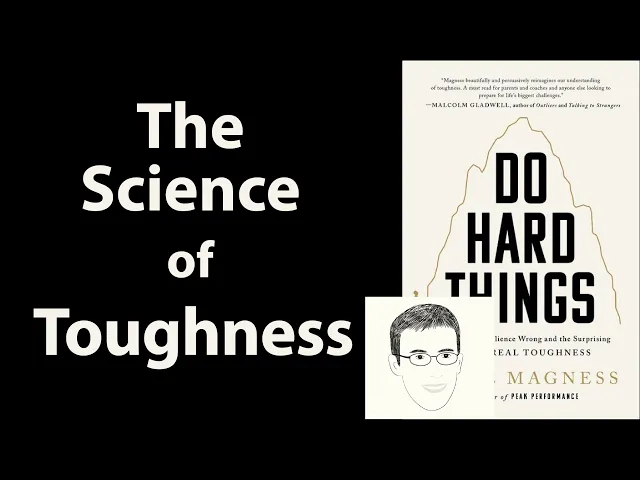
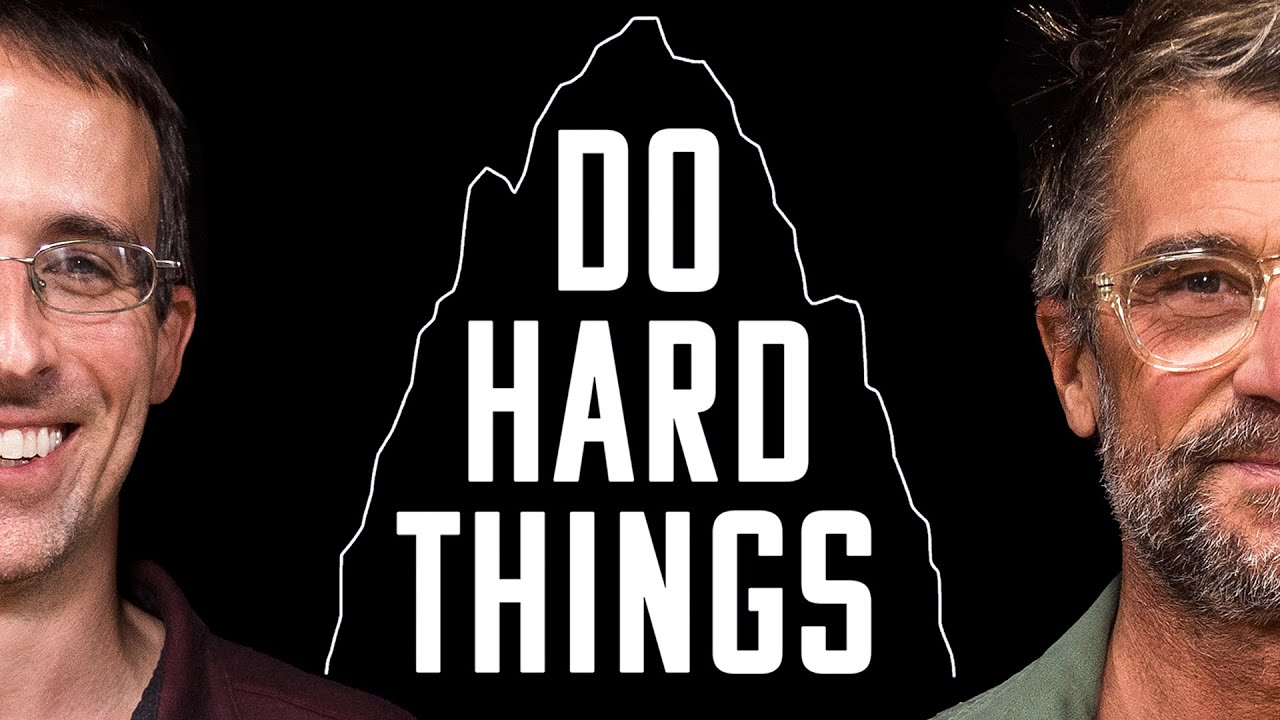
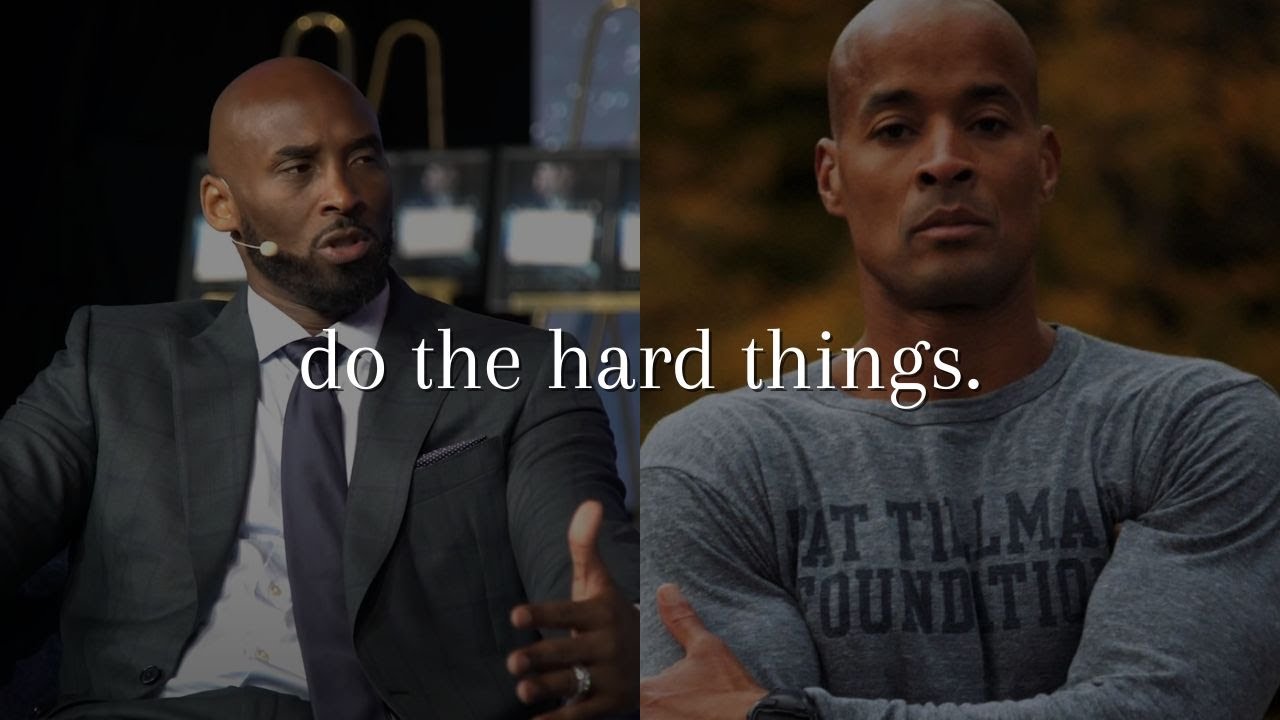
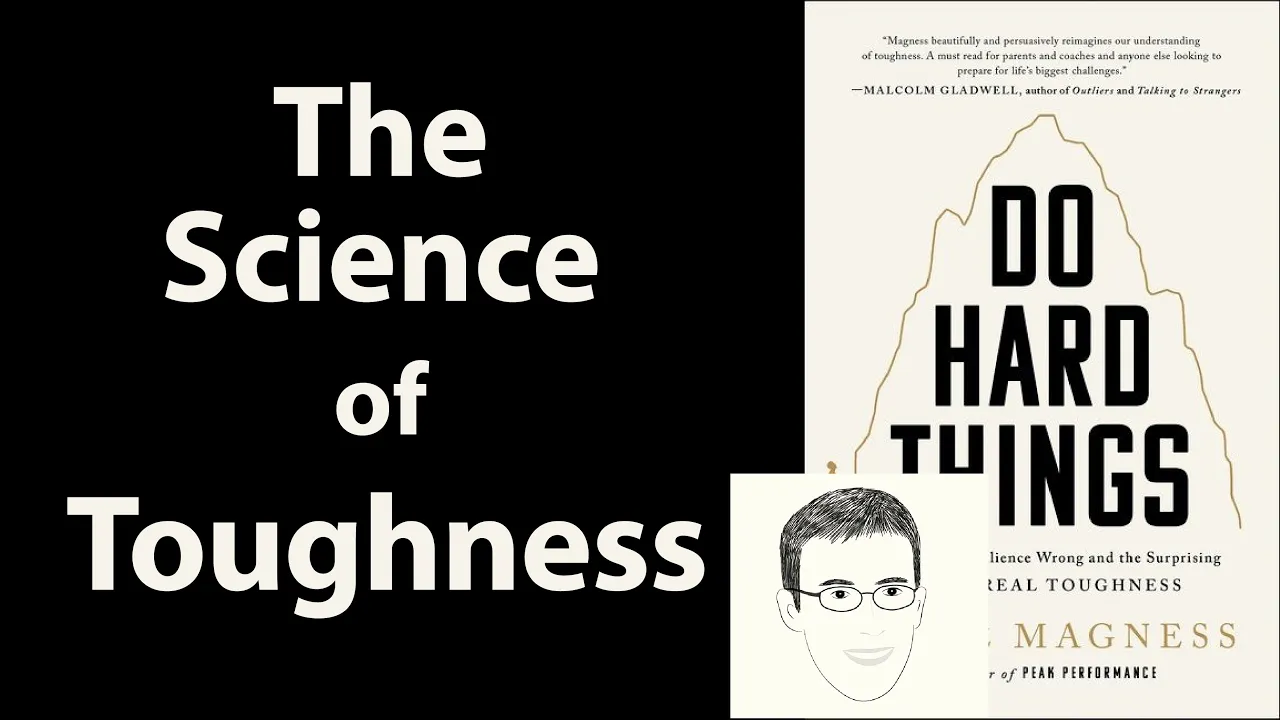
foreign [Music] ly read do hard things by Steve Magnus our proudest memories often originate from our hardest experiences whether it's getting a degree after several grueling semesters launching a Business website after several grueling months of work or finishing a marathon completing hard and worthwhile Endeavors we can be proud of requires a high level of toughness people typically associate toughness with complete confidence brute force and bravado but real toughness is none of those things although Steve Magnus has explored the science of toughness and he's found surprising differences between the traditional toughness maxims and the science of
toughness for starters traditional toughnesses act confident but the signs of toughness says Embrace reality if you go to the start of a marathon you'll see novice Runners sprinting off the start line acting as though the marathon will be easy but an hour later reality sets in and those overconfident Runners are walking on the side of the road while Vision Runners who respected the marathon challenge go by when the U.S army examined results from their survival training courses they found that the soldiers who experienced doubt and expected the training to be difficult perform much better than
the soldiers who thought the trading would be a piece of cake as a wise and experienced military friend once told Steve Magnus an ounce of Doubt keeps me sharp the perseverance and toughness you will display during a difficult Endeavor will be determined by your expectations before that endeavor if you underestimate a challenge you will panic when that challenge is more demanding than you thought it would be the key to staying tough is assuming nothing will happen as easily or as smoothly as you hope but with enough time and effort you can get surprisingly good results
in other words have short-term pessimism coupled with long-term optimism the next way traditional toughness differs from the science of toughness is traditional toughness says ignore the pain and push on whereas the science of toughness says acknowledge the pain but maintain equanimity every hard and worthwhile Endeavor brings a heavy dose of discomfort when discomfort strikes the amygdala a small region in the brain that scientists call the body's alarm system is activated people who burn out at work have an over activated amygdala that they can't calm down to avoid burning out and checking out we must understand
our internal alarms and then quickly turn those alarms off so we can make smart decisions and focus it's like getting a low fuel alarm when we're driving the alarm provides useful information we should act on but once we determine that we have enough fuel to get to the next gas station we don't need that alarm to keep ringing one group of people have mastered the process of acknowledging and managing their inner alarm system meditators with 10 000 hours of meditation practice researchers wanted to see how experienced meditators with 10 000 hours of meditation practice would
respond to painful stimuli so they gathered meditators and non-meditators and put them in an Fri machine and place a hot Probe on their skin directly below their wrists when the Hop probe touched the participant's skin the fmri brain scans showed similar activity in the amygdalas of meditators and non-meditators but the non-meditators amygdalas stayed active long after the initial pain whereas the meditators amygdalas quickly returned to their Baseline level of activity when both groups were asked about their experience they all rated the initial pain at or above a 7 out of 10. but the non-meditators who
failed to get their amygdalas back to a baseline level of activity bring to the overall experience twice as unpleasant as the meditators our ability to return to a Baseline and steady the Mind as a name equanimity if we want sustained toughness we must maintain equanimity luckily we don't need 10 000 hours of meditation practice to maintain Equanimity we just need to deploy the following three techniques when discomfort strikes first zoom out and explain when I get frustrated working on a video I zoom out and see myself from a distance and think oh look Nathan's getting
frustrated explaining stressful situations to ourselves in the third person is an effective way to regulate emotion because we stop identifying with the emotion in one study kids who refer to themselves in the third person while working on a frustrating task we're 30 better at regulating their emotions and staying on task when we zoom out and explain we increase activity in the prefrontal cortex the inquisitive problem-solving part of the brain which in turn decreases activity in the amygdala since the two brain regions have evolved to balance each other out zooming out and explaining is a great
way to turn down the volume on our alarm system but if you want the alarm to stop we must reappraise when lifting weights at the gym we can interpret struggle as a sign of weakness or as a sign that we will experience muscle growth in the coming weeks when we take a test we can interpret nervousness as a sign that we're not prepared for the test or we can see it as a sign that the test is important and our bodies are providing us with additional energy to focus when we reappraise we identify ways in
which discomfort is beneficial the more we reappraise the more likely we are to deal with discomfort in a productive manner instead of running away from it or ignoring it after reappraising we must take the final step back to Baseline by reassuring ourselves that this too shall pass experienced meditators are so good at calming themselves down after a stressful experience because they've spent thousands of hours observing thoughts and emotions come and go and have come to understand that everything is temporary we need not meditate for thousands of hours to know that discomfort will be temporary we
just need to use discomfort as a cue to tell ourselves this too shall pass and allow ourselves to gradually return to a state of equanimity after this video practice zooming out and explaining reappraising and reassuring by allowing yourself to be bored for 10 minutes just sit on the couch and do nothing when your mind starts to get anxious and you reach for your phone zoom out and think hey look how agitated insert your name is getting and then think experiencing this discomfort is an opportunity to practice my emotional regulation skills and develop mental toughness then
think just like every other emotion this too shall pass the last major way traditional toughness differs from the science of toughness is that traditional toughness says forget your psychological needs and just do the work whereas the science of toughness says satisfy your psychological needs and you'll work harder than ever humans have three psychological needs autonomy competency and belonging if you can activate a feeling of autonomy competency and belonging during a difficult Endeavor you will dramatically increase your odds of finishing that endeavor generate a feeling of autonomy by acknowledging that you always have a choice even
if you're told what to do you can choose how to think about it or you can choose not to do it and accept the consequences when you feel like you must do something do it on your terms by adjusting the variables when Runners complete a grueling VO2 max test on a treadmill which measures their aerobic fitness they push themselves harder and longer if they can choose the incline and speed of the treadmill even if the range with which they can adjust the incline and speed is narrow next consistently generate a feeling of Competency by always
feeling as though you're making progress reflect on the work you've completed the past few days to get to where you're at then focus on something you can do in the next five seconds to continue making progress for a runner mid-marathon this would mean reflecting on the miles she's completed and then executing the next few steps as well as she can lastly generate a feeling of belonging by remembering the people or Mission you're struggling for a soldier on the battlefield can endure a grueling battle because he fights for the soldiers next to him a solo entrepreneur
can deal with setback after setback because she's on a mission to improve the lives of her customers Steve Magnus says when we satisfy our psychological needs we are allowed to fulfill our potential because our Drive comes from within so fear and pressure no longer consume us that was the core message that I gathered from do hard things by Steve Magnus this book will give you a set of science-backed tactics to take on difficult Endeavors I highly recommend it if you would like a one-page PDF summary of insights that I gathered from this book just click
the link below and I'll be happy to email to you if you already subscribed to the free productivity game email newsletter this PDF is sitting in your inbox if you like this video please share it and as always thanks for watching and have yourself a productive week