I can't believe it's been two years since I talked about ketamine. There's been some new developments with it that I want to make you aware of. I’m Dr Tracey Marks, a psychiatrist, and I make mental health education videos.
Here's a brief recap of what ketamine is and how it works in the brain to treat depression. Ketamine is a medication primarily used for starting and maintaining anesthesia. It has been around since the seventies, and as an anesthetic, it provides pain relief, sedation and amnesia for the event of the procedure.
In recent years, it's gained a lot of attention for its rapid acting antidepressant effects, especially for treating depression that has not responded to at least two antidepressants. And this is referred to as treatment resistant depression. Some experts believe that there is no such thing as treatment resistance.
You just don't respond to the standard antidepressants that we've been using for years to increase certain brain chemicals like serotonin, norepinephrine and dopamine. Ketamine works entirely differently from those medications. It falls into the category of NMDA receptor antagonist.
Long story short on this, ketamine works at the level of neuroplasticity or rewiring the brain. Ketamine also increases brain derived neurotrophic factor, which is a protein that promotes nerve repair and growth. Ketamine acts very rapidly, with some people seeing improvement in their symptoms within 2 to 4 hours of a single dose.
And it can also immediately resolve suicidal thinking within hours. So that's the overview of ketamine. Here are the new developments.
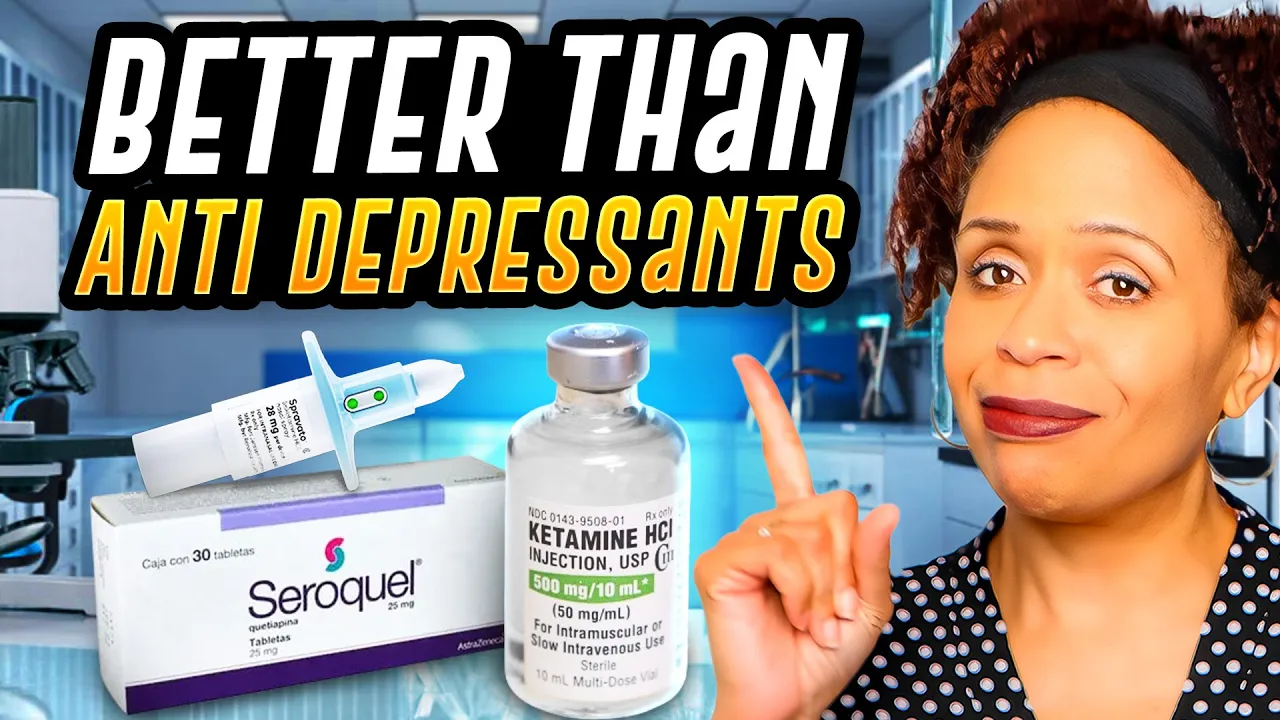
Before 2019, intravenous ketamine was used off label to treat depression and off label means that it's not FDA approved for depression, but because research supported its use, doctors use it for depression. In 2019, ketamine nasal spray called bravado, was officially FDA approved for treatment resistant depression. The nasal spray is not as potent as getting ketamine intravenously, but it was still thought to be better than our traditional antidepressants.
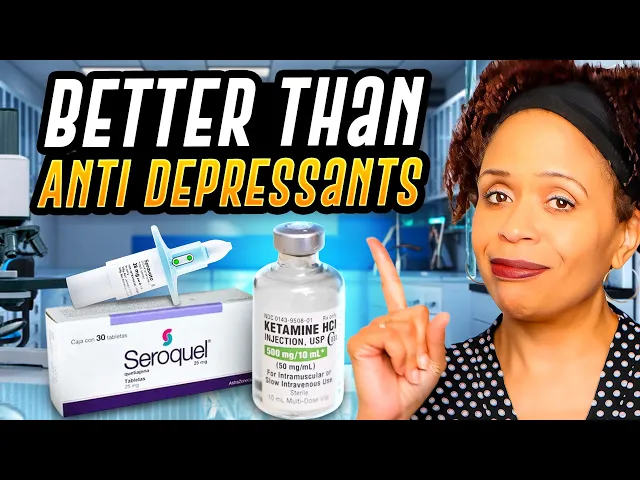
Well, a recent study from 2023 compared PROVATO to QUETIAPINE for treatment resistant depression and Provato was found to be far superior to QUETIAPINE for treating severe depression. Now this might seem like. Yeah, and.
But these findings are really significant. When a drug first comes out, its effectiveness is compared to placebo or no treatment. So it's one thing for a clinical trial to show that a drug works better than nothing, but it's a different story.
To see that a drug beats something that has an established track record for working drug. Two drug comparisons are next level research and give us perspective on just how good or not so good a medicine is compared to something that's tried and true. Quetiapine brand name Seroquel is an antipsychotic medication that is used to treat schizophrenia, bipolar disorder and treatment resistant depression.
Although it can cause weight gain and other metabolic changes, it's a very good drug and works well for all three of these conditions. For depression you would take quetiapine in addition to your antidepressant. Now provato is not without side effects.
It has to be administered under supervision, can cause dissociation and increase blood pressure, but you don't get the weight gain and insulin resistance that you can get with quetiapine. What do these findings mean practically? It means that people who are struggling with chronic depression may have a more effective and safer option.
And I have to admit that I was lukewarm about Aprovado when it first came out because I didn't think it would work as well as the infusion, because the infusion goes straight into your bloodstream and is more bioavailable than the nasal spray. But despite not being as bioavailable as the infusion in the head to head comparison with quetiapine, it left quetiapine in the dust. Now that's Provato has been out for four years.
There's a greater chance that more insurance companies will pay for it, which makes it more accessible. I've seen ketamine infusions are pretty expensive. The other positive finding for ketamine is another recent study that showed that ketamine injections were safe and effective for treating depression.
This is encouraging because it adds more options for taking ketamine. Other than going to a clinic and getting an infusion. There isn't a drug on the market yet that's packaged as injectable ketamine.
Right now you would have to get it from a clinic or from a practice that is likely getting ketamine from a compounding pharmacy and administering it in their office. And even though this wouldn't be covered by insurance, since it's not FDA approved, it's still likely cheaper than the infusion. So the moral of this story is research support for using ketamine for treatment resistant depression is building and expanding to different formulations that are also effective.
The grand prize still goes to intravenous ketamine in terms of how fast it works and how powerfully it resolves symptoms, including suicidality. But close behind are the nasal spray and the injectable form. Watch these videos for more on treatment resistant depression and the psychedelics.
The next big thing is suicide, and we're still waiting on that. Thanks for watching. See you next time.