[Music] Narrator: On November 9, 2010, a powerful explosion . . .
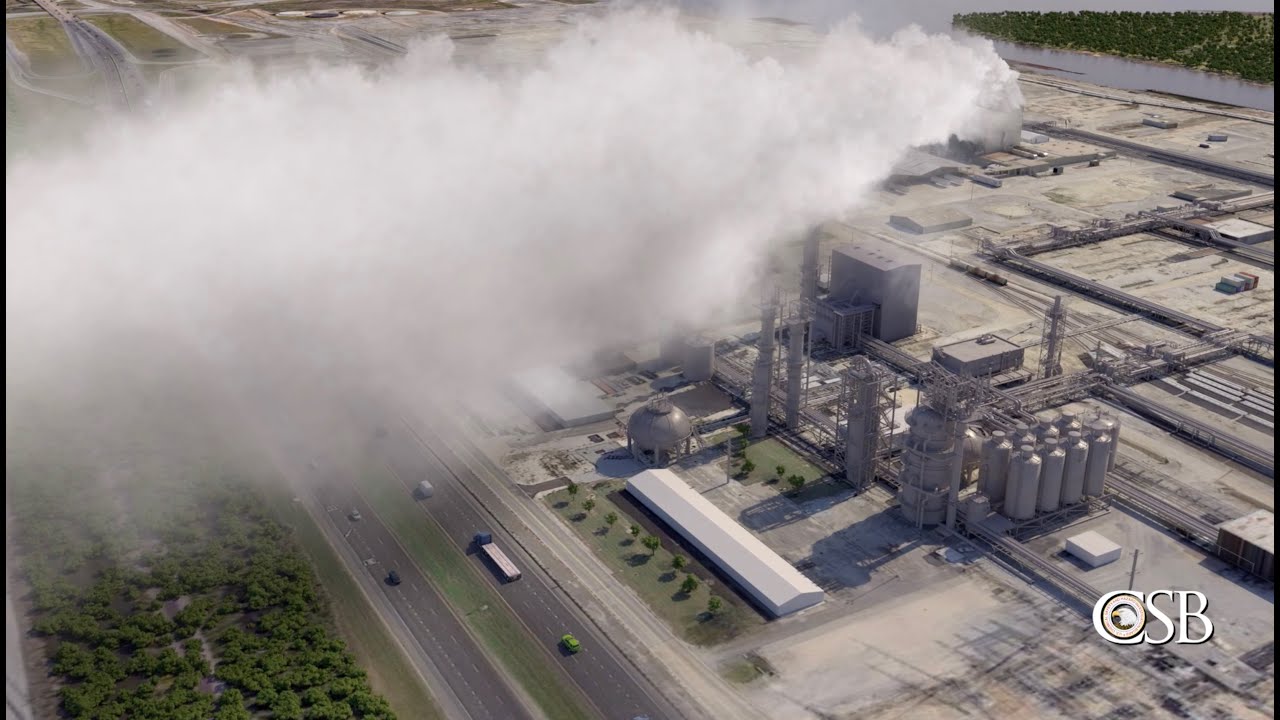
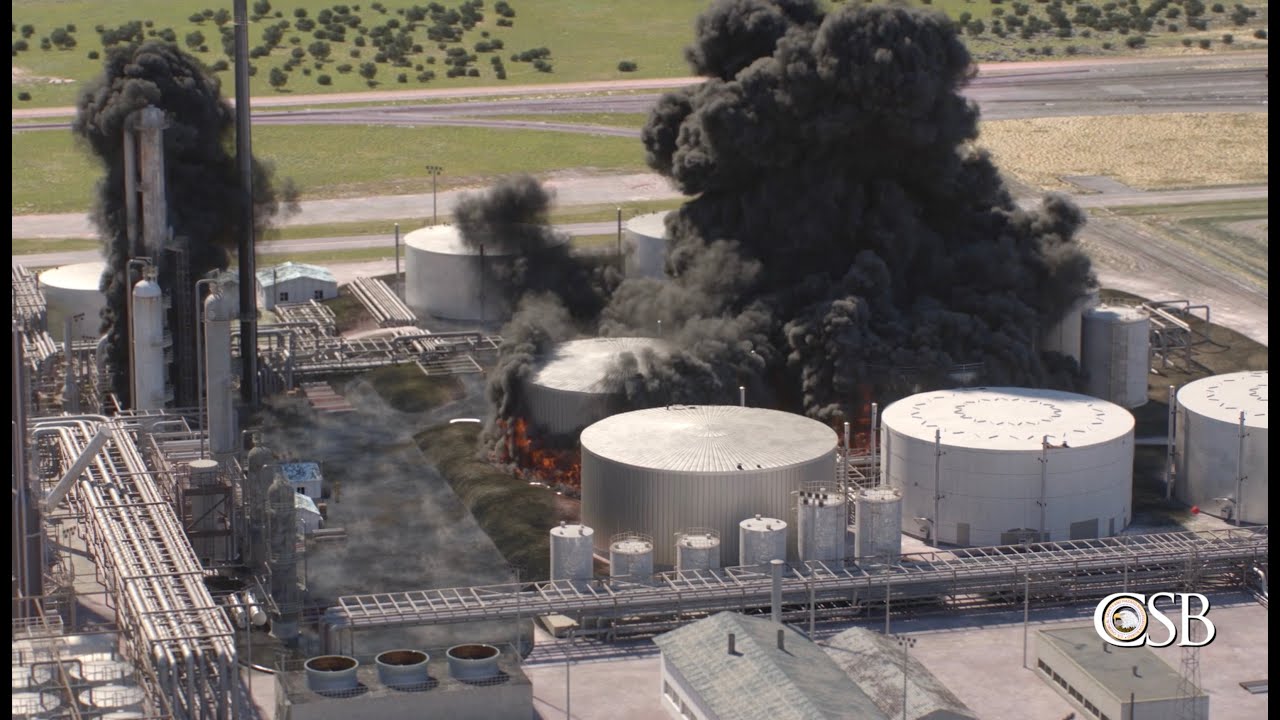
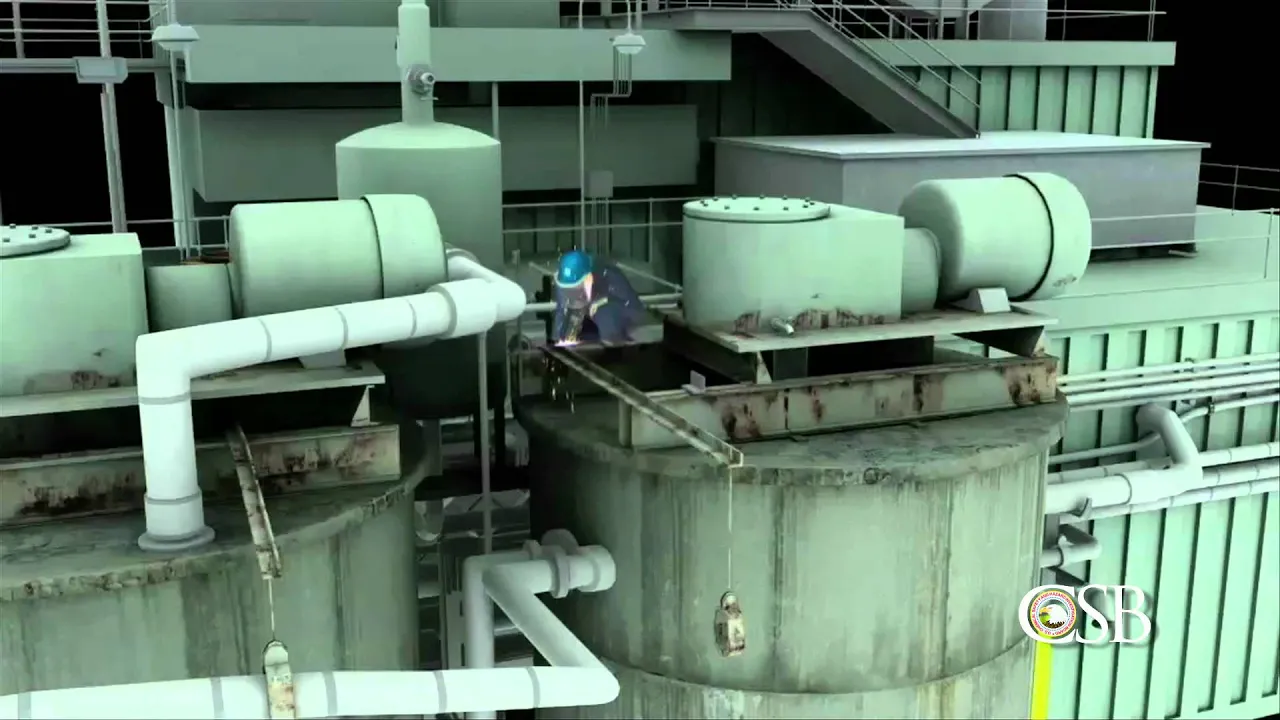
[Sound of explosion] shook the DuPont Chemical Manufacturing Plant in Tonawanda, New York, a suburb of Buffalo. A contract welder was performing maintenance work on a tank, that unknown to him contained flammable gas. The explosion blew the top off the tank, throwing the welder to the ground and killing him instantly.
A second contract worker was burned. Moure-Eraso: The tragic explosion at the DuPont facility exposed weaknesses in how process hazards were analyzed and controlled. The result was the death of a welder in a preventable hot work accident.
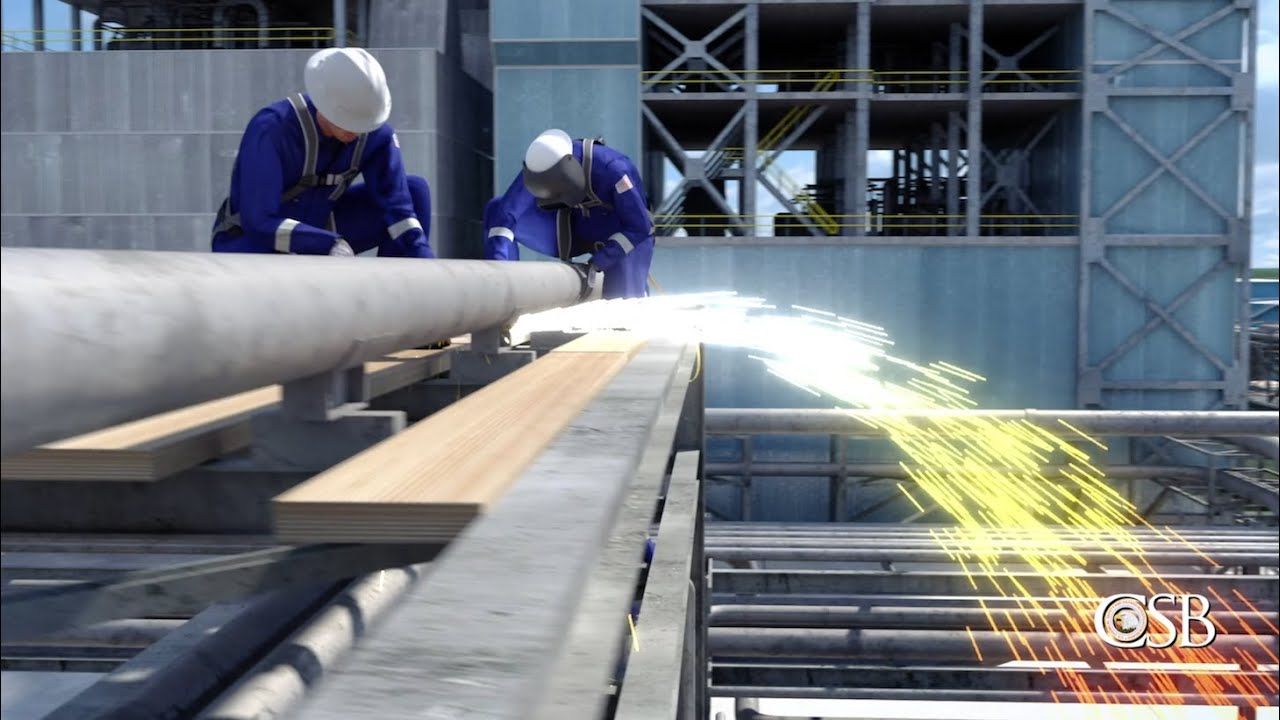
Narrator: Hot work accidents occur when workers are welding, cutting or grinding near flammable vapor and were the focus of a 2010 CSB Safety Bulletin. Deficiencies in the safety management of hot work were among the causes of the tragedy at DuPont. [Music] Narrator: DuPont's Tonawanda facility manufactures a polymer known as Tedlar, used in solar panels and Corian for use in countertops.
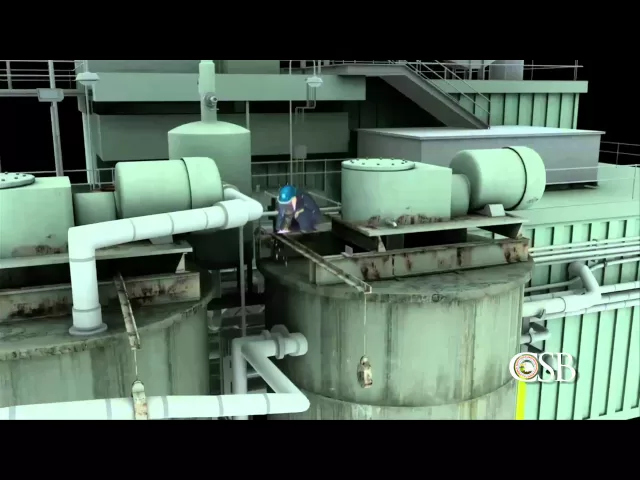
The process of producing Tedlar began with a chemical reaction to convert flammable vinyl fluoride gas into a slurry of polyvinyl fluoride polymer, or PVF, in water. The PVF slurry then passed through separators, compressors recycled unreacted vinyl fluoride gas into the process, while a small flash tank released residual vinyl fluoride into the atmosphere. Finally, the slurry was transferred to one of three insulated holding tanks, usually Tank Number 3.
Tanks 1 and 2 were reserved for slurry overflow. Tank 1 normally remained empty. On October 22, 2010, the Tedlar process underwent a planned shutdown, during which workers removed the asbestos insulation on Tanks 1 and 2.
Removing the insulation revealed that the agitator supports for the tanks were heavily corroded. DuPont directed contractors to repair the supports, which would involve welding and grinding on Tanks 1 and 2. The hot work on Tank 2 occurred during the shutdown without incident.
But the repairs on Tank 1 were delayed while parts were ordered. DuPont personnel determined that it would be safe to perform hot work on Tank 1 after the restart. On November 7, DuPont operators locked all five valves leading to and from Tank 1 in the closed position, in order to stop potential slurry flow.
The tank's agitator motor was also locked out. However, DuPont personnel did not block the flow of gas inside the overhead piping or overflow line that connected the vapor space of all three tanks. They mistakenly believed that flammable vinyl fluoride gas could not reach any of the slurry tanks.
But the CSB investigation found that even in normal operations, vinyl fluoride was not completely removed from the slurry and was always present in the slurry tanks in varying amounts. When the process restarted on November 6, the flammable gas was able to travel from Tanks 2 and 3, through the open overflow line, into Tank 1. On the morning of November 9, a DuPont technician tested the atmosphere above Tank 1, where welding would later take place.
There were also two continuous air monitors in the vicinity. No flammable gas was detected and the hot work was cleared to begin. But no testing was done to measure or monitor the atmosphere inside the tanks, where unknown to the contractors, the flammable gas was at dangerous levels.
Around 9:00 a. m. , two contract workers began welding and grinding on Tank 1.
The welder connected his safety harness to the tank's agitator support and worked on top of the tank, as the foreman looked on from the nearby catwalk. At approximately 11:00 a. m.
, the welder was repairing corroded portions of the agitator support beams, directly above the flammable gas. A hole around the agitator shaft may have provided a pathway for ignition. Welding sparks could fall into the tank, even as flammable gas might drift upward toward the sparks.
The ignition of the vinyl fluoride caused a powerful explosion. [Sound of explosion] Narrator: The force of the blast blew the top of the tank almost completely off. A flash fire erupted, that consumed the flammable gas and quickly burned out.
The welder was thrown to the ground, killed instantly from blunt force trauma. The foreman's face and arms were burned. Mark Wingard was a member of the CSB team that investigated the accident at DuPont.
Wingard: Had DuPont technicians tested Tank 1 for flammable atmosphere, they would have known that any hot work presented a serious explosion hazard. But plant engineers did not realize that significant amounts of flammable gas could be present in the slurry tanks and the testing was never done. Narrator: DuPont regarded most of the Tedlar production process as covered under the OSHA standard for process safety management, or PSM, and therefore subject to stricter operating and maintenance requirements.
But DuPont personnel did not include the slurry tanks in the facility's PSM program. In 2009 process hazard analysis, DuPont erroneously concluded that flammable vinyl fluoride gas could never reach the tanks in dangerous quantities. Wingard: We found that the contractors did obtain hot work permits for welding on Tank 1.
But those permits were authorized by DuPont employees, who were unfamiliar with the specific hazards of the process. And the permits did not require testing the atmosphere inside the tanks. Narrator: Two additional factors may have contributed to the tragedy.
Prior to the explosion, DuPont personnel had discovered that slurry Tank Number 2 had a hole in a liquid trap, which was designed to prevent the flow of gas from the flash tank. Without a liquid seal in the trap, there was an additional pathway for vinyl fluoride gas to flow into the tanks. However, this hazard went unrecognized and DuPont engineers concluded that it would be safe to return the tank to service.
No formal management of change review was conducted. Further adding to the danger, on November 8, there was a malfunction in a compressor used to strip vinyl fluoride gas from the PVF slurry. As a result, the slurry contained more than the normal amount of vinyl fluoride.
Once again, DuPont personnel did not formally analyze the safety impact of continuing to operate with a malfunctioning compressor. In its final report, the CSB recommended that DuPont revise its corporate policies to require atmospheric monitoring inside tanks before and during any hot work. And the Board recommended that DuPont require all process piping, including vent lines on tanks, to be positively isolated before authorizing any hot work.
Moure-Eraso: In our 2010 hot work bulletin, the CSB identified eleven accidents similar to the one at DuPont. All involved hot work on tanks that ignited flammable gas inside. Narrator: In all cases, the CSB found that there was not an adequate system in place for monitoring the atmosphere for flammable vapor, where hot work was to occur.
For example, in June, 2006, three contractors were killed and another seriously injured in an explosion at the Partridge-Raleigh Oilfield in Raleigh, Mississippi. The contractors were welding on one of four storage tanks when welding sparks ignited flammable vapor flowing from an adjacent tank. As was the case at DuPont.
No monitoring was performed to test for flammable gas inside the tank. Narrator: And piping to the adjacent tank was not isolated. In July, 2001, an explosion killed one contract worker and injured eight others .
. . [Sound of explosion] when welding sparks ignited flammable hydrocarbon vapors in a large sulfuric acid storage tank at Motiva's Delaware City refinery.
And in January, 2006, two workers died and another was seriously injured in an explosion at a municipal wastewater plant in Florida, when hot work ignited vapor inside a storage tank . . .
[Sound of explosion] of highly flammable methanol. In all of these cases, combustible gas monitoring either was inadequate or wasn't performed at all. In its 2010 Safety Bulletin, the CSB said companies can prevent hot work accidents by analyzing the hazards, enforcing rigorous training and permitting procedures, constantly monitoring the atmosphere for flammables and avoiding hot work in favor of non-spark producing methods whenever possible.
Moure-Eraso: Hot work is often seen as a routine activity. But it can prove deadly . .
. [Sound of explosion] if fire and explosion hazards are overlooked. Thank you for watching this CBS Safety Video.
Narrator: For more information on the CSB's DuPont investigation, please visit CSB. gov.