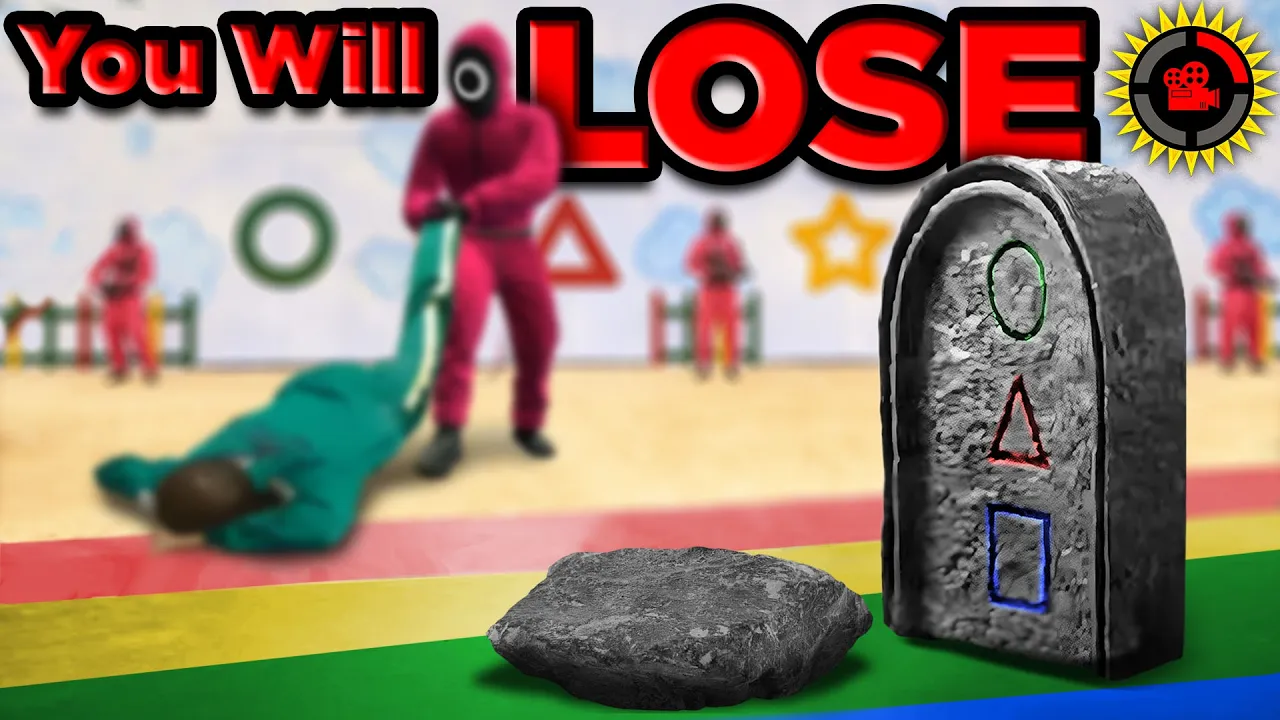
So, you've found yourself in the latest Squid Game, putting it all on the line to win a little cash. Well, listen up friends, I've got the strategy guide that will help you beat all of the games we see in Season 2. The real question is, will you survive?
Mild spoilers for the games in Season 2, and I apologize for the Korean names I'm going to be butchering. Hello, Internets! Welcome to Film Theory, the show that wants to play a little game.
If you can't scroll down and hit subscribe in five seconds, I win. Five, four, three, two, one. So, how'd you do?
I hope you didn't get eliminated. So, Squid Game, if you were somehow living under a rock and missed Netflix's biggest original series in history, first off, that's impressive. I mean, the show and its scathing critique of the rich, watching the poor literally put their lives on the line for just a taste of wealth really resonated.
And a lot of people, us included made content about it or celebrated that message, which everyone definitely 100 % got, because it was so clear. Like, who could watch Squid Game and think it was actually a good idea to turn this premise into a real reality show where desperate people play these games and end up getting put through allegedly awful conditions? No one's that out of touch, right?
Right? Oh, come on! Anyway, if you somehow don't know, Squid Game is a Korean series all about a few hundred players that are taken to a remote island and forced to play a series of seemingly innocent and childish games.
The twists, if you lose, you die. But the more people who die, the bigger the pot of prize money that the winners get. Season 2 of the show follows Gihon, the only survivor of the games from season 1 as he returns to the game, attempting to stop it from the inside.
"What I want is to stop the game once and for all. " But of course that means there's a whole new slate of challenges for the new players in season 2 to face, because, I mean, you can't just have a season full of the same challenges again, right? In an older theory, we actually went over the best strategies to win all of the games from season 1, but now that season 2 is here with a ton of new games both on the island and off of it, I wanted to return to the series and imagine, how would you survive the new Squid Game?
If you met the salesmen and got shipped off to this island, what are the best strategies to actually make it through? Well loyal theorists, I did the research and put together a handy dandy little strategy guide to help you get off the island with just a little extra Cash in your pocket. Don't move friends.
We're about to get the green light for this theory Okay So first things first one of the biggest things we really drove home in that last theory was that the squid game is not like the hunger games This isn't a battle royale or death match where only one person can be left standing there can be more than one winner Those who win all six games will receive a handsome cash prize In fact, working together, building alliances, sharing knowledge and trying to have multiple winners is the best way to survive and get that life -changing amount of money. Go check out that older theory if you want all the details there, but just keep that in mind moving forward, okay? Now, sadly, that's not to say that all the games can't have losers.
For example, the first game we see in the series is actually on the mainland, played between two prisoners. The pair are forced to play a variant of Rock Paper Scissors called Rock Paper Scissors minus one, where they throw out both hands and then take one hand away for the final result. "Two -handed Rock Paper Scissors.
Take one hand back. If the one you keep beats their hand, you win. " But there's an added twist.
The loser is then forced to play around of, hmm, how can I say this without YouTube getting angie at me? Ah, gun gambling. Yeah, basically they might die if they lose.
Now if you're And for the strategy on the shooty bang bang part of this, the only real way to win that particular game is not to play. Yeah, that is my professional advice there, it is very stupid and I'm not touching it any further. But as for rock, paper, scissors, there actually is a lot of strategy we can look into here.
The first thing we're gonna wanna do is figure out which hand to throw out to start with. According to a study at the University of Tokyo, players are most likely to throw out rock as their first move, followed by paper and then scissors. You can use this knowledge to your advantage.
Since rock is the most likely first hand to be thrown out by your opponent, you can start with paper to maximize the chances of winning that first round. And if you win that first round, it can start a domino effect. Another study found that if a player wins, they are more likely to play the same hand again.
So if you throw out paper and it beats your opponent's rock, statistically you're more likely to throw paper again. Likewise, if a player has lost, especially twice In a row or more, they are far more likely to shift their play to the hand that will beat what their opponent just played. So the loser who threw out rock in that last scenario is far more likely to then throw scissors the next time.
So let's think this through. If you won that first round, don't play the same hand again and instead switch to what would have beaten what you just played. In other words, what your opponent just played.
If you threw paper to beat your opponent's rock, they are most likely to throw scissors next to beat paper. So you throw rock and bam, smash their chances of winning. But if you lose that first hand, your opponent is more likely to throw the same thing again.
So you should switch to what would beat it. If they threw rock to beat your scissors, it's statistically best to then switch to paper. I know it's a bit confusing, but you get it?
Got it? Great. Because we also then have the added complication of minus one where you play two hands and then take one away.
Firstly, a lot of the same psychology plays out here, especially given how fast the game goes. "Rock paper scissors minus one, rock paper scissors minus one, rock paper scissors ! " But there may be a few ways to game this to give yourself a slight edge.
First off, never, never, never play the same thing in both hands. This will immediately cut your odds of winning in half, and if your opponent throws out two options different than yours, you automatically lose. Next, try to search for any patterns that your opponent is falling back on.
For example, humans tend to subconsciously choose their dominant hands when doing menial tasks like this. So it may be more likely that your opponent will choose the option that they threw out on their dominant hand. Try to use that knowledge and also randomly switch up which hand you pick to confuse your opponent.
If you combine the psychology of how to win rock, paper, scissors that we just discussed above with this randomness, you'll have the best chance of winning this game. But really, you might not need to take part in all the dangerous games here in Squid Game if you were using the sponsor for today's episode, Rocket Money. So, as someone who has to watch a LOT of content from my job, I've signed up for a lot of these dang subscriptions over the years, then it's hard to keep track of what I actually have.
And I've actually had multiple subscriptions to the same thing before without even realizing it. Rocket Money is a personal finance app that can help you manage your subscriptions, lower your bills, and budget your expenses. Rocket Money scanned what recurring payments I was sending out, identified that I was paying for something twice, and then with just a few taps, they actually even canceled that extra subscription for me.
It was like it got eliminated in the squid game. But that's not all. Like I just said, they can also help lower your other bills too.
You can ask Rocket Money to scan your bills and they'll do all the heavy lifting talking to customer service to see if there's a better deal out there. True story, but Rocket Money actually negotiated my internet bill to be $30 a month lower on my behalf. Money that I was able to immediately start saving or spending on other essentials instead, like green jumpsuits or black masks.
So if you want to start this new year by being smarter about your money, join the 5 million other members using RocketMoney today by going to rocketmoney . com /filmtheorists or just clicking that link in the description to get started for free. Thanks again to RocketMoney for sponsoring this theory and let's hop back into the Squid Game.
So congratulations, you've survived the first game. It's just too bad that it isn't even actually part of the actual Squid Game. But now that you've been shipped off to the island, we can start the real competition.
First up is Red Light Green Light, where the players must move forward across a field while the doll has said green light, but you must stop when she says red light. And all of this must be done within a five minute time limit. Well, at least in the West.
In Korea, this is actually a slightly different game called The Day Hibiscus Bloomed, but I digress. The same strategy is applied to both. So the absolute biggest thing you have to keep in mind for this game, even if other people around you are getting shot, you cannot allow yourself to panic, to let your fight or flight take over as others die.
And if you don't panic, you actually have a great chance of winning this without a ton of effort. According to Netflix, the recreation of this field for their reality show spin -off squid game the challenge was 328 feet long, or just under the length of an American football field. Even if the field in the actual squid game was double that size, which I'm pretty sure it's not just from eyeballing it, moving at the average human walking speed of 3 .
25 miles per hour means that you can cover that distance in just over two minutes. So the best advice here is to just Take your time, be calm, and just walk. And whatever you do, don't run.
You're much more likely to either trip or just not stop in time if the doll turns around quickly. It's not worth the risk. Now, I should also address the strategy Guihon instructs the other players to use here in season two.
He tells smaller players to line up behind larger ones, to minimize the chance that they won't be seen moving. - So if you're short, line up behind someone who's taller than you, single file, like - You're forming a congo line! - Now, I'm not sure I would go as far as to say that everyone should play like this, because it's incredibly dangerous.
All it would take is just one person making a mistake or sabotaging other players for several people to die, exactly like we see with Thanos. But if the entire group is playing together to survive, if someone's not playing this like a zero -sum game, this could be worth the risk. At the very least, if you're on the smaller side, Moving behind a larger player will help protect you and if you're a larger player you could easily start to form alliances here by Protecting other players either way it could also tell you the character of other people in the game Which will help you in the future if there are any team activities speaking of which so you've survived the free -for -all Red light green light, but the next game is completely different the six -legged marathon where a group of five minigames are played by groups of five With their feet all strapped together, so how do you form a team here to maximize your chances of survival?
"We need to find the team. That's the next step. " Well, going in, you're not going to know what these games are, so you can't really group up based on the skill sets you think you're going to need.
The games could literally be anything. Logic puzzles, tic -tac -toe, drawing, running, trying to diversify your skill sets based on the games you're predicting is a fool's errand, so it's better to partner with players that you trust or players with calm heads. If you want an example of that working really well, just take a look at this team.
On the face of things, they may not seem like they're that great, but because they trust each other, it really works out. We have Yongsik, who refuses to abandon his mother, Guamja, who herself is empathetic and looks out for other players. Yongmi specifically wants to partner with Yongju partially because of her heroics in the previous game, and in return, Hyunjoo inspires confidence in young me during the game, helping them all win.
The only odd one out is Hyunjoo, and even she gets the motivation she needs from the other players. They all work together, pool their knowledge and abilities, and end up winning as a result. On the other hand, there's this situation.
"I don't trust you. You're nothing. You're dead to me.
" Junhee refuses to partner with Myeongi because of their personal history and relationship drama. Now, don't get me wrong, her feelings are entirely valid, but at the same time, Myeonggi is very invested in her survival because she's pregnant with their child. This is a situation where putting those feelings aside might be worth it because he desperately wants you to win.
So, okay, you have your team, but before we hop into the games themselves, we need to talk about the marathon between them since you're gonna have your legs strapped to your teammates. How do you best approach this? Well, the players in the show actually figure this out pretty quick, counting their steps out loud.
This helps them coordinate so they don't fall over and waste valuable time. Nextly, if you or a teammate fails at a game, don't panic and don't yell. Collect yourself or encourage your teammate, reset the game, and try again.
If you need to move forward to collect a piece before you reset, don't bother turning around. It'll be easier and quicker if you just walk backwards just like we see in the show. And Finally, if you're lucky enough to be on a team that goes later on, make sure you watch the other players.
Observe what works and what doesn't. Emulate the strategies that succeed and avoid what fails. You have a massive advantage if you're going so late, so use it.
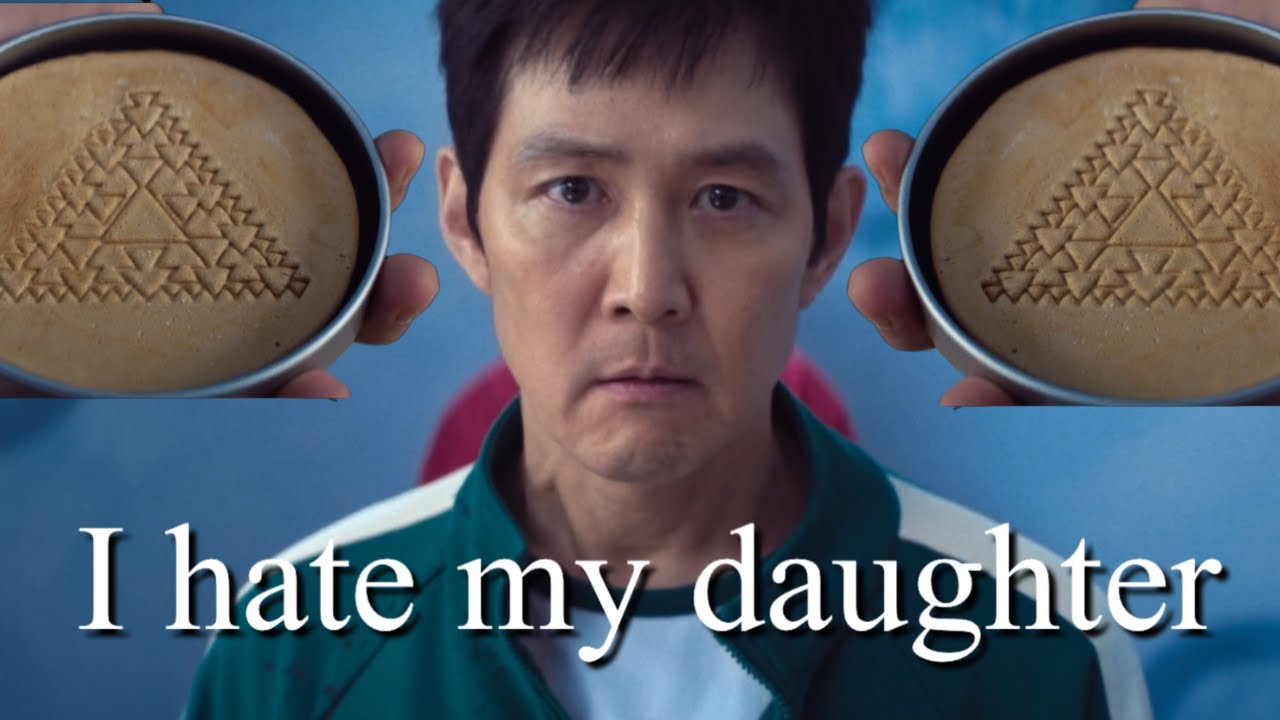
Now, let's talk about the individual games here in the Six -Legged Marathon. First up, there's Doc G. You'll recognize this one from Season 1, since it's what the salesman used to recruit people.
This game involves two paper squares. One is put on the ground while the player throws the other square onto it, hoping to flip it over. So, how do we go about doing this one?
Well, your first instinct might be to throw your square as hard as you can onto the other, but this comes with a bit of a risk. To build up the most momentum, you may end up flicking the square and end up hitting the one on the ground with the edge or corner of your square, since this is the fastest and hardest way to throw it. This is actually how professional card throwers do it, and are able to cut things with their cards.
But that is not the move for this game. It's going to do little to actually flip it since all of the kinetic energy from your throw is going to be concentrated on just the corner or edge of your square. Instead, what you need to do is focus on trying to slam the face of your square onto the other, towards the center of the paper.
This will transfer the maximum amount of kinetic energy over the widest area and focus it downward. Since the square is on the ground, it can't go down, So, instead, the kinetic energy will rebound, helping to bounce the square. Additionally, since the squares are made of folded paper, there will likely be puffy parts from the folds towards the center of the squares.
Even if they're small, this will end up creating itty -bitty pockets of air that you can use to your advantage. Hitting this with a large area will push the air down and out of the square, before air rushes back in to fill that space. Doing this with both squares will get you the best rebound of that kinetic energy.
We actually see this in the show, though they don't explain why it worked. "Wait a minute, Youngmi. Try with the flint.
Use the other side. " Youngmi hits the square flat with the side that's folded, giving it enough energy to bounce and flip. Do something similar, and you win.
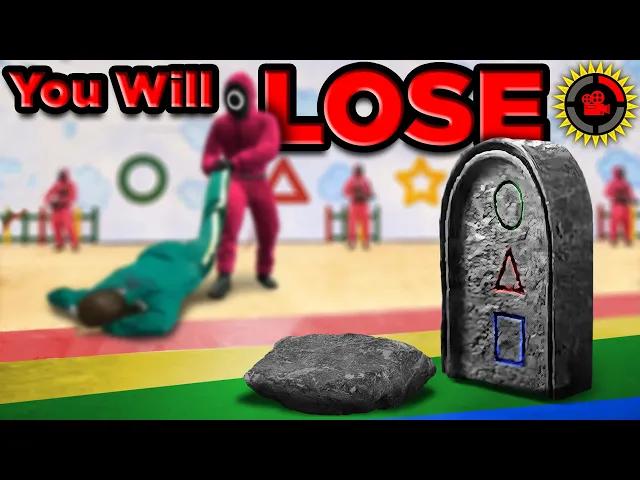
Great work. Next up, Flying Stone. Here you have a stone, and you just try to throw it at another stone several feet away to knock it over, all without stepping over a line.
It's a little bit like shoes, trying to throw something to hit a target. Honestly, the game here is super simple, and the trick is just to not overthink things. Take your time to aim, though it works for some players in the show.
Avoid overhand or underhand throws. You might get more power from those throws, but that's better for long distances than for aiming. Instead, flick your wrist like you're throwing a playing card, basically like the opposite of Dock G.
It's also important to remember your placement and your stance, just in case you miss. If you do, it's not the end of the world, and in fact, now you have an idea of the corrections you need to make to hit the stone. If you place your feet on specific parts of the rainbow racetrack and use the line you're not supposed to cross as a frame of reference, you can make sure you're in the exact same place for your second throw if you miss.
It's also worth noting that the rules here are vague. We see a couple players win this challenge despite bouncing their throwing stone off the ground, So, if you're concerned about your throw being powerful and accurate enough to knock over the other stone, it may be worth tossing the stone lower to the ground, and flicking it like you're trying to bounce a pebble on a lake instead of just lobbing it. This will get you more horizontal force in a more controlled direction, and hopefully enough momentum to knock over the standing stone.
Okay, that's two out of the five minigames won. Great job! Now, we get to Gongi, which is similar to the Western game of Jax.
Here, you have small stones that you need to pick up in bigger and bigger groups as you throw others up into the air, so picking up one stone at a time, then two, three, then all four. It's a bit of a complicated game. I'd recommend checking out a tutorial like this one from Miss Vicki if you want to learn the ins and outs.
Traditionally, Gongi is considered a game for schoolgirls, but that shouldn't be an assumption you make when choosing who to play this. Instead, choose either the most dexterous person, or the person who has the most practice with the game. We see this in the show.
It makes no sense to put Junhee on this game just because she's a girl, when Daeho is both dexterous thanks to his background as a marine, and has a lot of experience with the game thanks to growing up with a bunch of sisters. The main thing to make this game easier for yourself is going to be trying to keep the stones as close together as possible, so you don't need to move your hand in a large distance to pick them all up. Notice in Miss Vicki's video here where she goes for the stones closer together when she needs to pick up groups of two stones at a time, then when she needs to pick up four at a time, she lays them as closely together as possible.
That way, she's not trying to zip all around and pick up everything across the whole game board while the stone she threw is up in the air. Finally, if your team is lucky enough to go after a bunch of other teams, there's nothing to say you can't practice while you wait. You should absolutely take this time to pick up small pebbles and play a bunch of practice games, building up your muscle memory for the actual game when the pressure's on.
Now that you've beaten Gongi, the rest of the games are actually going to be much easier. Case in point, next up we have spinning top. Here you'll have to wrap a string around a top, launch it, and then have it land all while spinning.
It's basically like Beyblade. Tops like this work due to the principle of conservation of angular momentum. Basically when an object is spinning, it will continue to spin on that same axis unless stopped by something else.
Like friction or gravity. The axis of the top is its tip, so as long as you can get it to land on that point while it's spinning, it will continue to spin and you'll win the game. Just keep calm and keep your hands steady as you wrap up the top.
You're also going to want to use your dominant hand when throwing the top to maximize the amount of control you have. We actually see the frontman using his right hand, his non -dominant hand, while trying to throw this game and make Gi -hun lose before he switches to his left hand and immediately wins. Also, similar to Flying Stone, this one will be much easier if you release the top lower to the ground.
You'll have way more control of whether it'll land on its tip and keep spinning rather than just throwing it wildly up into the air, giving it a chance to rotate and land on its side. Honestly, this is probably the easiest game by far, and I wasn't a huge fan of it. You could tell that they had to manufacture drama with this game precisely because it was so simple.
See, Unnew is traumatized by seeing blood on the ground and freaking out, and the frontman tries to sabotage Gihoon's group by intentionally failing. Just seems like it didn't fit with the other games and the skill they've required, but I digress. Anyway, this brings us to the final game of the Six -Legged Race, Jegi.
This is basically kind of like hacky sack here in the West. To win this game, you need to bounce a paper jegi off your foot five times with your foot touching the ground in between each bounce. Not most people might think that you should go about hitting a jegi or hacky sack with the side of your foot, which does have the potential to launch it much higher into the air.
But this also comes with a lot of risk. It makes it much harder to control where the jegi is going and might make it more likely that you'll lose your balance and fall down. So instead, hit the jegi with the top of your foot.
This has a much larger surface area for a potential hit, and by lifting your foot directly up instead of angling it, it's gonna be much easier to control where it's going, especially if you just want it to go straight up. The physical movement of this is also much quicker, easier, and conserves your energy. Using this method, hitting the jegi five times should be a cakewalk.
So, great job. Give yourself a round of applause because you just survived the Six -Legged Marathon, but it also means that you've made it to the third and so far final game of season two, Mingle. In this game, the platform at the center of a large room will spin, and when it stops, the announcer will call out a number.
At this point, all of the players must split off into groups of that many players, and enter smaller rooms all along the walls. If you aren't in a room by the end of 30 seconds, or have too many or too few players in your room, you lose. Alright, so this game's a bit tough and might test alliances.
But this is where the idea of there being multiple winners of Squid Game NOT being a zero some game is really gonna come in clutch. Now, your first thought here might be to have an alliance with enough people that could manage to evenly split between all the numbers that they could call, but that just isn't realistic. In the show, the numbers they call out are 10, six, four, three, and two.
Out of those, the fewest number of players in an alliance you'll need to survive every possible combination is 60, which just frankly isn't going to happen considering the tensions amongst the contestants already, but consider this, that tin is far and away the outlier of these numbers, and between all of the other numbers called out during the game, the lowest common multiplier is actually just 12 players. Finding an alliance that can work with just 12 is much more achievable, but it's a bit of a moot point because you're not going to know the numbers that are called out before playing the game. So what do you do?
Well, easy, still work with your alliance. Even if you don't know the numbers going in and just have an alliance of like 9 or 10 people that you trust, like, say, two teams from the Six -Legged Marathon that like each other, assuming that any number they call out is going to be 12 or fewer, that's going to be very easy to work with. Like, sure, not all of them, it's not going to evenly divide amongst any possible number called out, but most of them will.
And that really shouldn't be an issue because of the sheer number of people that are going to need to be in a group. You can just grab a straggler or two that aren't in another group if you need more people, or loan some of your own people to another team if you have too many. Hell, you might even make some new allies out of this because people are going to be grateful for you and your team for saving their lives.
For example, consider this. Let's say you have 10 players in your alliance and the announcer calls out for 6. If you split your team evenly into two groups of 5, that means that each group only needs to find one additional player to bring in.
It's much easier for a group of five to attract one extra person with no group in this scenario than it would be for a group of like two or three to find three or four extra people. The same goes for if the announcer calls four or three or eight. Splitting your alliance as evenly as you can will yield the best chance that you'll be able to find enough stragglers to fill your rooms.
The only real challenges here would be larger odd numbers like seven or nine. There will be a few stragglers from your alliance that will have to break off. But if they go individually, well, then they're the one extra person for another group.
And again, it's far more likely that they'll find a room that needs one extra person than it would be for a group of three or four to find a group of six or seven. It's all about just breaking the numbers down to a small and evenly split as you can get. And there you have it.
Follow that advice and you have the best chances of surviving all of the games we've seen so far in Squid Game Season Two. So if you really want the best advice I can give, just don't play. I joked about this at the top of the episode, but Squid Game is a brutal critique of the divide between the rich and the poor and how uncontrolled wealth inequality puts the have -nots against one another for the amusement of the haves.
You don't have to give in and play that game, and instead you can try to change the system. Even if that is way harder than it sounds, just like Gi -Hoon is learning this season. But hey, That's just a theory.
A film theory. And cut. Up next on Film Theory.
And after today's episode, you'll know how to win the Hunger Games, not by skill or strength or extremely advanced finger painting skills, but through the power of probability.