a poder de Estados Unidos Seto Noah reduced my Annunziata Addison eurosocial Immanuel Wallerstein deliver Buddha clean you to impair Americana Palestine you dismiss influence of sociology Sushma's beccarose no silly Mita avocation ro fin de semana Americana Kelly anoxia a DES Integra zone to sistema capitalists possess a new era tomato departure non sonic wrist economy Americana my stamina in prose o pocos esperaba to Persia to Europe you nasty to register millennium mr. secretary non-vested igl wallerstein fan of the período in customs in Toronto this critter Purell in vomit cows to tau delta lugar on low sistema
no sabes emanuel o p oq' a 12 in watch you visually regard Pirelli voice vivemos no Maya pocket privilege the other Nawab the cleaners are so much interviewed wives positive consequences historical so do you think your main contribution is creating world yeah I would say that's my main intellectual contribution yes and this is there a short way to explain to the public what that is well there's not a short way but I'll let me underline the essential elements of it role for one thing most of 19th and 20th century social science assume that the state
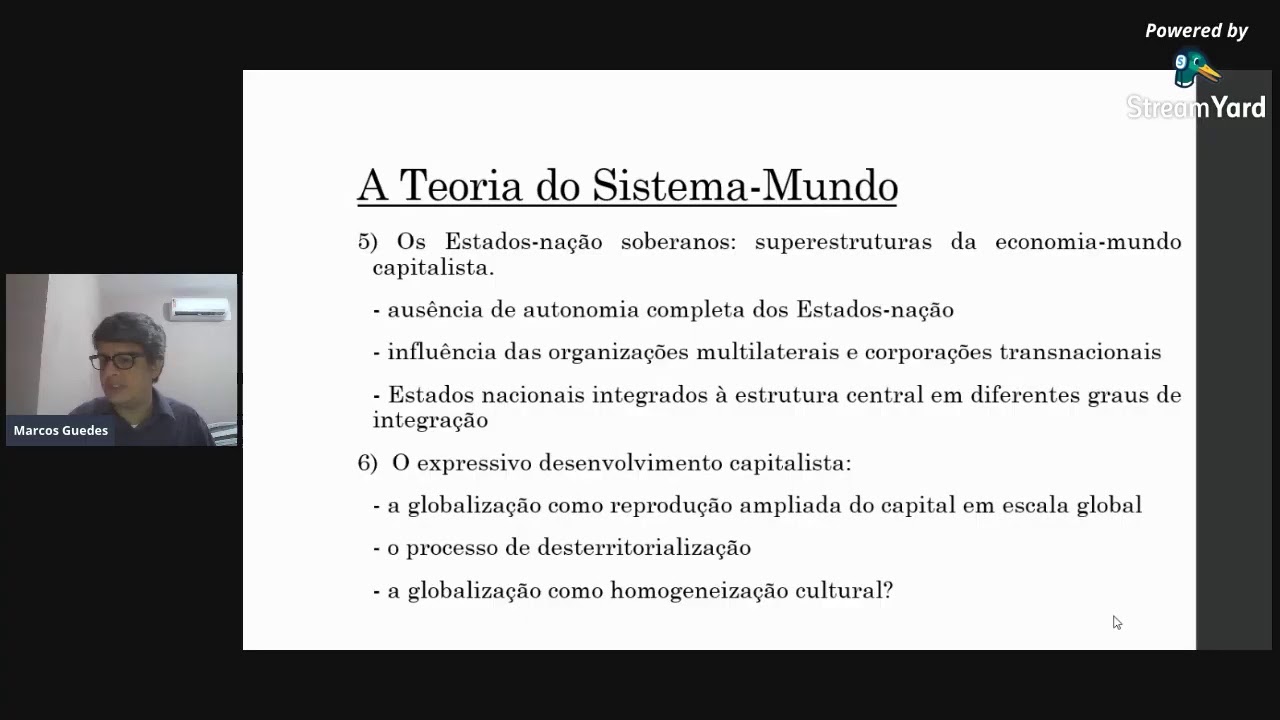
was the unit within which things happen world system analysis comes along and says this is not the unit within which reality has been occurring in the modern world the unit is a much larger work unity call world system and in particular the modern world system is a capitalist world economy so that's one basic element and the second basic element is the insistence on the importance of temporality and this we get a bit from Rodell it's it's it's it's the long dear thing so these two elements the the sort of geographic element that the that the
unit of analysis is a world economy which is not the whole world but a world because it begins as part of the world and by its inner logic expands until by the end of the 19th century it incorporates the entire globe but that's so spatially and then temporally so we say it's very controversial that this modern world system began more or less in the long sixteenth century and is still in existence today so I think that that captures the the heart of it and then it says that I suppose there's another element which is that
the artificial distinction which was created in the 19th century between the political sphere the economic sphere and socio-cultural sphere as though they were autonomous and separate from each other is just a piece of propaganda of classical liberalism but it isn't the reality and the the intimate interrelations between all these spheres and the fact that we all operate simultaneously in all of them is is part of any sensible way of looking at the world ok and I suppose there's a final element which is we take this one from Prigogine which is that systems all systems all
systems from the universe to the most micro possible system have lives they don't go on forever so you have to figure out how they came into existence what their rules are while they go on what I call their normal life and then because they always move far from equilibrium they come into a crisis a structural crisis and that that has it bifurcates the system bifurcates it will go in one direction or another but it won't keep going as is and I'm claiming that the capitalist world economy is in fact now in that structural crisis and
won't mood survive very much longer but we don't know what's going to replace it that's the big issue before us so after 500 years of capitalism why is it coming too high well then you have to trace the processes by which the system runs into trouble first of all you have to talk about how capitalists make money capitalists capitalists can't really make a lot of money out of production anymore and that's undermining the value of capitalism to capitalists okay so that's one thing and the other thing is the political stability of the system was guaranteed
for a reasonably long time by the ascent so the the sin the dominance of centrist liberalism which assured people that slowly but surely everything would get better they just had to be patient and leave things in the hands of specialists and that was exhausted in 1968 people don't believe it anymore so they don't believe in the stability of the system they don't believe in the inevitable future you see this now very much around the world and you have a system in which capitalists are really making money anymore the only thing they can do is speculate
and speculation has its limits we're running into that right now every everywhere so it's bifurcating but bifurcating means it can be you see it's very important to understand intrinsically impossible to predict how it will come out because it's the result of an infinity of decision making by an infinity of people at an infinity of moments no one could possibly it's impossible however it we can say it'll go in basically one direction or another and I call that I give it months it's just a codename for me I call it the spirit of Davos in the
spirit of Porto Alegre which will appeal no doubt to businesses but basically I say the spirit of Davos is that the capitalist system has been a system which has been hierarchical exploitative and polarizing it's not the only way to do it you could find another way to do that so the spirit of Davos define another way to do it that isn't capitalism and the spirit of Porto Alegre is to say well we want a world that's relatively democratic and relatively egalitarian they don't know how to do that institutionally but that's the direction of which and
this is the bifurcation this is the two possible ways in which the world is moving and it's moving constantly it'll take another 20 30 40 years and suddenly one day as though by magic it'll flip and one or the other path will be taken and then we'll be into a new system I don't know its name it's not important what's important is is that the type that I call the spirit of Davos or is it the type that I call the spirit of Porto Alegre and ie I can hope for the best but I can't
assure you and I don't I don't know if history is on nobody's side I keep repeating that mantra because too many people believe history is on their side history is on no one side it's the result of what we do and what we do in this moment of structural crisis what do you think of that doctor if I was I think Occupy Wall Street is a fantastic success absolutely no one predicted there though the moment seemed to be just right and what it's done is suddenly people found it responded to to what they were uneasy
about unhappy about and of course it's not the only thing there's the so-called Arab Spring there's the inking in Nardo's and in Spain as oxy and grease they're even things in China Russia na and well no no no place is safe but let me put it that way because no place feel there is no sense of certainty what's happened what's happening right now is a kind of paralysis because people feel so uncertain about what will happen they do nothing I'm talking now in the in there that's what the banks are doing they are not lending
money right well because banks want to make money and not sure that they lend money they've got to have that kind of minimal minimal certainty of the next couple of years and they don't have it so and that's of course a self-reinforcing thing if they don't lend the money then you know when somebody else can't start project and then etcetera etcetera etcetera but if I understand well what you write what is certain is that we are entering a period of chaos yeah it's going to be very hard and much worse than it is now right
all right so what is this sometimes you write to hell on earth dark times trouble times so what is coming ahead well look first of all I mean hell on earth why is it hell on earth first of all there is physical insecurity mmm I mean if I compare the world to the world I knew fifty years ago they're just a lot a lot of places I mean I used to feel secure moving around in most places not everywhere but you knew there were a few zones here and there they were dangerous but here now
I don't feel secure anywhere personally and I think many people feel like me so there that that's that that's terrible secondly I don't feel secure about money right I have X number of years to live I want to live them nothing desperate poverty so I'm worried about the money I have invested here and there just at a personal level alright and it's terrible uncertainty leads me to be sure I'm sure what I should do then I have to worry about my children and my grandchildren because the things look miserable for them you know when I
was let's say 15 years of age I pretty well knew that I was going to live economically and financially better than my parents and certainly better than my grandparents and now it's the opposite isn't it the children are gonna live less well than I and the grandchildren may live still as well well that's not very not very comforting so and then there's the geopolitical turmoil I mean we're definitely at the end of us hegemony the u.s. is just one major power in the world with a lot of others of which Brazil or Brazil leading South
America is certainly another major power there are eight or nine well that's an awful lot and when you have a situation where you have eight or nine strong powers strong enough to sort of make their own policy and make their own alliances what happens is they keep shifting alliances they try to figure out you know is South America going to ally with Europe is it going to ally with East Asia is it going to ally with South Southern Africa or and they play games they all play games right they they move they and they keep
so you want to tell me where the world will be let's say let's not take it very long 2015 or 2020 who who will be allied with whom not clear at all that's a very uncomfortable situation from the point of view of Brazilians yes we are finally getting out of poverty right we are becoming this new power we are growing and while the the main powers the US Europe and Japan are declining we are going up with China in India so what will happen to us in this well of chaos of the end of capitalism
look you're certainly doing better than you were doing 20 30 40 50 years ago not to speak of a hundred years ago no question and basically the a chunk of the surplus value created in the world has shifted to you away from the US or from Western Europe or so forth nonetheless how shall I say it's a bit of an illusion I think for the so called emerging powers or the BRICS to assume well okay now it's our turn and we'll be on top the US and Western Europe will be somewhere down there because that
would have been true a hundred years ago or 150 years ago when because there's always been movement within the world system who's on top moves in the middle and and so forth but because the world system is in such crisis structural crisis you in a sense make the structural crisis worse you see because what you're doing is you're including more still more people in the division at the top though was the prophets and it lowers the prophets overall and therefore you're or and furthermore you need customers all right that is to say it's not just
you took can't just produce you gotta find people to buy that stuff in China is now worrying about that and India is now worrying about that and Brazil is justice maybe it's the last of these to begin to worry about that but it's a real problem you know I mean it's it's all well and good to say we have XY and Z but who's going to buy them do they have enough money with which to buy it I wouldn't sit back comfortably if I were a Brazilian or a Chinese or an Indian and simply say
well the future is with us come back and see us in 20 years and you'll see how well we're doing I don't think that really what's going to happen hmm one interesting thing is that because of all this total uncertainty individual action makes a huge difference right explain that well you know we have had for two or three thousand years in in the Western world this philosophical debate is the world a determinist world or is there freewill right and the sides are the same and the the argument has been made constantly certainly since the Greeks
and so forth I say historicize that debate it isn't a question of one or the other but when one and when the other okay so my argument is when a system is in its normal a historical system is in its what I call its normal phase of operation for a couple hundred years things are relatively determinist meaning no matter how hard you try to change it things get pulled back to equilibrium and I good example are there two most famous revolutions in the modern world the French Revolution the Russian Revolution and how after X amount
of time it got pulled back to equilibria it wasn't a lack of energy put into it of social attempts to transform the world but they didn't transform the world now then I say when you come to the structural crisis because things are fluctuating so wildly free will prevent that is to say every little action every nano action by every nano person at every nano moment affects the outcome that's what I call free will or the prevailing of free will so you know that's from my point of view an optimistic way of looking at it we
can really affect the world in a way that our grandparents or our great-grandparents couldn't however much they tried really affect the world but I also say it's 50/50 right and that's a lot not a little okay 50/50 is a good chance not a bad chance but there's the other fifty you know and they may the other side I think of them as the other side they went out I can't get that would mean a world with more inequality probably at at least as much and maybe certainly more it could be a world with a much
harsher ice a tougher hotter hand in which people get hit on the head much more quickly yeah I don't know you know and the alternative would be a more democratic and egalitarian world but what kind of individual action now can help there's this more get it at the spirit of Porto Alegre yes I win well I see on the one hand I think you know the kinds of things that the of all these world social justice movements are doing in terms of trying to awaken people to the reality of what kind of world are we
living in okay and I I think that that has an impact I think if there's no question that people learn on our learning and not cutting through what should I call it the the official lines which we all incorporate into our into our mentalities and and now we're trying to get them out of our minds and I call this on thinking trying to unthink the things that we have been taught in our schools by our parents by the governments by everybody I think we can try to decommodification a system which tries to commodify everything bit
by bit by bit turned everything into a commodity these days you know the latest things have been water the body but you know we can we can try to create economic processes which are d commodified and so forth week refuse to participate in all kinds of commodified structures so that's another thing we can do and we can protest they receive you know protests actually they work up to a point there people do who are in power do back down at various points when when when faced with with enough protests so try one thing try another
thing I'm very empirical about this I there aren't a list of perfect solutions keep trying see what happens see what works if it works keep doing it if it doesn't work stop it do something else and this then is linked also with what's our philosophy rights is this a civilizational crisis in other words do we want is growth an objective per se which not only capitalist said but the classical Marxist parties in effect said or is wayne vivia when we but what does that mean and and how does that relate to other issues like the
rights of women and so it's not an easy I'm not arguing these are easy things I'm arguing they have to be talked about and they have and some attempt to create because if we are the 99% there's no point in defining ourselves in such a way that we end up being the 10% politically if we're the 99% then we want to pull groups together without diluting it entirely okay and that is the political problem for all these movements right now so a final question so we're answering this long period of increasing chaos it's going to
be happier on we have already entered it it's going to get much worse but you're still so optimistic white well how should I say what alternative do I have okay thank you thank you very much okay [Music] [Applause]