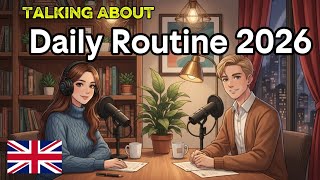
Hello and welcome back to English Unleashed, your space to listen, repeat, shadow, and learn English at a slow, natural pace. I'm Tom and I'm happy you're here. In this episode, I speak slowly.
I use clear simple words and I repeat ideas so you can shadow my voice, practice your speaking and build your confidence step by step. Today we will talk about how to describe your day in English. Not just short sentences but full ideas.
What do you do in the morning? What happens in your afternoon? What is your evening routine like?
By the end of this episode, you will be able to talk about your day in English using clear and natural sentences. Let's begin. Why is it important to practice talking about your day in English?
It's important because your day is real. It's something that happens to you every day. You know it well.
You don't need to search for words or ideas. You don't need to talk about history, science, or politics. You just need to talk about your life.
You can say what time you wake up, what you eat for breakfast. You can say if you go to work or stay at home. You can say how you feel.
Tired, busy, happy, or relaxed. And here's the best part. When you describe your own day, you're practicing real English.
Useful English. English that you can use with other people in real life. You don't need to be perfect.
You just need to try. When you talk about your day, you begin to think in English. You begin to speak more naturally.
You use simple, complete sentences. You stop translating in your head. And you feel more confident when speaking.
Let's take an example. Imagine you are meeting someone new. They ask, "What did you do today?
" "What did you do today? " If you've practiced talking about your day before, you can answer. You can say, "I woke up at 7.
I went to work. I had coffee and answered emails. " In the evening, I made dinner and watched TV.
Now, that's a full conversation. That's real communication. And that is your goal.
Even if you are alone, even if you're not in an English class, even if you are shy, you can still practice speaking English by talking about your day. So, whenever you don't know what to say, start with something simple. What did I do today?
What time did I wake up? What did I eat? Where did I go?
What did I do in the evening? These are good questions. They help you remember vocabulary.
They help you build strong English habits. They help you think in full sentences without stress. You can do this in the morning to talk about yesterday.
You can do this in the evening to review today. You can even record yourself and listen back. The key is to keep it simple.
Use the English you know. Don't worry about mistakes. Just speak.
And the more you practice, the easier it becomes. One sentence today, two sentences tomorrow, a whole story next week. So today, let's build that skill together, step by step, word by word, one real sentence at a time.
Okay, let's start at the beginning of the day, the morning. Morning is a very important part of your day. It sets the mood.
It gives you energy. And it's a perfect time to speak and think in English, even for a few minutes. Now, let's practice some simple morning sentences together.
Repeat each one slowly, just like shadowing. Let's go. I usually wake up at 7:00.
Now you repeat. Sometimes I wake up earlier around 6:30 when I have a lot to do. Now you repeat.
If I sleep late, I feel tired the next morning. I stay in bed for a few minutes and think about my day. I like to take a deep breath and stretch my arms and legs.
Then I sit up slowly and get out of bed. I walk to the bathroom and brush my teeth. I brush slowly and carefully for 2 minutes.
Then I wash my face with cold water. It helps me feel awake. Sometimes I take a quick shower, especially if I feel sleepy.
When I shower, I like to play soft music or listen to English audio. After my shower, I dry off and put on my clothes. I try to wear something clean and comfortable.
Sometimes I wear jeans and a t-shirt. If I have a meeting or class, I wear something more formal. Next, I go to the kitchen and prepare my breakfast.
I usually eat something simple like toast, eggs, and fruit. Sometimes I have cereal with milk and a banana. If I have more time, I make an omelette or oatmeal.
I like to eat slowly so I can enjoy my food. I drink coffee most mornings. Sometimes I drink green tea because it feels light and fresh.
While eating, I sometimes watch a short video or check the news. Other days I just enjoy the quiet and listen to birds outside. Before I leave the house, I check my phone.
I look at the time and read my messages. I check my calendar to see if I have any meetings or appointments. I pack my bag with everything I need.
My phone, notebook, keys, and water bottle. Then I put on my shoes and go out the door. Okay, let's shadow a story.
My morning routine. In this part, I will tell you a short story about my morning. You can listen, then shadow each sentence.
You can pause after each line to repeat it slowly. Are you ready? Let's begin.
In the morning, I usually wake up at around 7:00. Sometimes I wake up earlier if I have a lot of things to do. I lie in bed for a few minutes and think about the day ahead.
I stretch my arms, yawn a little, and slowly get up. Then I walk to the bathroom and brush my teeth for two full minutes. After that, I wash my face with cold water.
It really helps me wake up. If I feel sleepy, I take a warm shower. I often listen to relaxing music while I shower.
It helps me feel more calm and focused. After the shower, I put on clean clothes and check my hair in the mirror. Next, I go into the kitchen and start making breakfast.
I usually eat two pieces of toast with butter and jam. And sometimes I add a boiled egg. I drink a large cup of coffee.
That's very important to me. In the morning, while eating, I sit by the window and look outside. Sometimes I hear birds singing and I enjoy the peaceful moment.
Before I leave the house, I check my phone. I look at the time, my to-do list, and my schedule for the day. Then I prepare my bag.
I make sure I have everything, my phone, my wallet, my notebook, and sometimes a snack. Finally, I put on my jacket and shoes, open the door, and step outside to begin my day. Okay, let's say a few final practice sentences together.
Again, you can repeat right after me. Every morning is a little different, but I try to follow a good routine. When I start my day with English, I feel more focused.
I'm proud of my progress and I will keep going. Now, let's move to the afternoon, the middle part of the day. Many people are busy in the afternoon.
Some people go to work, some go to school, some stay home and take care of the house or family. Whatever you do, the afternoon is a good time to use English. Even if you're busy, you can still listen.
You can still repeat. You can still practice even for just 5 or 10 minutes. Let's learn some common sentences together.
Try to repeat after me slowly and clearly. After lunch, I go back to work. Sometimes I feel a little sleepy after I eat.
I check my emails and answer the important ones first. I often read messages from co-workers or classmates. I usually have one or two meetings in the afternoon.
Sometimes I meet with a client or my manager to talk about tasks. If I work from home, I sit at my desk and open my laptop. I type reports or prepare presentations.
I also look at my calendar to see what I need to do next. I like to keep my desk clean and organized. It helps me think clearly.
I usually take a short break around 3:00. I make a cup of tea or drink some water. Sometimes I eat a small snack like fruit or a biscuit.
If I have time, I go for a short walk to get fresh air. Even 10 minutes outside helps me feel better. If the weather is nice, I walk around the block or sit in the sun.
When I have free time in the afternoon, I study English. Sometimes I listen to a podcast while I take a walk. Other times I read a short article or a story online.
I also watch slow English videos to help with listening. I repeat short phrases out loud to practice speaking. Shadowing helps me speak more fluently and clearly.
Before I finish work, I write down what I did. This helps me stay organized and ready for the next day. Sometimes I write one new word I learned today.
I like to review my English notebook before I stop for the day. I will now tell you a story about my afternoon. You can listen, pause, and repeat after me.
Try to copy my rhythm and tone. This is a great way to shadow and learn. After lunch, I usually go back to my desk to continue working.
I check my emails and write a to-do list for the afternoon. I often have a video meeting with my team. We talk about what we finished in the morning and what we will do next.
The meetings are usually short, about 30 minutes. After the meeting, I take a short break. I walk to the kitchen and make a cup of tea or black coffee.
I drink slowly while standing near the window. Sometimes I step outside for some fresh air. If I have free time, I use it to study English.
I usually listen to a podcast like this one or read a short story. Sometimes I watch a video where the speaker talks slowly. I pause the video and repeat the sentences.
This is shadowing. It helps me speak more naturally and understand better. Before I stop working for the day, I write down a short summary of what I did.
I also write one sentence in English to describe how I feel. For example, I finished all my work today and I feel proud. I didn't study much today, but I will try again tomorrow.
This helps me reflect and stay motivated. Okay, now it's your turn. You can pause this episode for a moment.
Try to talk about your afternoon just like I did. What do you usually do after lunch? Do you go to work?
Do you go to class? Do you stay at home and rest or study? Use short sentences.
It's okay if it's just three or four lines. The goal is to speak, not to be perfect. Okay, let's try some sentence starters together to help you speak.
I will say the beginning of the sentences and you try to complete them. Okay. In the afternoon, I usually Mhm.
Very good. After lunch, I like to Good job. Sometimes I feel well done.
I usually take a break at perfect before the afternoon ends. I very good. Okay.
The evening and night. Evening is a special time, a time to relax and review the day. Let's repeat some useful sentences.
I come home at 6:00 in the evening. I take off my shoes and sit down for a few minutes to rest. I sometimes watch the news or listen to music to relax.
I cook dinner or I order food if I feel tired. I eat dinner at the table with my family. We talk about our day and share stories.
After dinner, I clean the kitchen and wash the dishes. Sometimes I go for a short walk after dinner. Before bed, I read a book or listen to calming music.
I take a shower and brush my teeth. I go to bed around 10:30 or 11. Okay, you have just listened to my full routine.
Now, I want you to speak about your day. Here's how you can do it. First, think about your day.
What time do you wake up? What do you eat for breakfast? Do you work, study, take care of the house?
What do you do in the afternoon? What does your evening look like? What do you do before bed?
You can speak about today or you can talk about a typical day, a normal day. Great work today. You listen to a full diary routine.
You practiced new vocabulary. You repeated full sentences. And most importantly, you try to speak in English.
This is real progress. You're not just studying English. You are using English.
You are living in English one sentence at a time. Keep building your confidence. Keep practicing your daily routine until it feels easy.
Now come back to this episode often. Listen again, shadow again, and each time add more to your story. This is English Unleashed.
I'm Tom and I'm proud of your effort. Keep listening, keep speaking, and keep believing in yourself. Bye for now.
Heat. Heat.