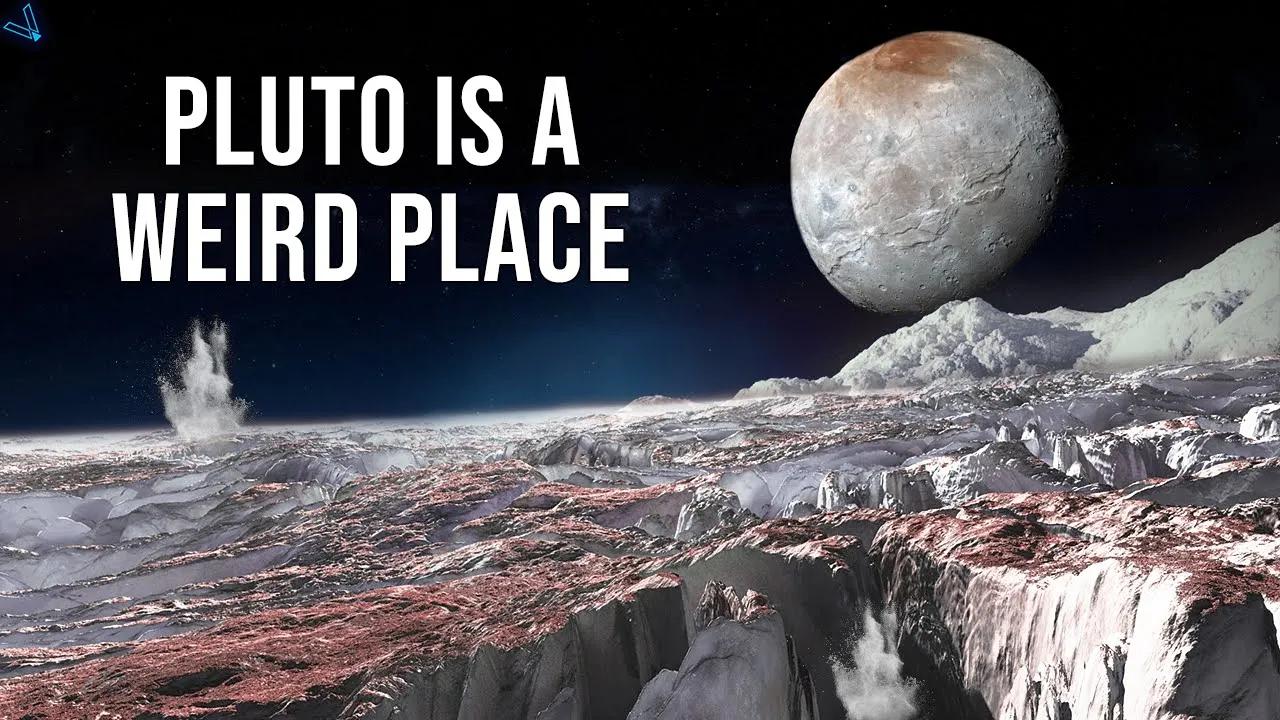
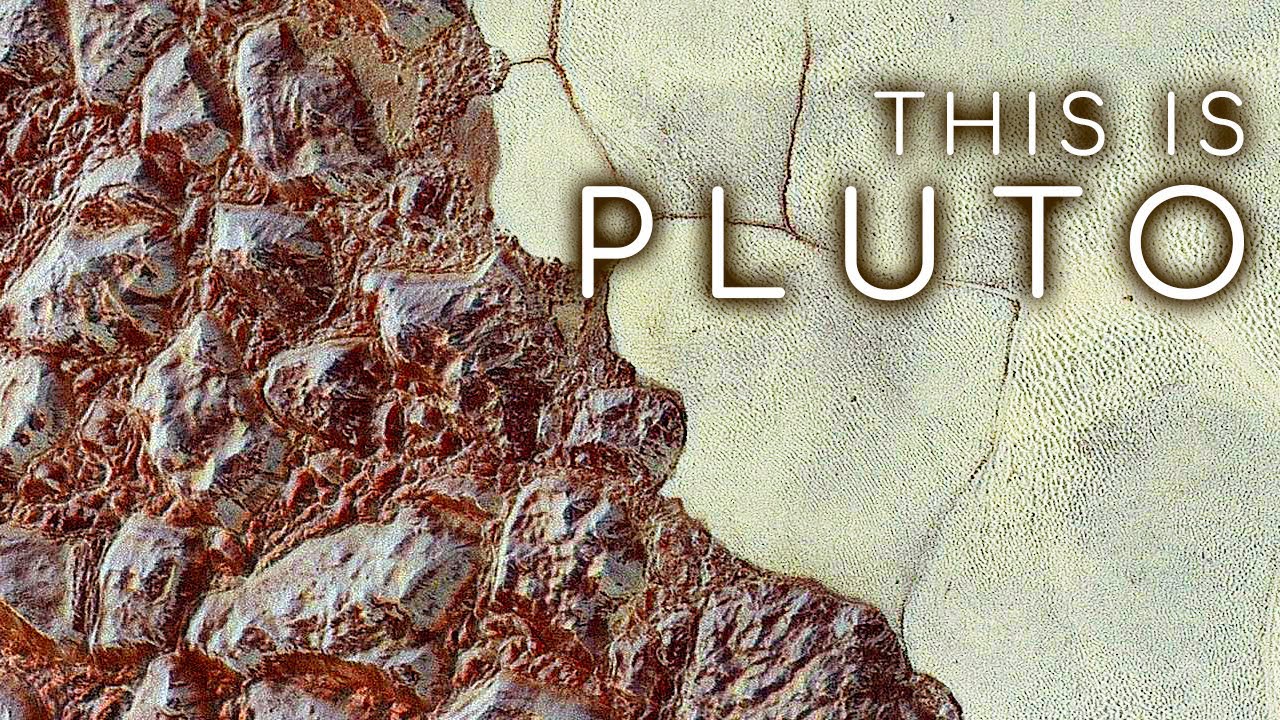
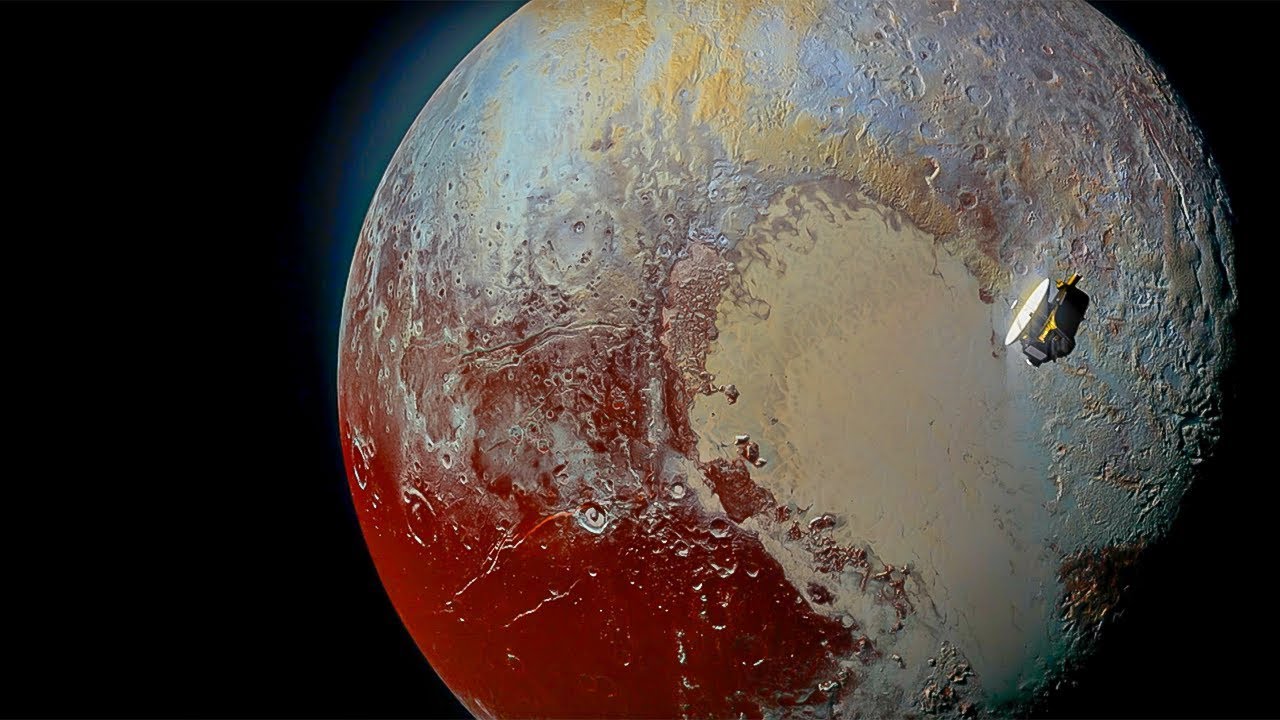
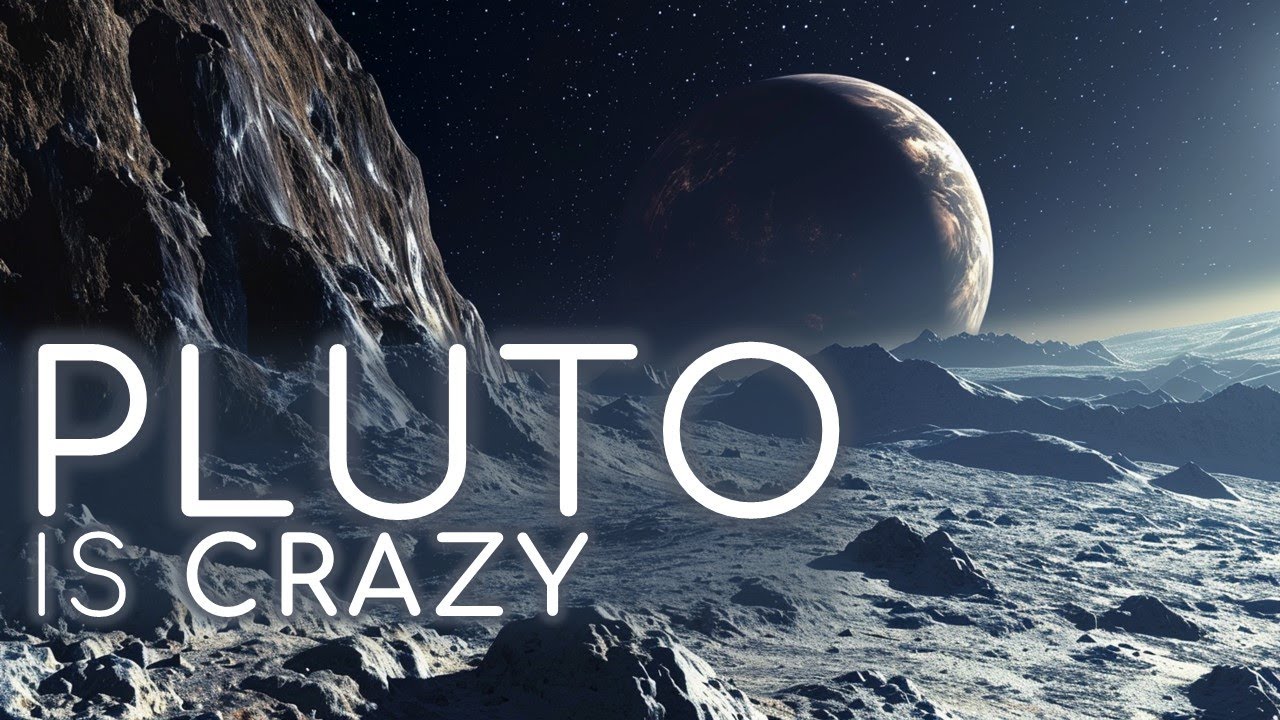
a big thank you to incog the sponsor of today's video this is Pluto a familiar site these days thanks to NASA's new horizon spacecraft which passed by in July 2015 allowing us to see the icy world for the first time in all its Glory it revealed detailed images of Frozen nitrogen Cliffs giant shards floating across icy Plains like icebergs cracks deeper than the Grand Canyon and of course its famous heart-shaped feature but even with all of these incredible highdef images there is still a significant portion of Pluto that remains cloaked in mystery The Far Side
of Pluto the opposite hemisphere to the one we are all so familiar with so what does the opposite side of Pluto look like you're watching v101 space my name's Rob and if you enjoy my videos then remember to subscribe for much more to come when Clyde Tomar discovered Pluto more than 94 years ago it was a mere Speck of light barely visible to the largest groundbased telescopes of the time it took until 1996 when the Hubble Space Telescope helped scientists to see surface details of Pluto although fuzzy the images revealed a world that had more
large scale contrast than any other in the solar system except Earth then in 2015 after a 9-year and 5mon journey NASA's new horizon spacecraft arrived there and discovered a world that was far more Dynamic than anyone had ever imagined unlike many other planetary missions New Horizons did not enter into orbit around Pluto mainly because of the mission budget time and how fast the spacecraft would have been traveling when it arrived more than 84,000 km per hour instead it performed a flyby in which its closest encounter only lasted a few hours the reason we only observed
one hemisphere of Pluto in high resolution is because the dwarf planets rotates every 6.4 Earth days meaning that as New Horizons flew past one side the world was illuminated by the Sun but the other was shrouded in darkness as this stunning image reveals when New Horizons turned its cameras back onto Pluto once it had passed by but by using images taken by the spacecraft during its approach up to a distance of 6 million kilm away scientists were able to reveal Pluto's hidden Hemisphere and so the question is what other stunning features was this bizarre world
hiding even though the spacecraft was still millions of kilm away when it captured the far side of Pluto the resolution of the images are still 100 times better than what the Hubble Space Telescope has been able to provide of this same region allowing us to just about make out some of the more prominent features in some ways both sides of Pluto are similar the presence of steep ridges for example called blades can be seen on both hemispheres stretching up to a kilometer like high Skys scrapers above the surface scientists think that this bizarre bladed terrain
forms in a similar way to the penitente features found here on Earth these features form when snow or ice supplements which is when a solid turns into a gas without becoming a liquid first however pentes are much smaller and only reach a height of about 5 m or so but the most intriguing features seen on Pluto's Far Side that cannot be found on Pluto's near side are these thick long dark lines crisscrossing each other and they appear to be on the direct opposite side of Pluto's heart something that scientists think is a result of what
caused Pluto's heart in the first place called Sputnik plena this Western lobe of Pluto's heart is thought to be the giant scar of a cataclysmic impact event one popular Theory suggests that an object over 640 km wide collided with Pluto causing an enormous Basin that eventually filled with slushy water as an underground ocean began to well up into the chasm afterwards nitrogen gas in Pluto's atmosphere condensed and froze over the frigid Basin creating the bright white scar that we saw when New Horizons passed by these fascinating dark lines on Pluto's Far Side helped to bolster
this idea of a giant impact event because they are possibly the result of seismic waves racing around the dwarf planet until they reached the opposite side and created a muddled mess of ridges cracks and plains known as chaotic terrain basically the shock waves from the Collision ripped around Pluto until they met 180° on the opposite side it is not just Pluto where this phenomenon has been observed either on mars or Jupiter's moon Europa for example evidence of collisions from asteroids or comets can be seen with the scars of seismic waves racing through and around their
terrains as well surrounding this chaotic terrain another geological Oddity can be seen enormous cracks and fault lines stretching from Pluto's North Pole to its South Pole these extensive fractures are possibly caused by the gradual freezing and expansion of a subsurface ocean as this internal ocean slowly solidifies it increases in volume creating immense pressure that fractures Pluto's icy crust just as Pluto's heart provides compelling evidence of a hidden ocean so do these cracks suggesting that even in the cold depths of the Kyper belt seemingly Frozen worlds like Pluto can Harbor hidden oceans adding to the Intriguing
possibility of subsurface environments capable of supporting life because of these incredible Far Side images it was also discovered that the Striking dark regions seen on Pluto's illuminated side when New Horizons flew past was actually a band that wraps around the entire dwarf planet interrup Ed only by the heart feature called the belon Regio this dark band presents a dramatic contrast to The Brighter icy regions and is thought to be composed of tholins complex organic molecules formed through the interactions with ultraviolet light and cosmic rays with methane and nitrogen unfortunately with these images being as fuzzy
as they are it's not clear how much more we will learn about the far side of PL Pluto bigger telescopes planned on Earth may help but there's nothing like being there and capturing closeup images and it's very unlikely that we will see another probe visit Pluto for many decades to come after all our solar system is packed full of other planets and moons that we still haven't got close-up images of yet take Uranus or Neptune for example it was back in the late 1980s that we last visited them and so these blurry images are the
best we have to complete the map of Pluto but they do show that this icy world still holds many more fascinating Secrets when space agencies explore the solar system the more data they gather the greater their chances of making an astonishing Discovery but closer to home data can be a powerful commodity something bought sold or traded such as your personal information as I'm sure you can all relate to receiving intrusive cold calls or emails from companies you have never dealt with can be a daily occurrence but have you ever wondered how these companies get your
information well through my recent partnership with the sponsor of this video incog I discovered a disconcerting reality data broker companies are profiting from your personal information without your explicit consent personal details such as your name your home address your location history and your online activity are up for sale potentially even falling into the hands of criminals thankfully however there is a solution to regain control of your data because incog using data protection laws can reach out to these Brokers and demand that they delete your information from their servers on your behalf it's really that simple
sign up to incog grant them permission by the click of a button and they get right to work protecting you and your data in less than a week incog has already purged my data from 24 broker lists and looking at my account there are still many more in progress so if you want to take back control of your data just like I'm doing sign up today for incog yearly subscription by using my QR code or click on the link in the description to get an exclusive 60% off an annual incog plan I hope you enjoyed
this video what an Incredible World Pluto is but the universe is also full of many other fascinating locations so why not click on one of these videos next thank you for watching and I'll see you next time





![Voyage Beyond the Solar System [4K]](https://img.youtube.com/vi/ZzglosGjrlM/maxresdefault.jpg)