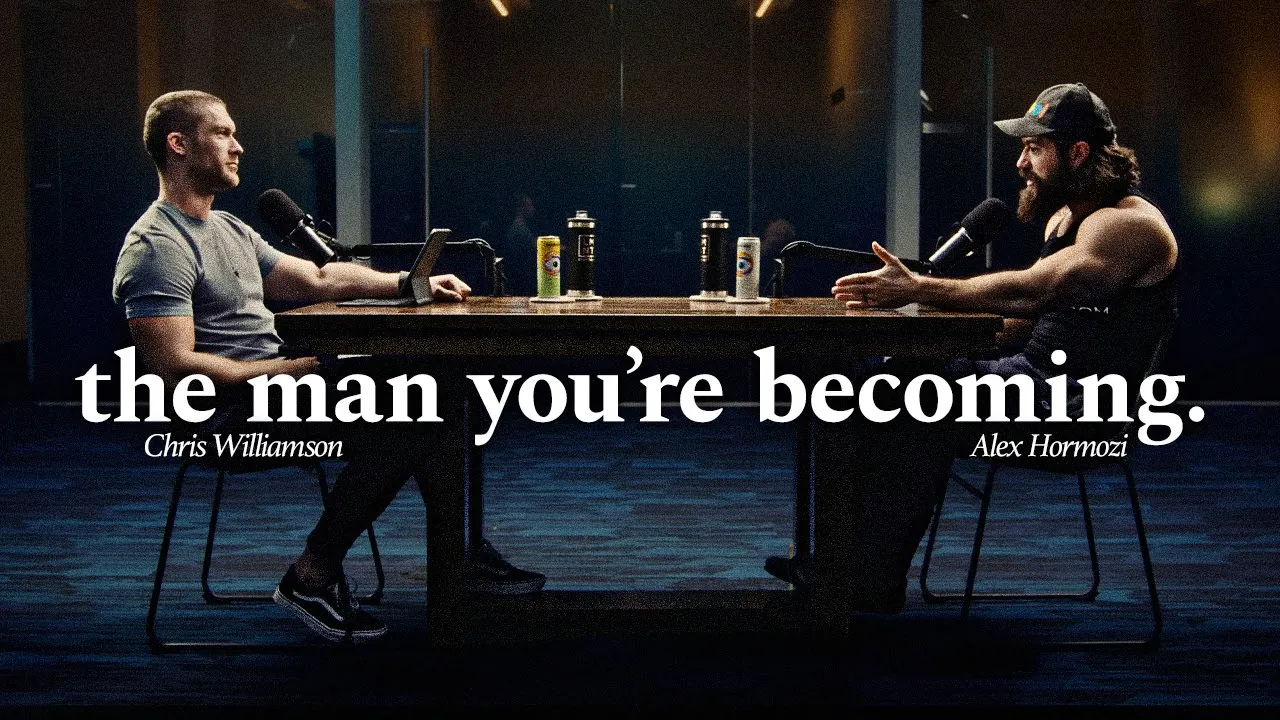
Everyone believes in the American dream until it comes true. And I remember because what had happened was everybody when I when I was sleeping on the gym floor, right? Like, you know, I was the I was the underdog. You know, my clients were all like, "Oh, good for you. You know, you're going after your dream." And they'd see my blanket and my pillow in the corner of the gym and they knew I was sleeping there and it was evident, you know, I I lived there and that everybody was like pro me. And then people would
come in, they sign up like I'm going to I'm going to support you, right? And then within 9 months, I had hired people and I had a manager and I pulled up and I remember I walked in the lobby and all the same the same people were like, "Ah, boss man's here. Oh, you're you're not too good for us now." Right? And I remember being so jarred by the experience. And I was like, "You guys rooted for me." And I was like, "And now I I did what you said you were rooting for me to
do." And that was when I realized that people want you to do well but not better than them. The reason the goal isn't coming at you fast enough is because every person you've seen accomplish the goal, you only see it the moment they accomplish it. And the reason that it hurts so much when people are like, "Must be nice. Oh, that happened overnight." Is because every time you fail, no one cares and no one sees. But when you finally win, people take notice, >> discredited, but it's the only time they notice is when you actually
win. And so to even further reinforce the point, the fact that everyone looks like an overnight success means that the 10 years where they sucked, no one saw. And so the fear that you have about people noticing the fact that you fail is ridiculous because they're barely going to notice when you succeed. The difficulty with personal development and entrepreneurship is that you don't know when the end is coming, but you still need to fight. And the only certainty that I can give you is that it's the same thing that every other person who got through
that period went through. But I think the thing that everyone who's who's listening lacks is the context on how hard work is. Not in that it's complex, but just in that it's a continuous and unending focus on one thing and noticing the details that separate mediocrity from greatness. And if you're like, I don't know what the difference between those two things is, that is the opportunity that hard work reveals. And most people expect that is hard work because that's the hardest they've worked, not the amount of hard work that is required in order to get
the level of outcome that they say they want or that they expect. And until you get great because as soon as you get great at one thing, you realize just the tremendous amount of hours and work that it takes to be great at one thing. And then there's this oh [ __ ] moment that I can express personally which is you realize that there's so few things that you can be great at. And then the discipline comes down to saying what are the two or three things that I can be really good at in my
life because it will take me 5 to seven years to be exceptional at this one thing. I am okay being a beacon of relentless hard work. And that's the neverending cycle of excellence. Oh, I just have to figure out what to do. When I wake up every day, there's only one voice I have to listen to. And so then it's like, just do it for me. Yeah. We need to be reminded more than we need to be taught. It's one of my favorites. There have been so many times in my life where I knew I
needed to do something and then I filled all this extra time not doing that thing. And then the moment I did it, I was like, "Wow, that took way less time than I thought it was going to take." And not only that, it took way less time than it took me to delay to actually get to this point. And if I had only started with just doing what I was supposed to do, I could have done four or five other things that I was also supposed to do by this exact same point. waking up and
then trying to shrink the time between when I wake up and when I start working and shrinking the time between one task and the next task. Like you don't need to take 30 minutes of getting ready to start working. Like you can just start working because as soon as you get into it, you start pulling the thread and you're like, "Oh, here it is." And all of the time that I was getting ready to work, I was just using up my best brain power time on things that truly don't move the needle at all. The
vast majority of business owners work a fair amount. They just work on the wrong stuff and they do it the wrong way. And so they get so little for their effort that they wonder when they're at home empty-handed in bed, why isn't this working when I am working? But if you define work, at least the way I do, which is um output. And in order to get output, it's volume times leverage. So how many times you do the thing times how much you get for each time you do it. And so that is the do
you work smart or do you work hard, it's you do both. you do as many reps as you possibly can and you were you do it with the most leverage possible. So if I make a 100 phone calls, the leverage that I can have there would be how skilled I am. So if I make 100 calls, I might get 10 times more. And so I worked more. I had more output than somebody has less skill. But the only way you get skilled is by working more. And so it's this virtuous cycle of doing more and
getting better. And then you get more for what you do. I talk about the rule of 100 on steroids, which is something that I learned from a guy who owned 13 or 14 really successful gyms. And he called it open to goal. And he said, "Yeah, yeah, yeah." He said, "My managers work open to goal." And I was like, "What does that mean?" It's like, "So they work open until they hit their goal." And so sometimes that means they hit their goal by noon and they can cut out or that means that they have to
go from 5:00 a.m. until midnight that night cuz that's how long it took them to hit the goal. And so I've seen this across a lot of high achievers across domains. So like I'll keep shooting free shots until I hit 100 free shots. I will run until this happens. I will practice my presentation until I do zero mess ups, right? or whatever that that output is that you want for quality or quantity. And the more times you do what is required to get what you want, the more times you get what you want. When no
one's watching, I work harder than when they're watching. Thinking about it like that has given me this persistent and everpresent scorecard or third party that's like no one's watching which means now you have to work cuz otherwise you're full of [ __ ] And so it's this continuous reinforcing cycle of me and other me holding the whip behind me to see how much I can take but with each lash of the whip that I take learning that I can take it and continue to trudge on. As long as you keep going, you bear witness to
yourself of what you are capable of. And I find that incredibly satisfying in the trenches of misery when you have to go through it. Hard work is the goal. And so it's not like work hard so that X. Because as soon as you have a so that, then the X is the thing. But if the goal is to work as hard as we possibly can, then the only real output we have is who we become along the way, then it's something that I can win or measure myself against every day in real time throughout the
day, which is how hard am I working because that is the goal. Because I know that when I look back on my life, the days that I loved the most were days when I had nothing left in the tank. And so then the goal becomes to empty the tank. not what where I drive, but just to drive the car as hard as I possibly can. And that means that in the beginning it's just straightaways and just seeing how high I can rev the engine. But as I become more advanced, it's like, all right, well, now
we've got turns and then it's turns and elevation and then it's turns and elevation without guard rails because we have risk. And so when I think about how hard I want to work, the interesting thing about that is that the only person who can judge you on your success is you because you're the only one who knows how much left in the tank you really had. There's this huge time delay between when we start behaving in a way that a winner behaves and when we start winning. >> Mhm. >> And the problem is that the
bigger the mountain you're trying to climb, the bigger the W you're trying to get, typically the more delayed it is lag. >> Yeah. between when you start behaving like a winner and when you start being a winner. And most people don't get the fast enough feedback loop to know that they're on the right path when they are taking these first steps in the right direction because they have this really big goal, but they forget that with that really big goal comes the even longer delay that it takes to get there. When you're growing in a
business, it's very painful. When you're stagnating in a business and you're plateaued and you don't know what to do, it's very painful. When you're declining and you also don't know what to do, it's very painful. And so that means that all conditions of reality are painful. And so if pain is a prerequisite for reality, then it means it's just a signal that we are alive. And so in thinking about that rather than pain is a problem it is a signal that I'm breathing and then becomes irrelevant. You know in the beginning you're like I feel
bad and then you think that that should weigh on the decision of whether you do the thing that you're supposed to do and then you start realizing that you can do the thing even though you don't feel good about it and you start hypertrophying it. But I think the ultimate version of the hypertrophy when the muscle becomes a tendon or it just becomes fused is when you don't even consider how you feel. It's just not a thought. You just keep you just do it. Champions just interpret anxiety as excitement. And if you're excited to go
up, then you're like, I'm amped versus I'm stressed. But it feels the same. The way you frame it totally changes how you feel when you're stepping on stage. But my two cents of if you are feeling lots of anxiety, it means you need to practice more. That's just my two cents and that comes for everything whether it's to have a meeting or give a presentation or write an email or do a book like if you feel nervous before you release it then you probably didn't work on it enough and I think the reality is that
most people to get not anxious about whatever they're doing you have to do it so many times that by the last time you're doing it you're bored of it like you don't even want to see the thing again when you're sick of it is the point where you'll have no adrenal response to the stimulus because you've seen it so many times you could do in your sleep because you hate it at this point. And if we think of confidence as the percentage likelihood what we think is going to happen will happen as a predictive metric.
>> Then in order to be more confident, we want to have more proof that what we think will happen will happen. And so the easiest way to do that is to do it a lot of times. And so it would be reasonable to say that you're confident that it will go the way you want because it has gone the way you've wanted. The leading indicator of a successful person is the ability to act without anything happening. And when you continue down that path, it happens slower than you expect and then faster than you can imagine.
>> And I think that's the part that everyone misses is they expect the faster than they can imagine and they imagine really big. And so then their expectations are really big, really fast, but they've they take the intensity and they don't apply it to a timeline that's appropriate. The path of personal development is befriending uncertainty. You always have to be the person who roots for you before everyone else does. And it's usually a single clap in the auditorium for a very long period of time. It is a slow clap that's just you rooting for you.
I think most people feel really lonely when you want something that doesn't currently exist. And so some people call that dreams, some people call that goals. Whatever it is, you're trying to pull something from your mind into reality and you want it done a certain way. And if it's not done that way, it's not what you imagined. And so people on the outside will throw stones and call you names that they think will change your behavior and get you to stop. And the more I have been the person trying to pull things into reality, the
more I've tried to weather and build kind of defenses against those things so that when those stones get hurled at you by being called a control freak or by saying you micromanage things or that you have incredibly high standards, the answer is yes, because I want it done right the first time. People criticize because it helps them justify the risks they chose not to take in the hopes that it'll dissuade you from doing it so that you can be in the exact same position as them, which then justifies that they made the right call. There's
this period of discomfort when you change anything cuz everyone around you wants you to fit within the label that they are comfortable with. People don't like that and so they're like, "No, no, I like you in this box, so just just and they just want to shove you back into it." And there's there's a lot of uncomfortable conversations that you have to have where it becomes really socially awkward if you're going through that right now. And like and I promise you every single person who wants to do something with their life and has done something
with their life has gone through the exact chapter that you're going through. And it's the lonely chapter. It's the chapter where you you don't fit in with your own friends, but you don't have the outcomes yet to fit into a new group of friends. And you're doing this thing. you're consuming content on the internet and you're going through this and you're like, am I is this even worth it? Because you have no signs of success, right? But if there's anything that you can take away from what we're saying right now is that the sign of
success is the hate that you get along the way. And what you can't do is bend the knee to their hate and fit back into the conformity because it's comfortable and it's warm because you've been down that road and you know exactly where it leads. And I know that's not where you want to be. It's like the best way to guarantee to not have the life that you want is to do what everyone else is doing. Unless you want what everyone else has, which no one does. The skills that you develop along the way, those
early days, that little trench winning in the weeds often times gives you these huge advantages later on because you have more context than anyone else. And so rather than lament them and hate the fact that you're going through it, remembering that these will be arrows that you put in the quiver that you're going to be using to slay the future bigger dragons. And so expecting it to be easy is what makes it much harder than it ever is. My personal goal is to squeeze every ounce of potential out of whatever I have. And I think
that if you feel like you have potential left over, then it will eat you alive until you do something about it. I'd say one of the strongest mental frames that has gotten me through my hardest times is thinking this will be the story that I will one day tell. And that means the harder it is, the bigger the dragon, the more epic the story, and by consequence, the more epic the hero. And if you think about the difference between winners and losers, winners define themselves by what they made happen and losers define themselves by what
happened to them. And the difficult part of the lonely chapter is that the rocky cut scene lasts 90 seconds in the movie and lasts 5 years in reality. It's rarely the information or the intensity that makes things hard. It's the sticking with it that makes it hard. And so the desire that we have to quit is simply breaking the consistency. And so that's why consistency has always been the hardest thing for most people to achieve. But the intensity of what you have to do to be successful is much lower than most people expect. And so
often times they suffer significantly more in a short period of time than is required to be successful over a much longer period of time with a much lower intensity. Many people want to be exceptional, but they're afraid of being an exception. I think it's wanting an outcome without the requirement that the outcome has. And so we can't do the same thing that everyone else approves of and then somehow get a different outcome that everyone else does. A great portion of our identity comes from the proof that we give ourselves of the things that we've done
and said in the past. And so if we want to build towards a different version of ourselves and it begins with stacking evidence that aligns with that future self. And so in some ways take the shot, get rejected. It is a zero loss game by choosing to begin. And the business never works until it's the one that does. And the episode doesn't take off except for the one that does. And whether it's 10 or 10,000, eventually one does. Because when you do more, you get better at doing. >> Which is why not quitting is the
best skill and the only thing that matters. Because by default with an infinite game perspective, the point of the game is to keep the game going. It's the only objective. Because even if your goal was to be number one at business, it's like by what metric? Enterprise value, growth, profit, revenue, all of a sudden. Okay, maybe it's richest man in the world. Okay, for how long? Look at the history of mankind. Not one person has ever been richest man forever. And so you get to touch the top even if you're that one guy for a
moment and then it's gone again. And so you can't have that as the the end point because it is by its very nature finite. But the competitor whose objective is to continue to play can't be beaten because by playing he wins. This is why I think everybody that starts off has this huge amount of escape velocity that's needed to be accumulated. starting from total inertia, lifting off where the gravity's strongest, going past all of these the disbelief and the criticism and the lonely chapter and all of this stuff. So, they've had to go through all
of these trenches and get over all of these hurdles and then they finally get to the stage where they're in a little bit more light altitude. They're floating out there a little bit more and maybe their uh velocity gives them or their their fuel gives them more returns in terms of their velocity. And now people say, "I must be nice for you." And you go, "Dude, you like if if you could have seen how much criticism and hard work and lonely nights and all of this stuff when nobody was watching and I was in was
unsure of myself, chronically miserable, and I criticized and all my friends took the piss out of me and I did all of these things. I had to go through all of that for you to now say, "Must be nice." When no one's watching, I work harder than when they're watching. And thinking about it like that has given me this persistent and everpresent scorecard or third party that's like, "No one's watching, which means now you have to work cuz otherwise you're full of shit." The sign of success is the hate that you get along the way.
The only person who can judge you on your success is you. you're the only one who knows how much left in the tank you really had. When you're stagnating in a business and you're plateaued and you don't know what to do, it's very painful. When you're declining and you also don't know what to do, it's very painful. And so that means that all conditions of reality are painful. If pain is a prerequisite for reality, then it means it's just a signal that we are alive. Rather than pain is a problem, it is a signal that
I'm breathing. It just doesn't matter. You can work every hour of the day. The person who loves walking walks further than the person who loves the destination. I work all the time. That's all I do. And I work until I can't work. They're like, "That's not healthy." I'm like, "Define healthy." I do as much as I can of the thing that I want to do with every minute of my day. And I work harder now than I did when I was poor. And I think it's because I've learned to enjoy it. And most people say,
"I wouldn't live my life that way. You're always working. You're always doing these things." But it's like I'm actually always spending my time in pursuit because in pursuit is my button for enjoyment. I will do enough work that there is nothing left to be done. Sometimes progress is the W. Like maintaining in some seasons is winning. This has been my my big focus right now. Um and I'm not the first person to say this but just winning the day. And Bill Aman had this hard season where he was getting divorced. He just lost $4 billion
and he was not him today. He was earlier on his career. So I mean it was just the worst and was just a terrible slog. And he said one of the difficult parts about that period is that there was no one thing that was like oh I can tackle this today. Like you're not going to finish the divorce today. You're not going to undo the $4 billion loss today. And so it's like when you have these larger, more complex negative things that do scale, it's like how do you how do you how do you navigate
through that? And for anyone who's listening right now, it's like maybe it's the bad breakup. Maybe it's the or maybe you're getting divorced, right? Or maybe it's like the business isn't working the way you want. It's like and there's like 10 things that you have to fix. And so he had this very tactical advice which I liked a lot which is he just tried to make progress and that was it. And he said, you know, in a day it's almost it's almost negligible, right? But at 30 days, you're like, "Okay, I moved this." And at
90, you're like, "Wow." Does this mean that our mood is still being dictated by circumstance? Yes, I'll be honest. Yes, it does. But I think many of us have this ideal. We'd love to be in a great mood in the absence of things to be in a great mood about. But I had this one great podcast today. I'm going to make that thing the thing that's making this a great day. And then if I can make that great day, then maybe it could be a great week. and then trying to expand those vision like let
those good moments eat up the season in actively trying to minimize all the down things and super super focus on those moments and be like cool I had that good moment that's my day's made and I'm trying to even say that more basically I've had to recalibrate my entire scale to how little of a thing can happen that makes my day how little of a thing can happen that makes my week how little of a thing can make my How crazy would it be if a year from now I say that was a great year?
I'm putting a huge amount of my discretionary effort into this because it's my belief that right now what will what will prevent me from achieving my ultimate goals cuz that that motherucker is not gone is running out of steam because I don't need to do this like I don't need to work this hard. I have to I'd prefer to make the ride more enjoyable. >> Realize it never mattered to begin with. What's that? >> If you want it all, life will give you nothing. We're willing to sacrifice everything that we have for the thing that
we want. And then once we get the thing that we want, we want back the things that we sacrificed, which really just goes to the heart of the human condition, which is we want it all. and we're not willing to make trades. And so one of the reasons that I've actually I would say largely tossed out the deathbed regrets of most people is that what they do typically is they will have the bias of wanting the other path they could have taken without considering the cost of that path. So they say, "Hey, I was really
successful and I did all these things, but you know, I I would give it all up today to have my family." It's like, well, yeah, that you didn't because you actually chose the path that you were on and you weren't willing to do that. But what you are saying right now is that you want it all. Sure. So does everyone. And so I've had, you know, a few moments of clarity over the last, you know, year or so, but we want everything without the cost. And everything has a price. And you will never be able
to get the sufficient price tag paid on everything to achieve a monocum of success in any domain unless you are willing to trade from another. And I think that that has significantly minimized my regret. We give up our 20s for our 30s. We give up our 30s for our 40s, our 40s for our 50s. And we trade everything we achieved in our 30s, 40s, and 50s to get back to our 20s. We give up the thing we have most of for the thing that we have least of >> and we give up the thing that
we want for the thing that's supposed to get it. I I I will become happy when I'm sufficiently successful and I will sacrifice my happiness in pursuit of success so that I can become sufficiently successful so I can finally be happy. We spend our 20s wanting to be richer and older and have a family. Then we start that in our 30s and we gain more wealth and do the family thing. And then we get back to get to our 40s and we've got more responsibilities. We've accumulated all of this stuff and then we think, "God,
if only I could go back to my 20s." But you wereing miserable in your 20s. You hated it. You had no idea whether you were going to be successful. You were constantly concerned about money. You were desperately needing validation from all of these people around you. You were permanently in dissatisfaction about this stuff. We already know how the movie ends when we go back and say we want to relive it. And you can't relive it under the same context because uncertainty is the largest part of the story. Perhaps golden years can only happen in our
memory. Nobody believes that we're living through a golden era right now. >> We never think we're in the good old days, but the good old days are always now. I have spent a huge amount of mental resources accepting suffering and not saying that there's something wrong with something bad. like a huge amount of mental resources has gone into this because I've been better and faster at correcting the loop of like oh I am not happy with this particular thing and therefore there is something wrong. >> Yeah. So fix the story that I tell myself to
fix the thing. >> And that's been um super helpful with the addition of everything that I remember will always be better than it was. And the nice thing is that there's tons of science that backs this up, which is that we learn uh through reward and punishment. Punishment fades with time, no matter how bad it was. Like you get drunk, you get hung over, you say, "I'll never drink again." 7 days later, you're out drinking again. Why? The punishment of the hangover fades quickly. You are with somebody for a while. You're like, "This is crazy."
Or, "This guy is crazy." And then you break up and then all of a sudden, what do you remember? The good times. because reward sticks. And in some ways, there's a little bit of a hopeful message there, which is that when you look back on your life, you will disproportionately remember the good times. But it only becomes a problem if you lament the present, which is the only thing you've ever actually lived in. When I think about a business and I want to grow it, for example, I would think, okay, what are all the things
that can destroy this business? And this is Charlie Munger. This isn't me. Um, but basically, he says, invert, always invert. And Einstein said that, too. And it's because like you get to use this this way stronger horsepower engine of like how do I grow my business that's you can obviously think that way but the alternative would be like how would I absolutely destroy this business in the fewest possible moves and then when you list out those moves you're like cool now let's do the opposite of that and that has been um honestly a lot of
the some of the sources of my greatest kind of creative moments have come from these apparently obvious things that would kill us. Well, what if we did the even more obvious thing and did the opposite of what would destroy us? Um, and it's worked better than I deserve. >> Figure out what you want. Ignore the opinions of others. Do so much work it would be unreasonable that you fail. Realize it never mattered to begin with. Help others once you get there. You've already achieved the things you said would make you successful. >> Yeah. The first
five steps there is my um is basically my my master life plan. I had a pretty terrible first out of college experience of work. But from that, I learned some of the most important life lessons that I still take to this day. And uh that boss particularly said one thing to me one day. She said, "Figuring out what you want is 99% of it." She said, "Once you know what you want, getting it is the easy part." And I I kind of adopted that as a worldview because it's like once you're really clear like this
is what I want. Then everything that's not that is what I'm willing to give up to get it. Now that thing can change. And I think that's the part that people miss. And I think we should all have permission to change what we want in any given moment. and not having basically sunk life bias of like I put 10 years into this thing and that's okay and that's what I needed to do at that time and today I'm willing to I'm going to change everything. It's been super helpful for me to not think of my
changes as permanent because it's been it's allowed me to make such dramatic changes in my in my life or my business much faster than I think most people have been willing to because there's this this weight of forever on top of everything. Like I can do this for today and tomorrow if it still works I will do it for tomorrow. And if 5 days from now or 25 days from now if I work this way I then say you know what I need a day. People like a he's burned out. It's like I took a
day cuz that's what I needed that day. And I think giving myself permission to have that freedom has allowed me to take significantly faster action because who am I apologizing to? One of my themes this year has been focusing on moments and on both the positive and the negative. And so like when we think back on if I think back on the last year, right, I don't remember probably 95% of the year. Like I, you know, I did the same things. And so it's like it just didn't get recorded. Like nothing notable happened. And so
really like when we think about a year, we really just recall a handful of moments and that's it. And those moments in time are usually very short. And so I've been trying to think about the bad, you know, seasons as, well, maybe it wasn't a bad season. Maybe I had five bad days or really five bad moments that I then thought about for the entire season and turned what would have otherwise been 5 minutes* 5 into an entirely bad year. It's like, okay, well, if we can do that in the negative, can we do in
the positive, which is, you know, obviously the thing to to exercise. I thought about that. that is like if I were if I were to boil everything down um of all the skills that you can learn if everything that we do eventually becomes irrelevant, then the single greatest skill that you can develop is being in a great mood in the absence of things to be in a great mood about. Most people don't question someone who's in a bad mood. Like I'm just in a bad mood. So it's like, well, if you're going to be in
a bad mood for no reason, it's like you might as well be in a good mood for no reason cuz that one at least serves you. And so I've been trying to exercise like cuz there's on one degree there's like let's count things to be grateful for. On the other side it's like why do I have to have things to be grateful for in order to be in a good mood? Like why is trying to find things a requirement of being in that mood? Like can I not find things and still choose to be in
a good mood? Because I've certainly not had things to be in a bad mood about and been in a bad mood. And so I've been trying to flex that which is like sure we can find things to be grateful for and when those things pop up yes and of course it's a you know it's a practice you get better at it but like what if I can just be in a good mood and so I've just tried to try to break that that relationship between the two because then it makes it contingent on something that
I can find to take this to the absolute extreme. Why should I be grateful? Why should I be happy? Why do I demand of my life that I must be happy during it? I think it comes down to I used the word control before. Basically, if you can predict, it means you can control. But if you can predict what's going to happen, it means that you know what the variables are and you can influence those variables which we can influence the outcome. We have a set of behaviors or skills that will increase the likelihood of
goal achievement. Whatever that goal is, being spiritual, being a good husband, whatever it is, these behaviors will do that. To increase the likelihood of me doing these behaviors, then I have to have more good stuff, less bad stuff. I will I will die on that hill. Beyond that, what does anything that happened prior to this matter at all in so far as it only works if I can use that same variable and then use it again to change my behavior yet again to be conducive to the goal. Expectation of life is that it's going to
be until I make the billion dollars, until I get married to the love of my life, until I get these things. You're just holding your happiness hostage until something great happens. What if something small could be something great? People only root for others at two times. First, when they're at the beginning of the race. Second, when they finish. Neither is when you need it. So, you have to master the middle. The boring, exhausting, soulcrushing middle. That's where the winning happens on your own. People will only cheer for you as long as you can't beat them
at the game they value most. Friendly reminder that every person who doubts you is right until they aren't. It's a bug, not a feature. you know, at the very very beginning people say, you know, I'm really excited for you that you're trying this thing out, right? And I noticed that everyone was very happy for me to try because I temporarily decreased my status. I actually became worse than them during that period of time. And then as soon as I achieved a level of success, which I then realized that their happiness for me was proportional to
where they were on the ladder relative to me. And so as soon as I passed some people, then they stopped being happy and then they start, you know, saying bad things, right? And the people who were still always ahead were still like, "Keep it up. Keep it up." And there's still people who have been that way my whole life. And I just wonder if and when I pass them, will they flip? I don't know. But also to the same degree, it was the it was after you start the race when you're in the thick of
it because you'll quickly pass the people who've done nothing. But then you have this long period of time where you don't catch up to the people who've been doing it for a long time. And that's the part where it's very lonely because you don't have your initial your initial posy. You have to leave them at some point. Um, but then you don't get to the new group that's, you know, way ahead and actually has some some proof behind them that you can actually like sit at the table. And so like today I have, if I
were to do something, I have tons of support, but I don't really need the support now. I need I I needed it in the middle, right? In the many years that like no one knew who Alexi was. And that's that's that's the hard part. And I think it's it's the story that Morgan Hassel tells, which is that you just don't know how it's going to finish. And that's what makes it hard is the uncertainty of like what if I give up everything that I've done in my life for nothing and then all of a sudden
if I knew that then I wouldn't be willing to make this trade. But in retrospect when you do have the thing you're like of course I was like if I knew that this was going to happen I'd be I would I would happily make the trade. >> But you don't know and so you're just putting the money down and they're rolling it but you get to find out if you hit black five years from now. It's why dealing with uncertainty is such a meta skill. And it's one that I, to be honest, it's one that
I really suck at. I'm I'm very very not good at dealing with uncertainty. My uh required line of assurance in order for me to commit to a decision is incredibly high, which is why I've basically never failed at anything that I've done. M >> all of the stuff that I've done a string of incredibly slow but very reliable successes is just because my required number of uh sort of justification points is very high. And you know in retrospect it might look like it was a risk. It's like dude I I took so long to [
__ ] make this decision. On the on the friend point, it's a a painful realization that the small number of good friends want you to win in case you take them with you. And the large number of bad friends are scared of you winning in case you leave them behind. The best way to know who a real friend is is how they react when you win. And when that happens, you'll realize how few real friends you really have. >> Many people were like, "Sure, like good luck with that." But I knew that they just weren't
really rooting for me. They were rooting for me to fail. They're rooting for me the wrong way. One of my rules is you should only take advice from people whose dreams for your life are bigger than yours are, which is a very small number of people. Sometimes it's your parents. Sometimes your parents really do have bigger dreams for you than you do. The people who are closest to you in the beginning, if they're like true, like actual friends, then you recognize that because they actually want you to win. And that's amazing. A lot of people
don't have that. And so what I have felt at least for me was that when you're a little ahead is where the friction is. When you blow them out of the water and there's no question like it's it's beyond reproach. They will do one of two things. They will either be really happy for you or they'll change the game that they're beating you at. That's great, but I'm in better shape. That's great, but my marriage is better, right? Like or whatever, you know, whatever game that they choose to play. People who doubt you will be
right most of the time. And this further increases your uncertainty about the path that you're choosing to take. But on a long enough time horizon, most people who don't bet are guaranteed to lose. And so they get to win at being right more times than you get to win at being right. But what that equation doesn't take into consideration is intensity, which is can I be so right one time that it makes all of the times that I was wrong irrelevant? And in the nature of life, the answer is yes, almost a resounding yes for
just about every domain. Like everyone can say that every person you've ever dated has sucked and they can predict that you're going to break up until you find the person that you're going to marry. And in that moment, whoing cares about the other 90 people that you went on dates with that everybody said was a bad idea or that you have a bad picker or you don't have a good taste. It's like, well, you're not marrying them. I date in a way that's different than than you would prefer. Great. But I did end up finding
this thing. I the you know, the first thing that I ever did was, you know, an online an online fitness thing and it kind of worked and then I did my first gym and it kind of worked and then I started all these other other side side projects. I got distracted and I didn't know. And the downside risk is significantly smaller and more frequent. It's both. You're more likely to lose and it's more likely to happen more times. It's just that upside is uncapped. And so, and I think about this one a lot. So, there's
the story of the guy. Do you know the guy who wrote Jingle Bells? >> No. >> So, I didn't even know that that was I thought it was like Happy Birthday. I thought he was just gifted to humanity when when we started. >> So, there's this guy. He's a he's a it's he has the most tragic life you can imagine. Just like did nothing but failed was a failed everything and his entire life was nothing. He just happened to write this small thing called Jingle Bells and it has become you know the number one song
in Christmas time like maybe globally and I think about that life where it's like what if I failed at everything but then I have one thing that actually makes a permanent impact. I was like, would I trade that life for Aristotle's good life where I amount to nothing but the whole time was good? And this is just one of my eternal battles where I think with myself that I have no answer for to be clear. But when I'm when I'm thinking through the periods where things suck, I'm like, well, maybe maybe I'll get a jingle
bells out of this. >> Mhm. >> And maybe it'll just take 20 years longer than I thought. >> So not taking the shot is like saying, "Life, I don't want to scratch off this lottery ticket, but the lottery ticket's free. Why would you not scratch it off and try it? Whatever reasons that we usually give ourselves in the beginning for why we can't achieve something, you can almost always find not only just someone, but someone who's achieved worldclass levels of success with worse conditions than you currently have, which then means it's absolutely possible. And then
the only thing that it takes to get there is work.