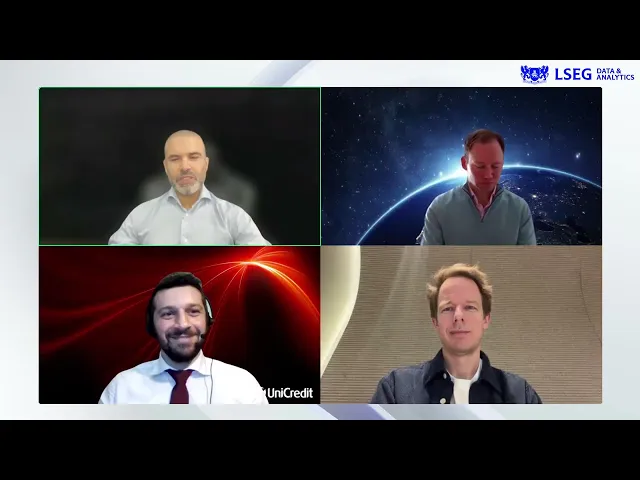
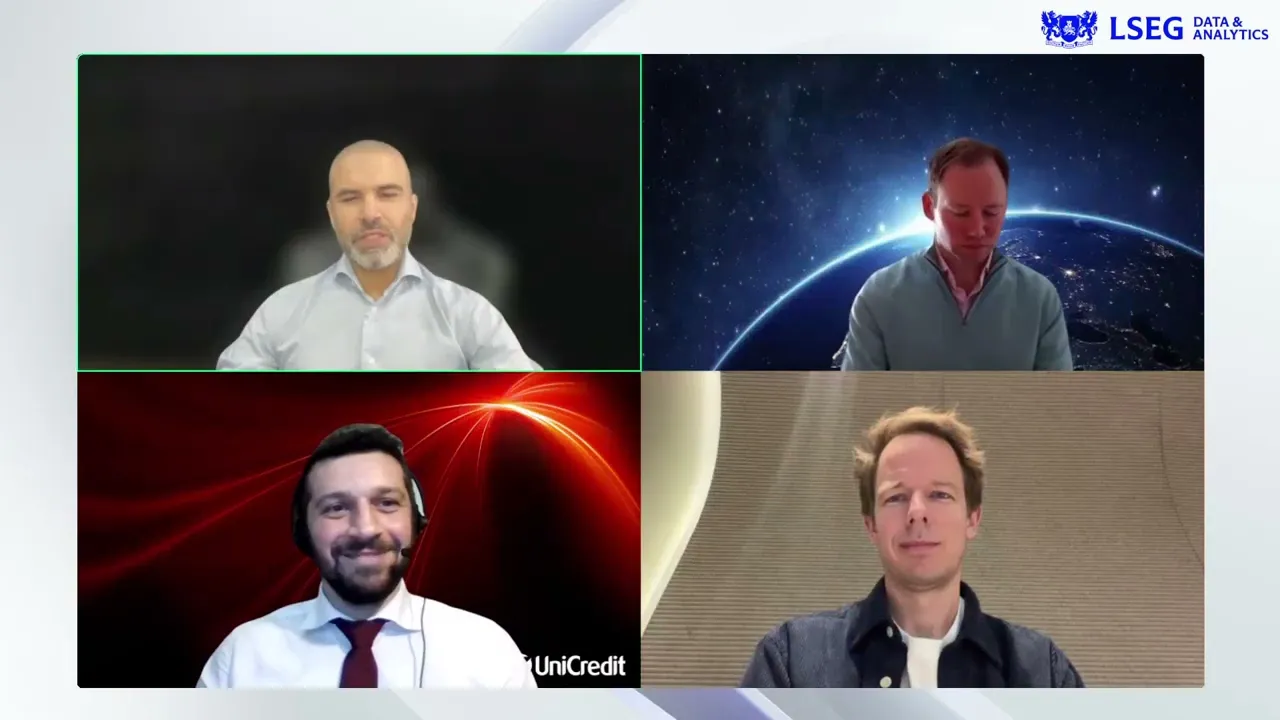
Hi everyone really great to see today and and connect with you U we're here to talk about revolutionizing the customer experience in financial services and I've got a fantastic panel of experts that we we will be having a conversation with uh my name is Ned Jalal I have the the privilege of being the group head of eleg workspace which is El's customer facing digital platform and uh and I I really care about uh the customer Experience uh naturally uh given uh my mission uh which is to really meet the needs of uh various different investment
professionals across the trading life cycle um the first thing I'd like to say is um this is uh this is a an exciting opportunity where we have over 900 uh people that have registered we have representation in the audience um in terms of uh trading banking wealth management and Investment Management over um 150 uh sea Suite um Executives But but very importantly just as importantly practitioners um uh who are you know working through their respective jobs day-to-day um we've got portfolio managers Traders uh and buy side uh as well as sside representation and uh for
those that can make this um slot um based on the time zone it's it's um European APAC audience there will be a recorded version that is available um so with that I'm very Excited to introduce uh our panelists and I'm going to hand over to each of them to give you some background starting with alesio thank you n and uh my name is alesio suit I currently work within Client Solutions for unic credit uh specifically leading the digital Innovation unit of the advisoring and financing solution Department under which falls all the investment banking activities of
of uni credit such as m& ECM DCM and specialized Landing um we have launched a very ambitious program called moonshot um as the name suggest is extremely ambitious but what it is is basically an innovator an innovation incubator H and the new what we want to be is a new Revenue stream generator um it acts as basically as an internal corporate Venture Builder uh prior to this I spent many years in consultancy and in companies in the TMT sector always in Innovation and Digitalization um what I'm trying to bring is a mix of software programming
background with en Hands-On business experience uh you can say that I mostly act as a translator between Tech and business and I'm very pleased to be here thank you Alesia very pleased to have you here um awesome intro thank you Neil over to you thanks n and great to be with this group today uh I'm Neil archal from Microsoft I work within Microsoft Microsoft's Financial Services business I'm based in London uh and I have the great pleasure of working full-time with eleg as part of the eleg Microsoft partnership um my focus within that really is
partnering with with NES and other product leaders within eleg um to really make sure that we are are taking the joint Innovation uh the co-development Investments That Microsoft and eleg are engaged in together and taking those to our common customers across Financial services and Indeed some adjacent sectors um so it's it's fantastic to have the opportunity to speak to this group and and I hope that we might be able to unpack some of what we're doing within the eleg Microsoft partnership uh to to build on this theme today thanks n thank you Neil uh that
was great and Mark over to you brilliant thank you very much really great to be here uh I'm Mark farrace from Accenture uh I lead accenture's geni business across UK Island and Africa but I have a particular focus and passion around customer experience and customer service and this is one of the major areas where we see significant disruption from Ai and geni over the last couple of years but also massive opportunity to be able to transform what good customer service actually looks like and be able to enhance that pretty much across the board and I'm
really looking forward to talking about a few of those things Today brilliant thank you Mark and I I think you know the audience will agree just the lenses here are so kind of Di diverse and complimentary it it really does lay the foundations for an exciting discussion so I I'll start with with alesio but it really is the same question to each of you to to help Define customer experience from your perspective what does it really mean and help us understand the the one or two you know Target personas the users that You're really focused
on and what problems are you focused on solving and give us one or two examples of how you're solving those problems with the latest greatest technology uh that is available thank you thank you n um so starting from what I what I think is the customer experience um my focus uh on my job is to what I call remove friction so my assumption and and and basically what I see is that client hire products to accomplish very Specific jobs or task right um think about it 50 years ago we were paying taxes using paper and
a pen 20 years ago we used Excel and today probably we're using automated software what it means is that the job or the task has remained constant paying taxes and we will probably remain constant for the next foreseeable future what changed was the solution the solution has evolved so what we try to Do is to try to really understand what are the needs and the problems of the customers and then and then formulate high level thesis and assumption to then test this assumption in order to figure out what's the best way to solve the problem
and that's for me it all falls under customers experience because if you solve the problem in a better way than the solutions that exist today then naturally the customer will migrate Towards your solution and that's what I think it is um really it's it's about removing the friction and facilitate the adoption of a new solution and this does not mean having the best technology you can think DVD better Max right uh it's not always about having the best technology it's about solving the client Pro client's problem um that is what it is to me that
that's super from your perspective like maybe if you can showare an example of what techniques do You use to crystallize a customer need a problem and there maybe a example of um how you're using whether it's AI or to your point you know could other techniques to to meet those needs yeah um I'm a in particular a fan of the jobs to be done methodology is the one that I use the most I mean there there are many methodologies to use but basically what we're trying to figure out is for each task that a customer
needs to Solve how much that task is important and and uh how satisfied they are with their current uh solution and that's it's where we we are able to identify the gaps in the current offering being ours or someone else's offering right um and then from there uh we try to find uh what could be again I don't want to repeat myself but basically it's basically a combination of changing the way of working and finding the right technology that helps fill that Gap in We're offering and and and as I said before we never start
from technology uh the the point of not starting from technology is because we want to find new solutions to existing problem and not the other way around find new problems for existing Sol we never start from AI specifically or gen specifically um but then uh we think that I think that of course I mean the technological Evolution and specifically AI can can facilitate a lot and and in particular in removing those frictions if you if you think about what AI is AI has been around for 60 years and it can be described as a piece
of software that perform a human task with similar or better ability right and and if that's the purpose then then basically what we're trying to do is is to eliminate the effort and eliminate the friction inside a product or a service um you know one example could be you know RPA machine learning these are all names that we are probably familiar with uh OCR techniques uh and if I think about U think about checks like many years ago there was a human that was reading the check and filling a form in a database today it's
all automated so there's something that scan the check and automatically F uh fill a database um in in a similar way gen can enhance all of these by basically substituting not substituting but Enhancing how how our professionals do their daily job um and that's mostly where we see the application as at the moment most on internal practice that affects then customer directly because if we are more efficient then the Serv is a better then the service is a better service and and the customer experience is a better experience I can give you one specific example
uh that we're working on lately which is the the credit memo the Infocredit memo application now during a a credit process there are a lot of steps and the infocredit memo is is is is a one important piece of the puzzle because it tells the investor the information about the company everything about the company uh but it's also something that there are some information that you have to retrieve from the customer and there's a lot of work involved in that um if we are able To simplify and streamline that it's one document production then it
speed up the entire chain and it means less burden on the customers less burden on ourself and and probably a faster a track to to to investors to evaluate a company okay brilliant one example really really helpful I think the credit memo is something we're going to get back into actually in terms of conceptually the the power of what you just described um And and it is I think you know quite um thematic as we think about the role of something like generative AI we're also going to kick the tires a bit I think with
this group in terms of what does adoption really look like versus where we are more Broly in the industry Neil from your perspective as I come to you just help us understand like who are you really thinking about um solving problems for and and again in practice can you give us one or two examples yeah Um absolutely so I we've got to focus on um quite a wide variety of of personas but um but but but specifically France office users across Financial Services um so we can think about saleside IBD uh corporate banking buide um
Asset Management Wealth Advisors corporate banking relationship manager cover coverage Bankers so that's sort of front office Universe um and and then sort of adjacent person owners as well that are interacting in that ecosystem so Obviously on the the uh corporate treasury counterparties um other parts of the industry ecosystem and involved in sales and trading and and the individual user as well the private individual who's engaging perhaps with with wealth advisers or other investment professionals um and then I think there's another group as well actually that we've got to focus on and that's the sort of
financial services but um But but but non-front office um who do a lot of trade support middle Office customer operations risk and compliance um so there's quite a lot of personas there that that that face you know Alesia was was pointing to friction there and when I think about defining the customer experience I really think quite simply about the employee experience I think it has to start there the the they're intimately interconnected if if you can equip that That that Universe of personas I was talking about with the right data and insights and let's think
about them differently uh at the right time in the right place then you you're naturally improving your your customer experience so ac across that that group of personas and and perhaps specifically the the front office users in in banking and Investment Management some of the key problems that that we're focused on from Microsoft broadly and more specifically Within our partnership with with eleg is the fragmentation of workflows there is and we all I I expect in this group and and on the call have this experience of the multitude of of surfaces of uis that we
have to interact with to get to done on any given job in in in knowledge work and navigating across a multiple set of of of internal third-party applications for collaboration for um for for for research for data Gathering um to to Look at risk profiles etc etc um so we're in a situation in the industry really where um workflows are have to have to be penned in by application perimeters rather than just respecting what the the job is to be done or or what the customer journey is or or the employee journey is so so
that's one key focus is is finding ways to seamlessly interoperate to find that sort of golden thread of what someone is trying to achieve that cuts across applications And uis and and perhaps fragmented data models and provides them that sort of golden thread of of of getting to done so bringing that to life me a couple of examples that that we're working on with with n and team looks like we've lost nil temporarily um Mark I'm going to go straight to you yeah sure meet with a corporate actually he's come back sorry do we have
you yes sorry did I lose you you lose me just for a second just Yeah okay let let me round out on that on that example just to just to close out here um we've got this real focus on this Readiness for a meeting you know the average um investment bankers going to be meeting multiple uh dozens of of individual corporates in any given week across their territory um so how to shorten the lead time on getting ready for that meeting how to crush down to some degree the uh the Pyramid of Junior ists uh
and and uh manual work required To to Crunch research uh Current financial position news uh updates and internal data so you know that's one area where we're focused on how could how do we bring for example eleg financial data news uh transcripts filings structured unstructured data together with the internal Corpus of information relevant to that relationship with that customer together in a seamless report to say look this is what you need to know going into this Meeting this is this is realtime information you as of right now uh co-mingled with your internal historical record of
of your relationship and the last couple of things that you committed to when you last meet met with that customer so we're really pleased to have a product available in the market right now called Financial meeting prep that addresses exactly that uh and and surfaces lsec data in Microsoft teams to get ready for for for a customer meeting So that's a great example I think of of there's a workflow um that that's that's Prime on the workflow that's that's cut across different data sets and applications and serve up to that front office user what they
need uh using generative AI technology love it brilliant and just to kind of you know react to it and and is clearly something that is is close to my heart as well I think thematically what aesio I think crystallized was uh like a Customer needs based approach to really teasing out the problem that we're trying to solve and the jobs to be done methodology is a really known and tested approach across the industry and and and definitely something that I subscribe to as well I think the example mentioned by leio regarding the credit memo is
a really good kind of uh consistent theme that you're bringing out nil which is essentially we know that um many different users across the investment Life cycle have a bunch of tasks that they need to complete every day with a very clear objective to ultimately underpin a decision-making process that is actionable um we we also recognize that because of the evolution of Technology we can help customers or users get to those decisions much faster than before and what we're seeing thematically is a technology uh capability whe you know in the form of generative AI but
not limited to clearly The interoperability of applications and data sets are also key which has been implied so far to to just ultimately save people time with high quality information so Financial meeting prep is a really good example I've spoken to many customers about this from from an eleg and and obviously a Microsoft perspective but really to be able to generate a uh effectively a memo um to prepare for a meeting or for a conversation about a company in just 3 Seconds is a really powerful um uh benefit if you like um that our customers
are recognizing but I think it's the beginning actually of many more types of scenarios that really fit this same pattern so I think really interesting um I'm going to turn to Mark now and and mark from your perspective again you know with an exential lens uh would be great to understand you know number one the problem you're solving and obviously the the target personas But your take on what's been said thus far yeah no absolutely and maybe I'll start with how we're seeing uh consumer expectations of what good customer service and customer experience actually looks
like um and we often talk about particularly when it comes to gen around the hype around gen I think interestingly what we're seeing is consumer interaction with the technology driving Enterprise expectations um and actually those two aren't necessarily Kind of matching up today so we all have access to gen technology as kind of consumers ourselves um I certainly use it every day from a kind of personal perspective and what we have is unconstrained access to the tech whether that's through a subscription service or through some of the free services which means that we can all
see what the technology can do um we've all started to find ways that that is enhancing us from a personal perspective and then What I see a lot of at the moment is that when we arrive into the office and look at the Enterprise tools that we've been given there's a bit of a gap between those two because suddenly I have a bunch of things that I need to worry about which kind of don't exist for from the consumer side I need to look at security privacy IP management I need to look at how backend
integration into other kind of systems work I need to look at what that means from an Operating model and an or structure perspective and these things all mean that we're moving at a kind of slightly slower Pace but as a starting point what that means is that um people expect more from the tech um what good experience means is now at a higher level than maybe it was previously so the bar has been raised I I expect easy access to data I expect easy access to the knowledge that exists within my organization and now we're
all chasing To kind of catch up with that so there's a a kind of paradigm shift that we're living through at the moment in terms of the definition of good experience and then uh we're seeing a bit of a blend now between where organizations are kind of starting and what good looks like so uh to pick a couple of examples a lot of people are starting with kind of individual use case kind of definitions so maybe that's looking at summarization of contact with a customer so that I can Log that within my CRM solution it
might also be looking at how I can automate some of my compliance kind of routines so I can look at an automated review of every kind of customer contact is that compliant and kind of what does that mean um where I think this becomes really interesting and where the Accenture focus is is broader than those individual kind of interventions the indiv ual kind of use cases how do we reimagine and redefine the domain as a Whole so when I think about that endtoend kind of customer journey and customer experience how can that look really different
in the future um and if I take a simple example of uh the summarization of a kind of customer contact what I really want to do there is make sure that it's compliant um I want to log the actions that were agreed so what did I promise to the client that I was going to do and how do I make sure that that gets logged into a kind of Case management system um I want to automatically generate maybe the contact that comes off the back of that so I want to send a summarization note with
some personal elements that sit within that I then want to have Chasers behind that that make sure that the back office kind of processing works correctly I would also want some training elements maybe so what could I have done differently within that customer conversation that would have made it More effective kind of in the future and how do I drive that and ultimately probably what I'd want is something where I have ai as a kind of tool that sits next to me as I'm having that discussion and it's supporting me through the process it's extracting
the knowledge at the right times and it's at that point that I start to get a very different definition of kind of what good looks like how AI can support me but making sure that I'm really focusing On providing the best experience possible and there's always a bit of a danger particularly with something kind of shiny and interesting like gen at the moment where it's a bit of a hammer looking for a nail and I think something that's been consistent with what everyone's described is start with the business problem start with the area where I
can drive a customer experience Improvement and really focusing on making sure that I'm using the Technology in the right way to to achieve that as a goal brilliant and so so many like really important I think points and themes that that you've covered um let let me kind of pronounce one and then just invite this group to to um to react I I think the point that you're making regarding consumer versus Enterprise is is absolutely critical um for a number of reasons F first and foremost as you say it really has you know raised the
Bar uh in terms of expectations and what great really means um from a consumer standpoint and the role AI can play not limited to generative but the role AI can play in clearly what we're very accustomed to as as consumers as it relates to personalization um and the relevance of of information to again to you know uh more quickly uh improve my my workflow um but also increase the quality of my workflow as well um what what is the the Feeling around the room in terms of okay if that's a premise that there is a
higher bar but do we all agree that the the bar the promise of of AI and what we're all describing it's just a matter of time for Enterprise and actually the real topic is what is that what does that curve look like in terms of adoption and developing the Comfort um uh and frankly the muscle to to ensure that the the Privacy security um and the behavioral um user kind of Behavioral uh Changes just take time because we are talking about a different Paradigm how much of the conversation is about timing versus again a little
bit more of an extreme take on it which would be is there just too much of a of a buzz around it and is is the promise something that is questionable I've got my my opinion on that but but let me turn it back to to you guys and just just jump in I mean if I maybe kind of pick up first I I think um there's two Two bits that are really important in terms of the foundations that I think you touched on um I completely agree with your description of kind of AI gen
AI as a as a muscle and I think that's really important in terms of how and where organizations start so the tech as you said is moving very very quickly it's only becoming more advanced there is a risk that organizations look at that and uh wait so the desire to maybe be a fast follower in a particular Domain and I wait until the technology matures and then I pick it up and drive it the the big risk associated with that is that gen in particular is a new muscle within an organization it's a muscle that
wasn't there before um and I need to train that muscle and I need to build those capabilities over time um I think particularly the responsible AI elements so how I manage that from a security and privacy side how do I go through the process of learning what Works and what doesn't work how I can enhance and change particularly the people element so there's two big bits that I think organizations usually underestimate one is around the people change side so the biggest thing that will actually stop a gen deployment being successful is a lack of focus
around change management so how do I get people actually adopting and using the solution that I've created it might be a perfect solution but if I'm not steering People as to how they can utilize it how does the business process change what the skills that they need not to be able to just use the technology safely but how do I use the application that I've created within the context of my job and the process that I'm actually undertaking so that's a big one that we need to make sure that we get right the other one
which I think is becoming more and more of a restriction is the quality of an organization's data so many Organizations have been on a journey of kind of cloud migration consolidation of structured data into a single Cloud environment and that is a good pin um what we see with Gen in particular is the importance of unstructured data so how do I unleash the power of the knowledge bases that exist within my organization what we often find is that there are multiple knowledge bases they're disparate they're not connected they're duplicated they're inconsistent In terms of their
content and there's a lot of poor content that exists within there as well if I put J on top of those multiple inconsistent All Quality knowledge bases um unsurprisingly I don't get the best quality of output so I always think of that as it's the handbreak kind of on gen and the capability that I could be building um so the focus needs to be on I think those two things that may be uh so far we've been quite obsessed with which Foundation model how are the foundation model advancing what are the reasoning capabilities that have
come out and how can I utilize those all of that is really important but if I don't look at that customer face ing side employee facing side of adoption and the underpin of the foundation around the kind of digital core and the data that sits behind it I'm going to kind of really struggle so I need to kind of get that Journey going I need to focus on those Kind of three areas and then that really sets me up for success in the future insightful and like play playing back I think like what really resonates
trust and and that that is a fundamental like uh you know principle certainly us being in the Data Business from an Elsa perspective Data Trust is something we we think about um and talk about a lot but also allowing um a firm to develop the muscle so whether that's experimentation uh and working through What works what doesn't work I think is critically important um Neil from your perspective how give us the Microsoft lens and clearly Microsoft is fair to say have been incredibly vocal about the role of generative AI co-pilots um and and agents uh
given the area we're in now tell us about that and give us a flavor of of of also adoption and sentiment yeah absolutely um you know there was a great point that that that came out from What Mark said said there about the expectation of the user uh the private individual who then also is an employee and also to some extent is a is a customer of an Enterprise organization the expectation that they would be able to access the technology that they know is out there and they're using in their private lives in their professional
lives uh once you can't unknow that there are better ways to interact with um Enterprise data Place bases and and workflows um because you've done it in in your private life so um you know I mean I I just I was at the weekend I was going into my retail banking app and you know I wanted to do something that I don't I don't normally do sort of particular uh report and um I just sort of wanted to just put in a prompt you know like point me to to where I do this I just
had an expectation and and knowledge that that technology was was Possible um but I had to go and navigate through you know some dropdowns and so forth and and and read some you know hardcoded uh guidance to to to get there and and I got there but um I couldn't help you know feeling that well I know the technology exists to to do this in a better way and and that's really the Microsoft position that generative AI is is fundamentally a platform shift uh on par with the invention of of the GUI um uh and
and and on par with with with Cloud as a new way of organizing your Enterprise infrastructure and and data it's a really fundamental platform shift that that we're going through right now it presents a new way to interact with with data and and with workflows we for the entire lifespan of of the Computing age um we have had to understand computers and we are at an inflection point over the last 24 to 18 months where computers can understand us and and that really is uh it's it's Important not to underestimate the possibility it's also important
it's been said before and every will have heard this I'm sure but you know when we look at these models and and these capabilities this is the worst will ever be and and and they are actually incredibly useful and and Powerful at this point so um I I believe it's incumbent on on any institution that wants to be at the Leading Edge in its space to to embrace this technology and Think about it but but obviously adoption safety uh control is param in in in regulated institutions that that are highly visible uh and systemically important
so you know we generally see that there are four ways that uh an Enterprise will will approach value realization through generative AI first it's the employee experience then it's customer engagement then it's business process optimization and transformation and then it's bending the Curve on Innovation and and generally in my experience and most of my colleagues we're seeing uh investment and and comes roughly kind of 60 20 10 10 across that so left to right like overwhelmingly a focus on the employee experience using generative AI to to rethink employee productivity and collaboration um but the extension
of that and and the flip of that coin as I've said is is really the customer experience exposing some of these capabilities to interact with Corpuses of data to engage with business processes to your customers especially when it's Enterprise to Enterprise a B2B scenario um and then really thinking about rethinking reimagining business processes through agentic automation um and and then really you know what does it mean for business models and actual product categories how can we innovate on those and come up with new ways of value creation uh based on on this Technology so that's
really the way that Microsoft is thinking about this that there is a new UI right now that that's possible our version of that is co-pilot and then there's a multitude of agentic experiences that can be built under that and the way we think of this is you have one smartphone and hundreds of apps you have one gen UI interface and then hundreds of agentic experiences that sit within that and you can interact through that brilliant thank you and I think That's you know hearing it from you bringing it together is really really helpful just given
how fast-paced you know the changes we're describing are and and and clearly you know there's a Microsoft lens to this given a prominent player Microsoft is in this um in this generative AI era thank you Neil alesio love to hear your on lot to unpack um a work work for a corporation which means that I'm on you know most of the Time on the receiving end of the tech providers on the consultancy company and uh data providers uh that they offer all the solution and then I have to figure out how to make how to
translate those technology into something that sells and generate Revenue right because otherwise doing technology for the sake of doing technology is not a good business strategy so uh I agree with all the the the mark and Neil said I want to add I want to look at things from three Different perspective uh the first one is the you know when we talk about customer experience we have a tendency to see it from a client facing customer experience a client facing solution sorry right every time we think about customer experience we think about a a solution
that HS in the ends of the customer and and that probably I have a different view a Different view on that uh then the second point is about experimentation and that I would like to to address and the third point is the gap between the tech Evolution and the company Readiness to adopt that technology right because again let's talk about gen gen without a proper knowledge base is good for email creation I'm going to be blunt okay uh now facilitates to write emails great I'll save five minutes Uh you know across the day in multiple
occasion but that is not changing my life and is not changing the life of my clients right uh you know why X or open AI are able to do what they do because there's a lot of work on the background that they do on the data right but if you're not an AI focused company that work is massive it requires a lot of investment and that is difficult to do for companies in other sector so we have to think strategically right and and and Traditionally what I observed over you know the length of my career
is that companies try to okay this gen we start with big uh you know innovation initiatives lots of funding and then everything 90% of it fails because it is over budgeted ends up accumulating a lot of delays and the final up to doesn't look or or or basically it's far away from what imagined in the beginning ER and so technology will continue to evolve right it's not just Gen uh you know and there will be companies that will push the boundaries of that technology what companies need to do is to figure out a way to
pragmatically implement that technology which doesn't mean adopt it 100% but adopt it even tactically okay and that that that is where the the the experimentation approach comes 95% of thing that we do and other companies do fails period that's a fact and we have and and and so the goal is to fail Faster cheaper and smarter that's that's the entire goal which means again figure out what's the need what what's the problem and try to to see if that specific type of Technology works for that case in even if it is Gen sometimes gen is
the perfect uh technology for a very specific use case so let me let me give you one one concrete example of what I'm trying to tell right uh and especially regarding the client phasing Solutions versus in general improving The customer experience we have launched a a solution a product last year uh I cannot get into the specifics uh but but let's say that we were hoping to generate 150 opportunities in one year and and when we launched after six months we got we got 10x that number it it was a massive success to the point
that we launch it as a pilot in in Italy and now we're live in six countries across the the the geographies that uni cre Covers that solution initially in the in the in the initial assumption was thought to be client facing and then we realized that that were not was not necessary for the C for to improve the customer experience of the final client our corporate clients independently if they are a big Corporation or mid Corporation or a small Corporation they have the same goal which is to raise capital in in an efficient way to
grow their company or either to monetize Their business that's their goal of course we need to differentiate the service because if the more you go up to the pyramid the more is is a tailored service it's it's a bespoke service the more you go down it's a more homogenized and digitized service but the goal is the same so to go back to the technology instead of creating something that is in the hands of the customer we created something that is in the hands of our corporate Network and we remove all the Friction what the corporate
network has to do is to is to fill one one box with the with the NDG which is the identification code of the of the clients then we we get all the data from our databases and we create a description again that's generative Ai and we create a profile of the company all the network has to do is write one code of the client this thing is being more adopted than this than the cim than the CRM right because it's easy for them It's frictionless they talk with clients they get the Insight then they they
go on this platform they write this code and everything is generated automatically then once we have that multiple insights from all the network we have created a radar a radar that tells me what each of these customers wants to do okay with in the frictional way possible then there is another AI mechanism that process those opportunities and the way it does it it Create matches between two parties uh the way it does it it employs three models One models work on figuring out a match by context meaning products and services again we use we use
data we scrap information public information we have private information we put that together we generate a profile of a company we extract some keywords again there is another AI model there and then we figure out if those two entities are matching together then the second thing Is to figure out the financial and Ma if there is a match on the financials and then the propensity it's another it's another AI model OKAY a model that that simulate the propensity of a specific company it gives us a score of doing that specific type of activity okay once
you put that three things together again all pieces of AI put together then we have a short list that then goes to an advisor uh a banker traditional Banker Then the banker goes back to the client okay all this process that previously was requiring a lot of expertise especially in the in the in the small uh small and medium segment where you have tens of thousands of company and if you you know uh think about all the geographies that we covered we're probably talking about hundreds of thousands of company it would be impossible to process
all this information you will have to have Hundreds of experts for each sector uh for each things and and and and basically what what this thing does is to eliminate all the frictions in the process and and so that we are able from the upload to get that get the engagement letter signed to starting a negotiation for us it takes sometimes between 30 and 60 days it's it's it's a massive it's a massive Evolution especially if you think about the 1,000 more than 1,700 Opportunities that have been uploaded in six months right I think that's
a a phenomenal example of like the the fundamental basics of understanding where there is friction in a workflow and ultimately increasing the value for the for the constituents uh as you mentioned uh for the corporates I think that's that's a fantastic example um and also the application of AI in more than one way I'm just going to um switch gears a little bit now because we've We've got some really great questions in the chat and I want to make sure we address every single one of them so the mission for each of you is to
speak for no more than 60 seconds per question okay so give us the give us the Salient points but let's answer the questions head on to ensure that um our audience uh gets the clarity uh of of the questions that they're asking for so let's start with um let's start with the first one and actually uh Mark I'm going To come to you on this one so are there areas where the economics of usage of gen don't make sense yet in brackets I mean the quick answer is yes um to to maybe expand on that
slightly um there's always three factors that you need to consider when you're looking a gen use case you need to look at the quality of the output that you need to make that successful you need to look at the latency with which you need it to create an experience which is good Enough and then you need to look at the cost associated with those two other factors so the higher the quality the lower the latency the higher the cost um so then for particular scenarios uh where you're looking at high volumes of interactions where you
need high quality of output particularly in a regulated world and you're looking for low latency they can be slightly more prohibitive right now uh is that something that's going to change it's already changing um We're already looking at costs which are 100 times lower today than they were 12 months ago that's because I can you have the same kind of model capability in smaller models at much lower price so this is going to continue it's going to continually drop in terms of what that looks like but I'm always going to have to take into account
those three factors when evaluating Ed awesome thank you I think that was within time more or less um thank you Right next question um alesio I'm going to come to you on on this one um what stage are Financial Services firms at in using generative AI are they still in the research phase or have they already implemented it in some operations and workflows where it adds value to the business please provide uh an example um very early stage in my opinion uh there are some some cases where I I saw a good use of it
mostly for internal Purposes uh like for example uh optimizing through gen all the knowledge B the internal knowledge base for the employees you know search about policies search about uh internal material so they're trying to to organize that uh and also in some cases the case you were mentioning about meeting prep I I see a lot of transitioning especially from from uh data provider and Tech provider to move from the let's say terminal experience where you have a web two Point and click experience to then a more conversational uh experience with your data that is
facilitating the bankers on their job love it very succinct okay Neil I'm going to come to you on the next one um and and this is this is a little bit tricky but we be good to get your lens on this and and there is a a regulatory um angle so from a from a reg perspective currently only the EU has established some AI regulations what Future developments do you foresee in AI regulation and what will impact what impact will this have on Financial Service firms in terms of monitoring and ensuring compliance yeah so I
I would come at this um and and I believe most of our Major Market Regulators are also coming at this way how far can we go with the current body of Regulation to govern control supervise ensure the safety and sness of The financial system with the existing framework we've got model risk management consumer Duty um Dora the operational resilience these These are examples of existing um bodies of Regulation that that really predate the generative AI wave we're currently on but are applicable when we think about supervis supervising the usage of this technology in financial services
so my view on that is let's go As far as we can let's interpret the spirit of this existing Corpus of Regulation to this technology before we write bespoke regulation around generative AI yeah and uh it's it's always a very tricky one to predict what the what the future regulation is right and and generally we all know that um that the technology is always always faster so there is a a lag there um let me I'll take the next one uh which is uh everybody is using chat tools more than Email now which means there's
a lot of unstructured data in that space how can that be captured systematically to add to an internal knowledge base and and I think I think that's right that um there is a shift there is a shift certainly but I would say email is not going away so so the F first thing I'd say is number one you know email is arguably one of the uh prominent if not the most prominent platform for communication that is out There and and the way we think about it is is that's okay and that's not going to go
away but what you can do is start to think about how uh a tool like Microsoft team certainly which is something that we are working uh with Microsoft very closely on in in developing uh a regulatory compliant cross firm collaboration experience we call open directory this is this is a really really um important point and and what's happening is I think in terms of The uh the Paradigm of usual experience in the past we had chat versus um workflow tools now actually they're immersive they're coming together so I think we will see more and more
opportunity to uh to lean into these types of immersive experiences using natural language to ask questions and uh presenting back answers through visualizations and and summaries and so on I think that's a pattern that will be repeated uh across not just unstructured Type of content that comes through chat but also other areas uh like transcripts um and filings and research and so on so lot to to unpack on that one but but I think they're the they are the Salient points okay we've had some additional um questions um let me uh come to um actually
mark this is one for you so are Financial uh institutions safe for using a gentic AI uh in Brackets autonomous uh decision making versus gen AI for Content Generation Um from the Perspective of shaping a customer's experience risk management compliance and so on um I think the answer to that is uh it's neither one nor the other being safer I think it's about the structure and the scaffolding that you put in place around it I think there's a another kind of question in there as well which kind of plays to how you put the right
guard rails around response playay as a structure um Our advice to organizations is that you need to create A central team that in particular focuses on security privacy and guard rails the same thing applies there to whether it's content generation or if you're looking at an agentic solution uh which might complete an autonomous decision-making process at each of those steps you need to have the right mechanisms that look at the output that's been generated the decision that's been taken is that kind of accurate based on a set of criteria that You're putting in place the
same really as an approach applies to an agentic solution as it would do to kind of content creation and a lot of the same approaches are kind of there but having one single set of standards as an organization that sits across all of your use cases and interventions is really important um and particularly from a financial services side where the regulatory element is going to be kind of vital to getting sign off kind of in The future as well so my advice is to focus on that Central kind of service and then from there yeah
great great advice my two cents on this you know with an eleg lens and historically you know working for banks I think there's going to be like if you drive use cases and and clearly I think uh content generation summaries Time Savings these types of things um there's a lower barrier to entry I think the moment you start to think about autonomy um and Delegation I think there will be use cases that apply some less risky than others um but but I I think if I were to you know know sequence or two um it
would probably be in the order that I I describe okay next question um alesio this is one for you and there's an implication here there's like a presumption here so so like you know uh let's get your reaction how long will it take for a gentic AI sales robot to replace salesperson in Brackets Bankers Advisers in financial services and and obviously the presumption here is that is that they will replace will they replace that's a great question um um I think it will not fully replace replace humans because there are something in the process as
long as there is a human on the other side some bits of the process still needs a human touch what it will do is basically reducing 90% of the workload which means that Probably the number of people that would be required to do that specific job won't need to be as much as before and we're observing already that on the on the programming side right uh because because AI is now able to to write code I think we will observe progressively the same also on on more relationship based job like sales job as well because
there's a lot of the process the sales process that can be managed VI nent Ki I'm not sure about all the process but 95% of the process I think it would be replaced my guess is 15 years 15 20 years I'm not prediction I'm not I'm not uh I don't see it happening uh soon yep yeah I I think I think there's a curve uh in terms of the call it the transition of um low to high value tasks uh ultimately um there are tasks that are performed by humans that I don't think will be
um to some extent ever replicated by machines um and and whether they are creative or Communication based functions I think there's a significant opportunity to really help uh human beings um make really kind of smarter faster and more more confident decisions and uh and we'll see so there's a couple of questions I want to get to before we close um because we've got less than 5 minutes uh the first one is going to be for um for Mark and then I'm going to come to you Neil so Mark uh what what are some of the
ways that teams are Addressing trust in AI usage Mark mentioned that our personal lives don't have the same privacy and security requirements that we face in our Enterprises which results in slower AI adoption among Enterprise customers but most Enterprises that have massive thresholds they must meet to achieve the levels of trust that are expected of managing their own knowledge and data yeah so uh I think number one is start with that Central definition of uh Kind of what good looks like in terms of responsib AI um I also think here there's a couple of things
around how you select the use cases that you go and look at I always say when it comes to gen just because you can doesn't mean you should um so there's a definition as to what do you want to look at in terms of potentially automating so similar to the discussion that you've just had we're going to see more agent to agent kind of ations that will start to happen So when we think about yes you might automate some of that from a sales side but actually your customer might be sending their bot to come
and talk to you so there's a shift there that happens as well is that a service that you want to provide in the future and then how do you put the kind of guard rails that exist around it and then in terms of use case selection um it's really important to start with something which is acceptable to the business from A regulatory side but also from a cultural perspective so how do I pick something which is relatively low risk but delivers kind of value to the organization and then as I build trust in the structures
and the guard rails that I've created I can be more ambitious in terms of where I'm going to kind of start and how I guess endtoend transformation kind of comes off the back of that but I see them as maturity steps as you kind of move along and that Is as much about building trust and faith within the organization in that this is going to work and it's going to be safe as it is actually the technological capabilities that exist which probably are much more advanced than we're using today anyway very clear thank you Mark
and um and Neil to bring it home in in 60 seconds or less um a lot of options and use cases for using gen in the financial sector to improve customer experience how do you measure The experience and proove ensure uh that the experience has improved the customer could be internal staff of a financial institution or an external customer of the financial institution yeah well I think the it's the same metrics that that we've probably always used around customer experience NPS Revenue per customer Revenue per user the these kind of metrization of how we would
take something relatively intangible like Trust and and look at it and and see if any technology interventions um have have moved the needle on those so so I I don't necessarily believe that that we're talking about different ways to metrize this stuff uh NPS is is going to continue to be an excellent way of of measuring how your customers feel about your your organization and every institution is going to have their own preferred ways of measuring the stuff so I think that the the art there is just making sure we've got the right correlation between
any technology intervention and uh the movement of those numbers brilliant I think that's a perfect segue actually to uh to wrap with a statement that's been provided by a member of our audience and I'll just read it um word for word it's not the technology itself that propels business success but rather the Strategic application of technology to generate Business value um well said and and we agree I want you to I wanted to take the opportunity to say thank you so much to our panelists today I think phenomenal job uh really enjoyed uh listening to
your insights I think we could have spoken for much longer um but but I hope and and believe our audience will agree uh really fantastic conversation and thank you again for your time [Music]