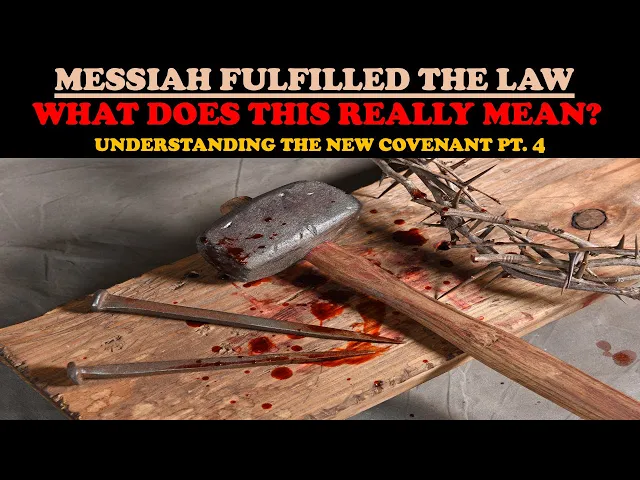
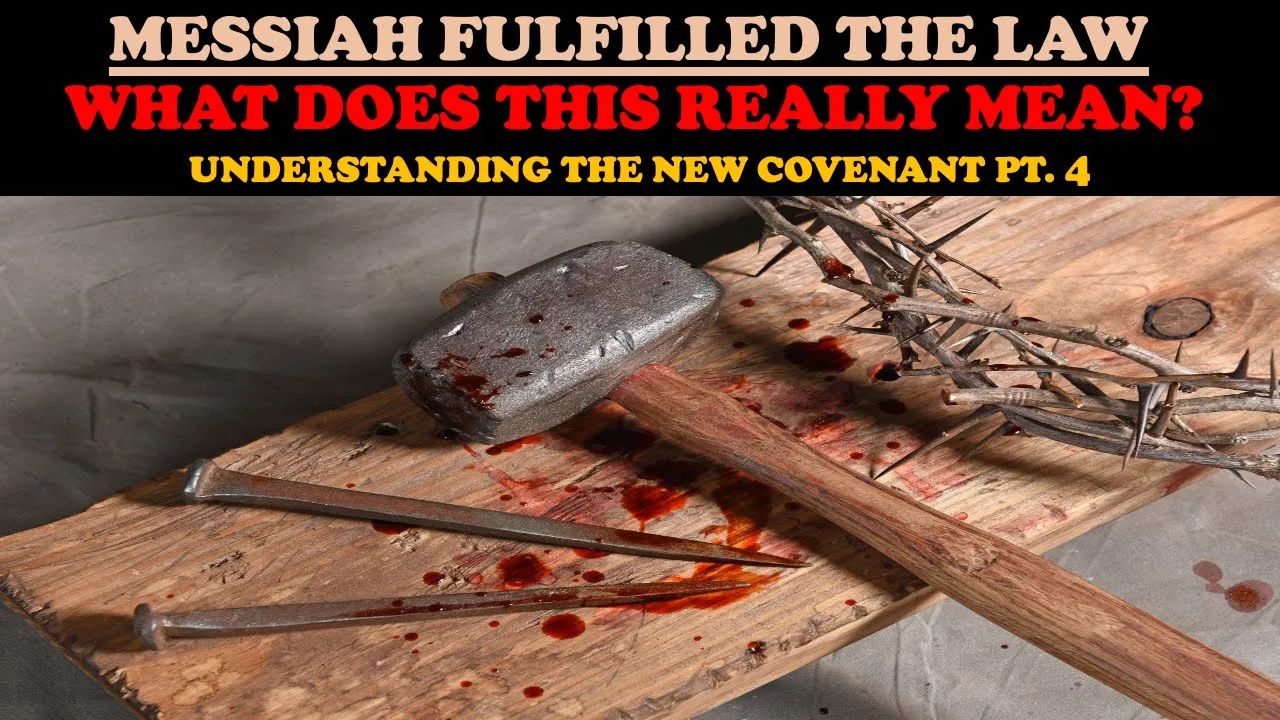
In part three of this series, we got more than halfway through the book of Hebrews, and from that study, we have gained tremendous clarity on the New Covenant. I feel that this series is extremely important in the time that we are in because there are way too many people who claim a love for Yah and that they are under the New Covenant, but they don't truly understand it. Yusha being our high priest and instituting a new priestly order is essential in understanding the New Covenant.
It's not something that can be played around with. This is not new teaching; this does not mean making things up. This is directly from the book of Hebrews.
I've gone meticulously through it—a book that's right in the New Testament of all of our Bibles. The problem is that we rely more on the doctrines of men than on what the Scriptures actually say, and so this is why I'm doing an actual Bible study video on this book. You see, a lot of people come to Yah in pride and believe there's no way that they can be deceived, but this attitude right there—that's deception.
All of us, myself included, must humble ourselves as children and really go to the Word for all of our answers when it pertains to being aligned to Yahweh. He gave us a wonderful New Covenant that we all can take advantage of, but we cannot be lawless. Because there are so many mentions in the New Testament about not being under the law, people just use this in a very general way and they say, "All that stuff in Exodus, Leviticus, and Numbers?
All that right there? That doesn't matter anymore. " And the scariest thought that I want you to consider is: What if you're wrong?
Ask yourself: Do you really think our Father is going to say, "My son, or my daughter, you cannot be in the Kingdom because you chose to follow my Word and do what I love and not do what I hate"? Do you think He's going to say that? I don't think so.
But I do think He will reject many of you who live the opposite and say, "I didn't need to follow that Word because you changed your mind on these things. " I know that's true because Yahusha said it in Matthew chapter 7. As proven in the last video, there are things that changed in the New Covenant.
There were four parts of the change, but none of that brings a justification of lawlessness. I really want to wrap up this study in the book of Hebrews and go into the letters of Paul, but in order to do that, I need to go deeper into understanding the law so all this can be tied together nicely. So what we're going to do right now is continue to study this New Covenant according to the book of Hebrews, and I pray that many will be renewed in their understanding and they will truly accept Yahusha for what He truly is for us.
Let's begin. Okay, so in that last part, we went through chapters 6 through 8. Those chapters were a little intensive, so I took my time with them.
In chapter 8, He was breaking down what the New Covenant is. I again encourage you to get your Bible out and read along with me. We will continue on Hebrews chapter 9.
Then indeed, even the first covenant had ordinances of divine service in the earthly sanctuary, for a tabernacle was prepared: the first part, in which was the lampstand, the table, and the showbread, which is called the sanctuary; and behind the second veil, the part of the tabernacle which is called the Holiest of All, which had the golden censer and the Ark of the Covenant overlaid on all sides with gold, in which were the golden pot that had the manna, Aaron's rod that budded, and the tablets of the covenant. And above it were cherubim of glory overshadowing the mercy seat. Of these things, we cannot speak in detail.
(Hebrews 9:1–5) Okay, so in this chapter, He's going to be contrasting the first Mosaic Covenant, which is the law of Moses, with the New Covenant. In these first verses, He speaks of the divine service in the earthly sanctuary. The earthly sanctuary is where the divine service was offered; this is where the sacrifices took place.
In the next verses, verses 2–5, He is describing the furniture of the tabernacle. This is what these verses are speaking of. Let's keep reading: Now when these things had been thus prepared, the priests always went into the first part of the tabernacle performing the services, but into the second part the high priest went alone once a year, not without blood, which he offered for himself and for the people's sins committed in ignorance.
The Holy Spirit indicating this, that the way into the Holiest of All was not yet made manifest while the first tabernacle was still standing. It was symbolic for the present time in which both gifts and sacrifices are offered, which cannot make him who performed the service perfect in regard to the conscience, concerned only with foods and drinks, various washings, and fleshly ordinances imposed until the time of reformation. (Hebrews 9:6–10) Okay, so let's understand what's being explained here.
Verse 6: Now when these things have been thus prepared, the priest always went into the first part of the tabernacle performing the services. Yes, every morning and every evening, the priest entered the holy place to burn incense on the golden altar and trim the lamps, as it says, “Aaron shall burn on it sweet incense every morning when he tends the lamps; he shall burn incense on it; and when Aaron lights the lamp at twilight, he shall burn incense on it. ” Perpetual incense before Yahweh throughout your generations—that's Exodus 30:7-8.
This is how it worked: also, every week on the Sabbath, the showbread was changed; you can find that in Leviticus 24:5-8 for reference. This is all so you understand how it all worked. Verse 7: But into the second part, the high priest went alone once a year, not without blood, which he offered for himself and for the people's sins committed in ignorance.
Again, I've mentioned this multiple times. You should understand this from understanding the Day of Atonement. For those that reject understanding His feast days, can you understand how leaving this information out can lead to a clearer understanding of the Covenant?
Let's keep going. Verses 8 and 9: The Holy Spirit indicating this, that the way into the Holiest of All was not yet made manifest while the first tabernacle was still standing. It was symbolic for the present time in which both gifts and sacrifices are offered, which cannot make him who performed the service perfect in regard to the conscience.
You see, the fact that the high priest could enter the Holiest of All only once a year indicates the problem with the first covenant. The tabernacle was symbolic; it was an illustration of spiritual truths that Yah was foreshadowing. When He says "present time," it was referring to the Old Testament period.
He was saying that the Mosaic Covenant covered sins of ignorance, as verse 7 states, but not premeditated sins or the sinful nature of all people. It did not completely reconcile people to Yahweh, but as He continues to teach, He brings in the contrast with Messiah and the New Covenant. So let's continue.
But Messiah came as high priest of the good things to come, with the greater and more perfect tabernacle, not made with hands, that is, not of this creation; not with the blood of goats and calves, but with His own blood, He entered the Most Holy Place once for all, having obtained eternal redemption. For if the blood of bulls and goats and the ashes of a heifer sprinkling the unclean sanctifies for the purifying of the flesh, how much more shall the blood of Messiah, who through the eternal Spirit offered Himself without spot to Elohim, cleanse your conscience from dead works to serve the living Elohim? And for this reason, He is the mediator of the New Covenant by means of death for the redemption of the transgressions under the first covenant, that those who are called may receive the promise of the eternal inheritance—that's Hebrews 9:11-15.
Okay, so for anyone that still is confused, last week hopefully you read on your own and things became more clear, but if not, here you go with more clarity. Verse 11: But Messiah came as high priest of the good things to come, with the greater and more perfect tabernacle, not made with hands, that is, not of this creation. So He is contrasted—Messiah as the new high priest—with the old covenant and the law.
He shows that Messiah is better than the Old Testament tabernacle, which He broke down in verses 1-5 of this chapter when He says, "the greater and more perfect tabernacle, not made with hands, that is, not of this creation. " This goes back to the true tabernacle, as He explained in chapter 8:2, "a minister of the sanctuary and of the true tabernacle, which Yahweh erected and not man" (Hebrews 8:2). Verse 12: Not with the blood of goats and calves, but with His own blood, He entered the most holy place once for all, having obtained eternal redemption.
The servants of the Levitical priesthood obtained a limited but continuously recurring symbolic type of redemption; Messiah, with His own blood, obtained eternal redemption. He said "once and for all" because His sacrifice never had to be repeated, because it was perfect. Now catch verses 13-14: For if the blood of bulls and goats and the ashes of a heifer sprinkling the unclean sanctifies for the purifying of the flesh, how much more shall the blood of Messiah, who through the eternal Spirit offered Himself without spot to Elohim, cleanse your conscience from dead works to serve the living Elohim?
Whoa! Okay, clearly He's contrasting the difference in the covenant. You see, according to Mosaic law, the blood of bulls and goats from the sacrifices would atone for the people's sins.
The ashes of a heifer were mixed with water and were used to cleanse a person who had become ceremonially defiled by touching a corpse; you can find that in Numbers chapter 19. He was pointing out that these ceremonies could only purify a person's exterior—the flesh—but not a person's heart. But verse 14 explains how much more the blood of Messiah can do for atonement.
Yahusha's sacrifice not only cleansed the flesh like the old covenant did, but it has the power to purify a person's mind and soul. Hallelujah! Verse 15 says: "And for this reason, He is the mediator of the New Covenant by means of death for the redemption of the transgressions under the first covenant, that those who are called may receive the promise of the eternal inheritance.
" Yahusha is the mediator of the New Covenant, and by His sacrifice provides us with two free gifts: redemption and inheritance—that's what this is saying. With redemption, the New Covenant provides redemption because believers receive redemption from the sins committed under the law. Messiah paid the price to free us from our own sin; His death pays the penalty for our sins.
This is our redemption. Most Christians say they accept it, but they don’t truly understand how. In regards to inheritance, as He writes, our inheritance is eternal through belief and acceptance of this New Covenant.
Those who are called are able to receive the promise of the eternal inheritance. Keep reading, for where there is a testament, there must also of necessity be the death of the testator; for a testament is enforced after men are dead, since it has no power at all while the testator lives. Therefore, not even the first covenant was dedicated without blood.
For when Moses had spoken every precept to all the people according to the law, he took the blood of calves and goats with water, scarlet wool, and hyssop, and sprinkled both the book itself and all the people, saying, “This is the blood of the covenant which Elohim has commanded you. ” Then likewise he sprinkled with blood both the tabernacle and all the vessels of the ministry. And according to the law, almost all things are purified with blood, and without shedding of blood, there is no remission.
That's Hebrews 9:16-22. You see, this all right here is explaining why Yahusha's death as the mediator of the New Covenant was necessary. You see, the first covenant was put in place by blood, not the blood or death of the one making the covenant, but the death of the animals offered as a sacrifice to Yah.
Read this for yourself in Exodus 24:1-8. But as he has done in this whole chapter, he contrasts this with the New Covenant with Yahusha's blood. Let's keep reading.
Therefore, it was necessary that the copies of the things in the heavens should be purified with these, but the heavenly things themselves were better sacrifices than these; for Messiah has not entered the holy places made with hands, which are copies of the true, but into heaven itself, now to appear in the presence of Elohim for us. Not that he should offer himself often, as the high priest enters the most holy place every year with the blood of another; he then would have had to suffer often since the foundation of the world. But now, once at the end of the ages, he has appeared to put away sin by the sacrifice of himself.
And as it is appointed for men to die once, but after this the judgment, so Messiah was offered once to bear the sins of many. To those who eagerly wait for him, he will appear a second time, apart from sin, for salvation. Hallelujah!
Hebrews 9:23-28. This whole part is a contrast to the old covenant. Yahusha's sacrifice was better than the sacrifices made under the Mosaic Covenant, the law of Moses, because the Messiah did not enter a man-made sanctuary; he entered the true sanctuary, which is in heaven itself, to appear in the presence of Yah for us.
His sacrifice was better than that of the high priest, because they enter the most holy place every year with an animal sacrifice. He did not offer an annual sacrifice, but offered himself once to put away sin by his sacrifice. The chapter ends in verse 28 with, as men die once, so Messiah died once—not like the repeated sacrifices of the Levitical system.
He died once to appear a second time for salvation, and those who eagerly wait for him receive it. Hallelujah! Let's continue.
Hebrews 10: For the law, having a shadow of the good things to come and not the very image of the things, can never with these same sacrifices, which they offer continually year by year, make those who approach perfect. For then would they not have ceased to be offered? For the worshippers, once purified, would have had no more consciousness of sins.
But in those sacrifices, there is a reminder of sins every year. For it is not possible that the blood of bulls and goats could take away sins. Hebrews 10:1-4.
Okay, the beginning of this chapter sums up the difference between the old covenant and the New Covenant. This is what we've been trying to get to, because it showed that the animal sacrifices were insufficient, for it is not possible that the blood of bulls and goats could take away sins. He shows that the old covenant was a shadow of good things to come.
But when he says, "not the very image," he means it was not the exact representation of the good things to come. He shows that these animal sacrifices that the priest would offer continually year by year never could make those who tried to atone perfect. These imperfect sacrifices of mere animals could not purify the person who offered them.
He is saying if they had been able to, these sacrifices would have ceased, instead of thoroughly atoning for the sins of the people once and for all. The annual sacrifice on the Day of Atonement was a visible reminder of the people's sins. Now, I wanted to do this in the last video, but I was going so deep into it, I didn't.
What I want to do right now is take you back to the Torah so you understand this fully. I'm going to go back to Leviticus chapter 4 and deal with the sin offering. Now Yah spoke to Moses, saying, “Speak to the children of Israel, saying: If a person sins unintentionally against any of the commandments of Yahweh in anything which ought not to be done, and does any of them, if the anointed priest sins, bringing guilt on the people, then let him offer to Yahweh for his sin which he has sinned a young bull without blemish as a sin offering.
He shall bring the bull to the door of the Tabernacle of Meeting before Yahweh, lay his hand on the bull's head, and kill the bull before Yahweh. Then the anointed priest shall take some of the bull's blood and bring it to the Tabernacle of Meeting. ” That's Leviticus 4:1-5.
Another one: now if the whole congregation of Israel sins unintentionally and the thing is hidden from the eyes of the assembly. . .
They have done something against any of the Commandments of Yahweh, and anything which should not be done, and are guilty. When the sin which they have committed becomes known, then the assembly shall offer a young bull for the sin and bring it before the Tabernacle of Meeting. The elders of the congregation shall lay their hands on the head of the bull before Yahweh; then the bull shall be killed before Yahweh.
The anointed priest shall bring some of the bull's blood to the Tabernacle of Meeting (Leviticus 4:13-16). Another one: When a ruler has sinned and done something unintentionally against any of the Commandments of Yahweh his Elohim in anything which should not be done and is guilty, or if his sin which he has committed comes to his knowledge, he shall bring as his offering a kid of the goats, a male without blemish, and he shall lay his hand on the head of the goat and kill it at the place where they kill the burnt offering before Yahweh; it is a sin offering (Leviticus 4:22-24). You see, this is the law right here: the old Covenant.
These are sin offerings according to the Torah. Now, if you notice in my Torah series, I never spoke on these because this is exactly what has changed in the New Covenant. We're not keeping this law.
The fight over the law from which Paul repeatedly spoke against was people trying to atone for their sins under the old Covenant because this was the way of the people—they were living under the law. This was a heavy burden people had. This is why Yahusha's load is light.
People hear the law, and they place it over everything that Yah has said. They even get upset when you read from the Torah. People have come so hard against me for simply reading the Torah—reading words that Yah has spoken directly to His children.
People have come against me for reading and teaching what Yah has directly said, all because they do not understand the New Covenant and what is different between the old Covenant and the New Covenant. I hope by now this is made much more clear. All that I just read has been done away with because of the blood of Messiah.
We're not keeping those laws, but His commands and statutes have not gone away. He did not have a change of heart on witchcraft and homosexuality. If He said something is unclean, He said it for a reason.
He did not change this. He did not change His command on the Sabbath that He wrote in stone; He, in fact, wrote it in our hearts. There is a strong misapplication of the Covenant because lawlessness abounds and people are teaching a false Covenant, and you know what?
It's prophesied that it would be this way. You must understand I'm not making my own version; I am reading directly from the Scriptures. This book of Hebrews directly deals with this, so there's no confusion, and this is why Yah led me to teach directly out of this book.
Let me continue in chapter 10 and remember what I just showed you with sin offerings in Leviticus chapter 4. Remember I didn't even cover burnt offerings; I was just making a point. Therefore, when He came into the world, He said, "Sacrifice and offering You did not desire, but a body You have prepared for Me; in burnt offerings and sacrifices for sin You had no pleasure.
" Then I said, "Behold, I have come in the volume of the book it is written of Me to do Your will, O Elohim. " Previously saying, "Sacrifice and offering, burnt offerings, and offerings for sin You did not desire, nor have pleasure in them," which are offered according to the law. Then He said, "Behold, I have come to do Your will, O Elohim.
" He takes away the first that He may establish the second. By that will we have been sanctified through the offering of the body of Yahusha the Messiah once for all (Hebrews 10:5-10). Now, verses 5-9 are referencing a Messianic Psalm from David in Psalm 40; read it on your own.
This Psalm indicates that Yahusha's obedience to Yah was one of the reasons His sacrifice was better than the sacrifices from the old Covenant. In verse 9, when He says, "He takes away the first that He may establish the second," He is concluding that Yahweh takes away the first, meaning the Levitical sacrificial system, to establish the second, which is the Son's obedient sacrifice. Here's something I really want you to hold on to, and I think this will be a revelation for many: please understand that when Yahusha said He did not come to abolish the law but to fulfill it, this is what He was fulfilling.
The old Covenant was a foreshadowing of Yah's promise for His people, and Yahusha was the fulfillment of it. None of this has to do with His statutes and commandments no longer applying. This was never even a thought or consideration, and when this book closes, you will clearly see.
But let me continue: and every priest stands ministering daily and offering repeatedly the same sacrifices, which can never take away sins; but this man, after He had offered one sacrifice for sins forever, sat down at the right hand of Elohim, from that time waiting till His enemies are made His footstool. For by one offering He has perfected forever those who are being sanctified. But the Holy Spirit also witnessed to us; for after He had said before, "This is the covenant that I will make with them after those days," says Yahweh, "I will put My laws into their hearts and in their minds, I will write them.
" Then He adds, "Their sins and their lawless deeds I will remember no more. " Now where there is remission of these, there is no longer an offering for sin. Hebrews 10:11-18.
Let's really tie this in more: Verse 11: "And every priest stands ministering daily and offering repeatedly the same sacrifices, which can never take away sins. " The writer is contrasting the Levitical priest with Yahusha, our High Priest. The Levitical priest always stood before Yah; there were no seats in the sanctuary because the priest's job was never done.
There were always more sins for which to atone. Verse 12: "But this man, after he had offered one sacrifice for sins forever, sat down at the right hand of Elohim. " Did you catch that?
Messiah sat down after offering himself as a sacrifice. He sits at the right hand of Yah. Sitting indicates that his work of atonement is finished.
So that should bring you back to his final words when he was crucified: "It is finished! " Hallelujah! Please catch this: His sacrifice has offered our atonement forever.
It's done; it's finished. This is what he meant. Verse 14 declares, "For by one offering he has perfected forever those who are being sanctified.
" You see, the finished work of Messiah in dying for sin once and for all has perfected those who are being sanctified by it, meaning those who have been set apart to Yahweh. In verse 17, then he adds, "Their sin and lawless deeds I will remember no more. " Now where there is remission of these, there is no longer an offering for sin.
You see, if full and final forgiveness has been achieved so that Yah does not remember our sin any longer, then no further sacrifice for sin is necessary. Like I said, it is finished! Hallelujah!
Let's keep going. Therefore, brethren, having boldness to enter the holiest by the blood of Yahusha, by a new and living way which he consecrated for us through the veil, that is, his flesh, and having a High Priest over the house of Elohim, let us draw near with a true heart, in full assurance of faith, having our hearts sprinkled from an evil conscience and our bodies washed with pure water. Let us hold fast the confession of our hope without wavering, for he who has promised is faithful.
And let us consider one another in order to stir up love and good works, not forsaking the assembling of ourselves together, as is the manner of some, but exhorting one another, and so much the more as you see the day approaching. Hebrews 10:19-25. So now that in this letter he has thoroughly explained the superiority of Messiah's priesthood versus the Levitical priesthood and the superiority of the New Covenant to the law of Moses, he is now telling those reading to approach Yah with boldness through Yahusha and the new priesthood and living way that he has consecrated for us.
The Old Testament High Priest passed through a veil to get to the Most Holy Place. Now believers enter Yah's presence through Yahusha's flesh, meaning his sacrificial death. In this section, he's exhorting those who believe to come into the Covenant and receive the promises.
That's what you're reading right there. Verse 25: "Not forsaking the assembling of ourselves together, as is the manner of some, but exhorting one another," is so much the more as you see the day approaching. I wanted to highlight this verse.
I really want you to think about all that has been presented in this book. But do you know that the main thing that people take from this book, amongst a few other verses, is this scripture right here? They take this scripture and use it as some sort of commandment that we need to be in some church organization.
Can you see how twisted modern-day religion really is? Look how meaty this book is, but yet this one verse is what people use in order to tie others into the false church system. The writer, yes, he exhorts the Hebrews to gather together.
The local assembly is where the gospel message is preached, yes, and that's still valid to this day. But it does not mean assemble just for the sake of saying you're doing so. If you are not around like-minded believers and you have people who twist the word and bring their congregations into false worship like Christmas and Easter, and they teach lawlessness— they’re not even teaching out of this book fully.
This verse should not be used as a commandment to stay tied to these false groups. Beware of these false applications of scripture; it is dangerous. Let's continue.
"For if we sin willfully after we have received the knowledge of the truth, there no longer remains a sacrifice for sins, but a certain fearful expectation of judgment and fiery indignation which will devour the adversaries. " Anyone who has rejected Moses' law dies without mercy on the testimony of two or three witnesses. Of how much worse punishment do you suppose will he be thought worthy who has trampled the Son of Elohim underfoot, counted the blood of the covenant by which he was sanctified a common thing, and insulted the Spirit of grace?
For we know Him who said, "Vengeance is mine; I will repay," says Yahweh. And again, "Yahweh will judge His people. " It is a fearful thing to fall into the hands of the living Elohim.
But recall the former days in which, after you were illuminated, you endured a great struggle with sufferings, partly while you were made a spectacle both by reproaches and tribulations, and partly while you became the companions of those who were so treated. For you had compassion on me in my chains and joyfully accepted the plundering of your goods, knowing that you have a better and enduring possession for yourselves in heaven. Therefore, do not cast away your confidence, which has great reward, for you have need of endurance.
So that after you have done the will of Elohim, you may receive the promise; for yet a little while, and He who is coming will come and will not tarry. Now the just shall live by faith, but if anyone draws back, my soul has no pleasure in it. But we are not of those who draw back to perdition, but of those who believe to the saving of the soul.
That's Hebrews 10:26-39. This point is extremely important, and those in the once-saved, always-saved camps should really read this. Speaking of verse 26: For if we sin willfully after we have received the knowledge of the truth, there no longer remains a sacrifice for sins.
Now this is not referencing an occasional act of sin, which can be, of course, confessed and forgiven. If we say that we have no sin, we deceive ourselves, and the truth is not in us. If we confess our sins, He is faithful and just to forgive us our sins and cleanse us from all unrighteousness (1 John 1:8-9).
That's not what this is speaking about; this is willful sin, a conscious rejection of Yah. But the person who does anything presumptuously, whether he is native-born or a stranger, that one brings reproach on Yahweh, and he shall be cut off from among his people because he has despised the word of Yahweh and has broken His commandment. That person shall be completely cut off; his guilt shall be upon him (Numbers Chapter 15:30-31).
That's what that's speaking to. If you go back to Leviticus and read about the sin offering, those offerings were for sins that were unintentional. But if you know you should not do something and you do it anyway, this is quite different.
I think this is one reason why people don't want to hear the Torah, because now that you hear it, you know, and you can't say that you never knew. A person that sinned intentionally will be cut off from the people. To sin deliberately after receiving the knowledge of truth—that's apostasy.
Does this mean that if you sinned and did wrong, even though you knew you shouldn't have, there's no offering of sin for you? No, but this is why you must live in repentance and no longer live in sin. This is why we learn about His laws and commands, so we don't go against Him.
Maybe you have said, "Well, if I don't know His law, then I won't be held accountable for it. " Maybe that's the way people think. This is absolutely wrong thinking.
His will is that you love Him with your whole heart, mind, and strength. Your whole mind needs to be given to Him, which means you need to seek Him out sincerely and understand. Living in repentance is what I'm trying to say.
This whole passage is an exhortation of accepting Messiah's sacrifice and not abusing this gift of grace. Let's keep reading verses 30-31: For we know Him who said, "Vengeance is Mine; I will repay," says Yahweh, and again, "Yahweh will judge His people. " It is a fearful thing to fall into the hands of the living Elohim.
He's quoting two passages from Deuteronomy Chapter 32 to support his claim that judgment belongs to Yah, and Yah's people are not excused from His judgment. It is a fearful thing to fall into the hands of the living Elohim, and that is a statement that we should all remember and apply. On that note, we will conclude this part of the study and we'll close out the rest of the study next week, Yah willing.
It was important that in this study, some important points and concepts were tied in from last week. You see, the New Covenant is a blessing and gift from our Father. We cannot abuse His love and His grace.
Our Father has given us a perfect covenant that we can come to Him through, and when you truly understand the covenant, it brings such completeness to your faith. This is my experience, at least. The New Covenant should be understood by contrasting the Old Covenant.
You see, the Old Covenant is not something we just ignore because we have a new covenant. People often say Yahusha fulfilled the law, and they know this because He said this. But ask them how He fulfilled it.
Ask them to explain that, and that's when you’ll get the silence or the defensive statements directed against you. So let me answer this for you: How did Messiah fulfill the law? Messiah fulfilled the law because the Old Covenant was a foreshadowing of what Yahuwah planned to do through His Son.
Throughout the Old Testament, He has foreshadowed this plan—from asking Abraham to sacrifice Isaac, his son, to requiring Israel to cover their doorpost with the blood of an unblemished lamb during Passover, to having the high priest atone for our sins annually in the holiest place on the Day of Atonement. There was a complete foreshadowing of the New Covenant to come, and Yahusha is the fulfillment of it. His sacrifice was the fulfillment of what the law has foreshadowed; He gave a more complete sacrifice that atoned not only for our flesh but for our hearts, and Yahweh will remember our sins no more.
This is how Yahusha fulfilled the law. So I want you to think about this: What do you think the devil wants? Do you think that the devil actually wants you to know this?
Of course he doesn't. The book of Hebrews is a book that is right in our Bibles; everyone should understand this by now. There is a reason why many don't.
The devil wants you to not even know what sin is, so he makes you reject learning the Torah. He also wants you to feel. .
. Like these things that Yah has said, he does not accept. He wants you to feel like all those are done away with because of the New Covenant.
He wants to make everyone believe that everything you need to know about Yah can be found in the New Testament, and therefore, you don't need to read the Torah. He makes people upset when they even bring the Torah up. Our Father did not do away with His laws, statutes, and commandments when He gave us the New Covenant.
In the New Covenant, He changed the priesthood, in which we are able to atone for our sins. If we love our Father Yahweh, the Most High, we must keep His commandments. Now listen, there is more to this topic as we tie in the letters from Paul.
As we get close to wrapping up this study, I hope you can truly understand that you cannot tolerate a lawless mindset. If this understanding of the change of the priesthood is new to you, then maybe you need to go back and start over in your study and understanding. Our Father has given us all time to get this right and truly understand the Covenant.
I think we should all praise Him that He did not come during our ignorance, but He has given us time to get ourselves together and truly come to Him in spirit and in truth, to truly accept His Covenant and live according to His will. The time of ignorance is over. Please continue to seek Him out daily and get into a deeper, more connected relationship with Him through His Word, and not from the doctrines of men that are leading the masses to hell.
Repent, for the kingdom of Yahweh is at hand; be ready for it and be blessed! Hallelujah, praise Yah! Okay, thanks again for watching.
If this has blessed you, please do not forget to like it and share this video with others. Again, please watch this with others and discuss this New Covenant with them. If you have not done so already, please don't forget to subscribe to this channel.
Yah willing, I upload every Friday. Also, please don't forget to follow this ministry on Facebook and Instagram, as well as on my website truthunedited. com.
As always, I'd like to thank all those who support this ministry. Your contributions truly bless this ministry and make a huge difference. I'm very thankful for your love and your support.
Again, thank you for listening to Yah's call on your heart. Be blessed! Okay, thanks again everyone for watching.
I love you all.