A true American champion. Long the leading aircraft manufacturer worldwide, an icon of engineering prowess. Boeing people are very proud of their work.
It is known all over the world! People here are proud of it. We’re proud of it.
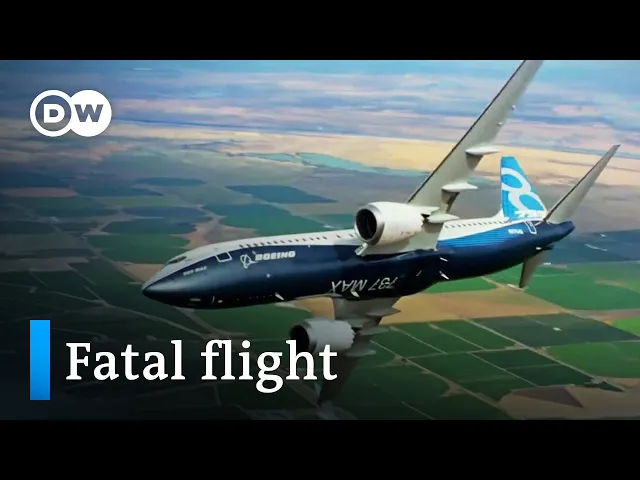
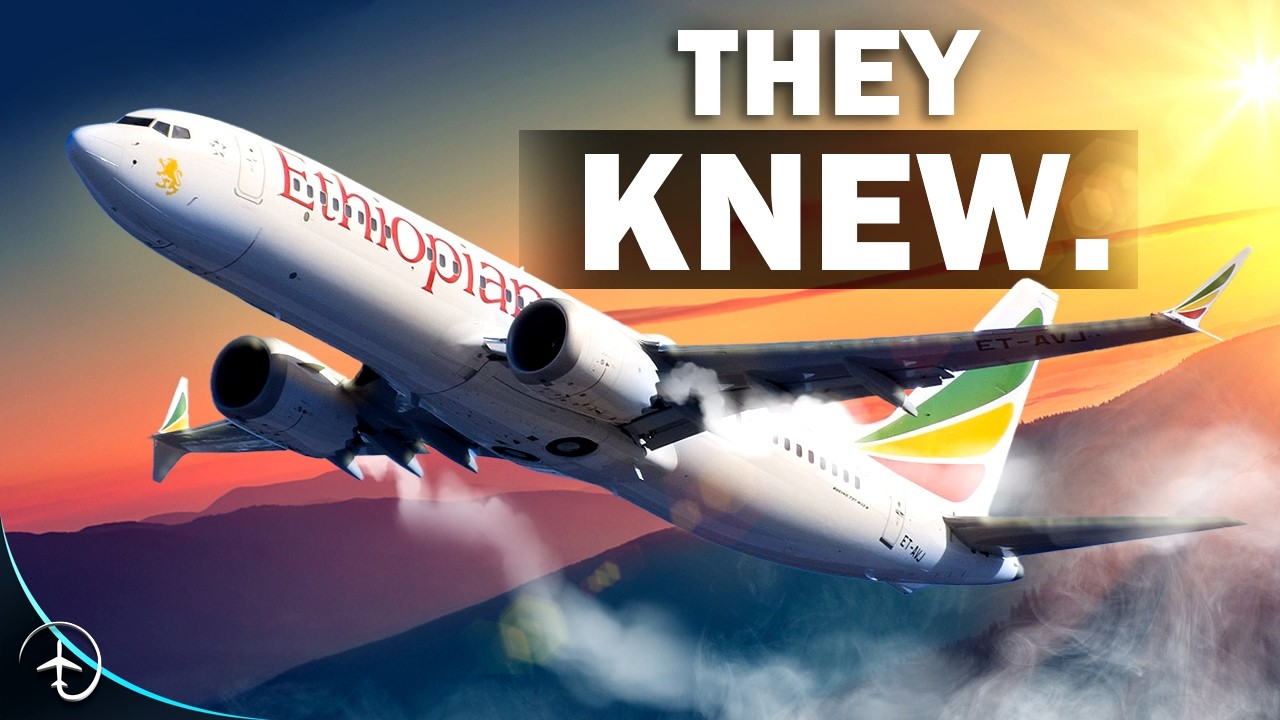
But March 10, 2019 proved a major turning point for Boeing. In Ethiopia, a passenger plane with 157 people on board has crashed. There are no survivors.
The victims were from 35 countries and included 5 Germans. Children mourned for their parents, men and women for their partners, and parents for their children. Less than five months earlier, a plane of the same type had already crashed in Indonesia resulting in 189 deaths.
A suspicion quickly arose that there might a connection. Were the crashes more than tragic accidents? Was there an issue that went beyond the 737?
Unfortunately, this seems to have developed into a system in recent years and has penetrated deep inside Boeing’s whole internal structure. In our investigation, we met with Boeing insiders who felt abandoned by regulators. Some even reported of violence and threats.
And he told me flat out, I’ll push you until you break. And then I’m going to come in and fix you. He told me several times.
Well, they broke me. Two crashes within five months, with two brand-new Boeing 737 MAX. 346 people died and they’re just a number.
There were 157 people on the Ethiopian Airlines plane. Their relatives want their photos put on display in order for the victims not to be forgotten. One of them, Yaser Eissa, left behind an entire family, and his three daughters now have no father.
The entire Njoroge family was killed — including three children. Another victim, Marie Philip, who was just 28 years old. It was a Sunday like any other.
We were looking forward to the spring again and everything behind the house turning green again, and then the phone rang. It was her partner on the phone. And I thought to myself, “What’s he calling about?
He’s never called before. ” The first few minutes, he couldn’t get a word out. And then he said Marie had been on the plane.
It was a business trip. She worked for IGAD, and in East Africa they’re responsible for bringing countries together to collaborate on resilience to droughts. And she had a meeting there.
Most of all, I admired how she always knew exactly what she wanted. She wanted to make the world a better place. Marie Phillip was flying with 156 other passengers in a Boeing 737 MAX from Addis Ababa to Nairobi — for a UN meeting.
Marie was sitting here. Right behind an Italian, and next to a Kenyan. It took excavators to dig the debris of the plane out of the ground.
The impact was so intense that it almost completely disappeared into the earth. Just when you see the pictures, you can imagine how everything was absolutely destroyed. The impact must have been extreme.
About five months prior, an almost brand-new Boeing 737 MAX had crashed into the sea near Indonesia just after takeoff. It quickly became clear the cause was not a simple technical defect but rather a flight computer system. 189 people lost their lives, and for many, their remains were never found.
Their relatives were left to mourn at mere memorial services. We visit a law firm in New York which represents the families of many victims in lawsuits against Boeing, including the Philipp family. They don’t want to see Boeing get off the hook.
They want to know what caused the crashes. Was it mere bad luck? Were there technical problems?
Or a deadly system of concealment and cover-up? Remember, Lion Air occurred five months, plus or minus, before Ethiopia. Lion Air made it clear that the MCAS computer system was a problem.
And right after Lion Air, the 737 MAX, should have been grounded until they figured it out. So, between Lion and Ethiopia, allowing this plane to continue flying, sort of made Ethiopia predictable. Predictable.
Shortly after the first crash, the US air traffic regulator, the FAA, prepared a risk analysis. If the 737 MAX were to be used worldwide as planned and this were to go on for about 45 years, about 15 such crashes were to be expected. A disaster would occur every three years.
. . About three months after this analysis, Marie Philipp lost her life in the second crash.
That’s unacceptable. You can’t just shrug off another impending plane crash! I can’t fathom treating human lives so recklessly.
That’s an unacceptable analysis. Death is 100 percent for the guy who’s killed. You don’t build airplanes with the expectation or an acceptance of the statistic that such and such can survive three years and then there’s gonna be a crash.
That’s bad. If one builds an airplane accepting the principle that you can accept one crash every three years, that’s an outrageous principle. On Boeing PR videos, the MAX flies smoothly even during extreme maneuvers.
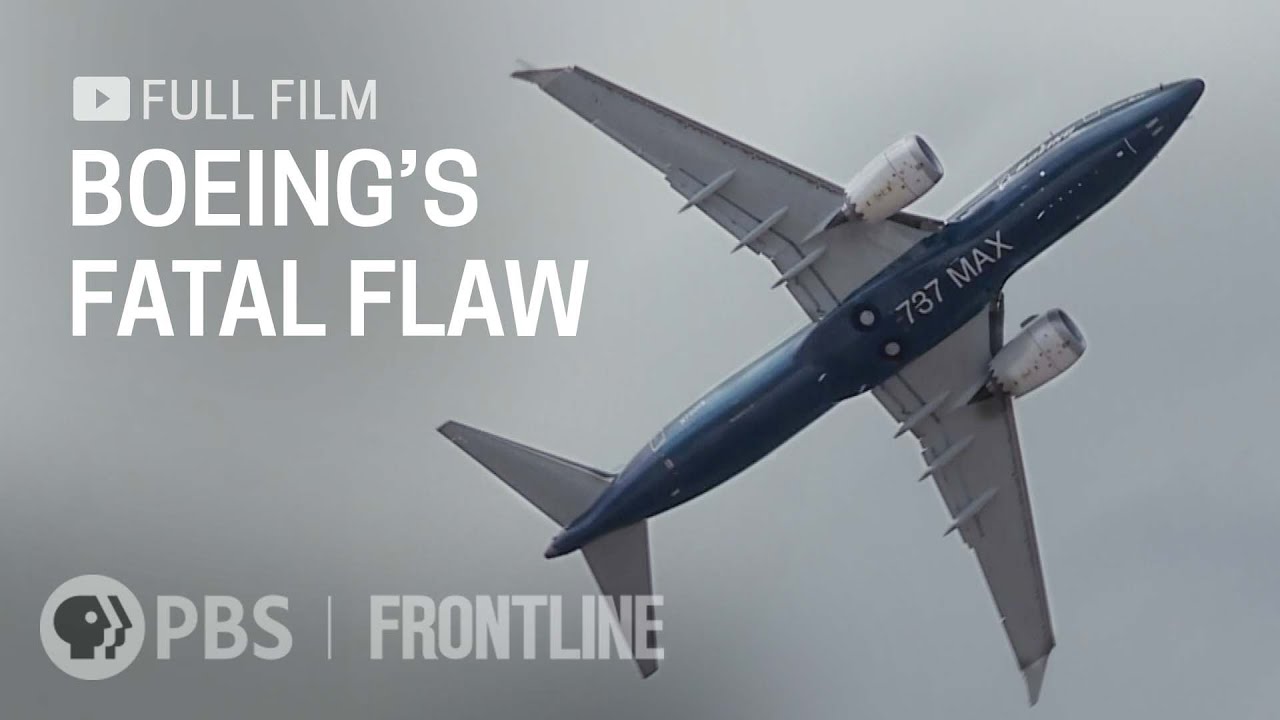
But after the second crash, the Chinese and Europeans grounded the plane. The American FAA followed suit the following day. Boeing was unwavering in its determination to find a quick technical solution with new software.
At a press conference, Boeing CEO Muilenberg downplayed the role of the software. And he seemed to be hoping for support from regulators. I think it is really important that we all focus on letting the investigation process run its due course, our job is to focus on safety, not on speculation.
He left many questions unanswered and was forced to resign eight months later. Sir, wait a minute. 346 people died.
Can you answer a few questions here about that? We have no contact with Boeing. Boeing never contacted us.
We never heard anything from them! No condolences. Nothing!
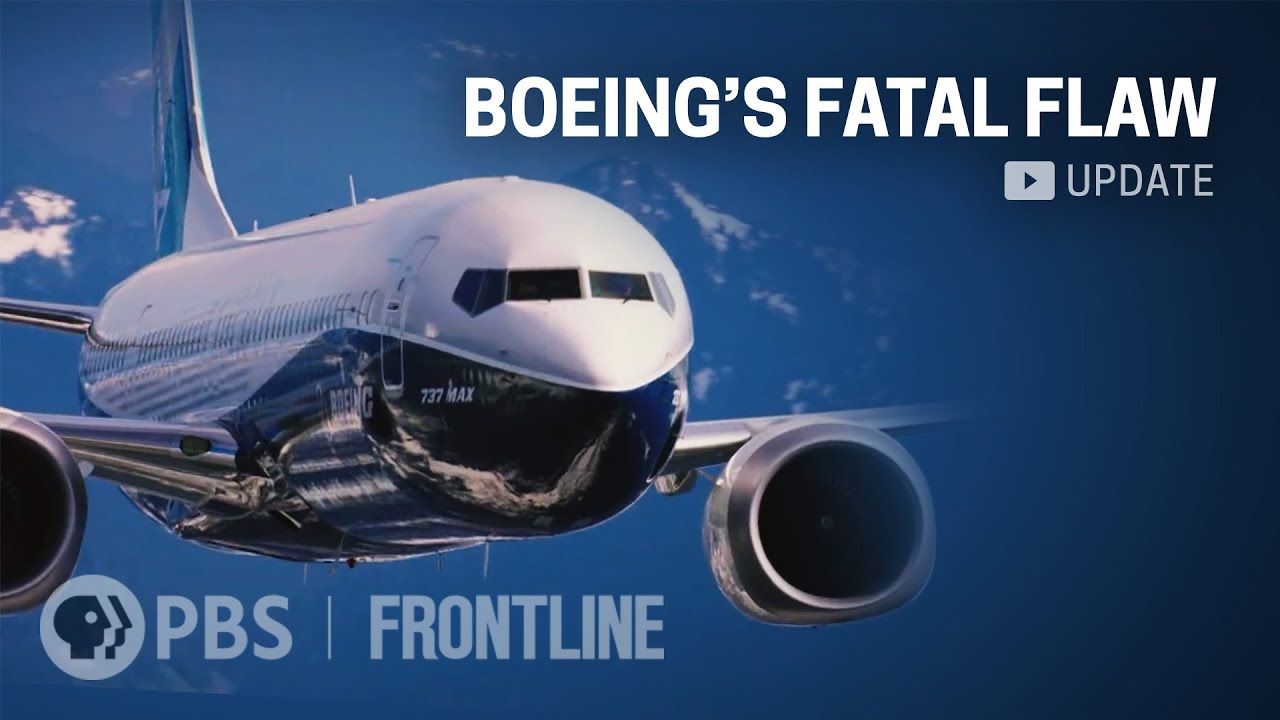
Did their daughter and 156 other people die, even though Boeing and the FAA knew that the 737’s software could cause fatal accidents? The Maneuvering Characteristics Augmentation System, or MCAS for short, is designed to improve aircraft handling. But what is its specific role besides statistically causing a crash every three years?
Why did Boeing even install this lethal system? It was developed mainly to compete with a new version of the A320 from Airbus. The ‘NEO’ was an immediate hit, with better engines boasting greater fuel economy.
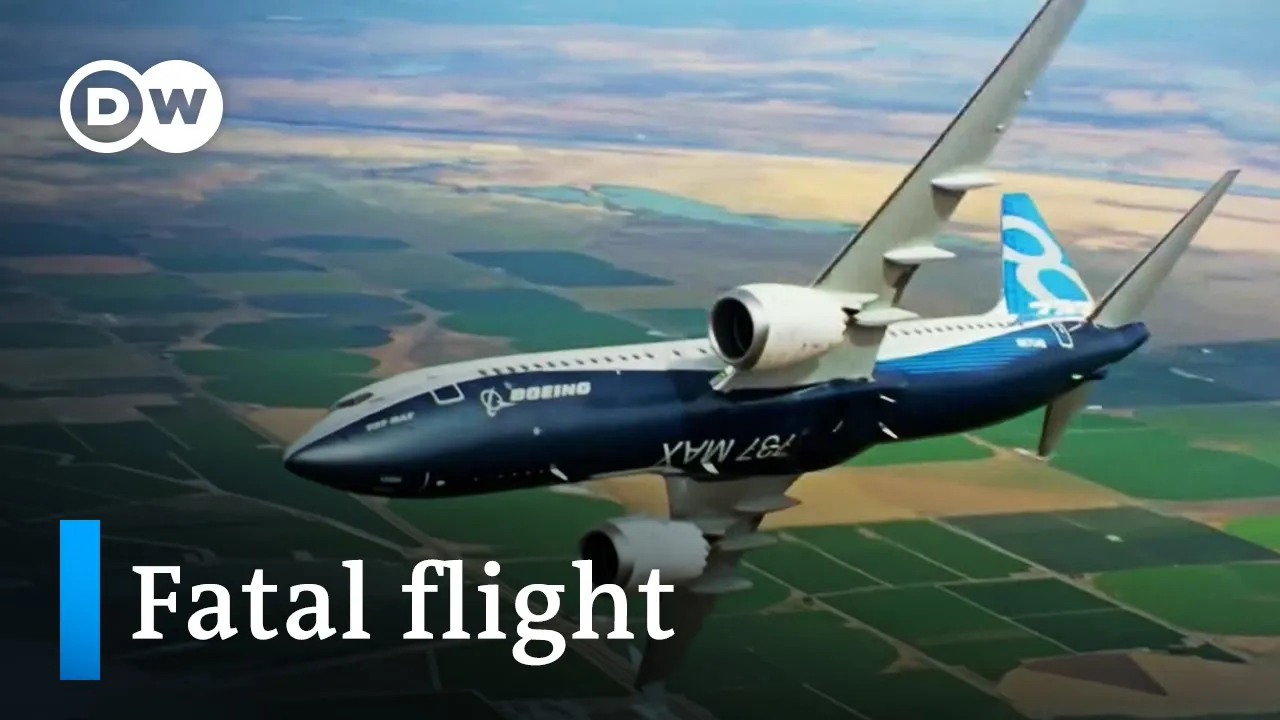
Boeing ran the risk of falling behind and needed less fuel-hungry engines requiring a larger size. However, because the 737 -800 was lower and the landing gear could not be built higher, Boeing had a problem: instead of building a new aircraft, Boeing decided to use an economy version. The engine was mounted further forward and, above all, higher.
The top edge even protrudes beyond the wing. This meant that the aircraft tended to pull upward when subjected to high thrust, which could lead to dangerous flight positions. That’s why the MCAS software was installed.
In such cases, it automatically adjusts the elevator, pressing the nose downward. In the crashes, it was pushed down “too far and too forcefully. ” The plane should never have been built in this form.
It should never have been designed that way and should never have been approved. This plane could not fly on its own. It could not stay airborne on its own, so an additional system had to be installed, this MCAS system, which was meant to compensate for the built-in, system error.
Technology can fail, and that’s what happened here. In a way that even the pilots did not know what was happening. That is not an acceptable airplane design.
Boeing does not want to give an interview on these points. Instead, they simply sent us a written statement. It says: “.
. . the MAX was a six year development program undertaken according to the same company processes and identical FAA requirements and processes that have governed certification of previous new airplanes and derivatives.
” Further down, the company adds: “Boeing operates in full accordance with all FAA oversight requirements and processes. ” Nevertheless, instead of building a costly new model, an over 50-year-old model was simply “souped up” to compete with Airbus. Their model of choice was very popular among pilots — as explained to us by a man sitting in a simulator who has flown thousands of hours in the predecessor of the 737 MAX.
The 737 is a very reliable and cost-efficient airplane. As a pilot, I find it very pleasant to fly. It is very intuitive to fly, its flight behavior is neutral, and it’s fun.
The computer system which spelled the doom of the crashed 737s influences an airplane’s trimming. For example, if passengers or cabin crew move further forward or backward inside it, this shift in weight distribution can push the nose of the aircraft up or down. The trimming compensates for this.
The pilot just pushes a little switch, . . .
And the “trim wheels” next to their seats start turning. A relic from the old days when pilots still had to turn them by hand This shows how old the basic construction is. In the 737, the trim wheel really turns.
That is not the case in other aircraft. But here in the 737, you can still see them. The MAX’s onboard computer could adjust the trimming.
But the changes could be tremendous and occur without the pilots’ knowledge. We now know that Boeing was fully aware of this information and deliberately kept it a secret. Here in Orlando, Florida, we visit someone who has spent half his life in Boeing jets.
I’ve always been a big Boeing fan because, you know, there’s a sentimental aspect, it was the first jet airplane ever flew. When you don’t inform the people that are flying an airplane that other people entrust their lives to, if they don’t know there, if they don’t know the machine that they’re flying, every aspect of what they’re flying and you hide something that is apparently critical, I think it’s criminal. If I were still flying my colleagues may very well and may or may not vocalize it, but they may be saying what else have they not told me about my 777, about my 787?
We learn of growing concerns in the industry that other Boeing models might also have defects. Ones which are still flying every day. Unfortunately, we have to assume there are similar problems with other aircraft.
This concerns the service life and overall functionality, and it is obvious that in the past few years Boeing has been very reckless, for costs reasons, and that the FAA has not managed to intervene here in its role as regulator. In advertisements for its 737, Boeing placed great emphasis on the fact that the MAX differs in practically no way from its predecessor in terms of flight behavior and operation. In an email to an airline, a prospective customer, it says: “there is only one difference .
. . the OFF position of the gear handle,” but everything else was said to be the same.
The emails also show why this was important to Boeing: To make the transition to the new model ‘there will not be any type of simulator training required’ — Boeing will not allow that to happen’. And whenever airlines or regulators demanded simulator training, Boeing employees were proud to have dissuaded them with ‘a jedi mind trick’. If the pilots had known about MCAS and had been able to train on a malfunction in the simulator, they would have had a chance to avoid the crashes.
Why did Boeing not want that? What would have been so bad about such training? We’re not just talking about a few pilots.
All the pilots are rotated through all the planes at an airline’s disposal. That means even if the airline were to purchase just two 737 MAX, it would have to train all the pilots to use that plane. And an airline has more than just ten pilots.
Usually, it’s hundreds, if not more. A more profitable future belongs to those who think: more. More capacity, More cost-efficiency, more range.
Promotional videos for prospective buyers clearly show: Boeing offers lower costs, efficiency, and higher profits. . .
Saving millions on pilot training is a great selling point! When it became clear after the first crash that the secret software had put pilots into an impossible situation, still no simulator training was developedfor this purpose. However, the pilots were informed of the new system.
Pilot David Schöne received information about the MCAS from Boeing, including instructions on what to do if it fails. The emergency procedure here is to hold the controls tight and turn off autopilot, automatic thrust control, and automatic trimming. I do so using these two stabilizer trim cutout switches, at which point the MCAS is completely deactivated and I can only trim the plane manually using the wheels.
Then I go on flying normally. I have to trim by hand using these trim- wheels, but I can keep flying. According to Boeing, it would have been that easy to prevent the crashes?
Pilot Les Abend doesn’t believe it. Obviously, it wasn’t just software that came up. And now they presented what the fix was to pilots in the airplane.
And here were pilots that were aware of that crash and couldn’t prevent the plane from crashing with Ethiopian. Since the second crash, Boeing has built more than 400 aircraft that are not allowed to be delivered. In early 2020, production came to a complete stop.
Regulators obviously see more problems than just software that can be reprogrammed and simply turned off in the event of an error. One year after the crash in Ethiopia, new technical problems increasingly came to light, such as improperly routed cable harnesses and unapproved sensors. Does this mean passengers died because Boeing designed an aircraft poorly and kept important details concealed from pilots?
Shouldn’t the regulators have prevented this? The American FAA is responsible for the US manufacturer Boeing. Why did it approve the MAX?
The FAA is headquartered in Washington. The Federal Aviation Administration is responsible for all aspects of aviation in the USA — including the approval of aircraft. Six months after the second crash, in October 2019, the FAA noticed that Boeing had failed to disclose crucial documents for months.
The FAA administrator wrote a strongly worded reprimand to Boeing. I expect your explanation immediately regarding the content of this document and Boeing’s delay in disclosing the document to its safety regulator. Until then, many experts had seen the FAA and Boeing as a close-knit community.
Unfortunately, it has become a system in recent years, it has eaten into the whole internal structure of Boeing and in relation to the FAA. The FAA became increasingly lax in its oversight, with entire working groups consisting of industry representatives headed by an FAA staff member. This means that the decisions were in fact made by the industry, formally speaking of course by the FAA, which only put its stamp on them.
In the institutional construction of how the FAA was developed in recent years, it has to be said, yes, this institution has failed. But what role do European authorities play? The EASA is responsible for the certification of Airbus in Europe.
But: it collaborates closely with the FAA. Did the Europeans know nothing about the MCAS? Could the EASA have prevented the tragic accidents?
Cologne, Germany is home to the European counterpart of the FAA: the EASA. Only aircraft that have been approved here are permitted to take off and land in Europe. This also applies to Boeing airplanes from the USA.
However, in order not to go through the whole certification process twice, the two institutions have agreed to divide up tasks. We sit down with Boeing and with the FAA and agree with them on the topics on which EASA wants to do our own specific tests, areas which are of significant interest from a safety standpoint to us, and areas that we are ready not to delegate but to rely on the FAA certification. The EASA explicitly explained to us that they, too, had carried out their own tests on the 737 MAX.
But if so, why did the EASA not discover the new and fateful MCAS? In this process, MCAS was labelled or designated by Boeing as a non-safety- critical component. Therefore, in this discussion dialogue between the three of us, since it was not safety-critical, we decided not to have a look at it.
In other words, the Europeans apparently also fell for Boeing’s “jedi mind trick. ” They were hypnotized to believe: “This is not a safety-relevant system; you don’t need to check it. ” Things changed in the wake of the accidents with the MAX and its subsequent grounding.
The EASA now neither wishes to rely on Boeing’s assurances nor the FAA’s judgment. We want a complete EASA independent assessment of the flight controls of the aircraft of the MAX. And independent means we alone, without the FAA.
So, there are clearly lessons learned, on all sides on how we want to deal with the new certification of aircraft, Boeing aircraft, but I’m pretty sure that the FAA will have lessons learned on the certification of Airbus aircraft as well. The European regulator promises more independence and no longer wishes to blindly trust the FAA. Will that be possible?
The story of a man still currently employed at Boeing shows there are limits: He thus declined to give us an interview and did not participate in this report in any way. But Boeing employees are allowed to report safety concerns to the FAA. And he did.
The Boeing employee is now represented by a lawyer. The questions he has to answer as a whistleblower are too complex. We already know his lawyer, Professor Giemulla.
For years, my client has been pointing out incidents and procedures that he no longer considered acceptable. He reported them to his immediate superior, to Boeing’s head of safety, and its board of directors, and it wasn’t rejected outright, because that would have been too blatant. Instead they acknowledged the issue, then let it fizzle out.
This Boeing employee isn’t working on the 737, but the 787 Dramliner — a larger, long-range jet. In a promotional video, Boeing presents the two of them together in the air, and for a good reason. The Dramliner is the group’s other hot seller besides the 737.
However — unlike the MAX — it boasts a completely new design which as far as is known eliminates the need for software to compensate for dangerous flight characteristics. But the Boeing employee has reported other problems to the FAA: He was instrumental in planning the Dramliner’s production. He noticed that parts repeatedly showed up in the plant from suppliers that did not correspond to the design drawings and that really should be rejected.
They would recurrently just disappear. Some are in fact installed, he reports, and yet parts that don’t meet specifications are considered a safety risk. But the engineer doesn’t think the FAA is really taking action.
The FAA has been cautious in its response. They are taking the case seriously, but they aren’t tackling it proactively. At least that’s how it looks to us.
They are trying to sort things out internally with Boeing, and I hope not in the old, traditional way. That’s why in spring 2019, the Boeing employee decided also to report his safety concerns to the European EASA, which has been relying more heavily on its own testing since the MAX crashes. Can it draw its own conclusions from the specific information on production defects regarding Boeing’s Dramliner 787?
On any type of airplane, on any type of operation, if someone comes to us and says there is a safety problem, we look at it. But if it has to deal with the quality of the manufacturing and things like that, this is not within our scope of responsibility as European agency. So it’s very difficult.
We can say to the FAA, “OK, look, we received this information. ” But there we cannot investigate ourselves. I do not have the right in EASA to send inspectors to a Boeing production facility in the US.
That’s outside of our limits. Did a lack of sufficiently thorough checks by regulators cause people to lose their lives? And do we face future danger due to European regulators’ inability to investigate American whistleblowers reports independently?
The issue goes beyond this one Boeing employee who does not want to be named. Many other insiders warn of dangerous Boeing jets — and have been doing so since long before the MAX crashes. Boeing operates a large plant near Charleston, South Carolina.
Here, some of the people we meet have worked for Boeing for decades — and the defects they reported of in planes delivered to customers are sometimes deeply disconcerting. 25 percent of the oxygen systems will not operate properly on the 787. So In the event of a decompression event, right, your oxygen masks fall and you pull on the cord and it releases oxygen, so you know at 40,000 feet, the average person has like 15 or 20 seconds of cognitive consciousness.
And what we found is 25 percent of them do not work properly when deployed. We had hundreds and hundreds of lost nonconforming parts. So whenever those parts are deemed unacceptable for use, they need to be segregated so they’re not used on the airplane.
We discovered that over eighteen hundred nonconforming parts were missing and presumably installed on airplanes without being fixed. Boeing does not dispute this but explains: “At the conclusion of the audit, all of the parts were accounted for or cleared as having no impact to any aircraft. ” Boeing went on to say, the oxygen masks were tested regularly, and they had “addressed the matter with the supplier through [their] normal FAA-approved process.
” But can we rely on that? The MAX had also been approved as “safe” by the FAA! And unlike the MAX, hundreds of Dramliners have been in service around the world each day.
787s also take off and land regularly at German airports. And every day thousands of passengers rely on the planes to be as safe as they have been for decades. But longtime Boeing employees fear the Dramliner might betray this trust.
And anyone who pointed out defects would face tremendous problems. I did have one manager that worked with me back in the. .
. He recorded all the aircraft and what was wrong with them and what they were sending out the back door that hadn’t been fixed. And the director of quality told him, I don’t want any more of these papers or any more of these pictures sent to me.
And, you know, he said, well, I’m taking this to Ethics. I’m going to take this to Ethics, because people are gonna die here. Three weeks later, they put him into another building and put him on a performance and he was walked out the door and lost his job.
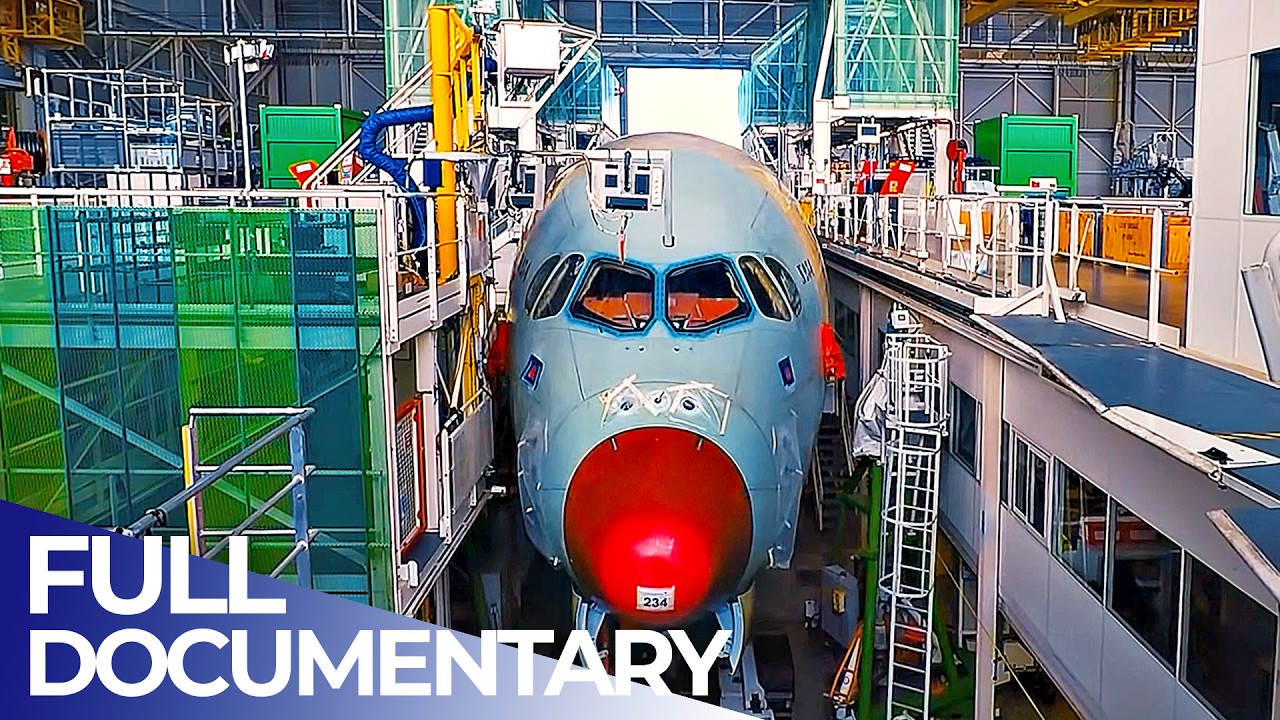
When I started back in 2009, the aircraft in my building would move every three weeks to the next section. So the same amount of work that was involved at that time for the movement of the three weeks when I left was being done every three days. So, it was actually increased from three weeks to three days, with the same amount of employees or less doing the work.
Boeing produced this original commercial in time lapse. And Boeing confirmed in writing that production had been accelerated. But: it was optimized in a way that still guaranteed safety.
But Cynthia Kitchens reports what happened when someone reported quality defects. If you brought anything forward, you were a target. They bullied you and harassed you.
I was actually physically assaulted by another manager, pinned up against a railing and told to get on the good-old-boy system or I’d go nowhere in this company. Actually, three weeks later, he became my boss and was in charge of my raises and my performance reviews and things. She, too, turned to the FAA and had photo-documented defects in aircraft.
This included bolts that had obviously been tightened with the wrong tool and thus damaged. And deeper down, wiring harnesses lay surrounded by countless metal splinters. There were sharp-edged metal splinters between important cables that distribute control signals throughout the airplane.
Without Cynthia Kitchens’ knowledge, her colleague John Barnett was making the same observation at about the same time: The slivers that I identified in the wiring, I was told to go cover a different area and they brought in a one year Boeing manager in my place to handle the slivers. And that’s when they decided to let it go. So, they delivered over 800 airplanes with these slivers, and from what I understand, they’re still delivering them today, because they still haven’t fixed the issue that’s caused it in the first place.
Both fear that they could rub through the insulation and cause short-circuits over the course of years of service. Boeing informed us that they had in fact discovered such splinters in 2017. They claimed the FAA had investigated them and found they did not present a safety of flight issue.
” Boeing also informed us that all aircraft delivered to customers were absolutely safe, also thanks to tests performed by the FAA. Engineer John Barnett isn’t convinced. We have a rule of thumb in production that it takes eight to 10 years for a defect to become an issue on aircraft.
That’s a rule of thumb. Sometimes it’s sooner, most times it is later than that. But we delivered our first airplane from Charleston in 2012, so we’re just now hitting that eight- to 10-year range of where defects become an issue.
And I’m scared what the next couple of years is going to show with the 787. I hope I’m wrong, but I’m scared of what’s going to come up. Boeing insists that all delivered aircraft are safe.
But employees who have yet to speak to the press are also expressing their fears in internal emails. For instance, one wrote: we “pick [? ] the lowest-cost supplier.
“ Everyone has it in their head meeting schedule is most important, [? ] not delivering quality. ” And a bit further down in the text.
. . “It’s systemic.
It’s culture. In a statement, Boeing deemed these emails unacceptable, saying they didn’t show Boeing to be the kind of company it actually is and strives to be. But they are undoubtedly from Boeing employees and show a corporate culture that has had catastrophic consequences for the MAX.
If you believe the insiders, this may also end badly for other Boeing planes. But how did this dangerous corporate culture come about? In these deliberations, the name of a nearly forgotten aircraft manufacturer always comes up: McDonnell Douglas.
Boeing was founded over 100 years ago in Seattle, on the west coast of the USA. Software companies such as Microsoft and Amazon also call this city home. But when it comes to industrial jobs and work for tens of thousands in the suburbs, Boeing is the heart of the city.
And because of Boeing, this Seattle community and the surrounding greater Seattle area grew up with a middle class, working class population that had fantastic incomes better than most working people all over America. If we lose that, we become a city full of rich tech people and homeless people. Nothing in between.
That’s what Boeing gave us. So it’s very important to this community that Boeing exist and succeed. Having to keep the MAX on the ground for so long has meant a fiasco for Boeing.
Sales subsequently fell by a quarter, and for the first time in decades, the group has seen losses. When the coronavirus crisis also hit in March 2020, the share price finally plummeted. Boeing employees we spoke to place the blame on management.
The technology group is said to have lost its “soul” and moral compass. But why? The Boeing 777 was a typical Boeing product at that time.
It was seen as the peak of engineering technology at that time. This was the mid-90s, but it did overrun in cost a lot, which was again typical of Boeing. But because of the cost overruns on that plan in the late 1990s, Boeing joined with McDonnell Douglas.
McDonnell Douglas, based in St. Louis, was much more focused on money and finances. So, their executives from McDonnell Douglas started running Boeing with the same business case that they ran McDonnell Douglas.
And it’s all about shareholder value and making a profit. And less about the safety and airworthiness of the airplane. But in the late 1990s, not just Boeing’s management changed — the whole aviation industry transformed.
Airbus grew to become a new major competitor, even selling more aircraft than Boeing for a time in the early 2000s. Aircraft manufacturers’ customers also changed, as an increasing number of low-cost airlines became major players. The ticket price war broke out.
Now every cent counted for aircraft purchasers as well. Competition and profit-seeking lead to aircraft being designed with built-in safety risks. According to Boeing insiders not just in the case of the 737 MAX.
Pilot David Schöne, entrusts his life and those of his passengers to a Boeing airplane almost every day. However, he doesn’t feel the problems are specific to Boeing but rather rooted in society at large. I don’t see Boeing as the source of the problem but the entire economy of the industry.
Just look at the exhaust gas scandal. That also involved an interplay of economic pressure and a lack of oversight by regulators, which can lead to even the largest corporations making fatal mistakes. The problem, however, is that errors in aircraft construction often prove more fatal than in other sectors.
Accidents usually cost many lives. Statistically, flying remains the safest way to travel. In order to keep things this way, safety must be valued more highly than profits.
And some people see the MAX crashes as a wake-up call. The MAX really was really a tragedy and it’s going to be, I think, a milestone in the history of aviation. When you look at the commercial financial impact of the MAX tragedy on Boeing - also for investors, for financial people, I think this will make them think twice if they ask, you know, for shortcuts in terms of safety to have short-term, you know, returns on investment, higher short-term returns on investment.
I think the events we are currently experiencing will lead to a huge sort of cleaning process — a self-cleaning process of the aviation industry. A lot will change. A lot has to change.
And it will happen. I think that once these things have actually been cleaned up, we can gradually place more trust in the aviation sector. 346 people died in the 737 MAX crashes.
Those 346 deaths could have been avoided. If cost reduction hadn’t played such a big role at Boeing and if regulators had provided proper oversight. The families want these avoidable deaths to have consequences.
We initially wanted those responsible to be found and punished. That was my immediate reaction, but it doesn’t do us any good. Now we just want the control mechanisms to work again and for flying to become safer again.