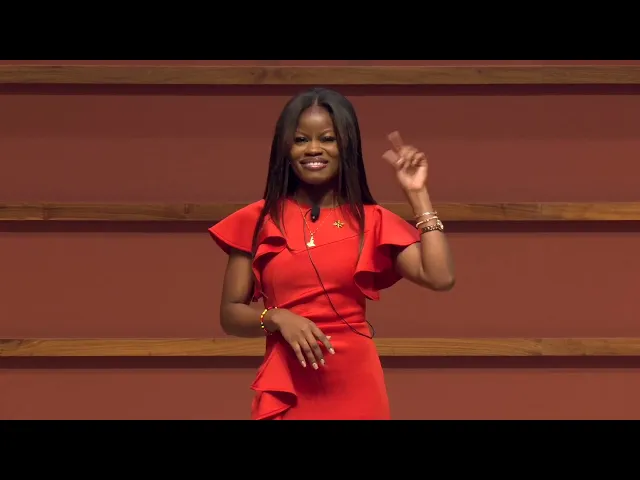
[Applause] Have you ever wondered how fast your reaction time is? Let's find out. On the count of three, clap once as quickly as you can.
Nope, not yet. On my count, one 2 3. That quick reaction, a perfect harmony between your brain and body, is something we often take for granted.
But however, there are millions of people with Alzheimer's and Parkinson's disease whose slowdown becomes a daily reality when they can't do such reactions. Simple things like walking smoothly, clapping your hands, or remembering these wonderful faces become increasingly difficult. Right now, doctors rely on very expensive brain scans and invasive tests that only provide a brief snapshot of what's happening in your brain and body.
It's like trying to understand an entire movie's plot from just one pause scene. Clearly, we need a better way. My research addresses this gap using two powerful tools, artificial intelligence, AI, and everyday physiological signals.
I measure physiological signals like brain activity using a portable EEG headset, your heart rate activity using your smartwatch, and your walking pattern using video recordings. Then I train AI to act like a skilled detective that constantly spots clues in changes in someone's daily movements, their speaking patterns, or even their typing speed. It learns what normal looks like for each person, so it can detect tiny shifts long before they become noticeable symptoms.
But I'm not stopping at looking at these signals individually. I'm also exploring how these signals interact with each other to provide a richer picture of the brain's communication network. Imagine your brain and body as musicians in an orchestra.
Usually, they're perfectly synchronized. In Alzheimer's or Parkinson's though, some instruments gradually fall out of sync or stop playing altogether. By tracking these disruptions, we can spot early signs of disease progression a lot sooner.
This early detection matters enormously because it means interventions like drugs and other treatments can start sooner to reduce the damages diseases can cause. Imagine being able to track your brain health as easily as you can see your daily steps or even knowing your heart rate activity right from the comfort of your home. Okay, now let's finish with one more synchronized count on my count.
Ready? One 2 3. Next time you clap, whether cheering at a game or celebrating a loved one celebration, remember these are the moments I'm working so hard to protect.
Thank you.