What company has had some troubles this year? What company has really just done a number to their own reputation and to the perception of their ability to put out quality content? What company, pray tell, needs a win and needs to not make stupid mistakes right now?
There's a lot of good guesses in the chat; I'll give you that — lots of good guesses. I would say Ubisoft. Okay, Ubisoft indeed.
Be soft! Right now, they need to get hard. But you know what they're doing?
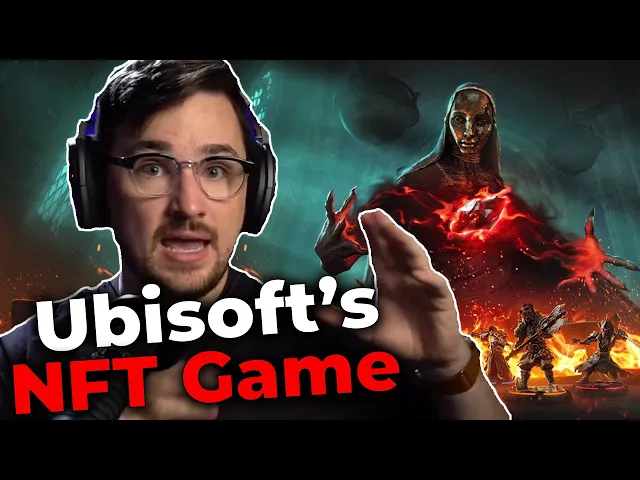
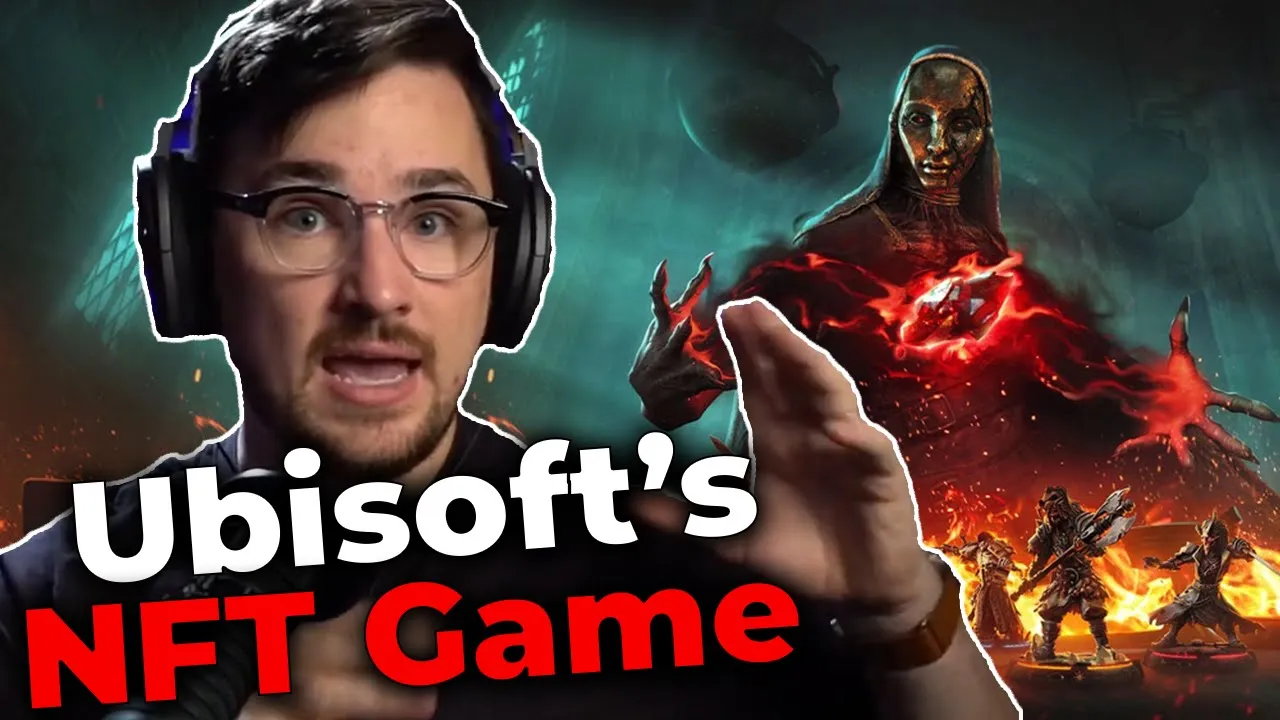
Ubisoft launches its first-ever blockchain game with NFTs costing up to $50! Ubisoft has released its first-ever blockchain game, the tactical NFT battler *Champions Tactics: Goria Chronicles* — because every game needs a title that sounds like you're gargling marbles when you say it. The company announced the game last June after years of dabbling in blockchain, but has only now quietly launched it.
This is true; they've done like no promotion for it. They've just quietly kind of shoved it out there, which frankly is probably the best way to do it. Oh, wait, no!
Did I misread? It's $50,000! My brain was in disbelief; I didn't even read the K.
I was like, "50 bucks? " It’s 50,000! Oh god, oh man!
Okay, wow, the game is on PC and free to start, though players can purchase figurines with which to battle using either in-game gold or cryptocurrency. Of course, these figurines are NFTs and can be bought on the game's marketplace from anywhere between $764,000. What does this trailer look like?
[Music] H. Okay, so I still cannot believe this. I cannot believe this — this is unreal!
Huh. Okay, well, so my brain is just totally broken. So they really need to be careful and tactical with how they do stuff right now, and they're choosing to quietly release an NFT project.
Now, perhaps you could say the reason they're doing this is because they already developed it; they already did all the work, and so they're just shoving it out the door instead of scrapping it because maybe some suckers will buy into it. But I will say, you know how on X (I think it was Twitter at the time) when NFTs were huge back in like 2021, there was this big shift where people went from like crypto coins and cryptocurrency? All of those people were obsessed about it; they were talking about "boob coin" and what was the one Boogie lost all of his money on?
I think Boogie lost all of his on like [__] coin or something insane like that. It's just breaking my brain! All of those people, though, they moved to NFTs for a little while.
That was going to be the next big thing, right? And then some more time went by and they all moved to AI stuff, and now they're all just like AI bros that are like, “Check out how ChatGPT can make you $50,000 a day. ” You know, they just move from thing to thing, but this is like next-level insanity because NFTs were out of date like three years ago!
People were already done with them three years ago, so to see them now trying to come back — it's crazy; it's wild! But you know what? It is free to play.
You know what we have to do? Was it Mil coin? Was it really Mil coin?
It was something stupid like that where he was talking to, I think it was Caleb Hammer. When he went on that show and Caleb's like, “What did you lose all your money on in crypto? Okay, so like Ethereum or Bitcoin?
” He's like, “No, Mil coin! ” Fatty coin is the one he put his name on that was part of like a $10,000 promotion; that was a whole thing. There was a period where like YouTubers were basically being reached out to promote crypto coins in order to like literally pump and dump it, so the people who made the coin would own like 80% of it.
They would give the YouTuber 10% of the total volume of the coin, and then they would sell the other 10%, and they would have the YouTuber promote it. It would drive the price up, and then the founder that owned 80% and the YouTuber would sell and dump their shares in it at the peak and save tons of money, or make tons of money. I tried to launch it; it already crashed.
This is going well. It’s trying to launch; it's trying to launch. Why do I do this to myself?
I don't know why I do this. AG Gravito: “Oh Luke, Mil coins aren't stupid. ” You're right, you're right; we should all stand together, hand in hand, Mil!
And dude, it's not working; it keeps crashing. Okay, I will show it from scratch. Let's do this again.
Play! Dude, this is the most accurate thing ever. Okay, it's spinning!
Okay, Easy Anti-Cheat — makes sense; you wouldn't want people cheating in a game with NFTs that cost $64,000. Waiting for game. .
. Okay, are you ready? You ready?
Splash screen talking about seizures, and then it's going to crash. Well, there you go! Oh wow!
Not even the game wants you to play it, man. Not even the game wants you to play it; that’s so funny! So anyway, all of this to say, they somehow have not learned that some things are better just dumped.
François Bodson, studio director at Ubisoft Paris, told IGN the game offers deep strategic gameplay, unique in-game assets, and several exciting innovations, comparing it to a physical trading card game. This is the thing, though: it’s like a physical trading card. .
. Games, you get something physical, and people collect them. Even then, like you don't see a lot of new breakout trading card games.
The biggest ones might be like Yu-Gi-Oh, Pokémon, or Magic: The Gathering and stuff like that that have been around forever. You don't see a lot of brand new trading card games that people are spending thousands and thousands and thousands of dollars on. Do any of you guys know of a recent trading card game that's blown up?
Like a physical-based trading card game? I can't think of one. Digimon?
Lorcana? I've never heard of One Piece. When was One Piece?
I think I've heard of the One Piece trading card game. When did those become a thing, though? Looks like 2022 is when the subreddit was made.
Oh wow, so maybe around there. But even then, I don't think that these are. .
. it seems like a lot of these NFT projects are designed because they want it to be on the scale of like Magic: The Gathering, where like Post Malone is paying a million dollars for a single card, you know? But like, you can't do that.
You can't just make something a thing. The whole premise behind NFTs was basically that big corporations were going to bankroll it. With NFTs, the whole premise was like if you have 10 different things—or let's just say five different things—and you say just arbitrarily that this is worth like 10K, it's only worth that if somebody's willing to pay for it, right?
I can say that this golf ball is worth a million dollars, but it isn't unless somebody's willing to pay for it—unless somebody's willing to pay that price. So the premise behind NFTs was basically that companies like Ubisoft, like EA, and whoever else would be participating would basically inject a ton of cash into the market at first to get the ball rolling. So they might have it so it could go onto like the open market, where it could land at maybe 5K, where you and I would be buying whatever this NFT is.
Or you could sell it to Ubisoft, and they would buy it back from you for like maybe 8K. So they are just losing this money, but it inflates this price because then there's an incentive to buy it for more than 5K, right? Because you want to get it closer to here to still capture the arbitrage between the two.
So this then gets bid all the way up to 8K or just under it, but it only works because somebody might be willing to spend like 7900 bucks on it and then sell it to UB for 8K. But UB lost all of that 8K while this buyer made a hundred bucks, and then this person up here that sold it made almost eight grand. So UB is just subsidizing the system until it's self-sustaining.
The problem is it doesn't get self-sustaining. Like, you would burn hundreds of millions of dollars on it trying to make it a thing, and it probably would never go anywhere. So NFTs just never made sense.
What I've said from the outset is that NFTs, in the application of video games, could have had a really cool application. There was a way to introduce NFTs as non-fungible tokens where they could be tied to individual game codes. So you have a game code that you buy on Steam for, I don't know, Red Dead Redemption, the PC port, and then because there is a very unique identifier for your copy of the game, you could then sell that digital copy of the game to a friend of yours or on an open market.
So you could have a secondary market for digital versions of games, which would drive prices down. That would be amazing! It would be amazing if we could do that.
Notice how they didn't do that, though, because then they'd be selling fewer digital copies. So they conveniently ignored that possible application and just talked about having skins that you buy and send the money for. It's really, really unfortunate because there was a cool application for NFTs in gaming, but it was something that would only help gamers and not really help the big corporations.
On the flip side, NFTs pretty much exclusively help the big corporations and do nothing for gamers other than offering them more expensive skins or in this case, like, you know, $64,000 NFTs—which is insane! And the game doesn't even launch, by the way. "Brilliant, brilliant.
I believe that collectibility will continue to be an important part of our industry and the games and experiences that we offer our players," he later said during an earnings call in February of 2022. That's specifically from EA boss Andrew Wilson, describing NFTs as an important part of the future of our industry. He said this in 2022.
He's telling investors what they want to hear, and I don't buy much of what they say in those earning calls because they're just trying to tell investors what they want to hear. What they said the team inside the Ubisoft Paris studio developing Champions Tactics: Goria Chronicles partnered with Ubisoft’s Strategic Innovation Lab and Oasis to ensure that our use of blockchain was done in service of delivering new and innovative gaming experiences for our players. Our shared goal is to explore new ways to play alongside bringing more value to players based on empowerment and ownership.
Champions Tactics offers deep strategic gameplay featuring unique in-game assets. Every. .
. We’ve read that for months. We have collaborated closely with our community through events and beta phases to build and find Champions Tactics.
We're excited to keep expanding. And enhancing the experience together, they did not comment on the game's adults-only rating, presumably for its blockchain basis and use of cryptocurrency. This is what's also interesting.
So you see, because it uses crypto, it has an adults-only rating. Do you remember one of the most surprising stories out of the last, like, year and a half? It had to do with AC Mirage, and people have just kind of forgotten about this.
There is a story that went up in September of '22, so I guess it was more like two years ago, but it came out of nowhere. They released a trailer for Mirage, and it had received an adults-only rating. This was on their official Xbox store page—intense violence, blood and gore, sexual themes, partial nudity, and real gambling.
Real gambling! That didn't make any sense. Now, what I'm about to explain to you is something that is my big brain conspiracy theory.
There’s not a lot of direct evidence; it's all kind of circumstantial. It would not find anybody guilty in a court of law, but I find it really interesting. So this story broke, and then we noticed some other weird stuff—Ubisoft.
This was, of course, in the middle of the NFT craze. Ubisoft had just launched a new thing called Ubisoft Quartz, with a website to explain what it was. The idea was they were going to sell digits, and these are basically NFTs where you buy a skin, and then it transfers from game to game.
So you buy a skin for Bakh, it should transfer into AC Valhalla. You buy a skin for an operator or something in Breakpoint, that should transfer elsewhere. But you notice on the website there's an empty space, a pretty clear empty space right here, where there's pretty obviously supposed to be another banner for a different game.
When this launched, this was empty, but it was right before the announcement of AC Mirage. What I think they meant to do—I think Mirage was supposed to go here, and I think AC Mirage was supposed to have NFTs and stuff put in it. I think it was supposed to have NFT skins; I think it was supposed to have maybe an in-game gambling system for NFTs where you buy in-game tokens or something that you then can trade and gamble and so on.
I think there was a whole lot of stuff in there, and when they sent it to the review board, they came back with an adults-only rating, and that was totally unacceptable. I think at that point, they pulled it out and stripped it out of the game. They’ve since updated it, saying that, you know, after this, they said it's got a rating pending instead of adults-only, meaning that it's possibly Xbox store listing is incorrect.
They reached out to Ubisoft for comment and will follow up when they hear back. If I recall correctly, they basically said that is not the game's rating; it's rating pending, and we will announce the rating at a future date. But when they also did the livestream, I'm pretty sure this also was listed as adults-only within the livestream trailer.
I don’t know if it was a Ubisoft event or a PlayStation showcase or what, but it seems as though they sent it for rating, got this back, and were like, "Oh, that won't work, let's strip out the gambling stuff. " They stripped out the gambling stuff for the final launch and then put it out there. But I think Mirage was originally featuring some of that stuff, and after the blowback around NFTs, and after the adults-only rating, they were like, "Okay, that won't work," and they stripped it all out.
But that's my little conspiracy theory. But with this game, this is rated adults-only because it features the NFT stuff and is effectively real gambling—or maybe not gambling, but it’s featuring real-life mega purchases, not even microtransactions. These are mega transactions.
Okay, the fact that somebody with an addiction problem could end up spending $64,000 on a single in-game miniature is insane for a game that’s probably going to be canceled within, like, six months. Let's just be perfectly honest. And how does that work?
They sell $200,000 worth of miniatures across their community. What happens when this game goes away? Do they have it set up to stay offline, available forever?
That’s not historically been a thing that Ubisoft's been great about. There are all sorts of ethical questions involved with it too, so there’s just a lot. So anyway, Ubisoft continues to shoot themselves in the foot.
I understand they’re chasing the money and they want to just get it out there, but this is why, like again, you look at one side of it and they're like, "Okay, we're going to delay Shadows, we're going to remove the stuff we consider to be anti-consumer, we're going to remove the Early Access, we're going to redo the season pass stuff, we're going to redo the collector's edition," and all that. And I'm like, "Okay, that's all great. Love that.
That’s a step in the right direction. " But then they launch something like this, and it’s like, "Do you see yourselves? Do you see what you’re doing?
" People are not stupid. People connect that you are doing this and you’re doing the Assassin's Creed thing at the same time. We don’t live in the 1970s anymore.
People have the internet; they can see what you're doing on the other side of the pond. They can see what you’re doing with other games. It’s just—it’s ridiculous, and it’s such an unnecessary mistake.
Money they were going to make from this is probably far less than the damage this does to the brand perception and the impact it has on all of their other stuff. I feel like that's just something that they do not consider at all. They're like, "No, we put the NFT thing out, but that won't affect how people consider Assassin's Creed or all the other stuff we're doing.
" It's like, "Yes, it does! If your brand is tarnished, it affects everything you're doing, whether you wanted it to or not. " But to be clear, most of the—that is, when I say most, I've only ever spoken to one person who works at Ubisoft whom I would consider to be part of this problem.
I've talked to a lot of Ubisoft employees through the years; 99% of them, when you get them alone, when their boss is not listening, they're like, "Bro, I know, it drives me crazy too, but it's way above my pay grade. " Everybody at Ubisoft knows this too; it's a few producers and executives that are really high up and are frankly out of touch. I think a lot of it too is that there's this perception that consumers—it's almost like spreadsheet decision-making, you know?
They look at a spreadsheet and say, "We have this many players. " Because, like, I don't know if you've ever had a boss that kind of works that way. I have Excel installed; I can kind of show you what I mean.
So, it's kind of like this, where you have a boss who's like, "Okay, if we have this many players, and then we have a conversion rate of, let's say—let's do percentages—let's just say we have a conversion rate of 12. 2%. And then from there, we have a further conversion rate of 3.
8%. We have an average spend of $12. 35.
So, if we break out these numbers and we say that this times that, okay, and then this times that, that, okay, and then we figure out what our total spend is going to be like—it's going to be like this—wow, that's a lot of money; that's really easy. " They ignore the fact that just between these two points, they've lost or 1. 25 million people to service 5800.
They ignore the fact that they've lost all of this—lost all of these people in this process of getting down to here—because all they're looking at is this final number, these final numbers. They're just focused on the spreadsheet and ignoring the fact that they pissed off all of these people and that they are much less likely to come back. Next time, this number is probably even lower.
They ignore what they're losing in the process, and I think that's really the problem at the end of the day for a lot of Ubisoft’s stuff—that they just miss the forest for the trees. They misunderstand the damage they're doing to everything they're doing, you know? It's really unfortunate.