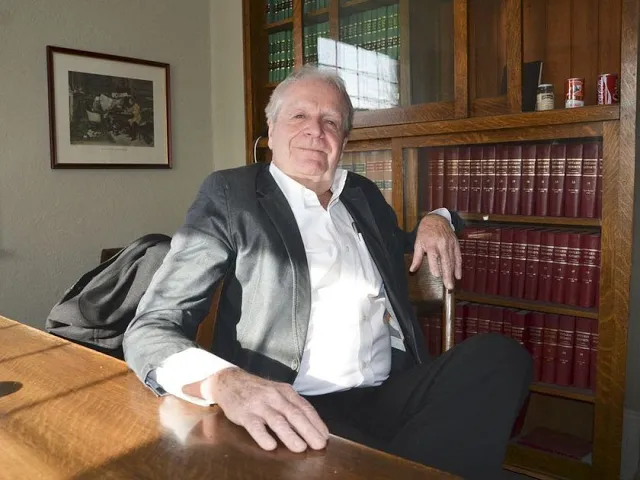
there we go all right uh well thank you brian for uh joining us uh today we have uh brian berry with us uh brian has been a practicing lawyer for uh 40 years uh brian i started his academic career at the royal military colleges studying english i moved to university of new brunswick uh got a master's degree in english before finishing his law degree at queen's university uh brian has uh represented uh various number of cases including 13 murder trials uh most notably that of uh may mccarran who brian is planning to write a book
about he has represented the chiefs of police and deputy chiefs of defenses staff at the somalia inquiry uh brian is also uh author of uh children books and also a rock star i'm wearing his t-shirt for his band right here uh brian has been kind enough to join us today and uh brian's experience as a criminal lawyer with uh police i think is very useful to us so i'm just gonna start with that brian i'm gonna kind of open up the discussion about what you think about as a person who has dealt with police maybe
from the other side of the table uh what do you think about kind of a role of ethics in policing in the canadian system today have you seen changes do you where do we begin to even think about police corruption um when we talk about corruption first of all not in the sense of bribery but in the sense of dishonest abuse of power and ethics i think goes right across the board so i can say this i can say that the more serious the crime and the better trained the police officer or police expert the
less likely there would be any issue of ethics or abuse of power for example in in the 13 or 14 homicide cases the invading except for one case it was a guns and gangs case and and the two officers were a little loosey-goosey as opposed to the others but the rest of the officers had an impeccable standard of ethics and a sense of duty and you never had to worry about them what was of more concern was when policing dropped to some municipal police forces uh and even some opp northern detachments or detachments that weren't
big city there seemed to be some real issues about um policing ethics and at some stage today i'll go through a number of uh lists of concerns that i have about keywords or power words about what went along with this policeman so i i i gave disclaimer there are so many police officers out there and i just happened to be in in a big fish in a small pond and i got to see some of the some of the problems more than might be revealed otherwise i don't know i can i can hear you very
well your picture is freezing a little bit but i can hear you really well okay okay so um i think so that's the the the short answer to that question uh it's one interesting thing that you keep uh bringing up is the notion of ethics and that's something that we have talked about uh sort of in our lectures that police corruption really is a question of ethics that for us to have non-corrupt police officers we need to teach them to be professional that a body cam for example or keep detailed notes those things can all
be managed by police uh what are some of the experiences that you have that uh because you see the the problem with police corruption is sort of if we say our police is corrupt and is unethical then police loses all this legitimacy so i was wondering what are some of the experiences that you have with police that when you see things have gone really well what do you think has been the catalyst for those things going well um those times that you have seen kind of the system break down do you see sort of some
common seminar similarities in their things that we could as sociologists maybe think about in class my students can think about it in class the type of things that have led to a breakdown because i agree with you most police officers are good decent people are trying to do their best even some of those who do something that's corrupt maybe they're doing it for what they think is good ethical reasons what are some of the things that you have seen that have led to sort of police going wrong or on the other hand police kind of
doing its job the way it needs to be done um the difficulty with ethics is everybody brings to the table their own sense of morality as they're sworn in to be a police officer and every police officer sworn uh to uphold the law and to maintain professional dues and those professional duties usually are sitting in a a police code where they can be punished if they they they break the code of good behavior and such things as uh keeping good notes maintaining notebooks on becoming those kinds of things that are set out in the police
regulations so everybody comes to the table i think with the same obligation but it's the treatment of that obligation that tells us whether it works or doesn't work in an effort and what i mean by that is this is that as i analyze cases over the years what i would see is our keywords or buzzwords would tell me where things would go wrong and i'll give you some of them and then maybe we can get into some case discussions one is it's really important to know that you can as a police officer charge anybody as
long as you can assert i have reasonable improbable ground to believe an offense has been committed and that can be on one person say so many times it is just one person say so i i assert that this happened and if the police officer believes that and reason probable grounds then they can squirt out the charge information and that the difficult thing is is that once many officers can committed to i i believe in reason probable grounds that this offense has been committed they spent the investigation justifying their decision as opposed to looking for innocent
behavior or witnesses that speak to innocents and so you know it in many ways investigations with blinders is a common concern that i've had over 40 years there were also police officers that have an internal set they were the bully guys that through high school and they still are the bully guys and so power to them was something that would feed feed their natural sense of uh of of i i can continue to be a bully guy now i've got a license for a power trap um there were so and then some officers would it
was kind of them against us and so you could morally justify not the full length to do everything to do in terms of honoring obligation mythical obligations so sometimes with personal agenda sometimes it was um officers uh don't become part of society they become part of their own clan if you wish finding it difficult to socialize in the society they have to police so there's lots of these kinds of things sometimes it's as simple as um i could do something that happened that would make make that a case change useful because i think this is
a it's an active ominous supposed but it's still uh i'll stop there and just see if you want to to deal with any of those issues before i maybe go into an example of one that was quite interesting where it was not an act of push but an act of omission yeah no that's uh i would very much be interested in that because those are the type of things we're interested in right it's this sort of notion that first of all who do you hire i really like that sort of example that you brought in
that there is sort of this sense that police some police officers at least are the bullies in high school who now have been legitimized to sort of carry a gun around and tell people what to do uh so who we hire is important and also sort of uh how is it that we think about police corruption because there is a very big difference between lying and just not telling the whole truth as a police officer or putting your blinders up exactly right so yeah i will very much be interested i know you have had some
experiences with dealing with police in that end i'll give you an example um and i can actually use case examples because they were litigated reported in papers and now public knowledge i'm not breaching any social client privilege so i'll give you one example that was an act of commission or omission as opposed to commission but it was really serious um i asked for a young man who was charged with impaired driving caused death and it was a a winter evening uh in on sound and he and his friend had been drinking and he had been
roughly counting his alcohol consumption and thought he was okay he turned out to be wrong and so as he was leaving own sound um anyone that knows on sound you you kind of pick up highway sixth and go up a hill and you head south toward chatsworth and as you get to the top of the hill on the right eventually as it flattens out there's a printing called healing printers and then on the left side the the land drops 10-15 feet into what farmer's field so this young fellow i'll call him s for now because
i makes them out i don't want to answer so he's driving and he just gets past steven printers and his best friends in the passenger seat but unseat belt and a car was approaching no dispute by anybody about that and so he touched his brakes just past healing printers unbeknownst to him in hindsight we all know he hit black ice um and so as he let off the brakes but the car had started to relax he was a truck and it was a rear-wheel drive truck which had less traction than a front wheel or an
all-wheel and so he spun left and the car flipped down the environment his friend was thrown out not seat belted and died he was injured they took him to the hospital and legitimately they got samples and they showed that he was a .04 over the legal limit that is not necessarily an issue of impairment that's a separate offense driving with a blood alcohol over point zero eight but the forensicologists and the when the orchestra breathalyzer was developed 0.05 was where we can the people become impaired there is a tunnel vision starts some experiments that have
dealt with the zero five reading uh we have delayed reaction the ability to see what's happening translate your foot to moving to the the break and then making the right decisions because it's a multi-tasking event so they had a forensic toxicologist that would say well he would have been impaired and his buddy died much to everybody chagrin so looking for a defense uh it was clear to me that he was impaired or he would likely be found guilty of impairment and then the question was causation causation and criminal law is not a but foretest it's
can there be one of the contributing causes beyond the de minimis beyond a minimal thing that can count and if it does that can be causation so from the police perspective investigation he was impaired lost control of his vehicle the the death resulted and one might say well wait a minute uh we we had i had the experts and retained and the the expert that i had reaching remark on and asked that if this young man had worn a seat belt um he likely would have survived so one could say the failure to wear a
seat belt was a causation issue crown responds well the owner of the car and operate of the car should make sure everybody's seat belt is so he's not relieved of his responsibility so it became a very tough case until an honest cop leaked information to me and the leak of information was when the cruisers were called to the scene to control the scene and stopped traffic one cruiser stopped the side of the road and put on his fleshers and had difficulty with uh coming to a stop the second cruiser at the exact location where the
therefore their uh level four reconstruction said the the causation took place the loss of control the second cruiser um seeing the flashing light hit the brakes to slow down and slid off off the highway out of control on the right hand side of the road uh with only modern damage there are no injury so i had a case where nothing was disclosed about we knew said black guys nothing was disclosed by the play about this might have been a the real reason for the the loss of control and we already have duplicated the same thing
that my client went through when that information was leaked i found that he's supposed to have school from all relatives the officer but i got to know then i could for trial and by the title problems finished the justice was the judge in this case was convinced that causation black ice even though the gun was impaired that the silver cop went to the incident in my life maturity was enough he was about ultimately conducted very uh information police honesty but underground okay so sorry uh we lost you for a minute uh you we were at
the point that we sort of were talking about uh sort of uh omission and uh sort of hard uh sort of this act of omission by the police force uh could have gone completely differently for uh your clients and that's sort of uh one question that i have for you there's this i mean this was a very interesting case right on one hand you have police that's uh sort of omitting something and other hand you have this police officer who are probably out of a sense of duty and a sense of professionalism felt the need
to share this information with you uh so you know the argument has usually produced corruption has been that police corruption is really a bad apple type of example you have one or two corrupt police officers uh there are those on the other side who say that well maybe it's not a bad apple situation maybe we have a system that leads itself into corruption uh do you have any opinion on that sort of is it we just like any other profession we get a few bad apples in it or do you see some systematic issues that
lead themselves to typical cases of corruption whatever we call it sort of lying and omission or corruption a sense of kind of being in cahoots with someone or anything along those lines yeah it's systematic and systematic in this sense the case i just gave you as an example you would think that the the j would be for information to come forward the officer who leaked the information to me if the first had been discovered with the discipline under the police act or could have been kicked out of policing because they did not go through the
proper channels and i had a case where uh people have gone trying to go through proper channels and have got themselves into difficulties i could i could give you a strange example of that there's a a little town north of where and keeper was charged with by one officer who invested and took the word of a young nine-year-old girl that when she went into this guy's store he sexually assaulted her uh in the sense of groping and inviting further behavior and that was the bare bones case that was disclosed by the crown through this one
officer's investigation there was a second officer who was a really good cop and a fair cop and he believed that this was and he did this he went and did a second investigation which was not disclosed to me at first where he um discovered about 19 witnesses pointed to this young girl actually being the daughter of a witch was practicing craft and had a coven and there were 19 that he was able to interview the clothes that she had hit up or i may have strong the charging behavior so when i saw the second investigation
uh because he he told me that he did but he couldn't close it i went to the crowd now i thought the information in the car certificate is the first officer [Music] investigation did not go through the procedure [Music] the investigation did a complete investigation because i knew of this existence i asked the ground for it didn't know of it got it and the crown intervened to withdraw the case after looking at the the real decent investigation downside was that the officer who took it upon himself to investigate and disclosed the truth uh with the
investigation of the first officer and he he was stuck two days of pay under the police act for uh wrongfully extreme with the first investigation that's hard to believe or understand but that's what happened so there's a systematic issue that i see those are examples of it uh there are others i've had a police officer um from another non-pp jurisdiction uh leaked to my client i know the police officer personally and actually foreign to my client that this force had a um a cutting corners thing for impaired driving where they would not go through the
proper procedure in the criminal code but would simply tell the doctor that he must give us must take a separate sample of blood for them not following the procedure in the criminal code which was exposed uh you can't tell your sources but uh i brought a charter application challenge uh the crown looked at it went found out that it was actually true and uh it happened four times before and withdrew the charge against my client so there's a systematic issue that's of significant concern uh and uh sort of one thing that you said that uh
uh really sort of grabbed my attention when you were talking about the first example was you said this police officer was a really good cop how do you define as a criminal attorney usually sort of you're on the other side of the table from the police how do you define a really good cough um the good cops were those did not have a vested interest in in the outcome that that simply did their job and after that is up to the the crown to call the case to do the evidence and judge to make the
decision so that for example all the homicide cops we've all been friends forever and and will stay that way uh the cops that leaked information from me they weren't the ones that were trying to fill quotas and get promoted they were the guys that were and women that were on the beat that cared about their community that related well to it that that in fact de-escalated stuff so they were never in a courtroom um you know it was it's i'm talking about the officers that were always in the courtroom and always trying to to show
everybody they were right to make the change and so as i said for the homicides so many of the other cops have stayed friends but uh there are some that there was no chance of friendship because they in my view were corrupt or unethical and sort of this brings us to something that has been sort of on the minds of anyone who deals with police and the criminal justice system is sort of this us versus them mentality that we are in a war and i've heard that from police officers i've interviewed before that they say
listen this is a war we're fighting it and if we have to lie if we have to cheat that's the only way we're gonna win uh i want you to comment maybe on both types sort of like the idea of police being sort of the adversarial position on one hand and on the other hand kind of this idea of kind of these dirty hairs that they say listen the criminals are breaking every law in the book if i have to be tied down by all these red tapes i can never do my job what do
you think about that i think there's an easy answer to that i and it depends upon here's my viewpoint when someone is charged it's a terrible event for them even if they're rounders that have been through it before because it completely interferes with their life until you get to a courtroom and depending upon when you get in a courtroom it can be 11 12 months at a lower court level it could be two years at a higher court level and the the good cops say i just do my job and even if the guy ends
up acquitted there has to be some usually some decent reason not always some people say technicality and i'm not sure but the good cops say i just i did my job ethically i can sleep at night and those people have been sensitized they have they've had to go through a huge situation uh where their lives have been in turmoil for uh 12 months 14 months or two years uh for those that can afford a lawyer they've had to they've had to pay tremendous amount of money and maybe over time change behavior so they look at
it in a holistic sense as opposed to just us or them so we got to get them before they get away with get out you know and and uh if you can look at it from that perspective the system works if you you look at it from i gotta go dirty you know there are too many easy people that you mean you know when you look at the innocence projects there's too many innocent people have gone down on that basis and uh it's pretty scary um one of the people who's talking to our students is
dr alan young from uh osgood law school that he sort of works with this uh innocent project so i'll definitely be asking him about uh these things as well uh but i know you have an interesting story about uh sort of uh you have also sort of uh defended a chief of police against uh sort of uh people underneath him uh so it's not like your job has always been adversarial with police i i that to be was a very interesting story though i would like to hear a little bit more about that yeah i
can actually use the name um this was the calling with police force and there was a character who i really came uh locally in the newspaper sometimes referred to as flashlight freddy because of the story i'm going to tell you um specter what he was responsible for was make sure that the police did everything right and if if fred had a distinctive character was this military he expected these guys not parking and coffee donating their job that would show up property that they would look good and not be fat and and have their hair cut
that they would do everything right by the book he was a by the book guy and as life went on for him in the police force there was a faction that seemed to be against him at least five officers that didn't like his methods and so what happened is five officers made complaints that were investigated by an outside sergeant reported by the opp from my jurisdiction and he ended up being charged with historical offenses of two assaults and one assault bodily harm one of the assaults related to him going into uh someone's home where the
officer gave evidence against him said he trespassed and where he forcibly removed somebody they said without authority and without cause another one was a simple assault of a minor nature compared to the major one which is an assault bodily harm where it is the arrested and impaired driver and in put housing in the cells admittedly hit him over the head causing a cut on the forehead to subdue him hence flashlight fleddy flashed like freddie in a cartoon in the collingwood newspaper so they all of a sudden uh he calls me he's charged and these are
historical events that took place years and years ago so fred told me about what happened he had a pretty good memory and i the first thing i said to him fred you take a witness and you go down to the basement of the collingwood police force and you grab the notebooks of the officers but do not have the witness verify you did not do anything just take pictures of the notebooks for those entries and the irony is that the sergeant who investigated should have done that before taking the statements of the police officers who had
never reviewed their notebook entries but this the sergeant-based his charges on the reasonable probable ground and allegations and memory of three officers who put their information assigned we'll say statements and that's typical of preparation for brief so i knew that if we got to the real notebooks we might find the truth and so fred did what i asked him to do with a witness and then put the notebooks back and we sat back and waited to see what happened and as the charges came forward what we what we found out is that the officers that
retrieved their notebooks and it was so by the time that i then asked the sergeant for the disclosure of the notebooks what we got was one one notebook where the event page had been ripped out a second officer was one notebook where the notebook entries have been overwritten where you can see changes paid after the fact from the photograph that we had another one was they had used whiteout to cover and rewritten new notes over the white out which i sent to forensic science to to lift off the white out so i could get the
white oak so we went to trial because the crime was not prepared to withdraw it and justice karen wilder was the justice um and it was a high court charge in barrie and by the time the officers were cross-examined she concluded they were completely unreliable and it lied that they had at least all of them had breached the police act regulations about keeping notebooks and some of them had probably committed criminal code offenses so fred was acquitted the irony was is that for the next eight months after i would just get defense call until after
defense console in the calling would vary area asking me for where they can get transcripts of the cross-examination police officers because they now by putting their reputations in such a mess were now not reputable officers for giving evidence in a courtroom and it turned out within a year that the calling of police force was disbanded and became an opp force it was in such a mess because of this turmoil but it just shows that these were acts of commission corruption abuse of power there we're going to teach freddie um a story and the best part
of it was they called the guy that got hit by the flashlight the impaired guy and the cross examination was hilarious when something like uh sir is it true that you were impaired he says yeah i was pretty pissed they never bothered to interview him but we had we called him as a witness and is it true that um you started to pretend to do karate chop moves you you took karate position and that you had some karate background yes and you were threatening to chop him yeah and he hit you once to subdue you
with a flashlight and and then told you stop the stupid behavior he doesn't want to hurt you yes he told me that you don't have any you don't have any qualms or problems with the inspector patterson do you know sir i think he did what he was supposed to do like come on what is this it was an appointed attempt to get uh fred patterson and it didn't work and those officers were dishonest uh in in the worst sense they were trying to get one of their owns and that's to me as a sort of
crocs of the whole thing right like the idea that yeah we can maybe even win a case against someone like an example that i usually bring up in class is i say let's say someone is a drug dealer and you know for a fact they have committed a few murders but you can't get them well on one hand you can go plant a gun on them and probably get them in one way or another but then the bigger question is have you brought the very administration of justice under question have you brought the legitimacy of
the criminal justice system under question that's one thing i want you to sort of comment on uh before i have like a sort of a question about military policing because i know you have some background and sort of uh thinking through that uh what what do you see as someone who has uh sort of devoted a lifetime to the study of law uh what do you see as some of the problems some of the larger societal problems that comes with police corruption fair enough uh you know it has obviously very serious implications for individuals but
what do you see as a sort of downfall of police corruption for us as canadians as a society well like you said it's it really if it brings the administration of justice into disrepute and you have enough of this information available then people lose faith in the police and policing and then we're where are we i mean it's it's our defined value system for better or for worse it's been in existence for a long period of time as an adversarial system and there are other systems available you can in europe it's an inquisitorial system that's
uh um that's far different from our adversary system but once a police officer cuts corners i think it becomes easier and easier for them to cut corners and then there's a lot of pressure on on on partners and others to have to cut corners to protect them and it it it has to catch up with you i i have to believe that over the years it's caught up with uh in at least our jurisdiction it's caught up with the officers that i can't i came to know were unreliable and i can think of an officer
it took three times for me to get him but i finally got him because he he'd just make up stuff as he went along he would he would lie and sometimes they'd get away with and sometimes they wouldn't but you know eventually on the last case where he got caught out uh they they moved him out because he was now an embarrassment to the to the force and he couldn't uh they could they know he couldn't rely on him to give evidence in court proceedings at least in our jurisdiction but not disciplined so it's it's
a it's a our job as defense counsel we're the we're the last person that can speak to innocence or guilt for a potentially innocent party before the power of the state rolls through somebody and and uh for the first five years of my career i was apologetic in saying i was defense counsel and i just what do you do i'm i'm a criminal defense lawyer and hang my head now i'm proud as hell that i could do that you know i showed it from the treetops it's a it's an important thing to do uh absolutely
and it's important to sort of uh to the administration of policing work as well right that one of the ways that police knows they're going to be held accountable is when they show up to court that when you talk to police officer you know that's what they tell you they say well you know i uh you could do these things but once you get to court it's gonna come out so it's best to do it properly that's sometimes what a lot of them say uh so you know the courts have a very important position to
play in that uh which brings me to sort of a question about i guess a little bit kind of unrelated to police corruption but i think it's related in that sense uh that well a really good criminal uh defense attorney is one that we all need uh in our uh sort of quarter when we are faced with the awesome power of this state uh at the same time as you mentioned it costs quite a bit of money to get a good attorney and to have all these sort of experts come in and deal with these
things what do you think as some of the reforms that we could make to the legal system in canada that would either sort of uh provide a better sort of free legal us care for people or on the other hand kind of uh you were talking about kind of the differences in police in between so more inquisitorial policing or more adversarial policing uh what are some of the things that you would recommend so that if you were put in charge today what would be some of the ways that you will look at a kind of
reducing this sort of adversarial position that police has with the committee that inevitably leads to corruption and uh some of the ways to make sure that people are actually well represented in the court system i'm sure you can tell many stories of people who if they had a better lawyer they would have got off or they have yes um first of all the legal aid plan has always paid badly so for example i i did i didn't i have to be careful i say this because i didn't care about money but by doing work well
i made more money than i ever thought i could make and it was kind of a shock to me in a way but it was never my focus and so i would any murder on legal that i'd take it in a heartbeat even though i would technically lose money because i had i had i was very busy and i had three legal assistants a a and then i had to of course pay for other um overhead so every case i had i would lose money but it didn't matter it was important to do and the
trouble with legal aid it doesn't pay enough so what you get is my honest estimation is you get many lawyers who are not well-versed in the law that crowns police can take advantage of that want to process process their clients and and make many guilty pleas that are not prepared because they don't know enough to do the work in it and i can tell you that that's true i can actually tell you i've had cases where um legal aid lawyers would be looking to access cases they're not as a duty council they're not supposed to
have a vested interest in the case but would access cases from their duty council were where they thought it would be a really serious case and pay the money were they where they were making stupid horrible mistakes i remember i had the director of legal aid in in one municipality call me and say look um i can't i'm not supposed to do this but um this poor person is is never going to get a bail hearing without um somebody knowing what they're doing if i can if i can convince them the accused to go to
you all wrong stuff will you take the case and of course we did and we got and it worked out fine but it's terrible they don't pay enough and the legal aid lawyers many of them are not well trained enough and and it's fodder for crown attorneys to to make deals to get people that really have defenses to things so pay our justice system is really believe in it then we should we should pay for it and and we don't we don't pay for it in the right way and do you think that comes into
play at all for police officers like do you find that for example a police officer is less likely to lay uh uh for lack of a better word a bogus charge against someone who they kind of look at and they go you look like someone who could afford a lawyer or you know they might be much more kind of loosey-goosey with their investigation if they look at someone and they go you don't look like you can't afford a good lawyer do you find police officers gonna think that way at all um no um for the
the poor guy um that that might be an easy mark it's just an easy it's an easy notch on your belt if you have a someone who is wealthy or notorious i guarantee you that the you will see in the local paper a headline um about this person has been this this important person has been charged with um because it makes it it shows policing works look we're going after the big guys but it's look what we got now you know so it's so i i don't know fair enough my experience doesn't my experience isn't
good for either fire the poor or the rich in that and then when they lose the case they don't want it they don't they don't want to have the publicity then sure sure and that those cases usually become the cases that sort of makes or breaks a police department too right sort of la police department got in quite a bit of sort of uh legal trouble after these things yeah the the best thing now is you know when you the best thing now is hey if you've got nothing to hide have you have your cameras
on all the time right uh all confessions need to be taped i mean right from the very beginning it's it's easy if there's nothing to hide don't hide it but you know about that how do you feel about that i think if i was a police officer i'd wanted to protect myself from false accusations and if i and why should i be worried if i'm doing my policing correctly um right and so what you've got in the state so you got people with body cameras and suddenly something's been shut off for four or five you
know and then cameras malfunction but that's the way to protect policing that's the way to protect the administration justice and that's so the last thing i wanted to talk to you about was about uh sort of military policing because one of the things that we talk about in class is sort of how canadian military has been charged basically to do policing around the world they're not doing military work mostly they're doing policing and a very good example of how military police and a legal system and a canadian sort of way of life can come into
play is the somalia inquiry right uh of the sort of airbase uh that was in somalia and there was a somalian kid who was sort of assaulted and died uh how do you feel about uh i know you you were uh sort of involved uh with that case a little bit uh how do you feel about kind of uh rule of canadian and i know this is kind of way outside of the type of things that we talked about today uh but the role of canadian military and hobby can go about controlling kind of uh
canadian military as all representatives uh sort of around the world uh do you see that we have a system because at least for the sort of civilian police we do have a rather robust system set up to of checks and balances uh what are some of the things that you see with military police well often the military policing is confined to base activity and um and i saw it more as you know enforcement of discipline in the military and and those kinds of things as opposed to if there was something serious uh that was even
on base or uh they might call for assistance uh they you know and if soft uh a lot of it was off base they would be involved but they as a as a essentially as a second uh second eye i i think i think it's far more difficult in because it's an international standard that we have to meet usually when we're dealing with the you know for example in somalia in korea and for everything else um it was really as a result of a royal commission that was held because the the young somali that had
reached the the lines had been tortured and then killed by um the the military and and there the irony about that was that um the somalis them it's different systems of justice somalis themselves at that time human life was nothing a justice system was nothing but thank god we had a justice system that really focused on one incident and that and it showed a whole host of problems um in terms of military in the field and and i i think it's a real issue and it's really more like an international issue but get it has
to be so bad and horrific that gold calls upon it to do something so i i think there's a lot that goes missing uh because the lines are so unknown or blurred when it comes to um military activity and and what happens it's so it's it's a whole new different different world it's a much harder world to police if i can use that term and as sort of my last question i kind of want to open uh sort of the floor to first of all anything that you feel like you want to share with us
that i haven't asked about but also i want you to comment on sort of in your experience what are some of the things we can do that would reduce this systematic corruptions uh those sort of maybe bring down that blue coat of silence that uh you seem to indicate is an important kind of barrier what are some of the things we can do as society what are some of the concrete steps we can take to kind of overcome these problems and i know they're extremely complicated but i thought i'll pick your brain on it well
number one is i i think the screening of the recruit is important and um i i'm thankful that we're getting better educate it used to be that when i 40 years ago your grade 12 you could jump right into it and now most of them have college degrees uh or diplomas and um and are going through a a very a very rigorous training the second thing that i think is important for both lawyers and police officers is that we should be placing courses on ethics at a very very high level in our selection procedure and
then in our training procedure and why it's still important if we can stress that then i think that's uh that's really critical the third thing is you have to realize that i i want change and most people want change instantly when you see something you that's not right you want to change it instantly and the reality is there are so many vested interests in the system continuing that you have to realize that the uh the police chiefs the deputy chiefs inspectors everybody's come up through a system that is degraded by 40 years of drag because
that's the way you had to do it you had to pay your dues you had to do the right thing you had to lay to get your quote of charges you have to be a tough guy so until we get rid of that at the top and on the way down in the senior positions it's going to continue and so until you until that that internal system recognizes the value in that change it's going to be slow and ponderous and uh and and difficult and then and uh but over time if we can get the
right the right mix of education and ethics we can get there but it's not going to happen overnight it's not going to happen in a decade you have to get all that old dead wood out honestly before you before you can clean house and start again and you've got to and those that care have to be rewarded for caring not punished for caring doing the right thing and that's sort of one thing that uh i was speaking to the chief of police in waterloo i was interviewing him for sort of similar for the same class
and that was one thing that he pointed at as well it's this question of culture of policing how do you change the culture and it's a very difficult question right because for example if you bring in women to change this or hyper masculine cultural policing we find that women who have come in more have adopted that hyper masculine culture rather than changing the culture so that's uh uh that's sort of right on the money and that's something that we talk quite a lot about uh and uh sort of on a side note i wanted to
uh i have about 60 70 of my students in my class want to go to law school i wanted to see as sort of someone who has done it for 40 and most of them want to become criminal attorneys uh i wanted to see as someone who has done it for 40 years if you have any sort of advice for them or if you just want to tell them not to do it and go do something completely different uh i think they would enjoy the advice okay um i wanted to be um a teacher and
a professor at one time and i loved english and i loved stories and i kind of backed my way into law and i i i'm the luckiest guy in the world the the first thing it does even if you don't do a thing with it nobody can jive you your feet are on the ground you know where the ground is and it gives you a sense of balance in the world that most people don't have um you don't have to be uneasy about where you fit in the world in terms of legality and morality and
hopefully the aim is to make both come together so heck of a heck of a thing to do and secondly i can't think if you like if you like people and you want to make a change i wanted to to run in like don quijote and joust and knock the windmills over and then i realized that is stupid it is not going to happen and what you have to do is make a difference one day and one case at a time and i i when i learned that and accepted that um i i embraced it
and i loved i can't think of anything i'd rather do i'm 73 now and if i still had the energy levels that i used to have i'd be right back at it again but you know at some stage it's time and and the energy levels are are less than they were but man oh man what a great you want to see what life is and and every day be morally and ethically challenged and and see stories of the world that you cannot believe and you get intimate access to someone's crisis and and are allowed to
help them through it if you can what a deal best deal in the world i have seen you on this stage before brian i know you have the energy to do it i think it's just that beautiful cottage of yours is keeping you away from the legal stuff that's right it's not the energy uh well uh thank you let me just stop this then i'll save prop goodbye to you properly