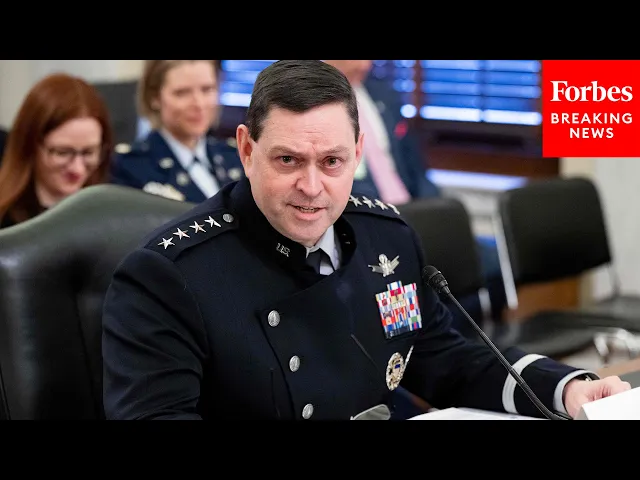
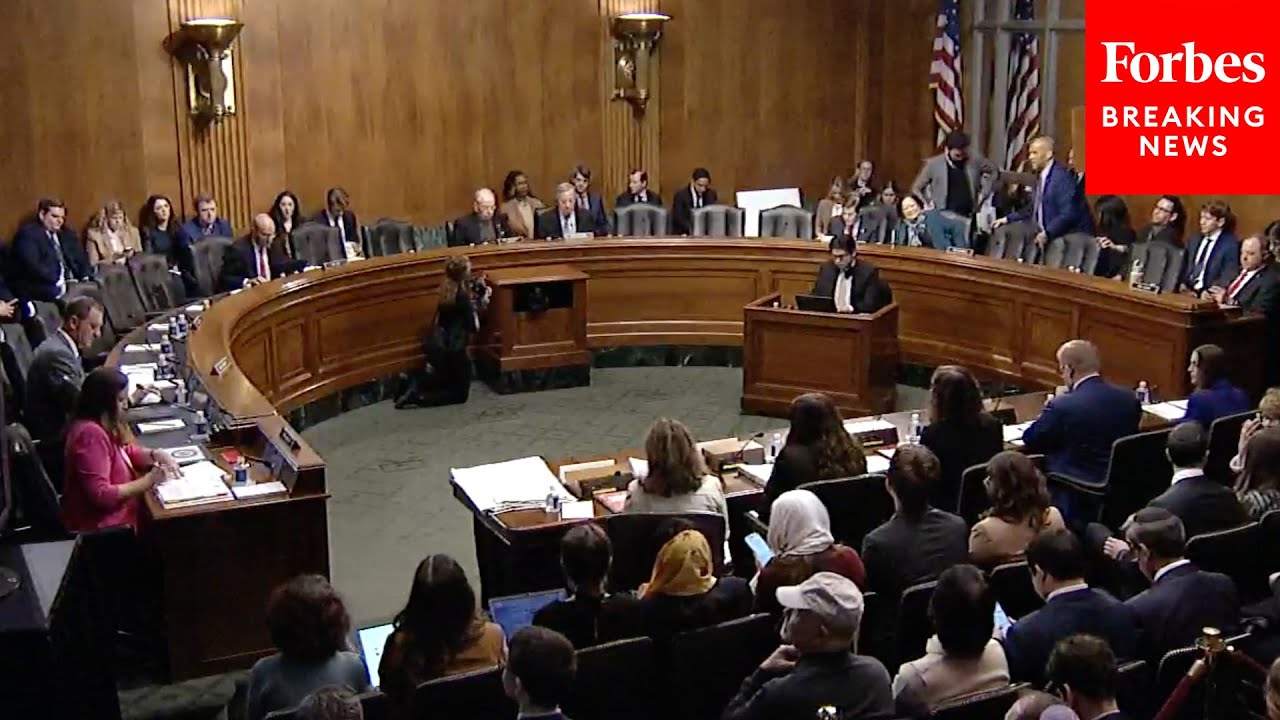
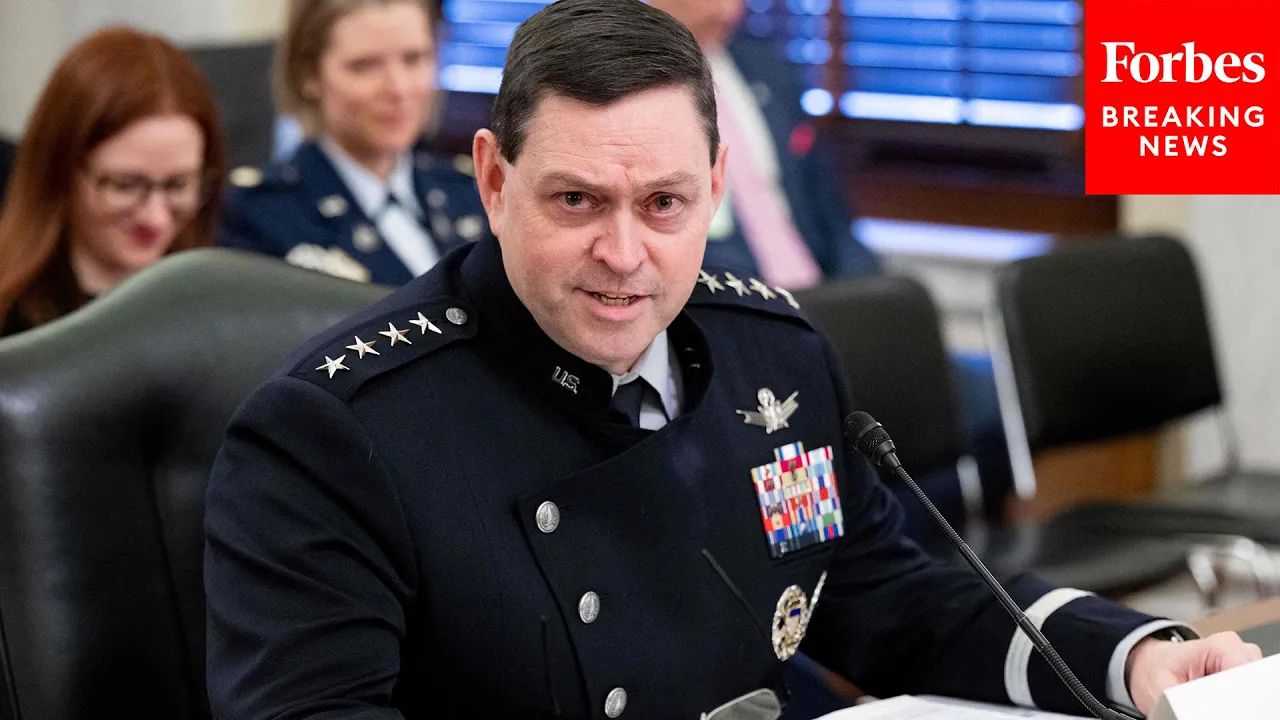
Call to order the meeting of the Strategic forces subcommittee of the senate committee on armed services our hearing today is on the subject of the space force I want to thank General Salzman for being with us today before this committee and the purpose of the hearing is to understand your vision and priorities for the space force as its second Chief of space operations while the budget for the Department of Defense And the space force has just been released we plan to have a space budget hearing which includes the space force later in May after we've
had time to understand and detail the president's budget request there are many uncomplicated topics such as missile warning and launch that will take time to understand and are not really ripe for this hearing today but we will take up in May instead the hearing will focus on you General Salzman this is your opportunity to explain to the subcommittee and to the public how you will train and equip the space force as the Department of Defense separate military service and be a presenter of forces to the combatant commanders in order to accomplish their missions as assigned
by the president my understanding is that today you will explain to us your three lines of effort for our space force Guardians as I understand it they are to first field a Combat-ready force second amplify the guardian spirit and third partner with the interagency allies and Industry to win I look forward to having you explained in detail what each of these lines of effort are and give us examples and simple ones that we can take with us and explain to our constituents and the public the importance of the work that you're doing let me conclude
that General heighten Said it best there is no such thing as a conflict in Space by itself any conflict will involve all domains although I believe it will start in space the land the sea the air and space all together at once I hope that today you will explain to us how your vision for the space force will meet General heighten's astute observation and enable our combatant commanders to accomplish the mission That the president has directed them to perform if called upon after your opening statement we will have questions at five minutes each Senator Fisher
thank you Mr chairman General Salzman thank you for being here today and for sharing your perspective with this subcommittee and thank you sir for your many many years of service you are only the second ever chief of space operations in a unique position to leave your mark on what is still essentially a Brand new military service an opportunity like this comes around less than once in a generation and I'm sure you feel the gravity and the expectation of this every single day I look forward to hearing more of your vision for this newest service Branch
specifically how you are forming it into a fighting force that is ready to prosecute War as part of the United States military I would also like to understand how you are shaping the space Acquisition Enterprise to that Vision enabling The Joint Force thank you Mr chairman General Salzman chairman King ranking member Fisher distinguished member of the subcommittee thank you for your continued support for the opportunity to discuss my vision and priorities for the United States space force I've been listen I've been in listening mode since becoming the second Chief of Space operations just four months
ago one of my first phone calls as the CSO was to the commander of U.S European command General cavoli my first trip as the CSO was to Colorado Springs to meet in person with the commander of U.S space command General Dickinson my first overseas trip was to Hawaii where I met with the commander of U.S indo-pacific command Admiral aquilino and during these last four months I have Also prioritized visiting with guardians performing vital missions around the world for the space force for The Joint Force and for the nation in December I met in person with
military space Chiefs from Australia Canada France Germany New Zealand and the United Kingdom in all these engagements my goal was to better understand how the space force should focus its near and Midterm efforts as we integrate our capabilities to address The threats and challenges the themes from these engagements should surprise no one each combatant Commander emphasized the vital role space plays in strategic competition and integrated deterrence the Guardians of the space force make this possible and are without a doubt the brightest and boldest America has to offer because of these advantages and our shared interest
in the domain U.S allies And international partners are eager for expanded collaboration with the space force especially in areas that strengthen the effectiveness of Coalition space operations and reinforce Norms of responsible behavior in short our mission forces people and Partnerships make the space force the most formidable space organization on the planet China and Russia know this and are accelerating their efforts to undermine U.S advantages in the domain to meet this challenge the space force will prioritize three lines of effort as Senator Kings already stated field and combat ready forces amplifying the guardian spirit and partnering
to win these lines of efforts are designed to deliver the forces personnel and Partnerships required for the space force to preserve U.S advantages in space and before I expand on the space force Lines of effort I'd like to update the subcommittee on the emerging threats space forces face as the handout I've provided indicates space is undeniably a contested and congested warfighting domain when describing space threads it's important to account for two kinds of threats first threats from space assets and second threats to space assets threads from space present a growing danger to the Joint Force
both China and Russia have robust space-based capabilities that allow them to find Target and attack U.S military forces on land at Sea and in the air equally alarming are the threats that endanger the satellites The Nation relies on for prosperity and security both China and Russia continue to develop field and deploy a range of weapons aimed at U.S space capabilities the spectrum of threats to U.S space capabilities include cyber warfare Activities electronic attack platforms directed energy lasers designed to blind or damage satellite sensors ground orbit missiles to destroy satellites and space to space orbital engagement
systems that can attack U.S satellites in space the contested space domain shapes the enduring purpose of the United States space force Congress established the space force to protect U.S interests in space this means protecting U.S space Capabilities and defending the Joint Force and the nation from space enabled attack my lines of effort are designed to achieve this Vision but by providing the forces personnel and Partnerships required for the space force to preserve U.S space superiority for the foreseeable future my first priority is to build resilient ready combat credible space forces to do this we are
accelerating the pivot Towards resilient satellite constellations ground stations networks and data links the space development agency's proliferated Warfighter space architecture provides a prime example of these efforts we are also emphasizing cyber security and preparing Guardians to detect and defeat cyber attacks against our networks systems ground stations data links and satellites We are developing an operational test and training infrastructure that will be the backbone of space force Readiness as Guardians prepare for a high intensity fight this infrastructure will allow Guardians to execute realistic training against simulated adversaries to validate their tactics space training and Readiness command
executed one such exercise last September with its inaugural black Skies Exercise focused on Space electromagnetic Warfare through these events we are continuously enhancing tactics and operational Concepts thereby creating a force ready for emerging threats my second priority is to amplify the guardian Spirit by embracing a modern talent management process that recruits the best talent develops and retains an elite Workforce and empowers Guardians to succeed One example is our constructive service credit program that allows experienced professionals from Key fields to directly commission into the space force at ranks appropriate to their civilian experience the first constructive
credit board served as a pilot program in 2022 and recruited seven cyber professionals to become Guardians one of which was onboarded as a lieutenant colonel the second board will incorporate Intelligence professionals and assess 20 additional personnel over the last year we have also deployed space-centric curriculum for basic military training The Reserve officer training Corps and officer training school in addition our partnership with the Johns Hopkins school of advanced international studies for professional military education begins this summer with Congressional support we will improve our modern talent management System by integrating the Air Force Reserve space element
into the space force as a single component this will allow Guardians to transition between full-time and part-time duty to pursue opportunities outside of full-time military service and subsequently return to full-time Duty without barriers to re-entry or detriment to their career we will ensure that such experience is utilized in strict and careful Compliance with Federal acquisition and ethics regulations and appropriate conflict of interest statutes the single service personnel management system will make retaining highly qualified Guardians Easier by facilitating flexible career paths and we look forward to working with this subcommittee on that important initiative my third
and final priority is to strengthen Partnerships the space force Relies on to accomplish its mission the space force will strive to eliminate barriers to collaboration including over classification so we can build enduring advantages with our partners to date Personnel from over 50 countries have participated in training education and exercise events hosted by the space force we're also leveraging allies and partners to expand our warfighting capability recent examples include deploying U.S payloads on Norwegian and Japanese satellites and establishing a partnership with Luxembourg for satellite communication services in total we have more than 200 foreign military sales
cases with over 60 countries for a broad spectrum of space capabilities commercial Partners will be key as we pursue emerging Technologies like Advanced power promotion propulsion Technologies artificial intelligence and machine learning and in-space servicing Assembly and Manufacturing Space Systems commands Commercial Services office is building these Partnerships to improve our ability to leverage more commercial off-the-shelf capabilities in conclusion thank you for the opportunity to share these priorities with you today the space force is the preeminent military space organization in the world our adversaries seek to surpass the United States and challenge Our advantage we cannot and
will not allow this to happen our Guardians will outwork out innovate and out-compete our adversaries to ensure that we succeed they will do everything they can to deter conflict and maintain stability in space I very much look forward to your questions thank you thank you very much General I I want to jump on the comment you made about recruiting and particularly bringing People in mid-career and having more flexibility about leaving and coming back that's a that's a creative idea flesh that out a bit for me it strikes me that that's really going to be necessary
in today's environment particularly in the technology field yes sir we currently don't have the ability because our reserves in the guard are in the Air Force they're in the Air Force Reserves and the Air National Guard so we don't have an Option to if you leave full-time active service from the space force we lose your expertise and so we're looking for anything that can allow us to retain those people who might have priorities that shift but are still willing to contribute to the service do we need a space National Guard I so I need the
capabilities that are currently in the Air National Guard I can assure you of that I think there's a couple of different ways to do it Um there's we we assessed three different options we could leave things as they are which I think is the worst solution because as general Brown points out as the chief of the Air Force he doesn't have organized train and equip responsibilities for space missions yet he has those space capabilities in the Air National Guard so it creates a little bit of a conundrum when I'm trying to figure out how to
train forces that are aligned under the Air National Guard so I think the status quo is the the most untenable position but there are other options and we're going through a series of cost estimates to figure out what a preferred option might be is one of them simply to sort of partner with the Air National Guard and have different units have different functions is that one of the possibilities rather than set up an entirely new a space National Guard structure well we Are currently partnered with the current status so we are currently partnered to make
sure we can rely on the capabilities that are in the Air National Guard it just creates a long-term sustainment problem with the difference in organized training equip responsibilities between the Air Force and the space force let me back up a minute again on recruiting how are you doing on recruiting both in terms of quality and quantity some of your some Of our other services are having real problems with recruiting in this economy how's space force doing yeah I'm I'm almost embarrassed in front of my peers to say it but we're doing very well uh mostly
associated with the fact that we have much smaller numbers to recruit and we have the ability to hand pick those that decide they want to join the space for us so right now we're doing okay the problem is going to be sustainment over time in the quality of the applicants That we can pull in and then retaining them for long enough to really benefit from their experience turning to you mentioned several times in your testimony commercial assets commercial space assets we know that Russia is trying to jam or otherwise damage the starlink network which is
assisting in Ukraine is that precedent making it more difficult to partner with commercial satellite users one of the one of the Strategies is proliferation and using uh using commercial satellites is that or what's been the reaction to what's been going on with Star Lincoln Ukraine so commercial augmentation is important to the space force for the reasons you mentioned resiliency diversification of our portfolio across a broader number of of participants if you will um the commercial augmentation space Reserve We're trying to establish what is kind of like a craft like if you know the civilian Reserve
air fleet that uses commercial capabilities we're trying to explore we're exploring options to use something along those lines I think the key with commercial industry is to make sure that the expectations are managed up front so we're going through a series of plans we're going through a series of of Industry days if you will to clarify what are the policy uh what are the Contractual what are the legal responsibilities and hurdles that we have to clear in order to establish this so the expectations are clear across all spectrums of conflict crisis Etc so this is
an evolving kind of uh capability it is but I will tell you that we had significant interest we hosted an industry day along these lines and there were 84 participants from commercial industry so it is there is interest in doing this now in my 45 seconds that's Left I'm going to ask you a question that I get asked at home what's the difference between space force and space command it's I get asked that at home too sometimes uh so I appreciate it I it's as simple as any of the combatant commands with the other services
if you were to think about U.S Central Command and the U.S Air Force or indo-pacific command in the U.S Navy uh for the U.S space command and U.S space force we simply have different responsibilities As the chief of the space force I have a responsibility to organize train equip and operate the forces that are then presented to U.S space command who has the authorities from the president the Secretary of Defense to direct those operations so you're organized training equip space command is is operate or fight they have the authority from the president to conduct those
missions and they would direct our forces that are That are presented to them to conduct the operations thank you thank you General Senator Fisher thank you Mr chairman uh General as we discussed last year the next gen opir satellite program it's one of the key components of our future missile warning architecture along with proliferated constellations of smaller satellites operating in the lower orbits during your nomination hearing you stated that having no gaps in coverage for missile Warning was a high priority the missile warning mission is the Cornerstone of our strategic deterrent you know if we
can't effectively respond it if we can't uh detect when our adversaries are launching nuclear weapons um we're in trouble and so it is very important uh that we continue to fund uh this next-gen opir given given really the importance of this no Fail Mission I'm concerned to see that the space forces fiscal year 2024 budget request appears to propose cutting the third Geo next-gen opir satellite does the space force intend to complete that architecture as planned and if not how you're going to mitigate it that's a huge loss yes ma'am thank you the the real
architecture that we need is the one that is is under that yes it is can you hear me So the the architecture that we really need is one that's survivable in a contested domain that's the proliferated Leo and multiple orbits to include Middle Earth orbit orbits as well um so that's what the space development agency and the swac analysis that we did is progressing towards and that's the investment we made in FY 24 to make that pivot because that's a pretty big technical shift we wanted to make sure that we for this no fail Mission
had Some Hedges to make sure that we didn't miss anything so next-gen opir we are committed to putting that on orbit and we felt like a two by two was sufficient to ensure one that the mission did not have any gaps it's a no-fail mission two that it was a hedge against any technical risk associated with the pivot to the the more survivable missile warning missile track architecture you're saying that um with this pivot to the two lower Orbits you have no plans then to look at the Geo now no we we have the plans
with next-gen opir for 2Go and 2heo that constellation we are still supporting in the fy24 budget has those four satellites in it that's the that's the long-term uh transition to the proliferated missile warning but Geo satellites are too much of a Target so having them in low earth and mid-earth orbit creates a targeting problem for an adversary which actually Lowers the threshold for Attack on orbit it's more resilient and it creates a level of deterrence because they can't attack the satellites it seems like on the major acquisition programs that are executed by space force have
been late they have cost overruns or both does the space force acquisition community I guess I would say to you how do you plan to address that and do you agree with my assessment well I've been doing them in this business a long time and so I've certainly seen the same things that you're you're noting there so I can't argue with the facts about cost overrun and schedules what I will say is I've been very impressed with the way Frank calvelli has reorganized how we're doing space acquisition with his employment as the under Secretary of
the air for assistant Secretary of the Air Force for space acquisition integration he's focused on Several different things buying small satellites having shorter term contracts going with well-developed technology so that we don't have as many non-recurring engineering costs and it's when you say I'm sorry to interrupt you but when you say well-developed technology is that you want to make sure things are proven would you say your risk adverse then I I would say we want to make sure before we commit to putting something on Orbit if there is well-developed technology we want to leverage it
to the max extent otherwise you have to build everything from scratch and it delays things and there's there's requirement shifts and it it can get in that spiral where you spend more money and delay the timelines so where there is well-developed Technologies we should take advantage of those and I think in Satellite production that's exactly where Mr calvelli's head is on that and So while again I can't speak to all the programs that have have existed since we've been putting satellites on orbit I can certainly tell you that the acquisition Community has shifted to a
different mindset for how it acquires systems and I think the space development agencies acquisition strategy for the missile warning missile tracking and space data transport layer is an example where it's going in about four years from order to orbit which is Substantially better than we've seen in other programs thank you call on our only subcommittee member who's been in space Senator Kelly thank you Mr chairman um I had a couple detailed questions and then the chairman asked both both of them so I'm gonna go a little bit different uh different approach here so um To
the ranking members question do you talked about that uh there's a little bit of a deterrent by putting something at a lower orbit I think you said why is why is that why is is it more likely that an adversary goes goes after something at Geo than it is if they are at a lower orbit if this sounds at all like I'm lecturing An astronaut I promise I'm not so the it's more than just the orbital regime in low earth orbit to provide the coverage you have to have a vastly greater number of satellites dozens
instead of from Geo you can have a single orbit that would look at a third of the Earth so by going to the low earth orbit we're buying smaller satellites and more okay it's the numbers more satellites creates a targeting problem which one do you want To shoot down that you think is going to be the the problem for the mission yeah it's just more Target it's proliferated Leo so more they they got to shoot more rounds a lot more take out the capability so much more that I think the escalatory threshold is raised to
the point where they probably wouldn't wouldn't do it okay okay that's helpful uh General of the nro Air Force Space Force satellites that we put into orbit Um what percentage of those is space force responsible for the you know the Contracting the the managing management of the you know the operations to to get these to their targeted uh orbit compared to the nro Yeah well yeah like what percentage do you have sir I I let me get back to you with this but the nro the nro has a number of constellations for its Mission set
we have I'm trying to think if there's any examples we have The vast majority of Department of Defense satellites that have now migrated those missions not all of the Department of Defense defense highlights I always hesitate to say all uh but um but I'm struggling to think of an example and and how many launch providers do you have that you contract with currently to get those satellites into orbit two and those are Ula and SpaceX and actually for demos And other things we've contracted uh other uh providers as well I can get you the full
number and and uh to date uh while you've been involved with this are we seeing you know typical kind of success rates and safety records from both companies absolutely okay and no identifiable you know problems um with that you that you feel puts uh our satellites at risk I mean it's been a while since we've had you know an accident I mean I saw one a long time ago an nro satellite actually that happened to be down at the Kennedy Space Center watch this thing blow up right after liftoff I was on console that happened
in California I just walked out of crew quarters saw this wasn't even expecting it saw this rocket launch and then explode about 15 seconds later something you never want to see yeah so it's great that we've we've Gotten better at this and uh you know SpaceX has a I'd say a pretty remarkable you know record of success Ula as well we just need to keep that going I think it's important to be um you know just constantly trying to look ahead and seeing what that next you know failure mode is and make sure you have
the workforce that is really tracking this stuff closely because you know some Of these assets are in the billions billions of dollars as you know General Sir so um I've got another question um well actually I do have about 50 seconds so let me so space force has been around now for a couple years um I think maybe three years is that right a little over three years a little over Three years and some of the Guardians incurred about a two-year commitment when they transferred from the Air Force or from an uh another service they're
coming up on the end of that time are you seeing a good you know reenlistment rate for the enlisted ranks and officers that are going to stay on yeah I think the day the the final assessment is still out a little bit because they want to see I want to see it all play out the full Cycle play out before I really commit to this but I'm encouraged so far and I think we're providing the kind of challenges that the workforce is looking for and so I'm I'm still hopeful that we're going to be at
good retention numbers but we probably need to let this full summer cycle play out before we judge okay thank you thank you Mr chairman senator tuberville thank you Mr chairman Um General you've been in you've been in your position now what less than a year correct four months Senator four months give us your number one priority for space force I need to make sure that the Guardians are ready to meet the threat I've said this from day one the systems that we're buying are Exquisite I want to make sure that the Guardians have the training
and the ability to practice their trade crafts reps and sets I call It we've got to get those into the Guardians so that they validate their tactics and they are trained to meet any adversarial challenge that's thrown at them so it's more training in people than it is anything there's a lot of challenges that's what I'm focused on right now because I think it was the biggest Gap from converting I like to use the example that we're trying to turn a Merchant Marine into the U.S Navy yeah Right we have to convert this uh space
force that we had for a benign environment into one that's contesting the domain is this a slow process sometimes it's slower than I'd like but I like our progress so I need to buy them the simulators the virtual ranges that takes a little bit of time but we're already building a new first generation model so that we've we've established the time to do the training we've established the new training Requirements and now we just have to get after it so spacecom has a rdtne budget of 19.2 billion and a proposed procurement budget of only 4.7
billion what's driving that difference and uh you see that change in the next few years sir this is just a this is a way the space force has to do its business because so much of our effort is spent in developing the satellites and we Don't have a lot of we don't have to put a lot of satellites on orbit traditionally so there's less procurement than there is rdtne and so I think it's just the nature of the space business that we are front loaded a little bit in in terms of procurement to rdtne balance
relative to what you might see in some of the other services that buy so many versions of that thing that they do rdtne for Fighters or tanks or the like and so even when we go to a Proliferated constellation our numbers will be so much smaller than than what the other services have to buy yeah in your mind what cyber security standards minimum do you think new commercial satellites should have I'm worried about the ground infrastructure and how and how the links are protected to make sure that we have access to those capabilities that are
put on orbit so in commercial terms I'm a little less worried about the on-orbit Cyber protections as as much as I am the ground Network and I think those cyber protection centers are well understood and we can hold the commercial providers accountable for putting cyber uh defense capabilities onto the ground Networks I've had several uh private companies come by my office saying they have a great idea how to take space debris down have you talked quite a few of those I have what do you think I think well we privatize it in the in at
the end of the day I think there's a lot of different ways to go after that sort of problem I haven't seen uh demonstrated capabilities and I'm always thinking in terms of you know it's one thing to have a pitch that says we can do something that's another to have a demonstrated capability I'll be honest we do a lot of of serious effort making sure we understand what's on orbit and preventing debris from hitting each other or or things that we care about right now I would say this isn't my number one challenge but if
somebody feels like they can demonstrate a capability cleaning up debris is an important concept as well because it's going to get worse and worse right it's not going to it's not going to clean itself up yeah A lot of people believe the conflict with China could very well start in space what might that look like one day the the Chinese and the Russians have have gone to school on us over the last 20 years and they know that we've built a Joint Force structure that relies heavily on the assumption that space capabilities will be there
whether it's our Precision navigation and timing whether it's satellite Communications uh the missile warning that we we rely on And the intelligence surveillance and reconnaissance persistence that we have with space capabilities they know we rely on that and so if they can blind us if they can interfere with those capabilities or God forbid destroy them completely they know that that will diminish our advantages and and put the Joint Force at risk so I can see interfering with I can see blinding I can see some of those gray area kinds of attacks on our capabilities to
try to Put us behind the eight ball that balloon wasn't in your purview was it no sir sixty thousand feet when they call it near space but I like to call it far air Senator Rosen uh well thank you chairman King and ranking member Fisher uh good to be here of today and holding this hearing and general Salzman uh thank you so much for everything you're doing and I know Everyone's been talking about Workforce is key we need a pipeline of qualified individuals going forward you're just young three years old trying to get this Workforce
and especially like you said research and development critical um to protect our country and our families from the threat we feel from space so stem education I talk about an awful lot but I really believe that investing in stem educations is just essential to matching our adversaries Increasing capabilities as you have alluded to and also to addressing all of our Tech work for shortages so General Saltzman during your confirmation Hearing in September you highlighted that space force has established a university partnership program partnering with universities across the country to provide stem students with research opportunities
and increase Guardian retention and so how is space force growth and retention benefited From this program I'm really excited to hear about that and what can Congress what can we do better to support this program specifically and maybe some National Security folk focused stem education initiatives at American universities uh generally well thank you for that because any opportunity I get to talk about how great our Guardians are I'll take full advantage of it um you would be really impressed with The quality of the people that are joining the space force the average age of our
enlists are enlisted uh members is 22. that's a relatively High number Rel you know considering the other services we have an educated Workforce very educated we we have the luxury of hand picking the best and brightest of a large applicant applicant pool that wants to join the space force and so we're really benefiting one from the fact that we are kind of small and we Can take the cream of the crop if you will we're looking for diversity we're looking for high quality stem education and and going to the areas that that maybe you don't
have a chance to to get to in some of the other services a remarkable set of opportunities that we've taken full advantage of every time I go out in the field I'm just impressed with the quality and capabilities of of the Guardians that I see doing the job so we should help expand these programs Uh to make it a little make your job a little better well as long as you expand the number of people that help me select you know so I think there were 42 000 uh hits of interest to join the space
force and we have about a thousand slots right so culling that down to who's eligible who can who can meet the requirements and you know there's a lot of effort there too so I'm real happy with the way the recruiting team has done I'm real happy with the standards That we've set I'm really happy with the quality of Guardians we're getting in that's great because um as Senator tupperville talked about uh cyber attacks in space it's a more fighting domain and and uh cyber is really I probably more effective there or as effective there as
it would be anywhere else and uh last week we discussed with General jenkinson uh during space command's posture hearing that both Russia and China are developing rapidly investing in developing and Fielding these technologies that will provide timing and uh that will threaten us and so we need to be sure that we're stopping that so these sophisticated cyber attacks are going to include the threat of stealing data jamming satellite signals hacking satellites disrupting internet services I know the proliferation concept is really good because there's just so many it makes it not worth their while so That
resilience-based architecture particularly in low earth orbit as you've alluded to really important and so what other kinds of things besides what you mentioned to say Senator Kelly and Senator tuberville how are you keeping our most advanced space assets safe from Cyber attack by Russia China and others and increasing their resiliency I like to I like to talk about two particular areas that we're doing first is I want to avoid Operational surprise that's that's a tenant in my maybe theory of success if you will for the space Force's primary missions and by avoiding operational surprise what
I mean is do we have all the sensors in all the right places to see what's going on and that's cyber and space do we do we recognize hostile activities aggressive activities irresponsible activities the minute they occur can we attribute them to the Bad actors that's The kind of avoidance of operational surprise that I'm talking about and then secondly we have to establish Norms of responsible behavior what are the Norms of behavior that are acceptable and and developing a coalition of like-minded space Nations that supports those Norms of behavior is a power full motivator to
do the right things and call out irresponsible behavior all of that I think protects our capabilities as well that's great I know my time's up but my Next question was on International Partnerships and how this potentiates that we'll take it off the record this hunt forward operations to avoid operational surprise with our allies and partners around the globe we will submit that for the record but you were leading me right there so thank you very much I yield back General there's one member of this subcommittee who probably had more than more to do with the
Founding of the space force early and vocal supporter and that's Senator Kramer Senator Kramer thank you Mr chairman ranking member um and general good to see you again um I don't think you were lecturing uh Senator Kelly at all he asked you the easiest question he could and you answered it brilliantly and I think the issue of redundancy as a tool it sort of answers Senator rosen's question in terms of how you secure them as well as How well they work as as a as a kill web if you will versus a kill chain so
um I didn't think you were I thought it was it was brilliant I also think you're too humble you you brag about the guardians but let's face it you're the you're you seem to be the employer of choice in the service you you have that luxury and it's because I think of the mission I think because it's a it's an important mission that particularly younger people realize and and they're Attracted to it and it gets to stretch them and so my hope Jackie is that the Air Force the air the space force is so cool
it just automatically creates more stem students because they all want to they all want to be part of the next big thing um I want to get into some you know Senator Fisher asked you about um the Gap issue with with regard to eyes in the sky and whatnot and we did see a little bit of a gap in in defense when We learned that our Radars couldn't see everything they could only see what they were tuned to see and so in terms of like Parks radar as an example and we see some money coming
for for that uh I would presume that means it'll be upgraded it'll be modernized as you know it's a high priority for for me since we have one that's that you're the landlord of uh up in North Dakota maybe maybe speak a little bit to to the role of the parks radar and modernization and and How that will help you and and the other The Joint Force in terms of particularly the early warning well it's a two-part answer because you know I don't want to be too distracted by the the balloon right um issue because
that's not where those Radars are looking um it's uh you could you could easily build Radars they would look in that area but that's not our mission the mission that's being done in North Dakota and the other ground-based Radars is twofold it's missile warning and it's space surveillance uh primarily and and those Radars are really good at those those jobs uh so the real the real challenge is how do I go to a rapid assessment and decision quality information of the data that those Radars are pulling in and so that's that's my responsibility is to
figure out how to take all that mass amount of data in and quickly turn it into uh Decision making uh information so we've got some work to do there but it's it's more associated with the latency of the data than it you know I can tell you where something was but I can't tell you where it is precisely at that moment and we're getting better and better at that um with regard to some of the things the issues we've already talked about the Partnerships that you started out talking about Senator Rosen asked about academic Partnerships
alliances Obviously commercial Partnerships one of the things when we stood up the space force and we had this discussion many times and and your predecessor certainly grabbed on to it that is making sure it's lean agile fast where how many times we hear General Ramsay lean agile fast do you feel like you're still lean agile and fast um is does the budget help you be more lean agile and fast and I don't mean cheap I mean Agilent fast those again Those relationships are so important how how valuable is that and difficult is that balance to
make sure you maintain those characteristics well there's no question we're still lean and there's no question we're going as fast as we can I you know that's a tough standard for me to say we're fast I'm always looking to go faster I'm always looking to be more agile and so I'm going to be our probably our toughest critic uh going forward trying to ensure that we stay as Fast as possible being small does offer some advantages we can move rapidly through a smaller bureaucracy than than maybe some of the other organizations can but it also
comes with you know that means there's fewer eyes on ideas that means there's fewer opportunities to catch mistakes that means there's fewer opportunities and so we've got to have good solid processes we have to have good Innovative technology that supports us And so there's no question we're still lean and now we're trying to become optimized based on that size to make sure that we're still producing high quality capabilities for a high quality Workforce that's a great point because the bureaucracy can gobble you up and slow you down as well so we like oversight we're all
about that but we want you to be as agile as you need to be to to keep up with that well at the speed of China as I like to say which is Really important one last thing just I just want to make sure that you're you're getting the type of um the right policies that that don't restrict your offensive abilities we've heard a lot about that you you've spoken to it at some points again whether it's the budget or the administration or you know a chain of command do you feel like you you have
the right policies in place to both protect and and attack if necessary I can assure you there are no policies That prevent us from exploring a full spectrum of operations uh it's just about doing the work uh establishing the the what I would call uh understanding of what the capabilities can and can do and then we test and we we learn from our experiences thank you well done thank you thank you Senator Kramer you're lean agile fast reminds me of my high school football coach who said he wanted us to be mobile agile and hostile
yeah I'm not going to go into our record but our team motto was we're small but we're slow that was our problem senator gillibrand thank you Mr chairman um your budget request this year includes a goal of increasing the number of space force launches as you look to maintain a modernized launch ranges and facilities in support of our space launch needs can you speak to how the ability to leverage commercial funding Sources to grow space Transportation infrastructure and service capacity would impact the space forces space launch efforts yes ma'am thank you uh as we've talked
before the we've grown our capacity on our national launch ranges National space launch ranges uh from what I remember to be 10 12 launches we're going to hit getting close to 100 launches a year now uh and and most of that is commercial launches and so the Infrastructure that we're providing is being used uh and it's it's it needs to be refurbished on a on a more regular basis than it did what I'd call the old days and so the I think the commercial industry understands this and they're trying to figure out the best ways
to to help support and now we just look have to look for the contractual and legal mechanisms to make sure that that we can maintain that infrastructure our investments in the reins of the future Start us down that path but we've still got a lot of work to do over the fight up I think to make sure we maintain the kind of infrastructure we need to support the commercial industry um as you've said your mission is very technical ensuring Guardians are properly trained and able to execute their missions requires access to Advanced Ranges do you
currently have the training resources you need to provide fully trained Guardians to Combat and commanders and are any additional resources required to ensure we have a space force fully capable of operating in the space domain I the FY 24 budget submission includes about 340 million dollars uh dedicated to operational tests and training infrastructure I think that's sufficient for this year because we've got a lot of study to do to make sure we're building the right kind of ranges the right kind of simulators and we're learning as we Go a little bit so I'm really comfortable
with the level of investment we're at this year for fy24 last week you spoke about the concept of competitive endurance from reporting it appears to Center on Space domain awareness resilience to deter attack and responsible counter space activities can you speak to how the space Force's budget proposal will help to achieve competitive endurance through each of these three core tenants For avoiding operational surprise that's the space domain awareness tenant and we are investing heavily in new sensors or investing in in capabilities with our allies and partners to also increase the data set associated with space
domain awareness and perhaps most importantly we're investing in space command and control capabilities which is kind of military talk for how do you take that data in and rapidly turn it into operational decisions and so I think we Have good software Investments to make sure that we're doing the decision support tools that go with that space domain awareness and go ahead go ahead and finish well the resiliency piece is also important and and this this budget definitely invests in shifting to a more resilient space architecture we've started that pivot now in earnest so looking on
your documents you have this contested space document about what China is doing The PRC has developed counter space and anti-satellite weapons including demonstrations of anti-satellite missiles which you say are launching orbit to ground and the ability to move a defunct satellite can you speak to our ability to defend against these counter space assets and exercise-based superiority the transition to a proliferated Leo missile warning missile tracking architecture includes the capacity to Find fix and track Hypersonic capabilities so that's why that's such an important transition that we're making with regards to grappling satellites and pulling them out
of orbit much tougher to deal with when you have less than maneuverable older Legacy satellites so again shifting to a proliferated Leo constellation where you don't have the what general heightened called the big juicy Target sitting there at Geo makes that a much tougher Proposition for them to execute against that makes sense what lessons are you learning from the war in Ukraine about the role of the space domain in large-scale military operations well the most important observation is that space is critical to Modern Warfare we've seen the Russians attack satellite Communications we've seen cyber attacks
trying to dismantle we've seen GPS jamming they recognize that space is a force multiplier and they're willing to Attack it the fact that we have to defend cyber we have to defend against cyber attacks in the ground networks reminds us that ground is also a part of space and that those networks are critical assets but I think we're also seeing the power of commercial augmentation that there is a viable path for commercial augmentation to provide capabilities and then I've been kind of harping on it through the testimony here but proliferated Leo that's what we're Seeing
used in to support Ukraine and it's turning out to be a much tougher Target for the Russians to take apart agreed thank you Mr chairman thank you madam ranking member thank you Mr chairman General thank you for your service there have been efforts General uh driven by political decisions regarding the shared use of the 3.1 to 3.45 gigahertz or M -band portions of the spectrum can you confirm that you have Systems critical to our national security that reside on this portion of the spectrum yes Senator we have a space surveillance radar that's that's currently in
development that does uh occupy that portion of the spectrum would it be not just radar but perhaps Communications that are in that portion as well as it turns out the the I think the key emergency kinds of communications live just outside of that band so as long as It as long as we manage very narrowly that that strip we would we would avoid those uh particularly okay so it's primarily radar it's primarily radar further further space force okay so the communications portion is not not the part well I I wouldn't want to talk to the
other services capabilities so from a space force perspective okay thank you can you provide your professional military advice on how detrimental it would be to Your mission and the security of our nation if you lost the use of this portion of the spectrum I think the most important thing I can say is I'm not exactly sure because we haven't done the technical analysis of exactly what vacating or sharing any of that Spectrum would look like in terms of cost and Technical performance but we do have a study ongoing and so we would hope that any
legislative decisions or decisions along these lines would wait for that Study to come out later this fall so that we could make the decision with data informed analysis have you been given the opportunity to provide your professional military advice in the dod's use of this portion of the spectrum yes thank you um I presume you've expressed your concern with regard to the sale prior to the September study being completed I have described my concern as not knowing exactly what the impacts will be until I Receive that study thank you um I'd also like to go
on record saying that I'm I'm concerned about the dod's approach to providing space-based ground-moving Target indication capabilities the gbmti to war Fighters following the divestment of the J-Stars platform it's my understanding that this capability is being moved under the funding authorities of the intelligence community we do not have really to get into the Fine details here but can you share with me how you are assuming that the J rocker validated requirements are captured in the Acquisitions process of a platform owned by the IC community because of the way the funding is has been moved we
are focusing on two areas where we think we can provide some detailed level of collaboration the first is in Milestone decision Authority uh which still there are some decisions which reside at the OSD level and could Be delegated to secretary call Valley we're looking into what those options are what the possibilities might be that's for program management acquisition purposes the other side is the operational Concepts this is still a DOD Mission the space force mission to do this for the Joint Force and so we have the responsibility to provide the operational concept for how this
would work and we will have to work closely with the program managers and sensor Developers to make that happen yeah with jstars the Tactical capabilities to track these moving targets was available to our our our soldiers in the ground we just want to make sure that that same capability is still found in a space-based system and that's what we're really talking about here isn't it yes sir and the beauty of the the sensors that are being developed is they're more survivable relative to the current threats we're facing and we're going to Do it at a
global scale as opposed to a very small aor the way the J starts we just don't want to get it lost in that this needs to be made available for title title 10 operations these are these are direct Operational Support activities the mission falls to the space force and the Department of Defense thank you understand that there is a legislative proposal in the works to integrate the reserve elements of the space force This seems like a logical move as your service matures and Embraces its organized train and equip roles it's also my understanding that the
space force is residing within the guard element still reside within the Air National Guard and is organized trained and equipped by the Air Force from your perspective as the chief of space operations what should the subcommittee consider to provide the most seamless oversight of these forces as the space Force matures first let me describe the the reserve integration I think this is a very important legislative proposal that I hope you'll give due consideration to it gives us the flexibility to have both part-time and full-time Guardians in the space force which is going to give incredible
career flexibility and hopefully serve as an Innovative way to retain the kind of expertise that we know we're going to need moving forward I think we've done a much better job of capturing kind of the key details that are needed in legislation to to make that proposal work and I hope that we can continue to work with this committee and others to make that happen from the guard standpoint I've been clear from the beginning that the critical capabilities that are living in the Air National Guard for space are must-haves for the space force that's the
most important thing I don't believe because Of the way uh organized train equip authorities reside with the chief of staff of the Air Force and my responsibilities that it that General Brown feels like he can organize train equip space capabilities inside the International Guard it creates a little bit of a disconnect and so the current status quo is the is the toughest to figure out how to do properly other than that I think there might be some options that are worth exploring that are based On cost estimates and the like thank you and Mr chairman
I would just like to commend the general he has taken a very direct and strong approach with regard to advocating for our Airmen and Guardians on the subject of the missile Community cancer study this is a case of where they're finding cancers in areas where these guys that are basically working underground for extended periods of time and the general has taken a very direct and personal Interest in seeing that this be pursued and that anybody that's out there any one of these Airmen or or Guardians that they get help they find out and they keep
track of and I just wanna commend him and I would hope that the committee would make available time for him to be able to share with us moving forward just exactly what he has found with regard to any health concerns surrounding the cancers that seem to be more prevalent with these folks that are Working underground in these missile silos thank you Mr chairman thank you gentlemen General a couple of follow-up questions several times you've mentioned the possibility of norms developing International Norms expand on that is that a realistic possibility will the Chinese and the Russians
talk about International Norms in space Unfortunately the Norms that they talk about are not ones that we would support and they've they've kind of shown um a propensity to not support the ones we want to support this is a battle of narratives over International Norms what I can tell you is when I talk to my counterparts in the other nations they are interested in this uh the Secretary of Defense issued his tenants for responsible behavior and U.S space command followed up with Steven some More details those are all widely viewed from my peers as helpful
in establishing what it means in a in a like like-minded set of nations with responsible behaviors in Space the we have a we have an initiative called the Coalition space operations initiative which is seven countries that have also detailed what responsible behaviors in space means very consistent with the secretary of defense's tenants and so I think this Is kind of a widespread understanding that we have to behave a certain way in order to maintain a safe secure sustainable space domain and I believe there's widespread agreement for that is the state department engaged in this discussion
as well they are I think that would be an important aspect of moving this forward very important initiative they are just a comment you mentioned cyber protection several times It it seems to be the experience that most major cyber attacks start with a sub not the general contractor but some small company the smaller firm that's working for a general contractor and then they get into the system I hope that's something when you're talking about the protection of your assets and very rightfully you've talked about ground and space that you worry as well about those small
companies that might Act as a Gateway for a Cyber attack yes sir I've talked to my cyber Defenders at length I'm not really a cyber professional myself I don't understand all the technical details but one of the most important things that they start with is mapping the Cyber Terrain in other words understanding exactly what the network looks like where it might be vulnerable and how they might best censor it to rapidly detect any kind of intrusions and so to Your point understanding how all of the companies fit together in the Cyber terrain is an important
foundational aspect of cyber defense finer final question is space force in charge of Defense defensive you've talked a lot about proliferated proliferated Leo are you also in charge of developing the the capability of of maneuver and otherwise defending our space assets is that part of space Force's Mission I would say it's Important that as we develop our DOD capabilities through the space force that we make sure we're applying all of the right concepts for active and passive defense to meet the requirements so that we have a survivable architecture on the US's worst day and that's
this is a relatively new concern we own space for a long time and but the Russians and the Chinese have been very active in uh anti-satellite technology so we need to be developing counters to That in order to maintain a credible deterrent is that correct absolutely and I think it's about how fast can we go again in my my weak analogy is converting The Merchant Marine the U.S Navy we've got a little bit of ways to go before we can take our Legacy platforms that we've got so much utility out of and so much capability
from but convert them to providing the same or better capabilities while being able to perform in a contested domain and we'll Have to make that transition as rapidly as possible thank you other questions thank you very much General this has been a very Illuminating hearing I appreciate your forthright responsive to our responses to our question and your leadership and your long career of service to the United States thank you thank you sir hearing is adjourned