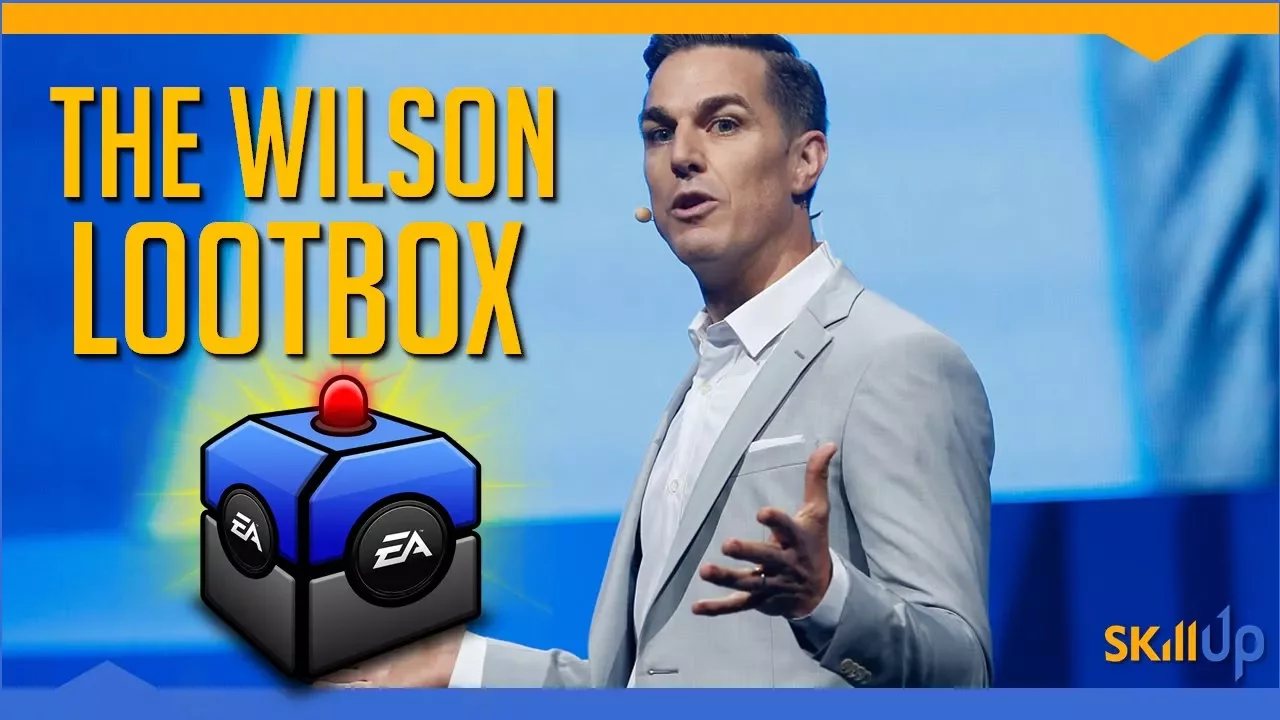
and what we announced for star wars battlefront 2 is we're going to do the same thing we're going to give all of the core based content over the time over the life of the product to players for free but then let them engage in the live service that brings the community together keeps them together and gives them reason to keep engaging over the line and charges them well they can invest time on that investment it's completely up to them there's a latin phrase that goes post hoc ergo propter hoc which means after therefore because of it it's a logical fallacy that suggests that if x came after y then y must have caused x so if i clap my hands in sydney and then there's an earthquake in venezuela or whatever i could say that i caused the earthquake because i clapped my hands this is of course ridiculous and it's the perfect example of why causality and sequence aren't always linked i raise this because there's a narrative doing the rounds at the moment that overwatch is to blame for popularizing the modern day loot box but this idea just isn't factually correct it rests on the premise that publishers care what is popular and since overwatch is popular and it had loot crates in it then therefore that's the reason why all these publishers are now inserting loot boxes into every game imaginable here's the thing though publishers don't care what's popular they care what's profitable if they cared about what was popular they'd all be making the witcher 4 instead we get this so that's a loot chest and with that you're able to use those bows you could crush them for more miriam we also can go to silver war chess and we're gonna actually buy a bunch of these and open up a lot of these there's a lot of money to be made here but publishers aren't following overwatch they're following something else what if i told you that overwatch are actually making very little from the sale of their loot boxes what if i told you that the history of the modern day loot box predates the mobile apps that so many people claim to be the genesis of this whole mess and what if i told you that this entire history can be traced directly back to the man that now leads electronic arts its ceo andrew wilson it's a fascinating story that's taken me weeks to sift through and to understand but now that it's all laid out in front of me it creates a crystal clear picture of where this all began and where it's likely to go next but to begin to understand it i had to go right back to the beginning and that took me to a place i never would have expected the soccer pitch ea sports presents fifa international soccer the most realistic soccer game ever created for the pc experience the unique three-quarter overhead perspective that provides the users with the best view of a soccer field ever designed for a video game there's lots of popular sports around the world but nothing comes close to football it's truly the world's game in every sense of the word it's the national obsession of all but a handful of nations and as such the demand for football video games has been there for pretty much as long as there's been video games in 1993 ea had acquired exclusive rights to the fifa license allowing them to create what would forever remain the official video game of the world's game it was an incredible catch and still to this day fifa comprises 26 of ea's total revenue fifa is the rock on which ea is built but believe it or not there's actually another game to which modern day ea is now even more indebted developed by ea canada the uefa champions football series was essentially a clever marketing trick from ea to cash in on their football licenses instead of just selling one football game per year they could use the core game engine to sell different games under different licenses and trial different game modes or features in different titles to see which ones resonated most with players but ultimately it was the same game every year we just had a slightly different label on it and one or two additional new modes and features the 2006 2007 edition of uefa introduced a new game mode called ultimate team a fascinating post from one of the original creators of the system can still be found on ign's forums and in it chris coates who is associate producer at the time explains that his team had developed an entirely new concept that was essentially a collectible card game but i'll let this video from 2007 explain how it all works uefa champions league features a brand new mode which enables you to play football as never before this new mode enables you to collect and trade virtual player and gameplay cards to build a team you can then take your team to the pitch to compete for uefa champions league glory so how does it work in uefa champions league the user will be rewarded with credits for their play throughout the game credits will be used to purchase packs of cards to build train and maintain your ultimate team packs come in three varieties bronze silver and gold any card available in the game can be found in any type of pack however the better pack the more likely you are to find the better cards the fundamentals of the modern day loot box were all here you'd open it up to receive unknown items some of which could be useful to you and some of which could be completely useless and it was heavily baked into the core progression system of the game since you were constantly hoping for the right cards to drop because if they did you could build the perfect squad and steamroll your opponents it wasn't pay to win at this point because you couldn't actually pay real money for the cards they all had to be earned by some means but that would of course come later the parallels to collectible card games like magic the gathering or pokemon cards are really clear here but there's an important difference in the case of collectible card games you're purchasing an actual product cards some of these are more valuable than others but they all have some inherent real world value the difference with ultimate teams cards is that they have no intrinsic real world value you could buy a pack of ultimate team cards and you're stuck with them because you can't take them out of the ultimate team ecosystem and sell them for real money or trade them for other goods it's a closed economy that the manufacturer ea in this case has complete monopoly over so they're able to set the rate at which rare cards drop and completely stop the resell of any of those drops outside their own managed economy it's the closed economy factor that makes the video game loot crate so damn lucrative but it wasn't lucrative for uefa at the time because they weren't charging for cards and the uefa series wasn't really a big revenue spinner for ea fifa was the preeminent ea football game and when the uefa license was up for renegotiation in 2009 ea let go of the rights in favor of focusing more on the fifa brand it was at this point that someone suggested that the ultimate team mode should be retained and introduced into ea's flagship title a developer named matt pryor who would later go on to become fifa's creative director and he still is today by the way wrote a design paper for it and gave it to his executive producer to that point writes polygon ultimate edition had been losing money in the ue for games but that was because they were only looking at the unit sales of the uefa games they weren't thinking about the potential revenue from micro transaction purchases of card packs it was the executive producer of fifa 2009 who realized what ultimate team could one day become and he greenlit the mode into the next version of fifa that executive producer's name was andrew wilson the man who only four years later would go on to become the ceo of ea and who still leads it today i want to pause for a moment here just to make clear how critical this moment and andrew wilson is in all of this everything we've talked about so far predates the mobile game boom that ended up making people billions and team fortresses loot boxes and all of it it just predates all of it this all happened before any of that was going on the loot box we know and fear today found its roots in a soccer game mode that would have been cast aside had wilson not seen the micro transaction potential within it fifa's ultimate mode in 2009 began selling card pack loot boxes immediately and as such it was the first pay to win gain on any console since the more you spent the more powerful your squad became the core progression system within the game revolved around what were essentially loot boxes and it wasn't the cosmetic loot boxes that would be popularized by team fortress or cs go or overwatch this was the wilson loot box as i call it which was pay to win and hard baked into the core progression system of the game and it was unquestionably a form of gambling since you had no idea what you were going to get when you laid down your hard-earned cash the goods you received had no intrinsic value outside the game environment and you had no ability to recoup your money once it was gone the wilson loot box model worked ultimate team became a successful and respected business model inside ea almost immediately so much so that during the development of 2012's mass effect 3 bioware developers worked closely with fifa's developers to implement the first paid loot boxes outside of a fifa game loot boxes had certainly existed before this time such as in the borderlands series but mass effect 2 let you pay real money for them one ex-bioware employee cited examples of people spending upwards of fifteen thousand dollars on mass effect loot crates so clearly the system had an appeal to a certain type of player hungry for a competitive advantage in mass effect's horde style multiplayer in the background fifa ultimate was becoming a huge success in 2010 and 2011 combined fifa ultimate made 100 million dollars by 2013 it was 200 million dollars by 2014 it was 380 million dollars and by the way this wasn't the sale of fifa this was just the ultimate team add-on where people had to buy packs of cards 380 million dollars in 2014. the numbers kept going up and up the ultimate team model soon spread to all other ea sports games and was deeply ingrained into ea's emerging mobile ecosystem as well in march 2016 ea's chief financial officer told investors that ultimate team was bringing in 650 million dollars a year by march of 2017 this year ultimate team had grown to an 800 million dollar business for ea by far and away the most successful implementation of microtransactions in any premium game in history with this amount of money flowing through the success of pay to win was permeating every part of ea recently it's emerged that the creator of plants vs zombies which was acquired by ea when it acquired pop cap in 2012 pushed back on the inclusion of pay to win elements in the sequel of the game the rumor that he was fired for this isn't quite true but it does point to a clear desire on the part of ea to push toward pay to win mechanics as early as 2012. the disastrous dungeon keeper app released in 2014 was another example of ea going the whole hog on pay to win and the backlash mirrored the one that we're seeing today due to how beloved the classic dungeon keeper series was jim sterling who then wrote for escapists said of the new ea dungeon keeper a cynically motivated skeleton of a game a scam that will take your cash and offer nothing in return a perversion of a respected series twisted by some of the most soulless selfish and nauseating human beings to ever blight the game's industry it's good to know that jim sterling hasn't changed a bit and thank god for him in 2014 responding to the dungeon keeper controversy in an interview with eurogamer ceo andrew wilson said some things which i'm certain could be copy and pasted into his future interviews on the subject of star wars battlefront 2.
he said this you have to be very careful when you reinvent ip for a new audience that has a very particular place in the hearts and minds and memories of an existing audience and when you think about any business model premium subscription free to play value has to exist whether it's a dollar ten dollars one hundred dollars or one thousand dollars you have to deliver value and always err on the side of delivering more value not less these were empty words ea did not learn the lesson of the dungeon keeper fiasco because they could see the revenue pouring in from pay to win elements of their games pay to win was deeply ingrained into the ea culture a perfect example of this was the recent closure of visceral studios which was working on a single-player focused star wars game under the leadership of amy hennig who had previously headed up the uncharted series that was looking like a really fantastic just great star wars game and as she was presenting it to the ea board one day they asked in response fifa ultimate team generates one billion dollars a year where's your version of that if you're asking those sorts of questions about a single-player star wars adventure that it indicates that the rot has set in fairly deeply but the revenue being generated from pay-to-win micro transactions by ea was fairly addictive for a very important reason the revenue being made on the sale of wilson style loot boxes across their games was extremely cheap on a regular product say battlefield or mirror's edge ea needs to spend around 40 cents to make one dollar of revenue so they have about a 60 margin there but with the ultimate team product and their related mobile products they only needed to spend 20 cents to make the same dollar it's literally twice as good from a margin perspective to generate revenue through microtransaction loot boxes than it is to develop actual games and ea have certainly noticed this there's a mantra during the rounds at the moment that publishers need to monetize in this way with loot boxes because development costs have gone up so much so you might be surprised to know that ea's development cost today is lower than it was nine years ago it peaked in 2009 and has continued to trend down since then if you adjust for inflation ea this year spent 300 million dollars less on development than they did back in 2009. the idea that development costs are skyrocketing and that publishers just have to do this is a bald-faced lie and it's a little more than ironic that at a time when developers like ea are claiming rampant development costs are the reason that they need loot boxes they're in fact spending less on development than they have in nearly a decade and what they are spending yields higher return than ever before the impact of all of this new form of cheaper revenue on ea has been nothing short of transformational when andrew wilson took over as ceo in 2013 ea had made 3. 4 billion dollars in 2012 from the sale of games and 728 million from the sale of microtransactions and season passes by march 2017 ea was making 2.
6 billion from the sale of games and 2. 2 billion from the sale of microtransactions and season passes if you adjust for inflation ea are making 30 percent less from the sale of actual games today and 280 percent more from the sale of microtransactions and season passes the shift in their revenue composition has taken them from a profit of 76 million dollars in 2012 to a profit of 976 million in 2017.