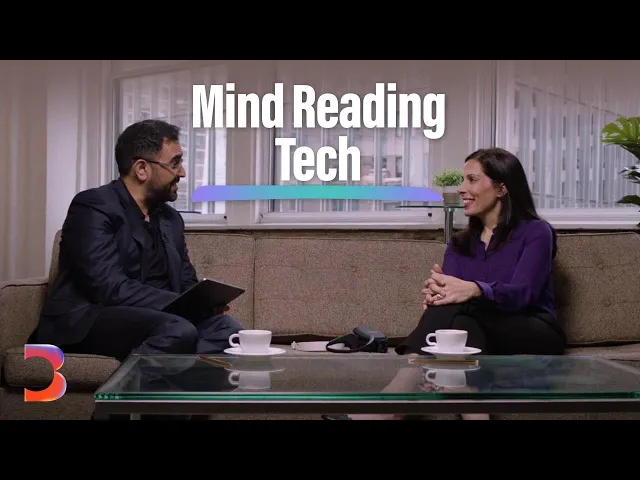
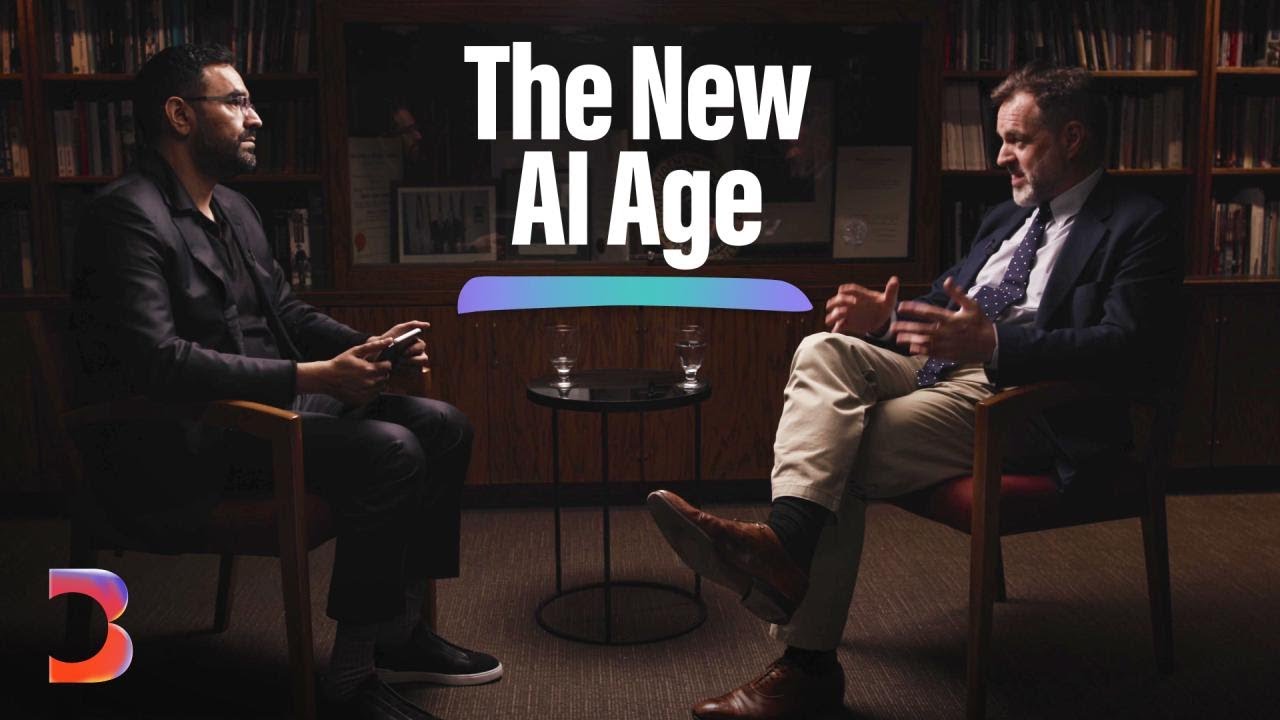
[Music] in five years we will legally own our own thoughts that is the premise of today's conversation welcome to exponentially new devices can now read or even manipulate our mental states to help us relax learn or reduce pain as they do this they harvest data and that is where we should be concerned can businesses be trusted with this very private information and do we have any protections at all in the past five years over a billion dollars has been invested in developing these kinds of Technologies some of this research has had magical results this is
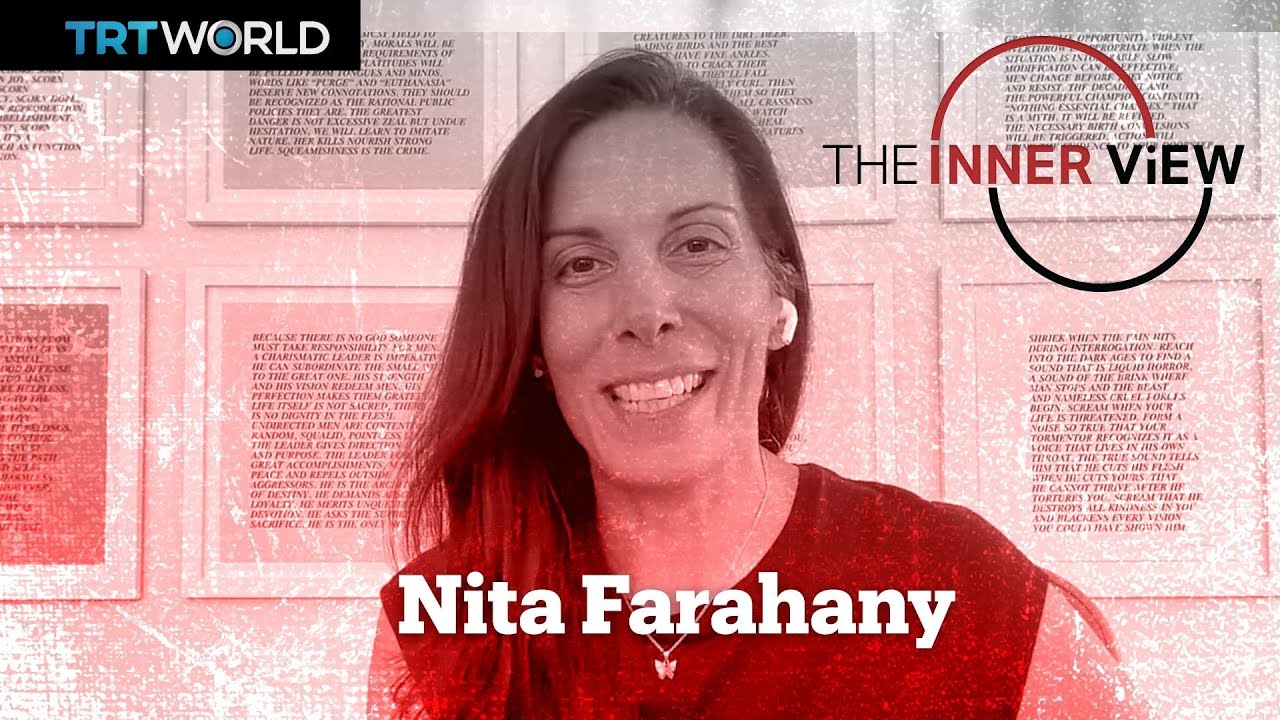
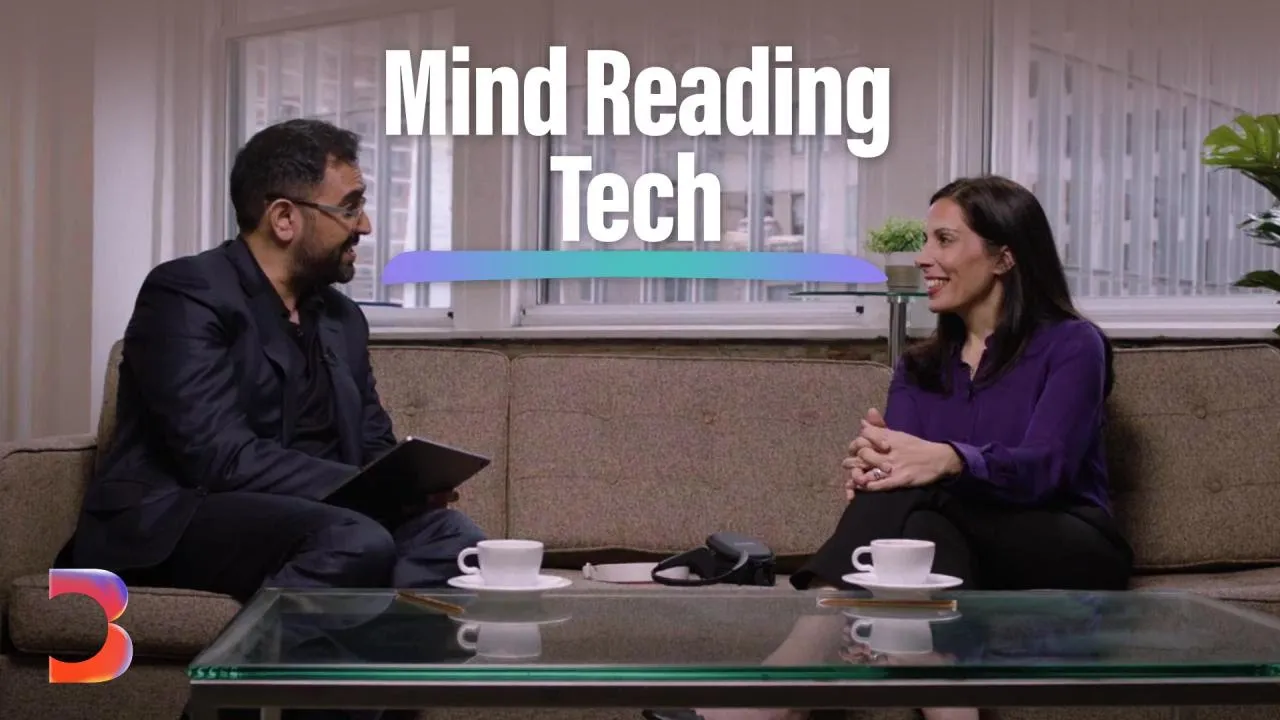
a paralyzed man he can do this with the help of a brain implant but with every new technology that are of course downsides in this case basically letting companies into our brains so how can we make use of this Tech without firms taking advantage of us do we need new fundamental human right a right to our mental privacy when it comes to Human Rights and evolving neurotechnology there is no one more expert than Professor Nita farahani I wanted to share a story with you a few years ago I was sent a headset from a startup
that was meant to improve your cognitive performance and you you put it on your head and it would zap you with some direct current and you know I was too scared to use it so I put it that's probably a good thing actually right well I I put it back in its box and I now use it as a shelf it's probably a good thing that you didn't use that one back in the day because we don't really have a very good understanding of the zapping your brain the hacking your brain with precise electrical stimulation
so um you know as you think as you do anything neurons are firing in your brain they give off tiny electrical discharges and so we can measure those electrical signals I guess approach is the EEG and if anyone is old enough to remember Ghostbusters the Rick Moranis character wears his he's wired up to one that's right early on now if you're using consumer grade electroencephalography or EEG you're gonna have far fewer electrodes and so it's really the average across the entire brain and then those averages um through software and advances in artificial intelligence can then
say okay this is happy this is sad this is paying attention this is fatigue this is mind wondering I'd love to see one sure this right here these are just earbuds they just look like ordinary headphones that's right like the ones I have for the gym they're just like the sensors that are embedded into multi-functional devices like a smart watch this puts them into earbuds so that you can take your conference call listen to your music and also have your brain activity measured at the same time what is that able to measure from those small
earbuds what they have currently trained this on attention focus fatigue boredom engagement positive and negative emotions so those are all emotional states you could imagine matter to students who are studying or people who are working in desk based jobs or actually in non-death space jobs out in the field already you know this particular company has partnered with a number of Corporations where you know if it's offered as part of a brain wellness program for example to people are really distracted in today's world you're on your computer you then quickly go buy something for your kids
birthday party you get a notification on social media and that context switching is costly so these will consumer grade uh devices that are in a way leaking into the workplace these right now primarily are entertainment or very low stakes decision making and a lot of the other more sophisticated neurotechnology and by sophisticated I just mean it's able to more precisely pinpoint in the brain where something is happening you know those really run the gamut from electrical stimulation or implanted neurotechnology where there's been tremendous advances in the past few years companies that are investing and the
ability for somebody who's a paraplegic to be able to navigate their environment or a person who has lost the ability to communicate to be able to speak their mind by using implanted neurotechnology and when you talk about some of these implants it seems like some of the technologies that you've been discussing are as much about reading the brain State as they are about imposing a new brain State on us right so for example there was a woman who was suffering from severe depression and she described herself as being at the end of her life like
no longer in a life worth living and neuroscientists and Physicians were able to use electrical stimulation in the brain to reset that brain activity like a pacemaker for the brain that enabled her to recover her will to live to overcome depression and have a typical range of emotions instead wow that's pretty extraordinary that's extraordinary because right now the disciplines of neuroscience and psychology are a rather different yes and they're separate and and what you've given an example of is using Neuroscience to try to tackle something that would have traditionally just been seen as a psychological
problem that's right so let me summarize where we are we've got this uh fantastic science and engineering which is progressing and it's giving us a new class of neurotechnologies which we can use for diagnostics for Therapeutics for augmentation uh as well but these are also dual use Technologies they could be applied in ways that are harmful perhaps I remember reading about a school in in China for example which for a short period of time was putting on a brain monitor on on the kids and allowing the teachers to figure out which ones had drifted off
now I think it's a right of a young child to zone out of school I mean we all did I think any time you're looking at for example coerced use of it whether that's in the workplace or in a school setting that it's deeply problematic and that's because not only do you have a right to have your mind wander but you have a right to think freely right the ability to be able to have a dissident thought or have a creative thought or you know even fantasize about the co-worker in your office so you have
a bit of a crush on like there's I work on my own so well there you go no crushes no crushes for you but these flashes of bad thoughts you have for a moment somebody cuts you off in traffic and you have a bad thought that pops into your head right you know in other contexts it's already being used in these kind of coercive ways like in police interrogations where people's brains are being interrogated to see if they recognize yes it's already happening so there's a company in the US that has been selling their technology
to law enforcement agencies worldwide and whether it's that technology which has been used in places like the UAE or in Singapore is being tested out in Australia and there have been criminal convictions that have occurred as a result so-called criminal confessions in response to brain-based interrogations those are I think very chilling applications of this technology there is a second slippery slope which is they're all technologies that do purport to understand what our brain States saw but aren't neurotechnology so I think of this this area of emotion recognition which is being attached to certain types of
CCTV cameras and people are claiming they can look at your face and they can say you're hungry you're happy you're sad those seem to be on a similar sort of Continuum to exploit or take advantage of our in a mental state I think if you look across the world whether it is through microfacial changes that people are trying to interpret using video cameras and AI facial recognition to cognitive and personality testing that's being conducted for workplace like during the pandemic one of the popular video conferencing Technologies introduced the ability to pick up attention and focus
you know how many screens did you have open and how much of your you know Facebook I didn't like that I uh I didn't like that either right but all of these are really trying to Target our brains and mental experiences and their different degrees of precision and different degrees of intrusiveness all of that falls into this category that I find concerning which is to actually get at the hidden information in your brain these Technologies are improving exponentially they are and there are these combinations as as well I've been tracking a variety of experiments where
scientists have connected the readings from fmri machines to different types of AI and they've been able to reconstruct the image that you've been thinking about you've been thinking about a church and they can produce a sort of blurry church and over the last four or five years that church has got sharper and sharper and more precise and even more recently scientists have been able to look at fmri readings and predict the words that somebody was was thinking about I mean how does that process actually work what is the science behind that a person in an
fmri machine has shown a bunch of videos and then a region of the brain called the visual cortex is studied down to kind of individual levels the voxels we call them and then a machine learning algorithm a pattern classifier is trained on this is the image the person is seeing this is what their brain activity looks like this is the image this is the brain activity and you do that in different voxels light up if I'm looking at a cat compared to if I'm looking at a cheeseburger well the pattern will look different right so
the voxels will will represent things like the green of the image or the color of the image now of course an fmri machine is this huge machine not that practical but the point being that once we are able to correlate activity as we see it through an fmri machine to particular sequences of words or pictures we can then find easier to read signals and then without needing to pop you into an fmri machine we could start to extract those thoughts or those pictures there was a recent study that was done that was really a leap
an advance in this area where they could use the predictive nature of generative AI which predicts the next word to decode language from the brain and we're able with a very high degree of accuracy to reconstruct continuous language from the brain they were then curious as to whether those same findings could apply to a different portable system called fnirs functional near infrared spectroscopy which picks up blood flow changes in the brain just like Alpha Mirai does could it apply in that context as well well so blood flow being the key thing that appears to connect
to what we're thinking or what we might be speaking so for that particular study they wanted to see if blood oxygenation levels the patterns of blood flow through your brain could be used to reconstruct language they were able to do so powerfully with fmri they then trained it on F nears to see if it worked in that context and it did and I could show you what an avenirs looks like I would love to see what anaphnia's looks like now this is not what they use literally in this research study right but this is just
another band and it has in it you can see these little lights right there little light is it sort of infrared light are the kind that might come out of your TV remote control and those little lights are lights that go through the scalp through the skull and look at the hemodynamics of the brain meaning Bloods right exactly blood flow exactly the blood flow in the brain and of course hundreds of millions of us have these smart watches that actually have quite cheap scent sensors in them and yet can be really accurate for measuring things
like blood oxygenation or pulse and and all sorts of other biomarkers so we've got some expertise in taking lower cost low Fidelity signals and turning them into more reliable signals how long before there are going to be affordable portable fnus devices that you might see employers buying for for their Workforce I mean I think one like this is already fair game for a Workhorse right and their game in the sense it's affordable for a company to buy both affordable for them to buy and make sense in some ways to distribute to employees and that's for
a couple of applications for brain Wellness programs to decrease stress levels in employees or this one I use for Focus you can retrain your brain to have longer periods of focus and increase the activity in your prefrontal cortex which is a form of cognitive enhancements I just have to say the idea need to view with your multiple degrees and two professorships having even more Focus it's an unfair Advantage it is can I try it on is it comfortable yeah this one might be taped for you if you loosen it up it may be more comfortable
but yeah let's let's give it a go you need to loosen it because you do want a good fit um and you want it just above your eyebrows just like that yeah wow and just untwist the back of it so that it's nice and snug no yeah do we it doesn't suit me I think it looks great yeah it's a good it's I like the orange background so I could use this to improve my focus if it was connected to yeah so if we if we just took for example let's turn on the button on
the side so just turn that on right yeah now it's on and we will launch um the app and there's no electrical current that's going to zap is that how do you feel now hopefully you feel all right and so then what we could do is we could go into training I'm not going to get as high score as yours yeah so we're going to do another session oh good news you have brain activity yeah okay so I'm officially sending blood around my brain which is really good for me to know okay now what the
goal of this is you see the zero percent here that doesn't mean that it says zero percent now what you want to do is okay good look at you look at you wow that's better than I've ever done yeah all right so what you try to do is you want to increase the rate of fire in your prefrontal cortex you're trying to get this ball to go up so should I try thinking about something hard yeah okay if I'm going to go try to stay focused on that something difficult uh Cairo Algiers Casablanca um oh
my goodness so you don't want the oh my goodness where your mind wanders I always try to stay okay let's do the periodic table because I know that one hydrogen helium lithium beryllium boron carbon carbon nitrogen oxygen fluorine argon neon it's I know it too well so it just doesn't find it interesting um well that's the thing is you don't want to be just doing memory recitation you I hope I can get this in the UK the thing that strikes me about these Technologies in particular is that the brain is that last Fortress and our
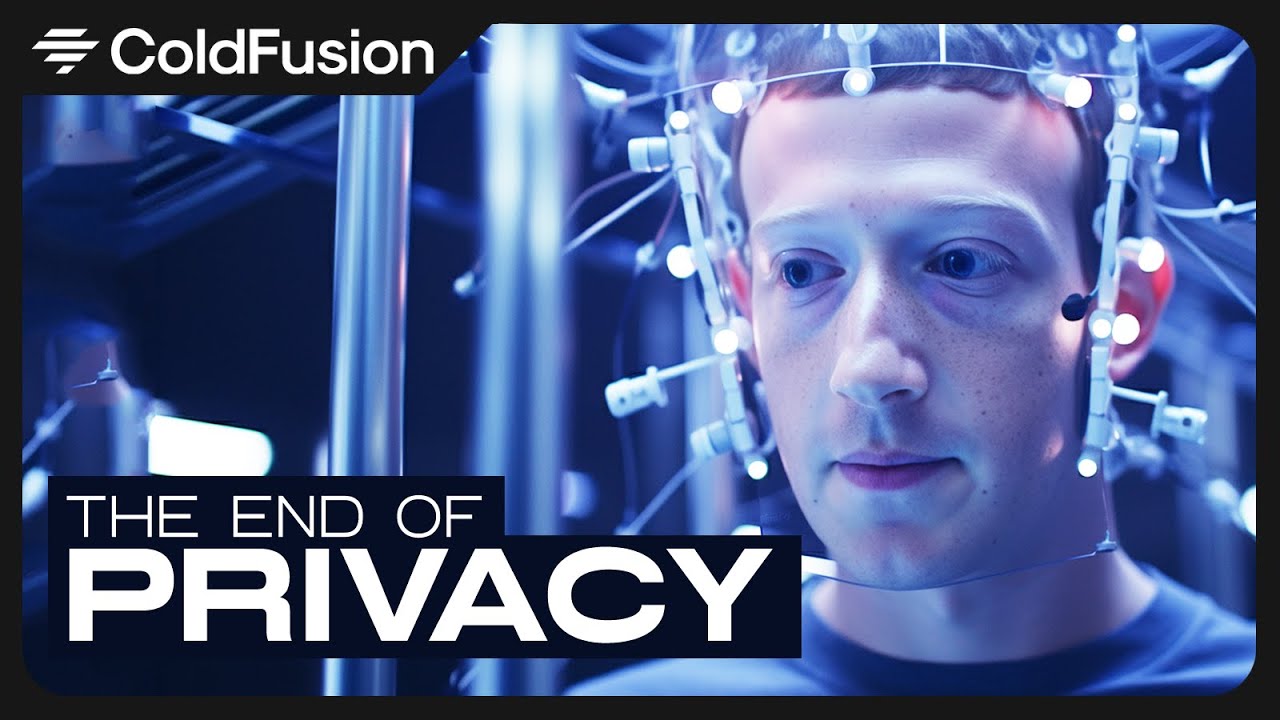
inner self is the thing that defines us and yet we're at this turning point where that Inner Space could become part of some businesses private Enclave or some governments uh orwellian fantasy so I worry about this deeply um and I I worry that that final private space the space that I think is so critical both for self-awareness and for resilience for the ability to know truth from fiction to the emotional self-reflection and cultivation is at risk of brain transparency you mean the idea that we can just be seen through entirely essentially right I think the
way we Define Intimacy in a lot of relationships is by choosing what emotions what thoughts What secrets we want to share with another person and if all that could be revealed by decoding your brain activity if other people can have access to it whether it's your partner who says no no I want you to prove that you're in love with me or you know your employer who says I need you to have five hours of focus today or show me you gave gave me a hundred percent that's right prove it to me or you know
a lie detection test by the government or the way you authenticate yourself it borders is through brain transparency I think this final space of mental reprieve is at risk your suggestion is cognitive rights so what do you mean by that so I believe that a right to cognitive Liberty as an international human right a right to self-determination over our brains and mental experiences would give us both a right to access and change our brains if we choose to do so but also a right from interference with our mental privacy and our freedom of thought and
that that's something we can recognize as existing within the UN Declaration of Human Rights although already in the Universal Declaration of Human Rights the right to privacy the rights freedom of thoughts and belief and the right to self-expression without undue influence you can look to the right to privacy and say what we need to make explicit as right to mental privacy is included within it right you can look to the right to freedom of thoughts which has currently been really interpreted much more narrowly to be about freedom of religion and belief and say no no
this is also about interception manipulation and Punishment of our thoughts if we look at all of the existing rights we can say an individual right to self-determination is fundamental to every right that is part of the U.N Declaration of Human Rights so it's not that I think we need new rights it's that we need a new umbrella concept which is cognitive Liberty to help us and direct us to update our interpretation of existing rights so how do you propose drawing a line between the acceptable and unacceptable use uses of these neurotechnologies so I have framed
cognitive Liberty as a right to and a right from and I think the right two is critical because the truth is we don't treat our brain health and wellness nearly as seriously as we treat the rest of our physical well-being we don't have access to information about our own biases and preferences self-insight I think is powerful which is why it's a positive right to access information about your brain a positive right to be able to use it notice me saying you right it's about you being able to access and use the technology you having control
over your own brain data it not being commodified and misused against you and a right from other people coercing you to use the technology or taking your brain data to analyze it to mine it to share it and to sell it it's giving you and putting you in the driver's seat of your own brain even if we are in the driver's seat we do have precedence from other types of Therapeutics I'm thinking about attention deficit disorder Therapeutics I'm thinking about antidepressants which emerged over the last 30 or 40 years and particularly in Western markets particularly
in the United States are heavily over prescribed because it's easier to deal with some of these issues through a prescription than perhaps figuring out how to tackle those issues these Advanced you know techniques will be more sophisticated more precise more effective so why wouldn't they fall foul of the same type of behavior that sees them just being used pervasively even if we are notionally in the driver's seat they could be right I mean I think that's the risk and there are risks to individuals using them to shortcut their own cognitive processes their own process of
self-discovery and self-awareness and growth and emotional developments um it can be misused by others it can be misused by parents well-intentioned though they may be to try to redirect the brain activity and brain development of their children I think in order for us to effectively realize the potential of this technology and Society we have to not just have rights right not just have Norms but we need to also be substantially increasing people's awareness of how their brains can be accessed and changed given the urgency the Technology's all getting better and better at exponential rates uh
I'm a bit perplexed about choosing the UN as the route to to do this I mean it's not an organization that in recent years people would say is adept at dealing with change and or indeed effective when it does finally get around to doing it so is that the right way to approach this first it's not the only way but as a starting place to say we need worldwide to recognize as an international human right that we have a right to cognitive Liberty and that that simply directs us to update existing human rights and our
interpretation of it sets both a strong legal Norm which doesn't require everybody to come together and even if we don't succeed meaning even if the UN takes zero action in this space that doesn't prevent Us in the United States in Europe and other countries from interpreting existing human rights consistently with the idea that there's a right to mental privacy the freedom of thought is broader that we have an individual right to self-determination I mean it strikes me that even if this isn't sufficient also self-regulation that's right could be very very valuable if you're able to
persuade the handful soon to be dozens of companies making these technologies that cognitive rights matter I think that's absolutely right which is corporations should act as if there is cognitive Liberty and should be cultivating it and recognize the mental privacy or employees and to say here's technology you can use to improve your focus we won't collect the data we won't use it to make choices about you those aspects of cultivating cognitive Liberty within ourselves will enable us as the technology continues to rapidly develop to still be able to have a strong sense of self now
the premise of our conversation is that within five years our thoughts could be legally protected How likely do you think this Vision could become reality within five years I think the technology is going to be mature and it's going to be widely available at scale across society which is why I believe before that happens we will make moves to recognize a right to cognitive Liberty to enable us to be empowered by rather than oppressed by the technology reflecting on my conversation with Nita I can't help feeling that the Technologies we've discussed will be mainstream even
faster than we think more than 200 million of us wear smart watches and these collect personal information every second of the day it's becoming a normal experience and the exponential Improvement in technologies will allow devices like these to monitor us more closely yes to the point of tracking our mental States so it does make sense to protect our minds our thoughts but is going via the slow-moving un the best route or can we together find a better way I'm asimazar and you've been watching exponentially oh foreign [Music]