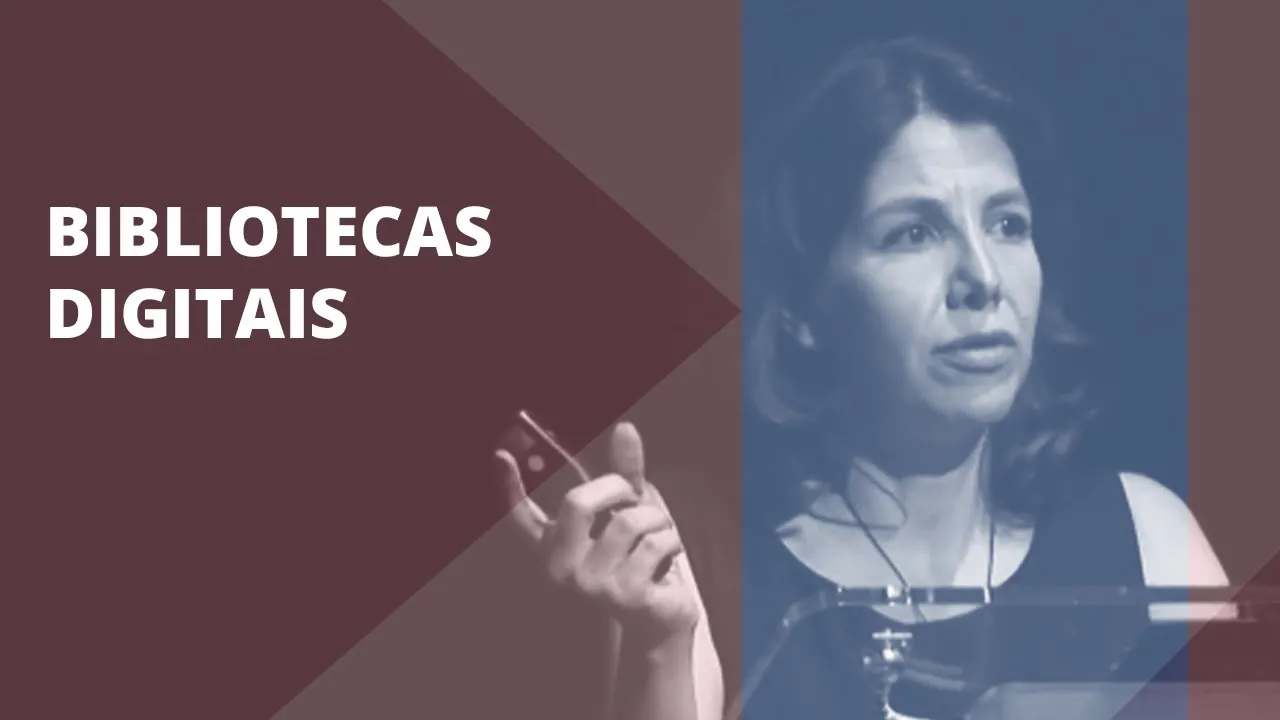
INTERNATIONAL COLLOQUIUM ON DIGITAL CONTENT IN LIBRARIES E-BOOKS AND LIBRARIES: WHAT CHANGES SHOULD WE EXPECT? LILIANA GIUSTI SERRA LIBRARIAN OF THE SOFTWARE SOPHIA BIBLIOTECA SINCE 2010 AUTHOR OF "E-BOOKS AND LIBRARIES", PUBLISHED BY FUNDAÇÃO GETULIO VARGAS INTERNATIONAL MEMBER OF THE AMERICAN LIBRARY ASSOCIATION Good afternoon. Thank you for inviting me to come here to talk to you. They asked me to talk about e-books in libraries, which is what I study, regarding the changes that we might notice in libraries: how they are going to work with this material, what are the main differences, what transformations we can see. The
idea is to point out essential questions to promote a moment of reflection on how we will work with this product in libraries, if it is the appropriate time to bring this material into our collections. Well, first off, when we start talking about e-books, we notice people are largely unaware of what an e-book is. People say... Wait. A quick question first: who here has already read an e-book? Quite a few people. Who read it on a computer? Who read it on a reading device? Who read it on a smartphone? There are fewer and fewer hands. We
have the impression that we have a perfect grasp of what an e-book is: a digital version of the printed book. But it is no longer just that. Here are some things we will discuss regarding the changes we notice with e-books in libraries, what we see is changing. First, there will be a categorization of e-books. They are not all the same. The way we buy e-books has changed dramatically, which is something we are still no aware of. Where am I going to find this or that e-book in my catalogue, in my library? Where do we discover
this material? How do we access it? Here we have two very different issues: one is accessing to the provider's platform; the other is accessing the content. They are different things and we will see what the difference is, How do e-books affect a collection's buildup? We can see critical issues regarding library control. And when it affects the collection buildup, it also changes my routine as a librarian, from cataloguing until references. These are some aspects where we see more evident changes that e-books are bringing into libraries. Let's begin by identifying what an e-book is. First, let's try
to get on the same level in our discussion, so we can then start to understand its complexity. There are two kinds of e-books. A public e-book is the one for which you don't collect copyright, there is no control over simultaneous use, there are no restrictions regarding simultaneous use. Either it is public domain material, or its content can be made public, or it's simply an open access e-book, or it is a free piece of work. I'm not discussing copyrights. The copyright belongs to the writer. I'm saying that the library can have open access books that have
no restrictions regarding consultation. When we talk about licensed books, a material which I get from a specific supplier, we start having restrictions. Technically speaking, there are three kinds of e-books. We think they are digital versions of the printed book. That is just the static e-book, it is a true copy. It is the same publication, with the same content, only the format has changed. That is the kind of e-book that we call "static". But there is also the dynamic book. It is not that different from when we used to buy... When we started having, in the
early 90s, CD-ROMs in libraries, some books came with a CD-ROM and that CD-ROM wasn't a digital version of the book, it was information that complemented the book. So we see that these dynamic e-books have the same concept. I have complementary information via internet access or via the supplier's platform. It is extra content. There are also cases when we have a dynamic book and its content is automatically updated. For example, if I have the second edition of a book and the third edition is released, the text gets automatically updated. This is perfect for the user. For
the library, depending on the field it works in, it is very complicated, because we lose the history of a certain subject, because we will always have the latest version, but we won't know what it was like before. That can be very complicated for the library. And finally, there is the expanded e-book. The expanded e-book still hasn't had a strong growth. There are many discussions about it, but, from its characteristics, it can become a change in the concept of books, because expanded e-books are basically apps. There is text content, but, along with it, there is also
multimedia content, there is interaction content, there are games, questions, there is music, there can be smell. The only thing I haven't seen yet is something with touch, with the sense of touch, but even smell can be put into a book. From the moment I have an object which is not restraining, it is not limited as paper is to convey information, and when I can't guarantee the same content of the paper in a multimedia platform, then I can be definitely witnessing a change in the concept of book, because the content is rich. It would be similar
to imagine a book in Harry Potter's world. I'm reading a book and I have videos, I have infographics, I have games. OK? It is an excellent pedagogical instrument, because you can have tools in which people read the description of a process and watches a video of that process. Or maybe they read a chapter of the book and can only go to the next chapter if they get all questions right, because there is a test before it. So, in terms of education, that is perfect, because it is a rich tool which incites people's knowledge and you
can have all that combined into a single object. The problem with expanded e-books is that they are expensive, because you don't have only the author. Even if you have images in a static book, fixed images, the author of these images is also paid. There is all the work done by the editor, who is also paid. In an e-book environment, in this case, an expanded e-book, you start having many people participating in the project, so its cost gets very high. You have the author of the text, the author of the images, of the videos, of the
audios, you have the editor gathering and revising all the material, and, besides that, there is a team building a platform which puts this material together, gathers it and commercializes it. So problems regarding expanded books today are essentially centered in its costs and the difficulty to license it at a competitive price. One thing libraries have to be aware of: e-books are not all the same. People think that PDFs are e-books. It is a kind of e-book, the simplest kind of e-book, because it's static information, which I will read vertically with a scrollbar, which is unpleasant for
the reader. We already have more friendly formats which explore the concept of e-books much better, such as EPUBs, which displays the text on a screen which will adjust itself to the device used. It is possible to interact, mark things, look for an excerpt, search the text for a quote, look up words in a dictionary, highlight them. EPUB allows you to do these things better than PDF. But in a library you can have these three kinds of e-books. What we see being offered today is essentially the static model. And some dynamic books, but in Brazil I
still haven't seen any examples of it. The expanded e-books we have in Brazil are basically apps. They are not sold to libraries yet. It is a very controversial issue, the purchasing of an e-book. First because you don't buy an e-book. That book will not be yours in any way. You have a license to use it, and that license may last for a certain amount of time or for an indefinite period, but the e-book will never be yours. So we are no longer talking about purchasing, we are talking about licensing. An e-book is made... A licensed
e-book is made through licensing agreements between the library and the supplier. Ownership doesn't exist. If the library doesn't own the book anymore, if it can't guarantee that that book will be in its collection for an undetermined period, that shows how fragile these institutions, the libraries, are, because they have lost their autonomy over the books in their collection. They will never be mine, even if I purchase a perpetual license. We will talk more about this model later. Why do we say the e-book isn't yours? It's what we discussed this morning. The e-book is seen as a
service and not as a product. As it is seen as a computer-related service, it is ruled by software laws. That is why we have licensing, not ownership. So the book isn't mine. Another very important thing? there are two ways to buy an e-book. As a reader: you go to a digital bookstore, buy the e-book and download it into your device. The tools in these bookstores are not made for libraries, they are not focused on libraries, they are made for the market composed by individual readers. Even if a library decides to buy e-books on Livraria Cultura,
Amazon, or Saraiva, it will have to download this material into a reading device and lend that device. That might be a way for a library to use e-books, but it is not seen as an e-book policy in libraries, because if you have 50 or more books in a tablet users take that material, they take with them everything that is in there. And there is no way to know which books they have read, if they have read them or not, if they have made notes or not. Besides, investing in this kind of device is still very
expensive. When we talk about libraries buying, acquiring e-books, we can only purchase them through business models. So digital bookstores are made for individuals. Libraries can only buy e-books if they download the files into devices. And sometimes I can't transfer a file from one device into another. That depends on where I bought it and on my licenses. The library will purchase them through business models. And there isn't just one business model. Also, I can only deal with certain kinds of suppliers, those suppliers who offer e-books for libraries. Unlike what happens in France, in Brazil we can
buy e-books from editors, content aggregators, or distributors. We are not restricted to the distributor. Where we discover e-books. That is also somewhat surrounded by controversy. The ideal would be if the library, even in the case of impermanent licensing, put its e-books in its catalogue. Why? Put everything in the same place to make your user's experience easier. Put everything in the same place to make your experience easier. Your collection is entirely listed in a single space. But I also have the option of working with my supplier's platform. Because, even though I have an e-book's license, I
depend entirely on my supplier's platform. I will read the book through that platform and that platform only. When I have an e-book's license, I don't have the file to store in my collection. And, even if they give me that file, it can only be read in their platform. This is a case of complete dependency on a supplier's platform. It is a fact that if can also allow my user to refer to my supplier's platform, I will broaden that possibility, but it is important to try to gather everything in your catalogue, because then you are really
making the collection easier for your user. For universities or large institutions, there is also the possibility of working with discovery services. I have the book in my catalogue and in my supplier's platform, but I can also allow my user to discover the e-book through the tools of a discovery service. The access... There are basically two types of access. The first thing is: I have to ensure that my users can access the platform to do their reading. As they depend on the supplier's platform, I have to make the way form the library to the platform easier.
I also have access to the content, that is, the way in which I will acquire the licensing will or will not ensure the simultaneity of the access during the use. So I have a number of users who can access the platforms either through my catalogue or through suppliers' platforms, and depending on the amount of suppliers I have, there will be one platform per supplier or discovery systems. The catalogue and the discovery service ensure a concentrated search, because everything is in the catalogue or in the service. For the suppliers' platforms, the user has to know who
the licensing was done with, then they can go to the right platform. This example is enough to make it clear why it is important to list the material in your catalogue to make your user's life easier. OK. How can I access that platform? The image is a little bright, I hope you can understand the message. I have a user who will have a number of possibilities to access my supplier's platform. One of them, the more adequate one is: I will integrate the supplier's platform to the system used in the library, because the library's system will
validate the user in the platform. Mind you, these supplier platforms won't ask for the credentials of each user of your institution, they will ask for the credentials of the institution itself. I can't give the institution's credentials to all of my users, right? Another possibility, a very common one: my users will have access to that platform if they are within the institution. And then we have a paradox, because you have a digital library and a digital book, but it will only work if it is inside the library, if it is physically there. In this case, I
won't have a real 24/7 library, because if the library is closed users can't go in there, and if they can't go in, they can't access the book. That is an important matter in a licensing agreement. I have to check whether I can ,integrate it to my system whether I am going to work with an IP address range, when only if users are within that IP range they will be able to read the book. Or... I have the option of working with VPNs, virtual private networks, but not every institution has a VPN and not every user
has access to a VPN. After all, what does it simulate? That you, user, is remotely inside the IP range of the institution. That kind of detail we don't see in specific literature. It isn't clear, it is usually written in tiny letters. We think we are buying an e-book for the community to access and yes, it is accessible, but not 24/7. It's only when that institution is opened for its users. If I manage to do... If I follow any of these three possibilities, my user gets validated, and then I can say to my supplier's platform, "This
person belongs to my institution, they are authenticated to use this content". After that, the platform will be opened for the reading. So you can't just sign it and that's it, it's available. It isn't. It is much more complex than that. This is the access to the platform. And then I have access to the content, which also needs to be agreed upon during licensing. There are basically four ways to work with content access and this is the most common one. It is the "single" one. That means one access per book. There is no simultaneity. It is
as if you had the book in paper, a printed book, that has been borrowed, and while it is not returned, I can't lend it to others. E-books work mainly in this way. They usually assume that licensing means a single access. However, there are other possibilities. This case is also similar... Let's make an analogy with printed books. It is as if I had bought various copies of an e-book. I have a single record in my catalogue and I can say how many simultaneous accesses to it are allowed, because I have a license for five, six, ten,
or three simultaneous accesses. So I lend it, and, when the access limit is reached, I can start a waiting list for that e-book. This amount of accesses was the one mentioned this morning. You have 50 accesses in France. That is a model used in the United States, and in Europe more than in the US. In Brazil, we don't have that and I think it is good that we don't have that model, because it is a little tricky. In this model, I have a limited amount of accesses during a certain period, either the access availability or
the validity will end first. When this term ends, I have to buy a new license. We have two publishing houses among the "big five" that work with this model. One of them has stipulated 26 accesses. So I buy the e-book and it can be accessed 26 times. For the supplier, it doesn't matter whether they are simultaneous or not. They will count the amount of accesses during one year. When the limit is reached, it has been accessed 26 times, I have to buy a new license. Another publisher, Hachette, if I'm not mistaken, works with 52 accesses,
that is, 52 accesses in two years. So the proportion is the same. They have reached this number... I never managed to find studies that indicated how they have decided on the amount of 26 accesses. The explanations I found said, "Regarding the 26 accesses, we did a research and reached the conclusion that a book can be lent 26 times" After 26 times, the book is in no condition to be lent again, because it's already physically ruined, so the library would have to buy a new copy". That rationale doesn't make sense to me. Obviously, we depend on
a series of factors to know whether a book is in conditions to be lent to someone or not. It depends on the quality of the book, it depends on its use, on the kind of user that has access to that material... So it is hard to say how many times a book can be lent. There are books in our collection that are borrowed many times and can still be lent many other times. So, for me, it is very strange how they have decided on this number, 26. The fact is that in Europe we have seen
this kind of access model, this kind of contract. We had the case of France, mentioned this morning, and now the example of Germany was also mentioned. So I "hire" an e-book and it will last a certain amount of accesses or time, whichever ends first. In Brazil, we still don't have that and I hope we never do. And now unlimited access. Unlimited access is a dream. I am going to buy a title and it will be available in my catalogue and it will be accessible at any time for my users. Identified users, let's be very clear.
When we talk about e-books, even in libraries, only registered users can borrow the book. With e-books, that doesn't change. There, I think we also see a certain fear publishers have of libraries, because they think people will access the library's site and borrow the books. No. They have to be part of the institution. The person must be registered in the library. Besides, they don't have to be physically there, but lending is only allowed to registered users with an expiry date. So unlimited access is perfect. The book will never be lent, it will always be available. Whoever
looks at my catalogue will be able to see it. Obviously, the model I choose will affect my licensing agreement directly. Maybe I don't need simultaneous access for all books. I can have titles that can have a single access at a time, I can have titles that need a greater amount of accesses but I don't need them to be unlimited, and I can have titles that are highly sought out and then I can have an unlimited licensing. It all depends on knowing my public and where I have to invest to ensure the offer of content to
my users. Licensing. Another important issue. When I buy a printed book, I ask my supplier, I look at catalogues, I refer to specialists, and I choose the titles I want. And I will make a choice, discarding and selecting things, according to the money available, to my budget, then I will buy titles that are relevant to my collection. With e-books, that doesn't always happen. Why? I can buy books separately. But I might have some problems. There cases of suppliers who don't sell books to libraries. They've adopted a policy of not selling them. We have seen more
flexibility, there isn't such a radical movement as there once was, but, still, not all suppliers want to sell to libraries or are prepared, or offer e-books to libraries. Those who offer separate titles usually do it through a business model that is a perpetual acquisition, in which I will only have one access, not simultaneous accesses, and at a really high cost. When I say high cost, there are known cases in which an e-book can be 300% more expensive than the printed copy. So we wonder: is it worth it to invest 300% the cost in a single
title that we can buy in paper? It is expensive because publishers are not interested... suppliers... Let's not focus only on publishers. Suppliers have no interest in selling, because it is highly risky for them. That is the case of books sold separately. Another possibility is buying packages. The supplier assembles a package and offers this closed package to the library. You rarely have flexibility to choose and make your own package. They usually assemble them according to branches of knowledge and you will buy great amounts of titles, but you won't always have in that package books that are
interesting for your institution. Another issue that harms collection development. I'm doing a licensing agreement of a package of books in which many of them don't interest me, or are irrelevant for my collection, or I give up buying books of a certain branch of knowledge because it's not that relevant to me and I lose some titles because I couldn't invest on different packages. So that is an issue that directly harms the development of a collection. Before we get into the first-sale theory... There is another issue with packages. Suppose I have a license for a certain period.
The package is not unchangeable during that period. So, during my process, during my licensing agreement's validity, there are titles coming into my package and titles being removed from my package. Or even books in the package being altered, i.e., there is a new edition that can replace the previous one. So the package is not static, it is not like you've signed it and it will be yours for a year. No, you have no autonomy for that. We will soon see why you don't have autonomy. So I have the package... I have hired a package, it is
a service and that service is dynamic, it changes according to the contracts signed between suppliers and publishers, or according to contracts that are broken between suppliers and publishers. And now the theory about the first-sale. This morning, we talked a little about an issue... It is very similar to the theory of the first-sale. It is a little different from the German model, but I think it is really important to be aware of this matter when we are signing an e-book licensing agreement for our libraries. And there is also the fair use theory. Let's see what these
two theories are, as they are deeply affected by e-books. The first-sale theory. In Brazil, it doesn't have that name. It is not part of our legislation, but it is comprised by our copyright law, Law number 9610 of 1998. This theory says that an author writes a book which will be edited by a publisher, a publishing house. This publishing house then sells the book and it can be sold either to an individual or to a legal entity. When the sale is completed, the value asked for the book is collected and part of it is given to
the author according to his copyrights. So far, everything is fine. This person or library has the right to sell the object bought, the hard copy, the printed book can be sold, can be lent, discarded or given away. That is what we know now. That is the first-sale theory, that is, I have a physical object and I have property rights over that physical object, I will never have the author's copyright. That is untouchable, it is completely respected, but after I bought it, the object is mine, I do whatever I wish with it, I don't need to
pay anyone anything else. When we are talking about an e-book which is not a physical object and which is sold as if it were a software - and I can't sell, resell, lend or give a software away -, everything said in the first-sale theory goes out the window. I don't have an object, I have hired an object for which I have many restrictions when lending it. Now, libraries live off lending books. Libraries don't lease them.. Even though some users, especially kids, come into the library and say, "Do you lease books?" "No, I lend them, I
don't lease them." If the book isn't mine, it is not with me, and I have no autonomy over its use, I have a big problem on my hands. This is something essential to understand when we talk about e-books in libraries, because in theory I cannot lend them. Right? The fair use theory is... There are also restrictions, but I don't think it is as critical as the first sale theory. The fair use theory says that I can make a partial reproduction of a book to preserve it, for backup, for education, to replace an object or book
that I have run out of. So I could... The library would have legal authorization and legal basis to make a copy of the printed book. With an e-book, as I depend on a platform to read it, this platform, through DRM tools, completely blocks my attempts to make copies, or to make replacements, or even to illustrate a school paper. So it is also harmed. Of course we have seen that publishers have matured and now allow people to copy and paste, to share excerpts. France's case is interesting, because they are already giving up on DRM there, there
are uses of social DRM, in which there are no restrictions regarding content access. We can see some flexibility now, but it is still quite restrictive. There is another issue I always like to mention, which is that since it is a digital tool, it allows people to completely track me. We are not really aware of how often this invasion happens. If I have an e-book, even if I read it off-line, when I am online, my data will be sent through these platforms without my knowing. Not because publishers want to spy on us, but because they want
to know how the book is used and monitor attempts of DRM removal, of illegal distribution, but mainly to get to know the market. This way, they can get very specific pieces of information. Not all platforms reach this point, but there are accounts such as, "I know how long this person took to read 'this' page of 'this' book. I know what words were highlighted, I know the notes made, the words looked up on the dictionary..." I will never forget an article I read once with a brilliant title: "I know what you read last summer". They really
do. You have no privacy. Why? At the same time they are monitoring you to see how you are using that e-book, they receive information, big data, about the kind of book that might be interesting for them to offer you. It is a way editors found to survive in the digital environment. In no way do I see publishers... Publishers, not suppliers... I don't see publishers as the dark side of this story, the evil side. They are companies that live off selling books and they need to ensure that their business won't be pirated and that they will
be paid for the work they've done. Of course their resistance has brought difficulties to libraries, but I won't pick a fight with them, I depend on them. We have to make a deal, both sides have to be flexible. Suppliers' platforms work with DRM tools and DRM is nothing but a padlock. It can be removed and it is easily removed, but removing it is a crime. It's as simple as that. So you can't remove the DRM. It doesn't matter if it is on YouTube, on the internet, if your friends told you about removal tools... The fact
that it is easy to do doesn't mean it is legal. When you use a tool to break any kind of protection, you act in bad faith. There is a movement of librarians against DRM. In Brazil, we are a little bit behind regarding e-books and I don't think this is bad at all. I think it is good, because things come to Brazil after they have matured a little abroad. Libraries had serious problems with DRM. In Brazil, we still haven't seen that kind of thing. Even contract models and prices have matured before coming to us. Suppliers. There
are basically three types of library suppliers. The publisher itself, the content aggregator and the distributor. Publishers release the book, and very often they invest in a platform and offer that platform to the library. Just as I king buy printed books directly from the publisher, the library can also hire e-books directly from the publisher, if they offer that service to libraries. Some publishers don't have enough resources to invest in a platform, so they resort to aggregators. Content aggregators are companies that sign contracts with various publishers and offer robust packages. Aggregators have their own platform, e.g., I
am a publisher, I have transferred to the aggregator the responsibility of selling my books to libraries and controlling the use of these books. So I have publishers and aggregators with their own platforms, always a proprietary platform, with their proprietary DRMs, because each of them create their own DRM. Only distributors don't have platforms. Distributors are the third stage who will simply sell either what the publisher has to offer or what the aggregator has to offer, and they deliver that along with the access to the platform you hired. The distributor is a middleman. Some publishers are currently
offering Brazil some aggregators. The trend is working with aggregators, because it is easier for the library. You will have an aggregator who will bring publisher base with a bigger offer of titles. We already have some distributors, but still very few. Usually, our distributors are distributors of printed books who are starting in the digital area. Now, business models. Regarding this aspect, in Brazil we are a little behind, because we work with just two business models. Also, everything we see in an e-book are not single things. So we see... Access form: platform, content; access to the platform:
via IP, software, or VPN; access to content: simultaneous, not simultaneous. I mean, everything is dubious in e-books. Why? Because it's a developing industry. Nothing is defined, nothing is decided, nothing is written on stone. Everything is being built. With business models it is not different. We have two types of business models. The perennial business model. What does it mean? There's no expiry date. It's mine for as long as it lasts. But I'm not sure about this. I must have faith that it will last forever, but faith is all I have. And here we have a model
that exists in Brazil, which is perpetual acquisition. Perpetual acquisition is a name that is twice wrong, because it not an acquisition and it is not perpetual. The perpetual acquisition model has one aspect: I choose the title, I buy it, license it, and it is min for as long as it lasts. It is really expensive, it's that case of 300% the regular price, and buying through perpetual acquisition is worth it if I want a better guarantee that this book will last in my collection. It's long-term preservation. It's worth it for books that are frequently accessed, for
basic books in my collection, which I have to ensure that I will possess. And transitory models. In Brazil, we only use subscriptions. Only 15 minutes left. Subscription models are like with magazines. You hire a package, you don't always get to see the titles... You hire a package that will last for a certain time, which is usually a year, but there are cases when it's three or five years. You can renew this package or not and this package is dynamic. You have books being put in and removed during its validity. What's important about perpetual acquisition is
that even if I have hired it and paid for it, nothing exempts me from paying an annual fee to use the platform. Because I depend on the platform to access the book, I end up paying it. Of course it is a very low fee, I'm not buying the book again, but it is a way for the distributor to ensure they will receive some compensation for maintaining that service. With subscriptions and other transitory models, the price for the platform is already included. Besides subscriptions, there is the DDA model. The DDA model, the STL model, which is
the next, and the EBS model are three... You can't read it, right? OK. DDA... DDA, STL and EBS work in a very interesting way. Imagine you do the following things: you get that supplier's entire catalogue, it doesn't matter what titles you chose, you get the whole package and you put it in you catalogue, and it will be available for users to freely refer to it. It is the same thing as taking a child to a candy store and saying "Help yourself". You put the entire bookstore there for the user and the library keeps on paying
for it and licensing it according to usage. Each access will be paid by the library like a rent and that rent costs 10 to 30% the value of the e-book. Besides, the library stipulates with the supplier that after a certain amount of accesses to a specific book, a buying process will start automatically and that can be either a perpetual acquisition or a subscription. That's wonderful for users, because they have a huge offer of books and the library pays only for what they access. This model is not new for libraries. It already existed with printed books,
but with e-books it found a very fertile ground, because you make a huge amount of titles available to users and libraries simply pay for what was actually accessed. This model was used in American libraries precisely in times of budget cutback, when the library wanted to invest in titles that were actually sought out by users. They are very interesting. There are cases with the STL... STL is a short-term loan. So the library makes small loans and if you want, you can also redirect that cost or part of that cost to the user. The experience we have
had with users paying for the loan was in Canada. The interesting thing is that they charged 25 Canadian dollars per access as a rental fee. They suffered all kinds of criticism. The most frequent one was "I don't want to pay with a credit card, I want to use another card". But at no point the cost of this service was criticized. Doing something like that in Brazil would be impossible. And the EBS model is one that I think might prosper is Brazil. It's very strong in Europe not so much in the US, but it could be
interesting having it here. It is similar to STL, but the way it charges is different. When I hire the service, I must pay a certain amount to the supplier according to an estimate of accesses. A year after I have hired it, I will check the indicators and pay only for the books that were accessed, and transform it into a perpetual acquisition or a subscription. This way, you can ensure the library is investing in books that are actually used. They are three transitory models in which the user decides which books will be part of the collection.
So librarians lose a lot of their autonomy to choose the titles that will be part of their collections. What do we notice while forming a collection? First, it's really good. The collection is very quickly updated, with books coming and going, and that requires a constant catalogue updating. From the moment the user selects the works, what's the librarian's job, if not selecting them? I'm not sure anymore if there is one. Not because of the selection, but there is a very serious problem... I think it is in the next slide... During the validity of the contracts, there
can be breaches of contract. The supplier won't be able, legally, to offer me a certain title, so I will have to remove it from my catalogue, even if I have bought it by perpetual acquisition. That is a very serious issue. There is also all the register maintenance. There are titles coming and going and I have to update my catalogue. Or I have changed the contract for certain titles, and I also have to update the catalogue and inform the new licensing agreement and how long it lasts. It is still very expensive. This change of models has
a complexity to it that we are not used to. It requires great collection management ability. I depend on the service provided by each supplier in their platform, and I cannot be sure that they will always offer these same services. So you can't always be sure about what you will offer. Each supplier has their package. Unavailable books. If the supplier is no longer that title's legal representative, it doesn't exist anymore. And I can't go to an e-book antiquarian. There is no such thing. I mean, there is. They are trying some models in Germany... Actually, they are
not antiquarians. They are second-hand e-book stores. So you bought an e-book, you didn't like it, so you sell it to that platform and they resell it. But unavailable books are something very serious, because we have in literature so many people saying? "We'll never have unavailable books anymore". How come? If the supplier can't offer a certain book, they have to take it out of their catalogue. Even if you have bought it, you can't access it anymore. You might have that right, "One day I had this book's license, but I can't access it anymore, it's been taken
out of the platform"; Breach of contract. There can be many kinds of breaches. An author ends their contract with the publisher. That publisher goes to its supplier and says, "We don't work with this author anymore. Take all of their books out of the platform". Between publisher and supplier. For example, we have "Minha Biblioteca", an aggregator. Saraiva is in "Minha Biblioteca" and Saraiva ends their contract. All of Saraiva's titles are taken out of "Minha Biblioteca". So "Minh Biblioteca" would be over, there would be nothing in it. Or the library can end the contract with the supplier,
either because they didn't renew their contract or because they really ended it to cut off expenses. So the license I had to use those books was lost. There are other cases. If the supplier leaves the market, what do I do? If they've transferred their portfolio, great. If they haven't... We have to keep these matters in mind when signing a contract with a supplier. We need to write in ways to protect the institution so it is not endangered by this kind of situation. So these were the breaches that can happen during my contract's validity. What changes
in the library? I am always polishing metadata, all the time. Bibliographic metadata, management metadata, about who I hired, how I hired them, if there are set dates to begin and end. You work with many indicators. If you need indicators for printed books that are on the shelves, just imagine how it is for e-books, which are in clouds that are not mine and over which I have no control. I have to work with numbers, I have to collect usage data. And collecting data isn't enough, I have to get information out of these data, I have to
work with them. When classifying the books, I will prioritize neutral records, because I have printed books and e-books in my catalogue, so they must be in harmony. Concurrent books. I hire many suppliers, many aggregators, but one publisher is in everyone's catalogue, so there are repeated books in my aggregator. So maybe I hired a book but I have different offers on it. I am paying for the same content in multiple ways. I also have to think in a way to offer that to my user without showing many instances, because that is not interesting, it would be
a record with many different accessible platforms. There is a lot of negotiation. We are not used to negotiating. We have to negotiate with our suppliers and analyze contracts. And if you have legal support, enjoy it, because we'll need it, specially for important details. And we'll need a lot of training. For me, my entire team, my users. Training doesn't happen just once, but always, it's a constant thing. It's useless paying for a service and taking a small course once and never again. Then you start complaining that people aren't using the e-books. You have to insist all
the time to train the users, especially if it's a university or school library, where you have high turnover. Constant training. To conclude... I'm almost over... To conclude, I will tell you a story I heard that I found interesting and I think it might represent our situation. There is an island in the South Pacific, near Australia, Pentecost Island. This huge thing. Pentecost Island... is part of the nation of Vanuatu. It was discovered on Pentecost day, hence the name, and it has a very peculiar characteristic. This tribe's natives have a ceremony, a cultural tradition, which is a
ritual called NaGhol. This NaGhol ritual is this... AKA bungee jumping. If I ever decide to do that, I'll just sit and wait for that with to go away. Here we can see modern bungee jumping. There is a safety structure, with wires, elastic cables. You usually have a beautiful landscape. And people throw themselves to try to fly. But it wasn't like that in Pentecost. Rather, it isn't like that. This ritual happens once a year, by the end of the rainy season, which is between April and June for them. Here is how the ritual works: They build
a tower, about 65 to 100 feet tall, and they have strict rules for building it. Only men can build it, women can't even go near it, there's a whole ritual. It is built with these wood beams sticking out, as if they were fish bones. And the ritual is like this: a young man, usually to mark his passing into adulthood, goes up, ties a plant they have there around his ankles, and jumps. There's a small square over there that they mow and fluff the dirt, so the shock won't be too hard. That sap that they put
around the ankles is calculated in a very scientific way: the eldest in the tribe looks at the boy, gets a sap and says, "You're going to use this one". The sap can't be too short, or he would hit those thorns, those beams. And if it is too long, he will hit the ground. Their goal is to use their shoulder to touch the fluffed dirt. Besides being a rite of passage from puberty into adulthood, they also do that to ensure a good yam harvest. They must really like yam. Anyway... That fall is 65 to 100 feet
high, they can reach 45 miles per hour during the fall. There's a lot of technology to it. Visually, he clearly jumps and he has a support structure. They are also naked when they jump, but I didn't get a picture that showed all that, I thought it would be too much information. So the person jumps... If they are fine when they reach the ground, "Well done, you are now a man and you made sure that our yam harvest will be good". If their fall doesn't go well, there isn't much to tell. So far, so good. That
ritual was filmed for the first time in the 1950s by the BBC. After a while, Queen Elizabeth went to visit Pentecost Island in 1974. She went there with Prince Philip. And the tribe decided to perform the NaGhol ceremony to impress the queen. But it wasn't the right time of the year, so the poor guy crashed into the ground. Why? There's a right time of the year to get those wooden beams, it has to be by the end of the rainy season, when the trunk is full of sap, which guarantees elasticity. They did it during the
dry season. The trunk had no elasticity. And suddenly, in what was supposed to be a party, the poor man fell flat down in front of the queen. You can imagine it wasn't really nice and it didn't work all that well, this NaGhol presentation to the queen. You're probably wondering "What does that have to do with e-books?" Everything. Planning. It's no use doing some, trying to impress people, if you're not prepared, if you don't have the necessary information, if you don't know how it works, if you don't respect the limits you have because of suppliers. And
we still don't have many suppliers in Brazil. So I must have a plan for including e-books. Calling a supplier, signing a contract and writing a check are the easiest things to do, but if there's no proper planning, you will waste your money, mess up the library's service, maybe damage the library's image. It might sound amazing, but it won't have that effect. I have to think about how to make a selection, what suppliers I'm going to work with, what business model I'm going to work with, and if I'm going to alternate between those models. We can't
get euphoric and just go for it, because you might end up paying a high price for that. What kind of access will I have? Will it be simultaneous or not simultaneous? How to advertise it is also essential. If you don't advertise it, it doesn't exist. If it doesn't exist, it's not used. If it is not used, it is wasted money. I must have a plan to train my team and my user. And keep up with lots of data. Constant assessment. Signing a check to hire it is the easiest thing there is, but it's a very
basic thing. Well, my time is up, right? I appreciate the opportunity and I'm at your disposal, because we have questions now, right? Thank you.