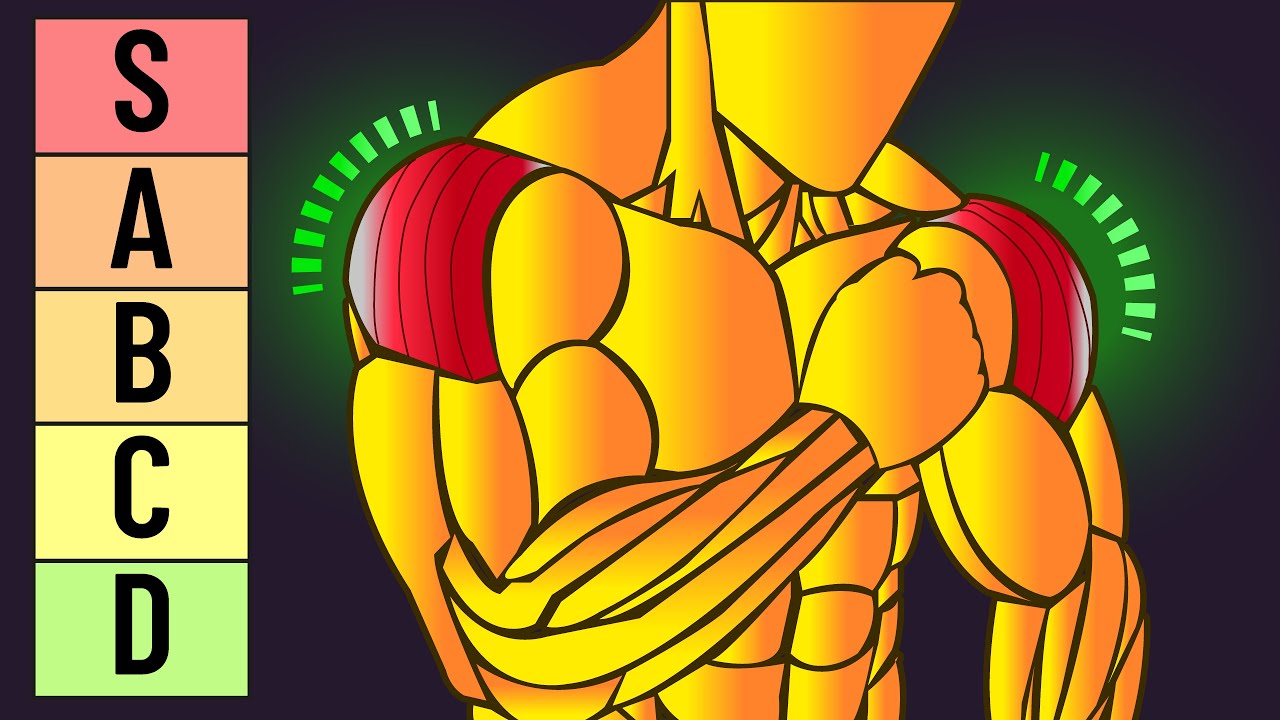
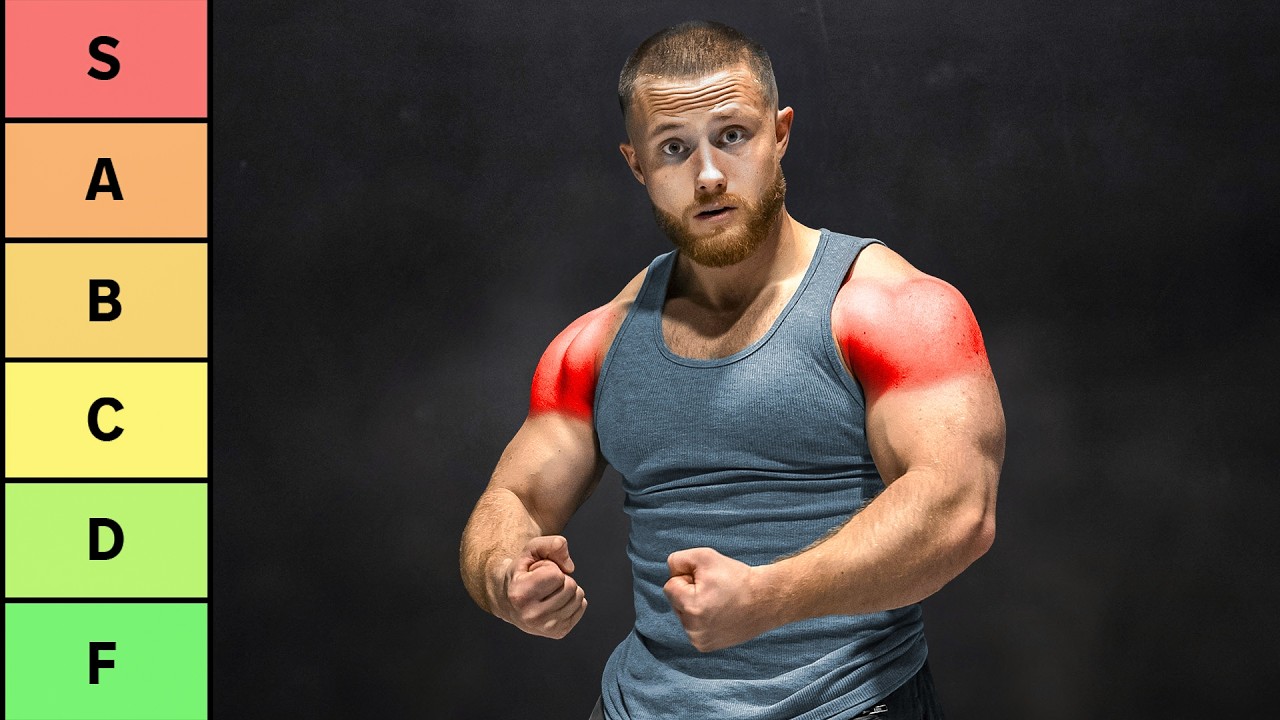
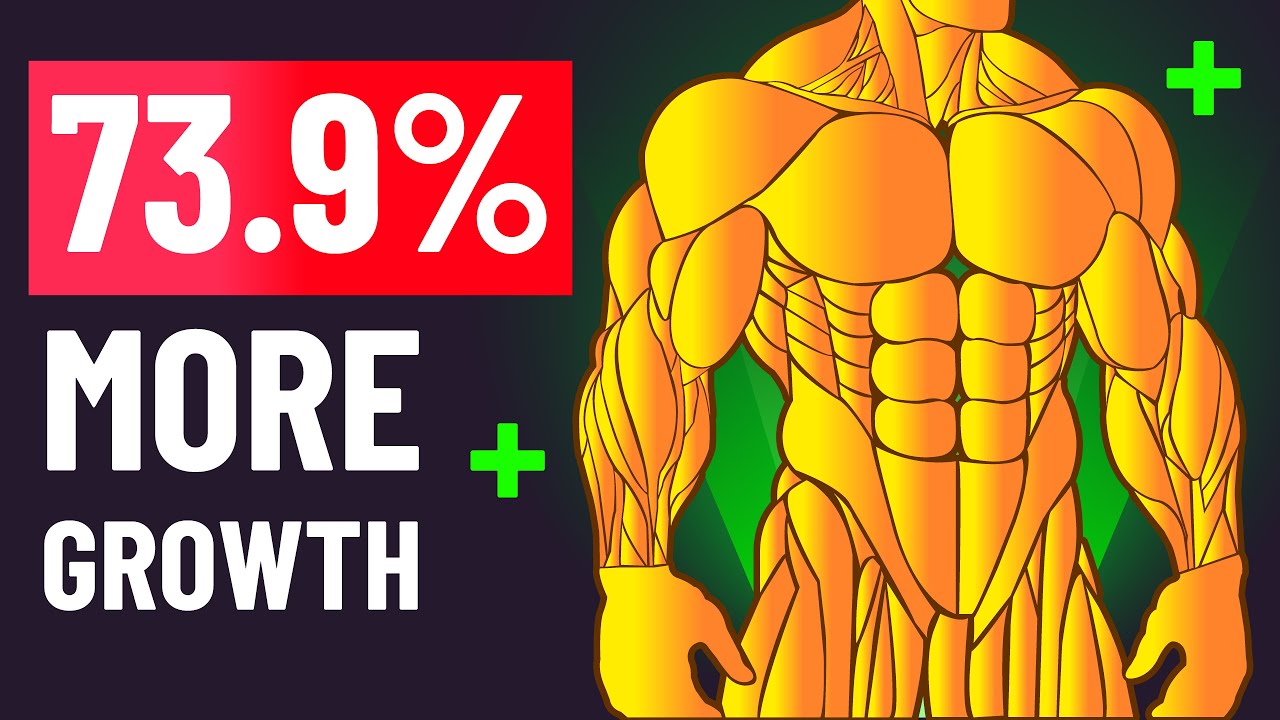
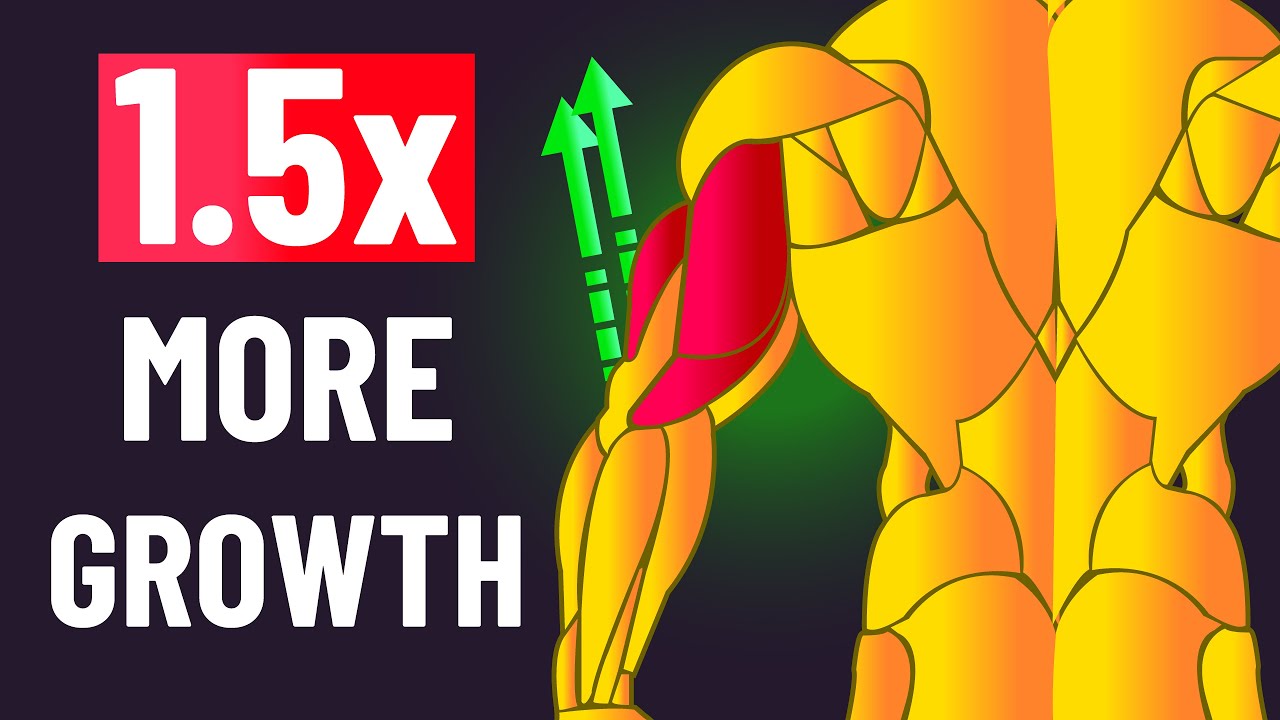
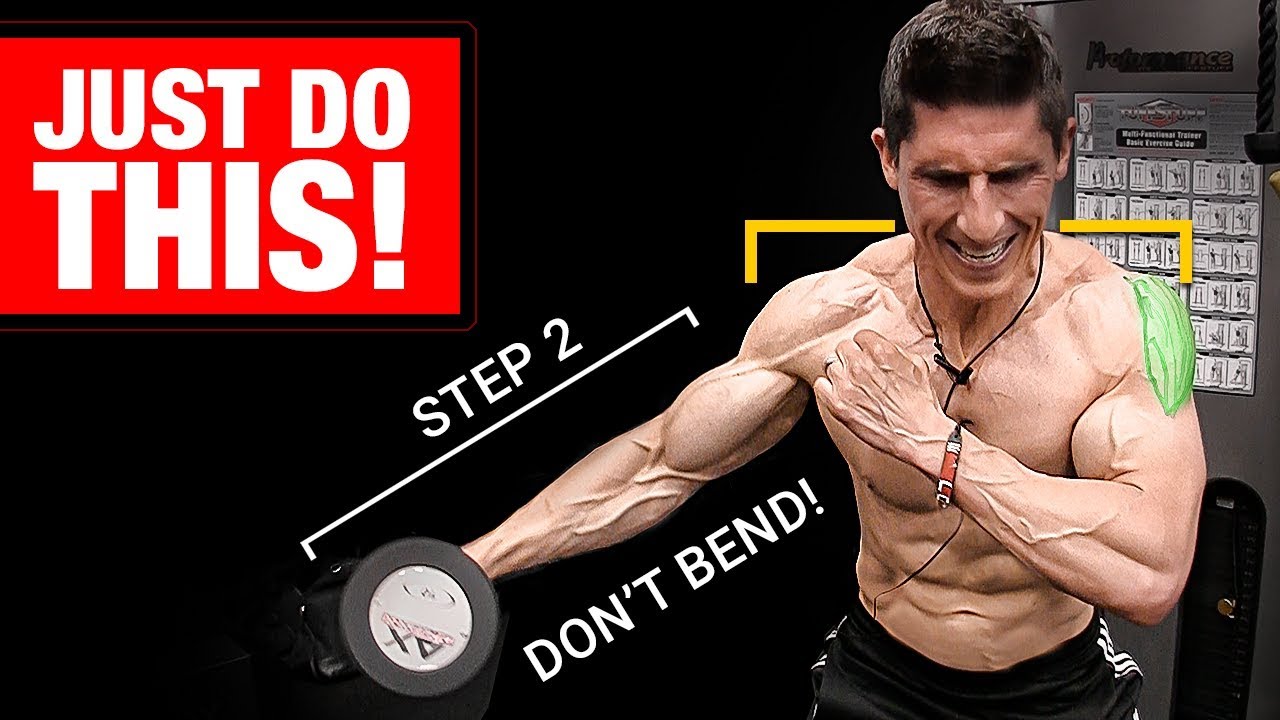
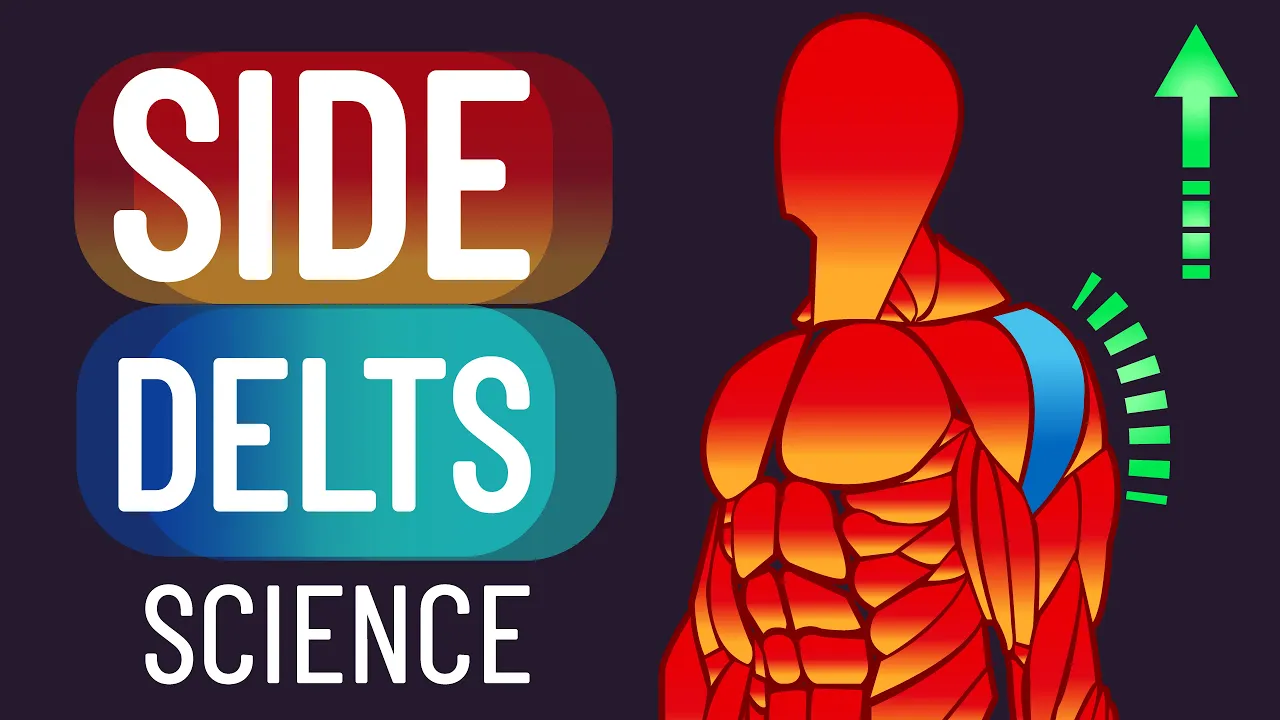
welcome to the house of hypertrophy we're dissecting the scientific literature on how you can develop and evolve your side doubts but first here are some fun facts about the doubts you never knew if we combine the front side and rear delts the deltoids are actually the biggest muscle in terms of volume of the upper body being bigger than the pectoris major and latissimus dorsi furthermore although we typically consider the delts that consist of the front side and rear heads it's actually possible for us to divide it into seven segments in fact a piece of text
dating back from 1734 appears to be the first to document this in more modern studies the precise way researchers divided deltoid can differ some use origin insertions or functional data nonetheless these studies arrive at the notion of seven doubt segments here's how an analysis by Brown and colleagues depicted the seven segments based on each segment having distinct Origins and or insertions looking at muscular individuals with a low level of body fat the segments can somewhat be seen though there's no unanimous agreement I think we can generally consider D1 as the front head D2 and D3
as the side head and D4 to D7 as the rear head we'll reference these segments more throughout the video and in future videos at the house of hypertrophy nevertheless the doubts are a pivotal muscle for enhancing a physique many hypertrophy enthusiasts and of course competitive bodybuilders wish to acquire capped 3D delts across the interwebs there's no shortage of information on how to develop the delts or any other muscle but in this video we aim to cut through the noise and provide Crystal Clear information derived from the current scientific literature on what you need to know
to grow those side delts how effective are compound exercises such as overhead presses bench presses and rows for developing the side delts we'll also be examining the utility and execution of shoulder abduction exercises like lateral raises and upright rows let's Dive In there currently aren't any studies directly comparing different exercises for Sitel hypertrophy fortunately we still have solid literature from which we can infer hell to effectively develop this ideals before analyzing this literature we need to know about the principle of neuromechanical matching to optimize growth of a muscle we of course want to highly activate
it with an exercise however how does your central nervous system so that's your brain and spinal cord decide what muscles to activate during an exercise think about it the biceps brachialis and brachial radiolis are three muscles that can Flex the elbow joints but in any elbow flexion exercise how does the brain and spinal cord decide to distribute activation across the three muscles it appears your brain and spinal cord preferentially activate the muscles with the best leverage during a movement this is known as the principle of neuromechanical matching the nervous system matches the recruitment of muscles
to their mechanical advantage or leverage what on Earth is leverage leverage in this case refers to the muscles moment arm a muscle's moment arm is the perpendicular distance between its line of force and the center of the joint it moves a longer moment are means a muscle has a better mechanical advantage and potential to generate movement think of a heavy door imagine you're pushing this heavy door at different points we can think of the moment arm as the distance between where you push the door and the doors hinges if you push the door close to
its hinges it's difficult to open the door since the moment arm is small if you push the door further away from its hinges it becomes easier to generate the required torque to open the door because the moment arm is longer thus longer moment arms enable greater torque and so once again the muscles with the best leverage that is the longest moment arms in any given exercise will likely be the once most highly activated why have I just described all this it's because we have solid research exploring the leverage the deltoids and numerous other muscles have
for different movements from this we can derive conclusions about how the side delts may be most effectively trained foreign a range of compound exercises in their training program and vertical presses including overhead presses handstand push-ups and machine overhead presses are a category of compound exercises that heavily train the delts but how effective are these for developing the side delts all vertical presses involve elbow extension so we'll train the triceps but in so far as the shoulders if you're performing vertical presses with a narrower to moderate hand spacing you're predominantly performing shovel deflection if you're struggling
to see how shoulder flexion occurs ignoring movement at the lower arm reveals this it's also evident vertical presses involve shoulder flexion at higher angles but how effective are these vertical presses which predominantly involve shoulder flexion for side delt hypertrophy there are a few muscles that have leverage for the movement of shoulder flexion and the side tails are one of them also it appears both segments of the side delts have leverage for shoulder flexion however the front delves are the muscle that tends to have the greatest leverage while the side delts leverage tends to be be
a whole lot less very generally the front Del's Leverage is mainly three to four times greater thus following the principle of neuromechanical matching the side Tails will be activated to some degree but it likely won't be sufficient to substantially trigger side dealt hypertrophy rather the front delts will see the bulk of the stimulus what if you perform a Vertical Press with a wider grip or even with the dumbbells on either side of your head you're now predominantly performing shoulder abduction eliminating the lower arm shows this also this shoulder abduction is at higher angles there are
a few muscles with leverage for the movement of shoulder abduction including the side delts and both of its segments have leverage for it at higher angles of abduction both the front and side delts appear to be the ones with the greatest leverage and they both have fairly comparable leverage thus these types of vertical presses where shoulder abduction predominantly transpires will better activate the side delts indicating it presumably will deliver great side dealt gains in the long term as as well as front delt gains of course but will it be enough for truly maxing side dealt
hypertrophy in the long term I'm going to speculate probably not I think to truly up to my side out hypertrophy we'd want an exercise where it solely has the greatest leverage for carrying out movement at a single joint before analyzing what exercises achieve this let's quickly dissect how effective exercises like the bench press and rolls are for side tail development [Music] horizontal presses are another category of compound exercises that include the bench press push-ups and machine chest pressing variations and these can also involve some degree of shoulder flexion thus the side delts will be stimulated
to some degree with horizontal pressures but it will most likely be quite trivial since we know the front delts are the predominant shoulder flexor on top of this horizontal presses involve shoulder horizontal flexion if you're struggling to see this ignoring the lower arm reveals this the picturesque major is the muscle that largely has the greatest leverage for shoulder horizontal flexion the side Tails actually appear to have no leverage whatsoever for this motion rather they have leveraged the shoulder horizontal extension shoulder horizontal extension can occur with horizontal pulls which include exercises like barbel rows cable rows
and Australian pull-ups more precisely shoulder horizontal extension predominantly occurs when using a wider grip with these various rows thus this will train the side delse but it likely won't trigger notable side dealt hypertrophy because numerous other muscles have greater leverage for shoulder horizontal extension such as the rear delts which seemingly have up to three times The Leverage for shoulder horizontal extension versus the side delts narrower grips with horizontal pulls predominantly involve shoulder extension and the side doubts do not have leverage for this whatsoever rather we know it's involved in the opposite movement that is shoulder
flexion [Music] thus far we've established various compound exercises can stimulate the side delts of notes vertical pressures particularly vertical pressures performed with a wider grip or with the dumbbells either side of your head are likely going to be great for Sitel hypertrophy but as alluded to I'm skeptical it will be enough to truly maximize sided hypertrophy long term presumably we want an exercise where the side delts largely have the greatest leverage for carrying out movement at a joint what exercise can achieve this you probably guessed it lateral raises tons of lateral raise variations exist you
can perform it in different planes no I'm not talking about airplanes but rather the plane of movement lateral raises can be done in the frontal or scapular plane you can vary the bends you have in the elbow and hips you can perform it with a neutral internally or externally rotated upper arm you can also perform it with different equipment dumbbells machines and cables foreign how do various muscles contribute to shoulder abduction at different stages in the frontal and scapular planes in both these planes in the initial abduction stages 0 to 30 degrees the supraspinatus tends
to have the largest leverage followed closely by the side delts and then the front delts in the middle abduction stages from 31 to 90 degrees the supraspinatus is leverage rapidly drops off and the side delts display the greatest leverage with the front delves fairly close behind in the final stages of abduction Beyond 90 degrees the supraspinatus has barely any leverage while the sidel and particularly the front delt especially in the scapular plane see increasing leverage at this stage as alluded to when dissecting overhead presses that involve predominantly shoulder abduction earlier the side and front delts
appear to have fairly comparable leverages other muscles like the infraspinatus and teres minor have much smaller leverages throughout all stages what does all this information mean for lateral race execution strictly speaking this data may suggest lateral raises in the range of 30 to 90 degrees of abduction may be the best way to isolate the seidels since below 30 degrees the supraspinatus are highly involved while above 90 degrees we appear to get relatively more involvement of the front delts however I think for most people performing the exercise roughly between 0 to 90 degrees is perfectly fine
the exercise is still very challenging Beyond 30 degrees which is where the side delts have predominantly the best leverage when directly comparing lateral raises in the frontal to scapular plane it's evident the leverages of the muscles are more or less similar some may be wondering about the traps no not those traps I'm talking about the trapezius the traps will naturally be activated during shoulder movement there's currently no data I'm aware of that can inform us of how trap involvement May compare between different lateral raise variations nevertheless feel free to experiment around with the different planes
and even variations to find your preference interestingly quite a lot of people actually report that lateral raises in the get a plane feel better for them foreign variations such as dumbbell lateral raises enable you to use internal or external rotation as opposed to the standard neutral upper arm internally rotating your upper arm with lateral raises likely enhances recruitment of the rear delts while externally rotating your upper arm likely enhances recruitment of the front delts in fact a 2020 EMG analysis by Curry teller supports this if you followed the house of hypertrophy for a while you
actually know I'm critical of surface EMG studies since it has numerous limitations and there are examples where it simply fails to predict muscle hypertrophy outcomes nevertheless I think these EMG findings are pretty logical and using surface EMG to compare subtle changes with the same exercise may be potentially more reliable compared to using EMG for comparing different exercises nevertheless I'd recommend individual stick to a fairly neutral on position if the goal is triggering Max side delt hypertrophy [Music] some individuals may like to slightly Bend at the hip during lateral raises some may also like to have
a slight Bend in their elbow I'm unaware of any solid research that provides insight into whether these provide any meaningful benefit or not I will mention it's likely that excessively bending the helper will only further enhance front delt recruitment so avoiding excessive elbow bending is probably sensible if the aim is to Target the side delts ultimately feel free to experiment with bending at the hip or elbow to examine what you prefer please lateral raises can be performed with dumbbells machines and cables and that are even lying and leaning variations at the end of the day
these fundamentally all involve shoulder abduction and thus are all going to be great for evoking sidel hypertrophy it's currently not clear if any other subtler differences between them could impact hypertrophy one potential difference relates to resistance curves dumbbell lateral raises involve fairly minimal tension in the initial stages of abduction while cable lateral raises involve more consistent tension throughout the abduction range of motion so the side tails are loaded more at the stretched position remember the supraspinatus is highly involved in abduction in the initial stages but the cytos are still going to be involved well in
these initial stages the reason I bring all this up is that in recent years the literature indicates that exercise that train muscles in a stretched position tend to build a muscle faster there currently aren't any studies demonstrating this with adults but some individuals have used research looking at the operating range of the side doubt sarcomas to speculate this muscle should indeed benefit from stretch however I believe there are a range of limitations with research looking at the operating range of a muscle sarcomas to the point where I don't think it's that useful for informing us
on whether a muscle will truly grow more with exercises attaining a stretch nonetheless hopefully we get future research examining how the side delts respond to stretch it's possible that cable lateral raises could very well be slightly better this is not to say dumbbells are useless again at the end of the day these all involve shoulder abduction and thus are all going to be great for developing the side delts in fact with the dumbbells you could experiment with partial range of motions in that initial position you won't be able to attain as great of a stretch
as you can with cables and we know the supraspinatus is also going to be trained well in this range but this somewhat lengthened side dumbbell loading might still be great for developing the side delts for example we've previously analyzed this study by Pedrosa at the house of hypertrophy which found that partial range of motion leg extensions in the initial position which far from maximally stretches the quads but still trains them at a more length and position produced overall greater quad hypertrophy versus full range of motion leg extensions so perhaps partial range of motion lateral raises
in that initial position are also great another option is that you could perform your dumbbell lateral raises normally with repetitions to failure and then immediately perform additional reps with a partial range of motion in that initial position feel free to experiment around if you prefer to keep things simple just select whatever lateral raise variation you prefer once again all of them fundamentally involve shoulder abduction finally within the same program or across many months of different trading Cycles you can of course vary the type of lateral raises you train with lateral razors are one of those
exercises where you're never going to be lifting super heavy loads trying to go heavy can result in people using excessive momentum with poor technique don't be afraid to use lighter loads we have a multitude of studies demonstrating that provided you're performing repetitions to or near to failure reps between 6 to 35 can be similarly effective for building muscle moreover you don't need to worry about trying to increase the loads you lateral raise with every session week or even couple of months progressively overloading through increasing the number of reps you perform across workouts with the same
load can be perfectly fine we've previously analyzed the 2022 study out of the USA that found across eight weeks progressively overloading through increasing the number of reps you perform with the same load was as effective for building muscle to progressively overloading by increasing the load you use with a certain rep range another alternative is to use slower repetition tempos the current evidence suggests individual rep tempos in the range of 0.5 to 8 seconds can be similarly effective for building muscle so as opposed to training with higher rep ranges with fairly normal rep speeds you could
use the same light load but perform the reps with a much slower control Tempo again feel free to experiment around and find what you prefer if you're looking for further ideas about constructing a high poetry program the alpha progression app can help it has a custom workout generator that deploys training variables based on meta-analyzes and reviews from their scientific literature plus it's very flexible specify your training experience the equipment you have and how often and long you want to train for edits to these custom workouts can still be made allowing you to individualize things the
app also has a massive database of exercises and it provides visuals displaying your long-term progress the link in the comments and description gives you everything on the app completely free for two weeks and if you like it and go beyond the link gives you 20 off a subscription we don't just partner with anyone at the house of hypertrophy so rest assured the app is quality [Music] there's actually another compound exercise we've yet to mention that is likely highly effective for developing the side delts this is upright rows which involves shoulder abduction typically up to 90
or slightly more degrees their currently aren't any studies directly comparing lateral raises to Upright rules for direct sidel hypertrophy so it's not currently clear how they may compare it's possible upright rows since it involves significant scapular elevation that will highly recruit the traps is slightly less effective for the side delts but this is very much speculative if you only had to choose one for the side delves to ER on the side of caution I think lateral Raiders are probably going to be a better pick but in the real world training muscles with multiple exercises can
be perfectly viable so the upper row is an exercise some people may consider some of you may be thinking isn't the upright row a dangerous exercise the guys over at E3 rehab have done a tremendous job summarizing the actual scientific literature surrounding this topic I'll leave links to their videos in the pins comment but let me speed through the main points upright rows are believed to call shoulder impingement here's the top right of the body we have the humerus and the acromion which is part of the scapula the space between the two structures is called
the sub of crow meal space and within it are various tissues like the supraspinatus tendon it's still upright Rose through involving shoulder abduction with internal rotation narrow the subacromial space and result in the supraspinatus tendon being compressed causing damage by the acromion however multiple lines of research would question this and even question the whole notion of impingement as a theory firstly we'd expect the upper area of the supraspinatus to be frayed and damaged via compression from the acromion but a number of analyzes find it's predominantly the underside that shows this secondly there are very generally
three acromion shapes that people may have flat curved and hooked we'd expect people with a hook shape to experience more shoulder problems due to increased frequency of impingement but the data does not support this related to this in those with subacromial pain smaller acromiohumeral distances do not appear to be associated with that pain thirdly there have been speculations stemming from a 2011 paper that if you do perform the upright rows perform it to no high higher than 90 degrees of abduction however this appears to be misguided rather it seems the smallest distance between a supraspinatus
tendon and a coraco acromial arch occurs between 40 and 75 degrees in most people at 90 degrees it actually seems the supraspinatus tendon is no longer in a position to be compressed some of you may be wondering about the internal rotation with upright rows fascinatingly the same paper indicates internal rotation actually seems to increase or have no effect on a chromial humeral distances thus opposing the idea that internal rotation makes things worse given this information if impingement was the enemy we would want to avoid abducting our shoulder to 40 degrees in all instances and plain
lateral raises in whatever plane you're performing it would be dangerous fourthly some have used the fact that upright roles mimic the Hawkins Kennedy test a test used to diagnose impingement as evidence that upright rows are dangerous however this test actually has poor specificity and has been described have little diagnostic value Fifth and finally shoulder decompression surgery which involves shaving down the acromion and other structures to increase the subacromial space should reduce pain and enhanced shoulder function due to reducing impingement however a solid amount of literature suggests this surgery fails to provide clinically important benefits over
Placebo surgery and pain function or health-related quality of life as described in a 2021 paper the impingement theory has become Antiquated that is outdated and we would also recommend to abandon the term shoulder impingement as it refers to this mechanical Theory so in summary there simply isn't any strong evidence to support the idea that upright roads are dangerous and we have compelling days of challenging the impingement Theory as a whole when combining the front side and rear heads the delts are the largest muscle in terms of volume of the upper body fascinatingly we can actually
divide the delts into seven segments there's no unanimous way to describe these segments but we may consider the front delts to be the first segment the side doubts to be the next two segments and the rear delts to be the remaining four segments many compound exercises will train this idealse most notably vertical presses particularly ones which involve wider hand spacing that necessitate shoulder abduction will likely be quite effective for growing the side delts moreover upright rows are another compound exercise that will most likely be very good for growing the seidels many fear the upright row
is dangerous but we analyze the range of studies that would question this as well as the whole impingement Theory generally I do think if the aim is to maximize Saito hypertrophy some kind of lateral race is going to be helpful there are tons of lateral raise variations it's currently not clear if any particular one is truly Superior it's possible that cable lateral raises could be slightly better as this more effectively loads the side doubts in a stretched position but at the end of the day they are all likely going to be highly effective for triggering
Sitel hypertrophy since they all fundamentally involve shoulder abduction in their approximate 0 to 90 degree range which is where the side delts tend to have the greatest leverage so feel free to train with your preferred lateral raise variation and execution if you're interested in the breakdown of the science of how often you should train a muscle feel free to check out this video or if you're interested in the science of rep ranges for hypertrophy feel free to check out this video