Now the average individual listening to us right now may say well i don't eat soybean oil yes you do um if if you're eating the bulk of your calories from foods that come from bags and boxes with barcodes it is exceedingly likely that you're like the average american where you're getting most of your fats from these refined seed oils most The average american gets more of their fat calories from soybean oil and shortening than literally any other fat in their diet and these are rich with these these omega-6 fats and among the many many things
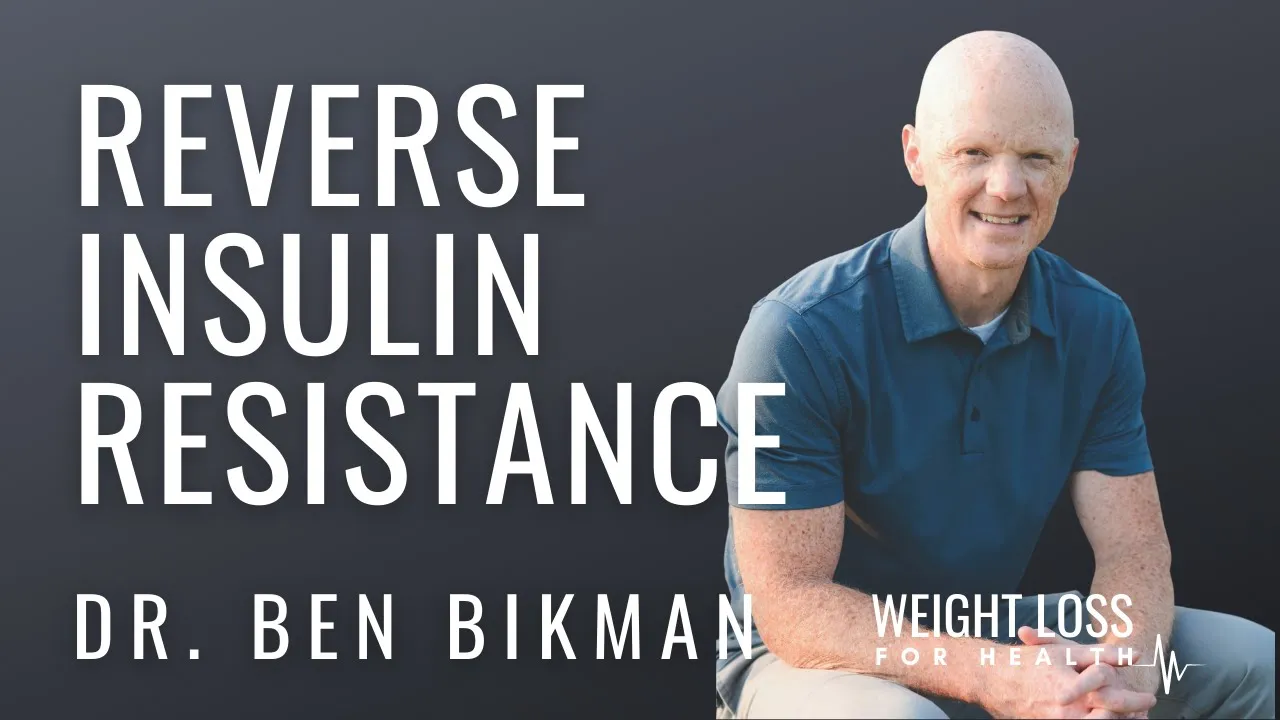
omega-6 fats do they can drive insulin resistance at the level of the fat cells first and then other tissues start to follow If you have high blood sugar high blood pressure or excess weight this episode is for you eight to nine out of 10 people tuning in have insulin resistance and for such a common condition i'm always shocked that so few people even know it exists insulin resistance is at ground zero for weight gain diabetes heart disease and so much more in today's episode i interview dr benjamin bickman who Is the author of why we
get sick consider him the expert of the experts on insulin resistance it's a big deal that he's here with us today dr bickman has his phd in bioenergetics and as a professor at byu he's the director of its diabetes research lab he studies insulin including its role as a regulator of human metabolism and its role in chronic disease in Addition to his research and teaching dr bickman actively serves as a research mentor to undergraduate and graduate students he and his students frequently publish their findings in national publications and he lives with his wife and three
kids in utah i have to be honest with you chronic dieting will not work for sustainable weight loss The only way to lose weight keep it off and prevent disease which hello that's what i'm all about is to live a low insulin lifestyle i know that might sound strange to you but it's true when how will this affect my insulin becomes your new litmus test instead of how many points or calories does this have weight loss clicks into gear it becomes so much easier i know for most people It's a paradigm shift you've been fed
pun intended bad nutritional advice then that advice has been reinforced by government recommendations and billions of dollars in marketing by big food companies this misinformation is not your fault but your health is your responsibility and when you accept full responsibility for your health you can expect to get results That's why i'm so proud you're here with me today this is a huge win because you're about to learn life-changing information so give yourself a little round of applause for being here for showing up and for learning i'm honored that you're spending your time with me today
knowledge is power and dr pickman is about to impart decades of wisdom in one short interview you're going to learn what insulin is What causes insulin resistance how to know you have it and how to reverse it we also touch on major diet myths and mistakes that everyone deserves to know i know that you're going to walk away with simple actionable steps to start lowering your insulin and when you do the weight will come off your blood pressure will go down and your blood work will improve i know because that's exactly what i teach in
My program weight loss for health and i hear stories like this all the time from my members i know that these kinds of results are possible for you with the right information and the right strategy i am confident that you can reach your weight loss and wellness goals let's go ahead and dive into this interview hey dr morgan here if this is Your first episode you may not have heard about the brand new quiz i created called the weight loss plateau quiz if you've been struggling to lose weight this 60 second quiz is what you
need did you know that there are different types of weight loss plateaus it's true if you want faster more effective weight loss you'll need to identify what's holding you back from Losing weight why you've hit a plateau that way you can create a targeted strategy that actually works i created this quiz to help you get to the root cause of your weight struggles whether you're not seeing weight loss or you lost and then regained this quiz is for you no matter how old you are or a stage in life no matter if you've been diagnosed
with disease Or just have a little bit of weight to lose i'm confident that your success is inevitable you can lose weight but you've got to believe in yourself and you've got to take action if you haven't already go take this quiz today right now at weight loss for health dot com forward slash quiz that's weight loss for health dot com forward slash quiz all right let's get started with Today's interview dr bickman thank you so much for joining us today on the reshape your health podcast we are so blessed by your presence and i
know this is going to be a great interview my pleasure please call me ben this will be great oh good i want to start with um your personal story i think that i've done a lot of research into you but i think listeners Um haven't you know you might be new to them so can you tell us about your personal story with health and weight loss and wellness and just what drove you to do so much research on the field of insulin resistance yes it was something i never would have imagined studying as a young
undergraduate i didn't even know what insulin resistance was Which isn't surprising a lot of people don't even now my evolution you know to become the scientist that i am now did start from a long held interest in the body i was just raised in a a generally healthy home my dad especially who largely raised us alone after my my mom passed away when we were quite young he was just always i'm focused on making Sure we got our vitamins and that we had a good hearty breakfast it was never cold cereal so generally just raised
in a home that prized uh health and and that interest um just sort of grew when i became when i was an undergraduate uh i just wondered what am i what do i really want to spend the rest of my life doing and i was in a class as an undergraduate and i Was taking a class physiology class from a professor who was an actual scientist as well he had an nih funded lab here at the university where i'm i'm back now at byu and i was just amazed that there were still scientists studying the
body it's i'm embarrassed to admit this but i as a 21 year old at the time um i started a little late after high school i Served a two-year mission for my church so i was a little late starting my undergraduate in the first place but i was amazed that there were still scientists studying the body i just assumed we're done we know everything there is no more science there's no more questions to ask but that that planted such a seed of interest in my mind and i really appreciated the work life balance that He
seemed to have that this was a guy who had freedom of his schedule and freedom of thinking which of course is something that is so precious in academia and may it always be that way yeah and and it's uh that planted the seed and then i i uh s stuck here at byu as a to get my master's degree in exercise physiology in part because i knew i Wanted to continue in academia but i didn't know what to do yet and i was close enough to finishing my undergraduate that i just sort of needed an
immediate step and so getting a master's degree i'm not too proud to admit that was really just a way to hold off a bit more before i committed to a phd because i just didn't know enough yet but it was at towards the end of my Phd sorry towards the end of my master's degree which was an exercise physiology so it had me studying the muscle and cardiovascular fitness that was the focus of my thesis but i stumbled across a paper that had been published a few years prior to that so this to me was
in the early 2000s the paper had been published in the late 90s which detailed how fat cells produce and release pro-inflammatory Proteins or hormones and that was such a fascinating discovery in my young mind at the time because it showed to me that fat cells are far more involved in the body than just storing fat and that they may be the connection between obesity and diabetes and that was something i'd i've been hearing a lot about this Confluence of these twin epidemics um diabetes had been coined kind of a term in the early 2000s so
a lot of people were talking about it and the idea that the fat cell could be releasing these pro-inflammatory proteins and that then is what's driving the type 2 diabetes it blew my mind and of course what was inserted in that in that paradigm the fat cell is Producing more inflammatory proteins that then um would result in something called insulin resistance and that was the foundation of the type 2 diabetes so that was the beginning of my interest in insulin resistance and it represented a total shift that i've never really turned back from which was
my interest pivoted away from muscle cells Not that we haven't studied muscle cells in my lab we have um as my with my own lab but i am much more interested in fat cells now and that was the subject of my dissertation and my phd and the focus during my postdoctoral studies and now with my own lab these past 10 years it has been to continue to dive into insulin resistance and then one last Comment on that because i'd be remiss not to to to state it it once i received my teaching assignment as a
professor uh and i was given the assignment to teach a class called pathophysiology that's the sick body that's when the body systems aren't working well i was just amazed at how frequently insulin resistance was relevant to one Of these pathophysiological conditions where i'd be teaching the students a lecture about fatty liver or liver disorders and fatty liver disorders a fatty liver is the most common liver disorder and wouldn't you know it insulin resistance is the most is the implicated most common cause and the same thing would go with alzheimer's disease and heart disease And infertility
and hypertension all of these chronic diseases that we're afraid of insulin resistance to some degree was causing this problem and that was very um wonderful for me as a professor because it let me bring up a topic that i'm an expert in from time to time but it also changed the way i looked at the research that i was doing i saw a Value in what we were studying that i didn't quite see before i i saw a scope that i had i couldn't ever imagine i i thought that me studying insulin resistance was only
relevant to type 2 diabetes and then it was this wonderful realization that actually it's relevant to virtually every chronic disease or what i like to refer To as the plagues of prosperity and and so that's my long-winded answer how i got to being a naive but interested undergraduate to being totally committed professionally to understanding what is the most common disorder and one of the least known absolutely and then you wrote an amazing book i always say it's the book that i wish i could write meaning i wish i had the expertise and Writing skills and
and everything that goes into writing a book why we get sick it's an amazing book i highly encourage every single person who hears or watches this interview to go read it i read it pretending that you were on a pedestal especially for the first half when you're like insulin resistance does this and it does this and it affects diabetes and hardness at the podium that's right That's kind of how i read the book i loved it i soaked it in i shared it with my members of weight loss for health and i really want to
know what drove you to take on that huge undertaking which it was this is a very dense topic and you made it very understandable you know what morgan i thank you that's all very nice of you to say i let me dispel some of the myth it was easier than i thought um and it's Not because someone would say oh well just because ben you're such a gifted writer and i'm i'm a decent writer but but i had just i had been kind of synthesizing this idea for so long that once the time came for
me to actually spit it out onto paper it just gushed out um but nevertheless it i my university here every summer they do Something called education week and in it's basically one week where the campus there's no students it's kind of in this break at the end of fall semester and before sorry at the end of summer semester and before some fall semester has started so the campus is empty for a couple weeks and so the university kind of took advantage of that time to create this education week and this Is something for just anyone
no not students anyone from the community can come sign up for a series of classes on all kinds of topics all kinds of topics and this would be taught by professors generally teaching their areas of expertise but of course very much to the to the level of the the public audience and i had thought this was probably About five years ago i thought this what a fun challenge this would be for me to take everything that i kind of sprinkle over an entire semester four hours a week a four credit class and then condensed it
to to one week you know five hours one hour a day what a fun challenge that would be and so one spring i i submitted this application Or this idea and the university loved it and they said yep do it please you got the green light submit send us to your kind of teaching plan and so i i did it and at the end of this week um it was absolutely mind-blowing to me they they had me in a pretty good sized room and i think the room could fit about 200 by the end of
the week they had moved me Into a room that could fit 500 and there was standing room only by the time i got to that friday class i was just amazed that people would be as interested in this as i was and at the end of this week dozens of people came up and just asked where can i get your book and i thought i really ought to write a book and that was the moment that that class Ended that first year five years ago i immediately started writing the book um but all my heavens
though morgan it you let me let me now explain what is difficult um i i'd written the book in about eight months from beginning to end i wrote the whole book and i was so naive i thought that just like when i when i published some of my scientific manuscripts i thought i could put Together a manuscript and then submit it to you know when we publish a manuscript in the science realm we write a manuscript we submit it to a journal the journal gets reviewers and they review it and they tell you whether it's
acceptable or not or whether you need to make some edits i just thought it'd be the same thing with a book i just need to contact a publisher Say hey i've written a book do you want to publish my book no you have to get an agent and it took me eight to ten months to find an agent and then even after i had my agent working with her it took us another almost year to find a publisher who wanted to publish the book it was such a hassle so writing the book was a piece
of cake it was actually trying to get the whole Process of getting the book published and and during this time i was tempted i confessed to just self-publish because you can do that these days but i am so glad i didn't anyone who's tempted to do that um i'm so glad i didn't because working with the publisher made this book so much better just having an outside set of eyes um tell me what was good what was not what needed to be expanded what might Not be the best fit for the book at the time
it became such a superior product nevertheless i've gone a little off topic the book was born from from my seeing how interested people were in this topic and how generally unfamiliar they were with it and and i i just needed to get this on paper and kind of leave my mark that if there was one thing i would Want someone to know um that represented the sum of everything i know and what i care about it is that we don't know the public the average person does not know enough about this thing called insulin resistance
and that is making them fat and sick well and then in the introduction for your book which was written by dr jason fung and i talk about his work a lot the obesity code the diabetes Code the cancer code i was i thought how did he get dr fung to write an intro for his book but that's probably another conversation anyways he said up to 85 percent of american adults have insulin resistance and most of them have never even heard of it and i'll be honest throughout my physical therapy education and even my geriatric residency
i don't think i ever heard the term insulin Resistance it wasn't until after that when i had seen so many people suffer from amputations and neuropathy and cognitive impairment from diabetes i thought how can we prevent this and that got me down the research rabbit hole landed on insulin resistance and like you i thought how do we not know this how is this not mainstream knowledge and it kind of became my mission then to help people learn How what it is how to lower it so that they can lose weight keep it off and prevent
disease how on earth are we here where 85 percent of adults have it and don't know it how are we here yeah what a wonderful question it is it is an a very very sobering statistic and lest anyone think this is a particularly american problem that is far Far from the truth i have done i did my postdoctoral work in in southeast asia in singapore there is massive um insulin resistance statistics in southeast asia i have given talks in the middle east and there is an incredible burden of insulin resistance in the middle east even
worse um per capita than we have here in the u.s mexico is as bad or worse than the u.s Is so this is not a problem that is unique to the united states this is a global problem and how we got here in part is because we did what we were told that seems a little maybe mean to say but i i think the the dogmatic view of nutrition has in part led us to where we are where we have been told with the best of intentions perhaps That we need to avoid fat and we
need to focus on carbohydrates and now more and more these days we need to avoid animal proteins which i know is something that we'll get to later and it's something you're passionate about we basically started eating a diet that was protein deficient and in our efforts to be to avoid well in our efforts to avoid fat it became protein deficient Now protein's been vilified for other reasons nowadays but it led to us eating more and more fake foods because real food has fat in it and of course protein and so our avoiding we were told
to eat a high carbohydrate diet and avoid natural fats which is what saturated fats are and to eat several little meals per day basically we were given a prescription when it came to our diet That would result in the average individual having elevated insulin levels every waking moment of the day because we wake up in the morning we've been told that we ought to eat this big hearty whole grain cereal or bagels or bread or whatever an orange juice our insulin and our glucose is going to spike dramatically the insulin is going to stay elevated
for perhaps In the average person it could stay elevated for two to three hours easily easily above average above what it was before the meal and then right around then they'll think well now it's time for my mid-morning snack and so they bump it up again and so every time throughout the day before insulin ever has a chance to come back down to normal we've bumped it back up and that is one Of the key drivers of insulin resistance there are other inputs involved no doubt but one of the key causes of insulin resistance is
chronically elevated insulin in fact you cannot have the insulin resistance without the chronically elevated insulin they must be viewed together hand in hand they go hand in hand yeah i'd really like to before we dig Too deep into it i think that we need to take a step back and realize most people listening and watching have no clue what insulin resistance is can you please start from the starting line and explain what insulin resistance is and what are the signs of insulin resistance yeah yeah excellent i'm very glad to start there so insulin resistance is
a coin and it Has two sides on one side of the coin it is that insulin isn't working as well at some cells at some tissues in the body as it used to now that is very very important for me um to make clear because you have to understand that some of the body's cells are responding to insulin as well as they ever have and that becomes very relevant when we talk about the other Side of the coin in a moment but some of the cells like muscle cells for example aren't responding in fat cells
which constitute a fairly significant part of who we are our muscle cells especially in our fat cells depending on how how fat we are so these cells aren't responding to insulin as well as they were before so insulin isn't working as well as it Was before at all cells of the body that's one part that's the insulin resistant part some cells are resistant to insulin the other side of the coin is the one i just mentioned which is chronically elevated insulin or a condition called hyperinsulinemia and again that matters because some cells have a perfect
responsiveness to insulin they're still totally insulin sensitive Now however this chronically elevated insulin level is over stimulating these cells it's making these insulin sensitive cells do too much and we have to appreciate both sides of this coin that we call insulin resistance in order to understand how insulin resistance is so involved in the origins of so many chronic diseases because while it may be the insulin Resistance part that is making someone's blood sugar levels rise and becoming more and more diabetic it's the hyperinsulinemia part that is making someone have hypertension and making the woman have
polycystic ovary syndrome so there are different pathologies or different disorders that are going to be a result of One or the other or both side of the insulin resistance coin right that's right okay and then for those who aren't familiar can you just explain what insulin is and what it does mm-hmm right yeah that's i should have even so one step even further back i should have started there yeah so insulin is the hormone from the pancreas that we all have Flowing through our blood unless we are a type one diabetic then you have to
inject the insulin because you have to have insulin insulin is a hormone of life you must have it you cannot survive without it so insulin is uh does all kinds of things literally every cell in the body will respond to insulin literally and i know the kids these days Use that term not literally i do mean it literally every single cell in the body has insulin receptors so every cell will respond to insulin and because every cell does different things insulin tells different cells to do different things the most common um effect of insulin or
how it's most commonly viewed is be is by through the lens of what it does To glucose so when someone eats a starchy sugary meal of course blood glucose levels will spike that is unhealthy in fact even lethal if it stays high for too long insulin comes in to save the day where in the pancreas will sense this elevated glucose it will release insulin and start making more insulin and that will open the doors to allow The glucose to move from the blood into some of the body's cells like muscle and fat cells for example
and that would then lower the glucose levels and insulin having done that particular job will also come down but again insulin does something to every cell even those cells where insulin isn't necessarily stimulating glucose uptake it's still telling the cell to do Something and so if i had to define insulin in a whole body term or a thematic effective insulin i would say insulin tells the cells of the body every single cell of the body what to do with energy so it it tells the cells whether to to grow or to shrink it tells them
what to do with the nutrients that they have and the theme of it all is to store energy insulin wants the body to store energy it abhors wasting energy It wants to dampen metabolic rate it wants to prevent any breakdown of fat for example it just wants the body to store stuff okay i think that's a really good starting point and building on that you know with both of us really passionate about preventing chronic disease getting the word out there let's talk about heart disease february we had it a couple months ago it's national heart
month I had some posts about how to prevent heart disease and one of them was an interview with dr nadir ali and he talked about why ldl goes up on a low-carb lifestyle and i really like how you explained this in the book for people who are concerned about heart disease sometimes their doctor might recommend to lower their ldl and they they blink they put a blanket statement on it that it's bad And i thought you did a good job explaining ldl and how we can determine um you know a better way to determine your
risk of heart disease in the book so can you elaborate on that yeah yeah so i would say any definitely if anything i say is incongruent with what nadir ali says defer to him he's he is the expert and i'm not a lipidologist but the little bit that i do know is this that Ldl is not the villain that we believe we've believed it to be um and that very much plays into us erroneously vilifying saturated fats the whole reason we're afraid of saturated fats is because it can impact it can increase ldl in some
people but when i talk to someone who has a high ldl and they're very worried because in part their physician has made them worried They've told them they need to be worried i will very quickly ask did you get a pattern or an ldl diameter test to know whether you had pattern a or pattern b and basically and if you guys already if you already had nadir on then this has been stated before so i'll do a brief version of it but if ldl matters at all and that is a big if Um there is
no causal evidence in humans to confirm that it does there's just correlational evidence but let's say ldl does contribute to plaque formation in blood vessels what seems clear is that the type of ldl matters or the size of the ldl matters and we define that based on the the diameter and we put it into a spectrum or a pattern are you pattern a which means your ldl lipoproteins are big and Like fluffier or is it pattern b which is when the ldl is actually tighter and more dense that the pattern b is more associated with
atherosclerosis whereas pattern a appears not to be and again this is all correlational but the idea is perhaps that the more dense and tightly packed the lipoprotein is the more likely it is to bump into Blood vessels and then potentially even invade those blood vessel walls and thus perhaps making it more prone to develop an atherosclerotic plaque and again that's all the theory that's all the theory of it um however this so so that's one one nuance that i think someone could take away from ldl which would be well what is your pattern if you
have a higher ldl but it's this pattern a or the bigger fluffy or Kind then it appears that you have very little to worry about if anything um i uh what's interesting about ldl is just how often we fail to appreciate its healthy aspects where uh we need um and i'll come back a little more to uh atherosclerosis and blood lipids but ldl is absolutely fundamental to human Immunity and this could be why um why that individuals with the lowest ldl levels are significantly more likely to die and especially from infections in blood-based cancers their
risk of dying from infections in like leukemia cancers i think it's 15 times higher if someone has very low ldl than if they have high ldl So when i'm talking to someone who has high ldl i often will say congratulations you're probably going to live longer because there are studies the the shanghai um uh what was that study there's the baltimore longitudinal study the honolulu heart study the shanghai aging study or something like that one of the themes of these very Different areas of research is that the people with the highest cholesterol including ldl tend
to live longer so i say if you have high ldl then look at your other lipids particularly your triglyceride to hdl ratio because that is a much better predictor of heart disease if you have lower relatively lower triglycerides and relatively higher hdl cholesterol And that results in a triglyceride hdl ratio that's somewhere below 1.5 then i would say that is when i especially say congratulations you're probably going to live longer than average but then to sum it all up i just strongly encourage people to to pay the 60 or 65 bucks depending on where they
live go to a radiology clinic and get a coronary artery calcium scan a cac scan because that's something that Can actually tell you the degree to which you have plaque in your heart vessels and this is what all these blood lipids ldl triglycerides hdl they're only surrogates of what the cac scan can actually tell you so if someone has high ldl but they have a zero cac score then they have nothing to worry about yeah that's what dr ali really said was the gold standard as well So i'm happy to hear you confirm that i
want to talk about people listening to this between 8 and 9 out of 10 of people listening or watching have insulin resistance they probably have never received a fasting insulin test like they have maybe fasting glucose tests i want to talk about how does somebody know if they are insulin resistance insulin resistant Let's start with the blood test and then go on to some signs and symptoms that they can use if they don't want to get their blood tested yeah yeah in fact you mentioned signs earlier and i failed to get around to it so
this is a good time okay um yeah so if someone can get their blood tests i would say there's two nice things you could well one actually three one is the triglyceride to hdl Ratio that i just mentioned if that ratio is below 1.5 that is a very good sign that you're insulin sensitive if it's above 1.5 that's a good sign that you're insulin resistant two of fasting insulin if you can get a fasting insulin measurement and it's at six micro units per mil or less now that is the gospel according to ben there is
no unfortunately we have so chronically overlooked insulin As a clinical value that there are no clear cutoffs i mean i would say i wouldn't trust them anyway because the average american is insulin resistant and they're going to have higher than normal levels of insulin anyway so my views and i base this on evidence is that six micro units is a good cutoff if you have a fasting insulin is six or less that's a very good sign that you're doing great Um maybe i could even almost be a little more liberal and say that if it's
under 10 that's good just to kind of make a nice clean cut off if it's if your insulin is up into the teens um that is a that's a warning sign um if it's you know say below 15 between 10 to 15. if it's above 15 ish i would say that's a bad sign and you probably are insulin resistant i Allow that academically i allow that kind of wiggle room in the low teens just because like every hormone insulin has an ebb and a flow and it's very possible that someone goes in and gets their
in fasting insulin measured but they happen to catch it at a peak at a flow rather than an ebb and all the more reason then to look at the triglyceride to hdl ratio so i'm Always quick to bring that one up after the fasting insulin because while the fasting insulin can change and that is a problem the triglyceride hdl ratio isn't going to go in that same kind of dynamic pattern as quickly and then lastly and this would be considered a gold standard if anything is that's available to the individual if someone can do an
oral glucose tolerance Test and then get their insulin measured at every 30 minutes that might be a bit extreme so i'll do a simpler version of it but if someone can do zero minutes 30 60 90 120 and at the simplest um way of interpreting this if they have a peak at 30 minutes and then every subsequent time point is lower than the 30 minute time point That's a very very good sign and then lastly with that same kind of challenged pattern of vincent or an oral glucose tolerance test you want to make sure that
at that two hour time point if your insulin is below 30 that's a good sign um that you're insulin sensitive if at two hours your insulin is above 30 so even if someone just measured insulin at time point zero and time point Two hours and didn't wasn't able to do all those intermediate time points to get the whole pattern if your insulin started you know at a good number ish you'll say below 10 to make it a little generous and it was below 30 at two hours that's that's a good sign and you said a
glucose tolerance test can you explain what that is yeah right so that is something that a lot of people can get done at a clinic Where you go in and you just drink a little solution of pure glucose 75 grams and and then you sort of feel a little sick and you you know you go in and get your blood drawn so any gal who's most gals who've been pregnant have had this done yeah i refused it yeah i have a well my wife failed on your own i i feeled it with my motivation i'm
not surprised um the par part of my Problem with this and i teach this to my students who are all future nurses and doctors i say you can't assume um if someone fails that it could be a false positive so to speak where we have standardized this we have every single woman drink the exact same amount of glucose and if you have a petite thin gal like say my wife is and compare her response to a woman Who's six foot two and weighs a hundred more pounds than my wife does you know my wife's gonna
get a false positive because she's so she's so petite that's a significant amount of glucose for her little body to metabolize this other gal who's a big husky woman she can metabolize it much more rapidly and even though she might actually have a problem she's just so much bigger that that amount of glucose Is nothing to her bigger body so she may get a false negative so i i don't i don't think that test is used very wisely frankly i think if we're going to use it we need to have a way of basing it
on body weight to some degree i think that makes sense i refused it with my daughter she'll be one in may um just because i didn't want to put that much sugar in my body i knew other signs of you know of issues which we can Talk about next and i thought i am not i'm not going to have gestational diabetes i'm not going to expose my body to that and i really tell people advocate for what you want you know doctors give recommendations and and you can give recommendations too um so can you talk
about other signs of insulin resistance besides blood work yep that's great yeah so so the blood Work is of course um the most obvious way to find this out but people would be surprised at just how obvious some of the non-blood work signs may be in indicating insulin resistance at its at its simplest i think if someone is a little overweight that's a little subjective of course so but i'll leave it there if they're a little overweight And they have high blood pressure i could almost say we're done because it is so unlikely that someone's
going to have hypertension and it not be caused by insulin resistance or i'll say that another way insulin resistance is almost always the cause of hypertension now people can have that's why i emphasize the overweight i know in myself I will check my blood pressure here in my office i have a little automatic cuff just from time to time and i notice that for me it if i have a bad night of sleep my blood pressure is absolutely higher even significantly higher than when i sleep well and so i have to you know qualify this
if someone consistently has high blood pressure you could say well they're just Consistently bad sleepers but if we combine that with the fact that they're overweight then i would say we've got we've gone beyond bad sleep that is very very likely confirmation or or indication that the person has insulin resistance and then i would add maybe just one more um with regards to signs and symptoms and that's the skin where the skin is incredibly responsive To insulin and thus can reveal insulin resistance quite well there are two things one is skin tags if someone has
skin tags at their armpits or around their neck or around their groin or around the backs of their knees these are any generally any area where their skin is rubbing against its itself if a person has skin tags That's a very very strong sign that they have insulin resistance and then less common than that skin tags is more common less common is another situation called acanthosis nigrikins and that's when a person will have like dark spots now i'm covered with dark spots called freckles of course that's not what i mean i don't mean these distinct
little Freckles i mean like actual kind of sections of skin um where it's darker and may even feel a little differently a little rougher more velvety than the rest of the skin that is that is a very that's almost absolute confirmation of insulin resistance if someone has either of those but especially the acanthosis nigricans it's prac i would i would bet everything That's a person who has insulin resistance it is so tightly connected with it and i love that you said somewhere in the book that you know if you have diabetes you are insulin resistant
i think we focus so much on blood sugar so if someone is pre-diabetes can we assume has pre-diabetes can we also assume that they have insulin resistance oh at 100 pre-diabetes is yep Pre-diabetes is synonymous with insulin resistance yes so here's something this is a selfish question and it's a rabbit hole that i went down when i read your book and we have companies nowadays that do continuous glucose monitoring which is fabulous right i think that that's very helpful in so many ways but i'm more interested in insulin why why is that not invented yet
or is It and i just don't know about it oh it's not uh oh believe me morgan can we do that and be millionaires together oh my goodness you you you would be amazed at how many groups are actively attempting to do this because of course the utility goes far beyond insulin the moment you can create a continuous insulin monitor you can pick any other hormone so it is going to once that dam breaks it's going To break and it'll be wonderful and i i know groups that are actively studying this including a guy named
tom soh at stanf uh at uh yeah at stanford a genius bioengineer but they're actively working on miniaturizing these kinds of devices that would allow i mean imagine the value of course in the amazing we're talking about it would once we can do insulin then you can have A little patch that's telling you not only your insulin levels but it could be it could be your cortisol levels your your epinephrine or your adrenaline levels your glucagon levels the growth hormone the sky's the limit at that point but it is technically fantastically difficult so my view
is that in the next couple years we will have at home insulin tests You know something like but it won't be exactly like this but just how someone can make a finger prick and measure their glucose or their ketones with a little meter it won't look like that it'll be something different i i believe but there will be some at-home tests in the next couple years for people to measure their insulin levels and then i would say In 10 more years then we will get to the point of continuous hormone monitoring including insulin so it's
technically just fantastically difficult but that is also why i believe we look at diabetes type 1 and type 2 strictly through the lens of glucose in part because we have been able to measure glucose for 100 years we've only been able to measure insulin For say 40 years and it or more than that now 50 years but even then more often than not even nowadays it is a radioactive test so you have to have approval to handle these little very very mildly radioactive molecules but it's it's not easy to do you have to have a
whole blood sample and you have to take it to a lab and it has it's an extensive process so just Measuring insulin is still a challenge and that's partly why i think we look at type 1 diabetes and type 2 diabetes as a family of problems because of what they have in common which is the elevated glucose but that is such an unfortunate paradigm because if we could have looked at the two from their origins as insulin diseases then we would see that they're not at all related They are exact opposites type 1 diabetes is
a disease of too little insulin type 2 diabetes is a disease of too much we shouldn't lump them together and i think that we only do disservice well to both groups frankly when we do so we especially type 2 diabetes even type 1 but type 2 is just so much more common we need to look at it through the lens of insulin and once we do we can detect it much Sooner because in the average individual who's progressing towards through pre-diabetes and type 2 diabetes we define it on the glucose levels and so we've been
waiting for years and years and years for the glucose to finally start rising but if we'd been looking at the insulin years before the glucose ever moved the insulin would have moved and then we could have detected the problem absolutely we're waiting too Long i i heard this analogy once that well james james clear i don't know if you've read atomic habits i really like his work and he has this analogy that bad habits have the reward in the present right if you want to smoke if you want to eat a a donut you get
that instant reward and the negative impact of the bad habit is Delayed until the future and so we tend to just kind of ignore it or not worry about it or not recognize it whereas a good habit um you know the penalty so to speak is in the present we skip we skip the donut after church you know we might feel restricted then but the reward is in the future and i think that is the beauty of the continuous feedback monitoring is to bring that Um you know negative or positive impact of a habit to
the present so that you cannot ignore what you're doing to your body and i think that that's a nice thing to pivot into how does insulin resistance start what are what what are people doing that's causing insulin resistance without even knowing it yeah so i touched on the most what i believe is the most Uh relevant which is chronically elevated insulin and and that is entirely a matter of what we're eating so where someone's eating high carbohydrate foods and they're eating every two to three hours that absolutely is going to be driving insulin resistance too
much insulin causes insulin resistance and this has been shown in humans This has been shown in laboratory rodents and in individual cells that all three of these biomedical models i could cause insulin resistance in each of them by just increasing the insulin humans as well so chronically elevated insulin is a big one now there are two more that i think are worth emphasizing because they've also been shown to cause insulin resistance in these same three biomedical models so i just have to mention them one is Inflammation inflammation itself can drive insulin resistance and this is
i don't emphasize this one at the first because it's harder to really know well how can i control my inflammation it's easy to know how to control your your insulin because it really is just a matter of control your carbohydrates inflammation is a little more subtle but it is a driver of insulin resistance And this is most obviously relevant in people with autoimmune diseases when people have an active phase of their autoimmunity because autoimmunity also tends to come and go you can track the insulin resistance with the autoimmunity when say the rheumatoid arthritis is active
the person is more insulin resistant when the rheumatoid arthritis has subsided for a time well then the insulin Resistance does too and they become more insulin sensitive so inflammation is another one of these big three and then the last one of the big threes is stress the prototypical stress hormones are hormones called cortisol and epinephrine or adrenaline that's another name for it both of those um they mediate the stress response in the body so when someone's feeling stressed Part of what they're feeling is is the consequences of the elevated epinephrine and cortisol and or cortisol
depending on the time of the stress both of those hormones have totally different effects throughout the body but one of the effects they share is that they both increase glucose levels and that is why they're called insulin antagonists so they're trying to Increase glucose insulin is trying to lower glucose and so it puts them at odds so if someone's experiencing stress and the stress hormones are up then it just means the body insulin has to work a little harder and so the body is becoming more insulin resistant so those are the big three that have
been shown to cause insulin resistance in cells rodents and humans but i have to add um another one that i Think is very relevant which is the excessive consumption of omega-6 rich seed oils like soybean oil and canola oil now the average individual listening to us right now may say well i don't eat soybean oil yes you do if you're eating the bulk of your calories from foods that come from bags and boxes with barcodes it is exceedingly likely that you're Like the average american where you're getting most of your fats from these refined seed
oils most the average american gets more of their fat calories from soybean oil and shortening than literally any other fat in their diet and these are rich with these these omega-6 fats and among the many many things omega-6 fats do They can drive insulin resistance at the level of the fat cells first and then other tissues start to follow yeah i think in your book didn't you say linoleic acid is the most readily oxidized fat and that oxidation then leads to inflammation and like you just said inflammation is a root cause of insulin resistance is
that kind of the the link between them yeah yeah that's so one they do become in fact Pro-inflammatory molecules but also they make the fat cells grow through a process called hypertrophy and when each individual fat cell hypertrophies it becomes insulin resistant so it basically forces the fat cells into this insulin resistant pathway now i read a lot of different books was it in your book or where you talked about um hypertrophic versus hyper hyperplasia Of fat can you someone else talked about it too yeah no i think it was from your book and i
thought that was fascinating we weren't planning on talking about this but let's go down that rabbit hole really quick oh explain explain that difference so gladly it's very very relevant so when someone i will sometimes be asked including in From my own students where does insulin resistance start there is no definitive answer to that question there are theories that it starts in the liver or the muscle or the fat cells i am firmly in the camp of the fat cells i firmly believe the fat cells fall first they're the first domino to fall and that
starts to spread the insulin resistance throughout the body and basically what happens it's a Fascinating series of events and part of why i love the fat cells so much because it's really it's really a case of the fat cell trying to ensure its own survival that causes the problem so very briefly and i will try to be brief because this is a topic that i devote an entire graduate level course too when's when if you had two people getting fat they're each gaining 10 Pounds per year they could actually be getting fat through totally different
processes on one hand we could have a fellow who's getting threat getting fat through a process called hyperplasia this is when each individual fat cell grows just modestly and then it recruits a new fat cell and then it recruits a new fat cell so they never no fat cell ever gets very big All the fat cells are very modest in size but what's so interesting is that there's almost a limitless potential to continue to make new and new fat cells so hyperplasia is like a hotel that the moment it gets full vacancy it just builds
another room the moment each of the beds is filled it just adds new rooms to the hotel so it new no individual room is ever too full But the hotel itself just continues to grow in contrast another fellow could be getting fat through hypertrophy and this is when the number of fat cells is set and this is most people most people get fat through hypertrophy which is why we have such a problem with insulin resistance and in this instance this is when the the fat cell number is set so this is Like the hotel that
cannot create any new rooms but it just keeps packing people into the rooms so each individual room is getting more and more stuffed or back to the fat cell each individual fat cell is getting fatter and fatter and then it gets big enough that it reaches a point where it essentially tells insulin because insulin is the signal That's telling the fat cell to grow or it's the it's the individual the hotel employee that keeps shoving new more guests into each in the into each individual hotel room the fat cell reaches a point of maximum dimension
beyond which it cannot grow lest it burst and then then really hurt the body and make the body very very sick so the fat cell basically tells insulin Well it does two things one in order to ensure that it doesn't get any bigger it stops listening to insulin because insulin is trying to tell this hypertrophic fat cell only store fat don't let any out but insulin keeps pushing more fat in and now the fat cell starts to break the fat down which is something insulin would normally inhibit so the fat cell has become insulin Resistant
and is now leaking fats in order just to ensure that it doesn't explode or burst second though and this is equally relevant as each individual fat cell is getting so big it's pushing the fat cells themselves further and further away from the blood vessels within the fat tissue so each individual fat cell is getting pushed further and further away From capillaries and thus each individual fat cell is becoming more and more uh hypoxic it's starting to get deficient in oxygen and so the fat cell in order to try to get more oxygen and more blood
it will start secreting pro-inflammatory hormones some of which can be used to increase new blood vessel growth so it can start to try to grow new Capillaries so both of these processes the fat cell becoming insulin resistant and the fat cell becoming pro-inflammatory are both in an effort to one prevent it from bursting and two to prevent it from becoming or maintaining um this hypoxic state which would cause the cell to die if it stayed too hypoxic so the fat cell's trying to survive the hypertrophic fat cell but in the process it's leaking fat and
It's leaking pro-inflammatory proteins and these two then will result in inflammation or sorry insulin resistance throughout the rest of the body the combination of the excessive free fatty acids and the inflammation starts to make the brain insulin resistant the muscle the liver uh blood vessels and and so on so that's that's really my view the fat cell falls first in with Regards to insulin resistance and then it starts to spread that insulin resistance throughout the body i am so glad we went on that little rabbit hole there that was fascinating i love how you explain
things i want to pivot just a little bit we have two more questions and the first is about protein i'm a big protein advocate i'm a physical therapist we need to prevent sarcopenia or that natural age-related Muscle wasting and whenever i'm going to the gym today is a leg day and i always say that quote from your book you know never miss a leg day we need to talk about the importance of muscle and how we can support healthy muscle with adequate protein intake when it comes to insulin resistance yes yes so muscle is the
by mass the main insulin sensitive tissue in the body if someone can have more muscle which is Why i'm such an advocate of resistance training because there's just no better way to keep muscle then it is so much more likely that you're going to stay insulin sensitive because that muscle there's just so much more of it it can pull in the glucose the insulin can come down and then your insulin's down and you're just maintaining insulin sensitivity So having muscle is a wonderful way having more muscle to stay in or or become more insulin sensitive
protein must be consumed at a high enough amount to foster that muscle growth and and i know this is something you've spoken to very well in the past most people aren't getting enough and i'm convinced that it's because of a fundamental misunderstanding of insulin How protein may be contributing to cancer which i think is absolutely insane it's it's it's an absolute asinine and wrong view but it's also i think more and more of this growing reluctance to eat animal foods or animal-based products where people think we shouldn't eat animal products meat or eggs or dairy
which are demonstrably The best proteins for humans if a person is trying to get their proteins from plants they will not get enough yeah not without a lot of different supplements that have other ingredients that maybe that's rest for our health yes so we need to make sure we're getting enough protein it's one of to me one of the pivotal um pillars of smart eating and that is To prioritize protein make sure you get enough protein and i just have to add make sure you get it with fat protein and fat together are more anabolic
than protein alone and i have to state that because i worry that as people maybe do embrace eating more protein they may be tempted to just eat whey like pure whey protein shakes where it's just the pure protein You will not digest that protein as well when you eat protein with fat you physically digest the protein better so you're getting more of the protein and this might be a consequence of this protein and fat are more anabolic they stimulate muscle growth more than protein alone that is based on human clinical studies so if you want
to maximize the anabolic effect of the protein then you better Make sure you're getting it with fat and i think that that's reflected in nature the best proteins in nature meat dairy eggs come with fat and i don't think we should be we should have we shouldn't be guilty of hubris thinking we know more than than god or mother nature or whatever evolution whatever you want to invoke fat and protein come together that's how We should eat it i've never thought about that it's very very true i like that you pointed that out i wanted
to talk about you know there's a lot of people online talking about keto um i personally don't advocate for a keto quote unquote diet because i work with people who want a sustainable lifestyle most people just want more food flexibility and so i teach them how to Live their lifestyle to keep insulin low without the ketogenic diet and so can you touch on how protein impacts insulin because people in the keto camp some or ketogenic culture i should say um sometimes recommend lower amounts of protein than one than what both of us recommend can you
touch on that yeah yeah so that was one of the more interesting Discoveries when i first sort of became a member of the low-carb community and i do mean kind of the social media community around low-carb i was surprised at how weird some people were eating and and they would say as they were literally taking a tablespoon of mct oil or coconut oil they would say well i i just can't get too much protein because it'll kick me out of ketosis and i thought What what a bizarre view and so i made it a matter
of some focus and i was glad to because i i kind of came to two what i believe are relevant discoveries one the degree to which protein changes insulin depends on the carbohydrates and the glucose if someone's eating protein the way we ought to which is with fat and not with carbohydrate because In nature carbohydrates don't come with protein it doesn't work that way apples don't come with protein peas aren't sources of protein we've artificially made them out to be but they don't come with fat and they don't come with protein so focus on the
focus on getting the protein in the absence of carbohydrates because if you stack carbohydrate and protein together you will in fact Amplify considerably the insulin response to that carbohydrate the protein will add an insulin response to it when you eat protein with fat what was a considerable insulin bump in one situation is negligible in the other so the degree to which protein does spike insulin is context dependent and if someone's eating that protein in the absence of carbohydrates then i would say don't worry about it if there Is an insulin bump it's very very modest
but also to kind of following up on a point i made a moment ago more human evidence there's a misconception where people will think i just got done my workout i need to get my protein and i need some carbs to spike my insulin to help my muscles get big that doesn't happen um there's a human evidence from stewart phillips lab To find that when you have people working out and they have protein with carbohydrate that does nothing further than just the protein alone it's not like the protein in the fat which does stack a
little more anabolic growth together fat does help the protein be more anabolic but carbohydrate and protein does not there's no additive anabolic effect and Indeed to talk about insulin resistance if someone works out and then eats carbohydrates at the end of their workout they actually offset the insulin sensitizing benefit of the workout itself now i'm not attempting to say carbs are evil and we should avoid them not at all i i do want to be a little more nuanced which i think you do too I'm not at all saying carbohydrates are bad i know but
i am saying there's a lot of misconceptions about them especially when it comes to muscle growth so just to dispel that misconception carbohydrates do not um add to the anabolic effect of the protein and if you want to really maximize protein focus on protein and fat i i think that's great advice i did want to piggyback a little bit in your book You said that a really two good hacks for eating carbohydrates and when we're talking about carbs starch sugar fiber we want to eat whole natural forms of carbohydrates reduce or eliminate refined starches and
sugars that's kind of when we're talking about carbs i think we're on the same page there and you said apple cider vinegar you don't need to go into the science because we're running short on time but Just for the listeners having one to two tablespoons of apple cider vinegar can help reduce the insulin impact of carbohydrates and then also eating the carbs at the end of the meal i thought was a really practical tip which i've adopted so and i tell my son this too i said dawson you need to eat your protein first you
know it makes you stronger and yeah so i've really tried i i feel That i feel that as well my when i look at my children in their eating habits i i want them to eat protein because it's these fake foods that are so protein deficient and real foods will have protein and fat and that's what i try to focus on yes and you already answered my my member's question so i will tell her that answer about the relationship between sleep apnea and Insulin resistance but for the fact of time i just wanted to wrap
it up and ask you the final question of what are you most proud of i like popping this question on my guess so if you had to pick something in your life um how would you answer that question yeah i'm most proud of my family yeah um and i'm unabashedly uh at the end of my life any success i have as as a professor and A scientist will mean nothing if i've failed my wife and children so i'm most proud of my family and the home that we're trying to build my wife and i that's
what i'm most proud of and may i as any if anyone knows me as a professor and scientist i don't i don't want my kids to ever even care about that i just want them to know my dad loves me And my my wife always say the same so i'm most proud of my relationships with them well i think that's a beautiful answer to wrap it up on i so appreciate your time your talents i didn't even mention i think your cv was like 15 pages and i was gonna say how do you get all
this stuff done and we know that you don't care about any of that so i just again wanted to thank you and can You let people know where they can connect with you online yeah yeah thanks again morgan this was great i'm mostly active on um instagram which is funny i used to be more active on twitter and just fine i don't really like the twitter environment anymore um so i pivoted to instagram so i try to put out a little video once or twice a week about human metabolism and that's all it ever is
it's never me Working out or it's never me um eating it's just little snippets about human metabolism so instagram they can find me at ben bickman phd also i regularly contribute blog and video content to a company that i'm involved with called health code people can find more about that at get health and health is spelled hlth and also i'm a founder in An online coaching platform called insulin iq and people can look that up as well for more information wonderful and i'll be sharing your instagram stuff i always like watching your videos because it's
just you and the camera and you're just getting a little super deep tidbit of information well morgan you'd be amazed and disappointed at just how casual those are i will actually kind of remind Myself oh i need to do something and so i'll just turn on the camera and just sort of go yeah well social media is just it's always an experiment isn't it but it's a tool and may it is we always keep it let it be a tool and i'm okay with that yeah all right guys well we will talk to you again
next week with another podcast episode dr bickman thank you so much again My pleasure i hope you enjoyed today's episode if you had a big takeaway take a screenshot of this episode and tag me on instagram at dr morgan nolte if you're listening live you can also come on over to my instagram account every wednesday in april at 12 15 central daylight time for coaching over coffee Where you can ask a question get answers and get some coaching thanks again for tuning in and i'll talk with you same time same place next week bye for
now