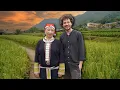
The people of this ethnic group have the custom of abducting the woman they like to be their wife. If you touch a child's head, they will believe that you are stealing his soul. Their clothes take up to 10 months to be handmade.
It is quite an adventure to travel through the rural side of Vietnam's mountains! I have just greeted you in the local Yao language, because today we have gone into the mountainous communities of northern Vietnam to live closely with people of the Red Yao ethnic group. This ethnic group, which to this day is still quite numerous, comprising some two million people, is spread throughout China, Vietnam, Laos and Myanmar.
We are just outside a town called Zapa. That's how your friend the gossip, all a Zapa, and we are moving by motorcycle, appreciating these divine but beautiful landscapes, greeting these people that by their smiles I sense that they are very, very warm. Come on, let's continue the journey, the tasty rain is starting to fall.
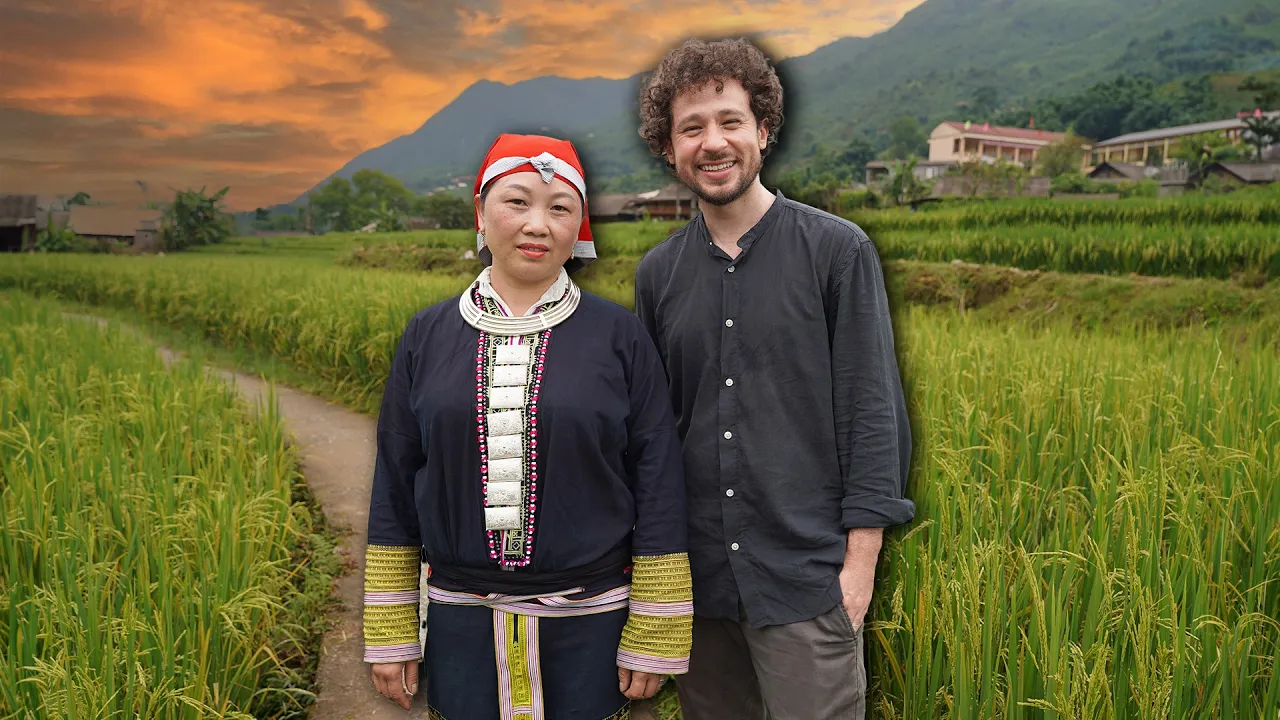
It is appreciated because yes, the heat gets heavy around here at this time of the year. Let's not say more, the beautiful ethnic group of the red yaos is waiting for us, let's go for it. I am loving the traditional dress of the people around here.
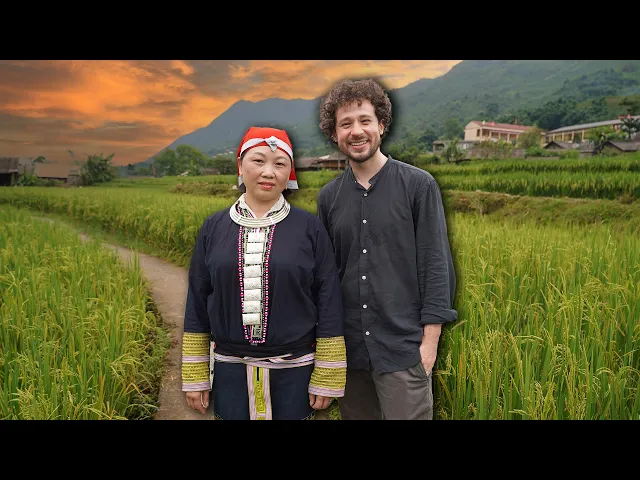
She is one of our local guides, her name is Mai, what is her name, the biggest name means girl or pretty girl. She is telling me that, in fact, this ethnic group, the red yaos, they are called because what they wear on their head, which is called zao, is red. There are other groups that wear blue, black, whose beliefs and customs may vary a little bit.
Similarly, the yellow we see on their sleeves symbolizes the color of corn. His necklace made of silver is designed more for special occasions, as well as his rings and each of these super special fabrics that we are appreciating can take months to be made in a completely handmade way. Back here she also has a little bit of silver in the back.
He's telling me that this whole costume we're looking at took approximately 200 hours of human labor. Quite rightly something quite expensive and very special. The communities here base a large part of their economy on rice and corn production.
Now, curiously, they tell me that there is not really a culture of preparing dishes similar to what would be, for example, a tamale, a tortilla, an arepa. They use corn in a different way. The crops are everywhere and give us simply divine panoramas.
Very green just at this time of the year, when harvest time is approaching. And it grows so much in this mountainous area, because it rains a lot throughout the year. In fact, on several of the roads we've been a little bit scared here on the bike, because it gets very slippery.
Luckily, you see, I have my Hello Kitty helmet here, so anything. Protected, okay? Protected by the power of Hello Kitty, my driver brings a Hello Kitty helmet.
What a beauty, what a divinity. Advantage of a lot of rain, here there is plenty of water. We have seen how even water tanks in houses are dripping, a very valuable resource that fortunately they have plenty to overflow.
On the downside of the excess rain, there are a lot of mosquitoes here, which means that diseases like dengue fever are not at all uncommon in the population, much worse. And, honestly, it's not like they have many health centers. I am also noticing that most of the little dogs that you see on the roads, on the streets, are similar to what could be maybe a dog like a shiba inu, like a very big pequimés, obviously very mixed.
A dog that with that appearance on our side of the world would be sold at a very high price. Here it is the most normal, the most everyday thing. The main animal raised here is the water buffalo.
Extremely useful, as their main crop is rice, they need an animal that can move efficiently in swampy landscapes. This animal is used both for work and for eating. In fact, it is in these villages that the famous and controversial poop soup is prepared in a very authentic way, which consists of taking advantage of every last resource of the animal.
That, in fact, we partially documented for Luisillo el Gordillo. But yes, it happens very often. What a curious fact, a little disturbing, but that must be respected because it is part of their deeply rooted culture.
For these surrounding communities, there are two schools. Behind my back we can see one of them, which is currently closed because we are visiting during the holiday season. I am told that most of the children do attend the school where they are taught to speak Vietnamese, because of course, they are all born speaking either Yao or Kumong, the two main languages.
And now, although most of the children do go to school, it should be mentioned, as in many places here you see lots and lots of children working, five year old girls carrying their baby siblings on their backs. A scenario that, sadly, continues to happen in many parts of the world. But yes, broadly speaking, the communities are concerned that most of the children have an education.
And it is worth noting that since they belong to so-called minority ethnic groups, they have access to education completely free of charge. Everything, from books to what teachers are paid, is completely subsidized. My guides here, locals, are worried sick.
They are making me put this down like a little child, because right now I almost gave myself a ranazo, but a real ranazo. Everything is so slippery. So, they no longer trust me.
I mean, they say that if something happens to this foreigner, it will be on YouTube, many people will see it, we don't want that. There it is, watch where you're going. They are teaching me how to make some corn flour.
Now, I'm learning that people here see corn flour more as an animal feed. Let's see, since rice grows much more and for them it tastes richer, more substantial, they choose to give this flour to the animals, to the ducks that they raise here, to the piglets that suddenly they were going to see, etcetera. Which, I find very curious, because coming from Latin America, it is quite normal that we use corn there, which is a very rich resource for us, for all our dishes.
I think we should come here to give them a little course on the delicacies that can be made with corn flour, because yes, I do not know, it strikes me that they do not have something similar to a tamala, an arepa, a tortilla, a cachapa, a buffalo meat taquito, a horse meat taquito that they eat here a lot, a duck taquito, a duck arepa, okay. I don't know, I am very surprised that they see corn as an animal food. Look, contrasts in the world, that is what it is.
They are giving me permission to enter here to a house, to a family, they are explaining to me here, according to local beliefs, you have to be very careful not to step on the edge under the door, because this could mean that you bring bad vibes, bad spirits, even, from outside. In the same way, that's why they usually place these types of cloths, papers, here on the edge of the door and you have to bend down, lift up and in this way you are not bringing anything bad from outside. Over here we can see an altar that they have in the same way, as in most of the Vietnamese territory there is a lot of belief that your loved ones are in the beyond, in the other plane, you have to respect it.
And over here we can see one of the bedrooms which, of course, has a large mosquito net and the kitchen of the house. I am learning a little about the theme of marriages which is very interesting and a little disturbing. You see, in these villages there are two ethnic groups living together, the Iau and the Mong.
In the Iau, whose language, by the way, is written with characters based on Chinese, adapted to the pronunciation, they base their system of bringing people together as an arranged marriage. Your parents advise you: No, look here that the neighbor's daughter, the neighbor has a lot of land and it suits us, which happens in many parts of the world, a dowry is offered, an exchange of goods and it happens. The interesting thing is that they do not wear a wedding ring, but a wedding bracelet.
It is said that the girl is invited to the boy's house for a few days, the parents try on the bracelet to see how she likes it, they do a series of rituals based on the horoscope. And in the end they like how they look together, how the bracelet looks, they proceed to write with their characters the names of the couple and so they get together and in an ideal scenario they will live happily ever after. So far so good.
When it gets a little disturbing when we talk about how the marriages of the Gmonos work, an ethnic group that to this day follows the tradition of catching your wife, literally catching her. There is a special day of the year when guys who are looking for a mate, go out with their friends on a hunt, there is no other way to put it, to catch the girl they like. It doesn't matter that the girl doesn't really want to, they are somehow mentally conditioned that on that day they have to get caught, they have to run, they have to run away.
And the belief is that the more physically fit man, etcetera, etcetera, etcetera, will be able to catch them, take them back home and that's how a union is agreed upon. Strong, isn't it? This, of course, is a practice that in modern times is increasingly disappearing, but it is still practiced.
It deserves it, indeed it does. Many people in this region of the world literally go out to trap their wives, sometimes even against their will. What a disturbing fact.
A great migratory benefit that people belonging to the ethnic groups of this region have is that they can cross the border to China and vice versa without a passport. It only shows a piece of paper given to them when they are born in these lands. This is because as there is a strong presence of ethnic groups on the Chinese side, preventing them from free mobility would hinder the preservation of culture and traditions.
Why, a person of one ethnicity on the Vietnamese side can marry another on the Chinese side without any extra paperwork or complicated procedures. They can come and go as they please, even eventually moving in. Another aspect that shows the relationship they have with China is that several of the local languages are written with Chinese characters adapted to the local pronunciation.
Something like what happened with Vietnamese in general, until around the 17th century, when they switched to the Roman alphabet, showing that a political border, no matter how strong it may be, will never have more weight than a cultural border. They let me try on a hojon here, this traditional hat, which in this size this big is called hon bion. They tell me that this is more for old people, old people or for special occasions.
And it's this heavy because it has so many layers. This one has 25 layers. Olo, Borgo, it's hard.
It could be my helmet, it protects me more than my Hello Kitty helmet. This really can be worn by both men and women, but it's obvious that it's seen a lot more on women. And what about the typical sack?
No man, it's hot, but it's really hot. Yes, you can make one. Dear Mai, our guide, invited us to her house to try a cucumber, but a huge cucumber, which is really like a melon cucumber, it is very curious.
And a little rice wine is like a sake, like a soy, but completely handmade and strong. Hey, how friendly people are here. Let's see, communicating, obviously, is a very difficult mission.
Luckily, we have guides here, but they approach you, they smile at you, the children are very nice. Although they tell me that when you greet a child you have to be very careful not to touch his head, because the local belief is that each child has seven souls and every time a stranger touches his head, he could be sucking a soul, because he is someone unknown, someone with whom there is no trust. So look, so that people here don't get misguided, don't get the wrong ideas, it's better not to touch the head of the child.
very pleasant adventure that we have had today. I have learned many things, I have been pleasantly surprised. Many thanks to the locals for their excellent reception and thanks to you for joining me in one more adventure.
See you, as always, as you know, in a few days with a new video. Goodbye.