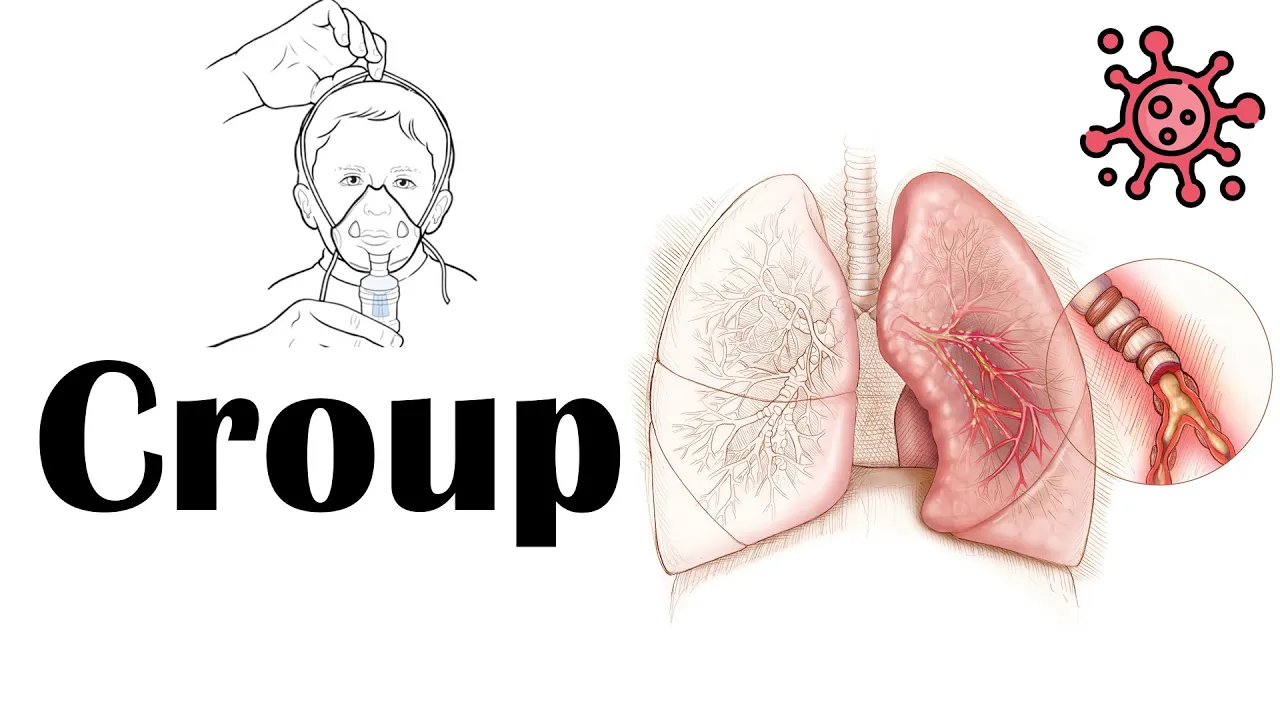
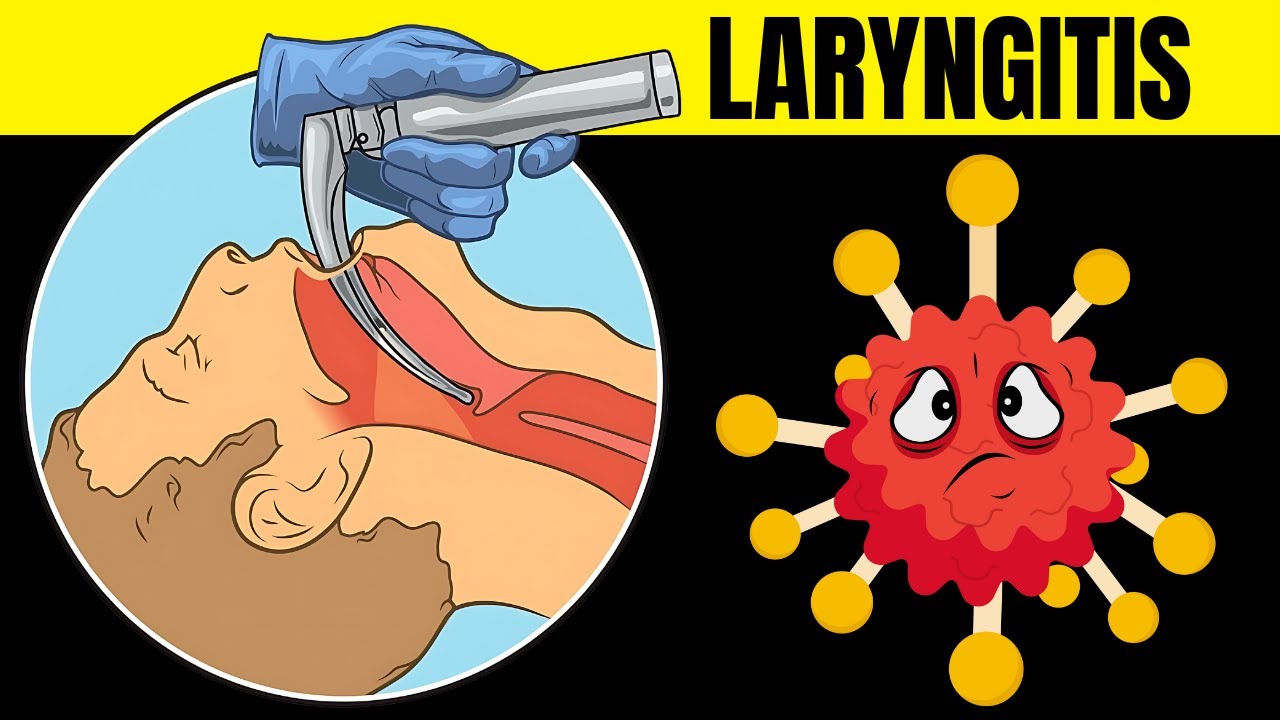
croup also known as acute larygo tricillo bronchitis or laryngotrichitis is a common respiratory disorder and is primarily a disease of infants and toddlers it is characterized by a seal-like barking cough hoarse voice or cry and acute straight ore most common infective organisms responsible for croup are perinfluenza virus type 1 2 and 3. adenovirus RSV enterovirus coronavirus and influenza viruses account for only a minority of cases first let's discuss the pathogenesis of the disease Croup is transmitted through direct inhalation of the virus or through indirect contact via fomites upon entry through the Nay sufferings the virus
primarily infects the larynx and trachea infection leads to an acute inflammatory response with result in Airway edema endothelial damage and loss of ciliary function also occur parainfluenza virus also activates chloride ion secretion and inhibits sodium reabsorption through the epithelium which aggravates the edema edema causes narrowing of the airway giving rise to characteristic symptoms of croup decreased mobility of the vocal cords due to edema causes hoarseness croup usually begins with chorizal symptoms such as rhinoria sore throat and nasal congestion which are non-specific fever is usually present and is low-grade within one to two days child develops
the characteristic signs and symptoms including a horse cry a seal-like barking cough and inspiratory stritter which are acute in onset some children may also develop shortness of breath unlike in acute epiglottitis children with crew do not have drooling of saliva these symptoms are worse at night and typically resolve within three to seven days on physical examination child will not appear toxic however in severe disease they will have signs of respiratory distress including intercostal and subcostal recessions poor air entry wheezing tachypnia tachycardia lethargy and agitation in some children with severe disease respiratory arrest may occur suddenly
during an episode of vigorous coughing cyanosis is a rare and late sign of severe croup children who are unable to maintain their oral intake are at risk of dehydration since they have increased fluid loss due to ongoing fever and increased respiratory rate these children may have signs of dehydration such as dry or cracked lips increase thirst and a low urine output diagnosis of Croup is primarily Clinical Laboratory tests do not contribute to the diagnosis pulse oximetry is important for monitoring of oxygen saturation of the child chest radiographs are typically not recommended in every child with
croup however it is an important modality to exclude other differential diagnosis anteroposterior view of the chest radiograph will show characteristic steeple or pencil Point sign in croup as far as the treatment is concerned mild crop can be managed at home after reassuring the parents they should be advised to control the fever with acetaminophen or NSAIDs encourage the oral intake keep the child's head elevated and avoid smoking at home patients with severe croup require assessment of the airway breathing and circulation they should be kept as comfortable as possible and continuous monitoring is mandatory inhalation of warm
moist air is recommended at the emergency setting oral dexamethasone or prednisolone or nebulized budotsinide is recommended to reduce inflammation and edema if the obstruction is severe nebulized epinephrine with oxygen via face mask should be given









![Seborrheic Keratosis (Dermatitis) [Age Spots] - Causes, Signs & Symptoms & Treatment](https://img.youtube.com/vi/62NlHGCnmdM/maxresdefault.jpg)