Warren Buffett the king of value investing has definitely built a cult-like Following over the years and well he's undoubtedly my investing Idol too what I find so interesting about his investment strategy the one that's made him 20% returns per year since 1965 is that it literally boils down to a short list of rules that anyone can follow so in this video I'm going to walk you through Warren's seven rules step by step with examples so that you can apply these to your own investing so with that said let's start with his first rule which is
don't hold a stock for 10 minutes unless you're willing to hold it for 10 years I'm not recommending that people buy stocks today or tomorrow or next week or next month I think it all depends on your circumstances but you shouldn't buy stocks unless you expect in my view you you expect to hold them for a very extended period and you are prepared financially and psychologically to hold them the same way you would hold a farm and never look at a quote you don't need to pay attention to them War has always described investing as
a game of psychology much more than a game of intellectual ability and a part of forming those successful thought patterns is to focus on the long term Buffett's famous quote here is don't hold a company for 10 minutes unless you're willing to hold it for 10 years and this helps you ward off the gambling mindset it instead makes you focus on the actual business you're buying and its future and giving great businesses a long time to compound is exactly how Warren has created his fortune American Express Coca-Cola Bank of America Visa Moody they're all large
Holdings in the Burkshire portfolio but each stock is also been held for more than 10 years in fact Buffett first bought Coca-Cola back in 1988 in total he spent about $1.3 billion but today through the passage of time and the power of long-term compounding that investment is worth $24.8 billion and pays Buffet $700 million a year just in dividends you've got to be prepared when you buy a stock then have it go down 50% or more and be comfortable with it as long as you're comfortable with the holding and I pointed out three times in
berkshire's history when the price of Berkshire stock went down 50% there wasn't anything wrong with Burkshire uh when those three times occurred but if you're going to if you're going to look at the price of the stock uh and think that you have to act because it's doing this or that or somebody else tells you well you know how can you stay with that when something else is going up or anything you really you've got to be in the right psychological position and frankly some people are not really careful some people are more subject to
fear than than others long story short think long term don't get caught in that short-term gambling mindset don't hold something for 10 minutes unless you're willing to hold it for 10 years that the real test of whether you're investing from a value standpoint or not is whether uh you care whether the stock market is open tomorrow if you're making a good investment in a security it shouldn't bother you if they close down the stock market for 5 years and with that we come to Buffett's next big rule which is quite simply don't lose money the
first rule in investment is don't lose and the second rule of investment is don't forget the first rule and that's all the rules there are I mean that uh if you buy things for Far Below what they're worth and you buy a group of them you basically don't lose money this is waren Buffett's famous rule number one of investing which is also made Popular by Phil town and his book rule number one and this quote might sound obvious or unhelpful but it's another one that makes you check your mindset in stock market investing if you
pick six good businesses out of 10 you're doing really well but the real secret is to ensure those four losers don't punish you waren Buffett says the most important thing to do if you find yourself in a hole is to stop digging and that's very important in stock market investing but also very hard to do because when an investor starts losing money the tendency is to convince themselves that they need to double down when sometimes in reality the best thing to do is just cut their losses and walk away but the main thing Buffet notes
in that clip that will help you reduce the likelihood of losing money is to watch the valuations make sure you buy businesses for below what they're worth and buy a few of them if you do this your risk of loss is greatly reduced a recent example of this is Buffett's investment in Taiwan semiconductor Buffett bought in Q3 of 2022 and sold it practically immediately across Q4 and then q1 after acknowledging that he quite simply got that one wrong but because he bought the stock after it was already at a very low valuation his mistake didn't
hurt him in fact it's reasonably likely he actually made money on it so remember Buffett's rule number one of investing don't lose money and in the same vein that leads us right to his next rule which is always buy below intrinsic value the only reason for making investment and laying out money now is to get more money later on right that's that's what investing is all about if you buy Coca-Cola today the company is selling for about10 to 15 billion dollars in the market the question is if you had 110 or 15 billion you wouldn't
be listening to me but uh I'd be listening to you incidentally uh but the question is would you lay it out today to get what the Coca-Cola company is going to deliver to you over the next two or three hundred years discount rate doesn't make much difference after as you get further out but and that is a question how much cash they're going to give you it isn't a question of you know it is a question of how many analysts are going to recommend it or what the volume in the stock is or what the
chart looks like or anything it's a question how much cash it's going to give you that's the only reason it's the true if you're buying a farm it's true if you're buying an apartment house any financial asset oil in the ground you're laying out cash now to get more cash back later on and the question is is how much are you going to get when are you going to get it and how sure are you that's what a lot of people miss when they start out stock market investing it's not about betting that a company
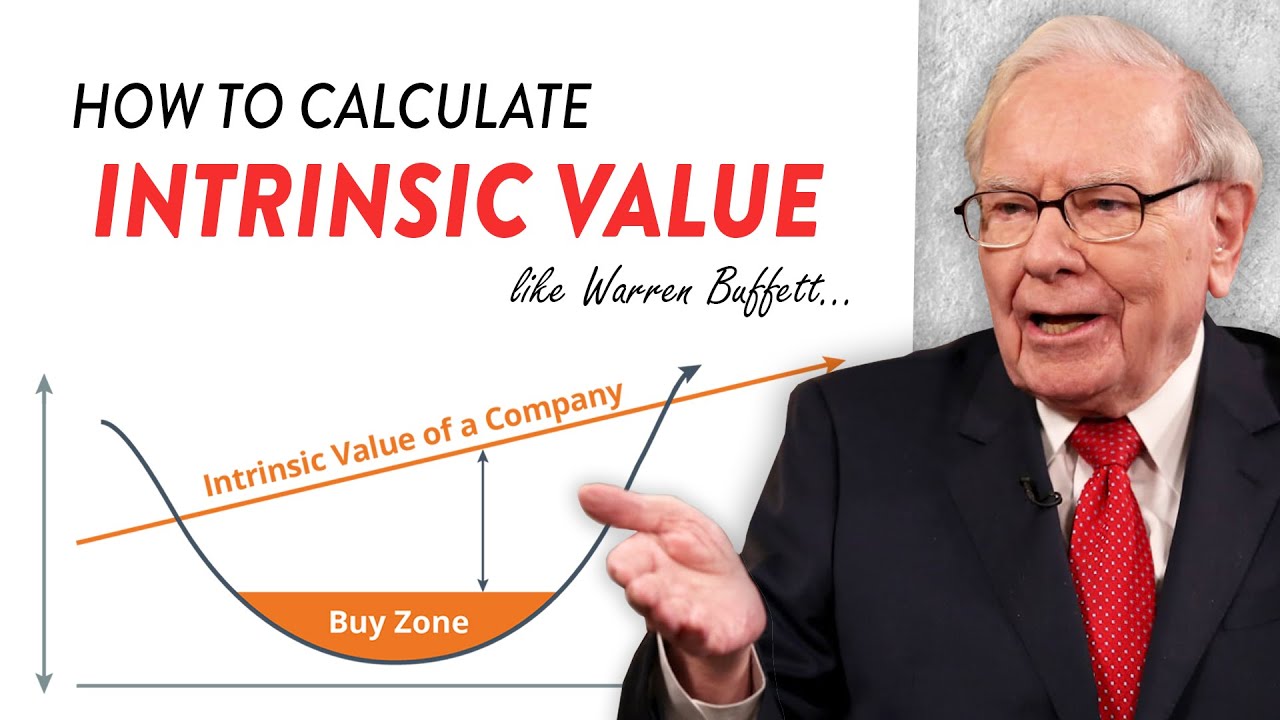
will be the next big thing it's about checking their free cash flows how well the business is growing modeling a conservative prediction of their future cash flows and then from there discounting those future cash flows to what you'd be comfortable paying for them today to ensure you get a good rate of return AKA checking your buying below intrinsic value and this topic is honestly a full video on itself so if you wanted to learn about this process in detail definitely check out the video coming up on the screen right now long story short the process
Warren uses to calculate intrinsic value is called a discounted cash flow analysis if you wanted to look it up but honestly that's what that video goes into but a great example of this point is Buffett's purchase of Apple in q1 of 2016 I mean at the time Apple had a market cap of around 600 billion which gave it a PE ratio of 12 now Buffett saw a really strong moat company that was likely to keep printing more and more cash over time and you know it was trading at 12 times ear so he bought it
today the company sits at a market cap of around 3 trillion and has grown its free cash flow from 53 billion to $11 billion per year bang so the important thing as Buffett says is to ensure the business you're buying can distribute enough cash to you the owner fast enough that it makes their current market cap look like an attractive buying price but the real question is Berkshire selling for we'll say 105 or so billion now if if you're going to buy the whole company for 105 billion now can we distribute enough cash to you
soon enough to make it sensible at present interest rates to lay out that cash now and that's that's what it gets down to and if the if you can't answer that question you can't buy the stock you know you can you can gamble in the stock if you want to or your neighbors can buy it but if you don't answer that question and I I can't answer that for for internet companies for example there are a lot of companies all kinds of companies I can't answer it for but I just stay away from those so
make sure you're buying well below intrinsic value and if you're not sure stay away and that leads us perfectly into Buffett's next big lesson which is to stick to businesses that you understand I have an oldfashioned belief that I can only should expect to make money in things that I understand and when I say understand I don't mean understand you know what the product does or anything like that I me understand what the economics of the business are likely to look at look like 10 years from now or 20 years from now I know in
general what the economics will say Wrigley chewing gum will look like 10 years from now the Internet isn't going to change the way people chew gum it isn't going to change which gum they chew you know if you own the chewing gum Market in a big way and you've got double mint and spearmint and Juicy Fruit those Brands will be there 10 years from now so I can't pinpoint exactly what the numbers are going to look like on regular but I'm not going to be way off if I try to look forward on something like
that that evaluating that company is within what I call my circle of confidence I understand what they do I understand the economics of it I understand the competitive aspects of the business and this is where a lot of investors go wrong particularly when they're first starting out they maybe use a stock screener and they can find some cheap looking stocks but they don't actually do enough research to understand the business they're buying and this is a problem because when the stock starts inevitably B ing around they just don't know what to do I mean imagine
you bought just a random company and the stock price fell 30% tomorrow after you'd bought it you know did a good deal just get better or did something fundamentally change meaning that you should actually get rid of the company you just won't know unless you've done the digging on that business and it sits firmly inside your circle of competence defining your circle of competence is the most important aspect of investing it's not how important how how large your circle is you don't have to be an expert on everything but knowing where the perimeter of that
Circle of what you know and what you don't know is and staying inside of it is all important and if I don't understand something but I get all excited about it because my neighbors are talking about stocks are going up and everything they start fooling around someplace else eventually I'll get cream and I should as Buffett says it doesn't matter how big your circle is just that you're staying inside of it and if you start drifting into businesses you don't understand it's only a matter of time before you get cramed and with that said let's
get on to Buffett's next rule which is something he's changed his mind on over the years and that is don't buy cigar Bots I've been taught by Ben Graham to buy things on a quantitative basis look around for things that are cheap and that I was taught that we say in 1949 or 50 made a big impression on me so I went around looking for what I call you cigar butts of stocks and the cigar butt approach to buying stocks is that you walk down the street and you're looking around for cigar butts and you
find this on thisly this terrible looking soggy ugly looking cigar one puff left in it but you pick it up and you get your one puff disgusting you throw it away but it's free I mean it's cheap and then you look around for another soggy you know one puff cigarette well that's what I did for years it's a mistake uh although you can make money doing it but you can't make it with big money it's so much easier just to to buy wonderful businesses so now would rather buy a wonderful business at a fair price
than a fair business at a wonderful price but in those and in all honesty that change of thinking that Buffett learned in part from Charlie Munga has probably been the biggest thing that has skyrocketed berkshire's wealth Buffett from the teachings of Ben grah used to look for Ultra cheap companies that may have been terrible but they gave you that one last puff and Ben Graham's thinking was always that if you applied this approach and bought a big Diversified basket of these businesses then on the whole you would come out with fairly strong returns however Buffett
then learned that this really was not the best way of going about things it's in fact far better and far easier to instead buy really high quality businesses and hold on to them for a very long period of time you may not get them at a PE of say three or four but if you can identify a high quality compounder that's fairly priced and you can hold it for a long time that's really the ticket we've already discussed one obvious example of this and that's Apple you know it's a high quality business I don't think
anyone would argue with that and Buffett bought it at you know a fair price a PE of around 12 sure there were probably some rubbish businesses out there in some fire out country selling for two times earnings but Buffett understood Apple's quality and future Runway and instead decided to back that and as we already discussed it worked out very very well for him so wonderful businesses at fair prices not fair businesses at wonderful prices that's the next big lesson but next up have two more investing lessons to round out the Buffett manga philosophy both to
do with psychology and this one is one of Buffett's most classic quotes which is to be greedy when others are fearful and fearful when others are greedy people behave very peculiarly in in in terms of the reactions because they they're human beings and they they get excited when others get excited they get greedy when others get greedy they get fearful when others get fearful and they'll continue to do so and you will you know you will see things you won't believe in your lifetime and securities markets I wrote an article for Forbes in 1979 I
just said how can this be Pension funds in the in 1970 put aund and some perc of their new money in stock because they were wild about stocks then they got a lot cheaper and they put a record low in 9% of their net new money in in 1978 when stocks were way cheaper investors behave in very human ways which is they get very excited during bull markets and when they look in the rearview mirror and they see a lot of Mone having been made in the last few years they plow in and they just
push and push and push on prices and when they look in the rview mirror and they see no money having been made they just say this is a lousy place to be so they don't care what's going on in the underlying business and it's it's astounding but that's that makes for a huge opportunity just huge opportunity and this has been a consistent talking point for Buffett throughout his whole investing career the vast majority of investors are unfortunately they're sheep they all get greedy together they all get fearful together they tend to do the same things
over and over again but them acting together really does move the stock market but it mostly just boils down to fear and short-term thinking so if you can break that and invest in high quality businesses during the big panics well that tends to lead to the returns that Buffett has achieved because that's exactly what he does for example in 2008 as the banking system was falling apart Buffett made some big investments in say Goldman SA sa and Mars in 2011 he bought into Bank of America he understood the businesses so he knew that his risks
were low and because of this he was able to get greedy when everybody else was panicking it doesn't take brains it takes temperament it takes the ability to sit there and look at something when I started out in 1950 I would go through and find things at two times earnings and they were perfectly decent businesses and people wanted jobs at those companies and everybody knew they were going to be around and they wouldn't buy them at two times earnings and that's when interest rates for 22% so it's about waiting for those smack bang home runs
when everyone else is convinced that the sun won't come up tomorrow but the trick is you have to show up the golden opportunities are very infrequent you won't get that many in your lifetime so when they do come along you have to follow Buffett's last investing rule which is to seize your golden opportunities big opportunities in life have to be seized uh we don't do very many things but when we get the chance to do something that's right and big we've got to do it and even to do it in a small scale is just
as big a mistake almost is not doing it at all I mean you've really got to you got to grab them when they come because they you're not going to get 500 great opportunities even in my lifetime of 28 years there's really only been three amazing stock market opportunities the dot crash the global financial crisis and the 2020 stock market crash so roughly once every 10 years or so you know you're not going to get that many opportunities so you have to stay vigilant and prep prepare yourself psychologically to act when those opportunities present and
I think that's the big thing you really do have to prepare yourself to act I mean the reality is that most people will let these opportunities go right on by they'll be watching Tik toks instead of researching the stock market even now watching this video You're essentially being given the blueprint but most people still won't do anything so the key is to act and if you're serious which I imagine you are cuz you made it this far into the video maybe write down some in inting goals you're going to do over the next month maybe
it's say invest your first $500 maybe it's to read a company's annual report maybe it's to read a famous stock market book I'll put some of my favorites up on the screen but whatever it takes put some sort of plan in place so that you do actually act don't listen to the world's best investor telling you the secrets and then do nothing the biggest mistakes we've made by far I've made not we've made biggest mistakes I've made by far are mistakes of omission and not commission I mean it's the things I knew enough to do
they were within my circle of competence and I was sucking my thumb and that is really those are the ones that hurt they don't show up any place I probably cost bir sure at least five billion dollar for example by sucking my thumb 20 years ago or close to it when Fanny May was was having some troubles and we could have bought the whole company for practically nothing and I don't worry about that if it's Microsoft because I don't know it Microsoft isn't in my circle of competence and so I I I I I don't
have any reason to think I'm entitled to make money out of Microsoft or out of cocoa beans or whatever but I did know enough to understand Fanny May and I blew it and that never shows up under conventional accounting but the co I know the cost of it I know I know you know I I passed it up and those are the big big mistakes so when you get that pitch right in your Hitting Zone make sure you swing you might not swing for many many years but when you do get that Perfect Pitch swing
hard and they my friends are Warren Buffett seven rules of investing please like the video if you made it this far and consider subscribing as well I'm going to check a quick summary up on the screen if you wanted to maybe take down some notes but thanks for watching guys and with that said I'll see you guys in the next video