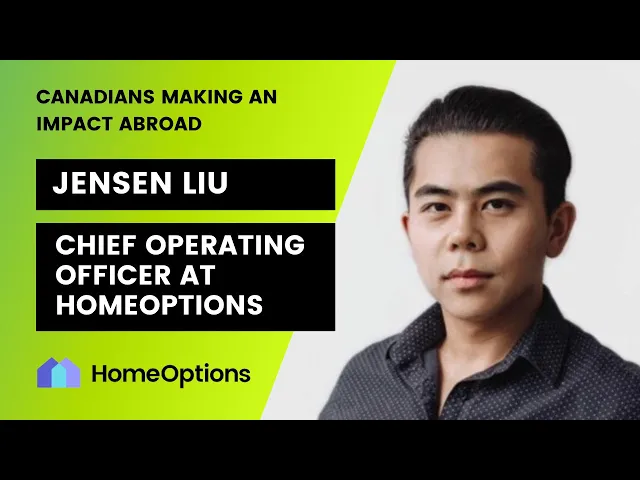
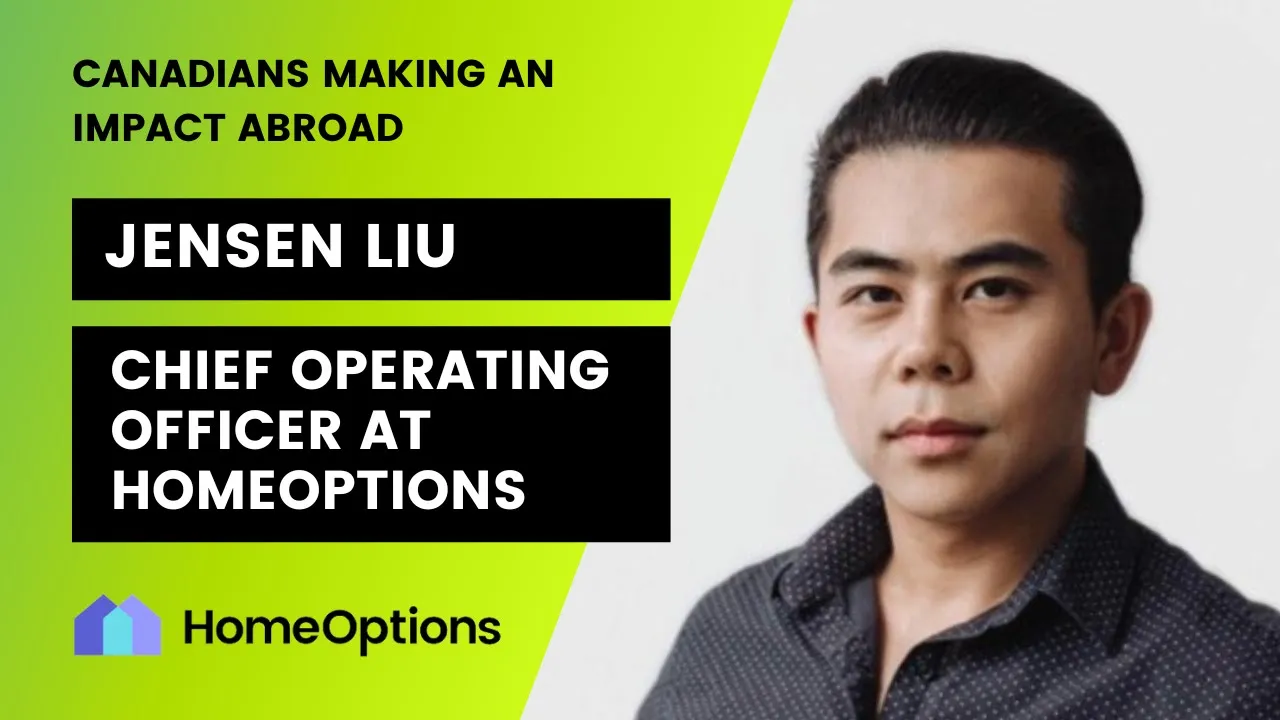
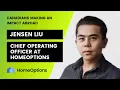
[Music] welcome to illuminae universe's podcast the cast get it yes we have a cast of celebrity professionals and entrepreneurs on this show my name is Alina and I'm the founder of illuminae universe where we Mentor job Seekers and help employers to Fast Track their business goals for this episode in particular I have invited Jensen Neo who is the Chief Operating Officer at home options home options pays owners to be their future real estate broker Jensen and his team raised over 9 million dollars USD in seed funding and are thriving in the tech start of saphir
Jensen will share today about the importance of developing key skills and attributes that will help you be prepared and thrive in the future of work start off from his journey as a business student at Western University in Canada to where he is today before further Ado please welcome my friend Jensen onto the show so diving into our first question how did your post-secondary experience lead you to where you are today would you say that you took a unique path into the world of Entrepreneurship so let's say the biggest impact perhaps is the experience of learning
structural thinking in University so if you think about I went to IV business school so essentially what they taught there is mostly case method and before that I studied economics and so primarily you learn about different Frameworks to understand in the economy and so a lot of the detailed knowledge that I learned there was not particularly useful in everyday life or in the business world but one important thing I think I caught while I was there was that these classes taught us how to put the world into a structured way and for you to approach
it the instruct your way and analyze it it's not always the best structure you have somewhere to begin and often it helps you to solve many problems and allow you to approach problem solving in a very guided and disciplined way I saw our State University certainly isn't worth the experience the biggest thing that impacts me is the learning of the structural thinking method as well as really seeing this particular competition out there that kind of inspire you to perform and work harder that's interesting you mentioned a lot about structural thinking and my question for you
uh is a little bit different because entrepreneurship sometimes involves a lot of creativity in making decisions on the go and that is the exact opposite of structural thinking so what is your take on that and how do you balance the structural thinking side and also the creative process well I think the creative process itself requires structure right and so you can create idea very easily ideas everywhere execution is really the key and even just the idea creation itself right you can think about idea that you want to start a business with but then immediately the
next step is really looking at your idea from a structural person expect to look at whether this idea has a chance of succeeding and so you can look at it in terms of the market competition the rather really there's a real demand how big is the market and then suddenly it's all analysis on structure to help you understand whether this has a good opportunity to succeed and once you have the idea the next step is really execution and so execution really if you look at all the successful company they're required to be very similar step
to reaching the next level you need to hire a team that is a structural process you need to build your Finance you could raise money you need to build up operational procedure to really scale right and these are all structured how did you go from an IV a Western Ontario ivhba student to where you are today what were the key steps that you took also for me I would say there are it's relatively uh non-traditional so I think a lot of people who left Ivy went into either traditional Finance essentially Investment Banking Merchant banking corporate
banking or into the Consulting world I have always been interested in entrepreneurship so right after graduation I went to this accelerator in the Bay Area called Plug and Play did you ever expect or imagine yourself to be where you are today have you ever thought of all of this happening was it expected planned or was it more so unexpected and unplanned it's expected in this sense that that's part of the dream right and so you want to go somewhere you must have a goal but it's also unexpected in the sense that you don't know uh
when and where you can get it but it's just a Direction that's there right so just to confirm that I'm hearing this right you've always had somewhat of a plan but it's just the specific steps sometimes that involves some spontaneous decisions or would you say that you literally I know ABCD and you follow through exactly that well I think from a larger perspective right there are somewhat of a plan so you go to a place where you can learn rapidly and gather resources that can help you right and so where is that place it's hard
to say this could be in a consulting firm this could be an investment Bank it could be at accelerator or it could be at VC right but it doesn't really matter where it is it's a place where you do get that uh as their starting point it's a good starting point where you can learn a lot very rapidly and this is the specific place I don't know but the rushed location or it's a characteristic of the location I do know this is so funny because Justin we've known each other for such a long time time
ever since high school and today I think I've come to the new and discovered assumption that Jensen is a planner Jensen needs so the next question for you is an interesting one do you believe that in life and also in important career moves that we make there always needs to be a plan well I think in general there should be some other plan uh to guide the general direction right but we cannot always expect a plan can be executed to the PornHub what we plan right and so the rest is adaptation but if you don't
have any plan then uh it's a little more uncertain and I think it's an uncertainty a lot of it's your lower proficiency because if you know the general direction you want to go but you don't spend any time investing on your way there then it's very hard to get there this is so cool I'm hearing a completely different perspective from the way I think I absolutely believe that sometimes in life you don't need a plan and the best decision sometimes are made when you don't have a plan when you're just making it in the moment
and I think that's a part of life and so from the way I've always approached my business I I started Illuminating and I never thought I never planned it for it to be what it is today but it always feels like I've made changes and adjustments to the business move while I was on the go getting intuitive feedback and implementing and testing it out if that doesn't work I'm changing the whole plan if that doesn't work I'm changing the next step or or I might take a step back so so it's it's really enlightening to
hear uh your structured thinking because I I am completely different in that way um and I think this has to do this has a lot to do with the role that you're in as a chief operating officer so Jensen we know that you are an incredibly successful CEO what are the main traits and the skills is someone aspiring to enter this role or the specific industry should develop well I think I'm pretty far from being incredibly successful given that uh it's a startup that I am working at but I would say you see overall certainly
come from different uh backgrounds I would say startup is a much more flexible background in terms of what um which background you can come from and in larger company it also depends uh this role you can come from Finance can come from operations and even sales and so there's definitely no standard pass but I would say uh operation a lot of it is processed a lot of it is structured and so certainly if you do want to enter uh or taking the co position I would certainly recommend a good understanding of the general business and
management knowledge to start with so if you were to list out the top three skills that someone should possess in a CEO role but what would they be number one is leadership right you are and they're really depending on the organizations your overalls are quite different uh you know from you know meta to a small startup but uh certainly leadership skill is very important as you you are at the end of the state not just managing uh business but managing people and I would say the skill sets why it's uh aside from leadership really depending
on the stage of the company so if you're in a really early stage startup you should be very flexible yeah adapting very quickly but when you're in a fast Skilling company then your skill set uh might be you want to be able to build process build rules and once you're in a larger company that that changes also rapidly but I wouldn't know because I was never there and what's the third one you have to say one more right I think really many skills there to have and I would say leadership really encompasses a lot of
things there for example I think uh as a CEO you likely are managing a lot of senior Executives and uh you're not really doing a lot of day-to-day things but really uh coordinating uh work across organization right so I think having the ability to manage very smart people as well as the empathy to do the work I think it's very important I love that you know a couple years ago a friend 's homemade that you should always have to hire people who are smart who are more capable than you and at first when I heard
that I was very shocked uh but now you know seeing the way how illuminae has grown just from my personal perspective I can I can absolutely say that I think that was the best advice that I've ever been given and I think it reflects a lot of what you just said as well is being able to work emotionally and being able to Showcase emotional intelligence and work with people who are sometimes perhaps even more capable than ourselves and trying to bring their attributes to uh to to to the best that they can be so Jensen
given the interesting times we're in what is one piece of advice you would offer to someone currently striving to attain their dream job number one certainly is have the courage to dream so if you have a dream you should give it a try no matter how unrealistic it is and number two is I think have a plan of how to achieve it right into your dream job is being accountant but you don't study for the CPA then it's hard to be accountant if you're not a CPA right if your dream job is to be an
entrepreneur one day then you should get skills to get ready for that and then I think the certain ones are really adaptability so be able to adapt to any situation and try to make the best out of it because at the end of the day a lot of it's luck but often you will get some and uh in those situations you should see that absolutely Jensen I think for people who are religious they might call this this entity and for for others they may call this entity Universe whatever it is whoever it is I absolutely
believe we get back as much as we give out and so I think when we are being positive like you said dare to have a dream and have the courage to have a dream we are giving out so much positive energy with our actions followed it is oftentimes also positive results and so I love that piece that you just share is being able to have the courage to dream and have a plan to follow through with that dream and adapt love that beautiful process there and so my last question for you Jensen is what are
some essential skills that you think individuals should develop in order to thrive or what do you tell yourself when you need to we all know that a lot of people don't like change yet change is the only constant in today's world so what is the narrative that you tell yourself well the narrative is really that you have to tweak your framework of understanding this world or particular situation right and taking the new information and come out what's a different calculation of what you should approach this new situation is and uh try to make the best
out of that situation leveraging your new framework uh with a new input I think with a lot of this adaptability piece that we talked about one crucial component is what you mentioned earlier courage how would you recommend someone to develop courage out what does courage mean to you I was saying really one you can say it's a courage and perhaps the other is the illusion or I would say I think the bigger part is that um to have the environment for example uh if your environment is in a place where the most successful person is
your local landlord or someone that runs a 30 person business then it's difficult to dream about becoming a Company CEO that runs a multi-billion dollar company but if you're in an environment where you have you see people like that succeeding all around you that maybe it's easier to have that courage and sometimes you can call that the illusion of the possibility that you can be the next Steve Job in the Bay Area it's interesting you you use the word illusion to me it sounds like it's a combination of influence and the exchange of knowledge there
is a quote that says you are the average of the five closest people that you surround yourself with and I think that is so true because in order for us to really get to where we want to be or who we want to be you should be talking to people who has actually done it people who's actually been to or been where we are today and have successfully gotten to where we want to be so I I absolutely love that piece of advice and Jensen thank you so much for coming on to our podcast it
is such a pleasure to have you here thank you