[Music] [Applause] well I didn't know how many people to expect here today I thought maybe six or eight until I heard free food was available then I knew there would be a big crowd I have found food to be the only inducement that students find believable I uh I stand before you in my my fishing TOS I was in southern Chile until the day before yesterday fishing for trout and coming home I had expected to stop in Boston to pick up my corporate government's togs which tend to be spin pin stripes and red ties and
shiny shoes because you can't talk about corporate governance unless you're dressed up and look as if you're a an executive so I'm quite ill at ease in these talks I need the support of a costume so try to think of me as in my suit and tie uh it's uh it's wonderful to be back in the City where I grew up I grew up in Pittsburgh and and for many years labored under the belief that Pittsburg did not have an accent but even recently I have heard myself recorded and I said to myself that fellow
is from Pittsburgh people in Boston talk funny as you know so it's nice to be back in the city where you pronounce the words the way they're spelled and it's also nice to be back at this University as uh you know I have all my degrees from Carnegie carnegi Tech back when it was as we say the real Carnegie then you sold out to the melons MIT would be willing for the right price to sell out to anybody but but we haven't found the right price yet uh uh and and uh I I was given
three degrees on the the mistaken impression that I had learned all the things they were trying to teach me but uh I have the degrees anyway and so I Come Away with a very high regard both for Pittsburgh and for carnegi and and it it is a an opinion I share widely with many people uh people in Boston can't imagine anyone living in Pittsburgh uh and I often ask them if had they ever been here of course they haven't but uh I tell them they would like it and might might even move if they had
the chance I think you are all wise to have chosen to be here it's a great place and I uh I know you all go on to do great things uh now you've heard only a brief smattering of my various accomplishments uh I study my resume with great care and and and applaud I always hand it out to my students asking them to be impressed uh I've done so many things uh I tell my students that that when they get as old as I am they will have done many things so uh my resume is
more a testimony to my longevity I think than perhaps anything else uh my uh you will discover from my resume that in in in my my various careers I have drifted a bit uh my early careers were based largely on Applied Mathematics which by the way I recommend to all of you I know you're exposed to a bit of that here uh and then as my my middle careers I drifted toward the softer Sciences of economics and psychology and in my latter days I now deal in matters which are almost purely a matter of opinion
uh and I draw on what is alleged to be my vast experience to share with people who do the real work of the world and it's been it's uh I'm not sure that's progress but it's my progress that's what's happened so I was invited here today as I understand it to share my opinions and that's what I will do uh and L you think that my opinions are limited to corporate governance I should let you know I have opinions about everything all of which I'm happy to share so if you have questions on any subject
I'm ready now most people most sensible people only think about corporate governance when some outrage occurs uh an economy collapses because of corruption our Corporation collapses because of skull duggery our CEO is vastly overcompensated uh and we see these events with great frequency in the morning papers it used to be I now as you may know uh I teach a course at MIT about corporate governance and I should tell you there's nothing like the sound of your own voice to persuade you that you know what you're talking about and I have now taught it often
enough that I'm certain I know what I'm talking about but um uh I uh so and and uh we read we read about these things and then we just go back and wonder why they allowed these things to happen how did they decide to pay the CEO that much how did they allow this corruption to occur how did they but that takes about 15 minutes for our outrage to die down and we we go back to work and do what we do every day and then the next morning we read the newspapers and discover it's
happened again and and it's a very reliable uh sequence it used to be when I taught this course I would find particularly egregious examples of these things and I would make clippings and and throw it on I file on the floor make a pile and when it came time to teach the course i' put these things together and sort them in the order of their Badness and I finally decided it was a it was just a waste of time and I then shifted to knowing that on the morning of class I could find in this
morning's paper an example good enough for my purposes so these things happen they happen with great regularity now uh what do we do about all that well most of us do nothing we fume we we sputter we say how could this happen these terrible people why are they doing it they make all this money but we do nothing nothing uh occasionally lawmakers Rouse themselves driven by some outrage or other to pass a new law the sarbanes Oxley being the latest example well-intended totally probably ineffective but well intended maybe does a little bit of good I'm
all for doing good and maybe it does a little and you know much earlier stage we passed this Sherman Antitrust stacked I'm sure it did some good little bit of good but it certainly hasn't eliminated the news in the morning newspapers they are still reporting outrages and I am here to confess I have no cure I have no cure these outrages will persist they will recur you read the paper tomorrow you will find a new one uh I I neglected to clip this morning's newspaper but I'm sure I could have found one which would be
an example today so I have no cure and the result of this is I have no publication record on this subject I write in deeply insightful essays which I read to myself and I say that fell really understands but I don't write anything that you would find particularly I don't know what impressive or insightful so the question is what do I do to help if anything the answer is I do what I'm doing today I have the opportunity by luck as much as anything to have access to students at MIT I I could equally well
do it here with the same degree of optimism who have arrived there through an incredible selection process they started in every corner of the world they were the best students in their Elementary School their junior high their high school they went by Dent of great sacrifice to the best universities they could find the best of those come through another selection process and they are like you and like me lucky people who have somehow drawn favorable cards favorable genes favorable parents favorable opportunities and you're here with the best Prospect in the world of influencing events there
is no better bet than you and I think if I can transmit to that group of students some tiny insight into ways this problem could be resolved I can't do better I think if I wrote a book people would read it but I have more confidence in my ability to look you in the eye and make you understand what what needs to be done without telling you how to do it than any other method so when I teach my course I ask my students to write me a paper every day and I remind them frequently
that shorter is better than longer because I read them all and I have about somewhere around 65 or 70 students and I see these papers as a form of conversation because I get them midweek by email of course I read every one of them make notes on everyone and pass them back and we have a conversation through these papers uh and and uh as a result I have a I have a little bit of a gauge of whether the students are are learning anything can anybody share a bottle of water with me I maybe there's
one thank you great uh and so I I tell my students uh that in addition I give them a paper every every class but in the last class I told them I have one last assignment for you the world is not very well organized we see all kinds of evidence of difficulty people blowing each other other up shooting each other leading movements of vast destruction and I say uh it's clear that governments lack the capacity to control all these evil influences and it seems to me that organizations of some form or other whether business or
otherwise are the context in which most of us live most carefully uh they tell us where to live how much we're going to be paid uh they provide meaning for our lives and as graduates of this school or MIT you will go to work in those organizations and if you can make them more effective you will provide people real opportunities other than shooting each other for their energies and their abilities so I I leave my students with one last assignment which is to go out and help save the world and when they email me as
they often do in later years I always end my email by saying could you send me a brief report on what you have done to help save the world and I tell them to be honest I don't care whether they make a lot of money or whether they become famous although I am not disappointed when they do those things but I teach them in the hopes that their work will do some good so that is my final assignment and will be you will not be surprised to know your final assignment but now we're going to
get to governance you had thought I'd forgotten the subject uh okay now I'll start with an observation that will lead to a definition governance is a widely bandied about word most people don't know what it means which allows me to Define it for myself so I start with an observation every organization will talk about about businesses the title is Corporate governance but I would like to think about business not corporations corporations a business but there are many other kinds of businesses but every corporation every business has two things in common one is a CEO now
think about it it's a peculiar thing an organizations take thousands of different forms but all of them have a single CEO now somebody will put up his hand and say oh no some have two CEOs that lasts 15 minutes and one of them kills the other and now we have one CEO okay so every every every business has a CEO a constant and and if you think about businesses every business has an owner okay now in some cases the owner is complicated it could be the state we know there are state-owned Enterprises in many parts
of the world there are Corp there are organizations where the owner is a group of faceless shareholders numbering in the millions uh there are corporations that are owned by nonprofit groups there are organizations owned by families by individuals by all kinds of people but if you think about organizations I think it is very useful to start with the owner ask who owns it and it's sometimes tricky to figure out uh and I uh we don't have a lot of time but if you're interested I could give you references to people who have done studies of
how organizations are owned around the world and they differ greatly uh but we don't we can't go into all that okay now so I as you as the length of my resume suggests I come from a bygone era I do not use PowerPoint but I'm even worse than that I don't even use overhead slides I use chalk but I don't do the work I need I I detect an artist this gentleman right here is going to be my man are you ready yes are you excited about this possibility I will be soon yes perfect perfect
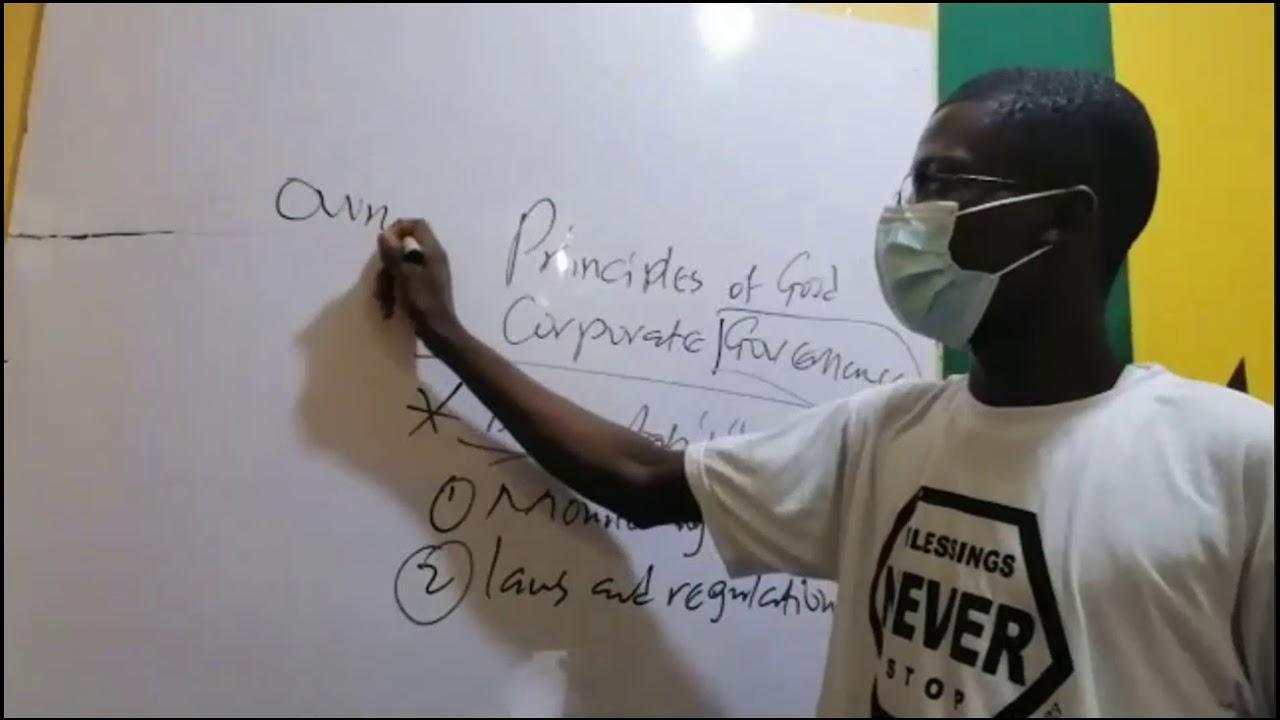
you are my man where's the chalk there it is okay now CEO right CEO this is why I always ask students they write better than I do and up here right owner if this is becoming too complex for you raise your hands and I'll go more slowly okay now in in the typical organization that's it the owner and the CEO are the same person they run the pizza parlor they run the barber shop they do the work of the world that is that is the business organization that dominates the world okay okay no governance problem
there folks the owner and the CEO are identical okay some organizations have we'll put down here employees It's Quickly becoming more complicated I recommend organizations with no employees you would you'd like it a lot better okay and some organizations are even careless enough to have Executives really a mistake they fit in here XC another reason I don't write is I can't spell these are options you don't have to have these people but you do need these two and some some some organizations labor under an even greater disadvantage they have Boards of directors and they fit
in here are you is this too complicated so far okay now this is the artistic part of your exercise you draw a hoop down here like this management management is what CEOs do okay and all the all the hierarchy below that's what CEOs do that's what you study in this school that's what we teach in this loan school that's marketing Finance organization operations all those things that's all we talk about and the CEO is God or thinks he's God or hopes he's God but the people down here are led to believe he's God right he
has Vision he has who I'll spare you all that okay now draw another are you ready up include this guy right governance that's governance governance is if you think about it the owners own all the assets the owners own it all governance is the way the owners control the use of their assets and as this curve implies the owner doesn't control the use of the assets through the employees he controls the use of the assets through the CEO okay Mr steinbruner doesn't tell Mr Jer how to play whatever it is short stop second base one
of those he hires and fires a general manager or the manager the CEO that's how owners control the use of their assets not very effectively in many cases and that's what we're going to talk about so governance is the process by which the owner controls the use of the assets through the CEO and the CEO does what he does does the CEO does what he does with the owner's assets the CEO uses the owner's assets okay is this too fast so my definition of governance is from the owner to the CEO and management is from
the CEO down so the CEO is the only person in both Loops now I will I at the advice of one of my Japanese students I was encouraged to mess up this drawing a little bit I prefer mine to his but he pointed out that the board of directors sees a bit through this line to this level because they're interested in succession they're interested in in what these people think of this person so they Peak through the line but they don't act through the line so they they suck information across this border but not a
lot and the executives Peak at these people a little bit they go to meetings and they make presentations about Finance or accounting or or marketing or whatever and so the 's a little leakage across the line but if you draw a circle around the directors and these people that's the folks who kind of run the business they run the business and they have a they have at least an awareness of each other and the CEO is elected to his job by the board okay the board once a year piously after having been elected as directors
by 97% of the voters in in a totally Democratic process unfortunately there there only one slate there there are no options uh corporations are run like the well-ordered old Soviet Union run exactly the same way Communist Party 97% of the vote uh they elect the CEO uh and incidentally when the time comes they fire the CEO with a Pious vote they say vote we terminate the CEO all in favor done but the CEO not only runs for office with these people but he runs for office with these people because if nobody will is willing to
work for the CEO the board will fire him or her and so these people also vote for the CEO but they vote by coming to work every morning and if one morning they don't come to work the CEO loses his job so the CEO has to keep these people amused by providing the capital they need to have fund and he keeps these people amused by occasionally allowing a dividend to be paid and if he does that with appropriate amounts everybody's happy and he's a great CEO so that's my definition of governance governance is here now
if you we should have planned ahead We'll erase this have you all made this chart on your on your flesh a tattoo perhaps okay okay now we're now going to you you you proved yourself capable of circles we're going to do straight lines now from here to here horizontal straight line good good okay this line contains represents all the businesses in the world they all fall in this line and we're going to put it this end we'll put C uh we'll put CEO right here down here okay CEO and we'll put CEO over here okay
the line represents all the CEOs in the world they all fall on that line below the line are Executives employees if any imagine all the dangling organizational structures under the CEO as you go across the line okay owner Pizza Place barber shop owner CEO same person make a DOT all those companies where the CEO and owner are combined over here owner okay now but make a DOT perfect could have been a little to the left but okay straight line huh that's very good I always draw it the other direction that's better I think you're you're
I'm a lucky draw here now the distance between these lines represents the distance however you define it between the owner and the CEO okay here the distance is zero let's consider General Electric between the owner and the CEO we'll write in uh financial advisor it's the pension plan committee it's the financial advisor somebody who advises the owner on how to deploy his assets then you come down here and you write in Institutional Investor the financial adviser says why don't we put money in the mellan fund or the uh S&P 500 Index Fund or who knows
whatever else private Equity is becomeing fashionable and about to blow up but we're putting lots of money there uh then we come to the fund manager okay and now we come to the board of directors this is to illustrate that if you are a sharehold if you are an owner of General Electric there is some distance between you and the CEO the CEO does not know you and you do not know the CEO okay now at this there there are several other contrasts between these two ends these people I use this sort of soft term
care deeply about the Enterprise okay care they think about pizza all day long they think about customers they think about the dough they think about the flour they think about the tomato sauce and the cheese even most of all they think about nothing else than the business who cares at this end the owner doesn't know he owns GE has no idea this person doesn't ever think about GE he thinks about his clients how am I going to persuade people to pay me my fee for giving him useless advice so he doesn't care the institutional invester
he cares about selling his funds he would like good performance but good performance of the funds and he doesn't care what they own he would like them to own companies whose stock increases in value that's not his problem he just wants to sell funds the fund manager who has no idea what to buy but he practices Very Superstitious rituals to decide hoping against hope that the funds go up and that he buys from people dumber than he uh and so he doesn't care about the company he cares about this the trajectory of the stock price
then we come to the board of directors do they care the answer is yeah sure they care but they care in a way that I call Professional they want to do it right they they uh but they have no as we say in the trade no skin in the game it's not their life it's their reputation but it's sort of round the edges it's something they do on the side and then we come to the CEO and we ask ourselves does the CEO care about how it performs and the answer is in my experience new
CEOs care but old CEOs get rich and they find Davos more attractive than de Mo and they drift around the world and they play golf and they make speeches to analysts meetings and various things and and uh they their attention is known to wander from the performance of the corporation so you might ask whether anybody cares these people have the skin in the game they they derive whatever benefit leaks out of the corporation all the way up to them but everybody else works for a for a fee uh largely independent of the performance of the
organization has been proven by various academics over the years so that's now that's that extreme in between we start as the little business here prospers all businesses start here even GE started here General Motors started here IBM started here so everybody starts here and if the business succeeds you need cash so you go to the bank or you go to your uncle or you go to your father or you go somewhere but suddenly the owner is not identical to the CEO the distance begins to grow and then you say we' run out of money in
the family or maybe we lost it the last time so we have to start with a new group uh you begin to drift out you get out into people who are like Venture capitalists you know they're they're in pretty close close here they they give you money but uh but they keep their fingers tightly around your throat and and usually own about 80% of your equity and are quick to remind you that you are replaceable in your lofty position as entrepreneur and then you drift out into the sort of Mezzanine Financing and and private Equity
groups and you head off this direction now somewhere along here uh we you're doing fine you're getting bad instruction draw from right here over to here that's it if we had drawn this properly that would be horizontal make your chart more attractive but anyway what happens here is organizations decide to sell shares to the public and so instead of having private owners getting more and more distant from the CEO you suddenly say why don't we take bring in the unwashed public they have a taste for returns and we have this very promising company will make
an IPO so let's sell 10% of the stock to the public and I think in most parts of the world that requires you whether you want it or not to have a board of directors you you must have a board of directors so the board of directors starts with the IPO but somewhere but the owner uh sometimes the the owner founder is still there and even though you have public shareholders the owner is still the owner he acts as the owner so control which has been clear up to here now becomes a little fuzzy because
you don't know whether the control is kept with the owner the dominant owner or the new IPO 10% shareholder but somewhere out in here people sell control and the old Founders get out and they turn it over to these folks okay we don't know when that happens uh in the case let's say of a digital Equipment Corporation dearly departed digital equipment uh Ken olssen who started here was still running it when he was out here he ran it cold turkey as and had his fingers tied around the throat of the CEO so even though you
have a public company you don't know that you have a public company the board is a sort of decorative object that the owner entertains from time to time or in some cases the owner disappears and you only have the folks who come to the party the uh the directors okay now this peculiar structure as far as I can tell with control that is where control has been Di has been seeded to that group only exists in the United States it is a peculiar institution in Asia if you describe this structure they look at you with
amazement how could you run a company with a board of amateurs of folks who know nothing about the business and the law in the United States almost requires the directors know nothing about the business they can be they cannot be suppliers they cannot be customers they cannot be financers they cannot be lawyers they cannot be investment bankers they have to be poets poets perfect qualification uh so this structure exists only in the United States as far as I can tell uh you talk to people in Latin am America I've just back I could tell you
about my trout fishing that's another subject uh they say we have a great company here I just was with a good friend in Santiago he runs a big operation identical to Home Depot in fact Home Depot tried to invade Chile and he had them thrown out and bought their store stores and now runs them makes a lot of money uh he says I have a public company he said what do you mean you have a public company I'm listed on the New York AR exchange folks my friend Jose Lis runs that company as if he
owned every share of stock and he only sends an occasional dividend to New York to to amuse them and keep them interested and he just sends them as much as he thinks they need it's a it's a AC of Faith to invest in any Corporation but especially his and I visited with people in Taiwan one time who are a tough Bunch guy sitting next to me destroys super tankers that have run out of their useful lives he chops them up in something like two weeks never taking them out of the water I don't know how
he gets the last piece out but I didn't I didn't ask uh uh he says you know it's it is absolutely amazing he says you have a sort of reasonable business here in Taiwan you uh you hire a lawyer and an account and you print up a a kind of document you can find the form you print it up you mail it to New York along with some shares pieces of paper printed nice print fancy top meaningless words big stamp at the bottom mail to New York and they send you back money and if you
need more money you send more paper endlessly they they'll they'll buy anything in the hope maybe someday you'll send them some money anyway that's the nature of our system It's a Wonderful system I've lost track uh huh I think I'm finished no uh let's see here we go now let's talk about some other now this is the this oh I should make it clear who elects the CEO who elects the who votes oh no excuse me the the board elects the CEO who elects the board what a quaint notion do you think shareholders have a
vote for the CEO not very many he votes the shares and if you look at most public corporations 70% of the shares are owned by institutions and the institutions vote the shares on behalf of the shareholders so it's even less Democratic than you thought you still get 97% of the votes but they come from a different place okay now that's the static picture now we're moving into the second half of the course we move into Dynamics now why if all businesses start here right all businesses start here they have to migrate through all these various
intermediate forms in order to end up here why do they do that why do they move to the right I if if we had a reasonable amount of time we could work on that for a while but I'll tell you the answer uh they do it for many reasons number one they need money for for good purposes they need money to expand the business to build plants to buy equipment to to to to make the business grow and prosper what which I call useful purposes and for that they have to deal with more and more
owners of different Stripes Banks and private you know insurance companies and all those kind of people and ultimately they have to deal with the public and that's where the money comes from so one reason they move to the right is to get money but there's another reason they moved to the right and that is the owner who has become rich and has lazy children who he doesn't trust if he's wise um says I want to get some money out of this business uh I can't continue to Bear all the risk and those of you who
are careless enough to study Finance know there are two kinds of risk there's a market risk which we can't avoid if we are willing to invest and there's this there's the firm specific risk uh which you can avoid if you diversify your portfolio now these people have undiversified portfolios and therefore they bear both risks and therefore if you were thinking about the value of the company to them you have to Discount the the value by the total risk and these people only bear Brown figures half the risk so you could imagine they deserve a lower
rate of return so the same asset as it moves across the Spectrum through all the forms that it takes are drawn to the right by decreasing expectations of returns these people will give you money twice as much money for the same asset as those people so the returns go down as you go to the right and the cost of capital goes down sharply and the advantage that this terrible structure has is it has access to the cheapest capital in the world mutual fund shareholders who invest at the expectation of what seven eight n% these people
wouldn't give you the time of day for 9% they're looking for 30% so if you can find somebody to give you money at at uh 8 you'd sell so the thing that draws companies from this form into that form if they're successful is in part access to cheap capital and when I talk to my friends in China or Latin America about why they all stop here and never sell control I tell them that's a quaint idea Poss possibly the wisest way to manage their business but they will never get access to cheap Capital because nobody
trusts them they think they'll steal it and the only virtue of this structure subject to the outrages that you read about in the newspaper is that it at least is alleged to try to deliver value to the shareholders consistently and does so with great regularity uh with with the exceptions that we read about so there are lots of forces that an arrow that take things to the right now when I was a student I studied at a wonderful university called carnegi and to my enormous benefit I studied chemical engineering and in chemistry you never have
reactions to go in Only One Direction so we need another arrow back this way so if access to cheap Capital draws comp companies to move to the right and restructure themselves adapt themselves to get to that final stage what could possibly draw companies back to the left well we could have a long rhetorical conversation but I'll tell you the answer these people don't pay attention they don't care performance declines not necessarily overall but in pieces so chunks break off and and and are are are you know GE decides that the division that manufactures locomotives isn't
competitive so they divest it and they sell it at a price to private Equity private Equity say you make the price low enough I'll buy it so private Equity buys it at a high rate of return the GE shareholders have lost the asset which the GE management decided they didn't want the private Equity guys say you've been treated badly by GE we love you we'll give you Capital we'll we'll make you a Great Locomotive maker and the minute we get you fixed up we're going to sell you to the public and so what you have
on the board here is not a a a Direction but a flow so companies move this way and this way and back and if I had the witth and a and an effective graduate student who was smarter than I am we could estimate where the optimum performance is but in my view GE is just a phase businesses go through they they drift up there when everything is fine and you can sell it to the public but you are sure once it gets there it will not be treated well and it will one day find its
way back into the pot of the private folks only to be repolished and sold back to the public so that's governance and I tell my students governance is a little bit like plate tectonics here we are in Pittsburgh hasn't been an earthquake in a thousand years that's true of Corporations carnegy is a is on a plate seems solid MIT is on a plate maybe not so solid uh but and and companies are on plates like AT&T was a plate it it was over there and the world changed and all of a sudden there was a
earthquake and disappeared Kodak is in the process of being drawn under a plate somewhere General Motors Gulf oil has disappeared and so there are tectonic kind of jerky movements back and forth and when you read the paper keep this chart in mind it's all on there that's what you read about you can say ah I see what's happening for example the Blackstone Group we read the other day uh a semi- resectable private Equity investor guess what decided they had access to cheap capital and they sold it to the public or they're trying to sell it
have they have they done that yet I don't know they were they're trying to get access to public money and of course once they do the partners in the Blackstone Group are suddenly working not just for themselves but for the public and they're becoming more like all the time and I guarantee you the returns will go down and new private guys will reemerge and so my my thing continues so that's how it works that's that's what's happening and the outrages all occur on this chart now I know some of you have other obligations I don't
know but I have even better things to say if you stay and I think I have till two is that right but if if you leave I will think less well of you but not badly anyway so by all means leave if you need to or or should this up for class students that want to continue we're going to move up to 259 which is right here at the end of the hall okay this is a test of your interest anyway [Applause]