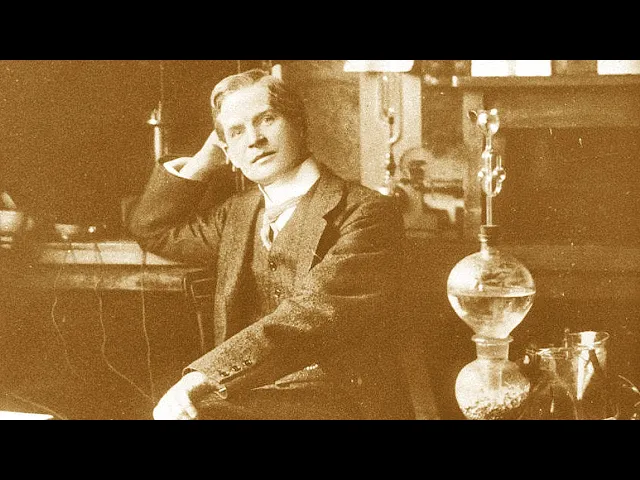
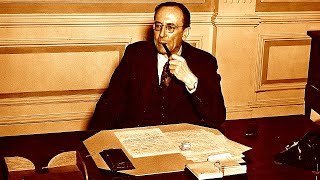
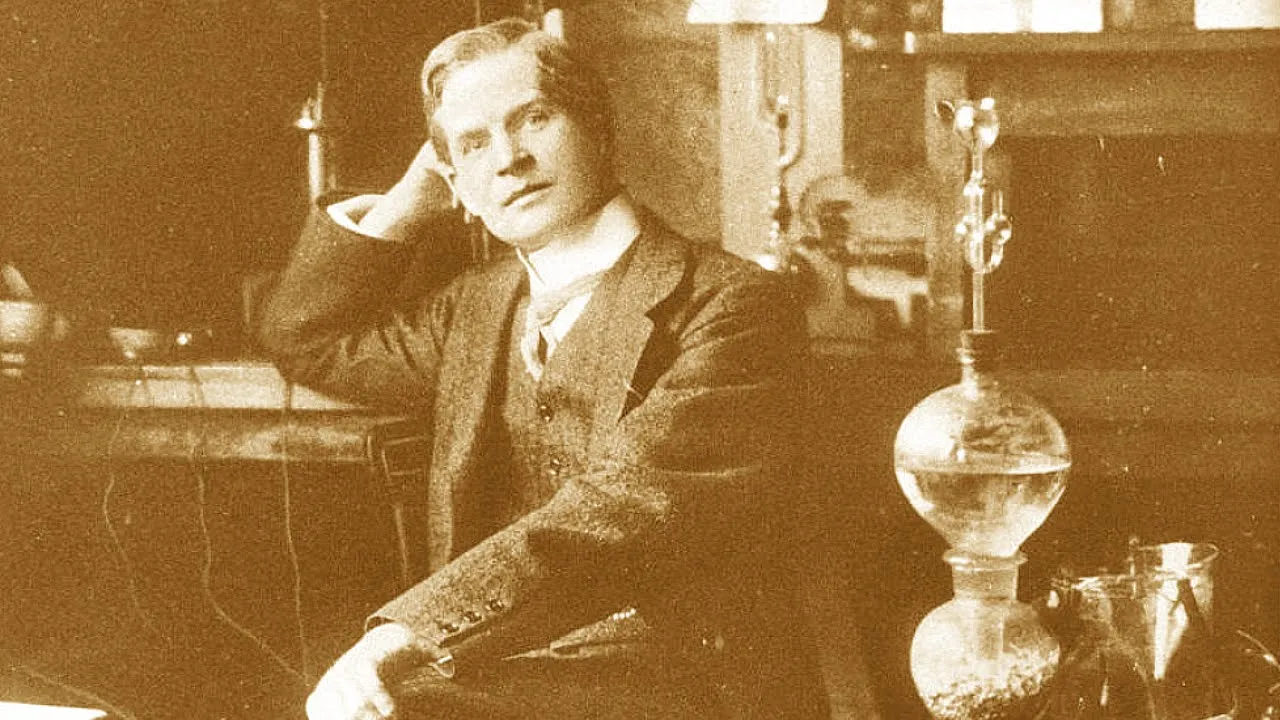
shortly after becoming a demonstrator at McGill University in Montreal in the year 1900 British radiochemist Frederick Saudi teamed up with Ernest ruford to conduct research on what at the time were called radio elements during their research on the element thorium they discovered a series of Elemental Transformations and labeled a series of new elements through them this change started with a transformation of thorium into what they called thorium X which itself then transformed into what they called thoron emanation which then led to a further series of Transformations into what they called thorium a and thorium B
upon noticing this they decided to study another radio element radium and found another series of Transformations with a whole new set of names for new elements to go with them as well this research had a significant impact on The two scientists as well as on the rest of the scientific community Rutherford went on to discover half lives from this research and after work got out of what they were doing at McGill many scientists got in on the hunt in search of more radio elements as fruitful as this era of radiochemistry was the discoveries of so
many new elements proved problematic for the periodic table according to its predictions there was only room for so many elements to fill in the missing gaps leaving little to no space for the plethora of elements rapidly entering the scientific sphere this growing problem would eventually be solved by Saudi introducing an entirely New Concept that would both save the periodic table and help explain the nature of radioactive decay one of the key aspects of organizing new radio elements during this time came from the separation of elements from each other by exploiting their distinct chemical properties the
curies did this successfully in 1898 when they discovered the element radio by chemically separating it from barium based on their slight chemical differences the problem with these newly discovered elements in the 1900s however was that for a lot of them it was virtually impossible to distinguish any sort of chemical difference between the elements in a chain the one thing that these scientists had going for them though was the prior discovery of Alpha and beta Decay as well as the understanding of what each form of radiation consisted of thanks to Ernest Rutherford using these two types
of Decay Saudi and polish chemist kashmir's Fons independently published papers in which they noticed a pattern in the nature of these Decay chains taking a look at this relationship between atomic number and atomic weight the relationship becomes clear alpha decay can be represented as a movement to the left two places and downward four places on this chart indicating a loss of atomic number by two units and a loss of atomic weight by four units beta Decay on the other hand can be represented as a movement to the right one place on the chart indicating a
gain in atomic number by one unit but no change in atomic weight Fons reached this conclusion through theoretical work and Saudi reached this conclusion through extensive research in the lab alongside his student Alexander Fleck this relationship describing Alpha and beta Decay chains came to later be known as the Fons Saudi displacement law although the same idea came from two chemists independently the conclusions they reached from this idea were entirely different Fons proposed that in the periodic table these elements with similar chemical properties should be grouped together in what he called a plead Saudi however from
his experiments with Fleck noticed just how indistinguishable these elements from beta Decay were from each other and came to the conclusion that the reason that they are so similar is because they are identical that they are the same element just with different Atomic weights to coin this phenomenon he took inspiration from a friend of his a doctor and writer named Dr Margaret Todd and labeled these same elements with varying Atomic weights as Isotopes naturally two different seemingly valid theories coming out of the fonade displacement law sparked debate in the community with experimental evidence needed to
favor one Theory over the other if Fons was correct the periodic table would need a new grouping for each radio element but if Saudi was correct the table would not need to be altered at all to get to the bottom of these conflicting theories Fons sent one of his students Max Ernest limbert to Harvard University to work with one of the most distinguished Minds in determining Atomic weights Theodore William Richards together the two compared the weights of standard lead with lead obtained from Decay chains of varying radio elements and found that all lead samples from
these chains were in fact lighter than normal lead samples not only that but there was no spectroscopic differences between the differing samples of lead this evidence led to the confirmation of saudi's theory and Isotopes were accepted thereafter in the scientific Community Saudi won the Nobel Prize in chemistry in 1921 for his attributions to our knowledge of the chemistry of radioactive substances and his investigations into the origin and nature of Isotopes Fons did end up contributing to the periodic table in a different way even though his plead Theory did not have a happy ending through his
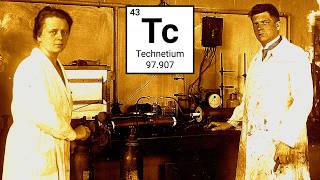
theory that led to the development of the Fon Saudi displacement law he predicted the existence of the element known today as protactinium and his student Oswald helmouth guring experimentally proved its existence in 19 193 and they named it brevium at the time there was still much to learn about these elements after the discovery of Isotopes such as the composition of the nucleus of the atom the discovery of the neutron and the subsequent realization that beta Decay converts protons into neutrons and vice versa but the discovery of Isotopes was a giant step forward in nuclear physics
and chemistry and served as an element of stability in a quickly emerging world of chaos as scientists begin to learn the nature of radioactive elements if you enjoyed this video please consider liking and subscribing click here if you want to see more scientific progress made during this time period thank you for watching and I will see you in the next video