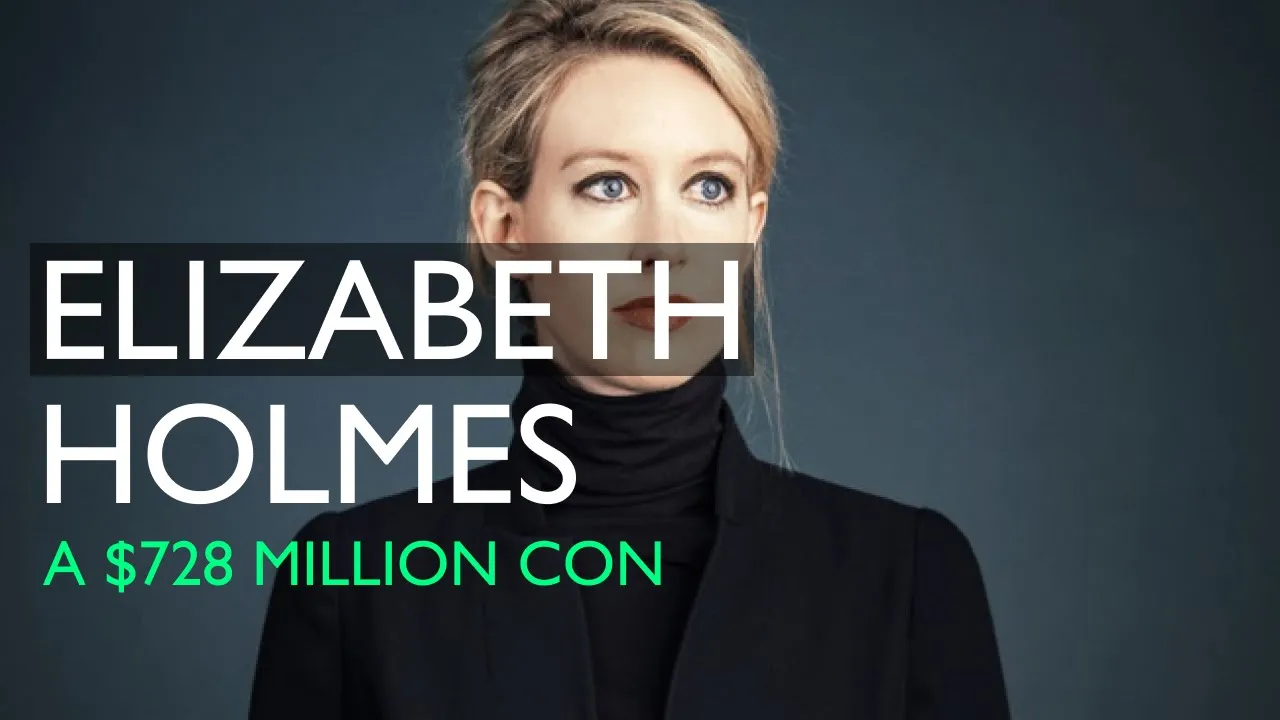
of course i have to blame sonny belwani and uh elizabeth holmes i mean they're the primary too i mean they they're they they're the uh the co-conspirators who who created this this mess you can't do it alone she was and as a singular figure and she does bear responsibility i mean even as young as she was she bears responsibility for what happened under her watch oh look there's so many other people went along with her you know so many other people wanted it to happen you know she will say in her defense you know it
wasn't me alone and that's true it's true of every entrepreneur it's never them alone where do you put sonny belwani in all of this i think he's really critical he's the in some ways the bad cop to her good cop and we often in in the case of tech companies there's you know many instances of the man behind the curtain or the part of the more silent partner and you saw that at apple with steve and steve you see this at microsoft with paul allen you know writing basic and bill gates i'm not sure the
investors were wrong because i'm not sure they ever fulfilled their own obligations and responsibilities venture capital and the rule of thumb of vc is that out of 10 investments you'll have three that fail you'll have three that kind of go um you know fine and you'll have one or two that actually make you money and sometimes make you a lot of money and what makes the risk worth it is when you hit you hit big the investment money was good eventually because it gives runway for scientists so she did a good job at getting some
runway later but the first round of the technology obviously was a massive failure and was terrible for patients but she did a good job at setting a vision for scientists to work towards to allow like a lot of companies don't have that much funding in private company investing the prospect of this investor has to fill out a very detailed form that says i understand the risks i understand that you know i may not get any return on this i understand furthermore this will not affect my net worth they're accredited they're accredited sophisticated actually i think
it's the term but nobody did i mean they all filled out the form but nobody did the work i didn't see them storming the gates and going after the board saying hey guys you know you got to in fact the board was telling elizabeth you don't have to do that which i think she got bad advice in announcing its settlement with holmes the sec posed theranose as a lesson for entrepreneurs warning that innovators who seek to revolutionize and disrupt an industry must tell investors the truth about what their technology can do today not just what
they hope it might do someday i believe that the sec did not have jurisdiction i i think the sec has got a great role to play in public markets and all kinds of other things like that but i'd hate to see them get deep into the venture community in the startup world it's a fine line between that and you know the mom-and-pop business believe it or not there are some people who say that elizabeth holmes is being held to a public company standard do you think that that's a valid argument i think there's some merit
in that one of the things the last particularly the last decade of silicon valley and the decades since the great recession that has been different has been the private markets have dominated more than the public markets companies would go public they'd have to go public i mean intel went public when it was three years old netscape went public when it was less than two the way you raised capital was on the public markets and with that came accountability and now in the last decade you have it's harder to go public all right new regulations post
recession um it's a heavier lift and there's been all of this private capital just sloshing through the global markets looking for a home and then you have this kind of flywheel of storytelling and buzz about oh this is the next big thing and everyone's like i want to get in on that then you're allowed in kind of relative you're protected from the scrutiny of public markets does that mean that you can get away with fraud no investors are right to be you know calling her to account warmenhoven said early investors had every opportunity to do
just that they did nothing in terms of trying to ascertain the current status of the product or the risks to completion or or anything else whose fault is that i think it's the investor's fault yeah you invest in something you want to know how your investment is doing and i think it's also a symptom of the founder culture that has really you know really took hold of the valley exactly during the time that theranos was growing the first meeting i was in was with all the major investors and they hadn't had any meetings with the
company since the round had closed and uh you know maybe occasional phone call or something but nothing nothing is a group nothing where they got a status report which i found staggering and weren't demanding it they didn't seem to to press hard before the investment and they still didn't seem to press hard after the investment from my viewpoint it was really out of character for a startup investor not not to be all over it you know if you were a venture capitalist and you put in 100 million you would you would be there every week
how we doing are we on track you know so those documents do not exist not in the not in the hands of the investors i mean they were available internally internal documents may have exposed the chasm between theranos's aspiration and ability though holmes told the sec its investor pitch left room for improvement we didn't intend these documents to be standalone and and sitting here now i know we could have been much better at the way we prepared materials and did you talk about specifically the technology and blood draw and what was in place at that
time versus what was aspirational was there a clear delineation between those two we tried to do that when we look at theranos investors many of them not necessarily your clients but certainly perhaps a vc fund we would expect to be seasoned investors who can properly vet a company a startup like theranose in this case probably what you would consider a seasoned investor like tim draper perhaps larry ellison and oracle they invested early when it was just a concept and a lot of vcs will invest even when it's not proven theranos got well beyond that and
then started raising funds massive amounts of funds uh over 700 million from other investors the amounts of money that a certain class of what i call mega vcs with untold unprecedented amounts of capital available to invest starting with a japanese company softbank and some of the sovereign wealth funds in the middle east who are looking for what to do after the oil begins to peter out are able to and are bringing amounts of money that have just never been seen before there's no independent validation that's what concerns me now when we look at some of
these you know mega-funded uh companies like wework and uber that it hasn't been vetted as much as you would normally hope and expect from uh at least an independent venture capital set of players and that adds to the board and the ceo and and here we are and they go dig in inside the company and get the facts start with channing robertson start with the head of engineering you know and start asking questions in addition to homes it was channing robertson who in 2016 gave warman hoeven confidence to join theranos's board even after media and
lawyers had accused holmes of fraud and he had just concluded organizing two we call it blue ribbon panels one that looked at the science of the biochemistry inside the box and another one looking at the mechanical nature of the box to make sure it was all viable and doable and they both came back very positive so i didn't get in deep to understand how far they were from go to market but i did have enough confidence that the fundamentals were sound he clearly thought that she was special and when she felt like starting a company
he's the one she went to he was being paid quite quite handsomely to work for work for her and had a desk in their offices and he claimed that he didn't know about that technology and he claimed that he didn't know about the fact that that things didn't work he claimed he didn't know things were being run on it on third-party equipment i don't know what the heck was going on with him why he wouldn't ask these questions why he claims to have been completely in dark and he's the one that brought her around got
her credibility and was paid handsomely annually one former board member reportedly did ask the hard questions according to abc avi tvanian software engineer and former right-hand man to steve jobs was asked to resign in 2007 following his ultimatum that homes be replaced as ceo the way that startup boards are usually they're made up of venture investors and they're made up of other people with domain expertise and you know at the early stage later stage corporations may you know look for look even more widely for people who have domain expertise in politics and statecraft sure because
they have domain expertise in understanding how to how large organizations can run and interact with the rest of the world something's off from the very early stage i would say there was a lack of scientific mentorship overall um it was the assay teams and that was it there was little other science guidance given to the actual scientists so even channing robertson was not interacting with your group no he he wasn't present as far as i could tell that did set theranos apart from the very beginning and it was a red flag to other potential venture
investors in the tech and particularly the biotech space it's a biotech company that doesn't have the personnel or the procedures in place that a biotech company would need to have even at the very beginning stage to develop product in 2016 theranos finally impaneled a medical board and under new leadership holmes presented a scaled-back version of its updated device the minilab to the american association for clinical chemistry there's clearly been a lot of interest in your company i would argue that a lot of that comes from the fact that there were these claims that were made
that were very broad early on 70 tests the whole you know panoply of of lab tests from a couple drops of blood and the evidence that you presented fell far short of that so how should we think about that well i think we fully understand and picking this place to come to introduce it that we have a lot of work to do to engage with this community and i mean i can tell you i wish that i had started earlier in the context of building the scientific and medical board that we've had the privilege to
build under legal pressures and burning cash the effort would prove too late should the board have looked at its own composition and said perhaps we don't have the level of expertise that's required for a revolutionary health care company yes but you know you're asking people to admit their own uh weaknesses you know let's give credit to elizabeth holmes she was quite the charmer and she and people just felt great and important you know in their own minds i'm sure they they thought they were providing good sage council but yes of course that should be a
part of the equation as well stanford medical school professor dr phyllis gardner reportedly critiqued fingerstick draws as an impossible source from which to glean accurate results for hundreds of tests she described theranos investors as crazy and its board members as old men whose brains had gone to their groin yet the suggestion that holm's concept was nothing more than fantasy fails to account for a flood of diagnostic startups surfacing in her wake take genolite and its maverick analyzer that's fda approved and on its way to running more than 100 common tests from a tiny drop of
blood over here is our proprietary technology so this is a machine we just got cleared from the fda and what it's really good at is running analyzing blood proteins nobody else has a machine that can analyze a large number of blood proteins in 15 minutes on whole blood in a physician setting so that's that's our ambition the maverick can perform much of what holmes envisioned the device features a proprietary optical silicon sensor that detects color changes in light when it's exposed to targeted blood molecules for now blood comes from a low volume draw taken from
a patient's arm and next is the fda's decision for the maverick to perform about 200 common diagnostic tests from a finger stick it is a politically charged topic to operate off of a finger stick what you'll see when we take the blood out of the tube is we're going to take a tiny fraction of one drop of blood so we've validated that our machine works on less than a drop of blood we're going to add less than a drop of blood to it less than a drop yeah so it's um it's about four percent of
one drop that we use in late 2020 the maverick was also granted emergency use authorization to diagnose sars cov2 also known as covid19 it's one of 28 approved coronavirus and flu tests that can all be performed from a finger stick eventually how many tests are you hoping that genolite will be capable of performing on one device that list is uh well under 200 tests it's really about 100 tests comprise the vast majority of that and there's only a few of those that we can't do we can get to 95 of all commonly ordered tests in
15 minutes so what do you have to say to the critics who said theranose's vision was science fiction well i think you just saw it happen in the other room so this is what the future looks like a small sample of blood can perform hundreds of tests exactly [Music] while not every test can be accomplished using a tiny drop of blood the advancements show homes may have had the right concept and the right story without enough technology at the right time there's you know difference between the idea and the execution you know clearly but decentralization
of diagnostics and getting more data in the hands of doctors when they're making decisions is vital beyond genolite investment in miniaturized diagnostics hardly dried up when theranos was forced to close its doors similar startups have been proving the concept as anything but science fiction there's a felis a sequoia-backed in-home blood testing device touting technology to detect white blood cell count viral infections and cancer from a single drop and truvian's portable benchtop analyzer takes five drops of blood to deliver multiple assays within 20 minutes if the latest technology is living proof that holm's concept was sound
where exactly was her achilles heel if she had dialed it back and was straightforward about using commercial analyzers and what's straightforward that you know this is about access this is about getting patients blood draw somewhere else and like that kind of stuff and said that and we're working on our finger stick technology we're working on this then you know we could have gotten there most likely this is an epic fail of a perceived a self-inflicted need for speed that proved to be you know very dangerous and fatal to the company and we could have had
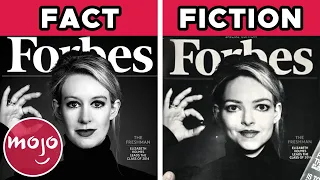
an entirely different story and on top of this we have to do it at breakneck speed this was a case where literally and figuratively speed kills it's easy to blame the people involved it's easy to say oh you investors you should have known better like you should have bought looked more closely but the hype machine is powerful the magazine covers are powerful maybe if enough people don't want to dig deep enough because we all want to believe um we'll prop them up we'll put them on the cover of magazines and they can just plow forward
and maybe eventually they'll make it or maybe not but there definitely is a is a public hunger for um that kind of celebrity nearly a year before the journal's expose john ianitas published a critique of theranos and other well-funded healthcare startups for a lack of peer-reviewed data and for keeping their intellectual property too close to the vest theronus had published practically nothing that they had a couple of papers but they were not relevant to their technologies so there are several unicorns out there with very high valuations with very little or no evidence that is supported
by peer-reviewed publications why is peer review publication so important in your opinion this is how science is run this is how we can put trust that something has merit that something is real that something can be scrutinized by other scientists and be proven or at least sustain some criticism and show that that it is relatively bulletproof home sleight of hand didn't go entirely unnoticed fortune's editorial team did note limits to their account have this sentence in the original piece that was published in june of 2014 it said quote precisely how theranose accomplishes all of these
amazing feats is a trade secret so what does a journalist do from there it's difficult to cover proprietary technology what do we really know about facebook's algorithms and how far can we go in there well some of it is ultimately a trade secret so it's an unproven proprietary technology particularly as it pertains to something as sensitive as health care that we probably should have been more skeptical about or had more questions about and i think it's a great lesson just because someone is claiming they're doing it doesn't mean that the media and the investment community
and everyone else should just believe them and it's often harder for the media because they don't have the same amount of time or the necessarily the technical depth whether it's the media investors uh or customers everyone needs to do the work and make sure that what they're doing is they're getting into bed with someone who's doing a good job and look it's not just the media the media consists of the people who produce it and the people who read it right and then when it all comes crashing down we rush out to buy the books
we rush out to watch the documentaries we sort of salivate over the oh you know look at all what what a fraud you know those silly people and so we kind of delight in the failure stories as well as successes and it does become hard to put it in context and see the broader facts and say well this was a manifestation of a bigger um you know a bigger problem while theranos's purported trade secrets were walled off from journalists and outsiders another party aside from investors in the board had power to probe deeper according to
walgreens in march 2010 homes in belwani pitched theranos devices to walgreens company executives as viable and consumer ready and said its technology had been comprehensively validated by 10 of the 15 largest pharmaceutical companies do you place any blame there i place huge blame with walgreens but it's more on the negligent side i don't believe that walgreens knew what was going on but they should have known what was going on it's almost inconceivable to me that they didn't know that things were being run on third party tests somehow things got embellished there was never any concept
anywhere in reality that they could do 150 tests with one drop of blood it was they could do different panels of tests with each other drop of blood part of it was how elizabeth talked but probably what people wanted to hear you know wow this is this is amazing you know but the truth was rather than getting three or four vials of blood taken it would be a very small sample and in fact the sample could be normally a finger brick and you could just get the drop of blood let's say off your thumb or
whatever and have no need to to poke a vein so there's a lot of good things to it but somehow the one drop of blood that's what got put in the machine but you know to do the whole panel do that i mean 150 probably would have taken 25 30 drops of butter in a deposition before the sec holmes admitted that fairness had kept walgreens in the dark over fda concerns that the nanotainer had been underclassified yet she maintained the move away from finger stick tests was no secret walgreens was operating with us in the
store so they would have known locally that we were doing venipuncture to the extent we were doing a puncture do you have a general sense of what walgreens was concerned about following the publication of the article um i i think there were multiple issues one was they were reacting to the press in general um but then the other was that we hadn't disclosed the engagement with fda with them to them yet before it was in the press holmes argues that because the fda engagement had to do only with nano tainers and because it began months
and in some cases years after soliciting investors it can have no bearing on the government's claims of fraud once they the walgreens conclude we can't get this deployed in the store from theronow's viewpoint they just should have said time out what you want to do doesn't fit our architecture our product strategy nothing but that's really kind of where they took the left turn that sent them right in the ditch red flags did spook world-renowned medical center cleveland clinic it bailed on a partnership after theranose left its due diligence requests ignored and walgreen's competitors safeway also
withdrew its plans for a pilot program was that the value add for theranos was 140 million dollars up front it got him on the map in a hurry but the walgreens deal gave it credibility and so you know it helped them basically raise the money they were looking for you know that kind of proposal something that size of magnitude should have been reviewed the board in depth and you know there were enough people on the board to say wait a minute you know this is not us in deposition testimony board member schultz and retired u.s
navy admiral gary ruffhead said they did not question holmes or anyone else at theranos once public concerns were raised about theranos's use of third-party technology the board had some very competent people and experienced people good operating people in some ways and they should just call the halt i'm not sure it was ever fully discussed at the board and elizabeth is ceo right had the right to turn it down or to take it to the board and what about sunny belwani what was his role as you understood it i never met sonny he'd been dismissed from
the company before i showed up elizabeth was the chief architect and she led most of the engineering program but sonny led all the rest of the operations veterans of silicon valley startups know that faking it can be fair game many of these companies start an idea they think that they have it actually they don't but they hope that they will develop the working idea while they're pursuing it and they have that expectation that that let's go ahead and it will kind of kind of get itself together and it will be successful this is not fraud
i mean you know this could be seen as visionary uh the the distinction between fraud and visionary is very subtle here these high-risk high-reward gambles have been taken by some of the most famous visionaries and even the inventor who inspired home's first prototype thomas edison he was the original fake it till you make it guy now he was different than elizabeth holmes in that he ultimately did make it he was an inventor who got it right and along the way when he was having trouble with the incandescent light bulb he didn't let anybody in on
that he faked demonstrations he was not so dissimilar from other famous people in silicon valley like say steve jobs who was a notorious liar but also a great storyteller so she is in that tradition and that's what makes elizabeth holmes interesting pushing out and out fraud or was she you know just in the great tradition of thomas edison and steve jobs you know faking it until she made it and it could sort of be a little bit both she's part of a tradition of fake it till you make it which to some extent is celebrated
in silicon valley but not so much when it comes to medical devices that can actually affect the health of people is there a certain point with respect to theranose where you say that's where things went wrong i think that there was a gradient going uh down the tubes and it's it's hard to say which specific decision was the the worst i believe that here my my response would be biased i think the the decision to move to patients was probably the the worst without having something that was mature because once you move to patients then
you're exposing people to risk in pushing a soft baked healthcare pitch homes isn't alone in its early days silicon valley biotech company 23 me was ordered by the fda to immediately discontinue marketing its widely publicized cheek swap test after making unsubstantiated claims that the company could identify risk levels for a number of diseases a consumer class action lawsuit followed and the company settled with complaining customers diagnostic startup ubiom was dropped from cvs after federal investigators and an fbi raid of its san francisco headquarters in 2021 the company's co-founders jessica richmond and zachary apt were accused
by the sec of defrauding investors and indicted by the doj for money laundering and securities fraud even the fda and experienced mega corporations have been known to get it wrong the international consortium of investigative journalists found in 2018 that over the prior decade 80 000 global deaths and nearly 2 million injuries were linked to faulty medical devices take fda-approved vaginal mesh implanted in approximately 10 million women worldwide before the agency banned u.s sales over risks including organ perforation protrusion and death its manufacturers among others boston scientific johnson and johnson coloplast and c.r bard and healthcare
giant bayer was forced by the fda to restrict sales of its permanent birth control device esher after reported complications involving device migration and death this widespread in precision is evidence that as the next biotech billion is already being raised and spent from startups to multinationals there's much to be learned and improved elizabeth holmes was made possible by a broader culture and her downfall and the attention given to it is also a reflection of the broader culture you know there still are investors out there hunting down you know who's the next bright young person man or
woman who's going to have the world changing product i think that we have a lot to learn from understanding what happened with fairness but i wouldn't like us to lose the the bigger picture the bigger picture being that there's hundreds of companies out there that maybe like theranos eventually many of them how do investors who want and care about getting accurate information out of a very opaque company where should they look you know i'll tell you it's it all this stuff scares me and then there's a lot of stuff in silicon valley actually technical stuff
chip companies telecom even medical stuff that people understand i urge people to make sure they understand and it's you know sometimes it's not 100 possible you can make a rule with yourself so i don't really understand it i'm not going to invest in whether founders can back up what they boast may depend on how vigorously interested parties demand to look behind the curtain i mean there are several checks and balances and it could be the press it could be the board it could be investors theranos was a case where all of those entities let down
their guard because the story was so great and they believed in the mission and they believed that success would be around the corner until it was there's a cautionary tale to be looking a little deeper into the underlying economics i think boards clearly have to be more vigilant than they've been i mean ask if it is a secret but ninety percent of the time i think in in silicon valley they may tell you it's a secret now a lot of these biotech startup companies their ip is very important to them and they want to protect
it there's indeed some tension between ip and peer review disclosure with patents it's possible to protect ip and at the same time allow someone to disclose sufficient information even with patents and peer review biotech founders and their funders may need to take a few leaps of faith you always think when you start a new science project you don't know what the unknowns are and so that naivete of not knowing what roadblocks you're going to hit what you're going to have to solve along the way i think that's has a long way to go well with
being an innovator right the naivete they joke is a really important piece of innovation yeah yeah you need money in science you need a lot of it um but and you don't know if it's going to work but you need guidance we don't want to get rid of visionary people we don't want to get rid of people who really take a shot at a very high risk idea we don't want them to think that if they do that they're just going to end up in jail we want them to take the best shot but we
also want to have some transparency about what is being done just how much transparency is demanded of future visionaries may also depend on how much light the justice department shines on private markets by way of homes in belwani a lot of entrepreneurs would love to have that much money why do you think that theranos chose not to just keep its head down and keep the research going once you've gone public and you've got this dialogue and and mantra and there's all this momentum that you have to maintain it's very hard to turn that off and
go into stealth mode again for for a period of time so there was really you know that's a big part of it i think elizabeth had a great big dream i don't think there's any governors put on her you know no speed limits and but that's the case a lot of people some work out some don't she made some bad decisions too you know i mean she's not home free but i always felt like she was fully committed to try to deliver the product and make the company successful and to do that with all the
energy she had and she gave it a role to a certain way like i said you know i know people can laugh when they say she how is she a victim do you see elizabeth holmes at all as a victim of this culture i think to some degree she is i mean look she was and is so young there's two ways that we can look at theranos uh one way is to say that it is a bad apple and that the people involved the ceo or whoever else were psychopaths and bad people and they were
cheating and it's all fraud and everyone else is wonderful and perfect in a way there's some sort of recall bias to use a scientific term if elizabeth holmes had managed to pull this off and and get the technology up and running and develop something that worked everybody would consider her a hero you know the the most famous person of the 21st century probably [Music] if i were fired or i had to start this company over a lot of times in order to figure out how to get this right i would and i would just do
the same thing over and over again [Music] [Music] you