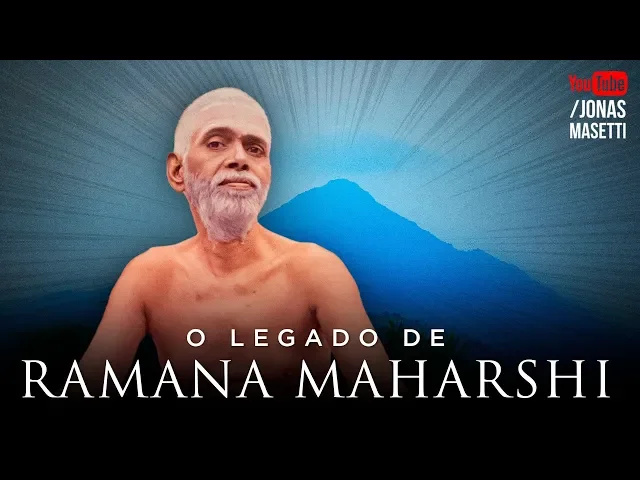
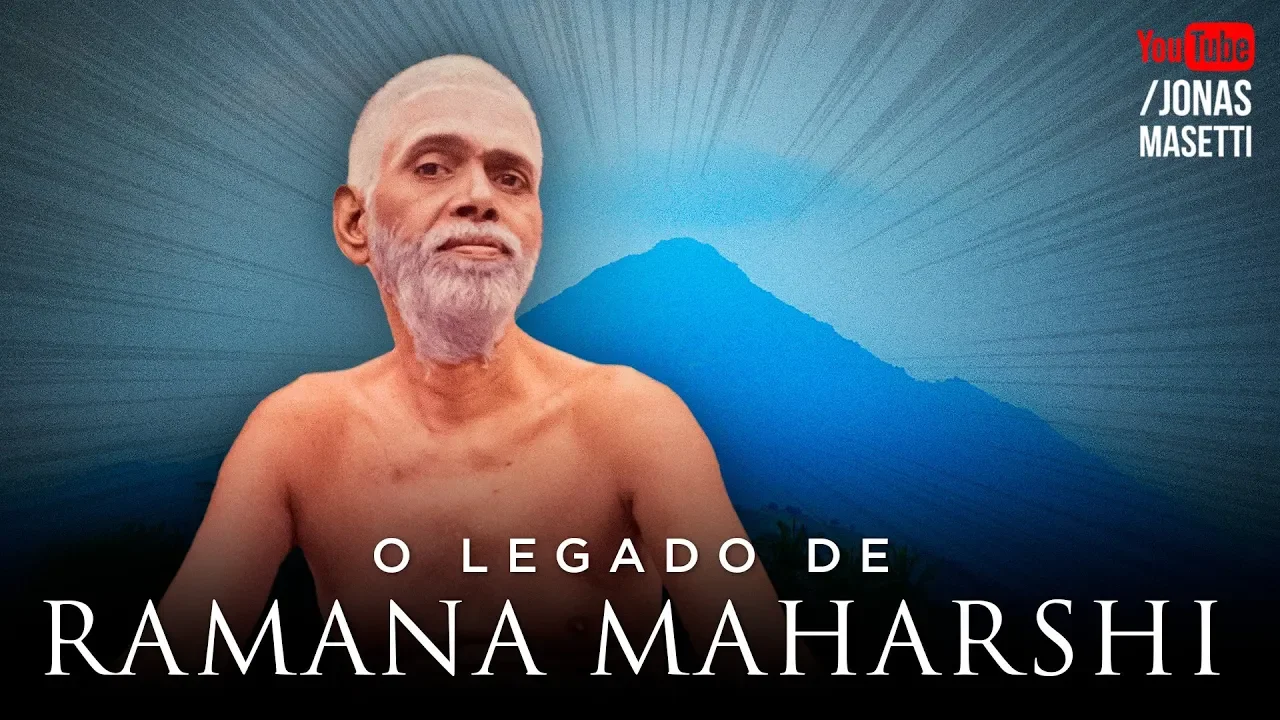
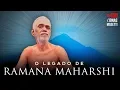
Om Shri Gurubhyo Namah Harih Om Harih Om It was 1879 India was dominated by British empire The famous British Raj And in a small village in South India in the state of Tamil Nadu, on December 30th of that year a boy called Venkataraman was born. Years later he would be known as Ramana Maharshi. The Legacy of RAMANA MAHARSHI The good auspices started on the day that Venkatarama was born.
It was Arudra Dharshanam day or Ardra Darshanam. Arudra or Ardra is the name of a constellation associated with Shiva with Shiva Natarajan specifically. And in South India, this is a very special day to have the darshanam The vision.
. . of Shiva Natarajan in Chidambaram Temple.
This is one of the most famous and ancient temples in South India dedicated to Shiva Natarajan. And one of the greatest Pujas performed to Shiva in this temple is done precisely on this day of Arudra Darshanam the day when Venkatarama was born. I mean, his connection with Shiva comes from birth.
Even during childhood, Ramana was said to have already some signals that show us he was a special child. But not very uplifting signals. One of them is that he used to have a very deep and heavy sleep.
It is said that kids used to carry him from one place to another, just kidding Even hit him and he didn't wake up. Another signal is that he was extremely uninterested. .
. in studies at school although he had an excellent memory He was said to be able to repeat an entire lesson. .
. even having listened them only once It's curious because these signals. .
. are usually associated to people with. .
. a tamas mind, people inclined to numbness and ignorance, but as we will see In Venkatarama's case his lack of interest was connected with another much greater interest for other things that were beyond this world he knew. Part 1 THE AWAKENING Venkatarama found out that interest when he was 16 years old by listening a word Arunacala.
At this time he used to live in the city of Madurai. in his uncle's house, his father had already passed away. So, he was at this uncle's house and a relative arrived.
. . from a trip and Venkatarama casually asked where he was coming from.
And, this relative answered "I'm coming from Arunacala". When he listened this word, he got scared, because. .
. he knew this word. .
. But he didn't know from where he knew it It was something oneiric. He had already listened that word in some place And he associated this word to something transcendental.
Something that wasn't from this world He didn't know that it existed on earth So, when he heard his uncle say that he was coming from Arunachala He became really surprised and very excited And started asking his relative "Where is this place? Does this place really exist? Where is it?
" Thus, he discovered that Arunachala really exists and it is in a place called Tiruvannamalai. In the same state where he lives, Tamil Nadu These two names, Tiruvannamalay and Arunacala echoed in the boy's head. Part 2 THE LEGEND Once, as it is told by Shiva Purana, Brahma and Vishnu were arguing to see which one of them was the supreme god Then, during the discussion , they couldn't come to a conclusion.
. . and during the discussion, a Jyotirlingam appeared.
Jyotirlingam is a column of light, a column of fire It appeared between them And this column of light was huge, They looked up, looked down and couldn't see the end of it Therefore, they decided that the one who first finds the end or the beginning of this lingam will be the supreme god. So it was agreed and they went away, Brahma went upwards and Vishnu went downwards Naturally, none of them found the end Because this Jyotirlingam was infinite, limitless Nevertheless, after sometime, both of them came back to the start point and Vishnu honestly declared, "I couldn't find the end of this Jyotirlingam" Brahma, instead, impelled by a wish for glory. .
. A wish for fame, lied He said: "I found the end of this lingam" He lied, obviously expecting to get the glory of being the supreme god However, Shiva got very angry with this lie told by Brahma. .
. And cursed him The curse was "Brahma, you will not have devotees" "It means that you will not have any temples dedicated to you in the world" And, of course, Shiva's curse worked. There are tens of thousands of Shiva Temples, There are tens of thousands of Vishnu Temples, But in the whole world, in all India There are only six Brahma Temples.
The most famous and ancient is the one in the city of Pushkar, Rajasthan But what does that have to do with Arunacala? The connection is that the Jyotirlinga, this column of fire, after it had cooled down And solidified, It became the Arunacala Mountain. So, Arunacala is that lingam of fire It is that Shiva Lingam solidified Therefore, Arunacal is Shiva it is a very ancient mountain, and even small, It has about 800 metres.
Certainly, the size did not do justice to the importance of this mountain in the Vedic tradition And the importance that Ramana himself attributed to this mountain. Ramana used to say that this mountain was the spiritual axis of the world. And, once, he also said that there should be another mountain on the opposite side of the globe that was the "Shakti" of Shiva Through investigation, they discovered that this point corresponded to a point in the Pacific Ocean, About 300 Km of the coast of Peru By closeness, some people say that this mountain, opposite to Arunachala, is the Machu Picchu mountain.
They explain this distance, saying that, after all. . .
The globe is not a perfect sphere and the maps are not perfect, so this justifies this 300 km distance So, in fact, the opposite mountain of Arunacala could be this one in Machu Picchu. Actually, there is a symbolism of Shakti, the feminine energy, in Machu Picchu mountain. But, anyway, this is only hypothetical, just theories Part 3 THE PERIYAPURANAM Right after the discovery that Arunacala was something real which exists in the world.
. . Another discovery grabbed Venkatarama's attention It was "Periyapuranam" Periyapuranam is a epic tale very popular in South Indian specially in Tamil Nadu which tells the story of 63 saints, Shiva devotees, the Nayanars Bronze Idols of the 63 Nayanars The whole bhakti movement of South India is inspired by Periyapuranam and in these saints' lives.
One of the most famous of them is known as Sundarar The story tells that Sundarar was literally in the middle of his wedding ceremony in the temple, during his wedding when an old man arrived, an ascetic man whom nobody knew, as if he had appeared from nowhere, And commanded to stop the marriage. Everybody looked at him, laughed and said "You're crazy! " "Pita!
" "Crazy! " "What are you talking about! " But, the old man was very serious and said: "Do you think I'm crazy?
So, look at this! " He took out of his pocket a document A document, written in a palm tree leaf signed by Sundarar's grandfather in which it was informed that his grandfather gave Sundarar to this ascetic So, this old man gave this document to the panditas, Vedic especialists, that were there to perform the ritual And they looked this manuscript in palm tree leaf and certified the veracity of it Now, the fact is that, according to the law of that time. .
. Sundarar belonged to this old man, this ascetic Sundarar was his slave, he had to stop the wedding. .
. and went away with the old man. When they left, the old ascetic revealed himself as Shiva.
Thus, Sundarar devotes the rest of his life to write chants, poems, songs about Shiva. One of the most famous says: "Pita piraisudi" which means "Oh, you crazy, that wears the crescent moon as a crown" Obviously as a reference to Shiva. And it was by hearing the stories of these saints, Nayanars, that Venkatarama found out that this kind of devotion, so deep, so close was available in the world And for sure, this influenced the intensity of the pursuit of Venkatarama in the future Part 4 THE EXPERIENCE When he was 17 years old he had the experience that defined his destiny As told by him, he was at the second floor of his uncle's house When he felt a panic, a very strong fear of death He was sure that he was dying Certainly, nowadays it would be diagnosed according to the psychiatry manuals As panic syndrome The certainty that you will die, the despair that comes from the assurance of death But, the interesting fact is that Venkatarama didn't decide to fight against this feeling it did not cross his mind to call the emergency or ask for his parents help, nothing He decided to go though that by himself With a impressive objectivity He simply laid down on the floor and dramatized his own death He laid down and stayed rigid as a corpse closed his eyes, stopped breathing And he thought, "That's it, now I'm dead!
" And he stayed there static And visualized his body being taken to the crematory The body being burned, everyone crying around him Then he though, "But with the death of this body, I, that I am testifying all this. . .
Will I be dead? I'm not the body, I feel the strength of my personality now. .
. completely independent of this body, I am something that transcends this body" And all this was not a mere formal or logical thought that he had It was a vivid experience, a real experience Thus, Venkatarama left this experience modified Even more uninterested in the studies Even more alienated to his family life Naturally this starts a big conflict in his family On a fatidic day, on August 29th in 1896 One said that he was at home, doing his English lesson from school when suddenly he saw how useless all that was And he simply put his notebook aside and sat in meditation, as he usually used to do He closed his eyes and stayed absorbed in the presence of this being that he has just discovered. Then, his eldest brother looks at that scene and becomes very angry, He calls Venkatarama hypocrite "Because, after all, you are here, using the resources of our family to pretend studying.
. . And stays sitting there pretending be a yogi, playing a role that is meditating" "You are a hypocrite" Once again, we can see how special Venkatarama was because instead of defending himself of these accusations He thought "You know what?
You're right! " "What am I doing here? " At the same time he thought that, the mountain Arunacala came back to his mind Then he decides to run away.
Part 5 RUNNING AWAY Venkatarama knew that his family would not allow that he simply took sannyasin and dropped the studies So, he decided to run away to Tiruvalamalay, of course run away to the Arunacala's mountain that was calling him. On that same day, he says to his brother that he has a school test. Without knowing, his brother gives him money, the exact amount he will need to the train ticket, and he said: "Take 5 rupees to pay my tuition" And, with a impressive objectivity, Venkatarama takes 3 rupees that it was all he needs and leaves 2 rupees, as change, with a note.
The note said: "I left in search of my father according to his command. It is a virtuous endeavor in which this one joined. Therefore, no one gets sad nor spends any money in searching of this one.
Your tuition was not paid. Two rupees remained that are attached to this letter. " It's interesting to notice that on the letter he refers to his body and personality as "this one" in the third person.
And this fact, besides the signature with just a line, points to a state of nonidentification with the body on what he was. The trip to Tiruvanamalai was not easy. There was not a direct train.
He had to walk too much. He had to sleep in temples, beg for food He had to pawn his ruby earrings to continue his trip Finally, on September 1st in 1896 he reached Tiruvannamalai and went straight to Arunachaleswar Temple Oddly, the temple was open and empty, no one was there. So, this allowed him to enter the temple and hug the Shiva Lingam which was a very curious thing that happened And there, hugging the Shiva Lingam, he believed to finish his search.
Having ended up the catharsis of hugging the Lingam, he left the temple, shaved his head, and abandoned all belongings that he still had He even threw away the sacred string, known as upavitam that distinguishes the ones who perform vedic rituals and brahmanes from other people. I mean, he was so convinced at that moment He was so detached that he gave sannyasin to himself Then he came back to the temple and spent many months there. First he stayed at the hall known as "Hall of thousand pillars" But some boys were disturbing him, throwing rocks on him and he moved to another place, called "Patala Lingam", an underground sanctuary where the boys were affraid to go in and this way they stopped bothering him.
He spent six weeks in meditation in this Patala Lingam completely absorbed in Samadhi literally without being aware of his body because he left that place covered with wounds. He was bitten by rats, insects, he had worms in his body He had open wounds, pus, his physical condition was very worrisome A local master, known as Seshadri Swami, seen that Venkatarama's physical condition was really worrisome, took him from there, and left him in Subramanyam Sanctuary where he stayed two more months completely engrossed in Samadhi At that time, Venkatarama was known as Brahmana Swami by people who used to live there because he didn't say his name and he spent all the time in Samadhi absorbed in meditation, without talking to anyone, barely opening his eyes Then the locals started to refer to him as Brahman Swami Part 6 THE TEMPLE AND THE FAME The Arunachalesvara Temple Is a very special temple, it is one of the Panca Bhuta Sthalam One of the five temples in South India where the Shiva Lingam represents one of the 5 elements of creation space, air, fire, water and earth The Arunacalesvara's Lingam represents "Agni", the fire And the lingam is called "Agni Lingam" The lingam of fire Naturally because of the story about the fire column that arrises between Brahma and Vishnu, in Puranas. It is one of the biggest temples in India It occupies more than 10 hectares of land And has 4 huge towers Those notched stone towers that usually decorate the four directions of a hindu temple The temple and the whole city of Tiruvanamalai get very crowded and lightened on Kartikai-Dipam Festival celebrated in November-December, being like a South Indian Deepavali And in December, 1896, it was not different The town got full of people and lightened to celebrate this festival Consequently, the Brahmana Swami, the future Ramana, became even more famous He was even more seen because of the that One of the greatest atraction of this Kartikai-Dipan Festival is the lamp, "dipa", which they lit on the top of Arunacala Mountain with more than three tons of ghee Part 7 THE MOTHER AND THE SCHOLAR In 1897, the so called Brahmana Swami moved, actually, he was moved to another place called Gurumurtam which is a temple where a famous saint from the 13th century is buried and who became famous by resuscitating a king's horse, the stories said.
The future Ramana stays there about one and a half year absorbed as usual in meditation and being taking care by some devotees that had already connected to him He became a local atraction because of the intense "tapas" that he was doing And such was the attraction that they had to build a bamboo fence around him Naturally, having become so famous, his family knew where he was and they went there to try to bring him back home His uncle went in person there, and said, "Please come back home, we will not disturb your ascetic life" It is said that Ramana did not even answered His uncle left and the day has finally come in which his mother arrived to try to convince him to go back home And Ramana's answer, that it was not even said, it was written in a note, was as follows: "God controls the destiny of souls according to their destinies What it is destined not to happen, it will not happen no matter how much you strive. What it is destined to happen, it will happen no matter how much you try to avoid. So, the best thing to do is to remain in silence" He was 19 years old at this time In 1899, he moved to Virupaksha's Cave in Arunacala Mountain itself.
This periodically moving happened because he wanted privacy, he was seeking privacy As soon as the devotees gathered around him and he started to receive too many visitors, he simply moved to another place. But in Virupaksha's Cave, he stayed quite a long time 17 years A very significant event of these years in Virupaksha was the meeting with a sage, a Pandita, a scholar of the shastras, scriptures and sanskrit known as Ganapatimuni He was a really great pandita with the title "Kavyakanta" The one whose throat is poetic Or the one who has poetry in his throat. He was already a well known author of sanskrit literature at that time When, in 1903, he came to Ramana with the following request He said: "Oh, Swamiji!
I have already studied all shastras, I have already practiced all disciplines, All tapas, I have already recited all mantras, I have done all Pujas, but I have not found peace yet Tell me what is "tapas"? What is this discipline through which I will gain peace? " Then, Ramana, who was still known as Brahma Swami at that time, who did not normally answer any question, surprisingly answered: "If you pay attention from where the notion of "I" arises, The mind is absorbed in this source.
This is "tapas", this is discipline. When you recite a mantra, observe from where the sound arises inside of you. Put your attention on it.
This is yoga, this is discipline, this is everything. " Ganapati Muni was the one who gave Brahmana Swami the name of Ramana Maharshi Which is not just a name, but a title. "Marrarshi" means The Great Sage And this is a kind of title that is conferred to the ones who had a great spiritual realization Ganapatimuni was also responsible to compile, in sanskrit, the teachings which Ramana had written in Tamil Among these texts, the most famous that are even in the list of traditional texts of Vedanta, are Upadesha Saram and Sat Darshana.
Part 8 THE WORK The Upadesha Saram starts with the following words: "Kartura jñaya prapyate phalam" Through the will of the creator, through the wish of creator that the fruits of actions are achieved. And this ecchoes directly, this surrender to destiny that Ramana's own life represents. Jonas Masetti SECTION OF UPADESHA SARAM CLASS So he says: Kartuh ajñaya Kartuh is the one who does the action He is the creator So the creator.
. . Ajñaya: ajñaya means by will Kartuh ajñaya: through the will of the creator is that Prapyate phalam The results are obtained in life There is nothing random Lets imagine that someone says: "You roll the dice.
. . .
. . you can't know which number will come" "The number that will come is random, by chance!
" By chance is the murder of Ishvara By chance is only a symbol of my ignorance When you roll the dice, which number will come is already determined I don't know Because I have no capacity to do this math, of understanding But there are some people that have this. . .
(ability) Like magic, they play with this. . .
Because they practiced and they know When we say that something is by chance "By chance" only means that I don't know the cause That's why I say "by chance" But it does not mean that "by chance" exists While Upadesha Saram is a text that. . .
talks much about the disciplines from which a person can get knowledge, The Sat Darshanam. . .
Is a text that talks exclusively about knowledge And, of course, Ramana's experiences also echo in verses of this composing For example, the second verse says: "To the ones who seek refuge of the fear of death with the one who conquered death The notion of I, the ego reaches death first" This clearly refers us to the experience that Ramana had in his uncle's house where he sought refuge of the fear of death not in looking for any external support but in that being, in that self, that I who transcend death Part 9 THE SILENCE One of the most peculiar things that they say about Ramana is that he used to teach through the silence. This notion comes from the Vedic Tradition itself From verses like: "whose words return along with the mind, without reaching (that being)" "(Dakshinamurti is) the one by whom the final reality is taught through silence" These verses, naturally, give us the notion, give us the feeling that by simply sitting in front of a sage, silently will give the self knowledge to someone And It is obviously an absurd. I am not denying the impact of the presence, of the mere presence of Ramana on people we have countless testifying of this impact of people that, simply by sitting in front of him, could keep the mind in silence and found peace and happiness However, this does not mean to acquire knowledge This is simply a experience The knowledge requires the removal of ignorance And this ignorance removal does not happen by the absence of teaching But by some teaching In fact, this teaching is a very peculiar one Imagine the following situation: You go to a pizzeria with an old friend from school times There, you meet a common friend But you didn't recognize him Then your friend says to you: "Look who is here!
Don't you recognize him? Do you remember Peter? Who studied in such-and-such school?
In such-and-such year? fifth grade? So, this is him.
That Peter is this Peter. " Now, let's see the literal meaning of this sentence. "That Peter is this Peter.
" That Peter cannot be this Peter. This Peter who is here in this pizzeria, this body, here in front of me, right now In this year, at this time He is not that body who was there In 1980, in that school That year These two bodies are imcompatible They exist in another time, somewhere else, They have another weight, even another form (the man gained some weight) If you are trapped in the literal meaning of this statement there is a contradiction on it. Even so, you are able to think beyond the literal meaning of the words to understand the "Peter" who is beyond the temporal and spatial attributes which apparently define him You abandon the time and space of that school you abandon the time and space of the pizzeria And who do you understand?
Peter who is the same in the pizzeria, who is the same at school but who goes beyond the pizzeria and the school And if you meet him five days later at a bus stop, you will recognize the same Peter Thus, when the mind do this cognitive procedure to go beyond the immediate meaning of the words, the Vedic Tradition says that you understand the silence of the words. You understand what the words did not say immediately But what they have revealed by implication This means teaching through the silence. It is not simply be quiet Now you can say: "But Ramana didn't go through this formal teaching" That's true, but it only means that he was an exception Although, for sure, some teaching Ramana went through to have his awakening Teachings in the scriptures sentences that he certainly heard from teachers in the temples, teachings that he was told in Periyapuranam Of course, this is only possible to a fully ready mind Ramana was a very special person that reached this fully ready mind in his previous lives And he reached this life ready.
As a fully dry wood needs only a spark to burn completely, the same way Ramana's mind needed only a pinch of teaching to acquire self knowledge. But this do not release us from the effort of years of dedication to the study In fact, when we use Ramana's life to justify our nonnecessity to study our nonnecessity of a teacher actually, this is only arrogance that only shows us how big our ego is. Part 10 THE DEVOTION In 1916, Ramana's mother goes back to Tiruvannamalai not to take her son back, but to stay there with him Then, Ramana happily accepted her as disciple She helped with the kitchen, cooking to everyone and to him Ramana was very dedicated to her He used to give particular instructions to her Right after the arrival of his mother they moved to a higher place in the mountain known as Skandashama.
It was at that time that Ramana composed a poem in honor to Arunacala called "Arunacala Aksharamanamalai" It was composed by request of his devotees who wanted a music to sing while they wandered around the city begging for food, for biksha. It is a long poem, it has 108 verses And Ramana used to say, as a joke, that this poem fed them very well because they could stay all day long singing and receiving food from people Oh, Arunachala, you cut off the ego of the ones who think, "I am, in fact, Arunachala" Oh, Arunachala, as the words azhagu and sundara ["beauty", in Tâmil and Sanskrit] . .
. may you and me be completely identical Oh Arunachala, how wonderful is that: you pervaded my mind and, rescuing me. .
. . .
. kept me captive in the heart's cave! Oh Arunachala, why did you rescue me?
If you now reject me, the world will accuse you! Oh Arunachala, save yourself from this accusation! Why did you make me consume myself for you?
Who, from now on, will leave you? Oh Arunachala, you shed a higher grace than the one coming from the mother herself! Such is your grace!
In 1922, His mother passed away, next to her son and guru And Ramana declared that she had reached liberation As usual with the sages, her body was not cremated But buried, and in the place where she was buried, on her Mahasamadhi place it was built a temple. Matrbhuteshvara (Mother's Temple) After 1922, around the place of his mother's samadhi was built the current Ramana Ashram where Ramana lived from 1922 until his Mahasamadhi in 1950. This relocation was not planned by anyone One day, Ramana simply left and settled at this place near his mother's samadhi and people built an Ashram around him.
Part 11 THE ANIMALS A special chapter in Sri Ramana's life was his relationship with animals. Not only he liked animals very much, all kind of animals, but also the animals liked him very much and were atracted by him as we read in other saint's stories of other traditions, like in Christian tradition we have Saint Francis of Assis. In particular we have to mention a cow called Lakshmi which was even considered as a special disciple of Shri Ramana.
She didn't spend a single day without visiting Ramana to ask for his blessings Shri Ramana used to talk to her when she was sad, he comforted her Every time a calf of hers was born She came to him to introduce her new little calf. Interestingly, she had nine calves and four of them were born on Shri Ramana's birthday. When Lakshmi, the cow died, Ramana said that all prosperiry of the Ashram was due to her.
And her death was dealt as the samadhi of a sage Even a temple was built in honor of her And until today, Pujas are performed there daily. Part 12 WHO AM I? Shri Ramana, in harmony with the vedic tradition, used to recommend "Atma Vichara" or the investigation about the nature of the Self as a straight way to liberation.
Nowadays, many people claim to be disciples of Ramana Although he has never proclaimed himself as guru of anyone Nor had left any formal successor And these people recommend, as a way to liberation Atma Vicara as a meditation A meditation where the person asks himself "Who am I? " Supposedly, this meditation would lead the person to self- realization The simple fact of sitting alone and ask himself "Who am I? Who am I?
with eyes closed This is truly absurd And a misinterpretation of Ramana's teaching Part 13 THE LEGACY In November, 1948 a small tumor was found on Shri Ramana's left arm He was operated on and the tumor was removed But soon after, another one was found One said that, in order to save his life, his left arm must be completely amputated but Ramana refused. Other successive surgeries were done always at the insistence of his disciples who wanted Ramana alive To Ramana it was even disappointing Because his teachings preached that he was not the body He wasn't anywhere or he was everywhere Ramana, obviously, had no problem with the idea of the death of his physical body He had already died a long time ago in his uncle's house in that death experience. And the relationship that he kept with the body was really a very interesting relationship The doctor who operated him on reported a very interest thing Ramana refused to take general anesthesia He didn't want general anesthesia, he wanted to remain concious And such surgery requested a general anesthesia But, the doctor, listening to Ranama, gave him just a local anesthesia in his arm And during the surgical removal of the tumor Ramana was impassible with the same face expression, his eyes far away in some point that we don't know But completely oblivious to any discomfort, any pain, any fear This greatly impressed the doctor, as he reported later In 1950 already quite weakened by cancer He passed away Before dying, asked where he would go, He gave his final teaching WHERE COULD I GO?
I'M HERE. Today, at the place where he attained Mahasamadhi, Where he was buried, there is a temple, a sanctuary, on which there is a statue of him with a Shiva Lingam in front of him This place became a temple where Pujas are performed daily where his devotees can go to keep in touch with Ramana's presence So they can feel his presence In fact, according to Ramana's own teachings, he is everywhere specially there where he attained his final samadhi People can deeply connect with him And they can live this experience of being in peace with themselves It was a legacy that Ramana brought beyond any teaching beyond any word The image of Ramana itself with his peaceful face inspires people and calms down people giving strength and confidence to them And help them keeping forward For sure, his presence, The presence of his life is the greatest legacy Ramana left us Far beyond the formal teaching he left Because, after all, formally the teaching he left written brings nothing new to vedanta's teaching But Shri Ramana`s life is a example of a saint's life which is something that we need a lot specially nowadays It is the greatest legacy that Ramana left us. At the time of his death, an interesting phenomenon happened He attained mahasamadhi in April 14th, 1950 at 8:47 pm At this exact minute, a shooting star was seen passing in the sky And disappeared right behind Arunachala mountain Naturally, it was seen as a sign that greatly impressed his devotees Shri Ramana is one of the few modern masters recognized by all great masters of different traditions In our tradition of Vedanta study Swami Dayananda Saraswati, Paramarthananda, including Glória Arieira herself, recognize him as a Vedanta's master and they teach his texts in their classes Even the worldwide famous Yogananda, who wrote the best seller " Autobiography of a Yogi", made obeisance to Shri Ramana.
Swami Chinmayananda has a very interesting story about his meeting with Ramana At the time he was still a skeptical, an atheist Even Jung, the famous psychologist, wrote the following words about Ramana "Shri Ramana is a true son of the Indian soil, He is genuine and, in addition to that, something quite phenomenal. In India he is the whitest spot in a white space. What we find in the life and teachings of Sri Ramana is the purest of India With its breath of world liberated and liberation humanity It is a chant of millenniums whose melody has only one and great reason which in its thousands of multicolor reflexes renews itself within the Hindu spirit of which Shri Ramana Maharshi is the last incarnation.
The identification of the Self with god will shock the Western man This is a perception strictly Eastern according to Shri Ramana`s writings Psychology has no other contribution to add except to verify that it is far beyond their scope to purpose similar thing However for a Hindu, it is clear that the Self, as a spiritual source, is not different from God Dwelling the own self The man is not only contained in God But he is God himself Shri Ramana is very clear about that. Here I finish this little homage I beg him, from the bottom of our heart where he lives, that he lead us and impel us, in our spiritual path, and may he removes our obstacles and give us all inspiration which we need so much.