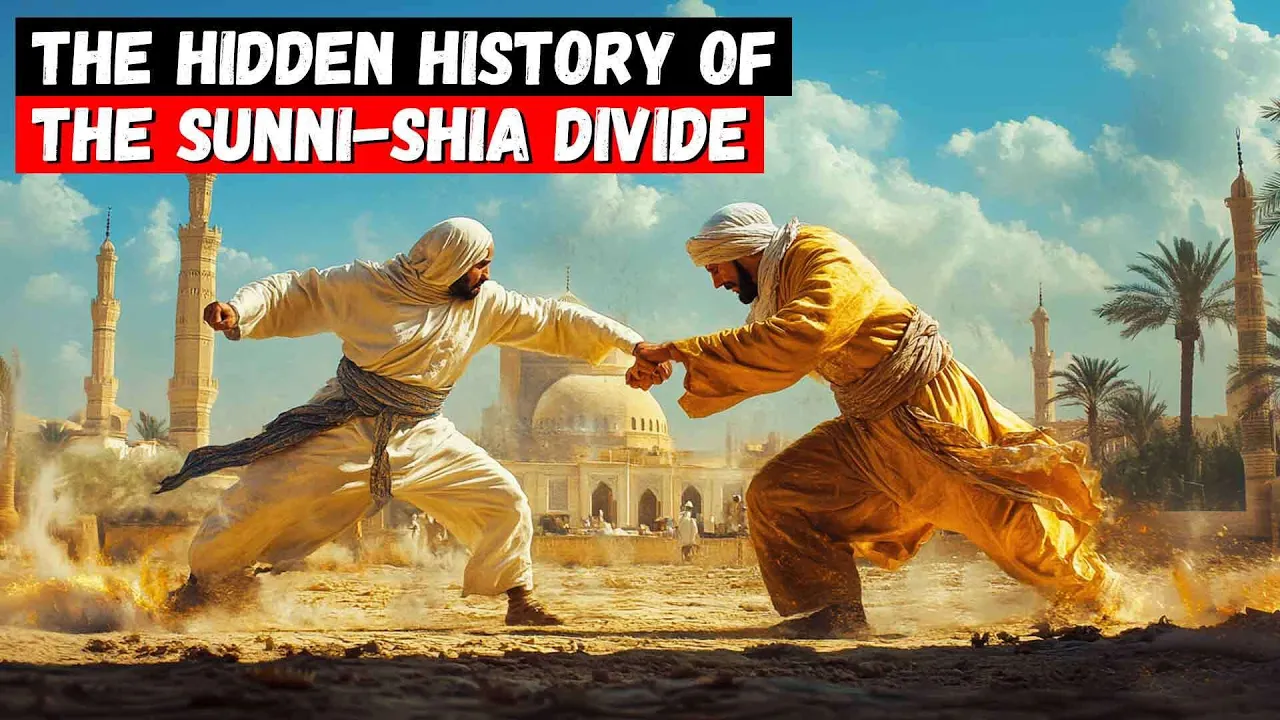
assalamu alaykum dear brothers and sisters welcome to another enlightening discussion one that delves deep into a significant yet often misunderstood chapter of our history the Sunni Shia divide this topic has shaped the Muslim World in profound ways and continues to influence our communities today however much of what we hear about it is shrouded in bias misinformation or political agendas what if we could peel back the layers of history and uncover the truths that are rarely told the purpose of this discussion isn't to spark division but to Foster understanding as Muslims our strength lies in unity
and unity begins with knowledge by learning about this complex history we can better appreciate the challenges faced by our ancestors and the lessons they've left us we'll explore the roots of this divide tracing its Origins to the earliest days of Islam and examine how events from that time have echoed throughout history let's embark on this journey with open minds and hearts seeking to build Bridges rather than walls the Sunni Shia divide traces back to one of the most critical moments in Islamic history the passing of our beloved Prophet Muhammad peace and blessings be upon him
his departure left the young and rapidly growing Muslim Community in a state of uncertainty the prophet peace be upon him had been the central figure uniting the hearts and guiding the path of the um with his death the question arose who would lead the community in his absence for many the immediate answer seemed clear leadership should continue in a manner consistent with the principles of Islam prioritizing piety wisdom and the ability to guide the umah a group of the prophet's closest companions gathered at Saka a meeting place in Medina to decide on this matter after
much discussion they agreed to appoint Abu Bakr Alis Salam one of the prophet's most trusted Companions and a man known for his deep faith and wisdom as the first cff of Islam Abu bakr's leadership was rooted in the concept of shur consultation emphasizing collective decision making within the community however not everyone agreed with this process a significant group of Muslims held the view that the prophet peace be upon him had during his lifetime indicated that Ali IB Abu Talib alisam his cousin and son-in-law was his rightful successor their belief was rooted in moments such as
the event of GAD where the Prophet peace be upon Him is reported to have said for whomever I am his MAA Ali is also his MAA this group believed that Ali alisam close familial ties to the prophet peace be upon him his unparal paralled knowledge of Islam and his steadfast commitment to Justice made him the natural and divinely chosen leader of the Muslim Community the disagreement wasn't about the fundamentals of Faith but rather the mechanism of leadership one group emphasized the importance of communal consultation while the other emphasized Divine appointment and familial connection to the
prophet peace be upon Him initially this was a political difference not a theological one Ali Alis Salam himself pledged allegiance to Abu Bakr alisam after some time demonstrating his commitment to the unity of the Muslim Community despite personal grievances yet beneath this surface level reconciliation tensions lingered these tensions weren't driven by personal animosities but by differing Visions for the future of the Muslim umah some viewed the leadership as a matter of practicality who could best govern and maintain stability others saw it as a matter of spiritual continuity believing that the leader should be divinely chosen
to ensure the purity of Islamic teachings the differences in opinion were further Complicated by the cultural and tribal dynamics of the time Arabia was still emerging from centuries of tribal rivalries and the leadership question inadvertently revived some of these underlying tensions while the early cffs worked tirelessly to unite the umah these fractures though small began to grow this period of History shows us how a community can experience profound challenges in the face of leadership transitions it wasn't about right or wrong but rather different interpretations of what was best for the future of Islam these initial
disagreements would later evolve into more defined sectarian identities but at their core they were a testament to the human struggle to balance Unity Justice and governance as we delve deeper into this history it's important to approach it with empathy and an understanding of the context in which these events unfolded these were extraordinary times and the individuals involved were among the greatest of our umah striving to uphold the principles of Islam in the face of unprecedented challenges may Allah be pleased with them all despite the initial reconciliation and the shared commitment to the unity of the
umah the seeds of division began to take root primarily due to the unfolding events in the decades that followed these events were not born out of theological Rifts but were shaped by political conflicts social dynamics and a growing sense of identity among those who supported different visions of leadership after the passing of Abu Bakr alisam Umar Alabam became the second Calif and laterman IB afan alisam assumed the role each of these Cals faced their own set of challenges governing an expanding Muslim empire that stretched far beyond the Arabian Peninsula as the community grew so did
the complexities of leadership tribal loyalties cultural differences and economic disparities became more pronounced uthman's alisam caliphate in particular became a focal point of contention while his leadership was marked by significant achievements such as the standardization of the Quran it was also a time of growing dissent accusations of nepotism and dissatisfaction with certain administrative decisions led to unrest in various regions of the Empire tragically this unrest culminated in the assassination ofman alisam an event that sent shock waves through the Muslim world and marked the beginning of a period of turmoil known as the fitna trial or
civil Strife following uthman's death Ali IB ABI Talib Al Salam was chosen as the fourth kff for many who had long believed in Ali's alisam right to leadership this was a moment of vindication however his caliphate was fraught with challenges from the start some groups still angered by uthman's alisam assassination demanded just before pledging their allegiance to Ali alisam this included figures like Aisha alisam Talha alisam and zuir alisam who initially opposed Ali alisam leading to the battle of the camel one of the first major conflicts between Muslims even more consequential was the conflict with
muaah alisam the governor of Syria and a relative ofman alisam muaah alisam refused to recognize Ali's alisam caliphate until those responsible forman's death were brought to Justice this led to the Battle of cph a prolonged and inconclusive confrontation to avoid further Bloodshed the two sides agreed to arbitration a decision that deeply divided Ali's alisam supporters as some viewed it as a betrayal of his claim to rightful leadership this internal dissent gave rise to a splinter group known as the kaarage who opposed both Ali Alis Salam and muaah alisam and became Infamous for their extreme interpretations
of Islam eventually Ali alisam was assassinated by a member of the karage leaving the umah in an even more fractured state in in the aftermath muaah alisam assumed leadership and established the umaya Dynasty ushering in a new era of centralized rule for many this marked the consolidation of power under a singular Authority however for those who had supported Ali Alis Salam this transition represented a departure from what they believed to be the true principles of Islamic governance the leadership was now viewed as a hereditary monarchy rather than a divinely guided institution deepening the rift between
those who identified as sunnis supporters of the caliphate and Shia who remained loyal to the family of the Prophet peace be upon him what began as a political disagreement had by this point taken on a deeper significance the supporters of Ali Alis Salam who would later be known as Shia did not simply see their stance as a matter of politics to them the family of the Prophet peace be upon on him carried A Spiritual Authority that was divinely ordained this belief became Central to Shia theology particularly the concept of imama the idea that the imams
beginning with Ali alisam were chosen by Allah to guide the umah in both spiritual and worldly matters on the other hand the Sunni majority emphasized the principle of collective decision making through shur and maintain that the leadership of the kiffs even with its imperfection s was a legitimate continuation of the prophets peace be upon Him mission for sunnis the community's unity and stability were Paramount and they placed their trust in the leadership structures that emerged after the prophets peace be upon Him passing this Divergence in understanding one focusing on divinely guided imams and the other
on pragmatic governance became the defining characteristic of the Sunni Shia divide while the initial disagreement was confined to leadership it eventually extended to different interpretations of Islamic jurist Prudence Theology and practices of worship as we reflect on these historical events it's crucial to remember that the individuals involved were striving to navigate unprecedented challenges these were companions family members and leaders who sacrificed everything for the sake of Islam the divisions we see today are often ampli if IED by politics and external influences but the essence of the disagreements in those early years was not born of
hatred or animosity instead it was a reflection of the complexities of leadership and the sincere efforts of those who wanted to protect and guide the Muslim umah after the initial disagreements over leadership following the passing of the Prophet Muhammad peace and blessings be upon him the Muslim umah faced several pivotal events that transformed those early differences into lasting divisions the Sunni Shia split which began as a primarily political issue was exacerbated by a series of historical events that deepened the rift these moments in history are essential for understanding how the Divide grew and became entrenched
in the collective memory of the Muslim Community one of the earliest and most significant events that widened The Divide was the assassination ofman IB afan Alis Salam the third kff utman Alis Salam was a devoted companion of the Prophet peace be upon him and was known for his generosity and service to Islam during his caliphate the Muslim empire expanded rapidly reaching new territories across North Africa Persia and Central Asia however with this expansion came new administrative challenges including managing the economic and tribal dynamics of a rapidly growing and diverse Community uthman's Alis Salam appointment of
several Governors from his own family the umad clan became a point of contention while these appointments were intended to ensure stability some segments of the community viewed them as nepotism creating a sense of alienation among certain tribes and regions dissent began to spread fueled by political factions tribal rivalries and external forces seeking to destabilize iiz the Muslim empire this unrest culminated in a rebellion against U man's alisam rule during which protesters besieged his home in Medina despite calls for his removal and demands for reform Usman Alis Salam refused to step down citing his duty to
Allah and The umah Tragically the situation escalated andman alisam was assassinated in his home by the rebels his murder not only marked a grave Injustice but also left the Muslim Community in a state of chaos and grief the aftermath of usman's Alis Salam assassination set the stage for the next major crisis the caliphate of Ali ABI Talib Salam aliam was widely respected for his knowledge piety and close relationship with the prophet peace be upon him but his leadership was immediately contested by several influential figures Aisha alisam the Beloved wife of the Prophet peace be upon
him along with Talha alisam and zubir alisam initially opposed Ali alisam rule arguing that Justice forman's murder should precede any new califate their opposition led to the battle of the camel a tragic conflict in which thousands of Muslims lost their lives although Ali alisam forces emerged Victorious the battle deepened divisions within the umah these divisions were not only political but also emotional and spiritual for many seeing revered Companions and respected figures fighting one another was a source of deep anguish and confusion the tension further escalated with the confrontation between Ali Alam and muaah IBN ABI
suf alisam the governor of Syria and a relative ofman alisam moah alisam demanded Justice forman's murder and refused to pledge allegiance to Ali alisam until the perpetrators were punished this conflict culminated in the Battle of cphon a grueling and inconclusive battle that led to arbitration between the two sides the decision to engage in arbitration was controversial and deeply divisive some of Ali's aliis Salam supporters felt betrayed by the compromise arguing that it undermined his authority as the rightful califf this discontent led to the emergence of the karage an extremist faction that rejected both Ali Alis
Salam and muaah alisam the karage became Infamous for their rigid and uncompromising interpretation of Islam as well as their acts of violence against Muslims they deemed Unworthy of Faith the constant turmoil and conflict took a heavy toll on Ali Alis Salam caliphate and in 661 CE he was assassinated by a member of the karage while praying in the mosque of kufa his death marked the end of the rashidun caliphate and paved the way for the establishment of the umayyad dynasty under maaah alisam the establishment of the umayyad dynasty was another turning point in the Sunni
Shia divide for many who had supported Ali alai Salam the transition to umayyad rule represented a shift away from the ideals of justice and piety they associated with the prophet's family the umad caliphate was seen by some as a monarchy rather than a true Islamic leadership and their policies often alienated those who remained loyal to the family of the Prophet peace be upon him one of the most defining events during this period was the tragedy of carala in 680 CE yazid the son of muaah Alis Salam and the second umad kff demanded Allegiance from Hussein
aliis Salam the grandson of the Prophet peace be upon Him Hussein alisam refusing to pledge allegiance to what he viewed as an unjust and tyrannical rule led a small group of his family and supporters to challenge yaz's authority at carala Hussein Alis Salam and his companions were surrounded by yazd's Army despite being vastly outnumbered and deprived of water for days they stood firm in their resistance the ensuing battle was a massacre Hussein alisam along with many members of The Prophet's family was brutally killed and the survivors were taken captive the tragedy of carala became a
Cornerstone of Shia identity symbolizing the struggle against oppression and the unwavering commitment to Justice and Truth for the Shia Community Hussein's alisam sacrifice was not merely a historical event but a spiritual lesson and a call to resist tyranny in all forms on the Sunni side while the tragedy of carala is also recognized as a dark chapter in Islamic history it did not hold the same theological significance sunnis largely f focused on preserving Unity within the umah and navigating the challenges of leadership under the umad and subsequent dynasties these events from the assassination ofman alisam to
the tragedy of carala solidified the political and emotional divides within the Muslim Community what began as a disagreement over leadership evolved into a profound Schism with each side developing its own narratives Heroes and grievances these differences though rooted in history continue to influence the Muslim world today may Allah grant us the wisdom to learn from these events the compassion to bridge our divides and the strength to work toward Unity as one umah as the political events of early Islamic history unfolded they began to shape theological understandings and practices within the Muslim Community initially the differences
between Sunni and Shia were rooted in in the question of leadership but over time these distinctions gave rise to differing interpretations of Islamic principles jurist prudence and Spiritual Authority for the Shia the concept of imama became Central to their belief system the imams according to Shia Doctrine were not merely political leaders but divinely chosen figures who possessed both spiritual and temporal Authority beginning with Ali ABI Talib alisam and continuing through his descendants these imams were seen as the rightful Guides of the Muslim Community they were believed to have been granted special knowledge and infallibility allowing
them to interpret the Quran and Sunnah without error this concept underscored the Shia belief that leadership of the umah was a matter of divine appointment not human selection the Shia tradition places great emphasis on loyalty to the family of the Prophet peace be upon him particularly through Ali alisam and Fatima alisam their children Hassan alisam and Hussein alisam and the subsequent line of imams this deep reverence for the aul bate the family of the Prophet is reflected in their religious practices prayers and literature events like the tragedy of carala where Imam Hussein alisam sacrificed his
life for justice hold him spiritual and moral significance for Shia carala represents the eternal struggle against tyranny and a commitment to uphold the principles of Islam regardless of the cost on the other hand the Sunni tradition developed a different approach to leadership and Authority Sunni theology emphasized the concept of shura consultation as a means of selecting leaders while the caleff was not seen as divinely appointed he was regarded as a custodian of the faith and a protector of the Muslim Community his role was more administrative and political with Scholars and jurists providing spiritual and legal
guidance this distinction in leadership models influenced how the two Traditions approached Islamic law and governance Sunni Islam developed four main schools of jurist prudence hanafi Malaki shafii and hanbali each emphasizing scholarly consensus analogy and reason in interpreting Islamic law these schools became a Cornerstone of Sunni identity reflecting a diverse yet unified approach to understanding and practicing Islam in contrast Shia Juris Prudence placed significant Authority in the hands of the imams since the imams were believed to be divinely guided their teachings and interpretations of Islamic law carried the highest weight after the occultation of the 12th
Imam and Shia belief the role of interpreting Islamic law transitioned to Scholars known as mahs these Scholars are respected for their deep knowledge and their ability to issue legal rulings fatwas based on Shia Traditions the theological divide also extended to Hadith literature while both sunnis and Shia hold the Quran as their ultimate source of guidance they rely on different collections of hadiths Sunni Muslims primarily draw from collections such as sah Al bukari and sah Muslim compiled by Scholars who assess the authenticity of narrations through a rigorous methodology Shia on the other hand emphasize narrations transmitted
through the alul bate and their close companions considering these sources to be the most reliable these theological differences while profound coexist alongside shared beliefs both Sunni and Shia Muslims affirm the Oneness of Allah the prophethood of Muhammad peace be upon him and the sanctity of the Quran there their prayers fasting charity and pilgrimage remain grounded in the same core principles of Islam even if certain practices differ in their details as these theological distinctions solidified external factors played a significant role in magnifying The Divide political rivalries dynastic Ambitions and interference by foreign powers created an environment
where differences were often weaponized the Sunni Shia divide became not just a matter of Faith but also a tool for those seeking to consolidate power or weaken the Muslim umah over centuries misconceptions and stereotypes about both sunnis and Shi began to spread among some sunnis Shia were unfairly portrayed as deviants who prioritized loyalty to the alul bate over the broader Muslim Community among some Shia sunnis were seen as having strayed from the rightful path by neglecting the Spiritual Authority of the prophet's family these narratives rooted in ignorance and often fueled by external agendas created barriers
to Mutual understanding a significant driver of these misconceptions has been the politicization of the Sunni Shia divide by ruling powers during the Abbasid and umad dynasties for example the state often favored one sect over the other persecuting denters to maintain control in more recent history Colonial powers and modern geopolitical players have exploited these divisions to further their own agendas dividing Muslim communities for political gain despite these challenges there are countless examples throughout history of sunnis and Shia living in harmony United by their shared belief in Allah and his messenger peace be upon Him communities have
intermarried prayed side by side and work together to address common challenges these examples remind us that the differences between sunnis and Shia though significant are not insurmountable ultimately the Sunni Shia divide is a reminder of the complexity of human history and the challenges of interpreting and practicing faith in a diverse World while it is essential to acknowledge and understand these differences it is equally important to remember the shared Foundation of Islam Muslims whether Sunni or Shia are united by their testimony of Faith their love for the Prophet Muhammad peace be upon him and their commitment
to the principles of Justice mercy and unity that lie at the heart of Islam the history of the Sunni Shia divide while rooted in political and Theological disagreements carries important lessons for Muslims today at its heart it highlights the challenges of leadership the consequences of misunderstandings and the human tendency to let differences overshadow Unity however the Quran and the Sunnah offer clear guidance on how to approach disagreements within the umah by reflecting on these teachings and the lessons from history Muslims can work toward building stronger bonds of Brotherhood and mutual respect one of the most
powerful lessons from this history is the need for empathy and understanding it's easy to view historical figures and events through the lens of modern biases but the reality is far more complex those who were involved in the early conflicts of Islam were companions family members and devoted followers of the Prophet Muhammad peace and blessings be upon him they lived in a time of immense challenges navigating unprecedented circumstances with sincerity and Faith recognizing this context allows us to appreciate their efforts and avoid the pitfalls of judgmental attitudes that breed animosity another critical takeaway is the quranic
emphasis on Unity Allah commands the Believers and hold firmly to the Rope of Allah all together and do not become divided Surah al- Imran 31003 this verse reminds us that our ultimate Allegiance is to Allah and his guidance differences in interpretation practice or leadership should not lead to divisions that fracture the Muslim umah instead these differences should be approached with humility recognizing that diversity can be a source of strength when rooted in mutual respect and a shared commitment to the core principles of Islam the importance of dialogue cannot be overstated open and sincere conversations between
sunnis and Shi can help dispel misconceptions build trust and Foster a deeper understanding of each other's perspectives throughout history Scholars and leaders from both Traditions have engaged in meaningful discussions that highlight their shared values in today's world where misinformation and stereotypes are rampant promoting such dialogue is more important than ever the role of leadership is another lesson that emerges from this history leadership in Islam is not about power or dominance but about serving the community and upholding Justice the prophet Muhammad peace be upon him exemplified this servant Leadership Model prioritizing the needs of the umah
over his own as Muslims strive to strengthen their communities this model serves as a Timeless reminder of the responsibilities that come with leadership whether on a local or global scale at the same time it's crucial to address the external factors that have exacerbated the Sunni Shia Divide from Colonial powers to Modern political players many have exploited these differences to weaken the Muslim Uma for their own gain recognizing these external influences allows Muslims to focus on what unites them rather than what divides them them by prioritizing the common good and resisting divisive narratives the Muslim Community
can reclaim its strength and unity finally the history of the Sunni Shia divide underscores the importance of Education many misconceptions about both Traditions arise from a lack of knowledge by studying history with an open mind and seeking authentic sources Muslims can develop a more nuanced understanding of their faith and its diverse expressions education also empowers individuals to challenge stereotypes and work toward Unity rooted in the principles of Islam dear brothers and sisters as we reflect on the hidden history of the Sunni Shia divide it's vital to remember that this story is not just about differences
it's also about resilience faith and the enduring commitment of Muslims to live by the teachings of Allah and his messenger peace be upon him the differences between sunnis and Shia though significant do not erase the fact that we are all part of the same umah Bound by our love for Allah the Quran and the prophet Muhammad peace be upon him the challenges faced by the early Muslim Community are a testament to the complexity of human life and the struggles that come with governance interpretation and Leadership yet they also remind us of the importance of humility
forgiveness and striving for Unity the prophet peace be upon him said the Believers in their Mutual kindness compassion and sympathy are just like one body when one of the limbs suffers the whole body responds to it with wakefulness and fever sah bukari and sah Muslim let us take this lesson to heart and work toward strengthening the bonds of Brotherhood and Sisterhood within the Muslim um rather than focusing on our differences let us celebrate our shared beliefs and work together to address the challenges of our time as we conclude I encourage you to seek knowledge engage
in respectful dialogue and embody the prophetic example of Love mercy and compassion in your daily lives for your time and attention if this discussion has helped deepen your understanding or inspired reflection please like share and subscribe to our channel for more meaningful content don't forget to click the Bell icon so you never miss an update while amum