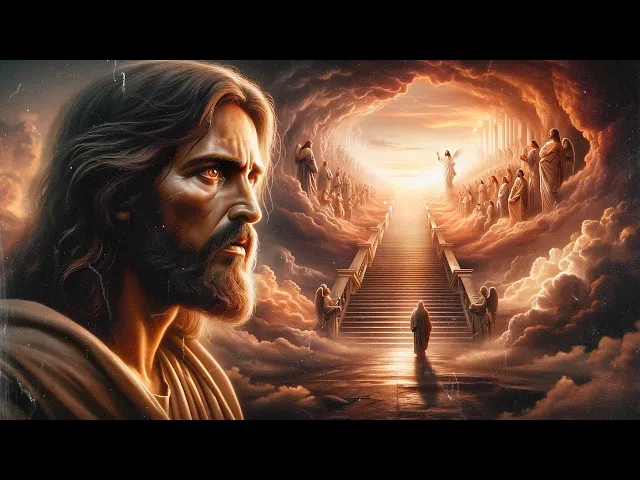
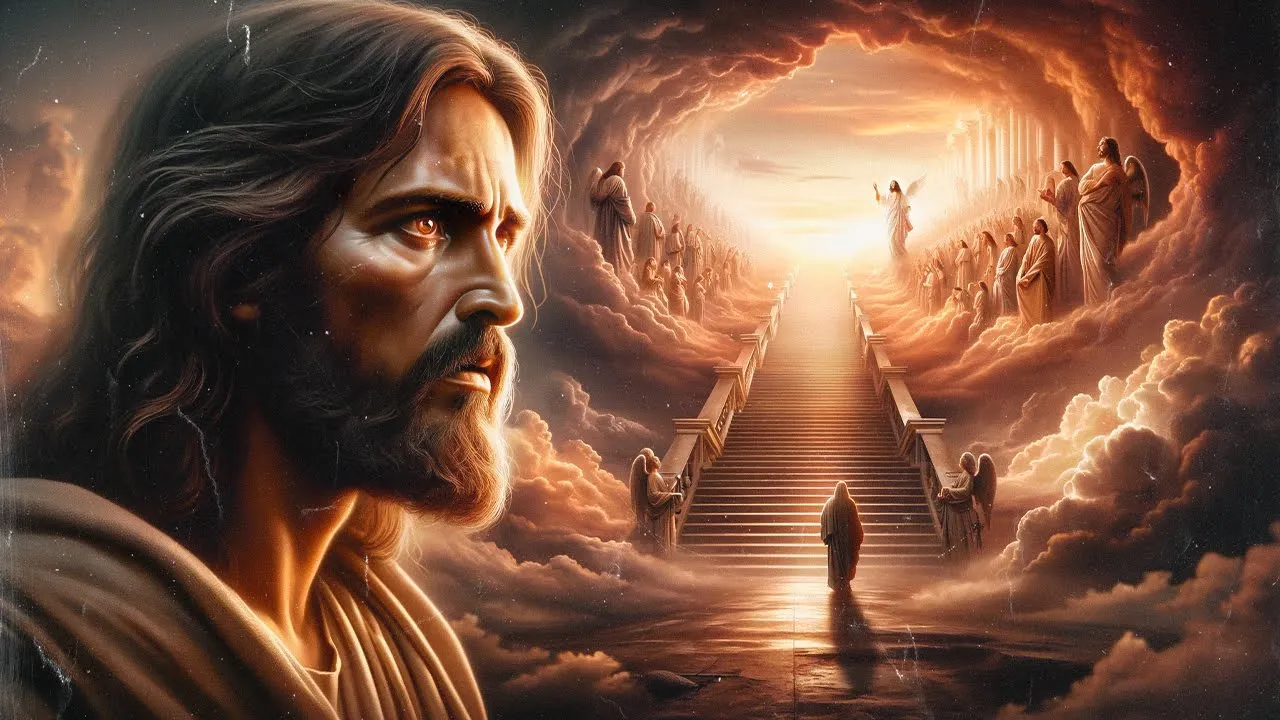
imagine a ladder that connects Heaven and Earth a symbol so powerful that it intertwines through history culture and religion capturing the imagination of generations this is Jacob's Ladder a concept so penetrating that it transcended its biblical origin to inspire works of art literature and Cinema but where does this fascinating metaphor come from The Story begins in the Book of Genesis a narrative that has not only survived the test of time but continues to enrich and challenge our understanding Jacob the man destined to become the patriarch of Israel found himself on the run a fugitive within
his own family his conflict with Esau his twin brother is a plot filled with deceit and betrayal revealing the complexities of Human Relationships and the weight of inheritance in Genesis 25 we discover that Jacob persuaded Esau to sell his birth right for nothing more than a bowl of soup this act of manipulation trivial as it may seem defined the course of their lives the tension intensifies even more in Genesis 27 when Jacob disguised deceives his nearly blind father Isaac to receive the blessing intended for Esau this moment is not only a turning point for Jacob
but also a point of fracture between the brothers as Esau consumed by betrayal threatens Jacob's life the plot thickens with the words in Genesis 27:41 Esau held a grudge against Jacob because of the blessing his father had given him and he said to himself the days of mourning for my father are near then I will kill my brother Jacob this statement not only highlights Esau's deep resentment but also sets a scene of suspense and imminent danger underscoring the gravity of Jacob's actions and the emotional cost of his choices Esau was determined to take revenge and
his intention was clear Rebecca ever Vigilant and insightful perceived the imminent danger to Jacob with a quick plan and a heavy heart she convinced Isaac to send Jacob away under the pretext of seeking a wife in the lands of his uncle laan thus Jacob left for padon Aram laan's home as narrated in Genesis 28:5 Isaac sent Jacob away and he went to padn Aram to laan son of bethuel the araman the brother of Rebecca the mother of Jacob and Esau in the Solitude of the night Jacob found himself in a desolate place with nothing but
the stars above and a stone for a pillow there under the veil of Darkness he faced a whirlwind of emotions regret for his past actions the isolation of the present and the uncertainty of an unknown future at this moment of vulnerability Jacob's story takes a miraculous and revealing turn Genesis 28: 10 to 15 describes a vision that transcends human understanding Jacob had a dream in which he saw a ladder resting on the earth with its top reaching to heaven and the angels of God were ascending and descending on it there above it stood the Lord
who said I am the Lord the god of your father Abraham and the God of Isaac I will give you and your Descendants the land on which you are lying this dream was not just a promise of divine protection it was a guarantee that despite his loneliness Jacob was not alone God was with him promising not only his safety but also prosperity and endless blessings for him and his Descendants the vision of the ladder symbolized a bridge between the Divine and the Earthly a reminder that heaven touches Earth through the actions and spirit of men
Jacob's Journey though solitary was under God's constant watch who promised I am with you and will watch over you wherever you go and I will bring you back to this land I will not leave you until I have done what I have promised you thus even in moments of greatest desolation God's presence offered comfort and Direction Illuminating Jacob's path with the promise of a future filled with hope and purpose Jacob's Journey from Beersheba to bethl a distance of over 40 Mi was an odyssey of true resilience and Faith Guided by Providence he found refuge in
a place likely shaded by trees a well-deserved pause after an exhausting day of travel the setting might seem sparse to any modern Observer Jacob lying on the cold ground used a stone as a pillow with the Open Sky as his only shelter although it seemed uncomfortable that night was more than just a stop for physical rest it was a stage for a divine revelation this rudimentary lodging not only denotes the absence of comfort but also Jacob's vulnerability alone exposed to the elements and the dangers of the unknown he might have felt more insecure than ever
fearing Esau's Pursuit however amid uncertainty and discomfort his faith and determination did not waver Jacob accustomed to a life of tents and hardships was prepared to face whatever lay ahead he knew that no matter how arduous the journey Divine protection would not fail him that night while the cold might have bitten his bones and the stone pressed against his head Jacob had a dream that would transform any discomfort into a distant background he didn't just dream he received a heavenly vision a direct encounter with God this dream was not a mere escape from his harsh
reality but a powerful affirmation of God's presence and Promises the Divine words and visions of the almighty assured Jacob not only of an Earthly blessing but also of celestial guidance this intimate moment reveals a profound truth God often chooses the moment of our greatest isolation and need to reveal himself more fully Jacob's experience illustrates that when Earthly Comforts fail us divine promises become even more palpable and essential through this dream Jacob received the assurance that regardless of adversities God's faithfulness remains unwavering ready to sustain us when we need it most the vision Jacob witnessed that
lonely night was more than a dream it was a profound revelation of the Heavenly and Earthly interconnectedness he saw a ladder that United Earth to heaven with angels ascending and descending and the comforting presence of God at the top this symbolic image offered a dual Comfort the certainty of a continuous connection between Heaven and Earth and the guarantee of God's constant presence this ladder was not just a physical structure in his dream but represented the incessant flow of Divine Providence the plans conceived in heaven are manifested on earth while Earthly deeds and dilemas are observed
and evaluated in the celestial realm God's providential action is meticulous occurring step by step the Angels serving as ministering Spirits play crucial roles in this Divine process they are the executors of God's will ascending to report their actions and descending to receive new orders this continuous Angelic activity described in Psalm 103: 20 21 bless the Lord you his angels Mighty in strength who perform his word obeying the voice of his word bless the Lord all you his hosts you who serve him doing his will underscores the importance of constant diligence in God's work inspiring us
to act with the same unwavering commitment as the angels for Jacob this Vision was not just a comfort in a moment of Despair but a lifelong Assurance of divine guidance and protection even away from the comfort of his father's house he was far from being helpless the vision assured Jacob that he remained under the watchful eye of a Ben vent Providence and the unfailing protection of the Holy Angels in this knowledge Jacob found the strength to continue his journey supported not only by the promise of Earthly blessings but also by the constant support of Heaven
it is truly comforting to imagine that as Jacob left Canaan for Syria dedicated Angels took turns caring for him many believe that during this transition the Angels who protected him in Canan ascended While others descended in Syria to take on their responsibilities in the wilderness God's encouraging words echoed to Jacob from the top of the ladder not only comforting him but also reaffirming the promises previously made to his father God indicated to Jacob that he would treat him with the same benevolence extended to Abraham and Isaac following the footsteps of Pious parents meant being included
in the divine Covenant and having a right to its blessings the land of Canaan where Jacob lay was promised as the dwelling place for his many descendants who would multiply like the dust of the earth although Jacob might have felt like a dry Branch God promised that he would become a flourishing tree whose branches would extend to the Sea the reiteration of these blessings brought immense Comfort to Jacob especially with the promise that the Messiah would come from his lineage bringing blessings to all the families of the earth Christ as the great blessing was destined
to bless everyone without distinction of origin except for those who choose to exclude themselves in Genesis 28:15 God's words adapt to Jacob's immediate context addressing his concerns about safety in the face of Esau's threats God promised his protection teaching us that those under Divine God are always safe regardless of adversity Jacob faced a long and challenging Journey traveling alone through unknown lands but he was reassured by the Divine promise behold I am with you this assurance of safety is a powerful reminder that with God's presence we are safe anywhere Jacob might not have foreseen the
difficulties he would face while working for his uncle but God had already assured protection for all future circumstances as Jacob advanced although in Exile and heading to a distant territory he received a Divine promise that would transcend his immediate circumstances God would not only take care of him during his departure but also in his return to his homeland amid the apparent isolation God assured Jacob that he would never abandon him a guarantee of continuous Fidelity and care that stood out even when circumstances seemed desperate This Promise resonates in Genesis 2 reaffirming that God's word is
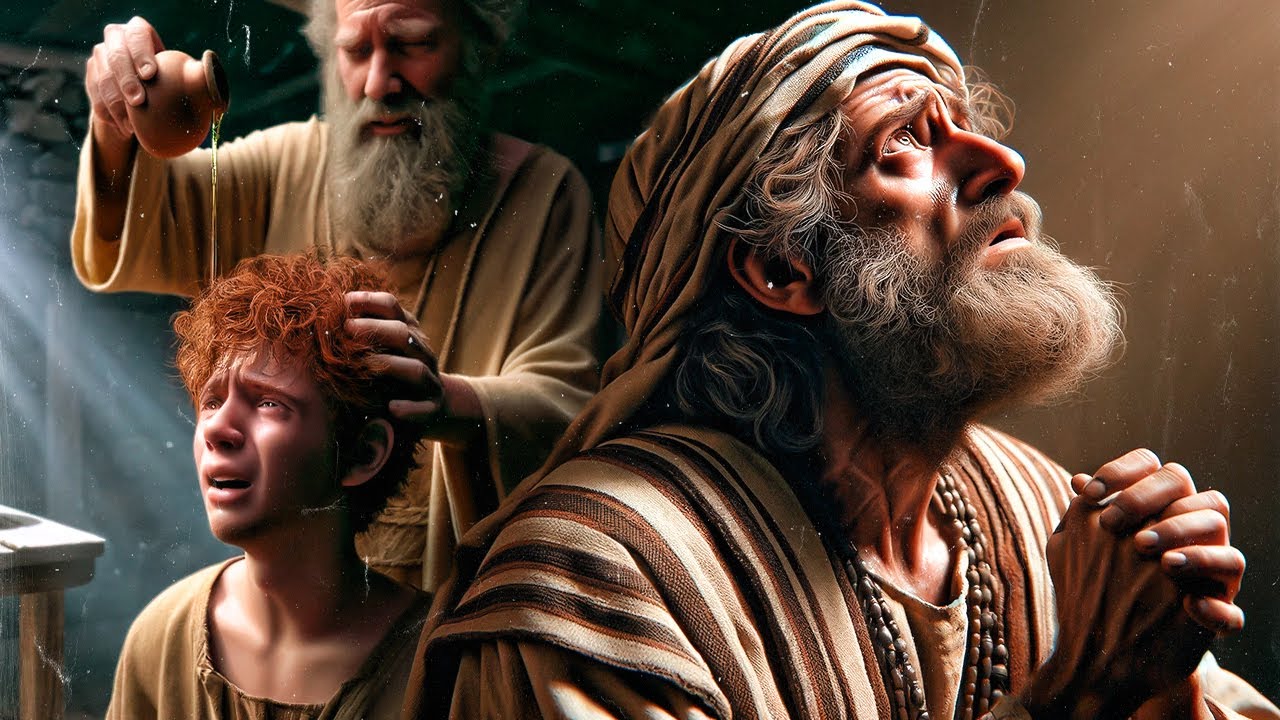
irrevocable and secure the distinction between speaking and doing which often exists among men is non-existent for God Jacob Awakening from his revelatory dream deeply realized this truth he declared surely the Lord is in this place and I did not know it fear and awe gripped him as he recognized that he was in the presence of the Divine describing the place as nothing less than the the house of God and the Gate of Heaven at dawn Jacob took the stone he had used as a pillow set it up as a memorial and anointed it with oil
an act of Consecration and acknowledgment of the sanctity of that place which he named bethl previously the place was unknown to him indicating a New Foundation both in Jacob's journey and in his relationship with God moreover Jacob made a vow a promise of continu faithfulness and dependence on God if God kept him provided his basic needs and brought him back safely to his father's house then the Lord would be recognized as his God Jacob committed to dedicating a tenth of everything he received solidifying his faith and gratitude through a tangible offering this Stone placed as
a memorial would not only serve as a physical reminder of God's promises but also as a sign that this place would be eternally considered the house of God God revealed himself to Jacob in a moment of quietness while he slept without Jacob actively seeking this Revelation just as the wind blows freely the spirit of God moves without being confined by human actions upon Awakening Jacob might have felt revitalized similarly to the Prophet Jeremiah who found his sleep sweet this experience highlighted not only God's surprising presence but also Jacob's profound commitment to integrating this divine revelation
into his life Jacob expressed his amazement and surprise in recognizing the clear signs of God's special presence proclaiming surely the Lord is in this place and I did not know it Genesis 28:16 God's manifestations carry such strong evidence that they are undeniable and provide profound satisfaction to The Souls of the faithful truly convincing them of his Divine proximity this conviction can be deeply personal and sometimes difficult to communicate to others but it is undeniably real for those who experience it Jacob's narrative teaches us that we can find God in the most unexpected places and under
surprising circumstances there is no place where Divine visitations are impossible God can be found anywhere in the city in the Wilderness at home or on the street as long as we maintain our spiritual practices Jacob's response to these Revelations was one of humility instead of exalting himself with the Visions he received he was filled with fear and reverence this experience shaped Jacob teaching him and us that the more we perceive God's presence the more we find reasons to Humble ourselves and Revere the people whom God chooses to reveal himself to are often those who see
themselves as small in their their own eyes and learn to fear and Revere God and His goodness Jacob marked by these Revelations not only recognized God's proximity but also the responsibility and privilege of living up to this divine grace God Reveals His presence in profound ways where his grace is explicitly manifested and his covenants are confirmed historically this occurred through the ministry of angels and now it is experienced through the ordinances he established when God blesses us with his distinct presence we must respond with the deepest reverence remembering his Justice and Holiness and reflecting on
our own fallibility and insignificance Jacob aware of the importance of preserving the memorial of his Divine encounter took steps to ensure the place would be remembered he placed a stone as a pillar not because he believed that the Visions Were Somehow physically bound to the stone but to Mark the place where he received God's favor he planned when possible to return and build an altar there following the example of Abraham who erected altars at the places where God appeared to him although time was short at that moment the column would serve as a lasting Monument
to that sacred experience thus he anointed the top of the stone with oil a ritual probably used to dedicate altars at that time Jacob was sincerely committed to building a more elaborate alter when he had the necessary resources as an expression of his gratitude for the heavenly vision received this action emphasizes that showing mercy and gratitude to God requires a sense of Duty and a constant reminder of our intimate relationship with him after his profound spiritual experience Jacob renamed the place of his divine revelation formerly known as loose he called it bethl meaning the house
of God in direct response to God's appearance there this name change not only reflected Jacob's personal transformation but also elevated the place's significance above all its beautiful flowering almond trees bethl would Mark a significant Point not only in Jacob's Journey but would also become a place of continuous importance in the scriptures where God would again speak to him in subsequent years the Divine visit to Jacob at bethl symbolizes the renew of God's covenant with him a covenant that is reciprocal by nature in this context when God reaffirms his promises it is appropriate for us to
renew our commitments to him Jacob's vow stemming from this interaction highlights several important principles First Foundation of Faith Jacob's Faith was Anchored In God's explicit promise as stated in Genesis 28:15 where God assures I am with you and will keep you Jacob embraced This Promise trusting that God would fulfill his word of protection provision and security second trust in Providence Jacob trusted in God's promise that not only would he protect him but he would also bring him back to his homeland in peace this illustrates a deep faith in God's Providence and guidance markedly contrasting with
Esau who was bound to the expectation of his father's death third with Esau while Esau impatiently awaited the opportunity to act after his father's death Jacob focused on God's promises using them as the foundation for his expectations and actions Jacob's example teaches us to value and Trust in God's promises as the basis for our desires and expectations in life Jacob is described as a man of humility and moderation finding contentment in the simple things in life such as having bread to eat and clothes to wear despite God's Grand promises Jacob did not aspire to luxury
or excess he exemplifies a fundamental virtue satisfaction with the essential true wealth according to Jacob's view does not lie in the accumulation of material Goods but in the ability to be content with what is sufficient for daily needs this attitude teaches that even those who have abundance do not enjoy more than what what is necessary what exceeds is preserved or shared but it is not the source of true pleasure if God blesses us with more than we need we should be grateful and use these resources for his glory if we possess only the essentials we
should be satisfied and joyfully enjoy the Divine blessings in our lives Jacob's experience underscores his deep piety and faith manifested in his prayer for protection and God's Contin ual presence he teaches us that true contentment and happiness do not depend on accumulating more but on being secure in God's presence and under his care during our Journeys it is comforting to have a guide who illuminates the path in unknown territories and a protector in adversities being well prepared and in Good Company are important but those who have God by their side enjoy these advantages in the
highest form Jacob firm in his resolution decided to cling to the Lord as his God in an unshakable Covenant even in the face of difficulties such as the lack of food and clothing for him each Act of Divine Mercy was a call to an even deeper commitment to God following his transformative encounter with God Jacob committed to specific acts of devotion as an expression of his gratitude first he declared that the pillar established in bethl would remain until he returned in peace at which point it would be transformed into the house of God through the
construction of an altar in Divine honor second Jacob committed to ensuring that the house of God would always be properly cared for and that its altar would never be without sacrifices he promised to dedicate a tenth of everything he received from God allocating it to the support of the altars or the poor who are God's Representatives on Earth these commitments reflect the ancient practice possibly initiated by Abraham of offering a tenth of one's Goods to God following Divine guidance this tradition underscores the importance of honoring God with our wealth and expressing gratitude for the blessings
received the act of tithing or dedicating a portion of income to support Divine work is a tangible way to demonstrate devotion and support works of Faith adaptable to individual circumstances and particular blessings the account of Jacob's first Supernatural encounter with God has significant parallels with Abraham's experience in Genesis 15 marking a moment of continuity and renewal of the Divine Covenant with the patriarchal lineage interestingly Jacob was almost the same age as Abraham when he received the call to leave his land and seek a new one despite Jacob's questionable actions in taking the family inheritance the
episode teaches that it is God not Jacob who commands the Fulfillment of the promises made to Abraham including the multiplication of his descendants into a great nation this episode serves to show Jacob and all of us that the divine plan unfolds under God's governance following his methods and timing not ours it would take time for Jacob to fully understand this truth just as we often take time to recognize and accept Divine sovereignty in our own lives Jacob's dream of the ladder extending from Heaven to Earth is not only a milestone in his spiritual journey but
also resonates through the scriptures to Nathaniel's Encounter With Jesus as narrated in John 1: 44-47 In this passage Philip finds Nathaniel and invites him to meet Jesus describing him as the one for told by Moses and the prophets nathani skeptical questions whether anything good can come from Nazareth a town of modest reputation the encounter unfolds with Simplicity but carries significant theological depth Philip instead of arguing simply invites Nathaniel to come and see believing that a direct Encounter With Jesus would dispel any doubts as they approach Jesus immediately recognizes Nathaniel as a true Israelite in whom
there is no deceit this instant recognition of Nathaniel by Jesus without having met him before reveals Jesus's profound knowledge of people and their Natures echoing the Divine Visions granted to Jacob Jesus's reference to Jacob's dream can be seen as an affirmation that just as Angels ascended and descended on the ladder in Jacob's dream now Jesus himself becomes the bridge between Heaven and Earth fulfilling ancient promises and prophecies this parallel not only links Jesus to the Salvation history initiated with Jacob but also highlights the continuity of God's purpose through generations thus the connection between Jacob's dream
and Nathaniel's Encounter With Jesus in John 1 verse 47 emphasizes that Jesus is the living fulfillment of the promises made to Jacob he is the means by which Heaven touches Earth bringing God's blessings and presence in a more intimate and direct way than ever before Jesus's Revelation to Nathaniel reinforces the idea that genuine Faith sees beyond external circumstances and recognizes the divine presence even in unexpected or humble contexts Nathaniel was surprised to be approached by someone who though a complete stranger seemed to know him deeply sitting under a fig tree he was well hidden by
the hanging leaves and branches believing himself invisible to others eyes eyes however Jesus saw him even from afar revealing not only his ability to perceive the hidden but also the depth of his understanding of people this initial perception quickly transformed Nathaniel's initial distrust into Faith as expressed in John 1: 49-50 by recognizing Jesus as the rabbi the Son of God and the king of Israel Nathaniel shows acceptance of Jesus's identity and Authority Jesus's response to this declaration of faith is promising you believe because I told you I saw you under the Fig Tree you will
see greater things than these Jesus then prophecies that Nathaniel will see Heaven open and the angels of God ascending and descending on the son of man reinforcing the theme of the connection between Heaven and Earth reminiscent of Jacob's Ladder Vision this episode highlights Jesus's encouragement and recog nition of Nathaniel's Integrity by calling him a true Israelite in whom there is no deceit Jesus not only Praises his sincerity but also speaks directly to Nathaniel's heart who may have felt discouraged or self-critical Jesus uses this moment not to inflate Nathaniel's ego but to lift him up acknowledging
his virtues in a moment of vulnerability The Narrative further emphasizes how Jesus welcomes and forgives despite people's initial failures and doubts he does not reproach Nathaniel for his initial skepticism about Nazareth but rather accepts and values his honest nature this teaches us the importance of responding with Grace and understanding even when confronted with criticism or distrust the story concludes by reinforcing that Jesus has a unique ability to truly know people's hearts allowing him to see beyond appearances and words reaching the essence of each individual Jesus's declaration that Nathaniel is a true Israelite in whom there
is no deceit evokes deep reflection on the nature of identity and Faith while the name Israel is used to designate the entire nation Romans 9:6 reminds us that not all who are descended from Israel are Israel indicating that true spiritual descent is not just a matter of physical lineage but of character and faith Jesus identifies Nathaniel as someone devoid of Deceit qualifying him not only as a true Israelite but also as a genuine Christian this honesty transparency in interpersonal relationships and reliability are essential qualities that reflect a sincere heart and authentic Faith Nathaniel is also
presented as sincere in his repentance and committed to God without falsehood in his Spirit as expressed in Psalms 322 blessed is the man whose transgression is Forgiven whose sin is covered Jesus's acknowledgement that Nathaniel is without deceit does not imply he is perfect in all aspects but highlights his integrity and sincerity he may have flaws be forgetful or even make mistakes but his Essence is not false nor does he perversely deviate from God this portrayal of Nathaniel invites reflection on the corrosive influence of hypocrisy exemplified by the scribes and Pharisees who often compromised the authenticity
of faith and religious practice among the Jews Nathaniel's sincerity and Fidelity are seen as rare and precious comparable to job's devotion who remained loyal to God even under Extreme Trials Nathaniel's surprise at being praised by Jesus reflects his modesty and authenticity he does not seek recognition for his virtues on the contrary his humble response to Jesus's praise demonstrates his genuine surprise and discomfort with the attention confirming his lack of pretense Christ possesses a knowledge that transcends our own understanding of ourselves unlike humans who often judge based on outward appearances nothing is hidden from Christ's eyes
this ability to see beyond the visible is expressed in Hebrews 41213 which describes the word of God as living active and sharply penetrating able to discern the deepest thoughts and intentions of the human heart this profound knowledge Christ has of us not only reveals his divinity but also establishes a call for us to seek to know him more deeply Jesus's statement to Nathaniel before Philip called you I saw you not only demonstrates his omnipresence and omniscience but also his intimate connection with those he calls Isaiah 11 2 three prophecies that the Messiah would be endowed
with the spirit of wisdom understanding and the fear of the Lord enabling him to perceive people's true nature without relying on superficial sensory perceptions this ability to judge Beyond appearances is crucial to understanding how Jesus interacts with those around him including Nathaniel two Timothy 2:19 reinforces this truth declaring that the Firm Foundation of God stands having this seal the Lord knows those who are his this verse underscores the importance of living consistently with the Divine call turning away from iniquity as we are always in God's sight Jesus's knowledge of Nathaniel even when he was alone
under the Fig Tree possibly engaged in prayer or meditation is a powerful example of how God not only sees us but also values our moments of communion with him Jesus's observation that he had seen Nathaniel under the Fig Tre was particularly significant for Nathaniel indicating not only Jesus's omniscience but also his profound Divine interest in his acts of private devotion Nathaniel sitting quietly under the Fig Tree offers an image of peace and reflection that favors intimate communication with God this scene recalls the tranquility described in Micah 4 four where each person will sit safely under
their own Vine and fig tree free from fear in an environment where God's presence is as palpable as the voice that promises peace Nathaniel's posture under the fig tree is not just a casual choice of a place to rest but symbolizes a deep spiritual disposition similar to Isaac in the field another moment of solemn commitment and communion with God this disposition starkly contrasts with the attitude of the Hypocrites Jesus describes in other passages who pray on street corners to be seen by men Nathaniel's transformation in perception of Jesus is remarkable initially skeptical about the possibility
of anything good coming from Nazareth he radically changes his attitude upon recognizing Jesus's identity and Mission God's grace Works in his heart allowing him to overcome doubts and prejudices once his faith is strengthened he is able to accept Jesus of Nazareth as the ultimate good and he begins to follow Christ without hesitation Nathaniel's public confession addressing Jesus as Rabbi not only confirms his acceptance of Jesus as a teacher and spiritual leader but also reflects a declaration of Faith this confession is an act of worship an acknowledgement of Jesus's Authority as the great Rabbi from whom
we must all learn this title of respect common among Jews for their teachers is here applied to Christ underscoring his position as the ultimate teacher whose teachings transcend those of all others by recognizing Jesus as the Son of God and the king of Israel Nathaniel not only declares his belief in Jesus's divine nature but also confirms his mission as the expected Messiah as prophesied these confessions are deeply rooted in Jewish scriptures such as Psalm 2:7 which prophesies the unique relationship between God and the Messiah I will proclaim the decree of the Lord he said to
me you are my son today I have become your father this Revelation is crucial as Nathaniel identifies Jesus not only as a teacher or Prophet but as the very Son of God implying a Divinity that transcends human knowledge and capabilities he also acknowledges Jesus as the king king of Israel a Messianic figure the Jews expected to restore the kingdom and Rule with Justice and peace Nathaniel's acceptance of Jesus as king demonstrates his willingness to submit to his authority reflecting his genuine faith and understanding of divine promises Jesus's response to this faith is described in John
15051 where he promises Nathaniel that he will see even more of divine power and Glory Christ values and encourages even the smallest signs of Faith as Illustrated in Matthew 12:20 where he is described as one who does not break a bruised Reed nor quench a smoldering Wick but brings Justice to Victory this encounter underscores Jesus's willingness to nurture and strengthen the faith of those who seek him even when that faith is initially Fragile the fact that Nathaniel believes in Jesus based on an apparently small proof Jesus seeing him under the Fig Tree is significant it
reveals that Nathaniel's heart was prepared to receive the truth indicating a prior disposition to Faith that allowed this Revelation to have such a transformative impact on his life Nathaniel's quick submission of heart to Christ at the first call is a reflection of Christ's powerful Grace which not only calls but also promises even greater Revelations to strengthen and expand Newfound Faith Jesus promises Nathaniel that he will witness greater things than these referring to more substantial proofs of his messiahship such as the Miracles he will perform and his future Resurrection in this context Jesus humbly adopts the
title son of man a term he frequently uses in the gospels to describe himself although Nathaniel recognized him as the Son of God and the king of Israel Jesus chooses a title that emphas izes his humanity and accessibility in contrast to Divine Grandeur this self-designation is a teaching about the importance of recognizing both Christ's humanity and Divinity and serves to adjust Nathaniel's expectations about the nature of the Kingdom Jesus came to establish a kingdom not of external pomp but of humility and service the promise that Nathaniel would see Heaven open and the angels of God
ascending and descending on the son of man is particularly significant this scenario Echoes Jacob's vision of the ladder that connected Heaven and Earth with angels moving between the two in the New Testament context this image symbolizes Jesus as the bridge between the human and the Divine the mediator through whom communication and interaction between humans and the Divine are restored and intensified Romans 5 one two reminds us that through Jesus we are justified by faith and have peace with God accessing a state of grace in which we can rejoice in the hope of the glory of
God thus Jesus as Jacob's Ladder restores and reconciles our relationship with God that had been broken by sin in this encounter Jesus not only reveals his Divine identity and Redemptive Mission but also defines the model of how true Faith manifests not in external displays but in a humble and deep recognition of divine grace the image of the ladder through Christ becomes the symbol of the new way Christians have to access Heaven promising continuous interaction between the celestial and the Earthly brought about by Jesus's saving presence Among Us Jacob's Vision rich in symbolism and meaning marks
a decisive moment in his spirit ual Journey this encounter not only reveals the continuity of the abrahamic Covenant Promises to the third generation but also highlights God's initiating Grace Jacob who had likely never heard God's voice directly before receives the divine revelation that solidifies his path of Faith the dream symbolizes the connection between Heaven and Earth with angels transitioning on a ladder linking the two Realms suggesting that God is actively involved evolved in the Earthly world upon waking from this profoundly significant dream Jacob responds with a promise of faithfulness and devotion committing to give a
tithe of all he receives this action reflects not only his recognition of God's sovereignty and provision but also A Renewed commitment to follow Divine ways the Gospel of John in presenting Jesus Echoes and expands these themes of mediation and revelation from the prologue John describes Jesus as the Incarnate Word bringing Divinity into the human context and revealing God to the world Jesus not only fulfills Old Testament scriptures as indicated by the testimonies of Andrew Philip and Nathaniel but he also manifests as the Fulfillment of the Messianic promise the true Son of God and king of
Israel furthermore Jesus's encounter with the Samaritan woman at Jacob's Well illustrates his ability to transcend traditional barriers of worship and reveal profound spiritual truths he not only demonstrates an intimate knowledge of the woman's life but also reveals that he is the source of Living Water offering a direct connection to the Divine surpassing even the great Patriarchs like Jacob finally the visions of Revelation culminate with the promise of a new creation where Heaven and Earth will be United and God will dwell Direct ly among his people this apocalyptic scenario resonates with Jacob's dream where the latter
symbolizes the permanent accessibility of God to his people and Jesus is the ultimate manifestation of this connection serving as the definitive ladder that reconciles God with Humanity Psalm 1611 reminds us of this truth promising that in his presence we find fullness of joy and eternal Pleasures at his right hand it is this promise of Eternal joy and continuous presence that sustains the faithful through the challenges and difficulties of Earthly life moreover the notion of Jesus as Creator mentioned at the beginning of John's gospel broadens our understanding of his role in creation and the Redemptive history
without him nothing was made that has been made this statement underscores the preeminence of Christ not only as Redeemer but also as the creative force behind the entire universe Jesus encouraged the Jews to study the scriptures which testify of him referring to the Old Testament when reading the Old Testament we should seek to see Jesus not only in explicit prefigurations but also in the shadows and types that point to him as the ultimate substance of these Revelations the lessons we draw from Old Testament stories like Jacob's offer valuable encouragement and challenges for our faith Journey
l lesson one God uses imperfect people Jacob despite his flaws and deceit is a testament to God's love and patience we all sin and fail but God does not give up on us Jacob's Faith though nent after his first encounter with God developed over the years despite his continued mistakes however at the end of his life Jacob is highlighted in Hebrews 11:21 as a man of Faith remembered for blessing Joseph's Sons and his loyal worship lesson two God's plans are always better than ours initially Jacob trusted in his own schemes rather than relying on God's
plans over time he learned that Divine purposes are deeper and more fulfilling than any human plan could be this learning is crucial for our own spiritual lives as we learn to trust more in God's ways than our own lesson three God wants to get our attention God communicates with us in ways that are unique and personal while we may not have dramatic experiences like vivid dreams or burning bushes like Jacob and Moses god uses methods that resonate with us individually whether through a sense of Peace after a decision or clear Direction in moments of prayer
he speaks to us Jacob marked the place of his Divine encounter by setting up a stone as a memorial and we too can cultivate practices that help us remember and thank God for those moments of clarity and divine guidance number four God wants trust and obedience though the Divine promises surprised Jacob he responded with a vow that still revealed some hesitation in his complete trust in God in Genesis 28: 20-22 Jacob makes a conditional vow if God will be with me and will keep me on this journey that I take and will give me food
to eat and clothes to wear so that I again to my father's house in peace then the Lord shall be my God this Stone which he had set up as a pillar would be God's house and he promised to give a tenth of all he received despite this striking heavenly vision Jacob still relied on his own abilities and strategies instead of fully depending on God this partial trust manifested throughout his life until a transformative wrestling match with God led him to a complete understanding of Divine sovereignty Jacob's experience shows that even after powerful Divine encounters
growth in trust and obedience to God can be a gradual process involving both challenges and continuous Revelations comparison with the Tower of Babel Jacob's Ladder offers a notable contrast to the story of the Tower of Babel in Genesis 11 while the ladder represents a divinely initiated connection between God and man the Tower of Babel symbolizes the failed human effort to reach heaven by their own means the Builders of Babel said come let us build ourselves a city and a tower with its top in the heavens and let us make a name for ourselves lest we
be dispersed over the face of the whole earth however this effort resulted in confusion and dispersion as the Lord confused their language and Scattered them across the world Jacob's Ladder on the other hand is a metaphor for The Med iation that God provides allowing continuous communication and relationship between Heaven and Earth unlike the arrogance of the Babel Builders who sought to glorify themselves the ladder symbolizes the humility and dependence we must have on God's provision Jacob's Ladder described in Genesis is symbolically called the Gate of Heaven illustrating a direct connection between Heaven and Earth this
symbolism starkly contrasts with The Narrative of the Tower of Babel where people attempted to build a tower reaching the heavens the name Babel is often interpreted as gate of God but ironically it represents a failed and proud human effort to reach the Divine unlike human attempts to build a way to heaven like the Tower of Babel the true Gate of Heaven is accessed only through faith in Jesus Christ any human effort to enter God's presence presence without Christ is doomed to fail for only he provides the authentic path to the father in complete opposition to
human self-exaltation and pride indeed pride is a recurring theme in the Bible often presented as something God seeks to Humble the construction of the Tower of Babel was an act of self-exaltation where people sang praises to themselves instead of glorifying God the Bible emphasizes that only God's name should be exalted in Corinthians 10:18 it is reiterated that it is not the one who commends himself who is approved but the one whom the Lord commands right after the failed attempt at bble God promises Abraham that he would make his name great and make him a blessing
illustrating that when plans align with God's will they Prosper however the people of Babel by trying to make a name for themselves and avoid dispersion were directly contradicting God's will for them to spread and populate the Earth this narrative highlights that despite human attempts to counteract God's will God's will always prevails the Biblical teaching on the Tower of Babel and Jacob's Ladder reminds us that human efforts to reach or manipulate the Divine through their own means are futile only through Saving Grace by faith in Jesus Christ do we truly connect with God and fulfill his
purpose for our lives lives this passage can be divided by the repeated use of the word come in verse three the people said come let us make bricks and burn them thoroughly they sought to build a tower reaching the heavens but their efforts were thwarted by the Lord who also used the word come in verse 7 come let us go down and confuse their language God Appears here not to support their plans but to frustrate them it was not a difficult task for the Lord to interrupt the progress of the Tower of Babel he dispersed
the people over the face of the Earth causing the construction of the city to cease by confusing their languages imagine the astonishment of the people experiencing this sudden confusion realizing that God was actively intervening this event highlights how easily God can accomplish his will and that his plans cannot be thwarted Psalm 33: 10 and 11 reinforce this truth the Lord brings the counsel of the Nations to nothing he frustrates the plans of the peoples the counil of the Lord stands forever the plans of his heart to all generations human opposition to the Lord is insignificant
in the face of the Eternal God who created man in His image and established the world and everything in it there is a clear linguistic and thematic connection between Babel and Babylon in Hebrew both words derive from the same root underscoring the association in the Bible Babylon represents Humanity's opposition to God exemplified by the sinful pride of Nebuchadnezzar King of Babylon during Daniel's time Nebuchadnezzar greatly boasted about babylon's power but the Lord humbled him making him eat grass like cattle until he acknowledged that the most high rules the kingdom of men and gives it to
whom he will Daniel 4:25 5 the Bible frequently mentions Babylon starting in Genesis 11 where the inhabitants in their pride defied God's will Babylon continues to be a symbol of rebellion against God in both the Old and New Testaments this city represents human opposition to God and His principles in Revelation especially in chapters 17 and 18 the Apostle John describes Babylon as the great mother of prostitutes and of the Abomination ations of the earth he details the Divine judgment that will fall upon her as described in Revelation 18 veres 21- 24 the destruction of Babylon
symbolizes the fall of sinful Humanity that opposes God figuratively all Humanity resides in one of two cities Babylon or the New Jerusalem the New Jerusalem is presented as a place of glory and Beauty prepared by God for those who have faith in Jesus Christ understanding the difference between Babylon and the New Jerusalem is vital as they symbolize the distinct Eternal Destinies of humanity Babylon founded by Nimrod grandson of ham Genesis 10:10 represents human attempts to reach heaven by their own merits while the New Jerusalem represents access to Heaven granted by God Nimrod whose lineage was
marked by his father Noah's scorn symbolizes is human effort independent of God these narratives illustrate two opposing approaches to Salvation one relies on human efforts while the other trusts in Divine Provisions the Bible reveals that Jesus is the ladder of Jacob the perfect connection between Heaven and Earth who came to redeem humanity and offer eternal life this dichotomy between Babylon and the New Jerusalem invites us to reflect on our own spiritual journey Babylon symbolizes pride and self-sufficiency while the New Jerusalem symbolizes humility and dependence on God's grace we must choose to follow the path of
the New Jerusalem trusting Jesus Christ as the only way to True salvation and eternal life applying these lessons in our lives today in the Bible God often communicated with people through dreams offering them important guidance and Revelations today he speaks to us through his written word the Bible which contains stories like Jacob's filled with lessons and clear principles he wants us to follow additionally God speaks to us through the Holy Spirit during prayer listening to sermons music interacting with other believers and spending time alone with him the key is to put the word into practice
not just read or hear it Jacob's Story shows us that even when we fail or are not entirely loyal God does not abandon us he patiently waits for us to fully surrender our hearts to him an important detail in the Gospel of John is the first instance of Jesus using the amen amen formula which appears in John 1:51 Jesus says truly truly I say to you highlighting the importance and certainty of his words this double use of Amen underscores the Divine authority of Jesus and the truthfulness of his message