all right we've already established that the Industrial Revolution was a major force of change in the world but for a lot of people that change was for the worse so in this video we need to talk about all the reforms in the 19th century that attempted to make those people's lives a little less now so if you're ready to get them brain cows milked let's get to so in response to the social woes created by industrialization some Europeans turned to politics and political parties to create meaningful reform and to make their lives feel more fulfilling
and less like a recently expired coupon and that brings us to the rise of mass-based political parties now political parties weren't necessarily new at this point but what was new was mass-based political parties you see as European nations extended the right to vote to more and more people political parties had to appeal to more voters interest in order to win off for example in England the conservative party really only cared about the interests of the landed Elite but the Liberal Party increasingly represented the interest of the working class and so was more and more of
the working class gained the right to vote the Liberal Party grew in influence and Power in the 19th century the people of England turned to the Liberal Party to enact policies for a national education system and public health benefit another example of people attempting reform through political parties was Germany's Social Democratic party this party was built on Marxist principles of class struggle and work to improve the lives of the German working club now remember what we talked about in another video when we dealt with Marx's understanding of History we believe that class struggle would eventually
result in a violent revolution there were Germans in the Social Democratic party who believed Revolution was inevitable but there was another faction that believed that class struggle could be alleviated by social reform and they were able to make some modest gains for the working class not least improved standards of living and working now during this time workers also joined together in labor unions which promote a social and economic reforms and some of these even turned into political parties themselves and this was especially prominent in England after 1870 labor unions gained the right to strike and
when they gained the right to strike well they struck in 1888 female workers organized a strike in the match industry in an 1889 London Dock Workers did the Same by the time World War one rolled around somewhere around three to four million workers had organized themselves into labor unions in England and this became one of the primary ways that workers agitated for reforms to their wages and their working condition now in the previous point we talked about the Social Democratic party in Germany but before this was a political party it was two independent labor unions
namely the general German Workers Association and the Social Democratic workers part now it's not as important to remember the names of those individual unions as it is to remember that these labor unions merged to form a political party that worked for the rights of the working class now women also press for legal economic and political rights as well as improved working conditions this came about in part because women of this age were exceedingly involved in broader reform movements that gave them the motivation to begin questioning their own roles in society for example Barbara Smith bodachon
in England gathered a group of women together who became known as the ladies of Langdon place they worked together to extend voting rights to women and to recognize women's rights to property apart from their husband we talked about Flora Tristan in another video but by way of reminder she worked for women's equality in France and since she was a utopian socialist her ideas didn't really seem workable in the real world and thus her ideas remained confined to the margins of society but building on Tristan's work the women's social political union emerged in Britain in the
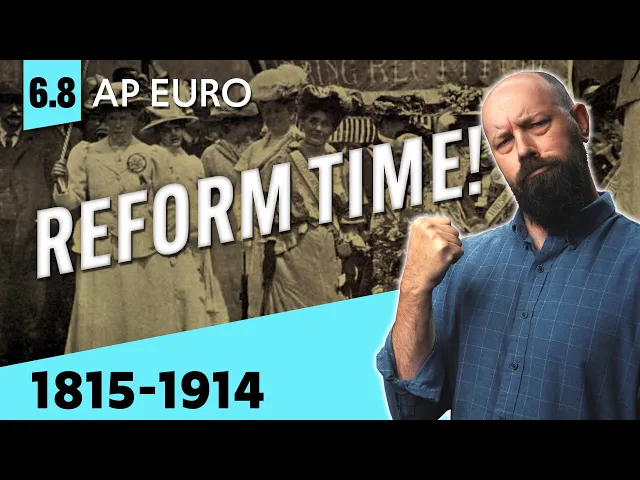
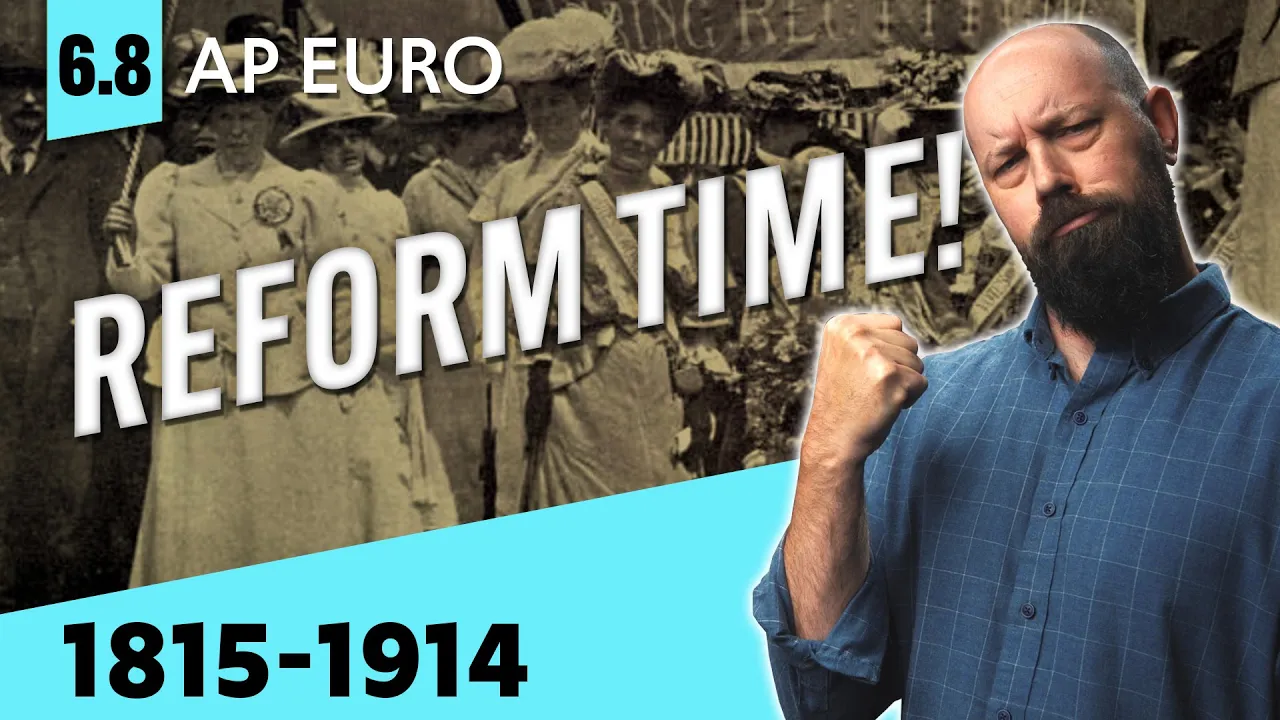
early 20th century it was created by the Pankhurst family who organized has rallies for women's equality the most significant rally for women suffrage occurred in 1908 in London's Hyde Park in response police attacked the demonstrators and jailed no small number but the pan curse continued fighting for women's suffrage a fight that eventually pressured Britain's Liberal Party to add that issue to their platform as a result in 1918 the British Parliament passed a law enabling men over 21 to vote in women over the age of 30 to vote so yeah baby stuff additionally let's talk about
people who sought to reform Society based on their religious principles one of the most notable was the Sunday School movement which aimed to provide education for working-class children and most of the teaching was done by women the movement was a massive success and as adults brought their children to learn Reading Writing and arithmetic the adults themselves learned too all leading to a more literate and empowered Society Additionally the Abolitionist Movement sought to ban slavery this movement had the most success in England where growing out of the Abolitionist work of William Wilbur Force by 1838 slavery
was abolished across the British Empire Okay click here to keep reviewing for unit 6 of AP European History and click here to get my AP Euro review pack if you need help getting an A in your class and a five on your exam in May I'll catch you on the flip-flop