the Cuban Missile Crisis of 1962 had just brought the world to the brink of nuclear conflict amid this Grim atmosphere aerospace engineer miky me rifles through discarded blueprints for experimental War aircraft American advancements in Battlefield technology are rapidly outpacing those at the Soviet Union to protect his homeland and maintain military superiority he envisions a revolutionary new weapon an Airborne infantry fighting vehicle that defies all conventional design principles his prototype helicopter can transport eight fully armed troops while doubling as a mighty gunship its 4500 horsepower engines Propel it to 200 mph while titanium rotor blade shrug
off 50 caliber rounds even Pilots are impressed with the unprecedented capabilities of the world's first flying tank it had everything and to them quote our helicopter also had a soul [Music] during World War II the Germans delivered a harsh lesson to the Soviets through their aggressive Blitz Creek strategy a rapid mechanized assault designed to overwhelm and Conquer vast territories before enemies had time to respond the speed and precision of these tactics left a lasting impression on Soviet military strategists prompting them to seek ways to replicate such mobility and Power in the event of future conflicts
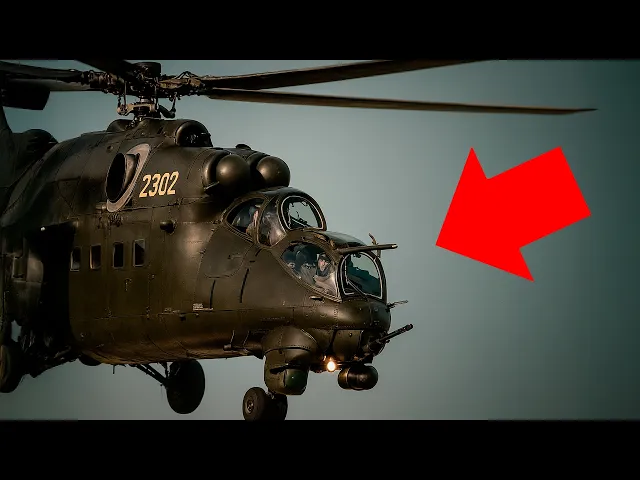
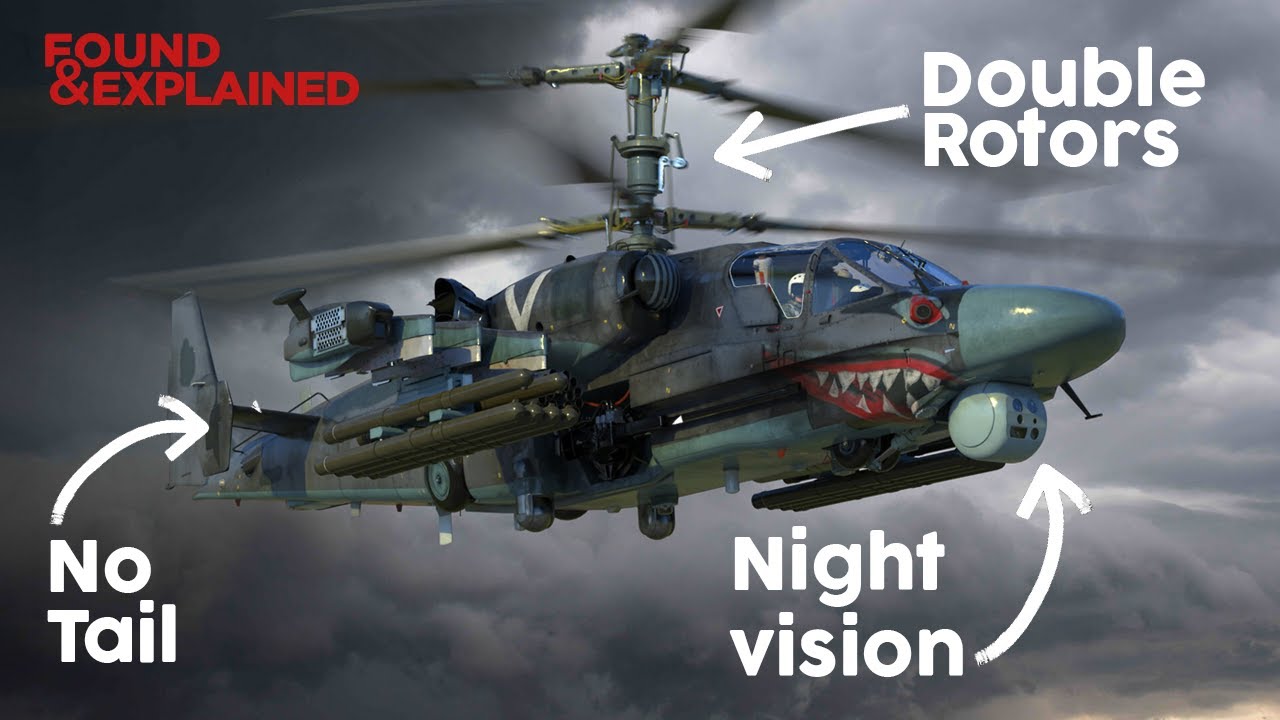
by the 1960s the Soviet Union recognized the importance of providing its troops with Advanced mechanized divisions including versatile aircraft capable of troop transportation and close air support helicopters were becoming critical assets on the battlefield and the idea of a single aircraft capable of Performing dual functions intrigued Engineers like miky M chief designer at the M Moscow helicopter plant he developed a prototype called the v24 inspired by an abandoned project and the me Mia twin turbine helicopter this Innovative design featured a central infantry compartment capable of transporting up to eight fully armed troops while its wings
were equipped to carry six missiles to enhance its Firepower me mounted a gsh 23l cannon on the landing skid creating a formidable flying combat vehicle despite initial support from some military experts senior officials in the Soviet Armed Forces remained skeptical at the time there was nothing quite like the B24 and investing in such an unconventional aircraft posed a significant risk if it failed the Soviet troops could be at a severe disadvantage however meil was unwavering in his belief that the future of warfare lay in his design me's persistence and persuasive abilities eventually gained him crucial
backing after engaging in discussions with influential figures like military commander and Marshall of the Soviet Union Andre a gretchko he began to build momentum for the project but it wasn't until the US demonstrated its helicopter gunship power during the Vietnam war the Soviet officials began to take meals v24 more seriously realizing they were falling behind in armed aircraft development the Soviet military officially commissioned a battlefield support helicopter in [Music] 1968 although mik M's determination redefined the role and capabilities of military helicopters he would never witness the full impact of his revolutionary design in 1970 just
as the completed version of his helicopter was on the verge of production me passed away leaving his team to carry on with his vision 2 years later the aircraft was officially accepted into the Soviet state Arsenal the final version of the helicopter named Mi 24a underwent extensive testing with numerous design modifications to enhance its performance Engineers made critical adjustments to the wings and tail rotor to improve stability and maneuverability in response to military demands the original gsh 23l Cannon was replaced by a rapid fire machine gun attached to a chin turret and the helicopter was
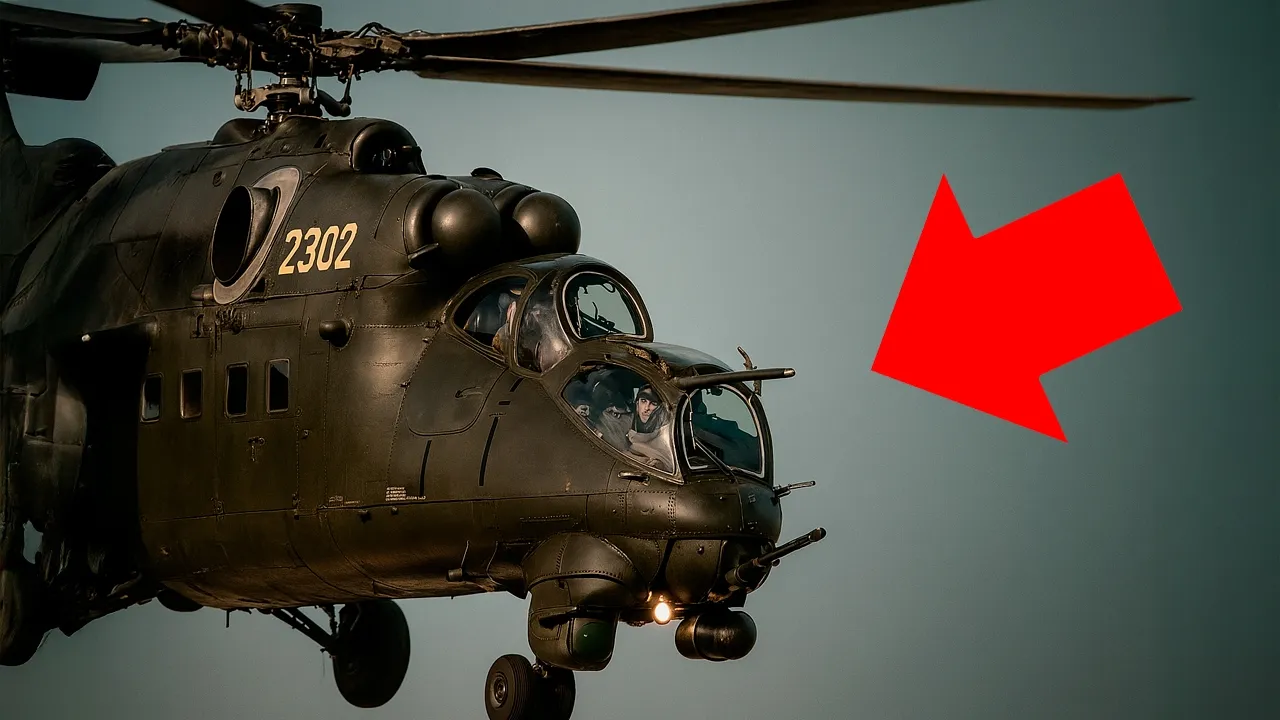
armed with the at6 spiral anti-tank missile further solidifying its Battlefield versatility while NATO designated the Mi 24 as the hind the helicopter earned several nicknames its distinctive camouflage pattern and elongated shape led to the moniker crocodile while its flat glass cockpit Windows gave rise to the nickname drinking glass however the most iconic name came from the Soviet pilots who affectionately referred to the aircraft as the L Tonk or flying tank the Mi 24's unique design included two mid-mounted stub Wings which provided additional lift and housed hardpoints for various weapons this configuration allowed the helicopter to
perform various missions from close air support to anti-tank operations and aerial Combat on board the helicopter could carry eight fully armed paratroopers side windows allowed each of them to fire their weapons when soaring above the battlefield providing precise gunfire to the already extensive arsenal of the Mi 24 the mi4 was not only a powerful attack helicopter but also a heavily armored one its titanium rotor blades could withstand 50 caliber rounds and its cockpit was fortified with Ballistic resistant glass and titanium plating offering significant protection to the crew to further Safeguard at operators the aircraft was
equipped with an overpressurized crew compartment designed to Shield against nuclear biological or chemical threats troop transport and Firepower weren't the only priorities in the design of the Mi 24 speed was a crucial Factor as well the helicopter streamlined airframe retractable landing gear and Innovative rotor and Wing configurations contributed to its exceptional lift and velocity a modified version of the Mi 24b went on to set multiple world speed records in the 1970s in 1973 two Soviet Pilots Galina rer Gua and Lilla poan skaya made aviation history by breaking several helicopter speed records using a modified Mi
24 among the remarkable Feats was setting an absolute record on 1,000 km triangular route reaching an astonishing speed of 20.5 mph far as surpassing the previous record of 161 mph which had been set by a group of men in an issue of 99 news Ruster Gua and panaya reflected on their experiences flying on board the Mi 24 stating quote it seemed to us that our helicopter also had a Soul it sure had character because a 4,500 horsepower helicopter commanded respect it was as if our Dream came true we appreciated its perfect flying characteristics immediately after
the first flight by 1978 test pilot gurgen car pan beat the absolute speed record after succeeding in flying an MI 24a at 228.50 that remained unchallenged until 1986 by the late 1970s the Soviets began exporting a variant of the Mi 24 to several Nations the new model was referred to as the mi25 these helicopters embarked on their first major combat missions during the ogaden war a brutal conflict between Somalia and Ethiopia that transpired between July 1977 and March 1978 Ethiopian forces bustered by Soviet military Aid deployed the mi2s to lead an aggressive air campaign that
provided critical ground support the formidable helicopters played a decisive role in helping Ethiopian troops reclaim the ogaden region from Somali forces the devastating effectiveness of the mi25 did not go unnoticed and other nations quickly integrated it into their military arsenals during the chadian Libyan conflict Libya leveraged the helicopter's Firepower and troop transport capabilities particularly in the Battle of inima in 1980 where it played a key role in helping Libyan backed forces capture the capital of Chad at the time of the Iran Iraq war in the 1980s the helicopter was deployed by Iraqi Hunter teams alongside
French built gazelle helicopters in air campaigns targeting Iranian Ground Forces this conflict also witnessed some of the few recorded helicopter dog fights in history with the rocky mi2s engaging Iranian a1j C cob in Fierce aerial combat with both sides claiming victories over the other in the following decades the Mi 24 and its variants were thrust into action across conflict zones worldwide from the jungles of Nicaragua and Sri Lanka to the deserts of Sudan and the war torn Hills of South oia amid the Russo Georgian War Russian forces Unleashed their upgraded Mi 24 PN variants equipped
with Advanced Night Vision systems and precision targeting technology these enhancements allowed the Mi 24s to strike under the cover of Darkness launching critical night raids on Georgian armor and infantry positions in a series of precision assaults the Russian gunships took out two Georgian t72 tanks leaving behind smoldering wrecks and shattered defenses the helicopter's versatility allowed it to adapt to various combat environments and missions making it a favored tool for many militaries however as anti-aircraft technology is advanced the Mi 24 faced new challenges gradually eroding some of its dominance on the battlefield during the Soviet Afghan
war the Mi 24 earned the ominous nickname Satan's Chariot from the Afghan mujahadin a testament to its devastating Firepower and Battlefield presence initially the helicopter was highly effective in providing close air support decimating enemy positions with its array of weapons how however the introduction of us supplied Stinger missiles drastically shifted the balance these portable heat-seeking missiles proved lethal against the mi2 24 leading to significant losses and forcing Soviet Pilots to adopt new tactics such as low altitude nap of the earth flying to evade the missiles while fighting in the senapa war a Peruvian mi25 flew
a daring low altitude Mission while attempting to support ground forces the helicopter was struck in Rapid succession by two igla shoulder fired missiles the missiles tore through the Mi 25's armored fuselage causing critical damage with its Systems Failing and smoke trailing from the engines the crew fought desperately to maintain control the dense jungle offered no safe place to land moments later the mi25 spiraled out of control and crashed the evolving threats and harsh drains in which these helicopters operated prompted a series of upgrades to the Mi 24 to counter the increasing danger posed by Stinger
missiles the helicopter was fitted with Flare launchers infrared Jammers and other countermeasures designed to disrupt the targeting systems of heat-seeking missiles these modifications allowed the Mi 24 to remain relevant though its role gradually shifted focusing on its air support role the mi-24 evolved into a dedicated attack helicopter it soon became known more for its Firepower than its troop transport capabilities featuring an EXT sensive arsenal of machine guns rocket pods bombs and anti-tank missiles even though military forces had developed more advanced missiles capable of Downing these helicopters the constant upgrades to the Soviet mi-24 compelled them
to remain Vigilant despite their technological Edge American troops never ceased to admire the formidable design of the Mi 24 it sheer power and versatility made it a valuable asset during capture missions in 19 87 when usback chat and rebel forces successfully raided a Libyan Air Force Base three mi25 helicopters were secured these captured gunships were sent to France the United Kingdom and the United States where they were quietly integrated into classified American Military programs the acquisition of these helicopters provided the US military with invaluable insights into Soviet technology further solidifying the mi4 status as a
machine that even their adversaries sought to possess despite the introduction of newer helicopters like the Mi 28 and Mi 35m a modernized version of the Mi 24 with Advanced avionics and weapon systems The Original Flying tank remained in active service and continues to be upgraded by militaries around the globe to this day the Mi 24 is operational in 58 countries cementing its enduring Legacy the Mi 24 marked a new era in military Aviation a flying Titan whose unprecedented combination of troop transport and Firepower revolutionized helicopter design its ability to deliver devastating air support while simultaneously
carrying infantry has set a standard that few helicopters have matched although many have attempted to replicate its success none have fully captured the essence of this unique Soviet Warrior Us helicopters like the uh1 huy had to sacrifice troop transport capacity to function effectively as gunships while other aircraft such as Romania's iir 330 and the m860 direct action penetrator fall short of the Mi 24's full range of capabilities despite never seeeing the full extent of his creation M Mill's contributions to the world of aerial Warcraft consecrate him as one of the most prolific Soviet Engineers from
the Cold War despite facing a grim Global scenario he was able to forge an aircraft that defined the course of numerous military conflicts around the globe and his endured Decades of service today as the Mi 24 take to the skies they remain a symbol of Soviet engineering prowess and a formidable presence on the battlefield [Music]