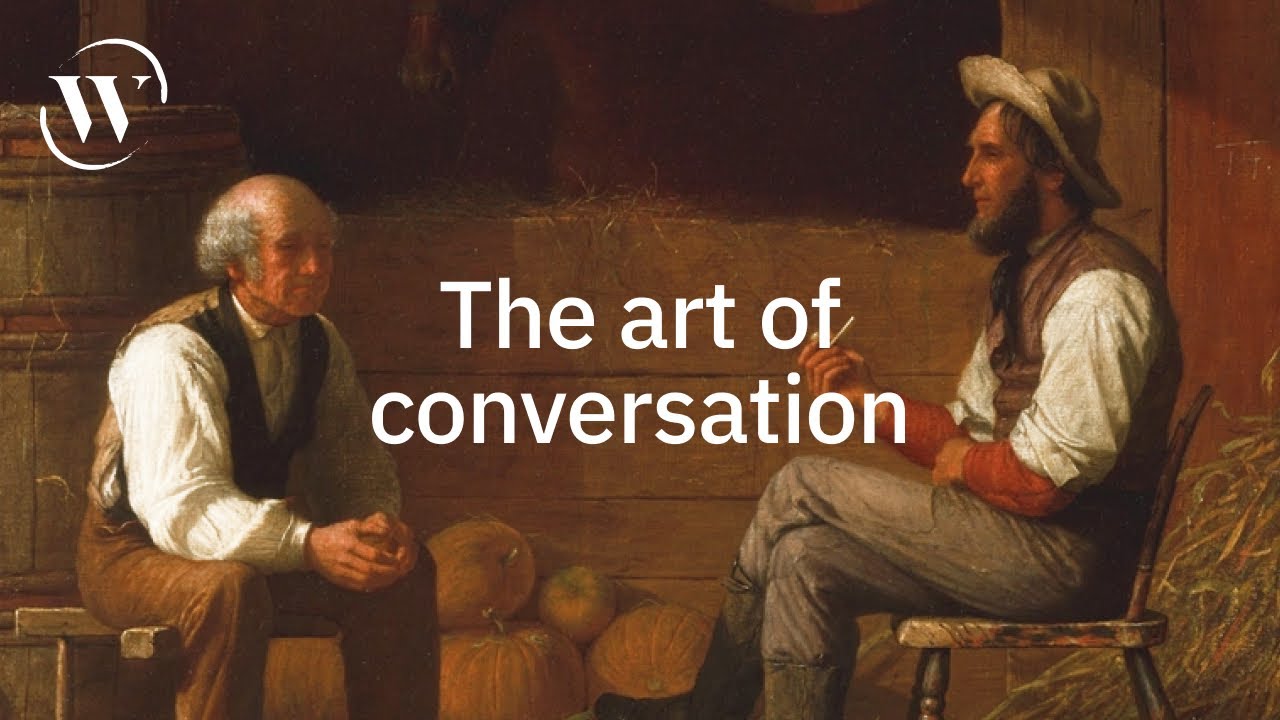
hello and welcome back to another video and tonight we are going to talk about something which most people don't seem to pay a lot of attention to which is the art of conversation sometimes when we're trying to connect with another person while we're trying to speak to another person we really do forget that most human communication all boils down to good conversations promising communication tends to happen when we disregard guidelines or rules for a good conversation and it is really interesting how we are so used to speaking we're so used to talking people that we
sometimes forget that we're even doing this conversation thing or sometimes we even forget that there are guidelines and rules for a very very productive and useful conversation so in today's video my aim is to give you a few tips and guidelines for a very stimulating conversation so you can be the most interesting person at a party where you can really drag a conversation into a four-hour really in-depth conversation with someone you care about before diving to the rules here's a little digression into history the streets of Paris in the 17th century were littered with salons
and these are are not salons where you go to get your haircuts but these were Elite Gatherings where the hosts would invite the leading scientists philosophers poets literary figures into one room for them to cultivate this art of conversation despite the fact that these were very much intellectually charged environments these guests at the salons had zero tolerance for anything boring a guest could be talking about the leading developments in poetry philosophy or anything fancy but if they fail to capture the audience's attention they were immediately booed off the stage because these audiences are pretty tough
crowd to please they both wanted intellectual stimulation as well as well Amusement so among these groups of people who are extremely hard to please philosophers and Poets and these literary figures really had to devise some inventive ways to communicate their insights without coming off as boring and one of these lasts was the 17th century moralist Francois Duke this man was perhaps one of the most cultured members out of the entire memberships of the cellar he dazzled his guests with short paragraphs and short aphorisms instead of long-winded lectures and as his reputation grew in the salons
compiled all of his maxims and aphorisms together into one short book and this book is still so close to French people's heart that Voltaire even said that this book should be memorized and committed to heart and he wanted the entries from this book laid out his best practices for a good conversation after spending so many years in these salons so I think sometimes it's rather useful for us to take some lessons from a wise people of the past and today we're going to use advice for this topic of conversation just a bit of a side
note if you want to read these rules and if you want these rules to be laid out for you this is also a written post on my sub stack which you can check out from my description and now here are 10 rules for Mr lahoshvuko to help us with our conversations rule number one listen to those who speak if we want to be listened to pretty self-explanatory if you lack the ability to really listen to what the other person's saying on the one hand you might not even get a chance to talk or on the
other hand if you're just too focused on yourself the other person's going to think you're a bore number two avoid arguing within different things and avoid asking useless questions and this tip is really just another way of saying wait for your turn to speak and be very very patient with the other person and a good conversation can only occur when both parties are comfortable with waiting for their turns number three Converse cordially according to the mood of the room we've all met people who are either too serious or too loosey-goosey for the mood of the
conversation so read the mood before you speak number four one must avoid talking for a long time about oneself no one likes self-absorbed monologues which is why a lot of people find Hamlet especially insufferable number five let people reach their own conclusions when you're trying to persuade someone instead of just jamming that point out their throat you want to gently guide this person to their own conclusions and this guiding process should make the person feel like they've reached that conclusion themselves number six never speak with Heirs of authority or use words and terms that are
bigger than things then again if you don't want to come up as a snob or a bore take this rule to Heart number seven retain opinions that might hurt the feelings of others in today's world we prize authenticity or reprise being extremely blunt with another person we prize just getting to the point and this hyper efficiency sometimes could really hurt other people so if we really want to convince another person with their opinions there are more Artful ways to disarm the other person before you give them your opinions instead of just guiding the entire thing
into a shouting match so temporarily keep those really sharp opinions to yourself and once the cars are down for a little bit maybe you can put those opinions in there and help the other person to understand your point of view number eight it is dangerous to always want to be the master of the conversation a good conversation is kind of a synergistic dance between two or more people everyone should have an equal part in this little dance and no one should really claim the entire dance for unless he wants to be a boar number nine
remain silent if there's nothing to say you don't have anything to say don't try to fill up the room with just useless words and maybe sometimes shutting up is the best policy and number 10 practice the art of Silence quote there's an eloquent silence it sometimes serves to approve and to condemn there's a mocking silence there's a respectful silence there are Tunes tricks and mannerisms what most people don't realize is that there's actually an art to silence different forms of silences can be used to different effects so experiment around play around and use silence to
your advantage during a conversation so those are the rules and guidelines from Mr lar to help us with our conversations and in the future I'm super excited to share more insights or more of these life lessons from history philosophy and literature and the main goal here is to really view history as a gold mine of great insights that we can use nowadays to better our lives and if you've enjoyed today's video be sure to check out my substack newsletter which is where all of these ideas live and the entire aim is to gift to these
little life lessons from history straight into her inbox so check that out if that's something you're into nevertheless that's all I have for today's video hope you guys are having a great night or a great morning or a great afternoon wherever you are Robin Walden here and I will see you in the next one take care and goodbye