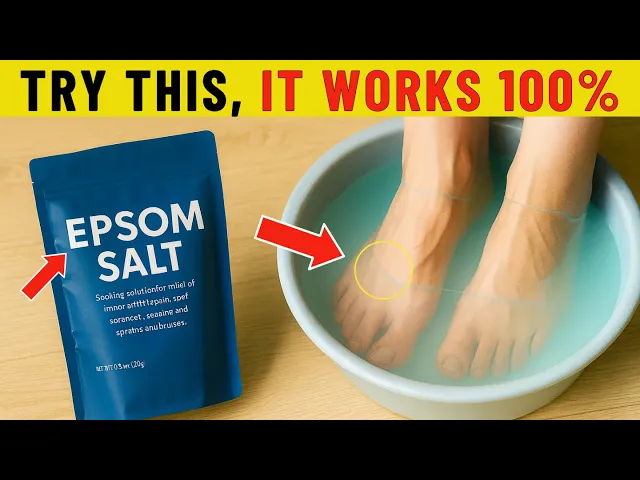
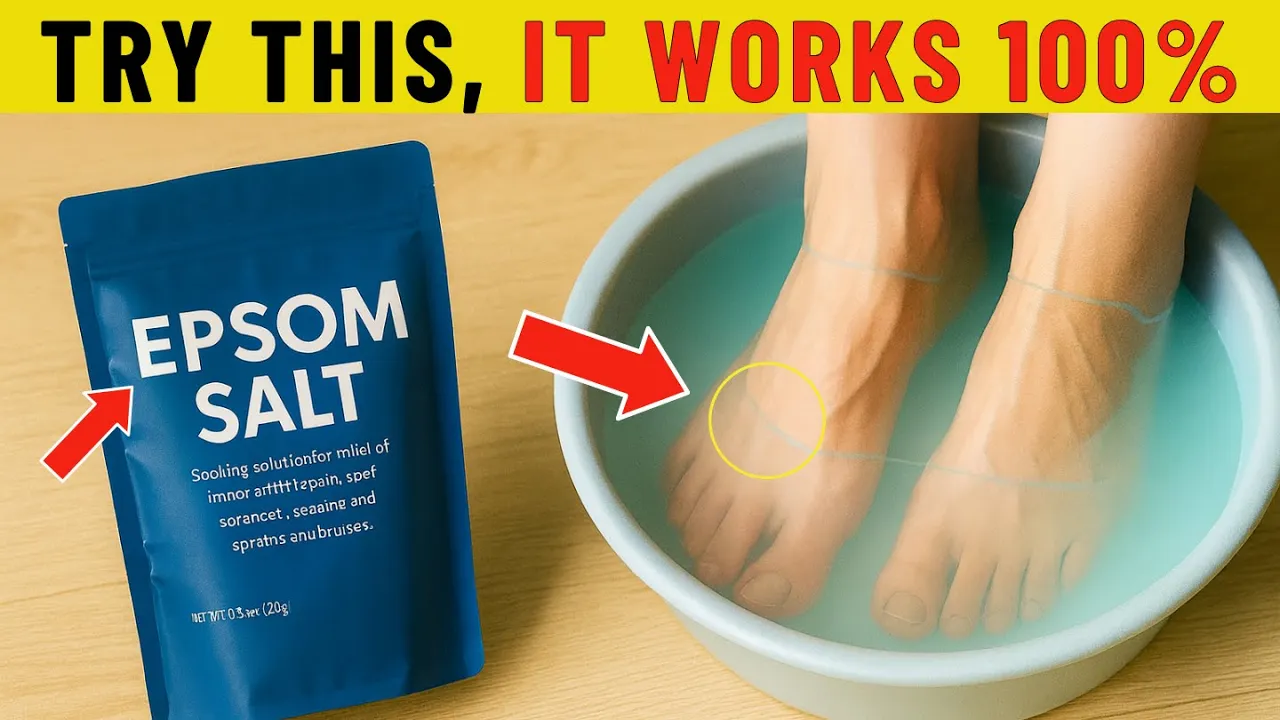
[Music] Did you know Epsom salt isn't actually a salt? It's a mineral compound called magnesium sulfate. More than 400 years ago, a farmer in Epsom, England, discovered it by accident.
He noticed that the bitter water from his well could heal skin rashes and even ease stomach troubles. Word spread quickly and soon this simple compound became one of the most popular natural remedies in Europe. But why do many of us still not know about it?
Let me ask you some simple questions. Have you ever wondered why so many seniors struggle with stiff joints or endless fatigue even when their medical tests come back normal? Could something as simple as soaking your feet or legs in warm water actually help reduce pain, improve circulation, and even calm your mind?
and most importantly, what really happens inside your body when magnesium from Epsom salt gets absorbed through your skin. In this video, we're going to uncover the real benefits of Epsom salt for seniors, and why this simple mineral is far more powerful than most people realize. You'll see how it helps, and why doctors and researchers continue to recommend it despite its lowcost and humble appearance.
By the end, you'll know exactly how to use Epsom salt safely and effectively, and why it deserves a place in your home. Before we get into it, can you do us a quick favor? Like this video and subscribe to join our healthy community.
Also, type yeses in the comments section now so we can see how many of you are interested in this type of video. All right, let's get started. Epsom salt may look like ordinary white crystals, but it's actually a compound of magnesium, sulfur, and oxygen.
When you drop it in warm water, it dissolves and breaks apart into magnesium and sulfate ions. And that's where the magic begins. Magnesium is deeply connected to how your body handles stress, energy, and relaxation.
It's one of the most important minerals in the human body, needed for more than 300 different functions. Inside the body, it helps regulate electrical activity between nerves and muscles. When levels are low, nerve signals misfire, muscles tighten, and your whole system feels on edge.
By restoring balance, magnesium helps the body switch off that tension and settle into a calmer state. Sulfate works differently. It supports the way your body processes and removes waste products almost like a natural detox partner.
It also plays a role in how proteins form inside your tissues, which is important for healing and repair. Together, magnesium and sulfate create a unique one two effect. One calms and relaxes.
The other helps the body clean and restore. When you soak in Epsom salt, the warmth of the water itself boosts circulation. This opens the door for magnesium and sulfate to interact with your body, easing pressure, flushing out byproducts, and supporting natural recovery processes.
What makes Epsom salt so fascinating is that it's both incredibly simple and surprisingly versatile. It doesn't just sit on the skin. It interacts with the body on a chemical level, influencing signals, balance, and repair in ways that modern science is still studying.
The powerful health benefits of Epsom salt. First, ease sore muscles and joints. Chronic joint and muscle pain isn't just about feeling sore.
It's actually caused by inflammation. As we age, the body produces more of the chemicals that trigger swelling and fewer of the ones that calm it down. That's why problems like osteoarthritis or constant muscle aches become so common in seniors.
Now, here's where Epsom salt or magnesium sulfate comes in. It's been studied in real human trials, not just lab tests. In one clinical study from Indonesia, researchers compared Epsom salt gel at different strengths to a common pain relief drug called Dloanac.
The results were surprising. At just 3% strength, the Epsom salt gel worked almost as well as the drug in reducing joint pain. Scientists believe this happens because magnesium helps calm down the body's pain pathways and lowers the chemicals that drive inflammation.
Even the Mayo Clinic lists magnesium sulfate as a safe soaking solution for sprains, bruises, sore muscles, stiff joints, and everyday aches. When you dissolve it in warm water, two powerful things happen. The heat itself boosts circulation, helping your body heal faster, and the magnesium sulfate works on the swelling to ease discomfort.
Some experts still debate how much magnesium actually gets absorbed through the skin. But the evidence we do have is clear. For mild to moderate pain, regular Epsom salt soaks make people feel better, reduce soreness, and improve mobility.
So, the next time your joints feel stiff, your muscles ache, or you're dealing with a nasty bruise, remember that sometimes something as simple as a warm soak with Epsom salt can give your body the comfort and healing it's been waiting for. Next, relieves constipation. Constipation is one of the most uncomfortable issues many seniors deal with.
It's not just about struggling in the bathroom. It brings bloating, heaviness, and a constant sense of frustration. Lifestyle habits like eating more fiber, drinking enough water are the long-term fixes.
But sometimes you need quick relief. And that's where Epsom salt can help. When mixed with water and taken orally, Epsom salt acts as what doctors call an osmotic laxative.
What that means is that the magnesium in it pulls water into the intestines, softening the stool and making it easier to pass. It works fairly quickly, often within 30 minutes to 6 hours. According to the US National Library of Medicine, magnesium sulfate has been used in hospitals for years to treat sudden constipation and even to cleanse the bowel before medical procedures.
That's how reliable it is. But the important part is that this isn't something you use everyday. Constipation is usually a sign that something deeper is going on, like low fiber, dehydration, or poor habits.
If you rely on laxatives too often, you're only masking the problem. Over time, the bowel can become dependent and less able to function on its own. That's why experts say Epsom salt should only be used for constipation under medical guidance or in emergencies.
For seniors, especially, safety matters. Too much magnesium sulfate by mouth can cause diarrhea, dehydration, and imbalanced electrolytes, and that can strain the heart and kidneys. If it's ever used, it should be carefully measured, and plenty of water should be consumed afterward.
So, while Epsom salt can provide fast relief, think of it as a backup tool, not a daily solution. Next relieves stress and improves sleep. Sleep often gets harder as we age.
Instead of drifting off easily, nights can turn into a cycle of tossing, turning, or lying awake with a restless mind. Many seniors say they wake up several times a night and struggle to fall back asleep. Here's the science.
Magnesium is one of the key minerals that helps regulate sleep. It supports melatonin, the hormone that tells your body it's bedtime. It also lowers cortisol, the stress hormone that keeps you wired, and it relaxes your muscles so your body can truly settle.
In fact, one clinical trial showed that magnesium supplements in elderly people significantly improved insomnia. They were able to fall asleep faster, stay asleep longer, and wake up less often. So, where does Epsom salt come in?
When dissolved in warm water, Epsom salt releases magnesium and sulfate ions. A soak before bed helps the body absorb some of this magnesium, which may calm the nervous system and stabilize mood. Several studies report that people who take Epsom salt baths feel less stressed, more relaxed, and sleep better afterward.
There's even a modern therapy built around this. Flotation tanks. These are pools packed with Epsom salt where people float effortlessly.
Research on flotation therapy has shown that regular sessions reduce stress and pain while improving deep relaxation. Exactly the state your body needs before sleep. When you combine magnesium with the warmth of the water, the effect multiplies.
The heat boosts circulation, eases muscle tension, and signals to your body that it's time to wind down. Spending 20 to 30 minutes in an Epsom salt bath before bedtime can make nights feel calmer and mornings more refreshing. So, if you're tired of long, restless nights, try adding an Epsom salt soak to your bedtime routine.
It's a simple habit that supports your natural sleep rhythms, helping you wake up feeling more rested, peaceful, and ready for the day. Next, natural skin exfoliant. Healthy, glowing skin isn't just about looks.
It's about feeling comfortable and confident in your own skin. As we age though, skin naturally gets drier, rougher, and more prone to redness or irritation. That's where Epsom salt can step in.
Magnesium sulfate is not only good for the body inside, but also has amazing benefits for the skin. The beauty of Epsom salt is how simple it is to use. You can wash your face with diluted Epsom salt water or soak a cloth in the mixture and gently press it onto your skin.
What this does is twofold. It exfoliates and it calms inflammation. The grainy texture of dissolved Epsom salt acts like a natural scrub.
But unlike harsh chemical exfoliants that strip the skin, it gently removes dead skin cells and unclogs pores. This helps smooth rough patches and gives your skin a fresher, brighter look. Dermatology experts even note in the journal of clinical and aesthetic dermatology that gentle exfoliation supports the skin barrier by speeding up healthy cell turnover and making moisturizers work better.
But exfoliation is only part of the story. Magnesium itself plays a big role in skin health. Studies show it regulates processes tied to inflammation and oxidative stress, two key drivers of acne, eczema, and premature aging.
A 2017 article in Scientific Reports found that magnesium salts improved hydration and reduced inflammation in people with skin disorders. On top of that, the sulfate in Epsom salt helps detoxify by drawing out impurities that can clog pores and irritate sensitive skin. The best part, Epsom salt is affordable, easy to find, and safe when used correctly.
All you need is moderation. Once or twice a week is plenty. Just make sure to follow up with a good moisturizer so your skin stays soft and hydrated.
Next, ease knee pain and water retention. Knee pain is one of the most common struggles as we get older. It can come from arthritis, years of wear and tear, or even just standing and walking more than usual.
On top of that, swelling in the legs and ankles, what doctors call water retention or edema, makes the problem worse by adding heaviness and pressure. One simple home remedy has been trusted for generations. Soaking the legs in warm water with Epsom salt.
This isn't just a basic foot soak. When you fill a bucket with warm water up to knee level and add 50 to 100 g of Epsom salt, the healing minerals surround not just your feet, but your calves and knees too. The warmth itself works wonders.
It dilates blood vessels, boosts circulation, and helps the tissues relax. For swelling, the effect is just as important. Epsom salt soaks may help draw out excess fluid through osmosis while also calming the muscles around swollen tissues.
Research is still ongoing, but clinical observation suggests that when done regularly, these soaks can reduce stiffness, ease swelling, and lighten that heavy, uncomfortable feeling in the legs. And it's not just for older adults. Even people in their 20s and 30s with sedentary lifestyles have found relief by adding this ritual once or twice a week.
So the next time your knees feel tight or your legs feel heavy, don't overlook this simple, affordable remedy. A warm Epsom salt soak may give you back some of the ease and comfort your body has been missing. Next, stop foot odor.
Naturally, foot odor isn't just embarrassing. It's a sign that bacteria are having a party on your skin. These bacteria love damp, warm places, and they feed on sweat and dead skin cells.
For seniors, the problem can be worse because circulation slows down and sweat control isn't what it used to be. That's why odor-causing bacteria like corona bacterium often hide between the toes or in shoe linings. Epsom salt soaks can help because they change the environment those bacteria live in.
When you dissolve about half a cup of Epsom salt in warm water and soak your feet for 10 to 20 minutes, the salt pulls out excess moisture from the skin. Less moisture means fewer hiding spots for bacteria. Now, it's important to note Epsom salt doesn't act like a strong antiseptic that wipes everything out, but it makes the conditions less friendly for odor-causing germs.
Moisture control is the real key. If your skin stays damp, bacteria grow fast and the smell comes back quickly. That's why after soaking, it's crucial to dry your feet completely, especially between the toes.
A light, gentle moisturizer helps keep the skin healthy without trapping moisture. Add in simple habits like rotating shoes, wearing breathable socks, and letting your footwear air out, and you multiply the effect. For many seniors, making Epsom salt soaks part of a weekly routine brings a big change.
Shoes smell fresher, feet don't feel clammy, and there's a boost of confidence when slipping into socks or sandals. Next, sports recovery and postsurgery healing. After a tough workout, muscles often feel sore, heavy, and inflamed.
That's because exercise creates tiny micro tears in your muscle fibers. It's part of how the body builds strength. But the soreness that follows known as delayed onset muscle soreness or DOMS, it can be uncomfortable and limit how much you move.
The same thing happens after surgery. Tissues stay inflamed and stiff as the body heals. In both cases, the goal is simple.
Reduce unnecessary inflammation while supporting recovery. Epsom salt or magnesium sulfate is well known for its anti-inflammatory properties. Research in sports medicine shows that magnesium can help reduce muscle cramps, improve recovery time, and balance electrolytes after hard training.
When you dissolve Epsom salt in warm water, it releases magnesium ions that may be absorbed through the skin. Scientists still debate how much magnesium actually gets in, but athletes and physical therapists recommend soaks because the combination of heat and magnesium provides real relief. Warm water boosts circulation, which helps flush out lactic acid and waste products that make muscles stiff.
At the same time, magnesium encourages muscles to relax, easing cramps and discomfort. For people recovering from surgery, the benefits are just as valuable. Epsom salt baths can reduce swelling around joints, calm muscle spasms, and soften stiffness that comes from limited movement.
After orthopedic procedures, for example, doctors sometimes recommend gentle Epsom salt soaks to improve blood flow and support tissue repair once the incision has healed. But recovery isn't just about the body. It's about the mind, too.
Healing can be stressful. Magnesium helps the nervous system by lowering stress hormones and supporting better sleep, both of which are critical for faster recovery. So whether you're an athlete pushing your limits or someone healing after surgery, Epsom salt soaks offer a simple natural way to ease soreness, reduce inflammation, and restore movement.
It's a gentle therapy that helps your body bounce back stronger and calmer. Next, fight infections and heal cracked heels. Cracked heels aren't just a cosmetic issue.
They're an open door for infection. Every time the skin splits, especially around the heel, fungi and bacteria have a chance to sneak in. For seniors, this can be painful and even risky because the skin becomes thinner, drier, and the immune system reacts more slowly with age.
But Epsom salt can make a difference. Studies and dermatology experts point out that soaking cracked heels in Epsom salt water helps in three important ways. First, it calms inflammation, so the skin feels less sore and irritated.
Second, it softens the hard, thick layers of skin, making them easier to heal. And third, it creates conditions that are less welcoming to fungi and bacteria. Let's break it down.
Fungi love warm, moist skin and often hide in small cracks. Epsom salt helps by drawing out excess moisture and gently exfoliating dead skin, leaving fewer places for fungi to grow. On the bacterial side, magnesium sulfate isn't as strong as an antibiotic, but it does help suppress bacterial growth and strengthen the skin barrier, so microbes have a harder time taking hold.
In fact, one dermatology review on bathing practices highlighted that salts like Epsom can restore the skin's ionic balance. This makes the barrier stronger and helps the skin repair itself. So, when cracked heels or recurring infections become a problem, Epsom salt isn't just a soothing soak, it's addressing the science behind the issue.
Lastly, eliminate foot cramps. Sudden leg or foot cramps at night can feel brutal. One second you're asleep, the next you're jolted awake in sharp pain.
These cramps usually happen when muscles contract without enough magnesium or when nerve signals misfire because electrolytes are out of balance. As we get older, this becomes more common. The body doesn't absorb magnesium as well and circulation to the legs slows down.
That's why so many seniors complain of night cramps that steal their rest. Now, let's talk about the solution. Science shows that magnesium supplementation reduces the frequency of cramps.
Most studies look at oral magnesium, but newer research and reviews suggest topical or transdermal forms like Epsom salt soaks may also bring relief. While experts still debate how much magnesium truly gets absorbed through the skin, there's evidence of modest increases in magnesium levels, and plenty of people report real improvements after regular soaks. And let's not forget the role of heat itself.
Warm water improves blood flow, delivers oxygen and nutrients to tired muscles, and helps clear out lactic acid and other byproducts that can trigger spasms. Add magnesium from Epsom salt into the mix, and you're giving your muscles the tools to calm down. Magnesium helps stabilize nerve impulses and keeps electrolytes like calcium and potassium in balance, reducing the chances of those painful midnight spasms.
In practice, this means something simple. Soaking your feet in warm water with Epsom salt before bed can reduce how often cramps wake you up and even make them less severe when they do happen. Make it part of your evening routine and you may find not only fewer cramps but also deeper, more restful sleep.
How to use Epsom salt? Knowing the benefits of Epsom salt is one thing, but getting the best out of it comes down to using it correctly. The good news is you don't need fancy equipment or a spa.
Just a small packet of Epsom salt, warm water, and a little time. For foot or leg soaks, fill a bucket or basin with warm water, enough to cover your feet up to the ankles, or even up to the knees if you're targeting knee pain or swelling. Add about half to one cup, 50 to 100 g, of Epsom salt and stir until it dissolves.
Soak your feet or legs for 15 to 20 minutes, then dry thoroughly. This method is perfect for cramps, swelling, or just unwinding at the end of a long day. For a full body bath, if you have a bathtub, fill it with warm water and add two cups of Epsom salt.
Soak for 15 to 20 minutes. This helps with whole body relaxation, sleep, and stress relief. Travelers often use this method to recover from jet lag.
Remember to hydrate afterward since warm salt baths can make you lose fluids through the skin. For skin care and exfoliation, dissolve a small spoonful of Epsom salt in a bowl of warm water. Dip a soft cloth, ring it out, and gently wipe your face or rough skin areas like elbows and heels.
This works as a natural exfoliant, removing dead cells and calming irritation. Always moisturize afterward to prevent dryness. Important precautions.
While Epsom salt soaks are generally safe and beneficial, there are some important precautions to keep in mind. First, avoid soaking in water that is too hot. Very hot water can damage sensitive skin, worsen dryness, and in people with diabetes or circulation problems.
It can even lead to burns without being noticed right away. Warm, comfortable water is always the safest choice. Second, never rely on Epsom salt as a regular oral laxative unless specifically advised by a doctor.
Drnking it unsupervised can cause diarrhea, dehydration, electrolyte imbalance, or even strain on the heart and kidneys. Risks that increase with age. Use it internally only under medical supervision.
Another key point is moderation. Although soaking feels good, doing it too often can dry out the skin and cause irritation. Two to three times a week is plenty for therapeutic benefits.
After every soak, always dry the skin thoroughly and apply a moisturizer, especially around the feet and heels to prevent cracking. Staying hydrated is equally important because warm salt baths draw water from the body. A full glass of water after soaking helps replace lost fluids and supports circulation.
Finally, anyone with open wounds, severe infections, or chronic kidney disease should consult a health care provider before using Epsom salt bass since magnesium balance is closely linked to kidney function. If you ever notice dizziness, unusual skin reactions, or worsening of symptoms, stop immediately and seek medical advice. Who would have thought that something as inexpensive and ordinary as Epsom salt could carry so many benefits?
From soothing sore joints and calming cramps to improving sleep, this time- tested remedy proves why it has been trusted for centuries. The secret lies in using it regularly and safely. When you give your body the right support, small habits like these can bring big changes over time now.
We'd love to hear from you. Have you ever tried an Epsom salt soak? Or is this the first time you're learning about its full potential?
Share your thoughts and experiences in the comments below. We always enjoy hearing from this community. And don't forget, if you found this helpful, give it a like, subscribe for more natural health insights, and share it with someone you know who could benefit from simple, affordable remedies.
Thank you for joining us today. To keep learning, we've handpicked two more videos for you. Click on one now and we'll see you there.