And then I wanted to leave a question here for those of you who are following us, looking at Kelly and Elton already planning. Are you also planning for tax reform? Well, if not, I leave it here for you.
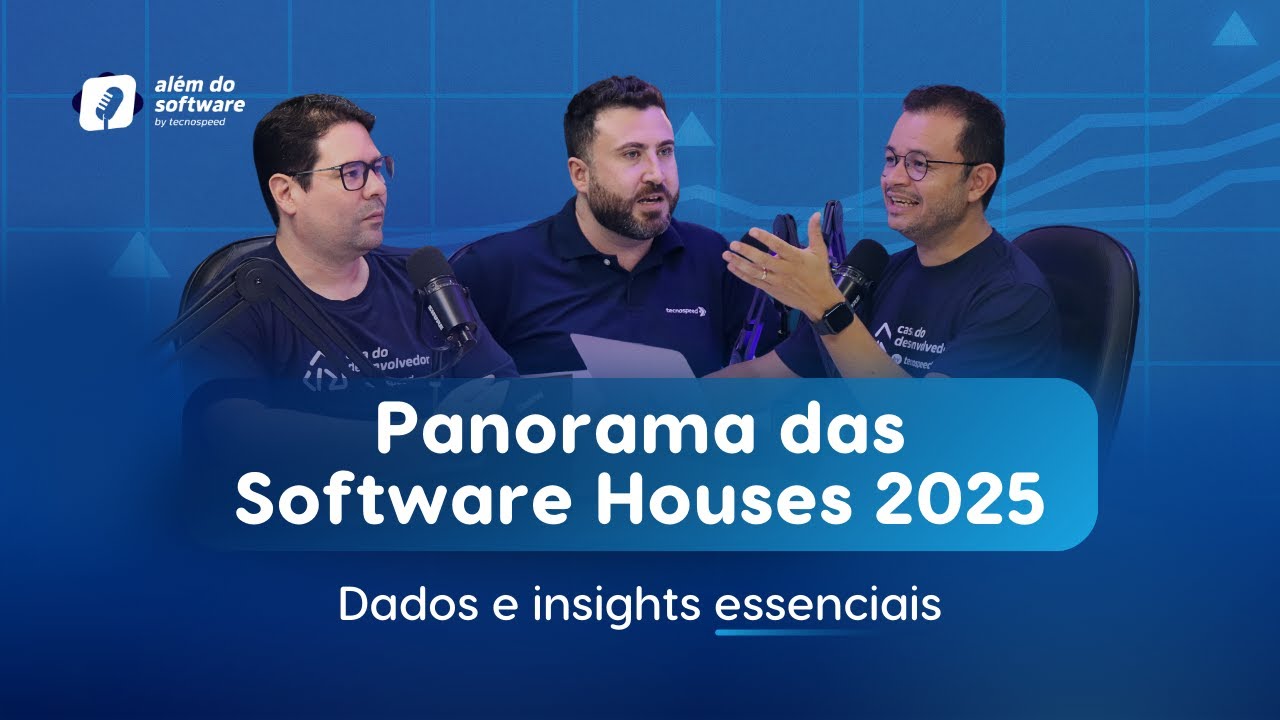
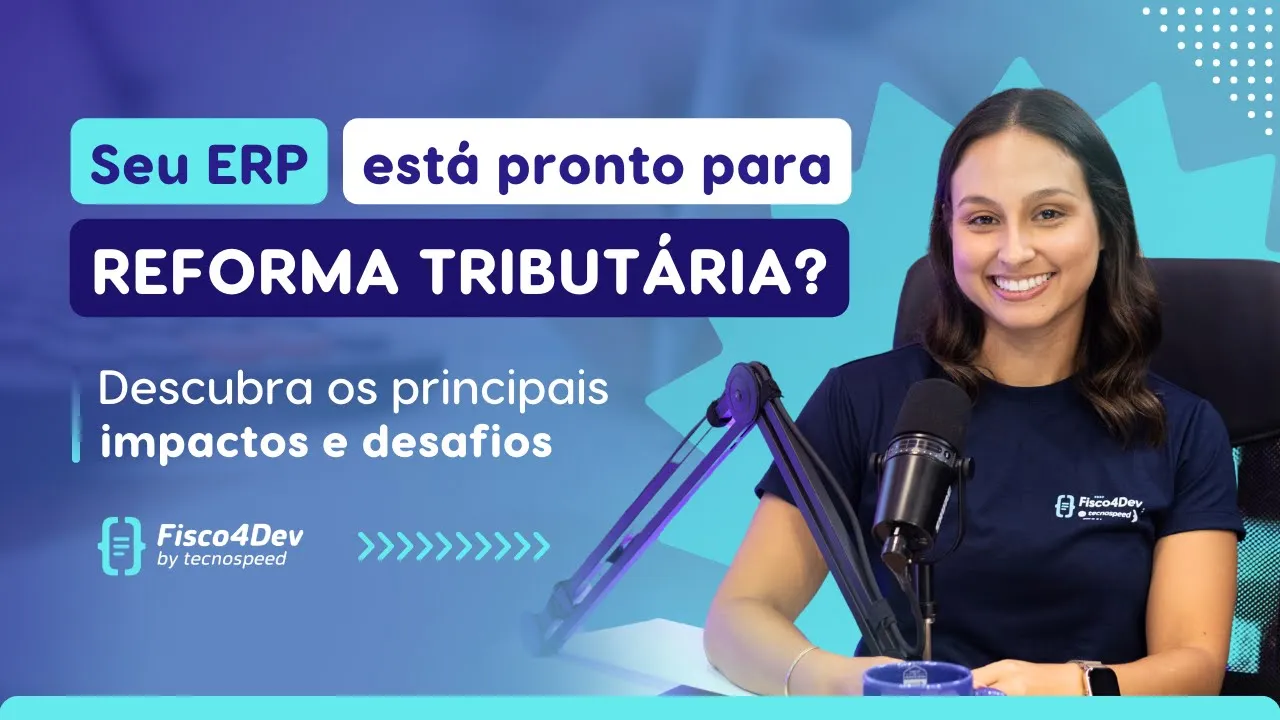
I think it's important to start now. Welcome to Fisco4Dev. The space where software house developers and managers find up-to-date information about the fiscal and tax world.
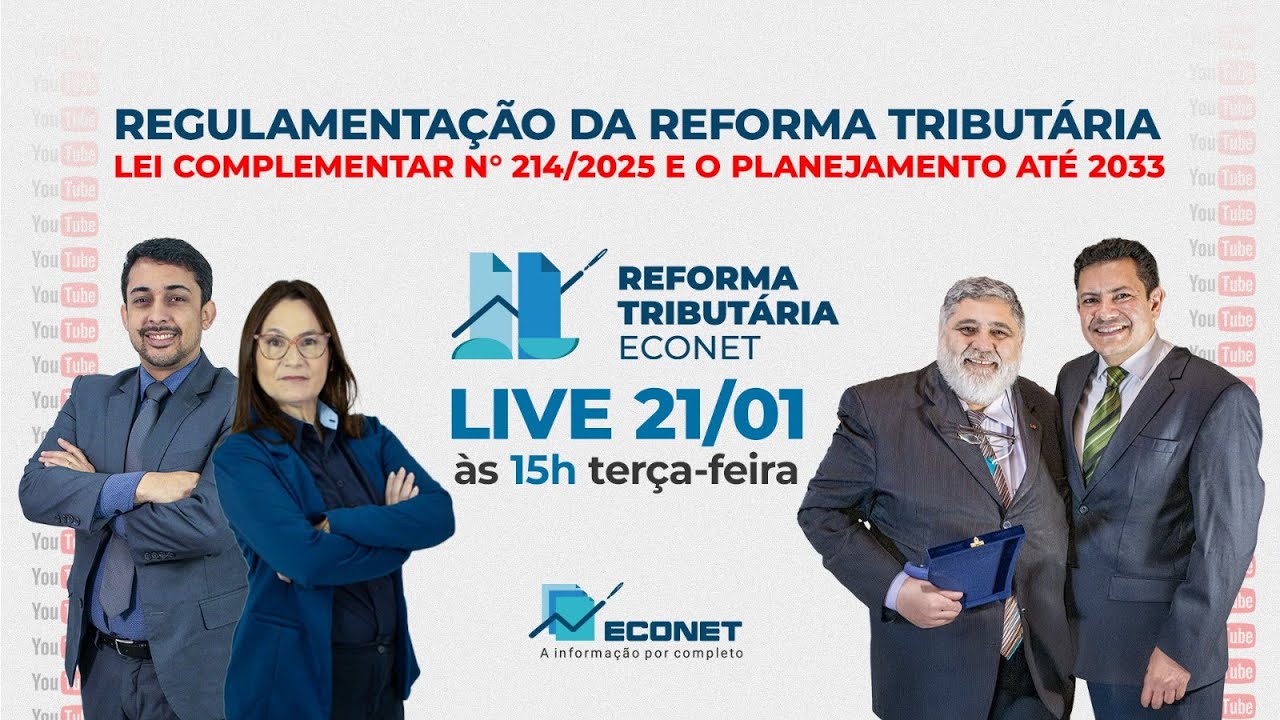
In today's episode, we will address an extremely important topic for the development of tax solutions, the impacts and challenges of tax reform. Let's discuss how this change will affect software houses that offer tax document management and issuance solutions. The reform proposals represent a significant challenge for PRs, who will need to quickly adapt to new rules, taxes and regulations.
Leave your questions and comments in the Físico for Debt forum, at the developer's home. Let’s build a deeper understanding of these changes together. In today's episode, we have incredible experts to share some of the knowledge they are gaining about tax reform in their daily lives.
I am very pleased to introduce elto, tax coordinator, from Attack Sistema, who has extensive experience in the tax scenario, in addition to knowing the development and implementation of software. And also Kelly, tax analyst, specialist in tax documents. And today we are going to talk about a topic that is the central theme.
Everyone wants to know, everyone is looking to understand about the tax reform and the impacts it causes on the day-to-day life of the software house, it is causing and will still cause many challenges. Why? Because tax reform will interfere with how companies calculate and pay their taxes today.
So software houses will play this fundamental role in operationalizing all of this, tax management, tax documents, to stay up to date with legislation. And one of the biggest challenges I find there is the transition period, which runs between 2026 and 2033. Why?
Because we will have the coexistence of the current tax with the new one. So it's going to be a huge challenge for PRs, I imagine, because, let's think here, companies will need to deal with both sets of rules, in addition to the tax rates, the excessive obligations, requiring more than doubled attention to be able to make these adjustments in these transitions. So with that in mind, what are the main challenges you see in this period of coexistence that we will have between the current and the new tax systems?
Well, Lorena, the current tax system is already well known, it is a complex system, but it has been mastered by our clients and developers for many years. The main challenge is the new tax system, because the rules were already complex. For example, the law that was born in 2012 was born with 500 articles, so it's almost like the Bible, there are many articles, a lot of complexity and it has new concepts that didn't exist before.
So we have to be prepared to learn about this new legislation, keep the current one operational, because we can't let go of it, so we have to be careful with what already exists and a dedicated team there for the new. So today in the job market we won't find anyone there who is ready. So everyone is on the same level, everyone is starting from scratch.
So we have to have exclusive dedication in this area. Yes, so a big challenge will be to really understand this business rule and transfer it to the PR to be able to execute it, right, Elton? And that, having specialized teams, right, so we will have to train these teams, right, there is no one ready, right?
So, as Software House, we're going to have to learn, we're going to have to train people, collaborators, creators, right, so it's a big challenge. Yes, this transition period scares me, because it is a very big effort, which we know that the development will have to dedicate to two hybrid systems there, right, so it is certainly a very big challenge, right. And thinking about this challenge, we know that in everyday life, in meetings, in planning, we have to have strategies, right, that we can operationalize this and transfer to PR, right.
So what are the strategies you intend to have there to be able to meet this new transition phase there, new taxes and everything? Well, what did we adopt? Time is short, right?
It will start production in January, in September, right, September will be approved, October could start production, right, so we are in February, we only have a few months left, right, so what did we adopt? We wait for 100% to be decided, look, this technical note will not have any changes, we may take a shot in the dark, so what is our strategy there at TAC? We are anticipating, even reading, studying, the way the documentation is today, already directing what needs to be changed in the software, what improvements we can implement, or functionalities, right, to help the user's life, so we always have to think about the user's part, because he will be living with two systems, right, so if we leave a new system, you know, the new complex functionality, he has to work with the old one, so we go, we have to think about the user's daily life.
And in this. . .
Support training, right, screen and manuals made available to them, right? Exactly, so what can we make easier for the. .
. we always have to think about the user, right, at the end there, he will still be there calculating the CMS, Pisco Finis, Difal, and there will be new taxes, so we have to think about the software, what we need to improve to make it easier, and in this anticipation, right, what are we doing? So the first point we have already started, right, we separated a specific team, which is to take care of just the reform, so by reading the legislation, the technical notes, together with the developers, already pointing out what needs to be changed in the system, then we already have the dimension of the size, which we have already seen is large, you know, the size of the changes and learn how to form the team, right, the team of developers, of testing, then among the other stages, after development, testing, we have to think about.
. . how do I speak?
It's a configurator, we thought, what is it? Here it depends on the nature of the operation, whether there will be a tax or not, it will be calculated or not calculated, so of course each software has a structure, right? Yes.
But we are already thinking about our structure and how we can, overnight , oh, it's ready, you can use it, just place these records, so we have to think about this automatic migration, right, of configuring our taxes, right, and then comes the documentation part, everything has to be well documented, to the point where the user at the end, the accountant, the tax analyst, the invoice, get our documentation , read it and know what it's like in the system, because it's all different new, right, the new, the old they already know, right, plus the new, and of course, training the technicians, the customers, right? So, what do we invest in training, in the future we will reap these benefits and why did we decide to start with what we have, because there will be more time left in this part of documentation and training, because in my view I think it is more work to do this part than to develop, if you end up changing the system, you know, then you change something and then who will know how to use it, so we have to invest a lot in this part. Yeah, so there's no shortage of work, right, we already see these movements that you at TAC are making, mapping, structuring, so I also agree that the strategy really has to be this, right, you have to be aware, you have to start the movements by structuring your PR to be able to meet, right, as we already talked about, companies will really look for software companies that are up to date, right, that are managing to deliver these reform updates, right?
When we talk about tax reform, a lot is said about simplifying the system Brazilian tax, right, but this simplification, as Elton already said, is not so simple because the law is already huge, right, but we already deal with this complexity today in our current legislation, right? I know that today the PR people are already dedicating hours there, right, to be able to regulate, to make the current system really good to comply with legislation, right, and with these new tax rules we are going to have to deal more deeply, to really adapt, because we are going to have the replacement, right, of the ICMS, the ISS, the PIS and the COFINS, to create the CBS and the IBS, in addition to a new tax which is the selective tax, right, and with that we have new rates, new reformulated calculation bases, right, and where does this directly impact? The layouts of tax documents, right, and this integration, right, will have to be done both in the system and also for sending, right, information to the government, right, so the customer's routine has to be very accurate, right, Alto?
Yes. Thinking about these points, what will be the biggest challenge for developers to face these changes in tax documentation, right? The first challenge I see is time, which is short, right, and the other big challenge is significant changes, right away there are already seven electronic documents, right, there are NFE, CTE, but there are seven, PPE, NFSE, so all the changes are already foreseen, so it's a large volume, there are groups, tags, right, the tax calculator, right, so we already have the new tax citations with deferral, with reduction which is the reduction of the net, right, it's not the base, it's probably, I imagine that changes will come to the printed documents, that Dan, Dacte, right, all tax documents have a printed model, there are changes that will come and we have to be aware, right, of what's going to come, so it's a short time, a large volume of changes and we have to be on standby because more things could come, right, so it's an anticipation there.
Yes, exactly, we know that the changes are big, right, keeping up with it is difficult, implementing it is difficult, then there is the whole testing phase, documentation, so it's quite a lot and the changes, as Elton said, are a short period of time that we need to be really preparing for, right, but what I see is also the same in relation to these points of the reform, which in addition to being very challenging, with a lot of impact, but also highlighting the opportunities, you know, competitive advantages that arise for the PRs, right, so that PR that can adapt quickly, communicate this, pass it on, pass it on, look, we're doing it, we're chasing it, we're developing it, it's working here, it opens up opportunities to sell new solutions, right, bring new users, new customers to RB and that drives new tools, new solutions, so no matter how much you think, my God, the reform is just going to give me work, it can also come opening up a big market of possibilities and opportunities, right, we also saw there that the technical notes with changes to the reform, right, the NFE and NFC are the ones that have a large volume of major tags already published there, right, the other documents are still in groups, right, it's moving towards that, right, but it already marks the beginning of the adjustment phase for the software houses, for the PRs there, right, and what I could already see, I don't know if you agree with me, but I could already see that it goes beyond these modifications that we're going to have, it goes beyond me messing with the issuance of the document, because if we were to think In what was published, there is already a field that talks about the multi-interest indicator, what would this multi-interest indicator be? It is an indicator that we will be able to inform, right, and what was the amount that was paid in multi-interest for that credit to be made available to the supplier of the note, right, and then we have to verify that this balance that is there in the financial system has to be passed on to the inspector to issue the note, right, because it is the note that will originate this credit. With that in mind, we have to have this integration, right, between the module and the routines of third parties, also with the inspector's routine module, right.
In addition to this particularity of the multi-interest indicator, I also see the classification table, right, the Secrestrib, right, there is already a starting deadline, a final deadline, so the law has changed, we have new classification codes, the change in the law can exclude that code, there is already that deadline, so, I see, right, that I could see that the RPs, they will have to be flexible and adapted to guarantee these changes. Do you also think that this is what we need to pay attention to when we are there studying to structure PR, so, we have to pay attention to this flexibility, this adaptation? Yes, they will have to be flexible, especially because the change will not only be in electronic documents, it will also be in the investigations and in the future in additional obligations.
An example that we can also cite is in Complementary Law 214, which previously an operation that was only financial, which is the addition, today will be taxed according to the rates, in this case, as they say there, adjustments can be made with the debit note and the credit note as well, so there will be more changes and then the correct thing is to analyze as new operations are launched . So we think like this, right, the structure has to change, right, the PR structure cannot be arrested, right? Imagine a transaction that until then has always, always been, only financial, as if it were a banking transaction there, in this case, in practice, we saw the addition of a supplier client, it says in the legislation that the triggering event is what occurred first, right, if I make an advance payment, it is already the triggering event and so, at that moment, I need to know what items it is, which is, to know what tax rate it is, so a guy that was a financial transaction only, I will have I have to have this complexity now, and in the future, I imagine there will have to be a connection between billing, will I later have to issue a credit note, a debit note for this operation for, or is it time there, right, so.
. . So you have to think about it, right, just like in this mapping that Kelly has already done, that Elton has already done, they are already studying, not only in the tax document, okay, I'll already guarantee that, issue in the document, but what is the path for that, right, where will I have to change in my system and if this changes again, have I already organized myself in the structure of my database, have I already allowed this adjustment?
Because sometimes, we who work there with the developer, we have to open our minds to this business rule, you know, not to get stuck just in what is there, because these communications between the finance and the inspector will have to, we have already seen that will have to happen, right? Yes. And then will I have to have a report or an API that then does this automatically, right, we have to think about this well beforehand.
Yes, exactly, we already know that the reform seeks this application, so all the time we talk about fewer tax documents, assisted verification, so we are going to do all of this to integrate these balances to government bodies, so we really have to have an open mind, my software is flexible, my software can adapt to this, what will be the demand for my effort, because the more flexible I make my software there, it demands less development effort, which we know that effort is a cost, right? Yes, something that I, in my day to day life, see, that the legislation today is very complex, right, and if it says, no, today not one of my clients has this situation, right, but one day the guy will say, oh, your system is not complying with the legislation and you said that it complied, right, so you have to implement this legislation, right, so, that's why this anticipation of already reading, interpreting, what has to be done in the system, right, oh, we're not going to do it, great, but it has to be documented because, right, but this is the path we are adopting. Yes, we know that fitting this in will be very important, right, integration of these modules will be important, right, but the tax reform is in a continuous process, I believe that the biggest updates will happen now, right, throughout 2025, we expect publications of new versions, new technical notes, in addition to the need for the package of schemes that we are all looking forward to, right, to really start testing and everything else, and also these tables, as I already said, right, these classification tables that now that it has been Law 214 originated, so we will probably have modifications, New tables will also be published, right, along with legislation related to the tax rate, which is of great interest to the end customer, right, and requires attention, right, Kelly, with that in mind, give us some tips on how to prepare for these changes.
At first we thought about keeping everything updated now, in fact, if it is extended, it could happen just like it happened here, finally, block K, getting everything ready so that when it gets there in January 2026, it will already be serving the user. The big point for us is to stay up to date, as we still have a preview, we will need to know the tax rates, we will need to know all the documentation, to generate the electronic documents. So, in this case, it would be more about following all legislation and updating the system.
So, the tip you give, Kelly, is to start now, right? That! So, guys, Kelly has already sent it to us, let's start, the thing is to map it out, sit there, you, the law, Elton has already printed the law here that he told me, it's already given a good page size for him to read during the day, his reading goal, and then, highlighting these points, you know, understanding that what I already have divided my software, what I'm going to have to adapt, already thinking about the registration there that I'm going to have to do, there in the registration.
Yes, keep track of all the changes, open tasks, add a backlog and pass it on to the programmer. Doing this mapping, this management, to be able to deliver quality software, a functional RPE there, when you start working, right? Yes.
In that part, of experience, you know, we recently worked with Re-Inf, with Bloco K, which in stages has been authorizing the entire block, you know, new companies, Ramos, but what did we notice? Back there was documentation from Re-Inf, it was 2070, now it's the family But the essence of the business hasn't changed much, right? Block K also evolved, but it didn't change much, there were records that were suppressed, others were created, but the structure is the same.
So, in this interpretation that we have of tax reform, right? They already gave the tip, right, so we are anticipating in this sense. That's it, folks.
And what we can see there too, a very interesting point of the reform that we can already analyze, is the elimination of some particularities, mainly in the issuance of final consumer invoices, right? In certain states there, like Ceará, we already see this process of adaptation to these new tax reform requirements, right? Currently, today, Ceará uses an exclusive format for issuance, which is the electronic coupon, which is the MFE, and this process is already being structured with publications of decrees in the CFA-CA, which now regulates the use of the NFCE.
Why, right, the NFCE? Because it is the tax document that is already there with the tags published there, that will cover the new taxes, right? So, the state, it wants to say, look, let's use the NFCE, which will be better than what I give here, maintaining my tax coupon, right, and these changes already reflect what is happening in São Paulo, with the FIM CF and ESAT, and also cover the FECF there in Santa Catarina.
Your clients have already moved something with you, how are you? Yes, we have one of the products there, it is the store front, right, which limits the tax coupon, the NFC, and, yes, there are customers who have already asked, hey, you issue, we have customers all over Brazil, so we already have this movement, we are already prepared, right, there are several states that are only NFC, right, so we are there, already prepared. Yeah, so it's another type of communication that we have to pass on to our clients, look, now we're going to the NFCE, we're going to learn, right, there's no longer an obligation to have the fiscal equipment there to issue, to teach them the contingency there, right, which it really is, but it's a tax reform movement, right, that we already know that there will be many, right, and so I wanted to leave a question here for those of you who are following us, right, looking at Kelly and Elto already planning, right?
Right, having already mapped out all these steps, are you also planning for tax reform? Well, if not, I'll leave it here for you, right, I think it's very important to start, right? For today's episode, then, I wanted to thank you immensely, right, and express my deep gratitude, especially to Elto for making his time available, which I know is very important, he plays a crucial role in the company and I believe His absence will be missed, especially during periods of trouble, right, Elto, and I also thank Kelly for her valuable contributions, I thank her for inviting us.
It's a pleasure to be here with you, a unique experience, and I hope that we have other opportunities ahead , it's going to be really cool. Yes, and I would also like to leave a big thank you here, right, for the entire ATAQ e Sistemas company, you know, it is a company that I have great admiration for, as I was able to be part of the team of ATAQ collaborators, in which I worked with Elto, who taught me a lot, everything, a lot of things I know in this area of software management, database management, I had the pleasure of learning from him, and I would like you to tell me a little, Elto, about what ATAQ does today in the market, operates in the market, for those watching to learn a little about ATAQ. ATAQ Sistemas is a reference software in the food industry, we have been in the job market for over 31 years, bringing innovation and agility to the sector.
It is also worth mentioning that we have three main systems there, which are EasyPack, Delivery and RP that we use, and among several clients, we have Marfrig, Copacol, BRF and countless clients that we serve today. Yes, and now ATAQ will be prepared for tax reform, right, Elto? Ah, yes, we can't stop, right, we are doing our best to help our customers, bring innovation, right, as we mentioned, as we are a reference, and we are there, full steam ahead.
Yeah, so guys, here's the thing for you to also follow ATAQ, right, get to know the company, go to the website there, and I can guarantee that the professionals there are excellent, they are always looking for knowledge, even when I invited Elto to be here, he immediately agreed, because, and I already met him knowing that he would already be mapping this, he would already be researching on the subject of renovation, so, be sure to go to their website, look, research, find out about the company, and if you If you have any questions, any suggestions, get in touch with us through the Fisco for Debt forum at the developer's home, also follow us on social media, at TecnospeedTI, and our blog is full of information on tax reform, news on these movements, there is an article on the MFE ESAT, the END of the MFE, the tax coupon there in Ceará, so be sure to follow us, and see you in the next episode.